












































































Article Contents:
- History and evolution of wooden column bases
- From antiquity to the present day: the journey of the column base through centuries
- Symbolic meaning of the column base in various cultures
- Anatomy of a wooden column base
- Structural elements and their functions
- Proportions and scaling
- Materials and Manufacturing Technologies
- Stylistic variations of wooden column bases
- Classical orders and their modern interpretations
- Regional and national characteristics
- Modern trends in base design
- Functional aspects of wooden column bases
- Constructive role and load-bearing capacity
- Protection from Moisture and Mechanical Damage
- Integration with flooring and "warm floor" systems
- Aesthetic aspects of wooden column bases
- Impact on perception of space
- Combination with other architectural elements
- Play of Light and Shadow
- Practical application of wooden column bases in modern interiors
- Columns in various functional zones
- Integration into various interior styles
- Columns in small spaces
- Selection and installation of wooden column bases
- Criteria for selecting a quality base

In the world of architectural design, there are elements that, despite their apparent secondary importance, play a decisive role in creating a harmonious and aesthetically perfect space. One such element is the base of a wooden column a detail that not only ensures structural stability but also sets the tone of the entire architectural composition. It is a sort of reference point from which the perception of the entire interior depends.
Imagine a majestic column without a worthy base — it would appear unfinished, like a beautiful painting without a frame or a precious gem without a setting. the base of a wooden column It is not just a functional element, but an artistic statement, emphasizing the status and style of the room.
In this article, we will delve into the fascinating world of wooden column bases, uncovering their historical significance, technical features, aesthetic value, and practical application in modern interiors. Whether you are a professional designer, architect, or simply an admirer of beautiful interiors, this information will help you view this crucial architectural element in a new light.


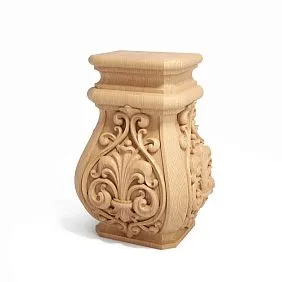
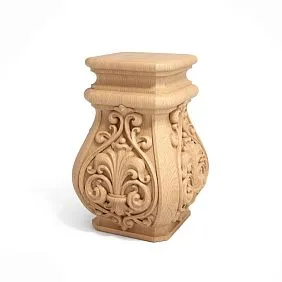

may be both a tribute to tradition and a bold experiment reflecting the designer's individuality and creativity.




From antiquity to our days: the journey of the column base through centuries
The history of column bases spans millennia and is inseparably linked to the development of architecture as an art. Already in ancient Egypt, columns had distinct bases, often in the form of lotus or papyrus, symbolizing natural motifs so important to Egyptian culture.
However, the true flourishing of the art of column bases occurred during antiquity. The ancient Greeks developed classical orders — Doric, Ionic, and Corinthian — each with its own type of base. If in the Doric order the base of the column could be absent and the column was set directly on the stylobate, the Ionic and Corinthian orders featured complex profiled bases with characteristic moldings and volutes.
The Romans, inheriting Greek traditions, developed and complicated column base forms, adding their own variants — Tuscan and Composite — to the classical orders. Roman column bases were distinguished by more ornate forms and rich decoration, corresponding to the general Roman architectural trend toward monumentality and luxury.
During the Middle Ages, with the development of Romanesque and Gothic styles, column bases acquired new forms. In Romanesque churches, they were often massive and low, with simple geometric shapes. Gothic bases became more elegant, with characteristic sharp angles and complex profiles, reflecting Gothic architecture’s striving toward verticality and lightness.
The Renaissance brought a revival of interest in ancient forms, and column bases once again followed classical canons, but with new interpretations. Masters of the Renaissance studied ancient Roman monuments and Vitruvius’s treatises, striving to recreate ideal proportions and forms.
Baroque and Rococo introduced dynamism and theatricality into column base design. Bases became more plastic, with wavy profiles, complex curves, and rich decoration. Often they were adorned with carving, gilding, and inlay, transforming into true works of art.
Neoclassicism returned to stricter, more restrained forms based on ancient models, but with greater precision and mathematical accuracy in proportions. Column bases from this period are distinguished by elegance and purity of lines.
In the 19th century, with the spread of eclecticism and historicism, designers and architects freely borrowed elements from various historical styles, creating unique combinations. Column bases could combine features from different eras and cultures, reflecting the tastes and preferences of clients.
Modern architecture and design offer endless variety in the forms and styles of column bases — from minimalist geometric to complex original solutions. Today
it can be both a tribute to tradition and a bold experiment, reflecting the individuality and creativity of the designer. the base of a wooden column Seasonal and daily changes — when designing interiors with natural lighting, it is considered how the bases of columns will appear at different times of day and in different seasons, as the angle of sunlight changes.
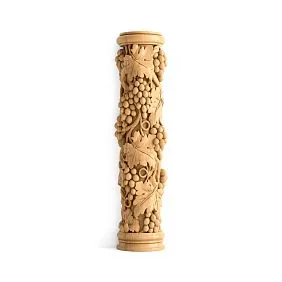
Our factory also produces:





Symbolic meaning of the column base in various cultures
In different cultures and epochs, column bases had not only aesthetic but also deep symbolic meaning. In ancient Greek architecture, proportions and forms of column bases were closely linked to mathematical principles of harmony and the golden section, reflecting the Greeks’ conception of cosmic order and beauty.
In Indian architecture, column bases were often adorned with lotus motifs — symbols of purity and spiritual enlightenment. These elements served not merely as decoration but as reminders of spiritual values and aspirations toward higher states of consciousness.
In Islamic architecture, where images of living beings were restricted by religious prescriptions, column bases were decorated with complex geometric and vegetal ornaments, symbolizing infinity and the unity of divine creation.
In Chinese and Japanese traditions, column bases often took the form of stylized clouds or waves, symbolizing the connection between earth and sky, the material and spiritual worlds.
In European Christian architecture, column bases could be adorned with biblical scenes or symbols, transforming the architectural element into a carrier of religious message.
Today, the symbolic meaning of column bases may be less obvious, but it still exists in subconscious perception of space. A massive, stable base creates a sense of reliability and stability, while a light, elegant one evokes impressions of delicacy and grace.
Get Consultation
Anatomy of a wooden column base
Structural elements and their functions
the base of a wooden column It is a complex architectural detail composed of several structural elements, each performing a specific function and contributing to the overall aesthetics.
Plinth — the lower part of the base, usually in the form of a rectangular or square slab. The plinth serves as a transition from the horizontal plane of the floor to the vertical axis of the column and distributes the load over a larger area. In wooden columns, the plinth is often made more massive than other base elements, visually emphasizing the stability of the structure.
Torus — a convex semicircular profile resembling a molding or cushion, located above the plinth. The torus softens the transition from the rectangular forms of the plinth to the circular section of the column and creates an interesting play of light and shadow. In wooden bases, the torus is often decorated with carving — ornamental motifs, braids, beads, or leaves.
Scotia — a concave profile between two convex elements. Scotia creates a contrasting transition and enhances the visual effect of the convex parts. In wooden bases, scotia can be either simple or complex in form, with additional profiles within the main concavity.
Astragal — a small convex profile, often in the form of a semicircular molding or bead, which may be part of the base or a transition from the base to the column shaft. The astragal visually separates the base from the shaft and creates a clear boundary between these elements.
Apophyge — a smooth transition from the base to the column shaft, usually in the form of a small concave curve. The apophyge ensures visual and structural continuity between the base and shaft, preventing a sharp transition that could create a weak point in the structure.
Each of these elements can vary in size, shape, and decorative treatment depending on style, column purpose, and the designer’s creative intent. Together, they create a harmonious composition that not only physically supports the column but also enriches its visual perception.
Proportions and scaling
Correct proportions of the column base are crucial for creating a harmonious architectural element. Historically, proportions of column bases were determined by strict canons based on mathematical ratios.
In classical architecture, the height of the base was typically 1/2 to 1/3 of the column's diameter, and the width of the plinth was approximately 1.5 times the diameter. These proportions ensured visual balance and structural stability.
When scaling wooden column bases for modern interiors, it is important to consider not only historical canons but also the specific characteristics of the space. High ceilings require taller and more substantial bases, while rooms with low ceilings are better suited to more compact and restrained forms.
It is also important to maintain proportional relationships between the various elements of the base itself. The plinth should be wide enough to provide visual stability, but not so massive as to appear clumsy. The torus and scotia should have balanced dimensions, creating a smooth and harmonious transition from the plinth to the column shaft.
When designing bases for non-standard or decorative columns, proportions may deviate from classical canons, but they must retain internal logic and harmony. Even the most daring and experimental forms should appear balanced and correspond to the overall interior design.
Materials and Manufacturing Technologies
The choice of material for a wooden column base is crucial both for its durability and aesthetic appeal. Traditionally, hardwoods with high strength, stable form, and attractive grain are used to manufacture column bases.
Oak is one of the best materials for column bases due to its strength, durability, and noble grain. Oak bases can withstand significant loads and serve for decades without deformation. Oak is also easy to carve, allowing for the creation of complex decorative elements.
Beech is a hard wood with a uniform structure and light color. Beech bases are characterized by high strength and form stability. Beech is easy to process and can be stained in various colors to imitate more expensive woods.
Ash is a strong and elastic wood with a distinctive grain. Ash column bases look elegant and modern. Ash resists impact loads well, making it ideal for bases in high-traffic areas.
Walnut is a noble wood with a rich dark grain. Walnut column bases look luxurious and prestigious. Walnut is easy to work with and polish, developing an even deeper and richer color over time.
Maple is a hard wood with light, almost white grain. Maple bases look fresh and modern. Maple is well-suited for fine carving, allowing for delicate details to be created.
Exotic woods (mahogany, teak, wenge) are used to create exclusive bases with unusual grain and color. These woods are usually more expensive but possess unique aesthetic qualities.
Manufacturing technologies for wooden column bases include both traditional handcraft methods and modern automated processes:
Turning - a traditional method in which the blank rotates around its axis, and the craftsman shapes the base profile using special cutters. This method allows for the creation of round and symmetrical elements with high precision.
Milling - a process in which a rotating milling cutter removes material from the blank to form the required profile. Modern CNC milling machines allow for the creation of complex shapes with high precision and repeatability.
Wood carving - a manual method of creating decorative elements on the base surface. The master carver uses special tools (chisels, cutters) to create relief patterns, ornaments, and botanical motifs.
Segmental assembly - a method in which the base is assembled from individual wooden segments, pre-cut according to a template and glued together. This method allows for the creation of large, complex-shaped bases while minimizing the risk of deformation and cracking.
Combined methods - combining machine processing with manual finishing and carving, allowing for unique items with individual character.
After manufacturing, bases are carefully sanded to create a smooth surface and then coated with protective finishes - varnishes, oils, waxes - that highlight the beauty of the wood and protect it from moisture and mechanical damage.
Stylistic variations of wooden column bases
Classical orders and their modern interpretations
Classical architectural orders - Doric, Ionic, Corinthian, Tuscan, and Composite - offer various column base options, each with its own distinctive features.
The Greek version of the Doric order did not include a separate base - the column was set directly on the stylobate. However, the Roman version of the Doric order and the closely related Tuscan order included a simple base consisting of a plinth and one torus.
The Ionic order has a more complex base, including a plinth, two tori (upper and lower), and a scotia between them. This creates a more elegant and refined profile, matching the overall elegance of the Ionic style.
The Corinthian and Composite orders use bases similar to Ionic ones, but often with more elaborate decorative detailing, corresponding to the opulence and luxury of these styles.
In modern interpretations of classical orders, designers often retain the basic proportions and structure of the bases but adapt them to modern materials and technologies. For example, traditional profiles may be simplified to create a cleaner, more modern look, or conversely, complicated with non-traditional decorative elements.
An interesting trend is combining classical base forms with modern materials and finishes - for example, a traditional base profile may be made from wood with an unusual grain or coated with metallic finishes that create a contrast between historical form and modern execution.
Regional and national characteristics
Different cultures and regions around the world have developed their own unique column base styles, reflecting local traditions, available materials, and aesthetic preferences.
Russian-style wooden column bases are often characterized by rich carving using traditional ornaments - botanical motifs, geometric patterns, zoomorphic elements. In wooden architecture of the Russian North, column bases could be adorned with complex three-dimensional carving, creating play of light and shadow.
Scandinavian style is distinguished by clean lines, minimalism, and functionality. Column bases in the Scandinavian style usually have simple geometric forms that highlight the natural beauty of the wood. Light-colored woods with minimal finishing are often used, preserving the natural color and grain of the wood.
The Mediterranean style is characterized by smooth, organic forms and warm tones. Column bases in this style may imitate weathered stone or have a textured surface resembling plaster. Warm, earthy colors and patina, creating an aged effect, are often used.
Asian styles (Chinese, Japanese, Indian) have their unique approaches to column base design. In Chinese tradition, bases often take the form of stylized clouds or lotuses and are coated with bright lacquers. Japanese bases are distinguished by minimalism and clean lines, highlighting the natural beauty of wood. Indian bases may be richly adorned with carvings depicting deities, animals, and plant motifs.
The Middle Eastern style is characterized by the use of complex geometric patterns and arabesques. Column bases in this style are often adorned with inlays, carving, or painting using traditional Islamic ornaments.
Modern trends in column base design
Modern wooden column base design is characterized by a variety of approaches — from minimalist geometric forms to complex original solutions combining different styles and materials.
Minimalism is one of the leading trends, implying the use of clean lines, simple geometric forms, and minimal decoration. Minimalist column bases may have the shape of a simple cube or cylinder, emphasizing the natural beauty of wood.
Biomorphic design — a direction inspired by natural forms — plants, animals, organic structures. Column bases in this style may imitate tree roots, seashells, crystals, or other natural objects.
Fusion — blending of different styles and cultural traditions. Column bases in fusion style may combine elements of classical architecture with ethnic motifs or modern materials, creating unique and eclectic compositions.
Industrial style — a direction inspired by industrial aesthetics. Column bases in this style may combine wood with metallic elements, imitate mechanisms or industrial details.
Sustainable design — a trend oriented toward ecological responsibility and responsible resource use. Column bases in this direction may be made from reclaimed or restored wood, highlighting natural imperfections and the material’s history.
Digital design — use of computer modeling and digital fabrication to create complex forms that would be difficult or impossible to produce using traditional methods. Column bases designed with parametric design may have complex geometry resembling natural structures or mathematical models.
Functional aspects of wooden column bases
Structural role and load-bearing capacity
the base of a wooden column Performs an important structural function, ensuring the stability and strength of the entire column. A properly designed base distributes the vertical load from the column over a larger supporting surface area, preventing point loading and potential deformations.
Load-bearing capacity of the base depends on several factors:
Material — hardwoods (oak, beech, ash) have high compressive strength and can withstand significant loads without deformation.
Construction — a properly designed base must have sufficient support area and optimal material distribution for effective load transfer.
Connection to the column — secure attachment of the base to the column’s stem prevents displacement and ensures structural integrity.
Attachment to the floor — the base must be securely fastened to the supporting surface using anchors, bolts, or other fastening elements.
For load-bearing columns performing structural functions, bases must be designed considering expected loads and operating conditions. In such cases, combined constructions are often used, where the wooden base conceals a metal fastening element providing additional strength.
For decorative columns not bearing significant loads, structural requirements for bases are less stringent, and design may be more flexible and oriented toward aesthetic qualities.
Protection from moisture and mechanical damage
One of the important functions of a column base is protecting the lower part of the stem from moisture and mechanical damage. Wooden columns installed directly on the floor are susceptible to moisture from wet mopping or accidental liquid spills. Moisture penetrating the wood may cause rot, deformation, or mold growth.
A properly designed base lifts the column stem above the floor level, creating a moisture barrier. Additionally, the base may be treated with special water-repellent compounds providing extra protection.
The base also protects the column from mechanical damage that may occur during cleaning, furniture movement, or foot traffic. A robust base with a strong surface absorbs these impacts, safeguarding the more vulnerable column stem.
For additional protection, bases may be equipped with special elements:
Waterproof gaskets between the base and floor, preventing capillary moisture penetration.
Protective metal plates on the lower part of the base, resistant to abrasion and impacts.
Ventilation gaps or channels ensuring air circulation and preventing condensation buildup.
Integration with floor coverings and "warm floor" systems
Modern interiors often include various types of flooring and "underfloor heating" systems, requiring a special approach to the design and installation of column bases.
When installing columns on parquet, laminate, or engineered wood, it is important to consider the possibility of thermal expansion and contraction of these materials. The column base must be designed to provide a small compensatory gap between it and the flooring, which can then be covered with decorative skirting or a special profile.
For heated floors, it is especially important to properly design the column base mounting. Direct attachment to the floor using deep anchors may damage heating elements or pipes. In such cases, special mounting solutions are used:
Surface mounting using wide support plates that distribute the load without deep penetration into the floor structure.
Pre-planning the location of columns during the design phase of the underfloor heating system, creating "cold zones" at the column installation sites.
Use of thermal insulation pads between the column base and the floor, preventing overheating of wood and potential deformations.
To integrate with various types of flooring, column bases may have special structural features:
Adjustable height - to compensate for level differences between various flooring types.
Modular construction - allowing replacement of the lower part of the base when changing the flooring.
Special profiles - ensuring a smooth transition between the column base and various types of flooring.
Aesthetic aspects of wooden column bases
Influence on Spatial Perception
the base of a wooden column play an important role in forming the visual perception of space, influencing the sense of scale, proportions, and overall atmosphere of the room.
Scale and proportions - large, massive bases create a sense of monumentality and significance, suitable for spacious rooms with high ceilings. Small, elegant bases give the space a lightness and airiness, which may be preferable in compact rooms.
Visual weight - bases with complex profiles and rich decoration attract attention and become important visual accents in the interior. Minimalist bases, on the contrary, create a more restrained and calm impression.
Direction of attention - the shape of the base can direct the viewer's gaze upward, toward the capital and ceiling, or, conversely, emphasize attention on the lower part of the space, creating a sense of grounding and stability.
Rhythm and repetition - in interiors with multiple columns, bases create a rhythmic pattern, structuring the space and setting a certain pace for its perception.
Transitions between zones - column bases can serve as visual markers indicating transitions between different functional zones of the room.
Combination with other architectural elements
To create a harmonious interior, it is important to properly combine column bases with other architectural elements - capitals, cornices, moldings, skirting boards, door and window casings.
Stylistic unity - column bases should match the overall interior style and other architectural details. This does not mean complete uniformity, but implies the presence of common visual elements, proportions, or motifs.
Profile consistency - the profiles of column bases can correspond to those of cornices, moldings, and other details, creating visual rhymes and connections between different interior elements.
Materials and finishes - consistency in selecting wood species, surface treatments, and finish coatings helps create a cohesive interior image.
Proportional relationships - the size and proportions of column bases should correspond to those of other architectural elements, creating a harmonious hierarchy of forms.
Decorative motifs - repetition or variations of decorative motifs (ornaments, carved elements) on column bases and other architectural details create visual unity and design coherence.
Game of Light and Shadow
The profiled surface of the column base creates a complex play of light and shadow, which enlivens the interior and adds depth and expressiveness. This effect changes throughout the day depending on the position of the sun and artificial lighting sources, creating a dynamic and constantly changing perception of space.
To maximize the use of this effect, designers consider several factors:
Depth and relief of profiles - deeper and more relief profiles create more dramatic light and shadow effects, suitable for classical and baroque interiors. Shallow, restrained profiles provide a more subtle and delicate play of light and shadow, appropriate for modern and minimalist spaces.
Placement of light sources - directional lighting (spotlights, wall-mounted fixtures) highlights the relief of the base and creates expressive shadows. Diffused lighting softens contrasts and creates a more calm perception.
Color and surface texture - light matte surfaces soften the contrast of light and shadow, creating a gentle, delicate effect. Dark glossy surfaces enhance contrasts and create a more dramatic impression.
Skillful use of light and shadow effects allows highlighting the beauty and expressiveness of column bases, making them important elements in shaping the atmosphere and character of the interior.
Practical application of wooden column bases in modern interiors
Columns in different functional zones
and the columns themselves can perform various functions depending on their placement in the interior:
the base of a wooden column Entrance zone and hallway — columns with expressive bases create a grand atmosphere and form the first impression of the house. Here, more decorative and representative bases are appropriate, emphasizing the status of the space.
Living room — columns can be used to zone the space, for example, separating the relaxation area from the dining area. Column bases in the living room often become important decorative accents supporting the overall interior style.
Dining room — columns can frame the dining area, creating a sense of a separate space. Column bases in the dining room should harmonize with the table and other furniture, creating a cohesive ensemble.
Office and library — columns with classical bases create an academic and intellectual atmosphere. They can frame bookshelves or a work desk, emphasizing the significance of these elements.
Bedroom — columns can be used to create a canopy over the bed or to highlight a relaxation zone. Column bases in the bedroom usually have softer, smoother shapes, creating a calm and relaxing atmosphere.
Bathroom — columns with moisture-resistant bases can frame the bathtub or sink area, creating a luxurious spa atmosphere. Here, it is important to use materials and finishes resistant to high humidity.
Kitchen — columns can be used to highlight an island zone or dining nook. Column bases in the kitchen should be practical, easy to clean, and resistant to stains.
can be adapted to various interior styles, from classical to modern:
Integration into various interior styles
the base of a wooden column Classical style — bases with traditional profiles (plinth, torus, scotia), made from noble wood species (oak, walnut) with natural finish or gilding. Proportions should be well-balanced and conform to classical canons.
Neoclassicism — simplified versions of classical bases with cleaner lines and less ornate decoration. Often use light tones and matte finishes, creating an elegant and modern look.
Art Deco — geometric bases with clear lines and contrasting materials. Characterized by use of exotic wood species, inlays, and metallic details.
Minimalism — simple geometric forms without unnecessary decoration, emphasizing material quality and line purity. Often use light wood species with matte finishes.
Scandinavian style — minimalist bases from light wood species (birch, maple, beech) with minimal processing, highlighting the natural beauty of the material.
Loft — rough bases from aged wood, often combined with metallic elements. Characterized by intentional imperfection in finish, emphasizing the industrial nature of the style.
Eco-style — bases from natural materials with minimal processing, emphasizing the natural texture and shape of wood. Often use recycled or reclaimed materials.
Ethnic styles (Provence, country, rustic) — bases with elements of traditional carving, often with an aged or patina effect. Characterized by use of local wood species and traditional processing techniques.
Columns in small spaces
Despite the common belief, columns can be successfully used in small spaces if their size, proportions, and placement are correctly chosen:
Half-columns and pilasters — flat or semi-circular columns attached to walls occupy minimal space but create a visual effect similar to full columns. Bases for such elements should be proportionally reduced and simplified.
Visual zoning — thin columns with compact bases can be used for visual division of space without creating physical barriers, which is especially important in small studio apartments.
Functional columns — in small spaces, columns can perform additional functions: serving as support for shelves, integrating lighting, concealing utilities. Bases of such columns should be designed with these additional functions in mind.
Optical illusions — properly chosen proportions and finishes of column bases can create an illusion of a more spacious room. Vertical lines visually increase ceiling height, while light tones and glossy surfaces expand the space.
Corner solutions — placing columns in room corners minimizes loss of usable area while simultaneously creating an architectural accent. Bases for corner columns may have a special shape adapted to the corner placement.
Corner solutions — placing columns in room corners minimizes loss of usable area while simultaneously creating an architectural accent. Bases for corner columns may have a special shape adapted to the corner placement.
Selection and Installation of Wooden Column Bases
Criteria for Selecting a Quality Base
When selecting a base for a wooden column, several key criteria should be considered:
Material quality - the wood should be well-dried (moisture content no more than 8-12%), free of cracks, chips, and other defects. Annual rings should be tight and uniform, indicating high material quality.
Manufacturing accuracy - all profiles and transitions must be made with high precision, free of burrs and unevenness. Symmetrical elements must be truly symmetrical, and straight lines must be truly straight.
Finish quality - the base surface should be carefully sanded, and the coating (varnish, oil, wax) should be applied evenly, without drips or stains. Decorative elements should be clear and detailed.
Dimensional accuracy - the base must precisely match the column's diameter and intended installation location. A base that is too large or too small will appear disproportionate and disrupt overall harmony.
Stylistic compatibility - the base design must match the column's style and the overall interior style. It is important that all elements create a unified, harmonious ensemble.
Structural reliability - the base must have a strong construction and secure fastening elements ensuring column stability.
Ecological safety - materials and finishing compounds must be environmentally clean and safe for health, especially if columns are installed in residential spaces.


