












































































Article Contents:
- History and evolution of edge in furniture manufacturing
- Origins of the tradition of edge on wooden items
- Development of edge technologies through centuries
- Modern trends in table edging
- Materials for making edges
- Wooden edge: variety of species
- Metallic edge: types and features
- Synthetic materials and composites
- Manufacturing and installation technologies for edges
- Traditional manufacturing methods
- Modern manufacturing technologies
- Methods of fastening and installation
- Design solutions and stylistic directions
- Classic Trim Styles
- Modern Trends in Trim Design
- Combining edges with various interior styles
- Functional aspects of edges
- Protective properties of different types of edges
- Ergonomic aspects of edge selection
- Influence of edge on table longevity
- Practical recommendations for selection and care
- How to choose the right edge for your table
- Care for tables with different types of edges
- Restoration and replacement of edges
- Conclusion
In the world of wooden furniture, every detail matters. Even the simplest interior item can be transformed thanks to carefully thought-out decorative elements. Among such elements, special place belongs to edge of wooden tablewhich not only completes its appearance but also performs an important protective function. This seemingly insignificant element can radically change the perception of the entire item, giving it completeness and elegance.
edge of wooden table represents a special profile that is attached along the perimeter of the tabletop. It serves not only as a decorative element but also protects the edges of the table from mechanical damage, moisture, and other adverse influences. Thanks to properly selected edge, you can significantly extend the service life of a wooden table, preserving its original appearance for many years.
In this article, we will thoroughly examine all aspects related to edge of wooden tables: their types and materials, manufacturing and installation technologies, design solutions, and practical recommendations for selection. We will also discuss how to properly care for a table with edge to ensure it continues to delight you with its appearance for as long as possible. Whether you are a professional furniture maker or simply an admirer of quality wooden furniture, this information will be useful and interesting.


History and evolution of edge in furniture manufacturing




Origins of the tradition of edge on wooden items
History edge of wooden table goes back to ancient times, when furniture makers sought ways not only to decorate their items but also to protect them from premature wear. In ancient Egypt, where furniture art had reached a high level of development, various techniques for edge of wooden surfaces were already used. Masters applied inlays of ivory, precious metals, and stones, which not only decorated furniture but also protected its edges.
In the Middle Ages, edge became more functional. Furniture makers of that time faced the problem of protecting tabletop edges from moisture and mechanical damage. The solution was the use of metal overlays, which were attached along the perimeter of the table. These overlays not only protected the wood but also became a decorative element, emphasizing the owner's status.
The Renaissance brought a new perspective on edge banding. Masters of that time began experimenting with various wood species, creating contrasting combinations. The marquetry technique emerged, where thin plates of precious woods were used for edge banding, forming intricate patterns and ornaments.
Our factory also produces:


Development of edge banding technologies through centuries
Over time, edge banding technologies improved alongside the development of tools and materials. In the 17th-18th centuries, during the Baroque and Rococo periods, edge banding became more refined and complex. Masters created wavy, curved profiles that emphasized the opulence and luxury of furniture of that era. Often, gilded bronze inlays were used for edge banding, which not only protected the edges of the tabletop but also served as a striking decorative accent.
The 19th century brought industrialization and mass production of furniture. This also affected edge banding technologies. Standardized profiles appeared, which could be produced in large quantities. At the same time, in contrast to industrial production, the "Art and Craft" movement emerged, whose proponents revived traditional handcraft techniques and paid special attention to details, including edge banding.
The 20th century marked the emergence of new materials and technologies. In addition to traditional wooden and metallic edge banding, plastic, rubber, and composite materials began to be used. This expanded designers' possibilities and allowed creating edge banding that met various functional and aesthetic requirements.
Get Consultation
Modern trends in table edge banding
Today edge of wooden table is experiencing a true renaissance. On one hand, there is renewed interest in traditional techniques and materials. Master woodworkers create edge banding by hand, using old methods and tools. On the other hand, modern technologies such as laser cutting and 3D printing open up new possibilities for creating complex and precise profiles.
The ecological trend also influences edge banding production. More and more manufacturers prefer natural materials and environmentally friendly processing technologies. Edge banding made from recycled materials or wood obtained through responsible forestry is gaining popularity.
Another modern trend is minimalism and functionality. Many designers prefer simple, sleek profiles that highlight the natural beauty of wood and do not distract from the overall furniture composition. At the same time, such edge banding must be highly functional and protect the tabletop from damage.
Materials for making edge banding
Wooden edge banding: variety of species
The most traditional material for edge of wooden table is, of course, wood itself. The choice of species depends on many factors: furniture style, tabletop material, usage conditions, and personal preferences.
Oak is one of the most popular materials for edge banding. It is characterized by high strength, moisture resistance, and resistance to mechanical damage. Oak edge banding has a distinctive texture and develops a noble patina over time. It is ideal for classic and rustic interiors.
Beech is another common species for edge banding. Beech wood has a uniform structure and a pleasant light rose tone. It is easy to process and can be painted in various colors. Beech edge banding suits modern and Scandinavian interiors.
Ash is valued for its strength and elasticity. Ash edge banding has a beautiful texture with distinct growth rings. This material harmonizes well with various interior styles and can be either light or dark, depending on the finish.
Walnut is a noble species with a rich dark-brown color. Walnut edge banding gives a table a luxurious, elegant look. It is ideal for classic and neoclassical interiors, as well as for offices and libraries.
Exotic species (teak, merbau, wenge) – used to create exclusive edge banding. They are distinguished by unusual texture, color, and high resistance to external influences. Such edge banding becomes a true decoration of the table and emphasizes its uniqueness.
Metallic edge banding: types and features
Metallic edge of wooden table is not only reliable protection for edges, but also a striking design accent. Depending on the furniture style and overall interior, various metals and their alloys may be used.
Brass – a classic material for edge banding. Brass edge banding has a warm golden hue that harmonizes well with dark wood species. Over time, brass may acquire a patina, giving furniture a vintage charm. This material is often used in classic and colonial styles.
Stainless steel – a modern, practical material. Steel edge banding is characterized by high strength, corrosion resistance, and ease of maintenance. It has a cool silver sheen that harmonizes well with light wood species and creates a contrasting accent. This material is ideal for modern and minimalist interiors.
Copper – a material with a distinctive reddish tint. Copper edge banding oxidizes over time, acquiring a greenish or brownish patina, which can be used as a decorative effect. This material is often used in rustic and industrial styles.
Aluminum – a lightweight and strong material. Aluminum edge banding has a modern look and harmonizes well with various wood species. It can be anodized, allowing for various colors and shades. This material is often used in modern and high-tech interiors.
Synthetic materials and composites
The modern industry offers a wide range of synthetic materials for edge of wooden table. They can imitate natural materials or have their own unique appearance.
PVC edge banding – one of the most common synthetic materials for edge banding. It is available in a wide color range, can imitate wood texture or have a solid color. PVC edge banding is moisture-resistant, easy to clean, and simple to install. However, it is less durable than natural materials and may peel off over time.
ABS plastic – a stronger and heat-resistant material compared to PVC. ABS edge banding has a more realistic texture and better resistance to mechanical damage. It is often used in mid- to high-end furniture.
Acrylic edge – a premium synthetic material. It has a glossy surface with a depth effect, creating a modern, stylish look. Acrylic edge is resistant to ultraviolet light, does not fade or yellow over time. This material is often used in modern and minimalist interiors.
Composite materials – combine properties of different components. For example, wood-polymer composite (WPC) edge combines the naturalness of wood with the practicality of plastic. These materials have high strength, moisture resistance, and ease of maintenance.
Edge processing and installation technologies
Traditional Manufacturing Methods
Traditional manufacturing methods edge of wooden table are based on handcrafting by a master carpenter. These methods require high skill but allow creating unique, individual pieces.
Routing – one of the main methods for creating wooden edge. The master uses special routers to form the desired profile. This method allows creating both simple and complex profiles with various decorative elements. Routing can be done manually or with a router machine.
Turning – used for creating edges with round or cylindrical elements. The blank rotates around its axis, and the master uses special cutters to give it the desired shape. This method is often used for creating decorative edge elements, such as beads or knobs.
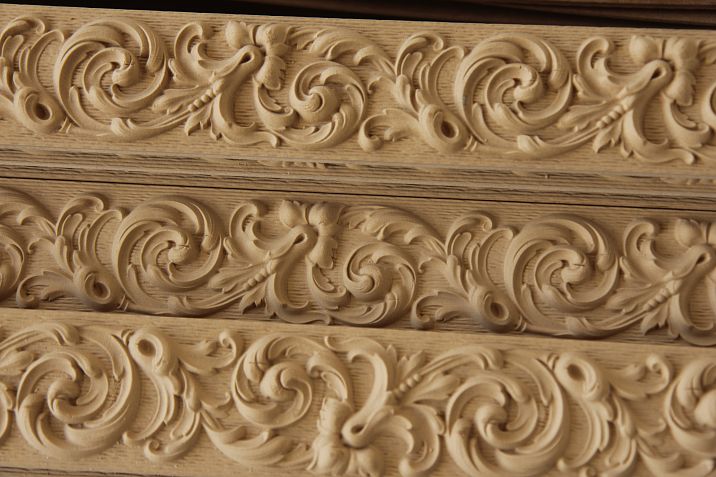
Carving – allows creating edges with three-dimensional patterns and ornaments. The master uses various chisels and gouges to carve relief images on the wood surface. This method requires high skill and is used for creating exclusive, artistic edges.
Inlay and marquetry – techniques where the edge is decorated with inserts made of various materials. These can be other types of wood, metal, mother-of-pearl, bone, etc. The master cuts recesses of the required shape in the main material and inserts prepared elements. These techniques allow creating complex patterns and images.
Modern Manufacturing Technologies
With the development of technology, new manufacturing methods have emerged edge of wooden tablewhich allow increasing the accuracy, speed, and quality of production.
CNC routing – using computer-controlled machines to create edges. A computer program controls the router movement, allowing to create complex profiles with high precision and repeatability. This method is widely used in industrial furniture production.
Laser cutting – a technology where a laser beam is used to process the material. It allows creating edges with very thin and complex patterns, inaccessible to traditional processing methods. Laser cutting is especially effective when working with thin materials and creating delicate elements.
3D printing – an innovative technology that allows creating volumetric edge elements by layer-by-layer material buildup. This method opens new design possibilities, allowing to create shapes impossible to achieve by traditional methods. 3D printing can be used both for creating prototypes and for producing finished items.
Extrusion – a technology where material (usually plastic) is forced through a shaping die to create a profile of the required shape. This method is widely used for producing synthetic edge. It allows creating profiles of various shapes and colors with high speed and low cost.
Methods of attachment and installation
There are several ways of mounting edge of wooden tableeach of which has its own advantages and specific applications.
Adhesive bonding – the most common method of attaching edge. Various types of glue are used: PVA, polyurethane, contact, etc. Glue is applied to the countertop and edge surfaces, then they are pressed together and left to dry completely. To ensure even pressing, clamps or special presses may be used.
Mechanical fastening – using nails, screws, brackets, or other fasteners. This method ensures a secure connection but leaves visible fastener marks that may disrupt the item’s aesthetics. Decorative caps or putty may be used to conceal fastener marks.
Dovetail joint – a traditional carpentry method where complementary elements (dovetails and grooves) are formed on the edge and countertop, then joined. This method ensures a strong connection without visible fasteners. However, it requires high precision in manufacturing and is complex to execute.
Thermoactivation – a method used for attaching synthetic edge. The edge with thermally activated adhesive is pressed onto the countertop edge and heated with a special iron or hair dryer. Under heat, the adhesive melts, ensuring a strong bond. After cooling, excess edge is trimmed and finished.
Design Solutions and Stylistic Directions
Classic trim styles
Classical styles edge of wooden table are characterized by elegance, symmetry, and attention to detail. They are based on the traditions of furniture art from previous centuries and remain popular to this day.
Baroque – a style characterized by opulence and ornamentation. Baroque edge has a complex profile with numerous curves, volutes, and other decorative elements. Gold leaf, carving, and inlay are often used. Such edge suits luxurious interiors with rich decoration.
Classicism – a style based on principles of ancient architecture. Classicism edge has a strict, symmetrical profile using elements such as fluting, meander, and acanthus. It is distinguished by restrained elegance and harmonizes well with classical interiors.
Empire – a style that emerged during Napoleon’s time. Empire edge is characterized by monumentality and use of military symbolism (laurel wreaths, eagles, lions). Bronze inlays and gold leaf are often used. Such edge suits grand, ceremonial interiors.
Biedermeier – a style that emerged in Germany and Austria in the first half of the 19th century. Biedermeier edge is distinguished by simplicity and functionality while preserving elegance. It has smooth lines and minimal decoration. Such edge harmonizes well with cozy, home-style interiors.
Modern trends in trim design
Modern trends in design edge of wooden table reflect general trends in furniture design: minimalism, functionality, eco-friendliness.
Minimalism – a style based on the principle 'less is more'. Minimalist edge has a simple, concise profile without unnecessary decorative elements. It emphasizes clean lines and the natural beauty of the material. Such edge harmonizes well with modern interiors.
Industrial style – inspired by industrial aesthetics. Industrial style edge is often made of metal (steel, aluminum) or imitates it. It has a rough, 'unfinished' look that contrasts with wooden tabletop surfaces. Such edge suits loft interiors.
Scandinavian style – characterized by light tones, natural materials, and functionality. Scandinavian style edge is usually made of light wood species (birch, pine, beech) and has a simple, elegant profile. It highlights the natural beauty of wood and creates a sense of lightness. Such edge harmonizes well with Scandinavian and eco-interiors.
Futurism – a style oriented towards the future. Futuristic edge may have unusual geometry, asymmetrical shapes, use innovative materials and technologies (e.g., glowing elements or interactive surfaces). Such edge suits modern, tech-oriented interiors.
Combining edge with various interior styles
edge of wooden table should harmoniously match the overall interior style, creating a cohesive composition.
Classic interior – requires elegant, restrained edge. Profiles with traditional elements (fluting, ovals, acanthus) made of noble woods (oak, walnut, mahogany) are suitable. Gold leaf or bronze inlays may be used to create a luxurious effect.
Modern interior – implies simple, minimalist trim. Straight or slightly rounded profiles made of light-colored wood or metal will work well. It is important that the trim does not overload the overall look of the furniture and interior.
Rustic interior – requires natural, "unfinished" trim. Profiles with visible wood texture, possibly with bark or natural irregularities, are suitable. Such trim emphasizes the connection to nature and creates a cozy, homey atmosphere.
Eclectic interior – allows experimenting with various trim styles. You can combine traditional and modern elements, use contrasting materials and colors. The main thing is that the trim harmonizes with the overall interior concept and does not create visual chaos.
Functional aspects of trim
Protective properties of different types of trim
One of the main functions edge of wooden table – protection of the countertop edges from various impacts.
Protection against mechanical damage – trim prevents chips, scratches, and other damage to countertop edges from impacts and friction. Metal and hard plastic trim, as well as trim from hardwoods (oak, beech, maple), are most effective in this regard.
Protection against moisture – trim prevents moisture from penetrating into the ends of the countertop, which is especially important for wooden tables. Wood is most vulnerable to moisture precisely at the end cuts, where fibers are exposed. Trim made from moisture-resistant materials (plastic, metal, some wood species with high oil content) provides good moisture protection.
Protection against temperature effects – trim can protect table edges from exposure to high temperatures (hot objects, direct sunlight). In this regard, metal trim and heat-resistant plastic trim are most effective.
Protection against chemical effects – trim can protect table edges from exposure to various chemicals (acids, alkalis, solvents). Trim made from stainless steel and certain types of plastic are most chemically resistant.
Ergonomic aspects of trim selection
When choosing edge of wooden table It is important to consider not only its aesthetic and protective properties, but also ergonomic aspects.
Profile shape – affects the ease of table use. Sharp edges may be uncomfortable to touch and even hazardous, especially in homes with children. Rounded or beveled profiles are more comfortable and safe.
Trim height – affects table functionality. Too high trim may hinder work at the table, creating a barrier between the user and the surface. On the other hand, it can be useful for preventing objects from falling off the table.
Surface texture – affects tactile sensations when touching the trim. Too rough or uneven surface may be unpleasant to the touch and even cause micro-skin injuries. Smooth, polished surface is more comfortable, but may be slippery.
Material thermal conductivity – affects sensations when touching the trim. Metal trim may feel uncomfortably cold in winter, while wooden trim remains warm to the touch.
Influence of trim on table longevity
Correctly selected and installed edge of wooden table can significantly extend its service life.
Prevention of delamination – trim protects the edges of multi-layered countertops (plywood, MDF, particleboard) from delamination under the influence of moisture and mechanical loads. This is especially important for tables used in high-humidity rooms (kitchen, bathroom).
Prevention of deformation – trim can prevent countertop deformation, especially if it is made of solid wood. Wood has a tendency to "react" to changes in temperature and humidity, which can lead to warping and cracking. Properly selected trim can compensate for these movements and prevent deformation.
Protection against wear – countertop edges experience the most wear, as they are most vulnerable to impacts and friction. Trim takes on the main load, protecting the main countertop material. If necessary, trim can be replaced, thus extending the service life of the entire table.
Protection against pests – trim can protect countertop edges from pest damage (wood-boring beetles, termites). Some trim materials (metal, plastic, certain wood species with high essential oil content) are unattractive or inaccessible to pests.
Practical recommendations for selection and care
How to choose the right trim for your table
Choosing edge of wooden table – a responsible process that requires consideration of many factors.
Consideration of table style and material – trim should harmonize with the overall table design and countertop material. For solid wood tables, trim is usually selected from the same or contrasting wood species. For tables made of artificial materials (MDF, particleboard), both wooden and synthetic trim are suitable.
Consideration of operating conditions – for tables used in high-humidity rooms (kitchen, bathroom), it is recommended to choose moisture-resistant trim materials (plastic, metal, some wood species). For dining tables, trim resistance to food stains and ease of cleaning are important.
Consideration of usage intensity – for tables used intensively (work tables, dining tables), it is recommended to choose strong, wear-resistant trim materials (hardwood, metal, hard plastic). For decorative tables used infrequently, more decorative but less durable options can be chosen.
Consideration of budget – trim cost can vary significantly depending on material and manufacturing complexity. Synthetic trim and trim from inexpensive wood species (pine, spruce) are the most affordable. More expensive are trim from premium wood species (oak, walnut, exotic species) and metal trim.
Care for tables with different types of trim
Proper care of wooden table edge will help preserve its appearance and functional properties for many years.
Care for wooden edge – requires regular cleaning with a soft cloth. For more thorough cleaning, use a slightly damp cloth with a small amount of mild detergent. After wet cleaning, the surface should be thoroughly dried. To protect and refresh the appearance, it is recommended to periodically treat the edge with special wood care products (oils, waxes, varnishes).
Care for metallic edge – depends on the type of metal. Stainless steel and aluminum can be cleaned with a soft cloth using special metal cleaning agents. Brass and copper may require polishing to maintain shine or, conversely, special treatment to create patina. It is important to avoid abrasive materials that may scratch the surface.
Care for synthetic edge – usually does not require special care. Regular cleaning with a soft cloth using regular household detergents is sufficient. It is important to avoid solvents that may damage the plastic surface.
General recommendations – regardless of the edge material, it is recommended to immediately remove spilled liquids and contaminants, use coasters under hot items, avoid impacts and scratches. It is also important to maintain optimal room humidity (40-60%) to prevent deformation of wooden elements.
Restoration and replacement of edge
Even with the most careful care edge of wooden table may eventually require restoration or replacement.
Restoration of wooden edge – may include sanding to remove scratches and scuffs, filling cracks and chips with special compounds, repainting or revarnishing. For minor damages, you can use wax pencils or furniture markers of the appropriate color. More serious restoration may require professional assistance.
Restoration of metallic edge – may include removing corrosion, polishing, and re-coating (chroming, nickel plating, gold plating). For light corrosion, you can use special metal cleaning agents. More severe corrosion may require mechanical treatment or even replacement of the edge.
Replacement of edge – may be necessary if damage is too severe for restoration. The replacement process depends on the type of edge attachment. Adhesive joints require careful removal of the old edge and thorough cleaning of the surface before installing the new one. Mechanical fastening is usually easier to replace, but may require filling old holes.
Prevention – regular inspection and care of the edge will help identify problems early, when they are still easy to fix. Special attention should be paid to areas where the edge connects to the tabletop, as problems often start there (delamination, seam separation).
Conclusion
edge of wooden table – it is not just a decorative element, but also an important functional component that protects the edges of the tabletop and extends the lifespan of the entire piece. Choosing the right edge requires considering many factors: the style and material of the table, usage conditions, personal preferences, and budget.
The modern market offers a wide variety of edge materials and designs, from traditional wooden profiles to innovative synthetic and composite materials. Each option has its own advantages and characteristics that should be considered when choosing.
Proper care of the edge will help preserve its appearance and functional properties for many years. In case of damage, most types of edge can be restored or replaced, thereby extending the lifespan of the entire table.
In the end, edge of wooden table – it is an investment in the beauty, durability, and functionality of your furniture. By paying proper attention to this seemingly minor detail, you can significantly improve the quality and aesthetic appeal of your table, creating a piece of furniture that will delight you and your loved ones for many years.


