Article Contents:
- Why wood?
- Wooden architrave: door frame or work of art?
- Functionality and aesthetics in one element
- Variety of profiles and shapes
- Installation: simplicity or art?
- Wooden floor skirting: the horizon line in interior design
- Why is skirting needed?
- Height, width, profile: how to choose?
- Joining with architrave: matter of taste or rule?
- Door decor: turning functional into beautiful
- What does door decor include?
- Stylistic flexibility
- Decor installation: subtleties and nuances
- Comprehensive approach: how to unite three elements into a single whole
- Material Unity
- Common profile and rhythm
- Color Harmony
- Practical questions: what's important to know before purchase
- How to calculate the amount of material?
- What tools are needed for installation?
- How to care for wooden elements?
- Styles and directions: how to adapt the triad to different interiors
- Classic: Eternal Elegance
- Modern Minimalism: Purity of Lines
- Scandinavian style: warmth of the north
- Loft: industrial romance
- Eclecticism: mixing styles
- Technical aspects: what to pay attention to
- Wood moisture
- Quality of processing
- Geometry
- Compatibility with other materials
- Economic considerations: is it worth investing in wood?
- Initial costs vs long-term benefits
- Impact on property value
- Ecological aspect
- Common mistakes in selection and installation
- Mistake 1: Scale mismatch
- Mistake 2: Ignoring grain direction
- Mistake 3: Incorrect fasteners
- Mistake 4: Installation on uneven surfaces
- Error 5: Lack of acclimatization
- Trends and innovations: what's new in wooden finishing
- Painted wood
- Combined profiles
- Hidden fasteners
- Integrated cable channels
- Thermowood
- How to find a balance between tradition and innovation
- FAQ: Answers to Popular Questions
- Can wooden and MDF elements be combined?
- Do wooden elements need to be coated after installation?
- What to Do If the Walls Are Uneven?
- What is the service life of wooden finishing elements?
- Can wooden elements be repainted?
- How to care for carved elements?
- Is it worth using exotic wood species?
- How to choose a wood shade?
- Can wooden elements be installed in high-humidity rooms?
- What tools are needed for self-installation?
- In conclusion: the philosophy of details from STAVROS
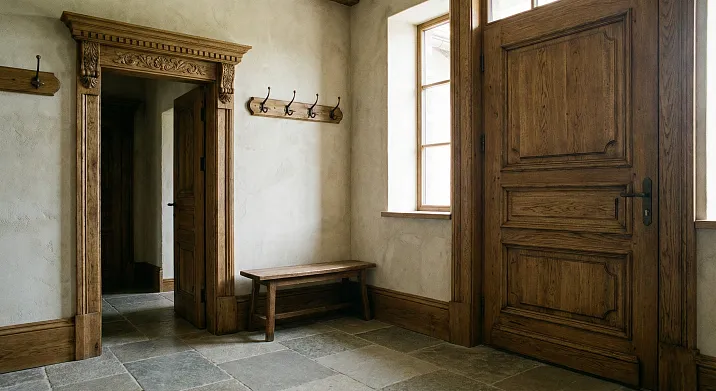
The hallway is the face of the house. It is here that the first impression of the home, its owners, their taste, and attention to detail is formed. It might seem simple: walls, floor, doors. But it is precisely these basic elements that require special attention to finishing. And here, three key components of interior harmony come to the forefront: wooden architraves, wooden floor skirting boards, and door decor. Each of these elements plays its own role, but together they create a unified symphony of style that transforms an ordinary room into a thoughtful, complete space.




Why wood?
Before delving into the details, it's worth asking: why wooden elements? In the age of plastic, MDF, and composite materials, solid wood might seem like an anachronism. But this is far from the case. Wood is a living material with a unique texture, capable of breathing, creating a microclimate in a room, and serving for decades. It is eco-friendly, safe for health, and possesses that very warmth that cannot be imitated by artificial analogues.
Solid wood productsWooden elements possess a unique texture and pattern; each piece is one-of-a-kind. Oak showcases an expressive grain structure, beech delights with a soft honey hue, and exotic species bring notes of luxury. When it comes to hallway finishing, it's important to understand: wood is not just a material; it's a philosophy of durability and style.




Wooden architraves: a frame for the door or a work of art?
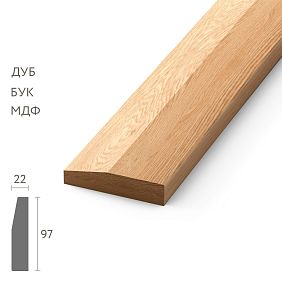
What is an architrave? Many perceive it as a utilitarian detail meant to conceal the mounting gap between the door frame and the wall. This is partly true. ButWooden casingarchitraves are much more than just masking construction flaws.
Our factory also produces:


Functionality and aesthetics in one element
The architrave performs several crucial tasks. Firstly, it covers the technological gap that inevitably forms when installing a door frame. This gap is necessary to compensate for thermal expansion, but from an aesthetic standpoint, it looks untidy. The architrave solves this problem elegantly and definitively.
Secondly, it creates a visual frame for the doorway, drawing attention to the entrance area. A properly chosen architrave can visually increase ceiling height, expand the space, or, conversely, create an intimate, cozy atmosphere. It's not just a wooden strip—it's a tool of architectural expression.
Thirdly, wooden architraves protect the edge of the wall from mechanical damage. The hallway is a high-traffic area where corners and edges are constantly at risk of being bumped by bags, umbrellas, or children's bicycles. A solid architrave takes the impact, preserving the integrity of the wall finish.
Get Consultation
Variety of profiles and shapes
The modern market offers an impressive variety of shapes and profiles. From laconic rectangular strips to exquisite carved compositions—the choice depends solely on the stylistic concept of the interior. Classic interiors gravitate towards shaped architraves with chamfers, beads, and recesses. Modern spaces prefer minimalist solutions with clear geometry.
Wooden moldingsDoor decor and architraves are often designed in a unified style, creating a harmonious space. This allows doors, windows, and walls to be united into a single composition where each element complements the others.
Installation: simplicity or art?
Installing an architrave requires precision and attention to detail. It might seem simple: cut at a 45-degree angle, nail it—and it's done. But the devil, as they say, is in the details. The slightest inaccuracy in the miter cut will lead to a gap at the joint that will catch the eye and ruin the entire impression.
Professional craftsmen use miter saws with laser guides, carefully fitting each element, taking into account not only geometry but also the wood grain. It's important that the grain on adjacent strips matches in direction and tone, creating visual unity.
Architrave fastening can be done in several ways: with finishing nails, with adhesive, or with special hidden fasteners. Each method has its advantages. Nails provide reliability but leave visible attachment points. Adhesive creates a seamless joint but requires a perfectly flat wall surface. Hidden fasteners are a compromise solution for those who value aesthetics and are willing to invest in quality installation.
Wooden floor skirting board: the horizon line in the interior
If the architrave frames the verticals, the skirting board is responsible for the horizontal.wooden baseboardA wooden floor skirting board is not just a decorative strip along the wall. It is an architectural element that defines the character of the space, sets the rhythm, and creates a sense of completion.
What is a skirting board for?
The question may seem naive, but it's surprising how often it comes up. Some consider baseboards an optional element that can be omitted in favor of minimalism. This is a mistake. Baseboards perform a whole range of critically important functions.
First and foremost, they conceal the expansion gap between the floor covering and the wall. Any floor—be it parquet, engineered wood, or laminate—is subject to thermal expansion. A 10-15 mm gap is necessary, but without a baseboard, it looks like an oversight.Wooden skirting boardselegantly solve this problem, turning a technical necessity into a design advantage.
Secondly, the baseboard protects the lower part of the wall from dirt and mechanical damage. Cleaning the floor, whether wet or dry, inevitably affects the wall. Without a baseboard, wallpaper or paint will quickly lose their appearance. A wooden baseboard takes all these impacts while remaining aesthetic and durable.
Thirdly, behind the baseboard, you can hide utilities: electrical cables, internet wires, TV antennas. Modern models include special cable channels, making them not just decorative but also functional elements.
Height, width, profile: how to choose?
Choosing a baseboard is an art of proportions. The height of the baseboard directly affects the perception of space. A low baseboard (60-70 mm) is suitable for small rooms with low ceilings, creating a sense of lightness. A high baseboard (100-120 mm) is appropriate in spacious hallways with ceilings from 3 meters—it emphasizes scale and gives the interior a solemn feel.
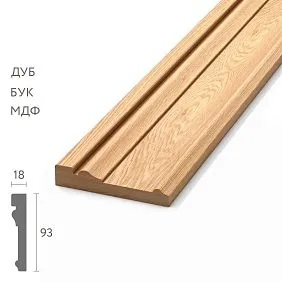
The baseboard profile can be straight, shaped, or with a chamfer. A straight profile is the choice for modern interiors where clean lines are valued. A shaped profile with beads and coves is a classic solution, referencing European decorative traditions. A chamfer is a compromise option, combining strictness and elegance.
Material matters.Oak skirtingis distinguished by its strength and expressive texture, ideal for long-lasting finishes. Beech baseboard has a soft warm hue and uniform structure, suitable for interiors in Scandinavian style. MDF baseboards for painting are a budget solution, allowing for color experimentation.
Joining with architrave: a matter of taste or a rule?
One of the most frequent questions when planning hallway finishing is: should the baseboard and architrave match in design? There is no definitive answer, but there are recommendations. The ideal option is when both elements are made from the same wood species, have a similar profile, and finish tone. This creates visual unity and a sense of thoughtfulness.
However, contrasting solutions are also acceptable. For example, a dark architrave and a light baseboard can create an interesting play of shades if supported by other interior elements. The main thing is to avoid chaos and randomness. Every decision should be justified and integrated into the overall concept.
Door decor: turning the functional into the beautiful
The door in the hallway is not just a barrier between rooms. It is an architectural accent that can become the highlight of the interior or go unnoticed.Door Decorationwith wooden elements transforms a standard panel into a work of art.
What is included in the concept of door decor?
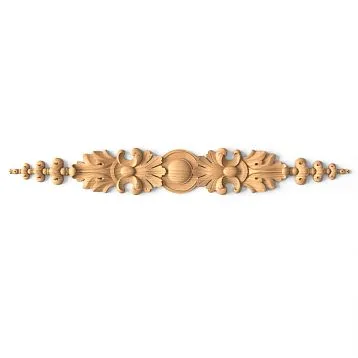
Door decor is a wide range of elements, from overlays and rosettes to pilasters and capitals. Each element plays its role. Overlays create volumetric relief on a flat panel, imitating a paneled structure. Rosettes frame door hardware, adding elegance and completeness. Pilasters along the edges of the door create the illusion of columns, giving the entrance monumentality.
Wooden Inlayscan be smooth or carved, simple or ornamented. Wood carving is a separate art, requiring skill and patience. Floral motifs, geometric patterns, abstract compositions—the choice depends on the interior style and personal preferences.
Stylistic flexibility
One advantage of wooden decor is its stylistic versatility. A classic interior requires overlays with Baroque curls, rosettes with petal ornamentation, capitals with acanthus leaves. Modern style prefers laconic geometric forms, minimal details, and emphasis on wood texture.
Eclecticism allows mixing: a strict door profile can be complemented with a carved overlay, creating a contrast between simplicity and luxury. Scandinavian style values naturalness: light wood, simple forms, absence of excessive decor. Loft can use roughly processed wooden elements, emphasizing industrial aesthetics.
Decor installation: subtleties and nuances
Installing decorative elements on a door requires care. Overlays are attached with special wood glue or small finishing nails. It is important to accurately mark the placement of elements so they are symmetrical and aligned. The slightest misalignment will spoil the overall impression.
Before installation, the decor must be acclimatized—kept in the room for several days so the wood reaches the same humidity as the environment. This prevents deformation after installation. After installation, seams and joints are filled, sanded, and then the entire surface is coated with a protective finish: varnish, oil, or wax.
Comprehensive approach: how to unite three elements into a single whole
Architrave, baseboard, and door decor are the three pillars supporting the aesthetics of the hallway. But how to make them work in unison, rather than exist independently?
Material Unity
The first and main principle is unity of material. If you have chosen an oak architrave, then the baseboard and decorative door elements should be from the same species. This does not mean everything must be the same shade, but the texture and grain pattern should harmonize.
Solid Wood Itemsfrom the same species create harmony, even if they are processed differently. For example, the architrave might be stained dark walnut, the baseboard coated with clear oil, and the door decor painted white. Different finishes, but one base—oak. This connection will be perceived subconsciously, creating a sense of thoughtfulness.
Common profile and rhythm
The second principle is the repetition of profiles and forms. If the architrave has a shaped profile with a cove, it is desirable to choose a baseboard with a similar line. This does not mean they must be identical, but a common logic of form should be discernible.
Rhythm is the alternation of elements that creates a visual music of space. The verticals of architraves echo the verticals of door overlays. The horizontality of a baseboard can find a response in a horizontal wall molding. This rhythm creates order, turning a set of elements into an architectural composition.
Color Harmony
The third principle is color unity. Even if you use different shades, they should be within the same temperature range. Warm wood tones (honey, golden, brown) go well together. Cool tones (gray, ashy, bleached) also form a harmonious palette. But mixing warm and cool without a well-thought-out concept is risky.
Wooden beamsand other horizontal elements should support the overall color logic. If the hallway is decorated in warm tones, a cool gray baseboard will look alien. And vice versa.
Practical questions: what is important to know before buying
How to calculate material quantity?
Before purchasing, it is necessary to accurately measure all parameters. For architraves, measure the height and width of the doorways, keeping in mind that each opening requires two vertical strips and one horizontal one. The standard length of an architrave is 2.2 meters, but it's better to check with the manufacturer.
For baseboards, measure the perimeter of the room, subtract the width of the doorways, and add 10% for cutting and fitting. Don't forget about internal and external corners, which may require special connecting elements.
For door decor, everything depends on the chosen composition. Simple overlays are sold in kits for one door. Complex carved elements may require individual design.
What tools are necessary for installation?
Minimum set: miter saw (or miter box with a handsaw), tape measure, square, level, hammer, nail set, wood glue, wood filler, sandpaper. For a professional result, the following will be useful: a cordless nail gun, laser level, clamps.
If you are not confident in your abilities, it is better to entrust the installation to professionals. Incorrect installation can ruin even the highest quality material.
How to care for wooden elements?
Wood is a living material that requires care. Regular dry cleaning with a soft cloth removes dust. Wet cleaning is acceptable, but without excess water. Use special wood care products containing wax or oil — they nourish the material and protect it from drying out.
Avoid aggressive chemicals, abrasive sponges, and direct sunlight. If an element is varnished, the coating may need to be renewed every few years. Oil finishes require periodic renewal — every 1-2 years, depending on the intensity of use.
Styles and directions: how to adapt the triad to different interiors
Classic: Eternal Elegance
Classical interiors require refined forms. Architraves with a figured profile, baseboards 100-120 mm high with coves, doors with carved overlays and rosettes. Material — solid oak or beech, finish — toning in noble shades of walnut, mahogany, natural oak.
Wooden moldingson the walls will complement the composition, creating decorative panels. The combination of vertical and horizontal elements forms a rhythmic structure characteristic of palace interiors.
Modern Minimalism: Clean Lines
Minimalism does not tolerate excess. Straight architraves without decoration, baseboards with a simple profile, doors that are smooth or with minimal relief. Material — MDF for painting or light wood. Color — white, gray, natural bleached oak.
Precision of execution is important: perfect joints, no visible fasteners, impeccable geometry. Minimalism forgives fewer mistakes than classic styles, where decoration can hide minor flaws.
Scandinavian style: the warmth of the north
Scandinavia values naturalness and simplicity. Light wood — birch, pine, bleached oak. Architraves and baseboards of simple shapes, without complex profiles. Doors are smooth, overlays are possible but without carving — laconic, geometric.
Finish — clear oil or white paint, emphasizing the wood grain. Scandinavian interiors love contrasts: white walls and natural wood, light floors and dark doors.
Loft: industrial romance
Loft allows for more freedom. Architraves can be rough, with deliberately visible texture. Baseboards — massive, simple. Doors — metal or wooden with industrial elements: rivets, metal overlays, visible hinges.
Wood in a loft is often used in contrast with concrete, brick, metal. The finish is minimal — stain, oil, sometimes no finish at all, to emphasize the naturalness of the material.
Eclecticism: mixing styles
Eclecticism is the art of combining the uncombinable. A carved architrave in a classic style, a modern minimalist baseboard, a door with ethnic motifs. The main thing is to find a unifying element: color, material, rhythm.
Eclecticism requires boldness and good taste. It's easy to slide into chaos, but a properly executed eclectic hallway becomes a work of art where every element surprises and delights.
Technical aspects: what to pay attention to
Wood Moisture
One of the key parameters is wood moisture content. Quality products are made from wood dried to 8-10%. This guarantees dimensional stability, absence of deformation and cracks. If the moisture content is higher, the wood will dry out after installation, creating gaps in the joints.
When purchasing, clarify this parameter. Serious manufacturers indicate moisture content in quality certificates and adhere to drying technology.
Surface finish quality
Inspect the product before purchase. The surface should be smooth, without tears, chips, or resin pockets (for coniferous species). The profile should be clear along its entire length, without dips or sags. The ends should be cut evenly, without chips.
If you are buying painted or tinted products, check the uniformity of the coating. There should be no drips, missed spots, or bubbles.
Geometry
Place the molding on a flat surface and check for any warping. Even a slight bend will create problems during installation. Measure the thickness and width at several points — they should be consistent along the entire length.
Compatibility with other materials
If you are using different materials (e.g., wooden casing and MDF baseboard), ensure they are compatible in terms of thermal expansion coefficient. A mismatch can lead to gaps at the joints.
Economic considerations: Is it worth investing in wood?
Initial cost vs. long-term benefit
Wooden elements are more expensive than plastic or MDF counterparts. That's a fact. But it's important to look at the bigger picture. High-quality wooden casing, baseboard, or decor will last for decades while maintaining a presentable appearance. They can be restored: sanded, repainted, or refinished.
Plastic yellows, loses its shine, and becomes brittle after 5-7 years. Painted MDF lasts longer, but it's difficult to repair if damaged. Wood, however, can be repaired locally: fill a chip, touch up a scratch, or refresh the varnish.
Impact on property value
Professionally executed hallway finishing with wooden elements increases the market value of an apartment or house. Potential buyers appreciate quality and durability. A hallway with wooden casings, baseboards, and decor creates an impression of well-maintained status.
Ecological aspect
Wood is a renewable resource. With proper forest management, its production does not harm nature. At the end of their service life, wooden elements can be disposed of without harming the environment, unlike plastic, which decomposes over centuries.
Common mistakes in selection and installation
Mistake 1: Scale mismatch
A thin casing on a massive door looks absurd. Similarly, a tall baseboard in a small hallway with a low ceiling creates a feeling of cramped space. It's important to maintain proportions.
Mistake 2: Ignoring grain direction
When joining elements, it's important that the grain direction matches. Differently oriented grains create visual dissonance, even if the elements are from the same batch.
Mistake 3: Incorrect fasteners
Using nails that are too thick can split the casing. Those that are too short won't provide secure fastening. There are fastener recommendations for each type of product.
Mistake 4: Installation on uneven surfaces
If the wall is uneven, the casing or baseboard won't fit tightly, creating gaps. Before installation, it's necessary to level the surfaces or use flexible sealants to fill the gaps.
Error 5: Lack of acclimatization
Wooden elements brought from a cold warehouse should not be immediately installed in a warm room. They need to be acclimatized for 2-3 days under operating conditions so the wood adjusts to the ambient humidity and temperature.
Trends and innovations: What's new in the world of wooden finishing
Painted wood
One of the main trends in recent years is painted wood. White, gray, and colored baseboards and casings allow you to preserve the wood texture while adapting it to modern color schemes. Pastel shades are especially popular: mint, dusty pink, light blue.
Combined profiles
Manufacturers offer casings and baseboards with combined profiles: a smooth surface is combined with carved inserts, creating an interesting visual effect. This allows for the decorative appeal of classic styles with the simplicity of modern design.
Hidden fasteners
Concealed mounting systems are becoming increasingly popular. They allow for the installation of baseboards and casings without visible fasteners, creating a perfectly clean surface.
Integrated cable channels
Modern baseboards are increasingly equipped with built-in cable channels for hiding wiring. This is especially relevant in the era of smart homes, where the number of cables is constantly growing.
Thermowood
Thermal treatment increases wood stability, reduces moisture absorption, and changes its color. Thermowood is gaining popularity due to its improved characteristics and noble dark shade without the use of stains.
How to find a balance between tradition and innovation
Wooden finishing is an area where craft traditions meet modern technology. Classic profiles are cut on high-precision CNC machines. Ancient wood species are treated with innovative protective compounds. Carving that used to be created by hand over months can now be reproduced by machine in hours.
Yet, the value of handcrafted work is not lost. Author's carved elements, created by a master, carry the energy of creativity and a uniqueness that cannot be mass-produced. The choice between mass production and custom work is a choice between accessibility and exclusivity.
The ideal option is a combination. Main elements (casings, baseboards) are factory-made, precise, and high-quality. Accent details (carved overlays, rosettes, capitals) are handcrafted, custom, and unique. This allows for an optimal balance of price, quality, and individuality.
FAQ: Answers to popular questions
Can wooden and MDF elements be combined?
Yes, it is permissible if the elements are executed in a unified style and coated with the same finish. For example,wooden casingand an MDF skirting board for painting in the same color will create a harmonious composition. The main thing is to avoid obvious contrast in texture.
Do wooden elements need to be coated after installation?
It depends on the condition in which they were purchased. If the elements are already coated with varnish or oil, additional treatment is not required. If it is untreated wood, be sure to apply a protective coating after installation and filling of the joints.
What to do if the walls are uneven?
For significant wall irregularities, use flexible polyurethane architraves and skirting boards—they follow the surface curves. An alternative is to level the walls before installing wooden elements. A third option is to use elastic sealants to fill gaps, but this is a compromise solution.
What is the service life of wooden finishing elements?
With proper use and care, high-quality wooden architraves, skirting boards, and decor last 30-50 years or more. The main enemies of wood are moisture, direct sunlight, and mechanical damage. Protect the elements from these factors, and they will delight you for decades.
Can wooden elements be repainted?
Yes, this is one of the advantages of wood. If the old coating has worn out or you want to change the color, it is enough to remove the old coating (mechanically or chemically), sand the surface, and apply a new one. Wood allows for multiple renewals.
How to care for carved elements?
Carved elements require more thorough care. Dust accumulates in the recesses, so use soft brushes or a vacuum with a furniture attachment. Perform wet cleaning carefully, avoiding water accumulation in the carving. Periodically treat with wax to nourish and protect the wood.
Is it worth using exotic wood species?
Exotic species (teak, wenge, rosewood) have unique texture and high strength but are significantly more expensive. They are justified in premium interiors, where every detail emphasizes status. For standard projects, oak or beech are quite sufficient, which are not inferior in quality but are more affordable.
How to choose the shade of wood?
Focus on the overall color scheme of the interior. Light shades visually expand the space and are suitable for small hallways. Dark shades add solidity but require sufficient lighting. Medium tones (natural oak, beech) are universal and suit most interiors.
Can wooden elements be installed in areas with high humidity?
In a hallway, humidity is usually not critical, but if it's a private house with a pool nearby or an entry area that often gets wet, choose moisture-resistant species (larch, oak) and be sure to treat with protective compounds. An alternative is to use moisture-resistant MDF for painting.
What tools are needed for self-installation?
Minimum: miter saw (or miter box), tape measure, level, hammer, nail set, glue. Desirable: nail gun, laser level, clamps. If you have no experience working with wood, it's better to hire professionals—saving on installation can result in damage to expensive materials.
In conclusion: the philosophy of details from STAVROS
Creating a harmonious hallway is an art where every detail matters.Wooden casing, wooden baseboardanddecorative elements for doorsare not just finishing materials. It is the language your home speaks, telling about your tastes, values, attitude towards quality and beauty.
Wooden finishing transforms a functional space into an aesthetically perfect one. It requires investment—temporal, financial, intellectual. But these investments pay off many times over: with durability, beauty, the pleasure of contemplation, and increased property value.
The company STAVROS has been creating solid wood products for over twenty years, combining craft traditions with modern technologies. Every element—from a simple architrave to a complex carved composition—undergoes strict quality control, is made from carefully selected wood, and is processed on high-precision equipment.
STAVROS understands: details create the whole. That is why the company's assortment features not disparate elements but comprehensive solutions whereCrown Molding, Moldings, architraves, skirting boards, and decorative overlays are executed in a unified style, from the same material, with impeccable compatibility.
By choosing STAVROS products, you choose reliability tested by time. You invest in durability that will not require replacement in a few years. You create an interior that will delight you and your loved ones, evoke admiration from guests, and serve as a model of taste and quality.
The hallway is the first thing those entering your home see. Let it speak the language of perfection. Let wooden architraves frame doors with the nobility of classicism. Let skirting boards outline the space with clear lines. Let door decor become a work of art. And let every element bear the stamp of STAVROS craftsmanship—a company for which wood is not just a material, but a philosophy of creating beauty.