












































































Article Contents:
- 1. Why an intentional choice of materials for furniture is important
- 2. Solid Wood: Classic Luxury and Durability
- 2.1. Brief Characteristics
- 2.2. Advantages of Solid Wood
- 2.3. Disadvantages
- 2.4. Conclusion
- 3.1. Brief characteristics
- 3.2. Advantages of Veneer
- 3.3. Disadvantages
- 3.4. Conclusion
- 4.1. Laminate
- Advantages
- Disadvantages
- 4.2. MDF
- Advantages
- Disadvantages
- 5.1. Advantages
- 5.2. Disadvantages
- 5.3. Conclusion
- 6.1. Plastic HPL/CPL
- 6.2. Acrylic Facades
- 6.3. Composite Materials (e.g., Quartz Agglomerates)
- 7.1. Hinges
- 7.2. Slides
- 7.3. Lift Mechanisms
- 7.4. Furniture Handles
- 8.1. Kitchen
- 8.2. Living Room and Bedroom
- 8.3. Sliding wardrobe doors
The modern furniture industry offers a vast variety of materials — from natural wood to high-tech plastics and metals. For some, luxury appearance and exclusivity are a priority; for others, affordability and practicality; and some seek durability and eco-friendliness. Before purchasing or ordering furniture, it’s worth understanding which materials are optimal in terms of strength, style, cost, and ease of use. In this article, we will thoroughly examine which furniture materials can be called "best" in different situations.


1. Why conscious material selection for furniture is important
- Durability and reliability
Furniture should serve for many years without squeaks or breakages. The better the quality of the base (MDF, particleboard, solid wood, etc.), the longer the lifespan, especially if complemented with quality hardware. - Aesthetics and style
The texture of wood or the color of acrylic coating, the type of handles and hardware, largely determine how well a piece of furniture fits into the interior. Loft, classic, high-tech — each style requires its own materials. - Practicality and maintenance
Resistance to moisture, mechanical impacts, and stains — important factors. Kitchens and bathrooms require higher moisture resistance, while living rooms or offices can afford more "fussy" but stylish surfaces. - Ecological safety
Wood panels (MDF, particleboard) may emit formaldehyde, and coatings — other volatile compounds. When choosing, don’t forget to consider the emission class (E0/E1) and composition of varnishes or paints. - Financial aspect
Some choose particleboard for savings, while others are willing to invest in solid wood or exclusive composites. It’s important to understand what you’re paying for and what value it ultimately brings.
Thus, the "best" material is not always the most expensive, but the one that best suits your needs. Next, we will examine the main contenders for the title of "best" in different categories.




2. Solid wood: classic luxury and durability
Our factory also produces:


2.1. Brief characteristics
Solid wood — solid boards or glued beams made from natural wood (oak, beech, ash, birch, pine, and other species). One of the oldest materials, still valued today for its authentic appearance and strength.
Get Consultation
2.2. Advantages of solid wood
- Natural beauty
Each species has its own texture (grain pattern), tone, "warm" aesthetics. Lacquer, oil, or wax accentuate the wood grain patterns. - High durability
Many hardwoods (oak, ash, beech) withstand significant loads and are not prone to deformation under normal conditions. - Durability and Repairability
When scratches or chips appear, solid wood can be sanded and re-coated with a finish — furniture easily regains its presentable appearance.
2.3. Disadvantages
- High cost
Valuable species are expensive. Even affordable pine is more expensive than some panel materials. - Sensitivity to humidity
Solid wood "breathes" and may crack under sudden changes in humidity and temperature. - Heaviness and weight
Large solid wood dimensions are heavy, making transportation and assembly more difficult.
2.4. Conclusion
If you are willing to invest in exclusive furniture, love the texture of natural wood, appreciate classic or country style, solid wood is one of the best choices. However, you must ensure a proper microclimate (40–60% humidity) and care for it carefully.
3. Veneered Solutions: Balance between Naturalness and Economy
3.1. Brief description
Veneer is a thin slice of wood (usually 0.3–0.6 mm), glued onto a panel base (usually MDF, less often particleboard or plywood). This approach allows you to achieve the appearance of solid wood at lower costs.
3.2. Advantages of Veneer
- Natural Wood Grain
The surface looks 'alive', with wood grain patterns, ideal for classic, neoclassic, and art deco styles. - Cost Savings Compared to Solid Wood
Less use of expensive species, resulting in more affordable furniture prices. - Wide Range of Wood Species
Both traditional (oak, beech, ash) and exotic (zebrano, padauk) species are used.
3.3. Disadvantages
- Thin layer
Upon impact, a chip may appear, revealing the base. - Repair Complexity
Requires careful restoration; otherwise, patches may be noticeable. - Sensitivity to Moisture
If improperly sealed with lacquer, veneer may peel off.
3.4. Conclusion
Veneer is an excellent option for those wishing to achieve the 'solid wood look' without an excessively high price. Ideal for office furniture, living rooms, and bedroom sets. The key is to ensure a quality base (MDF) and a final lacquer or oil finish.
4. Panel Materials: Laminated Particleboard and MDF — Leaders in the Mass Market
4.1. Laminated Particleboard
Advantages
- Affordable price
- Wide Range of Decorations
- Easy to Clean
Disadvantages
- Low Edge Strength
- Limited Machining Capabilities
- Demanding Quality Edge Treatment
When to Choose: When budget is limited, for built-in furniture (cabinets, drawers, shelves) in offices, cottages, apartments. Works well when combined with quality hardware.
4.2. MDF
Advantages
- Dense Structure
- Holds fasteners well, does not crumble at edges
- Cabinet with classic panels
Disadvantages
- Weight (heavier than MDF)
- Price (mid-range segment)
- Formaldehyde emission monitoring
When to choose: for facades (especially with PVC or enamel film), decorative panels. Kitchens, bathrooms, children's rooms, living rooms. Good price-to-performance ratio.
5. Plywood: strong base and eco-style
What it is: layered material made of veneer, glued crosswise.
5.1. Pros
- High rigidity
- Relatively low weight
- Ability to use natural birch plywood look in Scandinavian and eco styles
5.2. Cons
- Requires finishing: lacquer, oil, or paint to protect from moisture and improve aesthetics.
- Void spaces: cheap grades may have internal defects.
5.3. Summary
Plywood is good for structures where lightness and strength are important (children's furniture, Scandinavian, DIY projects). With proper grade, it can look very stylish, and with lacquer finish, the layer pattern becomes visible.
6. Plastic, acrylic, composites: high-tech modernity
6.1. Plastic HPL/CPL
Used for facades and countertops, providing high wear resistance and moisture protection.
● Pros: resistant to high temperatures, moisture, and strong stains; various color palettes.
● Cons: may be more expensive than standard MDF, requires careful post-forming.
6.2. Acrylic facades
Gloss or matte with depth of color, 'lacquered' surface effect.
● Pros: visual luxury, easy maintenance, moisture resistance.
● Cons: fingerprints are noticeable on gloss surfaces; require soft scratch-resistant polishes.
6.3. Composite materials (e.g., quartz aggregates)
● Excellent choice for countertops: withstand heat, mechanical impacts, do not absorb stains.
● Price: high, but justified by longevity.
7. Hardware: the heart of functionality
Regardless of the choice of main materials (MDF, solid wood, or acrylic), without reliable hinges, guides, and mechanisms, furniture will not be convenient or durable.
7.1. Hinges
● Surface-mounted: classic variant of swing doors.
● Semi-surface-mounted, inset: for more complex layouts.
● Soft-close hinges: provide gentle closing without slamming.
7.2. Guides
● Ball-bearing (roller): inexpensive, may be noisy and have load limitations.
● Ball-bearing (telescopic): smooth operation, increased load capacity, soft-close possible, full drawer extension.
7.3. Lift Mechanisms
Often used in kitchens: facades that lift upward (gas lifts, electric motors). Provide access without bending over.
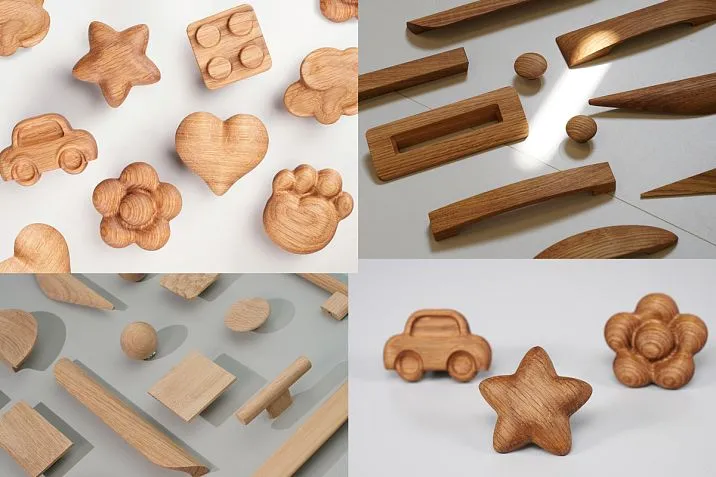
7.4. Cabinet Handles
Various shapes: knobs, buttons, rails, recessed, push-to-open (generally without handles). Material: metal (brass, steel), wood, ceramic, plastic. Choice depends on style and functionality.
8. Best Combinations by Category
8.1. Kitchen
- Cabinet: moisture-resistant MDF, plywood, or MDF.
- Facades: MDF with PVC film / enamel / acrylic or plastic, possibly veneer for classic style.
- Countertop: HPL, stone aggregates, solid wood if desired.
- Hardware: ball-bearing guides with soft-close, lift mechanisms, rail handles.
8.2. Living Room and Bedroom
- Cabinet: MDF (16–18 mm thick) or MDF.
- Facades: veneer, solid wood (if budget allows), MDF "wood-effect".
- Hardware: hinges with soft-close, telescopic guides, handles — according to style (classic or high-tech).
8.3. Sliding Closet Doors
● Profiles: aluminum or steel, quality roller system (Hettich, Komandor).
● Fill: MDF, mirror, glass (tempered), bamboo or rattan inserts.
● Hardware: ball-bearing rollers, stoppers, soft-close mechanisms.
9. Ecological Component
- Emission class: E0/E1 preferred for living spaces, especially children’s rooms.
- Safe finishes: water-based or low VOC content.
- Certifications: FSC (forest management), PEFC — confirm that wood is sourced without harm to nature.
10. Criteria for Defining "Best" Materials
- Suitability for the task: for the kitchen, moisture resistance and heat resistance are important; for the living room — aesthetics; for the bathroom — high moisture resistance; for the office — durability.
- Optimal budget: 'best' does not always mean most expensive. Sometimes, laminate with a good edge and ball-bearing guides provides the best price-to-quality ratio.
- Balanced hardware: even expensive fronts will be useless without reliable hinges and guides.
- Personal preferences: some love natural wood, others are thrilled by acrylic gloss, while others prioritize ease of maintenance.
11. How to check quality when purchasing
- Inspect surfaces: absence of chips, bubbles, cracks, and properly applied edge banding.
- Material thickness: for a sturdy carcass, usually 16–18 mm; fronts may be thinner, but not less than 16 mm for reliability.
- Smell (if possible): a strong odor may indicate high formaldehyde emissions.
- Certifications: check for E1/E0 labeling, reputable brands (Egger, Kronospan, Blum, Hettich).
- Functional test: open and close doors, pull out drawers, assess smoothness and absence of play.
12. Final assessment of the best materials
● Solid wood: premium solution for classic, eco, and luxury interiors. Best in authenticity, but requires a significant budget and careful maintenance.
● MDF: versatile, ideal for fronts and complex shapes (routing). Reliable, mid-price range.
● Laminate: top choice for budget and mid-range projects, office furniture, guest wardrobes, etc. Justifies itself well with quality edge and decor.
● Plywood: indispensable in eco and scandinavian styles, provides strength with relatively low weight.
● Veneer: gives the 'solid wood' look and natural aesthetics at a more affordable budget.
● Acrylic, plastic: best option for modern kitchens and bathrooms where durability and moisture resistance are needed, and acrylic gloss creates a luxurious effect.
In real practice, the 'best' material is chosen based on specific conditions: budget, style, load, climate, personal preferences. Often manufacturers combine different materials to achieve the ideal balance: for example, laminate carcass, MDF fronts with PVC film or veneer, HPL countertop, and premium-brand hardware.
13. Conclusion
The best furniture materials are those that best meet your needs. If you value authenticity and prestige, solid wood and veneered surfaces will be an excellent choice. For economical and practical projects, laminate is ideal — just ensure you monitor the manufacturer's quality and emission class. MDF excels in routing and reliable fastening, plywood appeals to lovers of eco- and scandinavian styles, while acrylic and plastic are indispensable in projects where water resistance, bold design, and futuristic gloss matter.
But no matter which material is chosen, without reliable hardware (hinges, guides, handles, lifting mechanisms), furniture will not function properly. Therefore, when selecting a set or ordering carpentry services, consider everything as a whole: carcass + fronts + hardware + your budget and requirements. And then you will get an aesthetically perfect, convenient, and long-lasting interior item that will delight you for many years.


