Article Contents:
- How Wall and Floor Lines Create the Visual Framework of a Room
- Polyurethane Moldings - Flexibility, Lightness, Precision
- Solid Wood Skirting - Natural Texture and Depth
- Color Combinations and Principles of Form Harmony
- Modern STAVROS Solutions for Comprehensive Finishing
- Questions and Answers
- Conclusion - Architecture of Lines

Interior is a system of lines creating the visual framework of space. Horizontal lines of the floor and vertical lines of the walls intersect, forming the volume of the room.Moldings made of polyurethaneandWooden baseboardTwo architectural tools working with these lines, transforming them from technical elements into artistic expression. Polyurethane moldings create wall structure - frames, panels, geometric compositions, rhythmic division of planes. Solid wood skirting forms the transition from floor to walls, the visual base of verticals, a natural accent in the interior.
The philosophy of combining synthetic and natural materials is based on mutual enhancement of their qualities. Polyurethane brings technological advantages - lightness, water resistance, flexibility, precision in reproducing forms, accessibility. Solid wood adds authenticity - natural texture, tactile warmth, prestige of natural material, eco-friendliness. Together they create an interior where modern technologies serve traditional values of quality and beauty.



How Wall and Floor Lines Create the Visual Framework of a Room
The visual framework of a room is formed by a system of lines of different orientations and scales. The base of the framework - the boundaries of the room: floor line, ceiling line, vertical edges of corners. These basic lines create a geometric volume - a cube or parallelepiped of the room. Without additional detailing, this volume is perceived as an empty box, devoid of scale and character.
Skirting creates the first horizontal, organizing space. The line running along the perimeter of the room at a height of 80-150 mm from the floor forms the visual base of walls, the transition from the horizontal floor to the vertical walls. This line is critical for perception - a room without skirting appears unfinished, damp, uncomfortable. A properly selectedskirting made of solid woodcreates the foundation of composition.
Moldings on walls create a secondary system of lines organizing verticals. Horizontal moldings at a height of 100 cm divide the wall into lower and middle sections. A molding under the ceiling at a height of 250 cm separates the wall from the ceiling. Vertical moldings between windows or at corners create rhythmic divisions. This system transforms flat walls into architecturally organized planes.
Door and window openings create vertical accents, breaking the monotony of walls. Framing these openings with moldings enhances their significance, turning them into compositional elements. Door and window casings work as frames, focusing attention on the openings, organizing the viewer's gaze.
Ceiling cornice completes the vertical of the wall, creating a transition to the ceiling. Without a cornice, the wall appears to end abruptly, creating visual discomfort. The cornice is the architectural crown of the room, necessary for a sense of completion. It can be simple or complex, but it must be present.
Intersections of lines create compositional focal points. Corners of the room, where skirtings of two walls meet - critical points requiring high-quality joints. Corners of molding panels, where horizontal and vertical elements intersect - areas of visual concentration, often accentuated by decorative corner elements.
The rhythm of lines creates the musicality of space. Regular alternation of vertical moldings at equal intervals forms a calm, measured rhythm. Different intervals create a more complex structure. Absence of rhythm leads to visual chaos, tiring perception.
The thickness of lines determines their visual weight. A massive skirting 150 mm high creates a heavy horizontal, visually grounding the space. A thin skirting 60 mm - a delicate line, almost imperceptible. Wide moldings 100 mm form strong frames, narrow 40 mm - elegant.
The color of lines affects their legibility. Contrasting lines - dark on light or light on dark - are most expressive, clearly structuring space. Monochromatic lines - in wall color - are distinguishable only by relief, creating a delicate play of shadows. The choice of strategy determines the degree of architectural expression.
The direction of lines controls the movement of the gaze. Horizontal lines of skirting and molding bands lead the gaze along the wall, emphasizing length. Vertical lines - upward to the ceiling - emphasize height. Diagonals - rarely used in classical interiors - create dynamism, unease.
The scale of lines must correspond to the size of the room. In a large living room of 40 square meters, large elements are used - skirting 120-150 mm, moldings 80-100 mm. In a small bedroom of 15 square meters - delicate elements 80 mm skirting, 40-60 mm moldings. Violation of scale creates imbalance - large elements in small spaces feel oppressive, small elements in large spaces become lost.
The number of lines determines the complexity of the visual framework. Minimal system - skirting and ceiling cornice - creates a simple modern interior. Medium complexity - adding wall molding panels - forms classic elegance. High complexity - numerous moldings, pilasters, friezes - creates the richness of palace interiors.




Polyurethane moldings - flexibility, lightness, precision
Polyurethane as a material fordecorative moldingsRevolutionized the possibilities of architectural decoration. Lightness - the main technological advantage. A meter of molding 80 mm wide weighs 200-400 grams compared to 1500-2500 grams of wooden analog. This simplifies transportation, storage, installation. One person can install moldings throughout the room without helpers.
Polyurethane's water resistance is absolute. The material does not absorb water, does not swell, does not deform from moisture. Water absorption coefficient less than 1 percent eliminates problems in humid rooms.Paintable MoldingPolyurethane molding is equally suitable for dry living rooms and humid bathrooms, making the material universal.
The flexibility of polyurethane solves the problem of curved surfaces.Flexible polyurethane moldingFrames arched openings, bay windows, columns, creates curved compositions on walls. The bending radius depends on the profile thickness — thin moldings bend to a 50 cm radius, while thick ones require a radius of 150 cm or more. This opens up design possibilities unavailable to rigid wood.
The accuracy of reproducing details is phenomenal. Casting in molds ensures perfect repetition of each ornamental element. The most complex classical profiles — Ionic, ogee, beads, flutes — are reproduced with millimeter precision. Each linear meter is absolutely identical, which is critical for symmetrical compositions.
The variety of profiles is impressive. Manufacturers offer hundreds of models — from minimalist flat strips 20 mm wide to large carved moldings 200 mm wide. Classical profiles reproduce historical styles — Classicism, Baroque, Empire, Modern. Contemporary profiles offer geometric purity of lines for current interiors.
Installation is simple and accessible for DIY. Moldings are glued using special polyurethane adhesive or quality acrylic mounting adhesive. Adhesive is applied to the back of the molding with a zigzag motion, and the element is pressed against the wall for 2–3 minutes until it sets. Joints are filled with acrylic putty and sanded after drying. After painting, joints are invisible.
Molding cutting is done with a standard metal hacksaw or a circular saw. The material cuts easily, does not crumble, and produces a clean edge. Angles are cut at 45 degrees using a miter box or a circular saw with a rotating table. Cutting accuracy is critical for joint quality — an error of 1–2 degrees creates a visible gap.
Painting creates the final appearance. Polyurethane accepts any water-based interior paints — acrylic, latex. The surface does not require priming — paint lays evenly and does not absorb. Painting white creates a classic look. Painting in wall colors integrates moldings into the plane — visible only through relief. Patination creates an antique effect.
The durability of polyurethane moldings is 25–30 years according to manufacturer warranties, but practice shows 40–50 years. The material does not age, yellow, or deform over time. The only maintenance required is repainting every 7–10 years to refresh the appearance and protect against UV radiation.
The ecological safety of modern polyurethane is high. The material is inert and does not emit harmful substances at normal operating temperatures. Certified for residential use, including children’s rooms. Environmental concerns relevant to older polyurethane types from the 1980s–90s are not applicable to modern formulations.
Repairability simplifies maintenance. A damaged section of molding is easily cut out and replaced with a new one. Joints are filled with putty and painted — repairs are invisible. This is simpler than restoring wooden or plaster elements, which require specialized skills.
Cost is affordable. A linear meter of simple molding costs 150–300 rubles, complex carved molding — 400–800 rubles. This is 2–4 times cheaper than wooden and 3–5 times cheaper than gypsum analogs. Savings allow decorating the entire house, creating rich interiors within a reasonable budget.
Versatility of application expands possibilities. Polyurethane moldings work on walls and ceilings, in dry and humid spaces, in heated and unheated areas. They frame doors and windows, create panels, form coffered ceilings, frame mirrors and paintings. One material solves all decorative tasks.
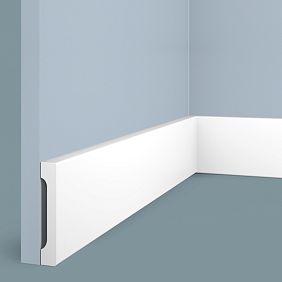
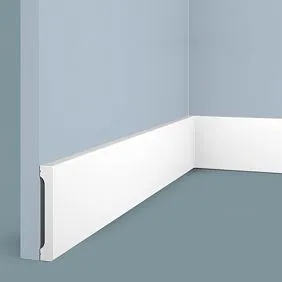
Our factory also produces:
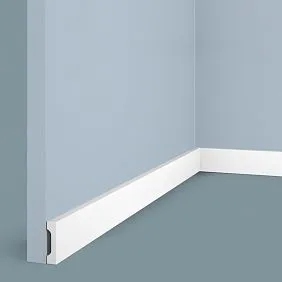
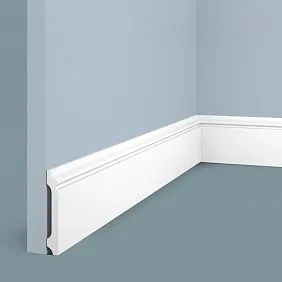


Wooden baseboards — natural texture and depth
Natural wood brings to the interior what cannot be imitated — living texture, organic quality, natural individuality.wooden skirting board purchaseThis is a choice in favor of authenticity, prestige, and ecological safety. Each strip is unique — natural grain patterns of annual rings, direction of fibers, color variations make it different from others. This natural variability creates visual richness.
Wood grain creates visual depth. A smoothly sanded oak surface under transparent oil reveals a complex structure — medullary rays, annual rings, transition between early and late wood. Under side lighting, the texture creates micro-relief, play of light and shadow. This complexity is unattainable with homogeneous polyurethane.
Wood species create different emotional atmospheres. Oak with powerful expressive texture and noble brown tones creates a sense of solidity, stability, prestige. Traditional choice for classic interiors, offices, libraries. Ash with contrasting light texture creates freshness, graphic quality, modernity. Suitable for Scandinavian and contemporary interiors.
Walnut with warm brown-purple tones adds luxury, coziness, elegance. Walnut texture has moderate expressiveness — not as rough as oak, not as delicate as birch. Ideal choice for bedrooms, living rooms, dining rooms. Larch with golden tones and moderate texture creates a warm atmosphere, additionally possessing natural moisture resistance.
The height of solid wood baseboards is critical for perception. The European standard of 70–90 mm creates a delicate framing, not dominating in the interior. Suitable for modern minimalist spaces and small rooms. Classic height of 100–120 mm — the golden middle, optimal for most interiors with moldings on walls. Creates sufficient visual base without excess.
High baseboards 140–180 mm — an element of luxury, characteristic of palace interiors and mansions with ceilings over 3 meters. Such baseboards create a powerful visual base, divide walls into sections, form scale. Requires large moldings on walls for proportional correspondence.
The molding profile determines the style. A classical profile with ogee, quarter-rounds, flutes is characteristic of neoclassicism and traditional interiors. Multi-tiered complex profiles with classical details create palace luxury. Simple rectangular or beveled profiles suit minimalism, Scandinavian style, contemporary interiors.
The tactile quality of wood adds a dimension of perception. Touching a smoothly sanded oak baseboard creates a special sensation — the material is warm, dense, pleasant to the skin. Brushed surface with emphasized relief of annual rings forms an expressive texture. This tactile quality enriches the spatial experience.
The scent of wood, especially freshly treated, creates an atmosphere. Light aroma of oak, resinous scent of coniferous species connect the home with nature on a subconscious level. This aroma fades over time, but periodic renewal of oil finish restores it.
Acoustic properties of wood improve the sound environment. Wooden baseboards partially absorb sound, especially low frequencies transmitted through floors and walls. This creates more comfortable acoustics compared to plastic or MDF baseboards, which resonate.
The durability of wooden baseboards is measured in decades. Hardwood species — oak, ash, larch — are practically eternal with proper care. Softwood species — pine, birch — are less resistant to mechanical damage, but with careful use, they last 30–50 years. Quality protective coatings — oil, varnish — extend lifespan.
Restoration potential — an advantage of solid wood. Scratches are sanded. Dents are filled with wood putty, sanded, and touched up. Faded finish is renewed — light sanding and application of fresh oil or varnish layer. Wooden baseboards can be restored multiple times, returning to their original appearance.
Get Consultation
Color combinations and principles of form coordination
Color combinationof baseboards and moldingsThe classic strategy - natural wood skirting with white polyurethane moldings. This contrast between natural warmth and artificial coolness has been proven over centuries. An oak skirting in natural oil color with white moldings on walls and ceiling creates an elegant classic atmosphere.
The monochromatic white strategy creates Scandinavian freshness. The wooden skirting is painted with white enamel, moldings are white, walls are white or light gray. The difference is only visible through the texture of the skirting wood, partially visible through the white paint, and the relief of the moldings. This restrained solution visually expands the space.
The tonal strategy uses a gradient of shades. Dark walnut skirting, medium beige walls, white moldings - a gradient from dark at the bottom to light at the top. This system creates visual stability, corresponding to gravity. The room is perceived as solid, but not heavy.
The contrast strategy uses dark skirting and dark moldings on light walls. Wenge skirting and wenge moldings on white walls create a graphic structure, clearly readable architecture. This bold modern solution requires confidence in choice, but the result is impressive.
Coloring the wood integrates the skirting into the color scheme. The skirting is painted in the color of the walls or in an intermediate tone between the floor and walls. Moldings are white, creating contrast. Or vice versa - moldings in the color of the walls, distinguishable only by relief, skirting is white. These variations expand the palette of solutions.
Form coordination is based on stylistic correspondence of profiles. A classic skirting with curved elements requires classic moldings with Ionic profiles and traditional ornaments. The complexity of profiles should be approximately equal - a lavish Baroque skirting harmonizes with ornate moldings, a simple modern skirting - with minimalist ones.
Scale correspondence is critical. A high skirting 120-150 mm requires large moldings 80-100 mm for visual balance. A low skirting 70-80 mm harmonizes with delicate moldings 40-60 mm. Violating proportions - a massive skirting with thin moldings or vice versa - creates imbalance.
The width of moldings on walls should be less than the height of the skirting. Optimal ratio: moldings constitute 60-80 percent of the skirting height. If the skirting is 100 mm, moldings are 60-80 mm. If the skirting is 150 mm, moldings are 90-120 mm. This creates visual hierarchy - skirting as a base is heavier, moldings as detailing are lighter.
Coordination with door casings enhances cohesion. Casings, skirtings, and moldings should speak the same stylistic language. If casings are classic carved wooden ones, the skirting is also classic carved, moldings are classic. If casings are minimalist rectangular, the entire system simplifies.
Material unity is created through wooden elements. Oak skirtings correspond with oak doors, oak furniture, oak parquet. These material correspondences create harmony. Polyurethane moldings complement the system with modern accents, not conflicting with natural elements.
Geometric consistency is important for classic interiors. If moldings create rectangular panels on walls, the skirting should have a straight profile. If arched forms are used in moldings, the skirting may have more rounded profile curves. Geometric logic unites the elements.
Modern STAVROS solutions for comprehensive finishing
STAVROS offers a systematic approach to interior decoration, where polyurethane moldings and wooden skirtings work in a harmonious ensemble. Design begins with space analysis - dimensions, proportions, ceiling height, natural lighting, functional purpose of rooms. The designer creates a concept where the style, color palette, and scale of elements are defined.
3D visualization allows seeing the result before work begins. The client sees their space with various decoration options - can compare skirting height, molding width, color combinations, decoration density. The ability to adjust during the design phase eliminates costly mistakes during installation.
The polyurethane molding assortment includes hundreds of models from leading European and Russian manufacturers. Simple smooth moldings 30-50 mm wide for minimalist interiors. Classic profiles with curved elements and Ionic profiles 60-100 mm wide for neoclassicism. Lavish Baroque moldings 120-200 mm wide for luxurious interiors. Flexible moldings for curved surfaces.
The collection of wooden skirtings is presented in dozens of models from various species. Oak - from light natural to dark walnut, height 60-200 mm, various profiles. Ash - contrasting texture, height 70-150 mm. Walnut - noble tones, height 80-180 mm. Larch - natural moisture resistance, height 70-140 mm. Each species in several variants of staining and finishing.
Custom-made skirtings to order expand possibilities. Non-standard height, unique profile according to the client's sketch, rare wood species - STAVROS implements individual solutions. Carved skirting with ornament, skirting with built-in cable channel, skirting with backlighting - technologies allow creating functional masterpieces.
Project completion includes all necessary materials. Skirting trim accounting for angles and joints, 10 percent reserve. Moldings of all required profiles and lengths. Corner elements for moldings, simplifying installation. Fasteners - self-tapping screws for skirtings, adhesive for moldings. Putty, paints, primers - everything for finishing work.
Professional installation guarantees quality. STAVROS crews specialize in working with wood and polyurethane, have experience on hundreds of projects. Skirtings are installed with precise geometry, tight corner joints, neat finishing. Moldings are installed with perfectly matched joints, invisible after puttying and painting.
Coordination of stages optimizes timelines. Skirtings are installed after floorwork completion, before wall finishing paint. Moldings are installed after basic wall finishing, before final painting. Final painting unifies all elements into a cohesive system.
Timeline for a typical 80 sq. m. three-room apartment: skirting installation - 2-3 days, molding installation - 3-4 days, finishing - 2-3 days. Total 7-10 working days. A crew of 2-3 people works in parallel in different rooms, optimizing time.
Cost of comprehensive finishing for an 80 sq. m. apartment: wooden skirtings - 60,000-120,000 rubles depending on species and profile, polyurethane moldings - 40,000-80,000 rubles, installation - 30,000-60,000 rubles. Total 130,000-260,000 rubles. Variance depends on material choice and decoration complexity.
Warranties on materials are provided by manufacturers. Wooden skirting - 5-year warranty with proper care instructions. Polyurethane moldings - 10-year warranty. Installation work - STAVROS 2-year warranty. These warranties ensure confidence in the longevity of the investment.
Service includes consultations on care, supply of materials for repair and renewal, restoration work. After 3-5 years, STAVROS reminds clients about the advisability of renewing protective coatings on wooden skirtings, offers professional servicing. Long-term care for the client.
Portfolio of completed projects demonstrates diverse solutions. Classic apartment with oak skirtings and ornate moldings. Scandinavian interior with white skirtings and minimalist moldings. Modern studio with ash skirtings and geometric moldings. Each project is unique, reflecting the owner's individuality.
Questions and answers
What is the main advantage of combining polyurethane moldings and wooden skirtings?
Combining optimizes the balance of aesthetics, practicality, and cost. Wooden skirting in the key zone - transition from floor to wall - creates a natural accent, prestige, authenticity. Polyurethane moldings on walls provide architectural expressiveness, moisture resistance, easy installation at reasonable cost. Together they create an interior where natural and technological elements mutually reinforce each other.
What skirting height to choose for 80 mm moldings?
With 80 mm moldings, the optimal skirting height is 100-120 mm. The skirting should visually be heavier than the moldings - this corresponds to gravity logic, creating psychological comfort. Ratio approximately 1:1.2 or 1:1.5 - skirting 20-50 percent higher than moldings. This is a proven proportion of classic architecture.
Can a wooden baseboard be painted white?
This is a popular solution for Scandinavian and modern interiors. Wood is primed and painted with white enamel in 2-3 layers. The wood texture partially shows through, creating an interesting effect. Advantages: preserving the prestige of natural material while integrating into a monochromatic color scheme. White wooden skirting is visually indistinguishable from polyurethane, but tactile and acoustically superior.
Is special wall preparation needed for polyurethane moldings?
Desirable but not critical. Walls should be relatively flat—up to 5 mm deviations are compensated by the elasticity of polyurethane. Large irregularities require leveling, otherwise the molding won’t adhere tightly and gaps will appear. The surface must be cleaned of dust, degreased, and primed for better adhesive bond. Perfectly flat walls are not mandatory—this is an advantage of polyurethane over rigid wooden elements.
How much does a linear meter of wooden skirting board and polyurethane molding cost?
Wooden skirting board from pine—300–500 rubles per linear meter, from oak—800–1500 rubles, from walnut—1200–2000 rubles. Depends on species, height, and profile complexity. Simple polyurethane molding—150–300 rubles, medium complexity—300–500 rubles, intricate carved—500–900 rubles. A linear meter of molding is usually 1.5–3 times cheaper than wooden skirting board.
How to care for wooden baseboard?
Easy care: wipe with dry or slightly damp cloth, avoiding excessive moisture. If the skirting board is oiled, it’s advisable to refresh every 2–3 years—light sanding with 220–320 grit sandpaper, then applying fresh oil. Lacquered skirting boards require only wiping. Scratches are touched up with touch-up pencils. This takes a couple of hours every few years.
Can polyurethane moldings be used in wet areas?
Yes, and even recommended. Polyurethane is completely moisture-resistant, does not absorb water, does not swell, does not deform. It’s the ideal material for bathrooms, toilets, kitchens, and pools. Wooden moldings in humid areas are problematic—they require enhanced protection and may deform. Polyurethane solves the problem without compromise.
What mistakes are most commonly made when combining skirting boards and moldings?
Disproportion—too high a skirting board with thin moldings or vice versa. Stylistic dissonance—classic carved skirting with minimalist moldings. Color chaos—mismatched shades. Over-decorative excess—too many moldings overwhelm. Cost-cutting on installation—gaps at joints and crooked lines spoil the impression. Professional design by STAVROS eliminates these errors.
Will such a combination become outdated in 10 years?
It won’t become outdated with a classic execution. Wooden skirting board is an element with centuries of history, outside fashion trends. Classic polyurethane moldings reproduce time-tested forms. Their combination creates timeless elegance. Avoid excessively trendy forms or colors. Choose classic proportions, quality materials, neutral colors. Such an interior remains relevant for decades.
Can moldings be added to walls in an already completed interior with installed skirting boards?
Yes, it’s a common practice. Many first install basic repairs with skirting boards, then add moldings to enhance expressiveness. Moldings are mounted on painted walls, then everything is repainted to unify the elements. The key is to correctly select the scale and style of moldings to match existing skirting boards. STAVROS offers consultations on selecting elements for completed interiors.
The result — architecture of lines
Combining polyurethane moldings and wooden skirting boards creates the architecture of lines—a system of horizontals and verticals that transforms an empty room volume into an organized space with character. Lines are the language of architecture, a method of structuring space, creating scale, rhythm, and proportions. Each skirting board line, each molding on the wall contributes to forming the visual framework of the room.
Wooden skirting board creates a fundamental horizontal—the transition from floor to walls, the visual base for verticals. The natural wood texture, tactile warmth, prestige of natural material make this line not just a technical element, but an artistic accent. The massiveness of wood, its density, longevity create a sense of reliability and solidity in the interior.
Polyurethane moldings form a secondary system of lines—horizontal bands, vertical pilasters, panel frames, geometric compositions. The lightness of the material, precision of forms, moisture resistance, and accessibility make polyurethane an ideal tool for creating architectural detailing. The variety of profiles allows implementing projects of any style—from strict minimalism to lavish baroque.
Harmony of combination is achieved through stylistic unity, proportional correspondence, and color coordination. A classic skirting board requires classic moldings. A minimalist one—modern ones. A high skirting board harmonizes with large moldings, a low one—with delicate ones. The color strategy determines whether elements will contrast or blend into a monochromatic composition.
The functionality of elements complements aesthetics. Skirting boards cover technical gaps, protect walls, may conceal cable channels. Moldings mask seams between different finishes, wall irregularities, and create frames for functional zones. Beauty and practicality are unified—each decorative element solves technical tasks.
Technological ease of installation makes quality finishing accessible. Wooden skirting boards are mounted with self-tapping screws or adhesive, requiring care, but the technology is well-established. Polyurethane moldings are glued with special adhesive, joints are filled with putty—the process is simpler than working with wood or plaster. Accessibility of technologies democratizes beauty.
The longevity of both materials is measured in decades. Wooden skirting boards from hardwood species last 50–100 years with proper care. Polyurethane moldings retain their appearance for 40–50 years. Regular maintenance—renewing finishes, local repairs—extends their lifespan. This is an investment in long-term quality of living environment.
Economic efficiency of the combination is obvious. Using expensive wood only for skirting boards instead of full wooden wall cladding saves hundreds of thousands of rubles. Affordable polyurethane covers architectural wall decoration needs at reasonable prices. This allows creating expressive interiors with natural accents within a limited budget.
The uniqueness of the result is guaranteed by the uniqueness of combinations. Choosing wood species, skirting board height, molding profiles, color treatment, and decoration density creates endless variety of solutions. The natural variability of wood makes each skirting board unique. The house acquires a character unlike typical projects.
Psychological comfort of a completed space is important for quality of life. A room without skirting boards and moldings is perceived as unfinished and raw. Properly selected elements create a sense of completion, thoughtfulness, attention to detail. This forms psychological comfort, making the home a place where it’s pleasant to be.
The universality of the approach allows implementing projects in any style. From strict classicism to bold modernism—the combination of wooden skirting boards and polyurethane moldings works everywhere. Variability of materials, forms, colors, and scales creates boundless opportunities for creativity.
Ecological nature of natural wood in skirting boards and modern safety of polyurethane create a healthy environment. Wood breathes, regulates humidity, does not emit harmful substances. Modern polyurethane is inert, certified for residential use. The combination of natural and technological creates a balance between tradition and innovation.
Architecture of lines: polyurethane moldings and wooden skirting boards | STAVROS Company