Article Contents:
- Principles of Symmetry and Proportion in Furniture Decoration
- Polyurethane Moldings - Tool for Stylistic Precision
- Wooden Cornices - Finishing Touch
- How to Combine Classicism and Modern Styles
- Furniture Decoration STAVROS in Details and Proportions
- Conclusion - Aristocracy in Details

Furniture is not just functional interior items, but applied art pieces capable of transforming space.Moldings for FurnitureandWooden cornice— two tools that transform ordinary furniture into aristocratic objects, where every line and ornament adheres to the laws of symmetry and proportion. Polyurethane moldings create relief decoration on facades, add classical motifs, reproduce historical styles from Baroque to Empire. Wooden cornices crown furniture compositions, create architectural finishes for cabinets and buffets, introducing the natural nobility of solid wood. Together, they form aristocratic geometry — a system of proportions, symmetries, golden sections, transforming standard furniture into exclusive pieces.
The philosophy of furniture decoration is based on classical principles of architectural composition. Furniture is small architecture, subject to the same laws as buildings. The base, shaft, and capital of a column are reflected in the plinth, body, and cornice of a cabinet. The symmetry of classical facades is reproduced in the symmetrical placement of molded appliqués on doors. The golden section, defining the proportions of the Parthenon, also works in furniture forms. The use offurniture decoration made of polyurethaneand wooden elements allows these eternal principles of beauty to be embodied in modern furniture.






Principles of Symmetry and Proportion in Furniture Decoration
Symmetry is a fundamental principle of classical aesthetics, creating visual harmony and psychological comfort. In furniture decoration, symmetry is expressed through the mirror-like placement of elements relative to the central vertical axis. A classic cabinet has two symmetrical doors, each with identical molded appliqués. A five-drawer chest has a central drawer on the axis of symmetry and two side drawers, symmetrically decorated.
Types of symmetry in furniture decoration vary. Mirror symmetry is the most common, when the left and right halves of the furniture facade are identical, like a reflection in a mirror. Axial symmetry involves rotating elements around a central point, characteristic of round tabletops with molded decoration along the edge. Translational symmetry involves repeating the same element at equal intervals, used in frieze decoration.
Proportions define the relationship of sizes of various parts of furniture. The golden section — a mathematical ratio of 1:1.618 — creates visually pleasing proportions. The height of furniture relates to its width as 1:1.618 or vice versa. The size of a molded appliqué relates to the size of the facade in the same proportion. These mathematical relationships are perceived as harmonious at a subconscious level.
The modular system organizes furniture composition. The basic module — the minimum repeating unit of size — determines all other dimensions. If the module is 60 cm, then the cabinet width is 180 cm (three modules), height 240 cm (four modules). Molded appliqués also conform to the modular grid, their placement is coordinated with the overall system.
Three-part structure organizes the vertical of furniture. The lower part — plinth or base — is visually heavy and solid. The middle part — body — contains the main volume. The upper part — cornice or crown — is light and finishing. This system corresponds to the classical architectural order: base, shaft, capital.
Scale relationships determine the size of decorative elements relative to furniture. On a massive cabinet 2.5 meters high, large molded appliqués with a diameter of 15–25 cm are used. On an elegant chest 90 cm high — delicate appliqués 8–12 cm. Violating scale creates visual imbalance — large decoration on small furniture looks inappropriate.
The rhythm of repeating elements creates musicality in composition. Regular placement of identical molded appliqués at equal intervals forms a calm rhythm. Alternating different elements — a large appliqué and two small ones — creates a more complex structure. Rhythm organizes perception, making a complex composition understandable.
Centering key elements creates focal points. A central large molded appliqué on the main facade of a cabinet becomes the compositional center. Side smaller elements support the center without competing with it. This hierarchy organizes the viewer’s attention.
Framing composition uses framing as an organizing element.Wooden moldingsWood or polyurethane creates rectangular frames on facades. Inside the frame, a molded appliqué or panel with texture is placed. The frame organizes the facade space, creating structure.
Corner accents enhance geometry. Special corner molding elements are placed at the corners of furniture facades, frames, panels. They emphasize geometry, transforming technical corners into decorative elements. Corners become active compositional points.
Vertical and horizontal divisions divide large surfaces. A 2.5-meter-high wardrobe visually divided by horizontal moldings into three zones of 80–85 cm each. This corresponds to human scale, making furniture less monumental. Vertical moldings divide wide facades into sections.
Negative space — the void between decorative elements — is as important as the decoration itself. Overloading with decoration creates visual chaos. The correct balance of decoration and void — 30–40 percent decoration, 60–70 percent clean surface — creates elegance.
Our factory also produces:


Polyurethane Moldings - Tool for Stylistic Precision
Polyurethane AppliquésRevolutionized the possibilities of furniture decoration, making classic luxury accessible. Traditionally, furniture was decorated with wood carving — a labor-intensive, expensive process requiring high craftsmanship. Polyurethane molding reproduces intricate carved forms by casting into molds, ensuring perfect repeatability, accessibility, and ease of installation.
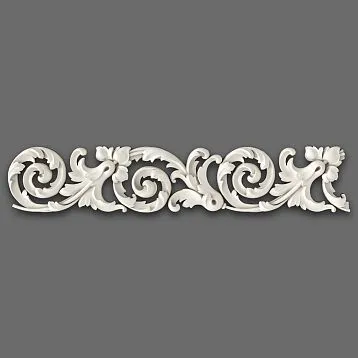
The variety of forms is impressive. Round and oval rosettes from 5 to 40 cm in diameter with classic ornaments — palmettes, acanthus, roses, laurel wreaths. Corner elements for decorating cabinet corners and frames. Vertical appliqués — miniature columns and pilasters for vertical division. Horizontal friezes with repeating ornamentation. Each form solves its own compositional task.
Stylistic collections reproduce historical eras. Classicism — restrained symmetrical forms, geometric ornaments, meanders, Ionic motifs. Baroque — lavish asymmetrical scrolls, abundance of details, dynamic forms. Empire — military symbolism, laurel wreaths, eagles, strict symmetry. Modern — flowing plant lines, asymmetry, stylized flowers.
Material advantages of polyurethane are critical for furniture. Lightness — a 20 cm diameter appliqué weighs 30–50 grams versus 300–500 grams of carved wood. This does not create load on furniture facades and does not require reinforced fastening. Moisture resistance allows using decoration on kitchen furniture and in bathrooms. Impact resistance protects against damage during use.
Accuracy of detail reproduction is phenomenal. Casting ensures perfect repeatability of each ornament element. All appliqués from one batch are absolutely identical — critical for symmetrical placement on paired cabinet doors. The finest ornament details are reproduced with millimeter precision.
Installation on furniture is simple. The back side of the appliqué is flat and designed for gluing. Use special polyurethane glue or quality mounting adhesive. Clean the furniture facade surface, apply glue to the appliqué, press for 1–2 minutes. After drying, it lasts for decades.
Painting creates the final appearance. Polyurethane accepts any paints — acrylic, alkyd. Painting white creates a classic look — white molding on colored facades. Painting in furniture color integrates appliqués — visible only by relief. Patination with gold, silver, bronze creates palace luxury. Contrast painting — dark appliqué on light facade — emphasizes decoration.
Restoration possibility simplifies maintenance. A damaged appliqué is easily removed, replaced with an identical new one. This is simpler than restoring carved wood, requiring a carver’s work. Availability of replacement extends the life of furniture.
Cost is democratic. A 15 cm diameter appliqué costs 200–500 rubles versus 2000–5000 rubles for carved wooden analogs of similar complexity. This makes classic decoration accessible for mid-range furniture, democratizing beauty.
Universality of application expands possibilities. Polyurethane appliqués work on cabinet doors, commode facades, bed headboards, mirror frames, countertops, chair armrests. One type of decoration can be applied to various furniture, creating stylistic unity in a set.
Service life is 20–30 years with proper use. The material does not age, does not yellow, retains relief clarity. The only maintenance — repaint when necessary. This makes polyurethane decoration a worthwhile long-term investment.
Ecological safety of modern polyurethane is high. The material is inert, does not emit harmful substances, safe for living spaces. Certified for contact with food — can be used on kitchen furniture without concerns.
Compatibility with various furniture materials is universal. Polyurethane appliqués can be glued to MDF, particleboard, solid wood, plywood, even metal and plastic. This allows decorating any furniture regardless of the base material.
Get Consultation
Wooden cornices — completion of composition
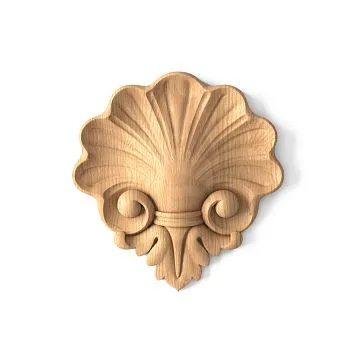
Wooden decorAs cornices, they crown furniture compositions, creating architectural completion, introducing the natural nobility of solid wood. A cornice on the top of a cabinet, buffet, or bookshelf acts as an architectural crown, without which furniture appears unfinished. A massive wooden cornice creates visual weight, prestige, and connection to the traditions of quality furniture craftsmanship.
Cornice functions are diverse. Architectural function — creating vertical completion of furniture, visual crown. Protective function — protecting the top surface from dust and damage. Decorative function — adding carved decoration, profiled forms, natural wood texture. Structural function — strengthening the rigidity of the furniture structure at the top.
Cornice profiles determine the style. Classic profile with scrolls and fluting is characteristic of neoclassical furniture. Complex multi-step profile with carved details creates baroque palace luxury. Simple rectangular or beveled profile suits modern furniture. Profile — stylistic marker of the era.
Wood species for cornices are chosen based on prestige and compatibility with furniture. Oak — the standard, its powerful texture and noble tones create maximum prestige. Used for elite furniture. Ash — contrasting structure, suitable for modern light-toned furniture. Walnut — warm brown tones, ideal for classic furniture. Redwood — exotic historical luxury.
Cornice width determines its scale. Narrow cornices 40–60 mm create delicate completion on low furniture — commodes, chests, low cabinets up to 120 cm height. Medium cornices 60–100 mm are optimal for standard furniture 180–220 cm high — wardrobe, bookshelves. Wide cornices 100–150 mm create monumentality on high furniture from 240 cm — wardrobe, built-in closets.
Carved decoration of cornices adds artistic value. Carved brackets — consoles supporting the cornice — transform a functional element into a work of art. Carved frieze under the cornice — ornamental band with plant or geometric motifs. Carved appliqués on cornice ends create completeness. Carving can be machine-made on CNC machines or handcrafted by masters.
Surface treatment affects perception. Smoothly sanded surface under transparent lacquer or oil demonstrates natural wood texture. Patination creates an antique effect — dark patina in relief recesses, light on raised areas. Enamel painting integrates the cornice into the furniture color scheme.
Cornice attachment to furniture requires reliability. Cornice is screwed from the inside through the top rail of the furniture body. Fastening is invisible from the outside. For massive cornices, use reinforced fastening with metal brackets. Proper fastening ensures stability for decades.
Cornice combination with furniture body should be thoughtfully planned. Cornice from the same wood species as the furniture creates material unity. Cornice from contrasting wood — dark oak on light ash — creates an accent. Cornice from premium wood on furniture made of simpler material adds prestige at reasonable cost.
Cornice proportions relative to furniture are critical. Cornice width should be 5–8 percent of furniture height. For a 200 cm high cabinet, an 80–100 mm cornice is optimal. Violating proportions — overly massive cornice on low furniture or too thin on high furniture — creates imbalance.
Cornice projection from furniture plane creates shadow relief. Minimal projection 20–30 mm forms delicate shadow. Medium projection 40–60 mm creates expressive relief. Large projection 80–100 mm — characteristic of monumental furniture, creates scale. Projection should be proportional to furniture size.
Angles of cornice junctions on corner furniture require skill. Cornices are cut at 45 degrees, joint is glued, pressed tightly. Additional fixation with dowels or screws from inside. Quality corner joint — indicator of furniture manufacturer professionalism.
Lifespan of wooden cornices is measured in decades. Hardwood species — oak, ash, walnut — are practically eternal. Quality protective coating protects against moisture, dirt, mechanical damage. Furniture with wooden cornices is passed down through generations, preserving beauty for centuries.
How to combine classicism and modern styles
Classicism and modernism — two eras, two aesthetic systems, seemingly incompatible. Classicism — symmetry, strict proportions, order system, classical motifs. Modernism — asymmetry, flowing lines, plant forms, rejection of historical templates. But modern furniture design often uses eclecticism — mixing elements of various styles, creating new quality. Combining classicalmoldingsand modern forms creates a style that can be called modern classicism.
The principle of simplifying classicism - the first path to unification. Classic elements - symmetry, proportions, molded decoration - are taken but simplified, deprived of excessive detailing. Molded appliqués of classical forms, but with minimized ornamentation. Wooden cornices with simple profiles without complex carving. Symmetrical composition, but with clean planes between decorative elements. Result - classic elegance without baroque opulence.
Material contrast creates modernity. Classical polyurethane molding on ultra-modern glossy acrylic or glass facades. Wooden cornices on metal frames. This material contrast between historical and modern creates tension, interesting for perception.
Monochromatic palette unifies styles. All furniture - carcass, molding, cornices - is painted in one color, most often white or gray. Differences are revealed only through relief and texture. This creates unity despite differing forms. Classical molding ornament and modern cabinet geometry merge into a monochromatic composition.
Accentual use of classicism on a modern background - an effective approach. The main cabinet body is minimalist - smooth facades, simple forms. Classical molding is used selectively - one central appliqué on the main facade. Wooden cornice adds a natural accent. Classicism works as a jewel on a minimalist background.
Geometrization of classical forms brings them closer to modernity. Classical rosettes with vegetal motifs are reinterpreted into geometric forms - circles, polygons with simplified ornamentation. Classical volutes transform into spirals. This geometrization creates a bridge between eras.
Asymmetric placement of classical elements adds modern freedom. Instead of strict symmetry, molded appliqués are placed asymmetrically, creating a dynamic composition. Wooden cornice is placed not around the entire perimeter, but only on part of the furniture. This asymmetry breaks classical canons, creating relevance.
Scale mismatch creates a modern interpretation. Large classical elements on small furniture or small ones on large furniture break traditional proportions, creating an unexpected effect. This deliberate violation of rules works as an artistic technique.
Mixing epochs through different elements - Baroque molding with modern cornices, or vice versa. This eclecticism requires a delicate sense of balance, but the result can be impressive. The unifying element is color or material.
Integration of modern technologies into classical forms creates functional relevance. Classical furniture with molding receives modern hardware, hidden opening mechanisms, built-in lighting. Externally classic, functionally - the 21st century.
Adaptation of classic proportions to modern needs. Classical cabinets were 2.5-3 meters high. Modern ceilings at 2.7 meters require adaptation. Proportions are preserved, but scale is reduced. This creates a modern version of classicism.
Context of placement determines perception. Classical furniture with molding in a loft interior with brick walls and industrial elements creates an eclectic contrast. The same furniture in a neoclassical interior works organically. Context changes perception of style.
Furniture decoration STAVROS in details and proportions
STAVROS offers a systematic approach to furniture decoration, where polyurethane molding and wooden cornices work in a harmonious ensemble. Design begins with analyzing furniture - dimensions, proportions, stylistics, carcass material, functional purpose. The designer creates a decoration concept, determining placement of molded appliqués, selection of cornice profiles, color treatment.
Polyurethane appliqué collection includes hundreds of models. Classical rosettes 8-40 cm in diameter with ornaments of all historical styles. Corner elements for decorating cabinet corners. Vertical appliqués-columns for vertical division. Horizontal friezes with repeating ornament. Each element is available in several sizes for different furniture scales.
Stylistic collections simplify choice. Collection "Classicism" - restrained symmetrical forms, geometric ornaments, meanders. Collection "Baroque" - lavish scrolls, asymmetry, dynamic forms. Collection "Empire" - military symbolism, strict symmetry. Collection "Modern" - smooth vegetal lines. Choosing a collection determines stylistic unity.
Wooden cornices are made from various species. Oak - from light natural to dark walnut, various profiles 40-150 mm wide. Ash - contrasting texture, profiles 50-120 mm. Walnut - noble tones, profiles 60-130 mm. Each species is available in several finishes - natural, stained, patinated.
Custom manufacturing for projects expands possibilities. Unique cornice profile according to customer's sketch. Carved elements according to individual drawings. Non-standard appliqué sizes. STAVROS implements individual solutions for exclusive furniture.
Project kit includes all necessary elements. Polyurethane appliqués of all sizes and shapes according to the project. Wooden cornices of required length, considering angles and joints. Polyurethane adhesive. Fasteners for cornices. Paints and patinas for final finishing. Customer receives a complete kit.
Placement consultations help avoid mistakes. STAVROS specialists advise on optimal element placement, correct proportions, harmonious combinations. Decades of experience in furniture decoration allow foreseeing problems and proposing optimal solutions.
Material samples allow live evaluation. STAVROS showroom presents samples of all types of molding and cornices. You can see wood texture, evaluate ornament relief, hold in hand. This helps make the right decision.
Installation services are available for furniture workshops. STAVROS specialists conduct training on installing polyurethane molding on furniture. Advise on adhesive selection, painting techniques, cornice mounting. Partnership with furniture makers allows creating quality decoration.
Cost of decoration for a standard cabinet 200 cm high, 180 cm wide: polyurethane appliqués 4-6 pcs at 300-800 rubles = 1200-4800 rubles, wooden cornice 2 linear meters at 800-1500 rubles = 1600-3000 rubles, adhesive and paints = 500-1000 rubles. Total 3300-8800 rubles. This adds 10-20 percent to furniture cost, but transforms a standard cabinet into an exclusive piece.
Portfolio of decorated furniture demonstrates capabilities. Classical cabinets with rich molding and carved cornices. Modern chests with minimalist appliqués. Eclectic buffets blending styles. Each project is unique, showcasing variety of solutions.
Cooperation with furniture factories allows integrating decoration into mass production. STAVROS supplies decorative elements to furniture manufacturers, ensuring stable quality and affordable prices. This makes decorated furniture accessible to a wide range of customers.
The result - aristocracy in details
Combining polyurethane molding and wooden cornices creates furniture of aristocratic level, where every detail conforms to laws of symmetry and proportions.Relief DecorationIntroduces classical ornaments, historical motifs, relief expressiveness.Decorative stuccoReproduces styles of Baroque, Classicism, Empire with perfect accuracy. Wooden cornices crown the composition, create architectural completion, add natural nobility of solid wood.
Polyurethane as a material revolutionized furniture decor. Its lightness, moisture resistance, precision in reproduction, and accessibility make classic luxury attainable. The variety of forms and styles allows decorating furniture of any style. Ease of installation makes decorating accessible to furniture workshops.
Polyurethane as a material revolutionized furniture decor. Its lightness, moisture resistance, precision in reproduction, and accessibility make classic luxury attainable. The variety of forms and styles allows decorating furniture of any style. Ease of installation makes decorating accessible to furniture workshops.
Wooden cornices create a sense of completion, prestige, and a connection to the traditions of fine craftsmanship. The natural texture of wood, carved decoration, and substantial forms create an aristocratic character. The durability of wood ensures value for generations.
The fusion of classicism and modernism creates a contemporary aesthetic. Simplification of classical forms, monochromatic palette, contrast of materials, and accentuated use of decoration — techniques for creating modern classicism. Furniture acquires a character that does not become outdated over time.
STAVROS Company offers a full range of solutions for furniture decoration. From consultations and selection of elements to delivery of quality materials. Collections of polyurethane moldings in all styles, wooden cornices from noble woods, custom manufacturing according to project. Experience working with furniture makers, understanding of proportions, sense of style — the foundation for creating aristocratic-level furniture, where details form perfection.