Article Contents:
- Psychology of Buying: What Drives Us When Choosing Decorative Elements
- Anatomy of the Right Choice: Criteria for Evaluating Moldings
- Material as the Foundation of Durability
- Manufacturing quality: details that matter
- Design and Stylistic Compatibility
- Market Orientation: Where and How to Make a Purchase
- Direct sales from the manufacturer
- Specialized Retail Networks
- Online Trading: Convenience and Risks of Online Purchases
- Financial Planning: Budget and Its Optimization
- Cost Structure: Visible and Hidden Expenses
- Cost-Saving Strategies Without Compromising Quality
- Technical Aspects of Selection: An Engineering Approach to Purchase
- Load Calculation and Selection of Mounting Methods
- Material Compatibility and Long-Term Stability
- Aesthetic Planning: Creating Harmonious Compositions
- Space Analysis and Architectural Context
- Principles of Compositional Construction
- Seasonality and Time Factors in Purchasing
- Demand and Supply Seasonal Fluctuations
- Project Planning and Logistics
- Regional market characteristics
- Logistical Factors and Their Impact on Cost
- Climate Requirements and Adaptation
- Market Development Trends and Future Technologies
- Industry Digital Transformation
- Ecologization of Production and Consumption
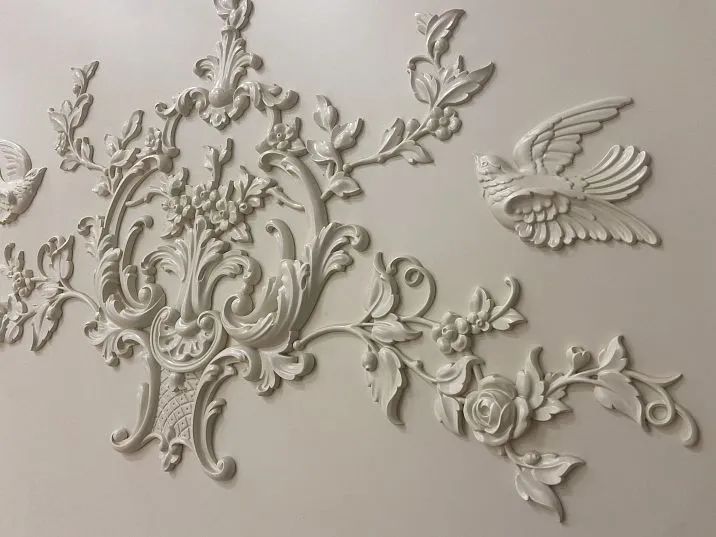
Decision Making Buy molding — is a step toward creating the dream interior, where every detail speaks of impeccable taste and a pursuit of beauty. In the world of modern technologies and materials, choosing decorative elements has become both simpler and more complex: on one hand, opportunities have expanded and prices have dropped, on the other — the variety of offerings may confuse even an experienced designer.
Why is it so important today to make the right decision when choosing moldings? Because decorative elements are not just decoration — they are an investment in the comfort, beauty, and status of your home for many years. Quality moldings serve for decades without losing their aesthetic and functional properties, whereas a wrong choice may lead to disappointment and additional expenses.
The modern market offers an incredible variety of solutions — from classic gypsum elements to innovative polyurethane items, from mass-produced standard profiles to exclusive original compositions. How to avoid getting lost in this diversity? How to choose exactly what suits your interior, budget, and lifestyle?


Psychology of Buying: What Drives Us When Choosing Decorative Elements
Every decision to buy moldings is made not only rationally, but also on an emotional level. We choose not just a functional decorative element, but a manifestation of our views on beauty, status, and comfort. Understanding these deep motivations will help make the right decision.
The desire for beauty is ingrained in human nature. We intuitively gravitate toward harmonious proportions, elegant forms, noble materials. Moldings satisfy this need, transforming ordinary space into a work of art. At the same time, it is important to understand that beauty is subjective — what delights one person may leave another indifferent.
The need for individuality is becoming increasingly relevant in the era of mass production. Moldings allow creating a unique interior that differs from standard solutions. Even using mass-produced elements, one can create unique compositions reflecting the owner's personality.
The desire to enhance the status of the residence also plays an important role. Moldings are traditionally associated with luxury, aristocracy, and high social status. High-quality decorative elements indeed elevate the prestige of the interior and the market value of the property.
Practical considerations are no less important. Modern polyurethane moldings solves numerous functional tasks: hides wall and ceiling irregularities, conceals utilities, improves room acoustics, and creates additional lighting opportunities.
The emotional component of the purchase is linked to anticipation of the result. We envision how our home will transform, how the atmosphere will change, what emotions the renovated interior will evoke. These expectations must be realistic and based on an understanding of the capabilities of the selected elements.
The social factor influences many decisions. We want our home to impress guests, reflect our taste and achievements. Moldings become a form of non-verbal communication, revealing more about the owner than any words.




The anatomy of the right choice: criteria for evaluating moldings
Making an informed decision requires a systematic approach to evaluating various characteristics of decorative elements. Each parameter has its own importance and affects the final result.
Our factory also produces:


Material as the basis of durability
The choice of material determines practically all operational characteristics of moldings. The modern market offers several main options, each with its own advantages and limitations.
Gypsum molding remains the benchmark of quality for admirers of classicism. This natural material possesses unique properties: it 'breathes', regulating humidity in the room, allows creating elements with the finest details, and is easily restorable. However, gypsum is heavy, brittle, and afraid of moisture, which limits its areas of application.
Polyurethane has revolutionized the world of decorative elements. This high-tech material combines lightness with strength, moisture resistance with the ability to precisely reproduce details. Polyurethane products do not fear temperature fluctuations, do not crack, do not crumble, and serve for decades without losing quality.
Polystyrene represents the budget segment of the market. It is lightweight, easy to process, and affordable. However, this material has significant limitations: low detail level, brittleness, and susceptibility to deformation under high temperatures.
Wood has been used to create decorative elements for centuries. It is ecological, beautiful, and prestigious. However, wooden moldings require special care, are susceptible to moisture and insects, and may deform over time. Moreover, items made from precious wood species are very expensive.
Composite materials combine the advantages of various components. For example, polyurethane with mineral fillers has increased strength, and materials with antibacterial additives are suitable for medical facilities.
Get Consultation
Quality of manufacturing: details that matter
The quality of manufacturing can be assessed by several criteria, each of which affects the appearance and longevity of the products.
The clarity of detailing determines the aesthetic value of moldings. Quality products accurately convey all nuances of ornamentation, have sharp edges, deep recesses, and smooth transitions. Blurred details, rounded corners, uneven surfaces indicate low manufacturing quality.
Geometric accuracy is critically important for joining elements. Deviations in size, even by fractions of a millimeter, can result in visible gaps or misalignments. Professional manufacturers control geometry using high-precision measuring systems.
Surface quality affects the appearance of the finished product. Pores, imperfections, and unevenness require additional processing, increase paint consumption, and may become visible after painting. An ideal surface should be smooth, uniform, and free of visible defects.
Material density determines the strength and longevity of elements. Insufficient density leads to brittleness, excessive density — to increased weight of the product. Professional manufacturers select the optimal density for each type of product.
Dimensional stability is especially important for long elements. Moldings, cornices, and baseboards must maintain straightness and not warp over time. This is achieved through proper material composition and adherence to manufacturing technology.
Strength of mounting joints affects the reliability of installation. Mounting points must withstand loads without cracking or breaking. This is especially important for heavy elements — large rosettes, complex compositions.
Design and stylistic compatibility
The aesthetic characteristics of moldings must harmonize with the overall interior concept. An incorrect style choice can ruin even the most expensive renovation.
Classic styles require adherence to historical canons of proportions and ornamentation. Baroque implies opulence and abundance of details, classicism — strictness and restraint, rococo — elegance and refinement. Each style has its characteristic motifs and rules for their use.
Modern styles offer more freedom in interpreting classical forms. Neoclassicism allows simplification of ornamentation, art deco — geometric forms, minimalism — extreme simplification of details. The key is to maintain stylistic unity throughout the composition.
Proportional relationships between elements must correspond to the size of the room and human perception scale. Too small details will be lost in a large hall, overly large ones — will overwhelm a small room.
Compatibility of various elements requires understanding of composition principles. Cornices must harmonize with baseboards, rosettes — with moldings, panels — with the overall architectural solution. Professional collections are developed as unified stylistic systems.
The possibility of customization allows adapting standard elements to specific needs. This may involve changing dimensions, combining different profiles, or creating individual compositions from standard details.
Market Orientation: Where and How to Make a Purchase
The modern stucco market offers numerous sales channels, each with its own features, advantages, and limitations. Choosing the right purchase channel can significantly affect the final cost, product quality, and service level.
Direct Sales from the Manufacturer
Purchasing directly from the manufacturer ensures maximum quality control and minimal cost. Large manufacturers have their own showrooms where you can see and touch samples, receive professional consultation, and order custom solutions.
Advantages of direct sales include guaranteed product quality, full technical support, the ability to order non-standard items, maximum discounts for large volumes. Manufacturers are interested in long-term customer relationships and are willing to provide additional services.
Limitations of this channel are related to geography — not all manufacturers have representatives in all regions. Minimum order quantities may be too large for individual customers. Production times for custom orders can reach several weeks.
Criteria for selecting a manufacturer include market reputation, presence of quality certificates, product range, delivery geography, and service level. It is important to study reviews from real customers, visit the production facility, and assess technical equipment.
Specialized Trading Networks
Specialized stores for construction and finishing materials offer products from various manufacturers, allowing you to compare offers and choose the optimal solution. Qualified consultants help select suitable elements and calculate the required amount of materials.
Advantages of specialized trade include a wide range of products, the ability to compare different brands, availability of warehouse stock, flexible pricing policy, additional services such as delivery and installation. Many networks offer loyalty programs and cumulative discounts.
Disadvantages may include markups by intermediaries, limited customization options, dependence on suppliers, varying quality of consultations across different sales points. Not all sellers possess sufficient knowledge of product technical specifications.
Choosing a sales point should be based on the network’s reputation, staff qualifications, warranty terms, availability of the required product range, and location convenience. It is important to verify the presence of all necessary documentation for the product.
Online Trading: Convenience and Risks of Online Purchases
E-commerce has fundamentally changed the construction materials market. Online stores offer a vast assortment, detailed product descriptions, price comparison, convenient payment and delivery methods.
Advantages of online purchases include time savings, wide selection, transparent pricing, detailed study of product features, customer reviews, loyalty programs. Many online stores offer lower prices due to savings on rental of retail space.
Risks include inability to physically inspect the product before purchase, potential delivery issues with fragile items, difficulties returning unsuitable products, fraudulent schemes, and poor service quality.
Online purchase safety is ensured by choosing verified platforms, studying the seller’s reputation, carefully reading sales and return terms, using secure payment methods, and verifying all documents upon receipt of the product.
Financial Planning: Budget and Its Optimization
Proper budget planning for purchasing stucco requires considering numerous factors far beyond the cost of the items themselves. A comprehensive approach will help avoid unpleasant surprises and optimize expenses.
Cost Structure: Visible and Hidden Expenses
Material cost forms the basis of the budget, but does not exhaust it entirely. Prices for stucco vary widely depending on the material, manufacturing complexity, manufacturer brand, and order volume.
Transportation costs may constitute a significant portion of the budget, especially when shipping to remote regions or for small orders. The fragility of items requires special packaging and careful handling, increasing logistics costs.
Installation work often costs 50-100% of material price. Quality installation requires highly skilled workers, specialized tools, and adherence to technical specifications. Cutting costs on installation may result in defects and additional expenses.
Preparation work includes surface leveling, priming, and marking. Preparation cost depends on the condition of base surfaces and quality requirements. Poor preparation may lead to stucco peeling.
Finishing work includes joint sealing, puttying, priming, painting, or other finishing treatments. These tasks require time and skill but are critically important for the final result.
Additional materials include adhesives, fasteners, primers, paints, and tools. The cost of consumables may account for 15-25% of the price of main items. Quality of additional materials affects the overall structure’s durability.
Cost-saving strategies without compromising quality
Budget optimization is possible through various approaches that do not affect the final result’s quality. The key is to find a balance between savings and reasonable quality requirements.
Purchasing in bulk provides significant discounts from most suppliers. Combining purchases with neighbors or friends can reduce costs by 15-30%. It is important to accurately calculate needs and account for potential waste.
Choosing the optimal time to purchase can significantly affect the price. During off-seasons, many suppliers offer discounts to maintain turnover. Planning purchases in advance allows you to wait for promotions and sales.
Comparing offers from different suppliers should consider not only price but also delivery terms, warranties, and service support. The cheapest offer is not always the most beneficial in the long term.
Using alternative materials can significantly reduce costs. For example, polyurethane stucco is much cheaper than gypsum stucco at comparable quality. It is important to understand the limitations of each material and choose the appropriate one for specific conditions.
Rational composition planning helps minimize the number of different elements. Using universal profiles, standard sizes, and typical connections reduces the overall project cost.
Performing some tasks independently can significantly reduce expenses. Simple operations — priming, painting, installing lightweight elements — can be done by oneself. Complex tasks are better entrusted to professionals.
Technical aspects of selection: an engineering approach to purchasing
Decision Making Buy molding Must be based on understanding the technical characteristics of the items and their operating conditions. An engineering approach will help avoid errors and ensure the longevity of decorative elements.
Load calculation and selection of mounting methods
Each stucco element creates a certain load on load-bearing structures. Correct calculation of these loads is critically important for safety and durability of the mounting.
The self-weight of elements depends on the material and dimensions. Gypsum items may weigh 15-25 kg/m², polyurethane items — 2-5 kg/m². Large rosettes and complex compositions create significant point loads requiring reinforced mounting.
Wind loads are relevant for facade elements. They can create both compressive and lifting forces depending on the shape of the elements and wind direction. Wind load calculation must take into account regional climatic conditions.
Thermal deformations occur due to changes in ambient temperature. Different materials have different linear expansion coefficients. Long elements require expansion joints or flexible connections.
Seismic effects in appropriate regions may create additional loads on mounting systems. Elements must have sufficient strength and flexibility to withstand vibrations without failure.
Mounting methods are selected depending on the type of substrate, weight of elements, and operating conditions. Lightweight items can be mounted using adhesive, heavy items require mechanical fastening. Combined mounting ensures maximum reliability.
Adhesive mounting is suitable for most polyurethane elements provided the surface is properly prepared. Modern polyurethane adhesives provide bond strength exceeding the strength of the material itself.
Material compatibility and long-term stability
Interaction of different materials may lead to unexpected problems during operation. Understanding compatibility principles will help avoid regrettable mistakes.
Chemical compatibility is especially important when using adhesives and paints. Some solvents may degrade polymer materials, while alkaline compositions may interact with fillers. Always check compatibility on samples.
Thermal compatibility manifests when materials have different expansion coefficients. Rigid connection of materials with different expansion coefficients may lead to cracking or delamination. Flexible connections compensate for these differences.
Galvanic corrosion occurs when different metals come into contact in a humid environment. Mounting elements must be made of corrosion-resistant materials or have protective coatings. This is especially important for facade applications.
Biological compatibility relates to materials' resistance to microbial action. Some organic additives may serve as a nutrient medium for mold and fungi. Modern materials contain biocides that prevent biological degradation.
Material aging due to exposure to ultraviolet light, oxygen, and moisture leads to gradual property changes. Quality materials contain stabilizers that slow down aging processes. Predicted service life must account for operating conditions.
Aesthetic planning: creating harmonious compositions
The success of a stucco decoration project largely depends on proper aesthetic planning. This is a comprehensive process including space analysis, stylistic solution selection, and composition development.
Space and architectural context analysis
Each room has its own characteristics that must be considered when selecting decorative elements. Building architectural style, room proportions, layout features — all of these influence the choice of stucco.
Ceiling height determines the scale of decorative elements. In rooms with low ceilings, use minimalist profiles that do not overload the space. High ceilings allow for more complex and substantial elements.
Natural lighting affects the perception of stucco relief. Rooms with large windows create contrasting shadows that emphasize the decor's volume. In darker rooms, relief may be less noticeable, requiring additional artificial lighting.
The functional purpose of a room imposes limitations on decorative solutions. Reception areas allow for more elaborate decoration, living rooms require cozy, intimate solutions, children's rooms — safe and easy-to-clean materials.
Existing architectural elements — columns, beams, niches — must be considered when planning composition. Stucco can emphasize these elements or, conversely, visually mask them depending on the objectives.
Interior color palette influences the choice of stucco finish. In monochromatic interiors, decoration can serve as a color accent, in multi-colored interiors — as a unifying element. It is important to consider the psychological impact of different color combinations.
Principles of Compositional Construction
Creating a harmonious composition from stucco elements requires understanding basic design principles and their proper application in a specific space.
Rhythm is created by repeating similar elements at certain intervals. Rhythmic compositions structure space, creating a sense of order and stability. Disrupting rhythm can create accents or dynamics.
Element proportions should correspond to human scale and room dimensions. The golden ratio and its derivatives provide harmonious dimensional relationships. Modern designers often use modular proportioning systems.
Symmetry creates a sense of solemnity and stability. Classical interiors are often built on the principles of strict symmetry. Asymmetric compositions are more dynamic and modern, but require a delicate sense of balance.
Contrast can be created through various means — color, texture, size, shape. Contrasting accents attract attention, structure space, and create visual focal points. It is important not to overdo contrast to avoid creating chaos.
Composition unity is achieved through the use of common elements — recurring motifs, a unified color palette, similar proportions. All elements must contribute to a common idea, creating a cohesive impression.
Seasonality and purchasing time factors
The market for construction and finishing materials is subject to seasonal fluctuations that affect both prices and product availability. Understanding these cycles will help optimize purchasing timing.
Seasonal fluctuations in demand and supply
The construction season traditionally begins in spring and reaches its peak in summer months. During this period, demand for decorative materials is at its highest, which may lead to price increases and shortages of popular items. Suppliers operate at maximum capacity, delivery times increase.
The autumn period is characterized by gradual decline in activity. Many complete ongoing projects, but new ones start less frequently. This is a favorable time to purchase materials for the next season — prices begin to drop, seasonal collections' leftovers appear.
Winter months are a time of minimal activity in the construction and renovation sector. Many suppliers offer significant discounts to maintain turnover. However, selection may be limited to warehouse leftovers.
New Year holidays are traditionally accompanied by promotions and sales. Many manufacturers stimulate sales with special offers. This is a good time for bulk purchases, if there is the possibility to store materials.
Pre-season purchases in February-March allow catching the expansion of the assortment at still moderate prices. Manufacturers prepare for the season, replenish warehouses, but the rush demand has not yet begun.
Project planning and logistics
Successful project implementation requires careful planning of all stages, taking into account time factors. Impulsive purchases often lead to overpayment and compromises in quality.
Pre-planning should begin several months before work starts. This allows detailed project development, obtaining specialist consultations, comparing different options, and waiting for favorable offers.
Reserving materials with suppliers guarantees the availability of required items at the start of work. Many companies offer advance ordering services with partial prepayment. This is especially relevant for rare or custom-made items.
Coordination with contractors is necessary to synchronize material deliveries and readiness for installation. Early delivery creates storage problems, while delayed delivery disrupts work schedules.
Material storage requires suitable conditions. decorative elements They require protection from moisture, mechanical damage, and temperature fluctuations. Improper storage may result in damage to expensive items.
Insurance of large material shipments protects against financial losses due to force majeure events. Insurance cost is typically 0.5-1% of cargo value, but can save significant funds in the event of an insured incident.
Regional market specifics
The Russian market for decorative materials has distinct regional characteristics related to climate differences, logistics, purchasing power, and cultural preferences.
Logistical factors and their impact on cost
Transportation costs can constitute a significant portion of material cost, especially for remote regions. The fragility of moldings requires special packaging and careful handling, increasing logistical expenses.
Road transport provides maximum flexibility and speed of delivery, but is expensive for long distances. For large shipments, rail transport is more economical, but less flexible in terms of delivery schedules and routes.
Regional warehouses of major suppliers reduce delivery times and transportation costs. Presence of a local warehouse is an important factor when selecting a supplier for regular purchases.
Consolidating shipments allows reducing transportation costs for small orders. Many logistics companies offer consolidated shipping services for construction materials.
Seasonal fluctuations in transportation tariffs are linked to overall transportation system load. During peak periods, tariffs may increase by 20-50%. Planning deliveries during off-seasons helps save on logistics.
Customs procedures affect the cost and delivery time of imported products. Changes in customs legislation may significantly impact the availability of certain products.
Climate requirements and adaptation
Harsh climatic conditions in most Russian regions impose special requirements on materials and installation technologies. Selection must consider local operating conditions.
Freeze resistance is critically important for facade applications. Materials must withstand multiple freeze-thaw cycles without structural damage. Standard tests involve 50-100 cycles, but in harsh conditions, higher freeze resistance may be required.
Moisture resistance is necessary in regions with high humidity or frequent precipitation. Moldings and cornices Must retain their properties under prolonged exposure to moisture.
UV stability is important in southern regions with high solar radiation. UV radiation can cause polymer degradation, color change, and surface cracking.
Thermal deformation is especially critical in regions with large daily and seasonal temperature fluctuations. Fastening systems must compensate for thermal movement without damaging connections.
Wind loads in steppe and coastal regions can reach extreme values. Facade elements must have appropriate fastening strength and aerodynamic characteristics.
Market trends and future technologies
The market for decorative materials is dynamically developing under the influence of technological innovations, changing consumer preferences, and ecological requirements. Understanding trends helps make forward-looking decisions.
Industry digital transformation
Digital technologies fundamentally change the processes of designing, producing, and selling decorative materials. Virtual and augmented reality allow customers to visualize the result even before purchasing materials.
Online configurators allow users to create compositions from standard elements, select colors, and calculate material quantities. This simplifies the selection process and reduces the likelihood of errors.
Mobile applications provide access to catalogs, calculators, and installation instructions directly on the construction site. Augmented reality features allow users to "try on" elements against existing interiors.
Artificial intelligence analyzes customer preferences and offers personalized solutions. Machine learning systems can predict trends, optimize assortments, and improve recommendation quality.
Blockchain technologies can be used to verify product authenticity, track supply chains, and protect design copyrights. This is especially relevant for premium market segments.
Ecologization of production and consumption
Ecological requirements are becoming increasingly stringent from both regulators and consumers. Manufacturers invest in "green" technologies and materials.
Biodegradable materials are being developed as an alternative to traditional polymers. Although their use in moldings is currently limited, they may find a niche in the ecological segment in the future.
Waste recycling is becoming an important direction for development. Technologies allow the use of scraps and defective items as secondary raw materials for less demanding applications.
Energy consumption reduction is achieved through optimizing production processes, using renewable energy sources, and improving building insulation.
Local production reduces transportation costs and greenhouse gas emissions. Developing regional production makes products more accessible and eco-friendly.
Certification of ecological safety helps consumers make informed choices. Different certification systems establish requirements for material composition, production processes, packaging, and disposal.
In today's world, where every purchase decision becomes an investment in the future, choosing quality moldings represents much more than simply acquiring decorative elements. It is an investment in beauty, comfort, status, and the longevity of your home.
When you make a decision Buy moldingIt is important to remember that this is a choice for many years. Quality decorative elements will serve for decades, delighting the eye every day and creating a unique atmosphere in the home. Therefore, the approach to selection should be thoughtful, based on understanding technical characteristics, aesthetic principles, and practical requirements.
Modern technologies have made high-quality moldings accessible to a wide range of consumers. polyurethane products Combine the beauty of classic forms with the practicality of modern materials, opening up limitless possibilities for creating unique interiors.
Project success depends not only on the quality of selected materials, but also on proper planning, professional installation, and correct maintenance. Each stage is important and requires careful attention.
The future of the decorative materials market is linked to further technological development, ecological production, and product personalization. Innovations make moldings not only more beautiful and higher quality, but also more accessible, functional, and eco-friendly.
Ultimately, choosing quality moldings is a choice in favor of beauty that will delight for many years, in favor of quality that will justify the investment, in favor of style that will speak of your taste and achievements.
STAVROS has helped its clients turn dreams of beautiful homes into reality for many years. By combining the best traditions of decorative art with advanced manufacturing technologies, STAVROS creates products that meet the highest standards of quality and aesthetics. Wide range wall panelsof moldings, cornices, and other decorative elements allows finding a solution for any interior and budget. Professional consulting support, flexible discount system, reliable logistics — all this makes cooperation with STAVROS not only profitable, but also comfortable. Choosing STAVROS means choosing a reliable partner who will help turn your home into a work of art, where every detail is thought out, every element is in its place, and overall harmony creates an atmosphere of true comfort and beauty.