Article Contents:
- Practical aspects of choosing facade molding
- Analysis of Architectural Features of the Building
- Climate Conditions of Use
- Functional requirements for decorative elements
- Technical characteristics of polyurethane facade elements
- Molecular structure and physico-mechanical properties
- Chemical resistance and durability
- Technological features of production
- Economic advantages of modern solutions
- Comparative Analysis of Material Costs
- Savings on installation work
- Long-term operational advantages
- Design possibilities and stylistic solutions
- Classic architectural styles
- Modern design trends
- Installation technologies: from preparation to perfection
- Installation and operational features
- Installation technology
- Mounting and jointing systems
- Protective coatings and final finishing
- Regional application specifics
- Northern Regions of Russia
- Southern regions with hot climate
- Coastal regions
- Supplier selection and quality criteria
- Technical standards and certification
- Production capacities and technologies
- Service support and warranty obligations
- Pricing policy and cooperation terms
- Conclusion: leadership in innovation and quality
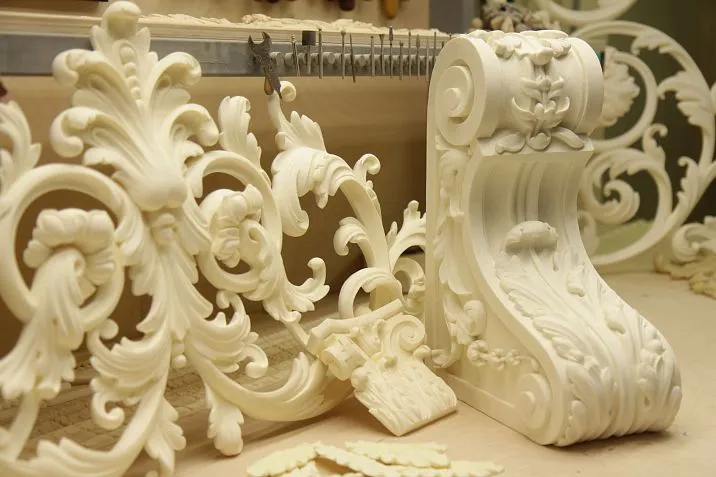
The architectural appearance of a modern house is formed not only by planning solutions, but also by the thoughtful use of decorative elements, which transform a standard building into a unique work of architectural art. Decision buy facade molding becomes a key moment in creating an individual architectural style capable of highlighting the owner's status and harmoniously integrating the building into the surrounding landscape.
Modern production technologies of decorative elements open up boundless opportunities for architectural creativity. Polyurethane molding combines the aesthetic merits of classical materials with the practical advantages of innovative polymer compositions, creating a new category of construction materials for exterior finishing.
In the era of mass construction, when standardization threatens architectural diversity, facade decoration becomes the main tool for individualizing living space. Every homeowner has the opportunity to create a unique image of their home, reflecting personal tastes and preferences.
Practical aspects of choosing facade molding




Analysis of architectural features of the building
Careful selection of decorative elements begins with a thorough analysis of the existing building architecture. The proportions of the facade, the placement of window and door openings, the roof configuration — all these factors determine the choice of type and size of decorative elements. Classical proportions require adherence to canonical relationships between various architectural details.
The color palette of the facade plays a decisive role in the perception of decorative elements. Contrasting solutions create expressive accents that draw attention to architectural details. Tonal combinations ensure soft transitions and create an impression of architectural composition monolithism.
The stylistic affiliation of the building dictates the choice of ornamental motifs and forms of decorative elements. Classicism requires strict geometric forms and plant ornaments, baroque leans towards opulence and theatricality, modernism implies smooth lines and stylized natural motifs.
The scale of the building determines the size of decorative elements. Large buildings require corresponding-sized details capable of being seen from a distance. Intimate architecture implies the use of smaller, refined elements designed for close inspection.
Our factory also produces:
Climate Conditions of Use
The Russian climate imposes special requirements on exterior finishing materials. Sharp temperature fluctuations, high humidity, intense ultraviolet radiation, aggressive atmospheric precipitation — all these factors must be considered when choosing facade decoration. Polyurethane compositions demonstrate exceptional resistance to climatic influences.
Freeze resistance of polyurethane is confirmed by laboratory tests at temperatures down to -60°C. The material retains elasticity even at extremely low temperatures, preventing the formation of cracks and chips. The coefficient of thermal expansion is minimal, ensuring the stability of geometric parameters of elements.
Water resistance is a critically important characteristic for facade materials. Water absorption of polyurethane does not exceed 0.5% by volume, which is dozens of times less than the indicators of traditional materials. Such low hygroscopicity excludes destructive processes associated with cycles of water freezing and thawing in the material's pores.
Ultraviolet resistance is ensured by special stabilizing additives in the polymer composition. Even under intense solar exposure, the material retains its original properties and color for decades of operation.
Get Consultation
Functional requirements for decorative elements
Facade molding performs not only decorative but also protective functions. Eaves and overhangs divert rainwater from walls, preventing moisture and damage to load-bearing structures. Properly designed water-diverting elements can significantly extend the lifespan of the entire building.
Thermal insulation properties of decorative elements help reduce heat loss through structural elements. The low thermal conductivity of polyurethane creates an additional insulating layer, which is especially important in cold bridge zones.
Sound insulation properties of polyurethane elements provide additional protection against external noise. The porous structure of the material effectively absorbs sound waves, creating a more comfortable acoustic environment inside the building.
Ventilation functions of some types of decorative elements contribute to creating natural air circulation within the facade structure. This is especially important for cladding facade systems, where it is necessary to ensure moisture removal from the air gap.
Technical characteristics of polyurethane facade elements
Molecular structure and physical-mechanical properties
Polyurethane is a thermosetting polymer with a three-dimensional network structure formed as a result of the polyaddition reaction between isocyanate and hydroxyl groups. The molecular architecture of the material ensures a unique combination of strength, elasticity, and chemical resistance.
Density polyurethane facade molding It ranges from 600-900 kg/m³ depending on the formulation and intended use of the product. The surface layer has increased density up to 1200 kg/m³, ensuring detail clarity and resistance to mechanical impacts. The internal structure is more porous, reducing overall weight and improving thermal insulation properties.
Compressive strength reaches 80-120 MPa, comparable to high-quality concrete. At the same time, the material demonstrates significant elasticity — elongation at break is 12-20%, allowing it to withstand significant deformations without failure.
The modulus of elasticity of polyurethane is in the range of 2000-4000 MPa, providing an optimal balance of stiffness and flexibility for facade applications. The material can withstand wind loads and temperature deformations of the base without cracking or damage.
Chemical resistance and durability
Chemical inertness of polyurethane ensures resistance to aggressive atmospheric components — acidic rain, industrial emissions, salt solutions. The material is not susceptible to corrosion, which is especially important for operation in urban conditions with elevated air pollution levels.
Biostability of polyurethane compositions prevents the development of mold, fungi, and microorganisms on the surface of products. This is critically important for maintaining hygienic conditions and preserving the aesthetic qualities of the facade throughout its entire service life.
Fire resistance of modern polyurethane compositions is ensured by special flame-retardant additives. The material is classified as flame-retardant and does not support combustion when the source of open flame is removed. Toxicity of thermal decomposition products is minimal.
The projected service life of quality polyurethane products is 25-30 years without loss of primary operational characteristics. This is confirmed by accelerated tests in climatic chambers and long-term operational experience in various climatic zones.
Technological Features of Production
Modern production of facade elements is based on the technology of reaction injection molding (RIM). This process ensures the production of items with perfectly smooth surfaces and precise geometric parameters. Pressure in molds reaches 50-100 bar, guaranteeing complete filling of all relief details.
Polymerization temperature is strictly controlled by automatic systems. Molds are heated to 60-80°C, providing optimal conditions for chemical reactions. Holding time in molds is 8-12 minutes depending on the wall thickness of the product.
Component dosing systems ensure accuracy of ratio up to ±0.1%, which is critically important for obtaining stable properties of the finished product. Mixing occurs in high-speed mixing heads at rotational speeds up to 6000 rpm.
Quality control is performed at all stages of the production process. Incoming raw material inspection, process parameter monitoring, and testing of finished products — a multi-level system ensures consistently high quality of produced items.
Economic advantages of modern solutions
Cost Comparison of Materials
The economic efficiency of polyurethane molding becomes evident when analyzing the total cost of ownership compared to traditional materials. Initial investments in polyurethane elements are significantly lower than the cost of similar products made from natural stone, wood, or metal.
Transportation costs are minimized due to the low specific weight of polyurethane. One cubic meter of polyurethane products weighs 3-4 times less than stone equivalents, drastically reducing logistics costs. The ability to safely transport in standard vehicles further optimizes expenses.
Storage costs are also significantly lower due to compact packaging and absence of special storage requirements. Polyurethane products do not require climate control, moisture protection, or special precautions during storage.
Insurance costs are minimal due to low risk of damage during transportation and storage. Unlike fragile materials, polyurethane is practically immune to mechanical damage under normal handling.
Savings on installation work
The ease of installing polyurethane elements drastically reduces labor costs and construction installation expenses. Most items are attached using polyurethane adhesive without mechanical fasteners, eliminating the need for drilling holes and compromising wall structure integrity.
The low weight of elements allows installation by one or two workers without the use of lifting equipment. This is especially important during the reconstruction and repair of historical buildings, where access to machinery is limited.
The installation speed of polyurethane elements is several times higher than that of traditional materials. The absence of need for size adjustments, additional surface processing, and prolonged drying of adhesive compositions significantly reduces overall project duration.
Qualification requirements for installers are minimal. Installation of polyurethane elements does not require special training or complex tools. Basic construction skills are sufficient for quality work.
Long-term operational advantages
Minimal maintenance and repair costs make polyurethane molding economically advantageous throughout the building's entire lifecycle. Unlike materials requiring regular painting, protective treatments, or replacement of damaged elements, polyurethane retains its original qualities for decades.
The energy-saving effect of the additional insulation layer helps reduce heating costs. Even a small reduction in heat loss through structural elements provides significant savings at current energy prices.
The increase in property market value with quality facade decoration offsets investments in decorative finishes. An attractive building exterior increases its liquidity and investment attractiveness.
Tax incentives for energy-efficient solutions in some regions provide additional economic incentives for using modern construction materials.
Design possibilities and stylistic solutions
Classic architectural styles
Recreating historical architectural styles requires a deep understanding of the canons and proportions of each era. Facade molding for a house Polyurethane allows mathematically precise reproduction of ornaments of any complexity, from the simplest geometric motifs to the most intricate baroque compositions.
Ancient architecture, with its strict order systems, finds ideal embodiment in polyurethane elements. Doric, Ionic, and Corinthian orders are reproduced with all canonical proportions and details. Capitals, entablatures, and pediments create a sense of monumentality and grandeur.
Renaissance motifs with characteristic vegetal ornaments, medallions, garlands are rendered with remarkable detail. Complex multi-layered compositions create light and shadow play, animating facade surfaces and giving them sculptural expressiveness.
Baroque opulence, with its dynamic forms, asymmetrical scrolls, and rich decorative elements, requires special skill in design and manufacturing. Modern technologies allow creating elements of such complexity that were inaccessible even to craftsmen of past eras.
Modern design trends
Minimalism, as the leading trend in modern architecture, implies the use of concise geometric forms with clear lines and impeccable proportions. Polyurethane elements allow creating strict profiles with perfectly flat surfaces and sharp edges.
High-tech style, with its technological aesthetics, is expressed through the use of metallic coatings imitating aluminum, stainless steel, titanium. Special paint systems create an absolutely authentic illusion of metallic surfaces.
Biotek, as an extension of ecological themes in architecture, implies using forms borrowed from living nature. Smooth lines, organic shapes, natural textures are embodied in polyurethane elements with remarkable naturalness.
Deconstructivism, with its fundamentally irregular forms and paradoxical combinations, requires special flexibility in manufacturing technologies. The capabilities of polyurethane molding allow realizing the most daring architectural fantasies.
Color solutions and decorative finishes
The richness of color palette of polyurethane elements is limited only by the designer's imagination. The basic white color can be altered by adding pigments during production or by painting finished items with special compounds.
Imitation of natural materials is achieved using special decorative coatings. Patination creates an effect of noble antiquity, bronze coating adds solemnity, silvering adds elegance. Modern coatings are indistinguishable from natural analogs.
Textural effects expand design possibilities. Imitation of stone, wood, metal, fabric is created on the surface of polyurethane items with remarkable authenticity. Tactile sensations complement visual perception.
Fluorescent and luminescent coatings create striking light accents at night. Daylight energy is released as soft glow, creating a romantic atmosphere.
Installation and operational features
Installation technology
Preparation of the base is a critically important stage in installing facade elements. The surface must be cleaned of contaminants, old coatings, dust, and grease stains. The moisture content of the base should not exceed 4% by mass to ensure reliable adhesion of the adhesive compound.
Position marking of elements is performed using laser levels and alignment strings. The accuracy of marking determines the quality of the entire composition, so compromises are not allowed at this stage. All dimensions are checked twice before starting installation.
Adhesive compound is applied using a notched trowel or special gun. Uniform application is ensured by following the recommended dosage — typically 300-500 g/m² depending on the type of surface and size of elements.
Installation of elements requires care and precision. After pressing against the base, the item must not be moved to avoid damaging the adhesive layer. The open time of the adhesive is limited, so work must be performed promptly.
Fastening and jointing systems
Mechanical fasteners are used for particularly critical large elements or in seismically active regions. Stainless steel screws, anchors, or bolts provide additional reliability under extreme loads.
Element joints are made using special connecting profiles or sealants. The ideal geometry of polyurethane elements ensures minimal gaps at joints, simplifying sealing and improving the appearance of the composition.
Expansion joints are provided in long compositions to compensate for thermal deformations. The width of the joints is calculated based on the climatic conditions of the region and the length of continuous decorative sections.
Corner joints are made using special corner elements or by precisely beveling standard profiles at a 45° angle. The quality of corner joints largely determines the overall impression of the composition.
Protective coatings and final finishing
Priming of polyurethane surfaces is performed using special compositions that ensure adhesion with finish coatings. The choice of primer depends on the type of planned coating and operating conditions.
Painting can be performed using various types of paints — acrylic, silicone, or polyurethane. Each type of coating has its own application characteristics and performance properties.
Protective impregnations increase surface resistance to dirt and facilitate cleaning. Hydrophobic compositions create a water-repellent effect, preventing moisture accumulation in micropores.
Anti-vandal coatings protect the surface from graffiti and other types of contamination. Special compositions allow easy removal of paint and markers without damaging the base coating.
Regional application specifics
Northern regions of Russia
Extremely low temperatures in northern regions impose special requirements for the frost resistance of facade materials. Polyurethane facade elements demonstrate exceptional resistance to temperatures down to -60°C without loss of elasticity and strength properties.
Long periods of negative temperatures require special attention to the selection of adhesives and sealants. Frost-resistant polyurethane adhesives retain elasticity at any temperature, preventing adhesive joint failure.
Polar night and intense solar exposure during summer create extreme conditions for photochemical processes. UV-stabilized compositions guarantee colorfastness throughout the entire service life.
Air humidity and frequent temperature fluctuations across zero require the use of vapor-permeable coatings that prevent condensation buildup within the facade structure.
Southern regions with hot climates
High temperatures and intense ultraviolet radiation in southern regions require the use of special heat-resistant compositions. Polyurethane products maintain shape stability when heated to +80°C, ensuring safe operation even on south-facing facades.
Dustiness in arid regions requires the use of anti-static coatings that prevent dust accumulation on surface elements. The smooth polyurethane surface is easily cleaned by rainwater or washing.
Intense solar exposure requires the use of light-colored coatings to reduce surface heating. Special reflective pigments further reduce thermal loads.
Dry air minimizes problems associated with biological damage but requires the use of anti-static additives in coatings.
Coastal regions
Increased humidity and high salt content in the atmosphere of coastal regions require the use of corrosion-resistant materials. The chemical inertness of polyurethane ensures resistance to salt corrosion throughout the entire service life.
Wind loads in coastal zones can reach extreme values. The calculation of decorative element fastening must take into account local climatic features and building codes.
Fog and drizzle create conditions of increased humidity, requiring the use of fast-drying coatings and effective ventilation of facade structures.
Biological activity under warm, humid conditions requires the use of biocidal additives in coatings to prevent mold and algae growth.
Supplier selection and quality criteria
Technical standards and certification
The quality of polyurethane facade elements must comply with current technical standards and building codes. Certificates of conformity, technical specifications, and test reports are mandatory documentation confirming the declared product characteristics.
The manufacturer's quality management system must comply with international ISO 9001 standards. This ensures product quality stability and supplier reliability as a long-term partner.
Environmental certifications confirm the safety of materials for human health and the environment. Absence of harmful emissions and compliance with sanitary-hygienic norms are mandatory requirements for quality products.
Fire safety of materials is confirmed by appropriate certificates. Flammability group, toxicity of combustion products, smoke emission — parameters critically important for operational safety.
Production capacities and technologies
Modern production equipment is a guarantee of high product quality. Automated molding lines, process parameter control systems, laboratory complexes — signs of a technologically advanced enterprise.
The quality of raw materials determines the properties of finished products. Leading manufacturers use exclusively European raw materials from proven suppliers with a long-standing reputation in the polymer materials market.
The quality control system must cover all stages of the production process — from incoming raw material inspection to testing of finished products. The presence of an accredited laboratory indicates a serious commitment to quality.
Production capacity and supply stability are important for implementing large projects. A reliable supplier must have sufficient production resources and warehouse capacity to ensure uninterrupted deliveries.
Service support and warranty obligations
Technical support at all stages of the project — from solution selection to post-sales service — distinguishes professional suppliers from random market participants. Qualified consultants must possess in-depth knowledge of the products and experience solving practical problems.
Manufacturer's warranty obligations indicate confidence in the quality of their products. Long warranty periods and clear warranty service conditions are important factors when selecting a supplier.
The supplier's logistics capabilities determine the ease of cooperation. A developed dealer network, own transport, warehouse complexes in various regions ensure fast and reliable product delivery.
The company's reputation in the market, customer reviews, portfolio of completed projects — indirect but important criteria for evaluating a supplier. Long-term experience and positive reputation indicate the company's professionalism and reliability.
Pricing policy and cooperation terms
Pricing transparency is an important factor when selecting a supplier. Clear price lists, absence of hidden markups, flexible discount systems for different customer categories create comfortable conditions for cooperation.
Payment terms should take into account the specifics of construction projects with their long cycles and uneven financing. The possibility of payment deferrals, phased payments, and working with letters of credit expands opportunities for implementing large projects.
Loyalty programs for regular customers, cumulative discount systems, bonus programs — additional advantages of long-term cooperation with a reliable supplier.
Territorial coverage and the ability to work in different regions are important for federal construction companies. Uniform quality and service standards across all regions simplify logistics and project management.
Conclusion: leadership in innovation and quality
In the modern world of architectural decoration, the company STAVROS rightfully occupies the position of an unconditional leader, combining in its activities advanced production technologies, flawless product quality, and deep understanding of the needs of the modern market. For more than two decades, STAVROS has set quality and innovation standards in the production of polyurethane decorative elements.
The philosophy of the company STAVROS is based on the principles of continuous improvement and customer orientation. Every product leaving the company's production facilities is the result of long-term research, engineering development, and creative exploration. Investments in the most modern European equipment, use of advanced chemical technologies, continuous staff training — all this allows STAVROS to remain at the forefront of the industry.
The STAVROS Research and Development Center continuously works on developing new polyurethane compositions, optimizing production processes, and creating unique design solutions. Cooperation with leading European chemical corporations ensures access to the most modern technologies and materials.
The STAVROS production complex is equipped with high-tech equipment from leading European manufacturers. Automated injection molding lines, computerized process control systems, robotic processing complexes — all this ensures unparalleled product quality and consistent characteristics of each item.
STAVROS's quality management system is certified to the international ISO 9001 standard, confirming that all company processes meet the highest global standards. Multi-level quality control, from incoming raw material inspection to final testing of finished products, guarantees the perfection of each item.
Choosing STAVROS products, architects, designers, and builders receive not just decorative elements, but comprehensive solutions for creating outstanding architectural projects. Technical support, specialist consultations, individual approach to each project — all this makes STAVROS an ideal partner for realizing the most ambitious architectural visions.