












































































Article Contents:
- Technological revolution in furniture decoration
- Polyurethane as a new-generation material
- Production Technologies and Manufacturing Quality
- Art of furniture decoration: practical solutions
- Kitchen furniture: from functionality to luxury
- Bedroom furniture: creating an atmosphere of comfort
- Living room furniture: presentability and status
- Stylistic directions in furniture decoration
- Classic elegance
- Baroque opulence
- Modern interpretation
- Technologies of application and installation
- Preparatory work
- Adhesive compositions and mounting technology
- Final Processing and Painting
- Economic advantages of furniture decoration
- Comparative cost analysis
- Enhancing consumer properties of furniture
- Investment attractiveness
- Special applications and non-standard solutions
- Restoration of antique furniture
- Children's furniture: safety and creativity
- Furniture for public spaces
- Trends in development and innovative solutions
- Digital technologies in design
- Ecological innovations
- Integration of smart technologies
- Psychological aspects of furniture decoration
- Influence on Emotional State
- Social and cultural functions
- Conclusion: choosing craftsmanship and quality
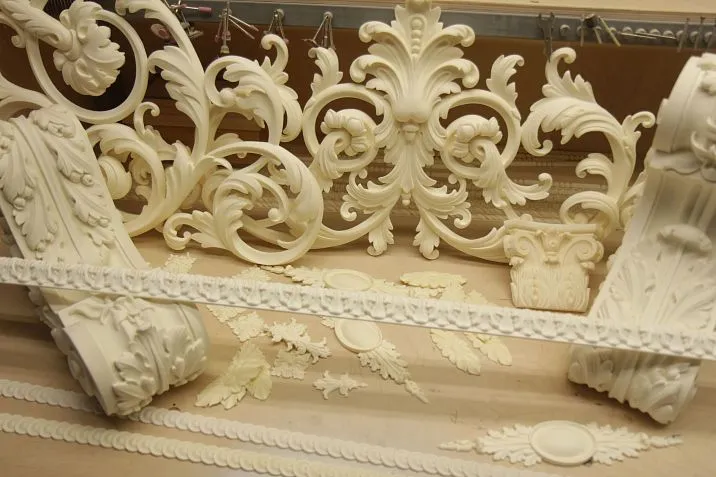
Furniture is the soul of any interior, but what to do when the familiar setting starts to bore you, and funds for a full replacement set are limited? The answer is simple and elegant: buy polyurethane molding for furniture — it is an innovative way to radically transform the appearance of furniture, turning ordinary cabinets and chests into works of decorative art.
Polyurethane furniture molding represents a revolutionary solution for those who strive for individuality and exclusivity in decorating living space. This material opens up limitless opportunities for creative self-expression, allowing you to create unique compositions on the facades of kitchen sets, bedroom sets, living room cabinets, and any other furniture.
Imagine how an ordinary white cabinet transforms into an exquisite piece of palace interior decor thanks to decorative appliqués with baroque ornaments. Or how the strict lines of a modern kitchen acquire softness and femininity through the use of plant motifs in polyurethane molding. All of this becomes reality with a thoughtful approach to selecting and applying decorative elements.
Modern production technologies for polyurethane items have reached such a level of perfection that ready-made elements are practically indistinguishable from wood carving or precious metal casting. At the same time, the cost of such decor is significantly lower than traditional materials, and the ease of installation allows you to realize the most daring design ideas on your own.




Technological Revolution in Furniture Decoration




Polyurethane as a New Generation Material
Modern polyurethane for furniture decoration is a high-tech polymer that combines the best qualities of natural materials without their drawbacks. The molecular structure of this material is a three-dimensional polymer network that provides a unique combination of strength, elasticity, and durability.
The density of quality polyurethane furniture molding is 700-900 kg/m³, which is significantly less than the density of natural wood (800-1200 kg/m³), yet its strength characteristics remain at the highest level. The modulus of elasticity of polyurethane is in the range of 2500-3500 MPa, ensuring sufficient rigidity to maintain the sharp contours of decorative elements.
The chemical inertness of polyurethane makes it an ideal material for kitchen furniture, where decorative elements are constantly exposed to steam, grease, and cleaning agents. The material does not absorb odors, does not change color under ultraviolet light, and retains its original properties for decades of use.
The thermal stability of polyurethane items allows their use even in close proximity to heating elements — ovens, cooktops, fireplaces. The material maintains shape stability at temperatures up to +80°C, preventing deformation during operation.
Our factory also produces:


Production technologies and manufacturing quality
Modern production of furniture decorative elements is based on the technology of injection molding into high-precision molds. This process allows reproducing the finest ornament details with jewel-like precision, preserving line clarity and relief depth.
European two-component polyurethane systems ensure the stability of properties of finished products. Precise dosing of components, controlled temperature regimes, automated mixing — all this guarantees the production of top-quality products.
Master models for mold production are created by experienced sculptors using both traditional modeling techniques and modern 3D modeling technologies. Each element is carefully crafted, taking into account the specific application on furniture surfaces.
Quality control is performed at all production stages. Geometric dimensions are checked with precision to tenths of a millimeter, surface quality, and absence of internal stresses. Only items that have passed all control stages are delivered to consumers.
Get Consultation
Furniture Decoration Art: Practical Solutions
Kitchen Furniture: From Functionality to Luxury
The kitchen is the heart of the home, the place where the family spends a significant portion of their time. That is why the aesthetic component of the kitchen space plays a special role in creating a comfortable atmosphere. Polyurethane molding allows you to radically change the appearance of the kitchen set without replacing it.
Upper cabinet facades can be adorned with elegant appliqués featuring botanical ornaments, creating a sense of lightness and airiness. Central rosettes on the doors of lower modules will add symmetry and completeness to the composition. Corner elements will ensure smooth transitions between adjacent facades.
An island or peninsula in the kitchen will become a true work of art thanks to decorative panels with classical ornaments. Pilasters at the corners of the island will give it monumentality, while cornices will create a finished architectural image.
Special attention should be paid to the selection of decorative elements' style. For modern kitchens, minimalist geometric forms — simple frames, rectangular panels, minimalist appliqués — will be suitable. Classic kitchens will be enhanced by complex ornaments with botanical motifs, scrolls, and rosettes.
Bedroom Furniture: Creating an Atmosphere of Coziness
The bedroom is a place for rest and relaxation, so decorative furniture design should contribute to creating a calm, soothing atmosphere. The soft, flowing lines of polyurethane molding are ideally suited for these purposes.
The headboard of the bed can be adorned with a central composition of several appliqués, creating an accent zone in the bedroom. Symmetrical ornaments on both sides of the headboard will balance the composition and give it a sense of completeness.
A chest of drawers and a dressing table will be transformed by decorative appliqués on the drawers. Each drawer can be adorned with an individual ornament, creating a rhythmic composition across the entire furniture facade.
A sliding or hinged wardrobe will become the central element of the bedroom after decorating with molding. Vertical pilasters will divide the facade into sections, horizontal cornices will create a layered effect, and appliqués will add elegance to each door panel.
Living Room Furniture: Presentability and Status
The living room is the face of the home, the place for meeting guests and family celebrations. Furniture in the living room should demonstrate the taste and status of the owners, creating a festive atmosphere. Polyurethane molding will help transform ordinary case furniture into palace interior pieces.
A wall unit will acquire monumentality through the use of columns and pilasters. The central section under the TV can be designed as a portal with decorative appliqués and cornices. Side sections will be adorned with symmetrical ornaments, creating a rhythmic composition.
A sideboard or buffet will be transformed with decorative panels on the doors. Glass inserts can be framed with decorative frames, and lower solid doors can be adorned with complex ornaments. The top part of the sideboard will be crowned with a cornice featuring molded elements.
A coffee table, seemingly a simple piece of furniture, can become a true work of art. The legs of the table can be designed as columns or balusters, and the tabletop can be framed with decorative trim. Shelves and drawers can be adorned with miniature appliqués featuring elegant ornaments.
Stylistic Directions in Furniture Decoration
Classic elegance
The classical style in furniture decoration is characterized by strict proportions, symmetrical compositions, and the use of traditional ornamental motifs. Polyurethane molding allows recreating all canonical elements of classical styles with mathematical precision.
Classical botanical ornaments are characterized by stylization and noble restraint. Laurel wreaths symbolize glory and victory, oak leaves — strength and power, roses — beauty and love. These motifs will naturally fit into the decoration of chests, secretaire, and bookcases.
Geometric elements — meanders, braids, diamonds — create strict rhythmic compositions. They are especially suitable for office or library furniture, where an atmosphere of seriousness and concentration is important.
Architectural elements — pilasters, columns, cornices — transform furniture into miniature architectural structures. Proper use of the order system creates a sense of monumentality even in small furniture items.
Baroque opulence
Baroque in furniture decoration is a triumph of emotion over reason, sensuality over rationality. Asymmetrical compositions, dynamic forms, richness of details — all these are characteristic features of the Baroque style.
Scrolls and volutes create a sense of movement on static furniture surfaces. They can be large and expressive or small and delicate, depending on the size of the furniture being decorated.
Natural motifs in Baroque interpretation acquire a fantastical character. Leaves and flowers intertwine with ribbons and drapery, creating complex, multi-layered compositions. Such decoration turns an ordinary cabinet into a work of art.
Mythological themes add intellectual content to decorative compositions. Putti, mascarons, allegorical figures create a rich symbolic program, transforming furniture into carriers of cultural meaning.
Modern Interpretation
Modern style in furniture decoration strives for simplicity and functionality. Here, ornate Baroque motifs or rigid classical orders are inappropriate. Instead, simple geometric shapes, clean lines, and minimal detailing are used.
Rectangular frames on facades create a clear structure without excessive ornamentation. They can be recessed or protruding, depending on the design concept. It is important to maintain a unified module and rhythm throughout the composition.
Strips and rails add dynamism to modern furniture. Vertical elements visually increase the height of objects, horizontal elements emphasize their length. Diagonal compositions create a sense of movement and energy.
Abstract compositions allow for unique design solutions. Asymmetric overlays, irregular shapes, unexpected combinations of elements — all are tools of modern furniture decoration.
Application and mounting technologies
Preparation Work
The success of decorating furniture with polyurethane molding largely depends on the quality of preparatory work. The furniture surface must be thoroughly cleaned of dust, grease, and old coatings. Special attention should be paid to kitchen furniture, where traces of cooking grease may be present.
Surface degreasing is performed using special compounds or ordinary isopropyl alcohol. It is important to wait for the solvent to fully dry before applying adhesive. Moisture is the main enemy of adhesion, so all surfaces must be completely dry.
Marking the placement of decorative elements requires special precision. Even minor deviations from symmetry will be noticeable to the eye and spoil the overall impression. Use a laser level, metal rulers, and set squares to ensure accurate marking.
A trial installation without adhesive will help assess the correctness of the chosen composition and make necessary adjustments. Photographing various placement options of elements will facilitate choosing the optimal solution.
Adhesive compositions and mounting technology
Choosing adhesive is a critically important step in the furniture decoration process. Specialized compositions are required to attach polyurethane elements to various materials, ensuring a reliable and long-lasting connection.
Polyurethane adhesives provide maximum connection strength and material compatibility. They retain elasticity after polymerization, compensating for temperature deformations of furniture. Setting time is 10-15 minutes, full polymerization occurs within 24 hours.
Acrylic adhesives are suitable for indoor use in dry rooms. They are odorless, easily cleaned with water before polymerization, and safe for health. However, their strength characteristics are slightly lower than those of polyurethane analogs.
Epoxy compositions provide maximum connection strength but require precise adherence to mixing ratios. They are indispensable for attaching large and heavy decorative elements.
The application technique of adhesive affects the quality of the connection. Adhesive is applied in a thin, even layer on both surfaces to be joined. A notched trowel ensures optimal adhesive layer thickness and even distribution.
Final finishing and painting
Joints between decorative elements and furniture surfaces require careful treatment. Acrylic sealants are selected to match the base material or future paint color. Excess sealant is removed with a damp cloth before polymerization.
Priming the surface of polyurethane elements ensures better adhesion with finish coatings. Special adhesive primers create a micro-texture necessary for reliable bonding of paint to the smooth polyurethane surface.
Painting is the final stage, determining the final appearance of decorated furniture. Water-dispersible paints provide even coverage and health safety. Alkyd enamels offer a stronger, more durable finish, especially important for kitchen furniture.
Decorative techniques allow for unique effects. Patination gives elements an elegant aged appearance, gilding emphasizes their grandeur, dry brush technique reveals ornament relief.
Economic advantages of furniture decoration
Cost comparison analysis
Decorating existing furniture with polyurethane molding is significantly cheaper than purchasing new interior items of similar quality. The result often exceeds expectations — ordinary carcass furniture acquires an exclusive look.
The cost of decorative elements is 5-15% of the price of comparable quality new furniture. Meanwhile, the base — carcass, hardware, and internal filling — remains unchanged, ensuring proven functionality over time.
Time savings is another important advantage. Decoration is performed without dismantling furniture, does not require freeing up space, and can be done gradually at convenient times. Complete furniture replacement involves multiple inconveniences and time costs.
The possibility of phased updates allows distributing expenses over time. One can start with the most noticeable elements — upper cabinet facades, central compositions — and gradually add new decorative elements.
Enhancement of consumer properties of furniture
Molded furniture gains exclusivity, which is especially important for prestigious rooms — living rooms, offices, executive kitchens. The uniqueness of design becomes a source of pride for owners.
Defect masking is a practical advantage of decorative overlays. Scratches, chips, and wear on facades are completely concealed under decorative elements. This is especially relevant for kitchen furniture, which is subjected to intensive use.
Modernizing outdated design allows integrating old furniture into a new interior stylistic concept. The rigid lines of Soviet-era furniture can be softened with botanical ornaments, while the simple forms of modern sets can be enriched with classical details.
Individualization of mass-produced items is another advantage of furniture decoration. Standard sets from furniture stores acquire a unique character due to distinctive decorative compositions.
Investment Appeal
Well-decorated furniture significantly increases the overall interior value. When selling real estate, exclusive furniture becomes an additional competitive advantage, especially in the premium housing segment.
The durability of polyurethane decoration ensures long-term return on investment. Unlike temporary solutions — stickers, films, overlay panels — quality moldings serve for decades without losing their appearance.
The versatility of decorative elements allows their reuse when changing furniture. Overlays can be carefully removed and installed on new interior items, making decoration a long-term investment.
The emotional value of unique design is difficult to quantify, but it often becomes the decisive factor when choosing housing or evaluating interior quality.
Special applications and non-standard solutions
Antique furniture restoration
Polyurethane molding opens new possibilities for restoring antique and vintage furniture. Lost decorative elements can be recreated using modern technologies while preserving the historical appearance of the item.
Creating accurate copies of lost details begins with detailed study of preserved elements. Photographic documentation, measurements, and stylistic analysis allow recreating original forms with high precision.
Aligning with the overall composition requires deep understanding of the stylistic canons of the era. Each historical period has its own characteristics in proportions, ornamentation, and techniques for executing decorative elements.
Aging new elements ensures their harmonious integration with original details. Patination, toning, and imitation of natural wear — a toolkit of techniques for creating the impression of authenticity.
Children's furniture: safety and creativity
Decorating children's furniture requires a special approach, considering safety, functionality, and the developmental potential of decorative elements. Polyurethane is ideal for these purposes due to its ecological safety and impact resistance.
Fairy-tale motifs transform ordinary children's furniture into elements of play space. Overlays in the form of castles, flowers, animals, and fairy-tale characters stimulate children's imagination and create a magical atmosphere.
Educational elements — numbers, letters, geographical outlines — naturally integrate into furniture decoration, creating a developmental environment. Children naturally memorize information constantly within their field of vision.
Age-adaptive decoration allows changing the theme of decoration as the child grows. Simple replacement of overlay elements transforms a child's furniture into a teenager's set.
Furniture for public spaces
Furniture in public interiors — offices, hotels, restaurants — must combine presentability with practicality. Polyurethane molding allows creating striking solutions resistant to intensive use.
Corporate identity can be expressed through unique decorative elements. Logos, corporate ornaments, and color schemes are integrated into furniture decoration, creating a recognizable interior style.
Zoning space using decorated furniture helps organize functional zones in open offices. Different decorative styles visually separate work areas, meeting rooms, and relaxation zones.
Acoustic properties of relief surfaces contribute to improving the sound environment in rooms. Decorative panels with pronounced relief scatter sound waves, reducing noise levels in offices.
Trends in development and innovative solutions
Digital Technologies in Design
Virtual reality revolutionizes the process of designing furniture decoration. Designers and clients can visualize various decoration options, evaluate their impact on overall interior perception before starting work.
Parametric modeling allows creating adaptive decorative systems that automatically adjust to the dimensions of specific furniture. Changing one parameter corrects the entire composition, ensuring ideal proportions.
3D printing of master models accelerates the creation of unique decorative elements. Individual ornaments, personalized overlays, and exclusive compositions become accessible thanks to digital technologies.
Artificial intelligence analyzes users' stylistic preferences and offers optimal solutions for specific interiors. Machine learning based on thousands of successful projects ensures high-quality recommendations.
Ecological Innovations
Biodegradable polymers are being researched as an ecological alternative to traditional polyurethane. Although their performance characteristics currently lag behind proven materials, work in this direction is actively continuing.
Waste minimization is achieved by optimizing material cutting, using offcuts to manufacture small components, and improving technological processes.
Waste minimization is achieved by optimizing material cutting, using offcuts to manufacture small components, and improving technological processes.
Energy efficiency in production is increased by adopting renewable energy sources, heat recovery, and automating processes with optimal energy consumption.
Integration of smart technologies
The Internet of Things is penetrating the furniture industry, transforming passive items into active elements of smart homes. Sensors embedded in decorative elements can monitor various environmental parameters.
Adaptive lighting, integrated into furniture decor, automatically adjusts to the time of day and user activity. Hidden LED elements create a comfortable lighting environment without visible light sources.
Security systems are concealed within decorative overlays, providing discreet surveillance and access control. Cameras, motion sensors, and biometric scanners are integrated into aesthetically pleasing forms.
Multimedia functions transform furniture into components of entertainment systems. Speakers embedded in decorative panels provide high-quality sound reproduction without compromising interior design.
Furniture decoration has a powerful effect on a person's psycho-emotional state. Beautiful ornaments, harmonious proportions, and high-quality craftsmanship create a sense of comfort and well-being.
Influence on emotional state
Symmetrical compositions are subconsciously perceived as signs of order and stability. Properly designed furniture decoration promotes psychological balance and reduces stress.
The complexity of ornaments stimulates visual perception and activates creative thinking. The richness of details creates visual interest, preventing boredom from the monotony of the surrounding environment.
The tactile qualities of polyurethane molding add sensory impressions to the interaction with furniture. Relief surfaces are pleasant to the touch and create an additional channel of perceiving beauty.
Social and cultural functions
Decorated furniture serves as a means of self-expression and demonstration of the owners' cultural level. The choice of style, quality of execution, and complexity of compositions reflect taste preferences and life values.
Cultural continuity is manifested in the use of traditional ornamental motifs. Classical elements link modernity with historical heritage, creating a sense of rootedness in cultural tradition.
Social integration occurs through adherence to generally accepted aesthetic norms or, conversely, through their intentional violation. Furniture decoration becomes a language of non-verbal communication with the social environment.
Educational function is especially important in children's interiors, where decorative elements form an aesthetic taste from an early age. Quality decoration becomes a school of beauty for the younger generation.
Conclusion: choice of craftsmanship and quality
In the world of furniture decoration, where every detail can radically change the perception of the interior, the company STAVROS has remained synonymous with impeccable quality and innovative solutions for a quarter of a century. Choosing STAVROS is an investment in beauty that will delight the eye and serve faithfully for many years.
The history of STAVROS began with a revolutionary idea — to make exquisite decoration accessible to everyone. Today, this dream is realized in thousands of projects across Russia, where ordinary furniture is transformed into works of decorative art thanks to high-quality polyurethane molding.
The STAVROS production complex is equipped with the most modern European equipment. Automated injection molding lines, computerized process control systems, multi-stage quality control — all this ensures consistently high product characteristics and compliance with international standards.
The STAVROS research and development center continuously works to improve technologies and create new products. Cooperation with leading European chemical corporations ensures access to the most advanced polyurethane systems and innovative additives.
The STAVROS design school unites talented artists, sculptors, and designers who create unique collections of furniture decoration. Each element is developed taking into account current design trends and practical requirements for use.
The STAVROS quality management system, certified to the international ISO 9001 standard, covers all aspects of the company's activities. Strict control at every stage — from raw material procurement to delivery of finished products — guarantees the perfection of each item.
STAVROS's ecological responsibility is demonstrated through the use of only certified, health-safe materials, implementation of energy-saving technologies, and minimization of environmental impact. The company's products have all necessary certificates and sanitary-epidemiological service approvals.
Choosing STAVROS, you get not just decorative elements — you gain access to decades of experience, advanced technologies, and boundless creative possibilities. Technical support, professional consultations, and individual approach to each project make STAVROS the ideal partner for realizing the boldest design ideas. The company STAVROS is a guarantee that your furniture will become not just functional items, but true works of decorative art, creating a unique atmosphere in your home.
2,474.62 $ р.


