Article Contents:
- 1. Principles of beautiful interior design
- 1.1. Harmony and balance
- 1.2. Color and light
- 2. Ideas for beautiful interior design
- 2.1. Moldings and decorative elements
- 2.2. Furniture as a key accent
- 2.3. Wall decoration
- Conclusion
- How to create a beautiful interior that will delight you for years?
- Why decorative elements play a key role in interior design?
- Final thought
A beautiful interior is not just a set of furniture and finishing materials, but a harmonious space where it is pleasant to be, comfortable to live, and easy to breathe. Proper interior design helps create a cozy atmosphere, highlight the owner's individuality, and make the space aesthetically appealing.
What principles will help you create a truly beautiful interior? How to properly choose a color palette, furniture, lighting, and decorative elements? Which styles of design are the most popular? In this article, we will examine the main styles, ideas, and solutions that will help you design your interior stylishly and beautifully.
1. Principles of beautiful interior design




1.1. Harmony and balance
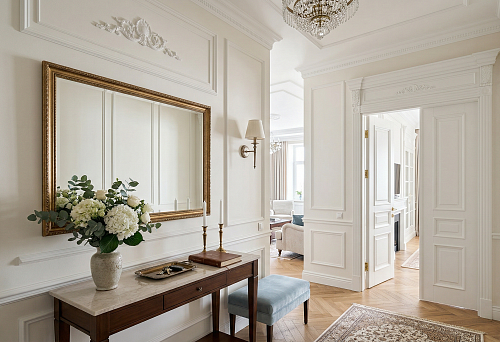
A beautiful interior begins with a harmonious combination of colors, materials, and textures. The space should look unified, without abrupt transitions or chaotic details.
How to achieve harmony in the interior?
● Maintain color balance – use 3-4 shades that go well together.
● Choose quality materials – natural wood, stone, glass, and metal create an effect of a luxurious and stylish interior.
● Work with volumes – combine smooth and textured surfaces to make the interior more interesting.
Tip: Use Moldings and cornicesto give walls expressiveness and elegance.
Our factory also produces:
1.2. Color and light
Color and lighting – key elements of beautiful interior design. They help visually transform the space, making it appear larger, brighter, or cozier.
How to choose a color palette?
● Light tones visually expand the space.
● Deep and saturated shades make the interior elegant and noble.
● Contrasting combinations add dynamism and make the interior more expressive.
How to properly organize lighting?
● General lighting – chandeliers, ceiling fixtures.
Zonal lighting – wall sconces, table lamps, floor lamps.
Decorative lighting – built-in LED strips, backlighting moldings and architectural elements.
Tip: Use warm tones for coziness and cool tones for a modern style.
Get Consultation
2. Ideas for beautiful interior design
2.1. Moldings and decorative elements
Moldings – is a wonderful way to add luxury and elegance to the interior.
How to use moldings?
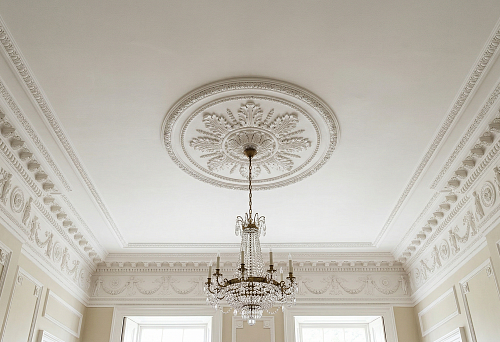
● For ceiling and wall decoration – cornices, moldings, outlets.
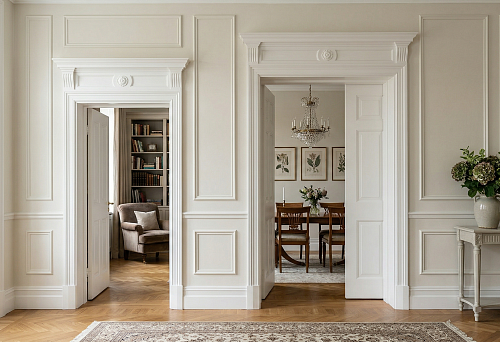
● For decorating door and window openings – pilasters and capitals.
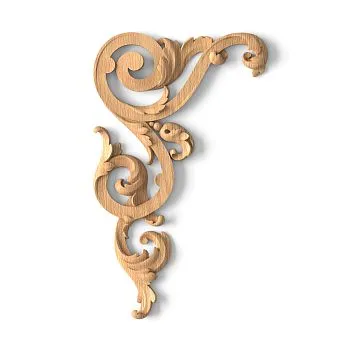
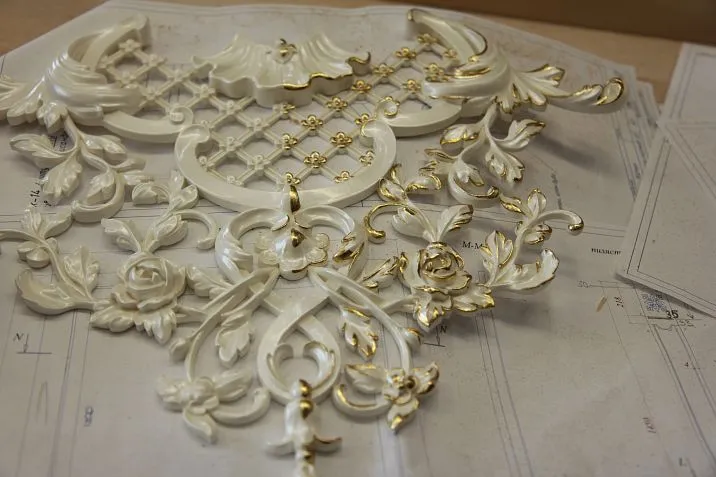
● For decorating furniture and fireplaces – applique.
2.2. Furniture as the key accent
Furniture sets the character and style of the interior. It should not only be beautiful, but also comfortable.
How to choose furniture?
● In a classic interior – carved elements, velvet and jacquard upholstery.
● In a modern style – minimalist forms, glass and metal surfaces.
● In a Scandinavian style – natural wood, pastel shades, and minimalism.
2.3. Wall decoration
How to decorate walls?
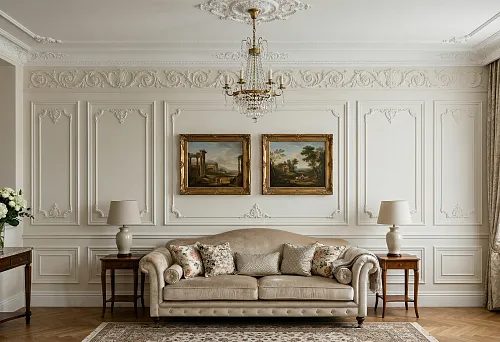
● Decorative panels and moldings – add relief and structure.
● Paintings and mirrors – visually expand the space.
● Murals and photo wallpapers – create accent zones.
Tip: Use moldings and appliqués, to give walls depth and expressiveness.
Conclusion
A beautiful interior is not just a set of furniture, colors, and accessories, but a harmoniously designed space in which every detail plays its part, creating an atmosphere of coziness, comfort, and aesthetic pleasure. A well-designed interior can influence your mood, productivity, and even your lifestyle. That’s why it’s important to approach its creation thoughtfully, attentively, and with love.
Modern design solutions allow you to transform the space, visually alter its dimensions, create focal points, divide zones, and make the interior truly unique. However, achieving the perfect result is only possible by maintaining a balance between style, functionality, and individuality.
How to create a beautiful interior that will delight you for many years?
Choose a style that suits you
The interior should reflect your personality, tastes, and lifestyle. Don’t chase trendy fashions if they don’t align with your inner preferences. After all, it’s your individuality that makes the space unique.
Pay attention to the harmony of colors and textures
The right color palette can visually transform a space, making it cozier, more spacious, or warmer. For example, light shades visually expand a room, dark tones add depth, and pastel tones fill the interior with calmness. Don't forget about textures — combining smooth and textured surfaces, matte and glossy materials makes the interior more complex and expressive.
Use decorative elements to complete the look
A classic or modern interior can be easily enhanced moldingswith moldings, decorative appliqués, and outlets. These details create depth in space, emphasize style, and give the interior a finished look.
Create layered lighting
The right lighting can transform even the simplest room. Use multiple levels of lighting:
● Main (chandeliers, ceiling fixtures).
● Local (wall sconces, floor lamps, table lamps).
● Decorative (under-cabinet lighting moldings, niches, artwork, and mirrors).
Combining different light sources makes the interior lively, cozy, and atmospheric.
Add architectural accents
A beautiful interior is not only furniture and accessories, but also details that give space character. For example, using moldings, pilasters, and decorative columns can add aristocracy and elegance to the interior.
Think about details
The beauty of an interior is revealed in details — elegant lines of furniture, textured fabrics, thoughtfully placed accents. Luxurious drapes, soft cushions, stylish decorative elements, mirrors, and artwork — all of this creates warmth and coziness.
Pay attention to functionality
Even the most stylish interior loses its charm if it is inconvenient and impractical. The space must be ergonomic and comfortable for living.
Why do decorative elements play a key role in interior design?
Decor is not just decoration, but an important tool that helps create an atmosphere, set accents, and highlight the uniqueness of the space. Moldings, cornices, and other decorative elements can visually structure a room, add volume, and give the interior expressiveness.
For example, decorative appliqués can be used to decorate furniture, walls, and doorways, while moldings and cornices allow you to create the effect of panel walls, visually increase the height of the room, and emphasize architectural features of the interior.
Using outlets and decorative elements makes the interior refined and complete, giving it a special atmosphere of style and elegance.
Final thought
Creating a beautiful interior is not just a process of selecting furniture and finishing materials, but a true art that requires attention to detail, thoughtful color, texture, and lighting combinations.
Using moldings, cornices, and decorative elements helps make the interior refined, stylish, and harmonious. Thoughtfully chosen materials, accents, and lighting create an atmosphere of comfort and coziness, where it’s pleasant to spend every day.
Don't be afraid to experiment, combine styles, add unexpected accents. The main thing is to create an interior that will not just be trendy, but reflect your individuality and lifestyle. After all, a beautiful interior is a space where you want to live, be inspired, and enjoy every moment!