












































































Article Contents:
- Architecture Inside the House
- Principles of Architectural Interior Organization
- Scale and proportions
- Color and Material in Architectural Interior
- Light and Architectural Elements
- Sondriks Above Doors
- History of Door Sondrik
- Construction and Elements of Sondrik
- Styles of Sondriks
- Choosing a Sondrik for a Specific Interior
- Installing Door Sondrik
- Ceiling Moldings and Decorative Elements
- Ceiling Cornices
- Ceiling Rosettes
- Material Embodiment of Beauty: Technologies and Materials
- Friezes and Moldings
- Color and Finishing of Ceiling Elements
- Corner Details for Walls
- Types of Corner Elements
- Functions of Corner Elements
- Materials and finishing
- Installing Corner Elements
- Corner Elements in Various Styles
- Conclusion
- Frequently Asked Questions

Interior is not just about arranging furniture and choosing wallpaper. It is a space that can speak the language of grand architecture, using the same principles of composition, proportions, and details as majestic palaces or temples.Buy a Door Sondrik, Buy ceiling moldingor installCorner elements for wallsIt means not just decorating a room, but creating within the house a true architectural environment, where every detail contributes to the overall impression of harmony and perfection.
What does it mean when interior speaks the language of architecture? It means that space is organized according to architectural composition laws — there are verticals and horizontals, accents and nuances, rhythm and proportions. Walls cease to be mere surfaces for hanging pictures, ceilings — white backgrounds for chandeliers, corners — places where dust accumulates. Each element acquires architectural significance, becomes part of a thought-out system, where form follows function, and beauty emerges from the logic of construction.
Historically rich interiors always used the architectural language. Palace halls, city mansions, country houses — everywhere we see columns and pilasters, cornices and friezes, moldings and rosettes. These elements were not random decorations — they created spatial structure, defined scale, shaped the character of the room. Today, when technology has made architectural decoration accessible, anyone can turn their home into a work of architectural art.
The modern approach to using architectural elements in interior design differs from the historical one in greater freedom and variability. We are not obliged to follow strict classical orders, can mix elements from different eras and styles, adapt traditional forms to modern spaces. The key is understanding basic principles of architectural composition and a sense of proportion, which distinguishes an exquisite interior from an overloaded decorative space.




Architecture Inside the House
Transforming an interior into an architectural space requires understanding how architectural elements work, what role they play in organizing space, and how they interact with each other and their surroundings.




Principles of Architectural Interior Organization
Architectural organization of the interior begins with understanding the structure of space. Any room has a basic geometry - plan shape, ceiling height, placement of openings. Architectural elements should emphasize this geometry, making it expressive and clear, or, conversely, adjust it if the basic proportions are unfavorable.
Verticals and horizontals are the foundation of architectural composition. Vertical elements - pilasters, corner moldings, vertical moldings - create a sense of stability, direct the gaze upward, and visually increase the height of the room. Horizontal elements - cornices, friezes, horizontal moldings - calm the space, create a sense of stability, and visually expand the room.
Dividing a wall into sections is a classical architectural technique inherited from antiquity. Traditionally, a wall is divided into three zones: lower (plinth or panel), middle (main field), and upper (frieze). Each zone can be finished differently - with different colors, materials, textures. Boundaries between zones are emphasized by moldings, creating a clear structure. Such division makes even tall walls proportionate to humans, creating visual anchor points.
Rhythm in architecture is created by repetition of elements. These can be identical panels on walls, repeating pilasters, regularly placed outlets on the ceiling. Rhythm organizes perception, making space more orderly and understandable. However, rhythm does not necessarily have to be uniform - acceleration or deceleration, syncopations and pauses create dynamics and expressiveness.
Symmetry is the oldest principle of space organization, based on natural and human body laws. Symmetrical interior organization creates a sense of stability, solemnity, classical correctness. The central axis of symmetry usually coincides with the entrance to the room or some important element - fireplace, bay window, niche. All architectural elements are mirrored around this axis.
Asymmetry is a more complex and modern principle requiring a delicate sense of balance. An asymmetrical composition can be dynamic and expressive, but easily descends into chaos with improper handling. Asymmetry in interior design requires compensation - a large element on one side must be balanced by a group of smaller elements on the other, dark areas by light ones, and so on.
Our factory also produces:


Scale and proportions
Correct scale of architectural elements is critically important for a harmonious interior. Too large elements overwhelm the space, making it heavy and cramped. Too small elements disappear, fail to create the desired effect, look incomplete and pitiful.
Human scale is the basis for determining the size of elements. Height of railings, width of doors, size of steps - all these parameters relate to human body dimensions and create a comfortable environment. Decorative elements should also relate to humans. Too high panels 'cut' the wall at an unfortunate height, too low ones look like baseboards.
Room proportions determine the choice of element sizes. In a room with 2.5-meter ceilings, appropriate sizes are: 7-10 cm for casings, 8-12 cm for cornices, 7-10 cm for baseboards. In a room with 3.5-meter ceilings, the same elements will appear small and insignificant - here, casings should be 12-15 cm, cornices 15-20 cm, baseboards 12-15 cm.
Room area also affects the choice of element scale. In a small room, large elements will visually 'consume' space, making it even smaller. In a large hall, small elements will disappear, failing to create the desired effect. Golden rule: the larger the room, the larger the decorative elements should be.
Classical proportional systems - golden ratio, Le Corbusier's Modulor, orders' proportions - provide mathematically precise relationships that are perceived as harmonious. Using these systems allows creating interiors where all elements are connected by strict mathematical relationships, creating a special sense of perfection and completeness.
Get Consultation
Color and material in architectural interior
Color solution of architectural elements determines their role in the interior. White elements on white walls create a monochromatic but volumetric surface, where play of light and shadow reveals relief. Contrasting elements - dark on light or light on dark - create a graphic, clear effect, emphasizing structure.
Traditional classicism implies white color of architectural elements regardless of wall color. This creates clarity of structure, clear boundaries between elements, classical elegance. White color is also universal - it combines with any finish colors, furniture, textiles.
Painting elements in wall color creates an effect of a unified surface structured by relief. This is a more modern approach, characteristic of minimalist interiors, where restraint and absence of excessive decoration are important. Such a solution visually increases space, as boundaries between elements blur.
Gilding of architectural elements is a technique characteristic of luxurious Baroque and Rococo interiors. Gold can cover the entire surface of an element or be used as an accent - on protruding parts of carving, edges of moldings. Modern technologies offer various gilding options - from pure gold to imitation compositions.
Patination is an artificial aging technique creating an effect of noble wear from time. Patina can be dark, accumulating in recesses and creating contrast, or light, highlighting protruding parts. Patinated elements create a sense of history, authenticity, connection to traditions.
Material of architectural elements affects their perception and characteristics. Gypsum molding is traditional, has a noble matte surface, can be executed in complex forms. Wooden elements are warm, have natural texture, are eco-friendly. Polyurethane products are practical, lightweight, accessible, but less prestigious. Material choice depends on budget, usage conditions, and aesthetic preferences.
Light and architectural elements
Light is the most important tool for revealing architecture. Relief elements create play of light and shadow, which changes throughout the day depending on sun position and artificial lighting.
Side lighting most expressively highlights relief. Cornices, moldings, carving cast clear shadows, creating a dramatic effect. Directional lights can specifically highlight architectural elements, making them more expressive in the evening.
Hidden lighting - a modern technique where the light source is hidden behind a cornice, in a niche, behind a molding. Light is directed onto the wall or ceiling, creating soft diffused lighting and floating surface effect. Such lighting visually lightens structures, creating a sense of weightlessness.
Central lighting through a chandelier suspended from a ceiling outlet - a classic scheme. The outlet not only decorates the mounting point of the chandelier but also creates a compositional center on the ceiling. The size of the outlet should correspond to the size of the chandelier - too large an outlet will overpower the fixture, too small will disappear.
Spotlights built into cornices or ceiling create even lighting without pronounced shadows. This is a functional solution for rooms where good lighting is important - kitchens, bathrooms, closets. However, architectural elements must be designed with the placement of lights in mind.
Doorway crowns
Doorway opening - one of the key architectural elements of interior, a place of transition between spaces that deserves special attention.Buy a Door Sondrik- means to give the opening architectural significance, turning it into a portal that does not merely pass through, but also creates a moment of pause, transition, change of mood.
History of doorway crown
The tradition of decorating doorway openings with decorative cornices or pediments traces back to ancient architecture. In ancient Greek temples, entrance portals were designed as miniature facades with columns and pediments. This emphasized the importance of the entrance, creating a solemn moment of crossing into sacred space.
Roman architecture developed this tradition, creating various forms of crowns - triangular, semicircular, broken. Each form carried a specific meaning and corresponded to the importance of the opening. Grand entrances received rich crowns with pediments, while secondary entrances received simple cornices.
During the Renaissance, sashings became an obligatory element of architectural language. Palaces of Italian cities demonstrated virtuoso mastery of this element—windows and doors on each floor received their own type of sashing, creating a rich yet orderly facade composition.
Baroque pushed the decorative nature of sashings to its extreme. Broken pediments, curved outlines, and abundant sculptural decoration transformed the sashing into theatrical decor. Even secondary doors in palaces and mansions received rich ornamentation with sashings.
Neoclassicism returned to the strictness of ancient forms, yet retained the tradition of using sashings as an important element of architectural decoration. Empire added military symbolism and imperial grandeur to classical forms, creating a special type of sashing with eagles, laurel wreaths, and torches.
In modern architecture, sashings experienced a period of oblivion during the modernist era, but today they are experiencing a revival. Modern designers freely reinterpret classical forms, creating sashings that reference tradition yet are executed in a contemporary aesthetic.
Sashing Construction and Elements
A classical door sashing is a complex construction composed of several elements, each with its own name and function. Understanding this structure is essential for the correct selection and installation of a sashing.
The base of the sashing is a horizontal plank that rests on the jambs or is directly mounted on the wall above the opening. This is a structural element that must be sufficiently strong to support the entire construction. The base may be concealed by subsequent elements or remain visible, forming the lower tier of the sashing.
The frieze is the vertical band between the base and the cornice. This is the primary area for decoration—ornaments, inscriptions, and coats of arms can be placed here. The frieze may be smooth, profiled, or carved. The height of the frieze determines the overall proportions of the sashing—a high frieze creates a monumental effect, while a low one appears lighter and more elegant.
The cornice is the upper, projecting part of the sashing. It is the most important element in terms of visual impact. The cornice casts a shadow on the frieze and door, creating depth and volume. The cornice profile may be simple or complex, composed of several elements—weeping, scroll, cove, or molding.
The pediment is an optional but highly expressive element of the sashing. A triangular pediment creates a classical, solemn image. A semicircular pediment is softer and more elegant. A broken pediment, where the apex or base is interrupted, creates a baroque dynamism. The pediment may be smooth or adorned with acroteria—decorative elements at the apex.
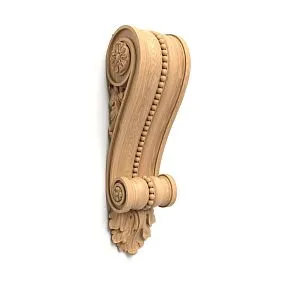
Consoles or brackets are decorative elements that visually support the sashing cornice. They may be placed on both sides or repeated at intervals across the entire width. Consoles take the form of volutes, acanthus leaves, or geometric brackets. Even if structurally unnecessary, visual logic of support is crucial for proper perception.
Sashing Styles
The choice of sashing style determines the character of the entire door treatment and must correspond to the overall interior style.
Classical sashings are based on ancient orders. Strict proportions, symmetry, and use of canonical elements—triglyphs, modillions, dentils. A triangular pediment on consoles or a simple profiled cornice. Color is traditionally white or natural wood. Such sashings are ideal for classical, neoclassical, or Empire interiors.
Baroque sashings are distinguished by opulence and decoration. Broken pediments with cartouches or vases in the break, abundant carved decoration, volute-like consoles, gilding or multi-colored finishes. Profiles are curved, creating rich play of light and shadow. Such sashings suit luxurious interiors in Baroque, Rococo, or Eclectic styles.
Renaissance sashings combine classical clarity with rich decoration. Clear proportions, but abundant ornamentation—vegetal motifs, geometric patterns, grotesques. Often include medallions, coats of arms, allegorical images. Color solutions may be polychromatic but restrained.
Modernism created its own type of sashing with smooth, flowing lines, asymmetrical forms, stylized vegetal motifs. Instead of classical volutes—stem curves, instead of acanthus—stylized flowers and leaves. Colors are natural—green, brown, ochre.
Modern minimalist sashings reduce form to the necessary minimum. A simple projecting cornice without decoration, clear geometric lines, monochromatic finish. Emphasis on material—beautiful wood texture, surface finish quality. Such sashings suit modern, Scandinavian, or loft interiors.
Choosing a Sashing for a Specific Interior
Choosing a sashing must consider multiple factors—the interior style, room and opening proportions, finish material and color, project budget.
Ceiling height determines allowable sashing dimensions. At a standard height of 2.5–2.7 meters, the sashing should not be overly massive—10–15 centimeters height is optimal. At high ceilings over 3 meters, larger sashings of 15–25 centimeters height can be used.
Opening width is also important. A narrow opening with a massive wide sashing appears disproportionate. General rule: the sashing width should exceed the opening width by 10–20 centimeters on each side. This creates a visual frame and correct proportions.
Interior style dictates the choice of sashing form and decoration. Classical interiors require canonical forms, while modern interiors allow simplification and stylization. Eclectic interiors permit bold combinations but require a refined sense of proportion.
Wall material affects mounting method and sashing material choice. On gypsum board walls, lightweight polyurethane sashings are better suited. On brick or concrete walls, heavy wooden or plaster elements can be installed.
Project budget determines the choice between ready-made catalog solutions and custom fabrication. Ready-made sashings are more affordable and quicker to install. Custom-made sashings allow unique solutions but require greater cost and time.
Installing a Door Sashing
Proper installation of the sashing is critically important for the final result. Incorrect installation can ruin even a high-quality product.
Surface preparation begins with checking the verticality of the opening and the flatness of the wall above it. Significant irregularities must be corrected, as the sashing cannot compensate for them and will replicate all base irregularities.
Marking is the most important stage. It is necessary to precisely determine the horizontal plane and position of the sashing relative to the opening. Using a laser level ensures ideal accuracy. Symmetry relative to the central axis of the opening must be perfect.
Mounting depends on the sashing weight and wall material. Lightweight polyurethane elements are mounted using special adhesive. Heavy wooden elements require additional mechanical fastening—self-tapping screws or anchors, which are then spackled and painted.
Joining elements requires precision. If the sanderik is assembled from several parts, the joints must be perfectly fitted. Gaps are filled with putty or sealant in the color of the element. After drying, the joints are sanded until completely invisible.
Finishing includes priming and painting or other decorative treatments. Primer ensures even paint absorption and good adhesion. Painting is done in multiple layers to achieve a perfectly smooth surface without drips or uneven coverage.
Ceiling moldings and decorative elements
The ceiling is the fifth wall of a room, often unjustly neglected. Yet, it is precisely the ceiling that defines the volume of space, creates a sense of height or intimacy, can serve as a neutral background or a striking accent.Buy ceiling moldingIt means transforming the ceiling from a blank surface into an architectural element that actively contributes to the interior's character.
Ceiling Cornices
Ceiling cornice - a basic decorative element that creates a transition between the vertical wall surface and the horizontal ceiling surface. Even a simple cornice dramatically changes the perception of a room, making it more complete and architectural.
The functions of the ceiling cornice are diverse. Visually, it completes the wall composition and creates a clear upper boundary. Structurally, it can conceal the junction between the wall and ceiling, which is rarely perfectly level. Technically, it can form a niche for hidden lighting, visually increasing the room's height.
The size of the cornice determines its visual impact. A narrow cornice, 5-8 centimeters wide, creates a delicate frame, almost imperceptible but organizing the space. A medium cornice, 10-15 centimeters, is a classic option for most interiors, sufficiently expressive but not overpowering. A wide cornice, 20 centimeters and above, creates a powerful architectural effect, suitable for spacious rooms with high ceilings.
The cornice profile affects the interior's style. A simple rectangular profile is universal and modern. A classic profile with moldings, curves, and ridges creates a traditional look. An ornate profile with floral or geometric motifs is characteristic of Baroque and Empire styles.
The cornice material determines its properties. A gypsum cornice is traditional, with a noble matte finish, but heavy and fragile. A wooden cornice is warm and eco-friendly, but expensive and requires moisture protection. A polyurethane cornice is lightweight, practical, affordable, moisture-resistant, and easy to install.
Hidden lighting behind the cornice - a popular modern technique. An LED strip placed in the niche behind the cornice creates soft, diffused light directed toward the ceiling. This visually lifts the ceiling, creating a floating effect, and can serve as additional or decorative lighting.
Ceiling Rosettes
Ceiling rose - a traditional decorative element framing the fixture's mounting point. But its function is not limited to concealing the electrical box - the rose creates a compositional center on the ceiling from which other decorative elements radiate.
The rose shape can be round, oval, square, or polygonal. A round rose is a classic option, universal and elegant. An oval rose visually elongates the space along its longitudinal axis. A square or octagonal rose creates a more modern, geometric effect.
The rose size should match the chandelier size. The classic rule states: the rose diameter should be approximately equal to the chandelier diameter or slightly smaller. A too large rose will overpower the fixture, while a too small rose will disappear. In rooms without chandeliers, roses are used as standalone decorative elements.
Rose decoration varies from simple geometric profiles to complex ornamental compositions. A smooth rose with simple profiles suits restrained classical interiors. A rose with floral ornamentation is suitable for more decorative styles. A rose with rays or coffers is appropriate for Empire and Neoclassical styles.
The rose relief creates a play of light and shadow, especially expressive under side lighting. Deep relief creates a dramatic effect, while fine relief is more delicate. Modern technologies allow creating roses with very complex, multi-level relief.
Rose installation requires precise centering. The rose must be strictly centered on the ceiling or at a predetermined point if the composition is asymmetrical. Mounting is done with adhesive, with possible additional mechanical fastening for heavy elements.
Coffers and panels
Coated ceiling - the pinnacle of ceiling decoration, where a system of intersecting beams creates recesses - coffers, each of which can be decorated with roses, painting, or gilding. Such a ceiling transforms an ordinary room into a grand hall.
The coffered ceiling construction can be real, where beams actually bear the load, or simulated, where decorative overlays create the illusion of structure. Simulated coffered ceilings are significantly lighter and more affordable, but when properly executed, they are practically indistinguishable from real ones.
The size and proportions of coffers determine the ceiling's character. Large coffers create a monumental effect, suitable for high, spacious rooms. Small coffers are more delicate and can be used in smaller rooms. Coffer proportions are usually close to square, but can also be elongated.
Coffer decoration can vary. The simplest option is a smooth recess painted in the same or contrasting color. More complex options include roses centered in each coffer, ornaments along the edges, painting, or gilding of the recessed surface.
Coffer beams themselves are decorative elements. They can be smooth or profiled, simple or with carved decoration. Beam color can match the ceiling color, creating a monochromatic relief surface, or contrast, emphasizing the structure.
Lighting for a coffered ceiling requires a special approach. A central chandelier can be placed in one of the coffers or in the center of the composition. Spotlights can be embedded in the beams or in the coffer recesses. Hidden perimeter lighting creates a floating ceiling effect.
Friezes and moldings
Ceiling friezes - horizontal decorative bands that can be placed below the cornice, creating an additional decorative layer. A frieze expands the ceiling decoration zone, making the transition from wall to ceiling smoother and richer.
A classic frieze can be smooth, profiled, or ornate. A smooth frieze is simply a colored band between the cornice and the main wall. A profiled frieze has a relief surface with moldings, ridges, and brackets. An ornate frieze is decorated with floral, geometric, or figurative motifs.
Frieze height determines its visual impact. A narrow frieze, 5-10 centimeters, creates a delicate decorative strip. A wide frieze, 20-30 centimeters, becomes a significant element that visually lowers wall height, making the room more intimate and cozy.
Ceiling moldings can create frames dividing the ceiling plane into zones. Rectangular or square frames imitate panels, creating a rhythmic structure. This solution is characteristic of classical interiors and allows visually organizing a large ceiling plane.
Curved ceiling moldings create more complex, baroque compositions. Ovals, circles, volutes, cartouches - all these elements can be laid out using ceiling moldings. Such compositions require precise design and careful installation, but create a unique, luxurious effect.
The color and finish of ceiling elements are critically important for the perception of the entire interior. A traditional white ceiling with white molding creates a classic, light, airy look. The color white visually increases height, reflects light, and creates a sense of cleanliness and freshness.
A colored ceiling with white molding is a bolder solution. The molding stands out against the colored background, creating a clear contrast and emphasizing the relief. The ceiling color can be pastel, creating a soft atmosphere, or vibrant, making the ceiling a bright accent in the interior.
A ceiling and molding of the same color create a monochromatic but textured surface. The play of light and shadow reveals volume, creating richness despite apparent simplicity. This is a modern solution, characteristic of minimalist interiors.
Gilded molding on a white or colored ceiling creates a luxurious, palace-like effect. Gold can cover the entire molding or be used accentually, highlighting individual elements. Modern gilding techniques allow for various effects — from bright shiny gold to matte antique gold.
Patina on ceiling molding creates an effect of noble antiquity. Dark patina in recesses emphasizes relief and creates depth. Light patina on protruding parts imitates natural wear over time. Patinated molding is ideal for interiors in Provence, shabby chic, vintage styles.
Corner details for walls
Corner details for walls
Room corners — often forgotten, but critically important architectural elements of the interior. It is precisely the corners that define the geometry of space and create its structure.Corner elements for wallsThey transform corners from technical zones into architectural accents that enrich the interior and highlight its character.
Types of corner elements
Corner rosettes — decorative elements installed in corners where horizontal moldings meet. They eliminate the need for precise 45-degree miter cuts of moldings, while simultaneously creating a decorative accent. Rosettes can be round, square, polygonal, with smooth or ornamented surfaces.
Corner covers — vertical elements that cover exterior or interior wall corners, protecting them from damage and creating a decorative effect. They can be simple rectangular strips or have profiled sections with rounded edges, coves, or ridges.
Pilasters — vertical elements that mimic columns, installed in room corners. A pilaster consists of a base, shaft, and capital, replicating column structure but being a flat overlay on the wall. Corner pilasters visually strengthen corners, making them more pronounced.
Counterforts — decorative elements that mimic architectural supports, installed at corners. They create a sense of structural strength and tectonic logic, characteristic of interiors in Gothic or industrial styles.
Rusts — imitation of stone masonry at corners, creating a sense of massiveness and solidity. Rusted corners are characteristic of classical interiors, stylized as castle or palace architecture.
Functions of corner elements
The protective function of corner elements is most obvious — they protect corners from mechanical damage, which corners are especially susceptible to. Furniture impacts during rearrangement, accidental bumps, children’s play — all of this can damage an unprotected corner. The overlay element absorbs these impacts.
Visual reinforcement of corners makes the room’s geometry more distinct and expressive. Emphasized corners create a sense of architectural refinement and spatial structuring. This is especially important in rooms with irregular shapes, where corners help understand the geometry.
Vertical division of walls using corner elements creates rhythm and scale. Pilasters in corners establish vertical axes from which the entire wall composition can develop. They create hierarchy — corners as main points, spaces between them as subordinate zones.
The stylistic function of corner elements lies in defining the character of the interior. Classical pilasters with capitals create a majestic atmosphere. Simple geometric overlays — modern minimalism. Rusted corners — a sense of solidity and connection to stone architecture.
The corrective function allows visually correcting room deficiencies. Vertical corner elements visually increase the height of low rooms. Contrasting corners in elongated rooms bring end walls closer, making proportions more harmonious.
Materials and Finishing
Wooden corner elements are traditional and prestigious. Solid oak, beech, ash provide strength and durability. Wood can be painted, stained, or lacquered, creating various visual effects. Wood texture adds richness even to simple forms.
Polyurethane corner elements are practical and affordable. They are lightweight, moisture-resistant, easy to install, available in a wide variety of shapes and sizes. After painting, polyurethane is visually indistinguishable from plaster or wood, but significantly cheaper and more practical.
Plaster corner elements are custom-made for exclusive interiors. Plaster allows any shapes, has a noble matte surface, and is eco-friendly. However, plaster is brittle, heavy, and moisture-sensitive, limiting its application.
MDF with coating — a modern material combining affordability with a quality surface. MDF elements have a perfectly smooth surface, are easy to paint, and resistant to deformation. They are cheaper than solid wood but more noble than polyurethane.
Finishing corner elements determines their appearance and compatibility with the interior. Painting in white creates a classic, neutral look. Painting in wall color blends elements into the space while preserving relief. Contrasting paint makes corners bright accents. Gilding, patina, and artificial aging create luxurious or vintage effects.
Installation of corner elements
Corner preparation begins with checking their verticality and straightness. Significant deviations must be corrected with putty or plaster. The surface must be clean, dry, and dust-free for good adhesive bonding.
Marking is critically important, especially if symmetrical elements are installed on opposite corners. It is necessary to precisely maintain vertical alignment, equal distances from floor and ceiling. Using a laser level ensures accuracy.
Mounting depends on the material of the element and the wall. Lightweight polyurethane elements are mounted with special adhesive or liquid nails. Heavy wooden elements require additional mechanical fastening — self-tapping screws or nails, set flush and spackled.
Joints between sections of long corner elements must be perfectly fitted and sealed. Use putty or acrylic sealant in the color of the element. After drying, joints are sanded until completely invisible.
Finishing includes priming and painting. Primer ensures even paint absorption. Painting is done in multiple layers with a brush for recesses or with an air spray for smooth surfaces. Each layer must be fully dry before applying the next.
Corner elements in various styles
Classic interiors use corner pilasters with capitals and bases. The capital may be Doric, Ionic, or Corinthian, defining the order and character of the interior. Pilasters are painted white or cream and may include gilded details.
Baroque interiors use richly decorated corner elements with abundant carving, volutes, cartouches. Corners become focal points, drawing attention. Gold leaf, multi-color painting, and patination enhance the decorative effect.
Modern minimalist interiors use simple geometric corner elements without decoration. Clean lines, rectangular sections, monochromatic coloring. Emphasis on material quality and precision of execution, rather than decorative appeal.
Loft and industrial styles may use corner elements imitating metal beams, rivets, industrial structures. Rough texture, rust or raw metal effect create a distinctive aesthetic.
Scandinavian style prefers wooden corner elements in natural light tones. Simple forms, minimal decoration, emphasized wood texture. Corners are protected but not overloaded with decoration, preserving the space’s lightness and airiness.
Conclusion
When interior speaks the language of architecture, space acquires a special quality — depth, structure, character. Usingdoor moldings, ceiling moldingsandcorner elements for wallstransforms an ordinary dwelling into an architectural masterpiece, where every detail is thoughtfully designed and contributes to creating a harmonious environment.
Architectural elements in interior design are not merely decoration, but functional details that organize space, create scale, guide the viewer’s gaze, and form an emotional atmosphere. They connect interior design with the great tradition of architecture, making it part of a cultural context, and imbue it with meaning and history.
Modern technologies and materials have made architectural decoration accessible to a wide range of people. What was once a privilege of palaces and mansions can now adorn an ordinary apartment. Polyurethane moldings, wooden moldings, ready-made moldings and rosettes allow you to realize any design ideas at reasonable costs.
It is important to understand that using architectural elements requires a sense of proportion and taste. Excessive decoration is as bad as its complete absence. The key to success lies in balance, when each element is in its place, performs its function, and contributes to overall harmony. A professional designer or consultant can help find this balance, creating an interior that will delight for many years.
Investing in quality architectural elements pays off many times over. In addition to aesthetic pleasure and increased comfort of living, such elements increase the market value of real estate. Apartments and houses with thoughtful architectural decoration stand out on the market, sell faster, and at higher prices.
Care for architectural elements is simple. Regular dusting, protection from mechanical damage, periodic renewal of the finish — that’s all that is needed to preserve beauty for decades. Quality elements made from durable materials require almost no maintenance and retain their original appearance for a very long time.
STAVROS Company offers a wide range of architectural elements for interiors — from simple moldings to complex carved compositions. Using premium materials, modern equipment, and the experience of skilled craftsmen, STAVROS creates products that meet the highest quality standards. Each element is carefully inspected, treated with protective compounds, and delivered ready for installation.
Choosing STAVROS products, you get not only quality items, but also professional consultation on their selection and application. Company specialists will help you select elements matching your interior style, calculate the required quantity, provide installation and finishing recommendations. This comprehensive approach ensures an ideal result.
With STAVROS products, your interior will speak the language of architecture, telling a story of taste, culture, and craftsmanship. This is an investment in beauty, comfort, and long-term value of your home.
Frequently asked questions
What material is best for ceiling moldings?
Material selection depends on usage conditions, budget, and aesthetic preferences. Polyurethane molding is the optimal choice for most cases: it is lightweight, moisture-resistant, easy to install, affordable, and after painting, looks like plaster. Plaster molding is more prestigious, has a noble surface, but is heavy, fragile, and moisture-sensitive. Wooden molding is eco-friendly, warm, has a natural texture, but expensive and requires moisture protection. Polyurethane is optimal for bathrooms and kitchens, while any material can be chosen for living rooms.
How to determine the correct size of a door molding?
Molding size is determined by ceiling height and door opening width. For standard ceilings of 2.5–2.7 meters, optimal molding height is 10–15 centimeters. For high ceilings over 3 meters, moldings 15–25 centimeters are suitable. Molding width should exceed opening width by 10–20 centimeters on each side. For narrow openings of 60–70 centimeters, use 90–110 centimeter wide moldings; for standard 80–90 centimeter openings, use 110–130 centimeter wide moldings. It is important to maintain proportions — a heavy molding on a narrow opening looks inappropriate.
Can architectural elements be used in a modern minimalist interior?
Architectural elements combine beautifully with minimalism when approached correctly. Choose simple geometric forms without excessive decoration, use monochromatic coloring matching wall or ceiling tones, limit the number of elements. One well-chosen ceiling cornice is better than an abundance of disparate details. A simple molding above a door, minimalist corner elements, minimalist ceiling rosettes — these details enrich a minimalist interior without compromising its philosophy. The key is a sense of proportion and understanding that in minimalism, quality matters more than quantity.
How much does it cost to decorate an interior with architectural elements?
Cost varies widely depending on material, element complexity, and scope of work. Budget option — simple polyurethane elements with self-installation — may cost 3000–5000 rubles per linear meter for cornices and moldings. Mid-range — quality polyurethane or wooden elements with professional installation — 8000–15000 rubles per linear meter. Premium — solid wood from valuable species, handcrafted plaster molding, complex carved details — from 20000 rubles per linear meter and above. For a standard 60–70 square meter apartment, basic decoration with cornices and door moldings will cost 50000–100000 rubles.
How to care for molding and architectural elements?
Care is simple and includes regular dry cleaning with a soft cloth or a brush for removing dust, especially from carved recesses. Wet cleaning, if needed, is done with a slightly damp sponge without excess water or aggressive cleaners. For removing stubborn stains, a mild soap solution can be used. Avoid abrasive sponges and stiff brushes that may damage the finish. Periodically, every 3–5 years, the finish may need renewal — repainting or reapplying varnish. In case of chips or cracks, local repair followed by touch-up is required.
Do you need special permission to install architectural elements?
In private homes and apartments, installing decorative elements does not require special permits, as it does not affect load-bearing structures or change the layout. This applies to cosmetic repairs that the owner may perform without approvals. However, if the apartment is in a historical building or a landmark house, any interior changes may require coordination with heritage protection authorities. In new buildings with a unified entrance decoration concept, approval from the managing company may also be required if elements are installed in common areas.
What errors are most commonly made when using architectural elements?
Most common errors: mismatch of element scale to room size — too large elements in small rooms or too small in large halls, excessive decoration — attempting to use all available elements simultaneously, stylistic mismatch — mixing elements of different styles without understanding their compatibility, incorrect proportions — for example, a heavy cornice on a narrow door, poor installation — unevenness, gaps, crooked lines, inappropriate color — color mismatch with the overall interior color scheme. Consulting a professional designer or experienced consultant helps avoid these errors.
How do architectural elements affect the perception of space?
Architectural elements strongly influence perception. Vertical elements — pilasters, corner moldings — visually increase the height of a room. Horizontal cornices and friezes expand space, making it appear more stable. Light elements on a dark background create graphic clarity, while dark elements on a light background create elegant contrast. Richly decorated elements make interiors luxurious but may overwhelm small spaces. Minimalist elements create restrained elegance. Proper use of architectural elements allows correcting room deficiencies — visually raising low ceilings, expanding narrow spaces, or making large rooms cozier.


