Article Contents:
- What is artistic decoration?
- 1. Interior Design
- 2. Product Design
- 3. Architectural Decoration
- 4. Wood Carving as the Basis of Artistic Decoration
- 5. Artistic Decoration as a Way to Express Style
- 1. Decorative Elements for Walls and Ceilings
- 2. Door and Furniture Decoration
- 3. Facade and Architectural Element Decoration
- 1. Carved Frames and Mirrors
- 2. Decorative Tableware and Accessories
- 3. Boxes, Panels, and Decorative Elements
- Conclusion
Artistic decoration is a key aspect of design that allows objects and spaces to acquire a unique appearance, expressiveness, and harmony. It is used in interiors, works of art, decorative items, and architectural elements, unifying aesthetics, style, and artistic craftsmanship.
STAVROS Company offers a wide selection of decorative elements made from solid natural wood, helping to create expressive artistic decoration in interiors and items. The catalog features moldings, capitals, rosettes, appliqués, and other carved details that will highlight the aesthetics of any space.
What is artistic decoration?
Artistic decoration is a comprehensive process aimed at creating aesthetically pleasing objects using decorative elements, ornaments, carving, textures, and artistic techniques. It plays a key role in interior design, architectural objects, works of art, and decorative items. Thanks to artistic decoration, one can not only add expressiveness to a space but also highlight its individuality, create unique accent zones, and enhance the visual perception of style.
Artistic decoration encompasses numerous directions, among which several key areas can be distinguished.




1. Interior Design
The interior space of a room acquires a finished look thanks to decorative elements that add depth, elegance, and character to the interior. In interior design, the following are used:
● Moldings and cornices - they structure space, emphasize architectural lines, and help create symmetrical compositions.
● Outlets - decorative elements for ceilings and walls, giving the interior a luxurious look.
● carved appliqués - they decorate furniture, doors, and window openings, creating an effect of three-dimensional decoration.
● Decorative panels – used for wall decoration and creating artistic compositions in the interior.
Correctly chosen artistic decoration elements not only decorate the interior but also zone the space, conceal layout flaws, and enhance visual effects.
Our factory also produces:
2. Product Design
Artistic decoration is also actively applied in the design of objects that become true works of art. Among the most common directions, the following can be distinguished:
● Decorative boxes – items with artistic carving, created for storing jewelry and small items.
● Carved frames – luxurious framing for mirrors, paintings, and photographs, emphasizing their artistic value.
● Furniture facades – decorative panels and inserts that help create unique designer furniture.
● Columns and pilasters – architectural elements used as decorative accents in interiors.
Each item styled artistically gains special expressiveness and becomes part of an aesthetic space.
Get Consultation
3. Architectural decoration
Architectural decoration plays an important role in creating a harmonious appearance of buildings. Decorative elements allow highlighting the architectural style and giving the object individuality. Among the key elements of artistic facade decoration are:
● Carved Mouldings – decorate window and door openings, giving the facade aesthetic completeness.
● Cornices and pilasters – decorative elements that emphasize facade lines and create expressive relief.
● Capitals – decorate columns, adding grandeur and monumentality.
● Balustrades – used for decorating staircases, terraces, balconies, creating harmonious compositions.
Artistic facade decoration helps create visual integrity of a building, giving it elegance and a unique style.
4. Wood carving as the basis of artistic decoration
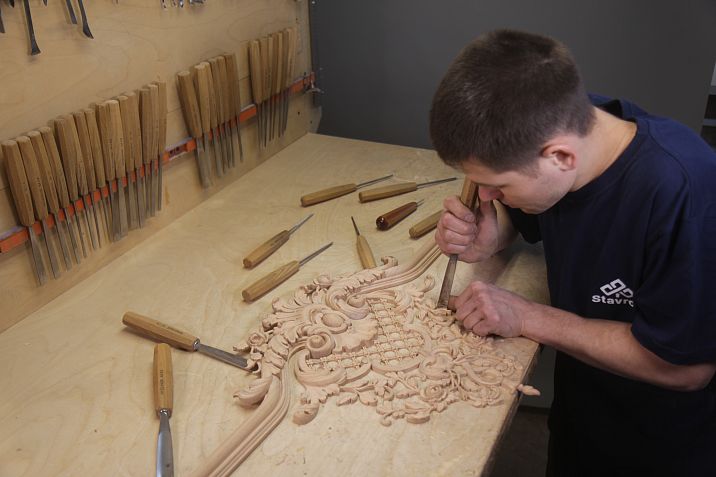
One of the most in-demand directions of artistic decoration is wood carving. This form of decorative art allows creating unique patterns and ornaments on natural materials. Wood carving is used for:
● Furniture decoration – carved patterns on cabinets, chests, chairs, doors give items an exclusive look.
● Decorative panels and inserts – artistic compositions made of wood decorate walls, ceilings, furniture facades.
● Wall panels – create accent zones in interiors, turning them into artistic works.
● Church, palace, and residence decoration – artistic carving is widely used in decorating religious and historical objects.
Hand-carved wood makes each item unique, while natural wood gives it a special charm and longevity.
5. Artistic decoration as a way to express style
Artistic decoration helps not only to decorate space, but also to set a certain mood and style. It plays a key role in creating interior atmosphere, emphasizing its character and individuality.
● Classical style – refined patterns, symmetrical compositions, rich ornamentation.
● Modern and Art Deco – smooth lines, artistic elements with metallic inserts.
● Minimalism – strict geometric forms, concise and neat details.
● Scandinavian style and Provence – natural wood, light shades, elegant and simple patterns.
Thanks to the variety of decorative elements presented in the STAVROS catalog, you can create a unique interior and facade decoration matching any style.
Artistic decoration is the art of creating aesthetics in interior design, architecture, and product design. It combines decorative elements, artistic techniques, and design methods to highlight style, individuality, and harmony of space.
Artistic decoration in interior design
1. Decorative elements for walls and ceilings
To give the interior expressiveness, various elements of artistic decoration are used:
● Moldings and cornices – allow creating stylish framed compositions, highlighting zones and adding classical aesthetics to the interior.
● Outlets – used to decorate ceilings, walls, and doors, creating a stucco effect.
● carved appliqués Perfect for artistic decoration of furniture, walls, door panels, and columns.
2. Door and Furniture Decoration
Doors and furniture can be transformed into works of art using decorative elements:
● Capitals and pilasters – emphasize the elegance of door openings and furniture facades.
● Decorative appliqués – allow updating the appearance of doors, chests, wardrobes, creating the effect of carved furniture.
3. Facade and Architectural Element Decoration
Artistic decoration of facades plays an important role in creating the architectural style of a building. For this purpose, the following are used:
● Carved Mouldings – for decorating window openings.
● Balustrades, columns, pilasters – give the building a classical and noble appearance.
Artistic decoration of items: uniqueness in every detail
Artistic decoration is not limited to interiors – it is actively used in object design. Carved and decorative items can become exquisite gifts, decorative elements, or functional interior items.
1. Carved Frames and Mirrors
Wooden frames with artistic carving – a stylish addition to paintings and mirrors, highlighting their status and harmoniously fitting into classical and modern interiors.
2. Decorative Tableware and Accessories
Elementswooden tableware with artistic carving become not just utilitarian items, but true works of art.
3. Boxes, Panels, and Decorative Elements
Wooden boxes with carving, wall panels, and lace inserts are used to decorate interiors and create a cozy atmosphere.
How to choose artistic decoration elements?
Choosing decorative elements is an important stage in creating a stylish, balanced, and aesthetically pleasing interior. For artistic decoration to harmoniously fit into the space and highlight its individuality, several key factors must be considered.
1. Decoration Style: Alignment with Overall Concept
Decorative elements must support the chosen interior style, creating visual unity and drawing attention to key details.
● Classical style – implies the use of carved ornaments, columns, capitals, molded rosettes. Suitable are refined details, rich patterns, and complex compositions.
● Modern and Art Deco – characterized by geometric forms, refined lines, and elegant curves. In such interiors, moldings with clear symmetry and smooth decorative appliqués look harmonious.
● Minimalism – requires simplicity and restraint. Thin moldings, strict wooden panels, and neat framing elements are used.
● Loft and Industrial style – the effect of naturalness and rough textures is emphasized by large wooden panels, beams, and decorative inserts.
● Provence and Country – perfectly combine with carved appliqués, bleached wood, natural textures, and light, elegant elements.
When choosing artistic decoration elements, it is important to consider the style of the room to ensure the decor looks harmonious and highlights the character of the interior.
2. Size and Scale: Ideal Proportions
The size of decorative elements should correspond to the dimensions of the room, furniture, and architectural structures.
● Large elements – better suited for spacious rooms, creating a striking accent. These may include large moldings, artistic panels, columns, and massive carved appliqués.
● Medium elements – universal, easy to combine, suitable for decorating doors, walls, and furniture.
● Small elements – look best in small rooms or serve as accents. For example, outlets, miniature carved appliqués, patterned inserts.
● Vertical elements – visually elongate space, making ceilings appear higher.
● Horizontal elements – help visually expand walls and add proportion to the interior.
Correct selection of decorative scale helps avoid overcrowding space and creates a visually harmonious interior.
3. Materials and textures: combination of natural surfaces
Decorative elements made from natural solid wood have unique texture and naturally combine with various materials:
● Wood + stone – creates an expressive contrast, giving the interior aristocracy and monumentality.
● Wood + metal – emphasizes loft, industrial design, modern styles, creating an effective balance between natural and industrial textures.
● Wood + glass – adds lightness, elegance, and visual transparency.
● Wood + textile – makes space cozy, suitable for interiors in Provence, country, classic styles.
Using natural materials allows creating durable and aesthetically appealing compositions that highlight the character of the room.
4. Functionality: combination of beauty and utility
Decorative elements can serve not only an aesthetic but also a practical function:
✔ Space zoning – moldings and decorative panels allow dividing walls into functional zones.
✔ Correction of room proportions – vertical elements make ceilings appear higher, while horizontal elements expand the space.
✔ Concealing wall imperfections – moldings, outlets, and decorative appliqués help mask unevenness and defects.
✔ Creating accent zones – expressive decorative elements attract attention and make the interior more impactful.
Correctly chosen decorative elements not only beautify the interior but also make it more convenient, functional, and thoughtfully designed.
Conclusion
Artistic decoration is an art that transforms ordinary objects and spaces into stylish, harmonious, and aesthetically complete compositions. Using decorative elements such as moldings, appliqués, outlets, capitals, and carved items helps create an exclusive interior, highlighting the owner’s taste and individuality.
Company STAVROS offers a wide range of decorative items made from natural solid wood. The catalog includes:
● carved appliqués – for decorating walls, furniture, and doors.
● Moldings and cornices – for creating expressive interior compositions.
● Outlets – elegant accents for ceilings and walls.
● Wooden Tableware – decorative and functional accessories for home.
STAVROS products are available for order throughout Russia, including Moscow, Saint Petersburg, Kazan, Yekaterinburg, Nizhny Novgorod, Samara, Rostov-on-Don, Chelyabinsk, Ufa, Perm, Volgograd, and other cities.
Choose artistic decoration from STAVROS and create an interior that highlights your taste, style, and individuality. Place your order today and bring aesthetic, sophistication, and artistic perfection into your home!