












































































Article Contents:
- Conceptual foundations of a furniture enterprise
- Choosing a production concept
- Defining target segments
- Technological foundations of production
- Choosing production technology
- Materials science in furniture manufacturing
- Organization of the Production Process
- Design and construction
- Technological process
- Quality Control
- Equipment and production outfitting
- Main technological equipment
- Specialized equipment
- Auxiliary equipment
- Planning and organization of the enterprise
- Selection and preparation of premises
- Infrastructure support
- Logistical organization
- Labor force for production
- Key specialists
- Workforce
- Staff development
- Economic aspects and business planning
- Investment requirements
- Operational costs
- Revenue planning
- Marketing and product promotion
- Positioning and branding
- Sales channels
- Digital marketing
- Legal and regulatory aspects
- Technical Regulation
- Ecological requirements
- Labor Legislation
- Innovations and Digitalization
- Industry 4.0 in Furniture Production
- Digital Design Tools
- Additive technologies
- Ecological responsibility and sustainable development
- Use of Eco-Friendly Materials
- Energy efficiency
- Circular Economy
- International Aspects and Export
- Requirements of International Markets
- Strategies for Entering Foreign Markets
- Risk Management
- Production Risks
- Market Risks
- Financial Risks
- Industry Development Prospects
- Technological Trends
- Consumer Trends
- Conclusion
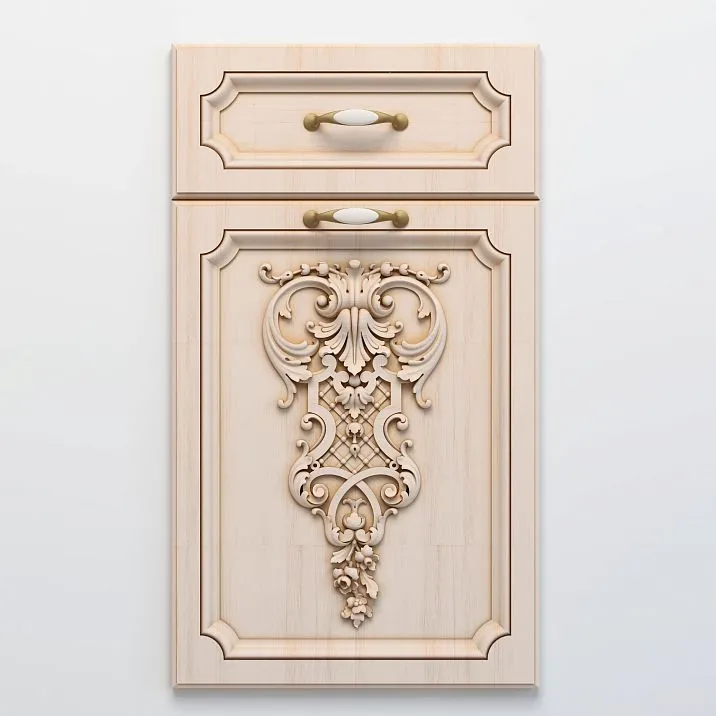
The furniture industry today is one of the most promising sectors of the economy, combining traditional craftsmanship with modern technologies. How to Create a Furniture Production — a question that concerns many entrepreneurs seeking to enter this dynamically developing industry. After all, furniture is not just a product; it is part of every person's life, an element of comfort and style that surrounds us everywhere.
The modern furniture market demonstrates steady growth and high potential for development. Consumers increasingly prefer quality, functional, and aesthetically appealing products. Demand is growing both for mass-produced furniture and for exclusive custom-made items. This trend creates favorable conditions for new entrants to the industry, especially those ready to offer innovative solutions to the market.


Conceptual Foundations of a Furniture Enterprise
Successful furniture production begins with a clear understanding of the business philosophy. Strategic vision must encompass not only economic aspects but also social responsibility, environmental sustainability, and contribution to the development of the local community.




Choosing a Production Concept
Mass production focuses on producing large quantities of standardized products with an emphasis on cost optimization and maximizing production process efficiency. This approach requires significant initial investments in equipment and automation, but ensures high profitability once the planned sales volume is achieved.
Custom production involves manufacturing unique items according to individual customer requirements. This model requires more flexible production processes, highly skilled specialists, and close collaboration with clients at every stage of the project implementation.
The hybrid model combines elements of mass production and individualized approaches, allowing the enterprise to diversify risks and fully utilize its production capacity.
Our factory also produces:


Defining Target Segments
Household furniture remains the most voluminous market segment, including kitchen sets, bedroom sets, living room groups, and children's furniture. This segment is characterized by high competition but also stable demand.
Office furniture shows steady growth due to the development of the business sector and changing approaches to organizing workspaces. Especially promising are solutions for modern co-working spaces and mobile offices.
Specialized furniture for medical facilities, educational institutions, hotels, and restaurants represents a high-margin segment with specific requirements for quality and functionality.
Get Consultation
Technological Foundations of Production
Modern furniture production is a high-tech process requiring deep understanding of materials, equipment, and manufacturing methods.
Choice of production technology
Traditional carpentry techniques remain relevant for producing high-end solid wood furniture. Joints such as "dowel-and-slot" and "birdsmouth" and other classic methods ensure exceptional strength and longevity of the products.
Modern industrial technologies are based on the use of particleboard and fiberboard, which allows significantly reducing the cost of production while maintaining high quality. The use of MDF, HDF, and other composite materials opens up wide possibilities for design solutions.
Innovative approaches include the use of CNC machines, 3D printing of individual elements, laser cutting, and other advanced technologies that ensure the highest level of processing accuracy and enable the realization of the most complex design concepts.
Material science in furniture production
Wood materials remain the foundation of the furniture industry. Solid wood is valued for its natural beauty, eco-friendliness, and durability, but requires special storage and processing conditions. Particleboard and MDF provide dimensional stability, ease of processing, and affordable cost.
Alternative materials expand design and functionality possibilities. Metal elements add rigidity and a modern look to structures. Glass and plastic allow creating light and elegant solutions. Composite materials open new horizons for innovation.
Ecological aspects of materials are becoming increasingly important. FSC certification for wood, use of recycled materials, minimization of formaldehyde emissions — these factors influence product competitiveness.
Organization of the production process
Effective production organization is key to the success of a furniture enterprise. Each stage must be carefully planned and optimized.
Design and construction
Design department — the creative heart of the enterprise, where ideas for future products are born. Modern design is unthinkable without specialized software that allows creating accurate 3D models, performing engineering calculations, and automatically generating production documentation.
Design preparation includes developing technical drawings, material specifications, cutting plans, and technological processes. At this stage, all parameters of the future product and methods of its manufacture are defined.
Prototyping allows verifying the correctness of structural solutions and making necessary adjustments before starting mass production. Modern technologies enable quickly creating functional mockups and conducting comprehensive testing.
Technological process
Preparation operations include drying wood, acclimatizing panel materials, preparing tools, and setting up equipment. The quality of these operations largely determines the quality of the finished product.
Cutting operations — the foundation of the production process. Cutting accuracy affects all subsequent operations and assembly quality. Modern CNC format-cutting machines ensure high precision and minimize material waste.
Mechanical processing includes milling, drilling, sanding, and other forming operations. The quality of mechanical processing determines assembly accuracy and the appearance of the finished product.
Finishing operations — edge banding, painting, varnishing — give the product a commercial appearance and provide protection against external influences. These operations require special attention to quality and adherence to technological regimes.
Quality control
Incoming control of materials and components prevents defective products from entering the production process. Each batch of materials must meet established quality standards.
Operational control is conducted at each stage of the production process. Timely detection of deviations allows preventing the production of defective products and reducing losses.
Final control of finished products includes checking functionality, appearance, completeness, and compliance with technical requirements. Only products that have passed all stages of control can be delivered to the customer.
Equipment and production outfitting
Equipment selection is one of the most important and costly aspects of establishing a furniture production facility. The quality and functionality of equipment determine productivity, product quality, and the competitiveness of the enterprise.
Main technological equipment
Format-cutting machines — the heart of any furniture production. These machines ensure precise cutting of panel materials according to technical requirements. Modern models are equipped with CNC systems, allowing automation of the process and minimizing human factors.
Edge banding machines are designed for processing ends of furniture parts. Quality edge banding not only improves the appearance of the product but also protects particleboard materials from moisture. Automatic edge banding machines ensure high productivity and stable processing quality.
Drilling and fastening equipment is used to create holes for fasteners. Drilling accuracy is critically important for quality furniture assembly. Multi-spindle CNC machines allow simultaneously processing several parts, significantly increasing productivity.
Milling machines are used for processing profiles, creating slots, bevels, and decorative elements. Modern CNC milling machines are capable of performing complex 3D operations, opening up limitless possibilities for design creativity.
Specialized equipment
Pressing equipment is necessary for producing bent elements, gluing panels, and other operations requiring pressure application. Hydraulic and pneumatic presses of various configurations allow implementing the most complex technological processes.
Sanding machines provide final surface finishing before applying finishing materials. The quality of sanding directly affects the appearance of the finished product and the durability of the coating.
Painting equipment includes spray booths, drying systems, and auxiliary equipment for preparing and applying coatings. Automated painting lines ensure high-quality coatings and compliance with ecological requirements.
Auxiliary Equipment
Dust collection systems — an essential element of modern furniture production. Effective aspiration ensures worker safety, extends equipment lifespan, and improves product quality.
Compressor equipment is necessary for the operation of pneumatic tools and machines. Stable compressed air pressure is a crucial condition for uninterrupted production.
Handling and transport equipment includes conveyors, carts, overhead cranes, and other devices for moving materials and finished products. Rational organization of in-house logistics significantly increases production efficiency.
Planning and organization of the enterprise
Establishing a furniture production facility requires a comprehensive approach to planning all aspects of operations — from selecting premises to forming a team of specialists.
Selection and preparation of premises
Production areas must correspond to the specifics of furniture manufacturing. Optimal ceiling height — at least 4-5 meters — is required for installing handling and transport equipment. Floors must withstand significant loads from heavy machinery.
Production zoning implies clear division of technological areas: cutting, mechanical processing, assembly, and finishing. Each zone must have appropriate equipment — electrical supply, ventilation, lighting.
Warehouse areas are divided into zones for storing raw materials, components, and finished goods. Raw material storage requires special conditions — temperature and humidity control to prevent material deformation.
Administrative and utility spaces include offices, employee rest rooms, changing rooms, and sanitary facilities. Comfortable conditions for employees are a key factor in productivity and work quality.
Infrastructure support
Electrical supply for furniture production requires connection to a three-phase power network of sufficient capacity. Many machines consume significant amounts of electricity, so a power reserve is necessary for production growth.
Ventilation and aspiration are critically important for ensuring worker safety and comfort. Wood processing generates large amounts of dust, which is not only harmful to health but also explosive.
Heating must ensure stable temperature in production areas. Temperature fluctuations affect processing accuracy and adhesive bonding quality.
Water supply and sewage are necessary for painting areas, cleaning facilities, and personal needs of staff.
Logistical organization
External logistics includes organizing raw material deliveries and finished product shipments. Convenient access roads and sufficient loading/unloading area space are key factors for efficiency.
Internal logistics implies rational organization of material and semi-finished product movement between technological areas. Minimizing transportation time losses increases overall productivity.
Inventory management system must ensure uninterrupted production while minimizing working capital. Modern ERP systems allow automating material requirement planning.
Production workforce
Skilled personnel are the foundation of successful furniture production. The industry requires both highly qualified specialists and workers in mass professions.
Key specialists
Production manager — the central figure of the enterprise, whose competence determines the efficiency of all production processes. This specialist must possess deep technical knowledge, personnel management experience, and understanding of production economics.
Chief technologist is responsible for developing and improving technological processes, introducing new technologies, and controlling product quality. Higher technical education and practical experience are mandatory requirements for this position.
Design engineer develops product designs, creates technical documentation and drawings. Knowledge of specialized software and understanding of production specifics are key competencies.
Shop floor supervisors coordinate production teams, ensure adherence to technology and product quality. Practical experience and leadership qualities are primary requirements for supervisors.
Operative workforce
CNC machine operators are highly skilled workers managing complex automated equipment. Specialized training and continuous skill upgrading are required.
Carpenters and furniture assemblers perform manual operations requiring high skill and attention to detail. Professional skills are passed on through mentorship and practical training.
Finishers specialize in painting and final product finishing. The quality of their work determines the appearance of finished products.
Support staff includes warehouse personnel, transporters, and cleaning staff for production areas. Smooth coordination of all staff categories ensures production efficiency.
Staff development
The training system must ensure continuous staff qualification. Changes in technology require mastering new skills and knowledge.
Staff motivation includes not only material incentives but also opportunities for professional growth, improved working conditions, and corporate culture development.
Occupational safety and security are priority directions of HR policy. Wood processing is associated with increased risks, therefore training in safe work methods must be continuous.
Economic aspects and business planning
Financial planning is the foundation of sustainable furniture production. Accurate calculation of investments, operating costs, and revenue forecasting determine the viability of the project.
Investment requirements
Capital investments in equipment constitute a significant portion of initial investments. Basic equipment for a small-scale production requires 15 to 50 million rubles depending on specialization and production volume.
Facility preparation includes renovation, engineering utilities, and equipment installation. These costs may amount to 20-30% of equipment cost.
Working capital is required for purchasing raw materials, paying wages, and covering current expenses until the first revenue is received. The amount of working capital depends on the production cycle and payment terms with suppliers and customers.
Intangible assets include brand development, trademark registration, website creation, and initial marketing expenses.
Operating expenses
Material costs account for 40-60% of furniture cost. Main items include wood materials, hardware, fasteners, paints and coatings, and packaging.
Labor cost expenses include wages, social contributions, and employee training expenses. In labor-intensive production, this item may reach 25-35% of cost.
Equipment depreciation is calculated based on useful life. Quality equipment serves 10-15 years with proper maintenance.
Overhead costs include rent, utility payments, insurance, transportation expenses, and expenses for product sales.
Revenue planning
Pricing must consider product cost, competitive level, and target audience purchasing power. Correct pricing strategy is key to business profitability.
Sales forecasting is based on market analysis, production capabilities, and marketing activities. Realistic sales volume planning is critically important for financial stability.
Demand seasonality is characteristic of the furniture industry. Sales peaks occur during spring-summer and pre-holiday months. Production planning must account for these features.
Marketing and product promotion
Successful promotion of furniture products requires a comprehensive approach combining traditional and modern marketing tools.
Positioning and branding
Unique selling proposition must clearly differentiate the product from competitors. This may include high quality, affordable price, innovative design, eco-friendliness, or personalized approach.
Brand strategy determines how the company is perceived by the target audience. Consistent development of a positive image requires time and significant marketing investments.
Visual identity includes logo, brand colors, fonts, product and advertising material design style. Professional design increases consumer trust.
Sales Channels
Own showrooms provide full control over product presentation and sales process. They require significant investments in rental, trade area equipment, and staff training.
Dealer network allows rapid expansion of sales geography with minimal own investment. Careful partner selection and continuous dealer support are crucial.
Online sales are becoming an increasingly important channel. A quality website with online ordering, 3D visualization, and virtual showrooms are modern tools for attracting customers.
B2B sales to designers, developers, and furniture chains can provide stable large orders with lower margins.
Digital marketing
Content marketing through the company's blog, production videos, and interior design tips helps build brand expertise and attract the target audience.
Social networks are an important tool for interacting with consumers. Visual platforms are especially effective for showcasing design solutions.
Website search engine optimization ensures attracting targeted traffic. A proper SEO strategy can significantly reduce customer acquisition costs.
Legal and regulatory aspects
Furniture production is subject to state regulation in multiple areas — from technical regulations to environmental requirements.
Technical regulation
Technical regulations establish mandatory safety requirements for furniture products. Compliance with these requirements is confirmed by a declaration of conformity or certification.
GOSTs and TUs define the technical characteristics of various types of furniture. Adhering to standards ensures product quality and protects consumer interests.
Sanitary-hygienic requirements are especially important for children's furniture and items for public spaces. Formaldehyde emissions must comply with established norms.
Ecological Requirements
Environmental legislation regulates emissions into the atmosphere, waste generation, and water consumption. Obtaining environmental permits is a mandatory condition for production operations.
Waste from wood processing requires special organization. Wood waste can be used as biomass fuel or for producing technical wood chips.
FSC certification confirms that wood originates from responsibly managed forests. Environmental certifications are becoming an important competitive advantage.
Labor legislation
Occupational safety in the wood processing industry requires special attention. Increased dust levels, noise, and vibration are factors requiring special protective measures.
Professional training for workers engaged in hazardous tasks must be conducted at accredited centers. Regular occupational safety certification is a legal requirement.
Workers in production must undergo medical examinations at established intervals to monitor occupational risks.
Innovation and digitalization
Modern furniture production cannot be imagined without implementing innovative technologies and digital solutions.
Industry 4.0 in furniture production
The Internet of Things enables creating "smart" production facilities, where equipment interacts within a unified information space. Sensors monitor machine conditions, optimize operating modes, and predict maintenance needs.
Big data and analytics help optimize production processes, forecast demand, and personalize offers for customers.
Robotization is gradually entering furniture production. Robot manipulators are used for loading machines, sorting parts, and packaging finished products.
Digital design tools
Parametric modeling allows quickly creating construction variants, automatically generating drawings and material specifications.
Virtual reality is used to present projects to clients, allowing them to "immerse" themselves in the future interior and evaluate design solutions.
Augmented reality helps assemble complex items, displaying instructions directly at the workplace via special glasses or tablets.
Additive technologies
3D printing is used to create prototypes, manufacture exclusive hardware, and produce complex decorative elements.
Hybrid technologies combine traditional processing with additive methods, opening new possibilities for design and functionality.
Ecological responsibility and sustainable development
Environmental aspects are becoming increasingly important for the furniture industry. Consumers value environmentally responsible manufacturers.
Use of eco-friendly materials
Certified wood from responsibly managed forests is becoming a standard of quality. FSC and PEFC certificates confirm the legality of raw material origin.
Recycled materials are an important development direction. Using secondary wood fibers and recycled plastic reduces the ecological footprint of production.
Biomaterials are an innovative direction. Composites based on flax fibers, straw, and other plant materials open up new possibilities.
Energy efficiency
Renewable energy sources — solar panels, wind generators — can provide part of the energy consumption for production.
Energy-saving technologies include modern lighting systems, efficient electric motors, and heat recovery.
Waste utilization as an energy source — wood waste can be used as biomass fuel for heating production facilities.
Circular economy
Design for disassembly implies creating furniture that can be easily taken apart into components for reuse.
Take-back programs allow manufacturers to reclaim used furniture for recycling or restoration.
Leasing models change the approach to furniture ownership — instead of purchasing, consumers rent items with the option to replace or upgrade them.
International aspects and export
Developing export shipments opens new opportunities for growth in the furniture business.
Requirements of international markets
Technical standards of different countries may differ significantly. Exported products must meet the requirements of the destination country.
Certification by international organizations increases trust among foreign partners and consumers.
Logistical solutions for export require special packaging ensuring product integrity during long-distance transport.
Strategies for entering foreign markets
Direct export through own sales channels requires significant investment in market research and establishing a distributor network.
Partnership with importers allows faster market entry by leveraging their knowledge and networks.
Participation in international exhibitions is an effective way to find partners and study the competitive environment.
Risk Management
Furniture production is subject to various types of risks, managing which is critically important for business sustainability.
Production risks
Equipment failure can halt production for a long time. Preventive maintenance and backup of critical equipment reduce these risks.
Raw material quality affects the quality of finished products. Supplier diversification and incoming quality control minimize risks.
Human factor — employee errors, staff turnover. Training, motivation, and corporate culture development help manage these risks.
Market risks
Demand fluctuations are characteristic of the furniture industry. Diversifying product lines and sales geography reduces dependence on individual segments.
Competitive pressure requires continuous product improvement and cost optimization.
Currency risks in exporting or importing raw materials require the use of financial hedging instruments.
Financial risks
Cash flow gaps due to mismatch between receipts and payments. Cash flow planning and credit lines help manage liquidity.
Accounts receivable — risk of non-payment by customers. Insurance, factoring, and advance payments reduce these risks.
Inflation risks affect the cost of raw materials and labor. Price indexing and long-term contracts partially offset inflation.
Industry Development Prospects
The furniture industry continues to evolve under the influence of technological innovations, changing consumer preferences, and global trends.
Technological Trends
Mass customization — producing individual items with the efficiency of mass production. Flexible production systems make this a reality.
Artificial intelligence is applied in optimizing cutting patterns, forecasting demand, and personalizing offers for consumers.
New materials — biocomposites, smart materials with changing properties, nanotechnology in coatings open up new possibilities.
Consumer trends
Functionality is becoming a priority. Consumers value transformable furniture, integrated technologies, and multifunctional solutions.
Sustainability influences consumer choices. Demand for certified, recycled, and durable furniture continues to grow.
Personalization — consumers want unique solutions that reflect their individuality and lifestyle.
Conclusion
Creating a furniture production facility is a complex, multi-stage process requiring deep technical knowledge, market understanding, and significant investments. However, with the right approach, the furniture business can become the foundation of a sustainable and profitable enterprise.
Key success factors include careful planning of all aspects of operations, investment in quality equipment and staff training, creation of an effective quality control system, and proper market positioning of products. Environmental aspects of production and implementation of innovative technologies become especially important.
The furniture industry offers numerous opportunities for entrepreneurs — from small workshops specializing in exclusive items to large automated mass-production facilities. The choice of development strategy should be based on a realistic assessment of one’s own capabilities, deep market analysis, and clear understanding of competitive advantages.
The future of the furniture industry is linked to further digitization, development of environmentally responsible production, and mass customization of products. Companies that manage to adapt to these trends will gain significant competitive advantages.
It is important to remember that the success of a furniture business depends not only on technical aspects of production, but also on the ability to create products that genuinely improve people’s lives. Furniture is not just functional items — it is elements that create comfort, coziness, and beauty in our daily lives.
For many years, STAVROS has been a reliable partner for entrepreneurs who have decided to link their activities with the furniture industry. Our rich experience, deep industry knowledge, and comprehensive approach to solving client problems enable us to provide high-quality support at all stages of creating and developing a furniture production facility.


