












































































Article Contents:
- Preparation for making a chest of drawers yourself: important points
- Planning and drawings
- Step 1: Preparing materials
- Step 2: Assembling the frame
- Step 3: Making drawers for the chest of drawers
- Step 4: Decorating the chest of drawers
- Step 1: Preparing materials
- Step 2: Assembling the frame
- Step 3: Installing drawers and decorative elements
- Step 4: Final finishing and installation
- Wooden overlays: classic and style
- Polyurethane molding: lightness and flexibility in decoration
Making a chest of drawers yourself is not only an opportunity to showcase your creative potential, but also an excellent way to create a functional and aesthetically pleasing piece of furniture that will perfectly match your interior. In this article, we will consider a detailed guide to making a chest of drawers, starting from drawings and planning, material selection, and ending with decoration and use of furniture legs and decorative elements, such as wooden and polyurethane overlays. We will consider making chests of drawers from wood, MDF, and even cardboard, as well as pay attention to different styles of decoration, from classic to modern.


Preparation for making a chest of drawers yourself: important points
Before starting to make a chest of drawers, it is important to think about its design and purpose. Decide where the chest will be placed (in the bedroom, living room, hallway, or children's room) and what function it will serve. This will help you choose the right materials, size, and style.




Planning and drawings
The first stage of any project is careful planning. Creating drawings of the chest of drawers yourself will help you avoid mistakes during assembly and accurately calculate the required amount of materials.
-
Determine the dimensions. Calculate the height, width, and depth of the chest depending on how many items you plan to store. For example, chests on legs for bedrooms are usually more spacious, with deep drawers for storing clothes and bedding.
-
Number of drawers. Determine how many drawers will be in your chest. This could be 3-5 deep drawers for a bedroom or several small drawers for storing small items in a living room or hallway.
-
Choose the style. Think about what style your chest will be: classic, modern, or loft style? This will help you select appropriate legs for the chest, such as wooden legs for a chest of drawers for a classic style or loft chest of drawers legs for an industrial interior.
Our factory also produces:
How to choose materials for a chest of drawers: wood, MDF, and cardboard
Choosing materials is one of the key aspects that determine the durability and appearance of your chest of drawers. You can choose classic wood to create sturdy and long-lasting furniture, MDF for budget projects, or even cardboard if you want to create a lightweight and mobile chest for temporary use.
-
Solid wood. For making a wooden chest, the best suitable species are oak, beech, and pine. Wooden chests are known for their durability and classic style, which suits any interior. You can use wood for the frame, drawers, and fronts, as well as enhance the item with decorative elements such as carved inlays or moldings. If you are making a chest on legs, choose wooden legs for a chest of drawers, to maintain harmony in the design.
-
MDF. Laminate particleboard is a popular and affordable material used for creating furniture in a modern style. MDF chests are easy to process, come in various colors and textures, allowing them to be adapted to any interior. MDF is ideal for creating a modern minimalist chest. For modern-style chests, you can use gold legs for the chest, to give the item an elegant and refined look.
-
Cardboard. Despite its simplicity, a cardboard chest can be an excellent choice for temporary use, children's rooms, or as additional lightweight furniture. Cardboard is easy to cut and assemble, and with proper processing, it can become a sturdy base for creating a stylish and functional chest. This option is suitable for those who want to make budget furniture by hand.
Get Consultation
How to choose and install furniture legs for a chest
Furniture legs play a key role in creating a stable and stylish chest. Regardless of whether you use wood, MDF, or cardboard for the main frame, properly chosen legs can give the item a finished look and improve its functionality.
-
Wooden legs for a chest. If you are making a classic or vintage chest, wooden legs will be the ideal choice. Buy wooden legs for a chest in different shapes and sizes. They not only add stability to the item but also become an important decorative element.
-
Gold legs for a chest. For those who prefer more modern and vibrant styles, suitable gold legs for the chest. They look great combined with glossy surfaces and light-colored fronts.
-
Loft-style chest legs. If your chest is designed in a loft or minimalist style, choose loft chest of drawers legs. Metal legs will emphasize the strict lines and industrial character of your item.
The height of the legs for a chest depends on your preferences and overall style. For low chests, legs 10-15 cm high are suitable, while for taller models, high legs for a chest.
How to make a chest by hand from wood: detailed guide
A wooden chest is a classic and durable solution that fits perfectly into any interior, adding warmth and elegance. Making a chest from solid wood by hand not only saves money on buying furniture but also results in a unique item fully matching your requirements and taste preferences. In this section, we will thoroughly examine all stages, starting from material preparation and ending with installing drawers and decorative elements, allowing you to create a truly quality item.
Step 1: Material Preparation
The first and one of the most important steps is choosing the right materials. To make a wooden chest, you will need high-quality wood species that ensure the structure's durability and resistance to loads. Use solid wood of species such as oak, pine, or beech. These materials are known for their strength and resistance to deformation, making them ideal for creating frames and drawers.
-
Solid wood can be used for all key elements of the chest — from the frame to drawer fronts. Also suitable are quality plywood sheets, which are more budget-friendly but still have high strength.
-
It is important to choose appropriate furniture legs for the chest. For example, if you want to maintain a classic style, suitable wooden legs for a chest of drawers, which will emphasize the wood's texture. Wooden legs can be made in a simple or carved style, depending on the desired finish.
-
For secure joining of parts, you will need metal brackets, screws, and wood glue. These elements ensure that the frame and drawers are firmly connected and retain their shape for many years.
-
To give the chest uniqueness, use decorative elements. These can be wooden inlays that can be placed on drawer fronts or side panels. If you want to add elegance, pay attention to polyurethane ornaments, which are easy to install and can be painted in the desired color.
Step 2: Frame Assembly
After you have prepared all the necessary materials, you can proceed to assemble the dresser frame. This stage requires careful attention and precision, as the strength of the frame determines the longevity of the entire piece.
-
Cut the pieces for the side panels, lower and upper parts of the frame, and the back panel. It is best to use solid wood or plywood. Oak or pine are ideal for this purpose, as they are easy to work with and give the piece a classic look.
-
Assemble the frame using metal brackets and screws. Pay attention to ensuring all corners are square and all joints are secure. Metal brackets will help make the frame resistant to loads and prevent possible deformation. This is especially important if the dresser is intended for storing heavy items, such as clothing or bedding.
-
Install the legs for the dresser. At this stage, it is important to choose suitable legs that not only support the weight of the dresser but also serve as a decorative element. If your interior is designed in a classic style, pay attention to wooden legs for a chest of drawers. They can be simple or carved — depending on your design. Installing the legs should be done after the frame is fully assembled and secured to ensure maximum structural stability.
Step 3: Making the dresser drawers
Creating the drawers for the dresser is a crucial stage, as it determines the usability of your piece. It is important that the drawers are strong, easily slide out, and have sufficient capacity to store all necessary items.
-
Cut the side walls, bottom, and front panel for the drawers. You can use the same wood as for the frame, or choose plywood. Plywood is generally lighter and more flexible to work with, but if you want to make the dresser entirely from solid wood, oak or pine will be an excellent choice.
-
Assemble the drawers using glue and screws. It is important that all corners are perfectly square, allowing the drawers to slide smoothly into the frame. Check each joint to avoid sticking when pulling out. For this, use metal brackets or special furniture fasteners that will help maintain the rigidity of the structure.
-
Install the drawer slides. For easier drawer operation, install metal drawer slides that will ensure smooth and effortless pulling. This is especially important for larger dressers with deep drawers. Drawer slides can be purchased at specialized furniture stores or use ready-made drawer systems that simplify the installation process.
Step 4: Decorating the dresser
The final stage is decorating your dresser, which will give the piece individuality and a finished look. Proper decoration not only enhances the dresser but also highlights the interior style.
-
Use decorative appliqués. For example, you can install wooden furniture appliqués on drawer fronts or side panels. This will add elegance and refinement to the dresser, especially if you have chosen a classic or vintage style.
-
Polyurethane molding. If you want to add an element of luxury, use polyurethane molding. This material is easy to install and can be painted in any color, allowing it to be adapted to any design solution.
-
Final finishing. After installing all decorative elements and fasteners, you can apply varnish or paint to the dresser to protect the wood and give it a shine. Varnish helps preserve the wood texture and extends its lifespan, while paint gives the piece a bright and fresh appearance.
How to make a dresser from MDF: a detailed guide
Creating a dresser from MDF is a practical and accessible way to obtain a modern piece of furniture that will fit perfectly into your interior. MDF (Medium Density Fiberboard) is a material widely used in the furniture industry due to its unique properties. It is strong, easy to work with, and comes in many texture and color options, allowing you to create furniture suitable for any style — from minimalism to classic. In this section, we will examine the process of creating a dresser from MDF step by step, starting from material preparation and ending with the installation of decorative elements.
Step 1: Material Preparation
First step in making a dresser from MDF — choosing and preparing all necessary materials. MDF is one of the most accessible and popular materials for furniture making due to its strength, ease of processing, and the ability to choose various textures and colors. When selecting MDF, it is important to consider how it will match with other interior elements, as this material can imitate wood, stone, or even metallic surfaces.
-
MDF sheets. The main material for the dresser frame and drawers is MDF sheets. Choose panels with a laminate finish, which will add extra resistance to moisture, mechanical damage, and dirt. MDF is available in various finishes: this can be a smooth surface imitating natural wood, stone, or even fabric. The color and texture of MDF should harmonize with the overall room style. For example, warm wood tones are suitable for classic interiors, while MDF with glossy or matte finish can be chosen for modern styles.
-
Install the dresser legs. For a finished look, it is very important to choose the legs correctly. You can buy dresser legs in various styles — wooden, metal, or gold, depending on the style you want to emphasize. For example, gold legs for the chest will add a touch of luxury to the piece, while wooden legs will give the dresser a natural and harmonious look with nature.
-
Metal brackets and screws. To ensure the frame is strong and reliable, you will need metal brackets and screws. These fasteners will provide structural rigidity and stability for the dresser even with daily use. Brackets will help secure side and top panels, while screws will ensure a secure connection of all elements.
-
Decorative elements. To give the dresser individuality and a finished appearance, you can use Polyurethane appliqués. These decorative elements are easy to install and can be painted to match any furniture. Polyurethane appliqués can be minimalist or complex with carved patterns, which is ideal for creating classic or eclectic interiors.
Step 2: Frame Assembly
After preparing all materials, the most critical stage arrives — assembling the chest's frame. This process requires precision and care, as the correctness of assembly determines the longevity and stability of your product. Assembling a chest from MDF is relatively simple due to the ease of processing this material, but it still requires adherence to all technical aspects.
-
Cut the MDF into parts of the required size. For this, a circular saw is best, as it allows for clean and precise cuts. The size of the parts depends on your project, but standard MDF sheets usually measure 2750x1830 mm, enabling you to cut several large panels for the side walls and top part of the chest from one sheet. When cutting MDF, it is important to be careful to avoid damaging the laminate coating, which protects the material from moisture and damage. To ensure clean cuts, it is recommended to use saws with fine teeth and process the edges with special edge banding.
-
Assemble the frame using metal brackets and screws. At this stage, it is important to ensure that all elements are assembled evenly and securely. Using metal brackets will strengthen the frame and prevent deformation over time. Brackets are attached at the corners of the frame, adding additional rigidity and stability to the structure. Special attention should be paid to securing the side walls, as they will bear the main load during the chest's operation. When assembling, use screws with anti-corrosion coating to ensure the longevity of the structure.
-
Install legs for the chest. The choice of legs depends directly on the overall style of your product. If you want to create a modern or industrial chest, you can use legs in a loft style, which will add a modern and stylish look. For more classic interiors, suitable options are Wooden legslegs that emphasize the naturalness of materials. Installing legs should be done securely, taking into account the weight of the chest and its functional load, to ensure stability and longevity of the structure.
Step 3: Installing drawers and decorative elements
After assembling the frame of your MDF chest, the next important step is installing drawers and decorating the fronts. Drawers should be functional, easily slide out, and withstand the weight of items stored inside.
-
Install drawer guides. To ensure drawers slide out and close smoothly, you will need special guides. They can be ball-bearing or roller guides. Ball-bearing guides are considered more durable and provide smooth sliding. You can purchase guides that match the size of your drawers, allowing you to use the chest easily and effortlessly. Ensure the guides are installed evenly to avoid misalignment when pulling out drawers.
-
Manufacture drawers. Chest drawers can be made from the same MDF as the frame or from plywood if you wish to reduce the weight of the product. Cut the side walls, bottom, and front panel of the drawers, then join them together using wood glue and screws. It is important that all corners of the drawers are even and fit tightly together, allowing them to slide easily into the frame and securely hold on the guides.
-
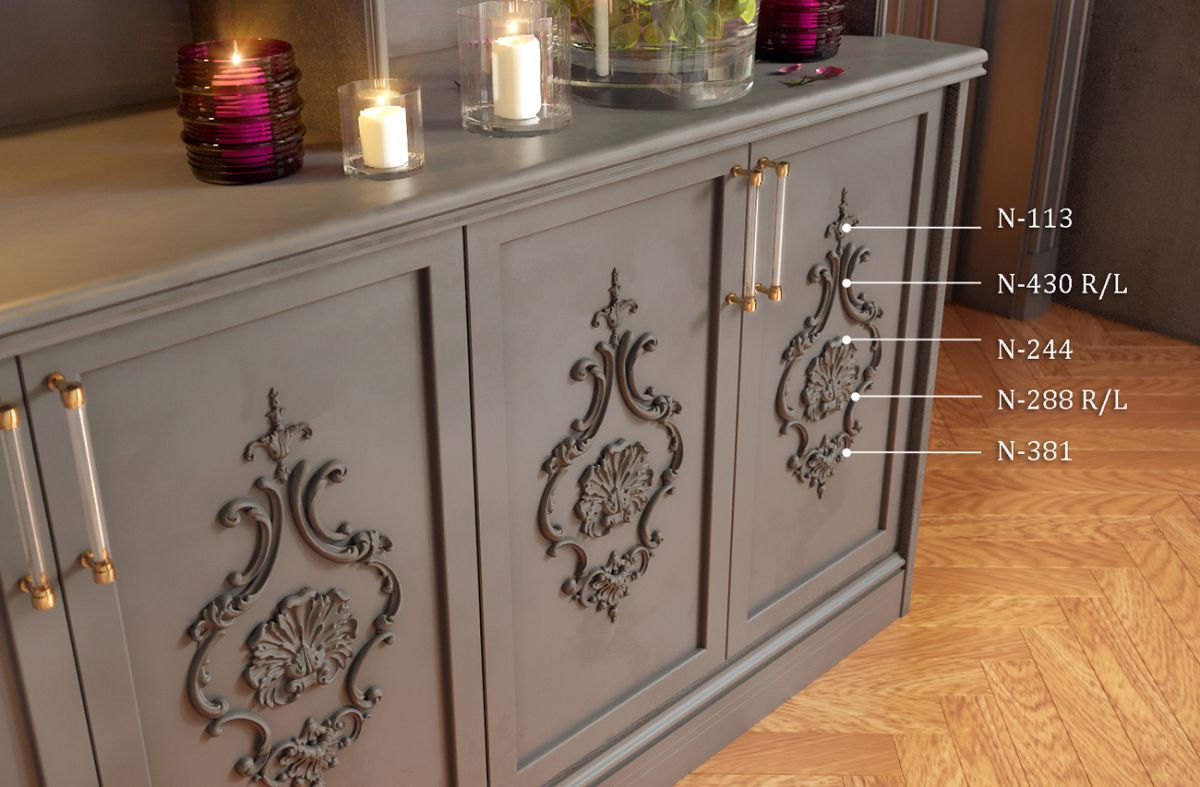
. These elements can be minimalist or more complex — with carved patterns. Polyurethane appliqués are easily mounted on drawer fronts using glue and can be painted in any color to highlight the style of your interior. Appliqués help make the chest not only functional but also a stylish decorative element. Polyurethane decorative appliquesStep 4: Final finishing and installation
After all elements are assembled and installed, your chest is nearly ready for use. Only the final touches remain, which will give the product a finished look and make it a true centerpiece of the room.
After all elements are assembled and installed, your chest of drawers is almost ready for use. Only the final touches remain, which will give the piece a finished look and make it a true centerpiece of the room.
-
Painting or varnishing. If you wish to change the color of MDF or protect it from external influences, you can use special furniture paint or varnish. Varnish will highlight the texture of MDF and give it a glossy finish. If you are using polyurethane appliqués, they can also be painted in your desired color to match the main body of the chest.
-
Hardware for drawers. Choosing drawer handles is an important element that will give the chest individuality. You can choose classic handles or modern minimalist options. Ensure that the hardware is securely installed and matches the overall style of your product.
Decorating the chest: how to add individuality
Decorating the chest is an essential part of the process that allows you to give your product a finished and unique look. The right choice of decorative elements can completely change the appearance of the chest, making it the centerpiece of the interior or harmoniously fitting into the overall style of the room. Furniture decor can be executed in various forms: from carved wooden appliqués to modern polyurethane elements. These decorative solutions are easily mounted on drawer fronts, side panels, and even the top part of the chest, adding elegance and sophistication.
Wooden appliqués: classic and style
Classic style. If you want to create a chest that looks like antique furniture, add
-
Classic style. If you want to create a chest of drawers that looks like antique furniture, add carved wooden appliqués for furniture on drawer fronts or side panels. Such elements can imitate vintage carved ornaments, giving your product a touch of antiquity and luxury.
-
Modern solutions. For those who prefer modern interiors, you can choose minimalist wooden appliqués. Such elements will highlight the natural beauty of wood and add freshness and lightness to the product. Using simple geometric shapes instead of classic patterns allows you to create a unique combination of traditions and modern design solutions.
Wooden appliqués are easily attached using wood glue or special fasteners. Additionally, they can be painted in a color that harmonizes with the overall style of your chest. This opens up even more opportunities for personalization and creating a unique piece of furniture.
Polyurethane molding: lightness and flexibility in decoration
Modern dresser. If you are creating a dresser in a modern style, pay attention to
-
Modern chest of drawers. If you are creating a chest of drawers in a modern style, pay attention to polyurethane molding. These elements can be made in the form of smooth geometric shapes, which will add minimalism and strict lines to the dresser. They are easily mounted on the dresser surface and can be painted in any color, allowing them to be adapted to any stylistic solution.
-
Classic style. For those who prefer a classic style, polyurethane elements can imitate intricate carved patterns and ornaments. The lightness of this material allows creating large decorative elements without overloading the structure. The molding can be painted gold or silver, adding luxury to the item and making it the main accent in the interior.
Moreover, polyurethane elements are ideal for creating dressers with curved fronts or unusual shapes, as the material is easy to process and can be adapted to any surface. Polyurethane molding is also resistant to changes in humidity and temperature, making it an ideal solution for furniture located in rooms with unstable conditions (for example, bathrooms or kitchens).
Conclusion
Creating a dresser by yourself is an exciting process that allows you not only to showcase your creative nature but also to create a unique piece of furniture that will perfectly fit your interior. Regardless of the material you choose to make the dresser — whether solid wood, MDF, or even cardboard — properly selected materials and decorative elements will help you make the item not only functional but also aesthetically appealing. The company Stavros offers a wide range of high-quality furniture components, including Furniture legs, Decorative Inserts и polyurethane molding, which will help you create the dresser of your dreams.
Creating furniture by yourself is not only practical but also exciting. It is an opportunity to realize your design ideas, bring your dreams to life, and create a piece of furniture that will serve you for many years. Thanks to the use of high-quality materials such as solid wood, and decorative elements such as carved appliqués or polyurethane ornaments, your dresser will become not just furniture, but a true work of art. Furniture legs and furniture decor from Stavros will help you create a dresser that will become a true gem of your interior, giving it a unique style and elegance.


