Article Contents:
- Preparation stage: the foundation of successful installation
- Master's toolset
- Mounting methods: choosing the optimal technology
- Mounting with metal bolts: reliability proven over time
- Mounting with screws: simplicity and efficiency
- Mounting with wooden dowels: traditional methods
- Step-by-step installation technology
- Stage one: marking and preparation
- Stage two: preparing balusters
- Stage three: installing support posts
- Stage four: installing intermediate balusters
- Features of installation on different types of staircases
- Staircases on stringers
- Staircases on treads
- Spiral and rotating staircases
- Working with different base materials
- Wooden bases
- Concrete and stone bases
- Quality control and defect elimination
- Checking vertical alignment
- Checking the reliability of mounting
- Correcting typical defects
- Final Finishing and Protection
- Sanding and Surface Preparation
- Protective Coatings
- Installing handrails: final stage
- Preparing the Handrail Support Board
- Handrail Installation
- Features of installation in different climatic conditions
- Wet Areas
- Unheated rooms
- Maintenance and repair
- Regular Inspection
- Preventive Maintenance
- Conclusion
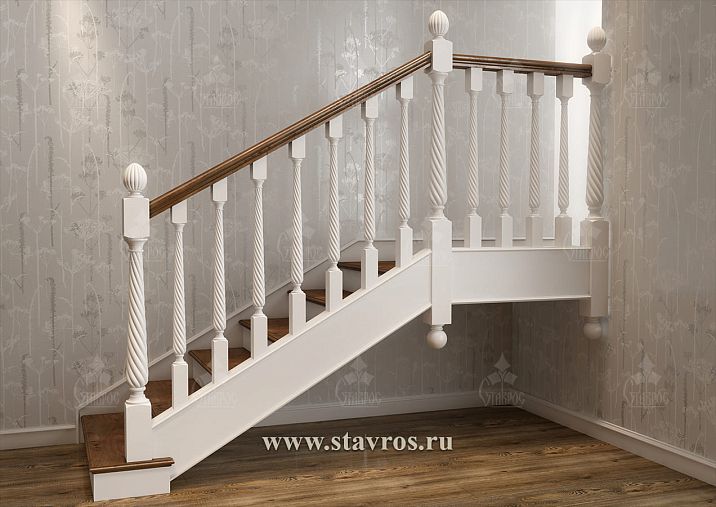
A staircase without balusters is like a symphony without violins, like a painting without colors. That is why the question how to properly install balusters becomes crucial for anyone who aims to create not just a functional structure, but a true architectural masterpiece. Proper baluster installation is an art that requires knowledge, patience, and understanding of the subtleties of working with wood.
Installing balusters yourself may seem like a complex task, but following the technology and using quality materials will result in exceeding all expectations. Each baluster should become not just a support element, but a work of art, harmoniously fitting into the overall interior concept. The correctness of installation affects not only the safety of the structure, but also its durability and aesthetic appeal.


Preparation stage: the foundation of successful installation
The success of any construction project is laid down during the preparation stage. Before beginning the actual installation, it is necessary to carefully plan every detail of the process. Planning is not just making a list of actions; it is a deep analysis of the staircase's structural features, choosing the optimal mounting method, and preparing all necessary tools.
The first step is measuring and marking. Accuracy at this stage determines the quality of all subsequent work. The standard distance between balusters is 100-150 millimeters, ensuring an optimal balance of safety and aesthetics. In homes with children, this distance should not exceed 100 millimeters — a requirement dictated by safety considerations.
The height of balusters is another critically important parameter. The standard height is 900 millimeters from the step surface to the top of the railing. However, this dimension may be adjusted depending on the height of the residents and architectural features of the room. It is important to remember that all balusters must have the same height after installation, which requires accounting for the thickness of the steps and the characteristics of their surface.




Master's toolset
Quality installation of balusters is impossible without professional tools. A drill with a set of drill bits of various diameters is the foundation of the toolkit. Drill bits for wood with diameters of 6, 8, and 10 millimeters will be needed to create holes for fasteners. A circular saw will ensure perfectly straight cuts, which is critically important for tight fitting of elements.
A construction level at least 60 centimeters long will help control the vertical alignment of each baluster. A tape measure and pencil for marking, clamps for securing elements during work, and a sander for final finishing — each tool plays its role in achieving an ideal result.
Do not forget about personal protective equipment: safety glasses will prevent wood chips from entering the eyes, a respirator will protect against wood dust, and gloves will ensure a secure grip on tools and protect hands from splinters.
Our factory also produces:


Ways of mounting: choosing the optimal technology
Get Consultation
Mounting on metal bolts: a proven method of reliability
Metal bolts with a diameter of 8-10 millimeters represent the most reliable method of mounting balusters. This method ensures exceptional strength of the connection and allows for disassembly of the structure without damaging the main elements if necessary.
The installation technology begins with preparing holes. In the center of the lower end of the baluster, a hole is drilled to a depth of 50-60 millimeters and a diameter 1 millimeter smaller than the bolt diameter. This ensures a tight fit of the fastening element. The bolt is screwed into the baluster to a depth of 40-50 millimeters, with the free end protruding 60-80 millimeters.
In the step or under the baluster, a hole is drilled with a diameter exactly matching the bolt diameter. The hole depth must ensure full immersion of the bolt’s protruding part with a small margin. For additional reliability, the threaded part of the bolt is treated with wood glue before installation.
Mounting with screws: simplicity and efficiency
Wood screws 80-90 millimeters long with a countersunk head represent an alternative mounting method, distinguished by its simplicity. This method is especially effective when working with soft wood species such as pine or spruce.
Angular mounting is performed at an angle of 30-40 degrees to the vertical axis of the baluster. In the side surface of the baluster, 20-30 millimeters from the lower end, a guide hole is drilled with a diameter 2 millimeters smaller than the screw diameter. The screw is screwed in so that its tip protrudes through the center of the lower end of the baluster.
To securely fix one baluster, four screws are required, arranged in a cross pattern. The screw heads are countersunk into the wood to a depth of 2-3 millimeters and masked with wooden plugs or putty matching the wood color.
Mounting on wooden dowels: traditional methods
Wooden dowels with a diameter of 8-10 millimeters are a classic method of connecting wooden elements, proven over centuries. Dowels are made from hardwoods — oak, beech, ash — and provide a strong, eco-friendly connection.
The installation technology is similar to mounting on bolts, but requires special precision when drilling holes. The hole diameter must exactly match the dowel diameter, ensuring a tight fit without gaps. The dowel is installed with PVA wood glue, which provides additional strength to the connection.
Step-by-step installation technology
Stage one: marking and preparation
Quality marking is the foundation of successful installation. Start by determining the points for installing the outer support posts. The first post is installed on the lower step or platform before the staircase, the second — on the upper platform or the last step of the flight.
Marking intermediate balusters is done using a tape measure and pencil. The distance between balusters should be equal along the entire length of the staircase. When there are turning sections, it is necessary to account for changes in geometry and adjust distances accordingly.
To control the vertical alignment of future balusters, a construction string is stretched between the outer points. This string serves as a reference during installation of each baluster and helps avoid deviations from vertical alignment.
Stage two: preparing balusters
Each baluster requires individual preparation before installation. End-cutting is the first operation, ensuring perfectly flat cuts at the top and bottom ends. A circular saw with a fine-toothed blade ensures a clean cut without chipping.
Drilling holes for fasteners is done with particular care. The center of the hole must exactly coincide with the geometric center of the baluster’s end. For this, diagonals are drawn on the end, and the point of their intersection is marked with a center punch.
When using balusters of complex shapes, individual fitting of each element may be required. Carved or turned balusters often have slight dimensional deviations that must be considered during preparation.
Stage three: installing support posts
Support posts are the foundation of the entire railing structure. Their installation requires special care, as they bear the main load from the railing and intermediate balusters.
The lower support post is mounted to the floor or lower step using anchor bolts or strong screws. The fastener diameter should be at least 10 millimeters, and the installation depth — at least 80 millimeters.
The upper support post is mounted to the upper platform or last step in a similar manner. It is important to ensure strict verticality of both posts, which is controlled by a construction level and plumb bob.
Stage four: installing intermediate balusters
After installing the support posts, proceed with installing intermediate balusters. Correct installation of balusters requires adherence to a specific sequence of actions.
Installation begins with central balusters and proceeds toward the edges. This approach allows for even distribution of possible errors and avoids accumulation of mistakes. Each baluster is installed strictly vertically, controlled by a level.
Baluster fixation is performed using the selected mounting method. When using adhesive compositions, it is necessary to ensure immobility of the elements until the adhesive is fully dried. The setting time for PVA wood glue ranges from 2-4 hours depending on temperature and air humidity.
Features of installation on different types of staircases
Stairs with Stringers
Stringer staircases provide the most convenient base for baluster installation. Wide treads provide sufficient area for secure mounting, and the open construction allows easy access to mounting locations from the back side.
Mounting to the tread — the most common method for stringer staircases. Balusters are installed 50-70 millimeters from the front edge of the tread, ensuring optimal load distribution and convenient staircase use.
The tread thickness must be considered when installing on stringer staircases. Standard thickness is 40-50 millimeters, which is sufficient for secure mounting of balusters using any of the described methods.
Stairs with Stringers
Stringer staircases require a special approach to baluster installation. The treads in such constructions are embedded into the side stringers, limiting access to mounting locations and requiring the use of special technologies.
Mounting to the stringer is performed at an angle corresponding to the staircase's incline. The bottom end of the baluster must be cut at this angle to ensure tight contact with the inclined surface of the stringer.
Using a baluster base — an effective solution for stringer staircases. A baluster base is a wooden strip mounted to the stringer and serves as a mounting base for balusters. This approach simplifies installation and ensures uniform mounting of all elements.
Helical and spiral staircases
Helical and spiral staircases present special difficulty for baluster installation due to the changing geometry of the treads. L-shaped treads have a trapezoidal shape, requiring individual calculation of the position of each baluster.
Radial placement of balusters on turning sections must ensure even filling of the space between railings. The distance between balusters is measured along the inner radius of the turn and may vary from 80 to 120 millimeters.
When installing balusters on helical staircases, the variable angle of the railing inclination must be considered. The top ends of the balusters must be cut at individual angles for each position.
Working with different base materials
Wooden bases
Wooden treads and landings provide the most favorable base for installing wooden balusters. Uniformity of materials ensures optimal adhesion and minimizes the risk of deformation due to changes in humidity.
Hardwood species (oak, beech, ash) require pre-drilling holes for fasteners. The hole diameter should be 1-2 millimeters smaller than the screw or bolt diameter to ensure secure fixation.
Softwood species (pine, spruce, larch) allow screwing in without pre-drilling, but require caution to prevent wood cracking.
Concrete and stone bases
Installing wooden balusters on concrete or stone bases requires special fasteners and techniques. Chemical anchors provide secure fixation in dense materials and withstand significant loads.
8-10 mm diameter expansion anchors are suitable for mounting baluster bases to concrete surfaces. Installation depth should be at least 60 mm to ensure secure fixation.
When working with concrete, use a hammer drill with diamond bits. Standard wood drill bits quickly dull and do not provide quality holes in hard materials.
Quality control and defect elimination
Verticality check
Checking baluster verticality is a critically important aspect of quality installation. A 60-80 cm long construction level allows precise determination of deviations from vertical. The allowable deviation should not exceed 2 mm per meter of height.
Visual inspection is performed from various viewing points. Balusters should appear strictly vertical when viewed from any side of the staircase. Special attention should be paid to inspection from the tread level — this is the point where deviations are most noticeable.
Checking the reliability of mounting
Each installed baluster should be checked for mounting strength. Light shaking in various directions allows detection of weak connections. A properly installed baluster should have no play or movement.
Load tests are conducted after complete drying of adhesive joints. A horizontal load of 50-70 kilograms is applied to the baluster — this load simulates real operating conditions.
Vertical deviation is corrected by loosening the fasteners and reinstalling the baluster using a level. In significant deviations, the hole in the base may need to be enlarged.
Poor fit at the ends is corrected by additional processing of the contact surfaces. Small gaps are filled with wood glue or wood-colored putty.
Weak fastening is strengthened by additional fixing points or by replacing fasteners with stronger ones. In critical cases, complete reinstallation of the baluster may be required.
Weak fastening is strengthened by additional fixing points or by replacing fasteners with stronger ones. In critical cases, complete reinstallation of the baluster may be required.
Final finishing and protection
Polishing and surface preparation
Dust removal is performed using compressed air or adhesive cloth. Residual wood dust may negatively affect the quality of subsequent coatings, so this step requires special attention.
The choice of protective coating depends on the wood species, interior style, and operating conditions. Transparent varnishes highlight the natural beauty of wood and provide reliable protection against moisture and mechanical damage.
Protective coatings
Oil-based coatings create a more natural appearance and allow the wood to "breathe". They require periodic renewal but enable localized repair without full resanding.
Wax compositions give the surface a noble matte sheen and create pleasant tactile sensations. Wax is applied in a thin layer and polished with a soft cloth to achieve an even gloss.
Wax finishes provide a noble matte sheen to surfaces and create pleasant tactile sensations. Wax is applied in a thin layer and polished with a soft cloth to achieve an even gloss.
Installing handrails: final stage
Preparing the handrail support rail
The handrail support rail serves as the base for mounting the handrail and provides additional structural rigidity. The rail section is typically 40×20 mm, ensuring sufficient strength with minimal visual bulk.
The handrail is the final element of the railing and must provide a comfortable grip and aesthetic completion of the structure. The handrail profile is selected to match the baluster style and overall interior design.
Installing the handrail
The handrail serves as the finishing element of the railing and must provide a comfortable grip and aesthetic completion of the structure. The handrail profile is selected to match the style of the balusters and the overall interior design.
Handrail mounting is done through a groove in its lower part, into which the handrail support rail fits. Additional fixation is provided by screws driven from below through the rail into the handrail body.
Installation features in different climatic conditions
Wet rooms
Installing balusters in humid rooms requires special attention to material selection and techniques. Moisture-resistant wood species (larch, teak, oak) better withstand increased humidity.
Special protective coatings based on polyurethane or epoxy resins provide reliable moisture protection. All fasteners must be made of stainless steel to prevent corrosion.
Unheated rooms
In unheated rooms, wood is subjected to significant temperature fluctuations, which may lead to deformation and cracking. Expansion gaps in joints allow wood to expand and contract without damaging the structure.
Elastic adhesives better withstand temperature deformations compared to rigid adhesives. Polyurethane adhesives provide strong yet flexible bonding.
Maintenance and repair
Regular Inspection
Installed balusters require periodic inspection to identify potential defects. Monthly visual inspection allows timely detection of loosened fasteners, cracks, or coating damage.
Fastener integrity checks should be performed at least once every six months. Special attention should be given to the junctions between balusters and bases or railings.
Preventive maintenance
Fastener tightening prevents play and ensures long-term structural integrity. When using threaded connections, it is recommended to use locking compounds to prevent unintentional loosening.
Updating protective coatings extends the service life of balusters and maintains their aesthetic appeal. The frequency of renewal depends on usage intensity and environmental conditions.
Conclusion
Baluster installation craftsmanship is a combination of technical knowledge, practical experience, and artistic sensitivity. Each stage of the process, from material preparation to final finishing, requires attention to detail and understanding of working with wood. how to properly install balusters — a question that concerns many homeowners striving to create a safe and beautiful staircase.
Modern technologies and materials open up wide creative possibilities, but the fundamentals of craftsmanship remain unchanged. Precision, neatness, understanding of material properties — these qualities were important for masters of the past and remain relevant today.
Correctly installed balusters not only ensure the safety of staircase use but also become an important element of interior design. They emphasize the room's style, create a sense of completion and harmony. Investments in quality installation are repaid by the long-term durability of the structure and daily enjoyment of its beauty. Properly installed balusters — this is a guarantee of safety, durability, and beauty of the staircase structure. Completed — this is a guarantee of safety, durability, and beauty of the staircase structure.
Each baluster, installed with technology and care, becomes part of the house's history. It will serve not only current owners but future generations, preserving traditions of quality and craftsmanship. In a world of mass production and quick decisions, proper baluster installation remains a bastion of true artisanal art.
For many years, the company STAVROS has specialized in producing high-quality solid wood items and providing professional consultations on their installation. Rich experience, deep knowledge of technologies, and understanding of client needs allow STAVROS to offer not only quality products but also expert support at every stage of the project. STAVROS specialists are ready to share their knowledge and assist in implementing the most complex projects, ensuring a result that will delight for many years.