












































































Article Contents:
- Baseboard as Space Philosophy: Why It Is Actually Needed
- Boundary and Protection: Functional Essence
- Psychology of Perception: Why Details Matter
- History in Details: Evolution of the Baseboard
- Anatomy of Production: How a Baseboard is Born
- Concept and Design: From Idea to Drawing
- Material selection: the soul of the future product
- Mechanical Processing: Precision as the Basis of Beauty
- Cutting: The Art of Economy
- Technological Symphony: Stages of Birth
- Calibration: Precision as the Foundation of Quality
- Fitting: Creating the Base
- Profiling: birth of form
- Sanding: The Path to Perfection
- Trimming to Size: Final Precision
- Materials Science: Choosing for Each Case
- Solid Wood: Enduring Classic
- MDF: Technologies Serving Quality
- Composite Materials: Looking Toward the Future
- Variety of Forms: Baseboard for Every Style
- Classic Profiles: Time-Tested
- Modern Solutions: Minimalism and Functionality
- High Baseboards: Return of Fashion
- Coating Technologies: Protection and Beauty
- Priming: Foundation of Durability
- Tinting: Creating the Desired Shade
- Finishing with Lacquer: Final Protection
- Alternative Coatings: Oils and Waxes
- Custom Approach: Baseboards Made to Order
- Unique Profiles: Realizing Ideas
- Tool manufacturing: precision accuracy
- Small-Batch Production: Balance of Uniqueness and Economy
- Quality Control: Responsibility for the Result
- Multi-Level Quality Control System
- Statistical methods: warning of problems
- Final acceptance: guarantee to the consumer
- Ecological aspects: responsibility to the future
- Sustainable forestry
- Zero-waste technologies
- Ecologically clean coatings
- Trends and prospects for development
- Production digitization
- New materials and technologies
- Mass Customization
- Installation and operation: final touches
- Preparation for Installation
- Mounting methods
- Maintenance and care
- Selection and purchase: practical tips
- How to choose the right skirting board
- What to Pay Attention to When Buying
- Skirting boards from the manufacturer: advantages of direct sales
- Frequently Asked Questions

There are elements in interior design that work quietly and unnoticed, like good supporting actors. They do not shout about themselves, do not attract attention with bright colors or extravagant forms, but without them the entire composition falls apart, loses its integrity and harmony. Skirting board — exactly such a modest hero of our everyday life.
Have you ever wondered why some rooms feel somehow incomplete, unfinished? As if the artist forgot to put the final stroke on the canvas? Most often, the issue lies in the absence or incorrect choice of skirting board. This seemingly secondary element actually plays the role of a connecting link between the floor and walls, creating that very sense of completion, without which even the most expensive renovation looks unfinished.
Skirting board manufacturing— this is not just a manufacturing process. It is the art of creating details that make our home truly a home, not just a set of functional spaces.


Skirting board as philosophy of space: why is it really needed




Boundary and protection: functional essence
Imagine the shore of the sea, where waves meet sand. This boundary — not just a line on a map — is alive, dynamic, it protects land from erosion and creates a unique ecosystem. Skirting board performs a similar function in our interior.
It protects the lower part of the wall from mechanical damage — from vacuum cleaner hits, children's toys, furniture. It hides inevitable gaps between flooring and walls, which form due to material thermal expansion. It conceals wiring and cables, preserving the interior's clean lines.
But this is only the tip of the iceberg. The true value of skirting board lies in creating visual completeness of space.
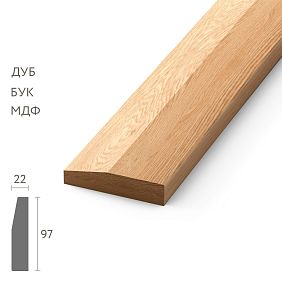
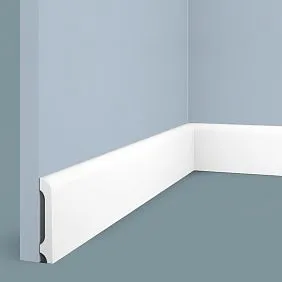
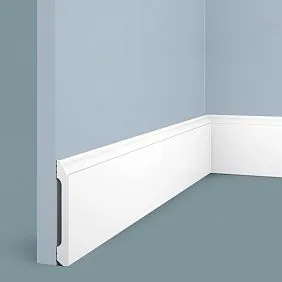
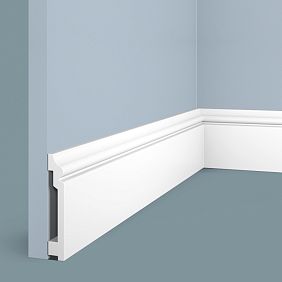
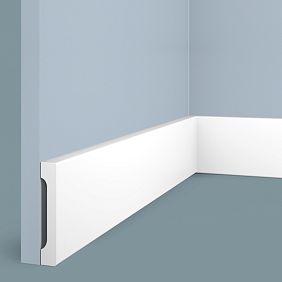
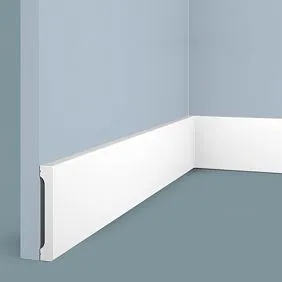
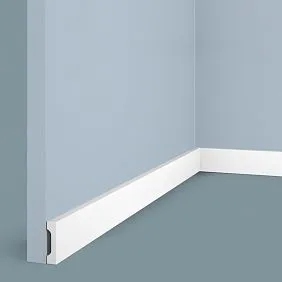
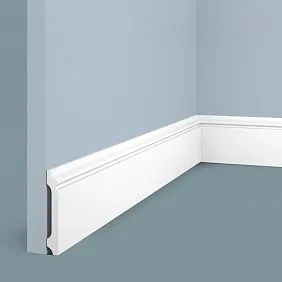
Our factory also produces:
Psychology of perception: why details matter
The human brain is wonderfully structured. It constantly seeks order, structure, completeness in the surrounding space. The absence of skirting board is subconsciously perceived as incompleteness, creating a sense of discomfort, even if we cannot articulate exactly what is bothering us.
A correctly chosen and well-made skirting board creates a "frame" effect for the floor, emphasizes the geometry of the room, sets the rhythm for the entire interior. It can visually increase ceiling height (if a narrow profile is selected) or, conversely, create a sense of coziness and intimacy (when using wide skirting boards).
Get Consultation
History in details: evolution of skirting board
It is interesting to trace how the role of skirting board changed in architecture of different eras. In ancient temples, these were massive stone plinths, emphasizing the monumentality of buildings. In medieval castles — functional wooden strips protecting walls from moisture.
The true heyday of skirting board art fell on the 18th-19th centuries. Palace interiors of that time demonstrated incredible variety of profiles, decorations, materials.Skirting board manufacturing from wood— became a true art, where each master tried to surpass colleagues in refinement and complexity of execution.
The 20th century brought functionalism and minimalism, but did not diminish the value of skirting board. Simply, the emphasis shifted from decoration to quality of execution and precision of geometry.
Anatomy of production: how skirting board is born
Concept and design: from idea to drawing
Everything begins with understanding the task. For what interior is the skirting board intended? A classic mansion or a modern apartment? A children's room or a strict executive office? The answers to these questions determine the choice of profile, material, and processing method.
Modern design uses CAD systems, allowing to create accurate 3D models of the future product. The designer can see how the skirting board will look in a specific interior, select optimal dimensions and proportions.
Material selection: the soul of the future product
Material — this is not just the base for the product, it is its character, its soul. Each material dictates its own possibilities and limitations, its aesthetics and functionality.
Solid wood— a classic choice, time-tested. Oak gives the product nobility and durability, beech — elegant strictness, ash — expressive texture. Coniferous species make the skirting board accessible to a wide range of consumers without compromising quality.
High-density MDF— a modern alternative combining technology with aesthetics. This material allows creating complex profiles that would require hours of manual labor in solid wood.
Preparatory operations: quality embedding
Custom skirting board manufacturingProduction begins with careful material preparation. This is like an artist preparing a canvas — the quality of the base determines the result of the entire work.
Wood undergoes multi-stage drying in special chambers. The material's moisture is brought to the optimal 8-12% — such skirting boards will not crack or deform during use.
Sorting by quality allows directing each category of material to where it will provide maximum benefit. The highest grade goes to premium product surfaces, medium grade to hidden parts, and lower grade can be used for technical purposes.
Cutting: the art of economy
Optimal material cutting — this is advanced mathematics multiplied by the master’s experience. Modern programs help calculate the most efficient use of each board, taking into account knot placement, grain direction, and requirements for the appearance of finished products.
A skilled master cutter can achieve a material utilization coefficient of 85-90%. This is not only economically beneficial but also environmentally responsible — fewer waste materials mean less burden on nature.
Technological symphony: stages of creation
Calibration: precision as the foundation of quality
The first machining operation — calibrating blanks by thickness. Double-sided jointers in one pass create blanks with perfectly parallel surfaces and precisely maintained thickness.
Why is this so important? Because any deviations at this stage will be magnified in subsequent operations. A skirting board with inconsistent thickness cannot be installed properly — it will either be too far from the wall or too tightly pressed against it.
Grooving: creating the base
Grooving the edge — an operation that creates the basic surface for all subsequent treatments. An ideally flat, perpendicular edge — this is the foundation of a quality product.
Modern grooving machines are equipped with spiral-blade cutters, which provide a level of processing purity unattainable with straight blades. Each millimeter of edge is processed by several blades, guaranteeing an ideal smooth surface.
Profiling: birth of form
If previous operations are preparation, then profiling is the moment of truth — when an anonymous blank transforms into a skirting board with its own character and purpose.
Wooden skirting board manufacturingRequires special tools — profiled knives manufactured according to individual drawings. Each profile requires its own set of knives, precisely reproducing all curves and transitions.
Four-sided machines form all surfaces of the skirting board in one pass. The blank is fed by roller mechanisms at a constant speed, knives operate at high speeds, cutting fine shavings. Process parameters — feed rate, cutting depth, spindle speed — are calculated individually for each wood species and each profile.
Sanding: the path to perfection
After profiling, the skirting board undergoes careful sanding. This is not just an operation to improve appearance — it is preparing the surface for applying protective-decorative coatings.
Multi-stage sanding with gradually decreasing abrasive grit refines the surface to mirror smoothness. Modern CNC sanding machines precisely replicate the product’s profile, processing even the most complex curves.
End-cutting to size: final precision
The final mechanical operation — cutting skirting boards to size. Automatic crosscut saws ensure perfect perpendicularity of ends, which is critical for quality installation.
The cutting angle is maintained with precision down to angular minutes. Modern measurement systems control the length of each item, rejecting those that do not meet strict tolerances.
Material science: choice for each case
Solid wood: enduring classic
Natural wood — this is a material with history, character, and living energy. Each board is unique, and each skirting board made from solid wood has its own unique texture.
Baseboard ProductionSolid wood requires a special approach to raw material selection. It is important to consider not only the wood species but also the growing conditions, drying method, and grain direction.
OakRemains the king among skirting board materials. Its hardness ensures durability, while its beautiful texture creates a unique appearance. Oak skirting boards can serve for decades, gradually acquiring a noble patina over time.
BeechA worthy alternative to oak for those who prefer a more subdued, uniform texture. Its pinkish hue pairs beautifully with modern flooring finishes.
AshAttracts attention with its contrasting texture and high durability. Birch skirting boards are especially effective under transparent finishes, highlighting the natural beauty of the wood.
SpruceA democratic choice that does not mean compromising on quality. Modern processing technologies allow creating pine skirting boards that do not fall short of hardwood products.
MDF: Technologies at the Service of Quality
MDF panels (medium-density fiberboard) have brought a true revolution to skirting board production. This material lacks the main drawbacks of solid wood: it does not crack, warp, or have knots and other natural defects.
Manufacturing Skirting Boards from MDFAllows creating items of ideal geometry with precision unattainable with natural wood. The uniform structure of the material ensures dimensional stability throughout its entire service life.
Modern MDF panels are produced without formaldehyde resins, making them environmentally safe. Special moisture-resistant grades can be used even in rooms with high humidity.
Composite Materials: A Look to the Future
The new generation of composite materials combines the best properties of various components. Wood fibers provide a natural appearance and good mechanical properties, while polymer binders ensure stability and moisture resistance.
These materials open up new possibilities for designers and manufacturers. They can imitate any wood species, have unusual colors and textures, and possess special properties — antibacterial, fire-resistant, wear-resistant.
Variety of Shapes: Skirting Boards for Every Style
Classic Profiles: Time-Tested
Classic skirting boards are the embodiment of centuries of form evolution. Every curve, every transition has its functional and aesthetic justification.
A simple rectangular profile — the foundation of foundations, a universal solution for most interiors. Its minimalism does not mean simplicity — quality of execution is especially important here, as any defects will be immediately noticeable.
Profiles with bevels create a play of light and shadow, visually lightening the structure. Rounded transitions soften transitions, making the interior more cozy.
Complex multi-profile skirting boards — a choice for classic and neoclassical interiors. Their manufacturing requires high craftsmanship and precision — each element must be executed flawlessly.
Modern Solutions: Minimalism and Functionality
Modern interiors dictate their requirements for skirting boards. Here, decorativeness is not valued — instead, line purity, quality of execution, and functionality are prized.
Hidden skirting boards, built into the wall, create a "floating" floor effect. This solution requires precise planning during the construction stage, but the result justifies the effort.
Skirting boards with hidden lighting — another modern solution. An LED strip, concealed in a special channel, creates an eye-catching perimeter lighting effect.
High Skirting Boards: A Return of Fashion
In recent years, there has been a return of fashion for high skirting boards. They visually increase ceiling height, creating a sense of spaciousness and grandeur in the interior.
Manufacturing Ceiling Skirting BoardsDesigning rooms with high and floor-level skirting boards requires a special approach. They must harmonize with the room’s proportions and not overpower other interior elements.
Coating Technologies: Protection and Beauty
Priming: The Foundation of Durability
Quality coating begins with priming. Primer equalizes the wood’s absorption capacity, ensures reliable adhesion to the final coating, and protects against moisture and biological damage.
Modern primers contain antiseptic additives that prevent mold and fungal growth. Special formulations for coniferous species block resin exudation, which could spoil the coating’s appearance.
Toning: Creating the Desired Shade
Staining allows wood to be given any shade — from natural to fantasy. Modern stains penetrate deeply into the wood structure, accentuate its texture, and create an even color.
Multi-layer staining technology allows creating complex color effects — aging imitation, tone play, color transitions. Each layer is applied after the previous one is fully dry and is processed with fine sandpaper.
Lacquering: Final Protection
Lacquer coating protects skirting boards from mechanical damage, moisture, and dirt. Modern lacquers provide high durability while preserving the natural beauty of wood.
UV-curing lacquers polymerize under ultraviolet radiation in seconds. This allows applying multiple layers within a single technological cycle, ensuring high-quality coating.
Alternative Coatings: Oils and Waxes
Oil and wax coatings are becoming increasingly popular due to their eco-friendliness and unique aesthetics. They do not form a film on the wood surface but penetrate its structure, highlighting its natural beauty.
Such coatings require more careful maintenance but provide unique tactile sensations. Wood remains alive, breathable, and warm to the touch.
Custom Approach: Skirting Boards Made to Order
Unique Profiles: Realizing Ideas
Standard profiles do not always meet the needs of individual projects. A modern-style mansion, restoration of a historic building, or an original design project — all these tasks require unique solutions.
Custom-made skirting boardIt begins with profile creation. The designer works closely with the client, refining every detail and nuance.
3D modeling allows seeing the result even before production begins. The client can assess how the skirting board will look in their interior, make adjustments, and select optimal dimensions.
Tool manufacturing: precision accuracy
Each unique profile requires individual knives. Their manufacturing is a separate art requiring the highest precision and craftsmanship.
Modern CNC machines allow manufacturing knives of complex shapes with micron-level accuracy. Each knife undergoes control on special stands, where samples are tested for the quality of the resulting profile.
Small-batch production: balance of uniqueness and economy
Custom skirting board manufacturingOften implies small batches — for one house, one project. It is important to find a balance between the uniqueness of the product and economic feasibility.
Flexible production systems allow quickly switching from one profile to another. This makes it economically viable to produce even very small batches of unique skirting boards.
Quality Control: Responsibility for the Result
Multi-level Quality Control System
The quality of the skirting board is established at every stage of production. The control system covers the entire technological cycle — from incoming material inspection to final acceptance of finished products.
Incoming material inspection includes checking moisture content, density, and presence of defects. Automated sorting systems reject unsuitable materials even before processing begins.
During production, all critical parameters are monitored: profile accuracy, surface quality, geometric dimensions. Modern measurement systems allow real-time control.
Statistical Methods: Preventing Problems
Statistical quality control allows identifying trends and preventing systematic deviations. Control charts show process stability and signal the need for parameter adjustments.
Analysis of deviation causes helps improve technology and prevent recurrence of problems. Each defect case is analyzed, and conclusions are drawn to enhance the process.
Final Acceptance: Guarantee to the Consumer
Finished skirting boards undergo final acceptance before packaging and shipment. All parameters are checked: geometric dimensions, surface quality, compliance with technical specifications.
Sample tests confirm compliance of products with all requirements. Results are recorded in the quality passport, which accompanies each batch of products.
Environmental Aspects: Responsibility to the Future
Sustainable Forestry
The manufacturer of skirting boardsIt bears responsibility not only to consumers but also to future generations. Using wood from certified forests is not just a fashionable trend, but a necessity.
The FSC system guarantees that forests regenerate faster than they are harvested. This ensures sustainable forestry development, preserves biodiversity, and protects local community rights.
Zero-Waste Technologies
Modern technologies allow the use of almost all wood raw materials. Waste from main production becomes raw material for other industries — particleboard, MDF, fuel briquettes.
Shavings and sawdust are not discarded but recycled. This is not only economically beneficial but also environmentally responsible — fewer waste means less burden on the environment.
Ecologically Safe Coatings
Traditional coatings based on organic solvents are gradually replaced by environmentally safe compositions. Water-based varnishes and paints contain no harmful substances and do not produce unpleasant odors.
Natural oils and waxes — a return to the traditions of our ancestors, who knew how to create durable coatings without synthetic chemicals.
Trends and Development Prospects
Digitalization of production
The Fourth Industrial Revolution has not bypassed the production of baseboards. The Internet of Things connects all elements of the production system into a single network.
Machines exchange information, optimize processes, and warn of the need for maintenance. Artificial intelligence analyzes data and suggests ways to improve technology.
Predictive maintenance prevents equipment failures and reduces downtime. Real-time quality control systems adjust process parameters.
New materials and technologies
Advancements in materials science open new possibilities for baseboard production. Nanotechnologies allow creating coatings with unique properties — self-cleaning, antibacterial, color-changing.
Bio-composites based on natural fibers and biodegradable polymers — a solution for environmentally conscious consumers. 3D printing opens opportunities for creating baseboards of the most complex shapes.
Mass customization
The development of flexible production systems makes mass customization possible — producing individual items with the economics of mass production.
Custom molding pricewhich will be accessible to a wide range of consumers, but each item will be unique, created specifically for a particular project.
Installation and operation: final touches
Preparation for Installation
A quality baseboard requires quality installation. Surface preparation, accurate marking, correct choice of fasteners — all of this affects the final result.
Walls must be flat, dry, and free of dust and contaminants. Irregularities exceeding 3-5 mm may lead to gaps forming between the baseboard and the wall.
Methods of mounting
There are several ways to install baseboards, each with its own advantages and limitations. Screws provide a reliable but visible fastening. Adhesive ensures invisibility but makes removal difficult.
Hidden fastening with clips — a compromise between reliability and aesthetics. Special fasteners hold the baseboard while remaining invisible.
Care and Maintenance
Proper care extends the lifespan of baseboards and preserves their appearance. Regular dry cleaning removes dust and contaminants. Wet cleaning is only permissible with special agents.
Periodic renewal of protective coatings is the key to product longevity. Oil-based coatings require more frequent maintenance but are easier to restore.
Selection and purchase: practical tips
How to choose the right baseboard
Choosing a baseboard begins with analyzing the interior. Room style, wall and floor colors, ceiling height — all these factors influence the choice of profile, size, and material.
A wide baseboard visually increases the scale of a room, but may 'eat' height in small rooms. A narrow baseboard is more versatile, but may disappear in spacious rooms.
What to pay attention to when purchasing
A quality baseboard must have correct geometry, smooth surface, even coating. Cracks, chips, glue marks, and uneven color are unacceptable.
Wood moisture content must match the conditions of use. Over-dried baseboards may crack, overly wet ones may deform.
Baseboards from the manufacturer: advantages of direct sales
Buying directly from the manufacturer offers several advantages. This includes authenticity guarantee, technical support availability, and more attractive prices.
The manufacturer knows their product better and can provide professional advice on selection, installation, and operation. Problems are easier to resolve directly with the manufacturer.
Frequently asked questions
What is the optimal height for baseboards in a standard apartment?
The optimal height of baseboards depends on ceiling height and interior style. For standard apartments with ceilings of 2.5–2.7 m, baseboards 70–100 mm high are suitable. In rooms with high ceilings, baseboards up to 150–200 mm can be used. The main rule — the baseboard should be proportional to the room.
Can baseboards be made according to an individual sketch?
Yes, modern technologies allow manufacturing baseboards of any profile according to individual drawings. The process includes creating a 3D model, manufacturing special tools, and setting up equipment. The minimum order volume depends on the profile complexity, but usually amounts to 100 linear meters.
Which material is better to choose: solid wood or MDF?
The choice depends on your priorities and budget. Solid wood provides maximum eco-friendliness and durability, but costs more and may deform due to humidity changes. MDF is more stable, cheaper, allows creating complex profiles, but lags behind solid wood in eco-friendliness and prestige.
How long do wooden baseboards last?
When properly manufactured and installed, wooden baseboards can last 25–50 years or more. Service life depends on wood species, coating quality, and operating conditions. Baseboards from hardwoods (oak, beech) last longer than those from softwoods (pine, linden).
Can wooden baseboards be installed in humid rooms?
Wooden baseboards can be installed in humid rooms, but they require special moisture protection. It is better to use moisture-resistant species (teak, larch) or special moisture-resistant MDF grades. Adequate room ventilation is mandatory.
How to properly care for wooden baseboards?
Care includes regular dry cleaning with a soft cloth, periodic wet cleaning with special wood cleaning agents, maintaining optimal air humidity (40–60%). Avoid excessive water contact and abrasive cleaning agents. It is recommended to renew the protective coating every 5–7 years.
What tools are needed for installing baseboards?
For installation, you will need: a circular saw or miter saw for precise cutting of angles.


