Article Contents:
- Natural wood — eternal classic of furniture art
- Wood species and their unique characteristics
- Coniferous species in furniture production
- Exotic species and their applications
- Wood composites — technologies of the future
- MDF: universality and perfection
- Particleboard and the evolution of wood-based materials
- Plywood and its possibilities in furniture
- Metal in modern furniture
- Steel structures and their advantages
- Aluminum and its alloys
- Cast iron and its modern applications
- Glass: transparency and lightness
- Types of glass for furniture
- Glass decoration
- Plastics and polymers in furniture
- Acrylic and its possibilities
- Polycarbonate and its properties
- Innovative polymer materials
- Textiles and upholstery materials
- Natural fabrics
- Artificial and synthetic materials
- Leather and leather substitutes
- Composite and innovative solutions
- Wood-polymer composites
- Mineral composites
- Bio-composites and eco-materials
- Modern joining technologies for materials
- Adhesive technologies
- Mechanical connections
- Welded connections
- Finishing Materials and Coatings
- Coating finishes
- Film Coatings
- Decorative techniques
- Ecological aspects of materials
- Renewable resources
- Waste recycling
- Biodegradable materials
- Specialized materials for specific applications
- Materials for children's furniture
- Materials for kitchen furniture
- Materials for office furniture
- Quality Control and Standardization
- International standards
- Testing methods
- Safety certification
- Trends and prospects for development
- Digital technologies in materials science
- Nanomaterials and nanotechnologies
- Smart materials
- Frequently Asked Questions
- Which materials are better to choose for making furniture?
- Which materials are the most eco-friendly?
- How to determine the quality of a material?
- Does the thickness of a material affect its strength?
- Which materials are suitable for humid environments?
- Can damaged materials be repaired?
- How to properly care for different materials?
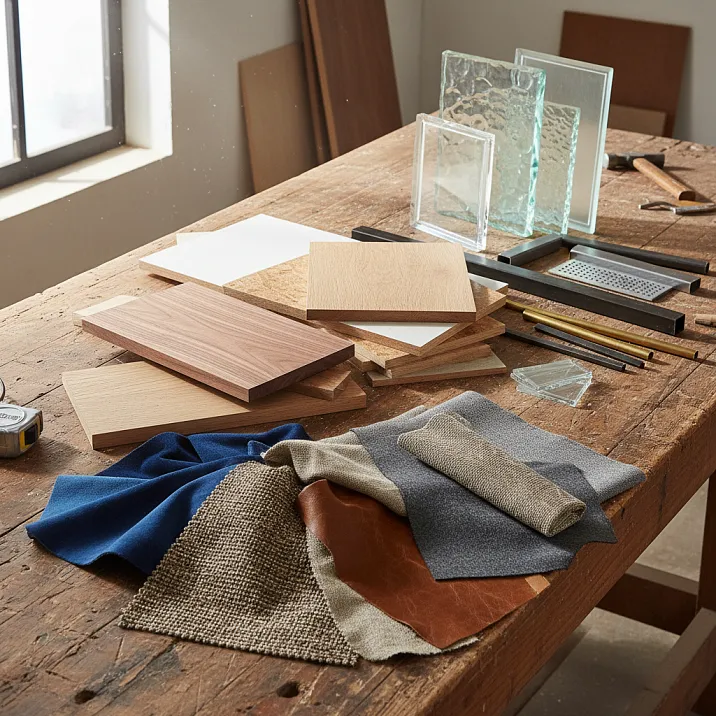
Question aboutwhat can be used to make furnitureThe question of what can be used to make furniture concerns everyone who faces the need to furnish a living or working space. In the modern world, the variety of materials is breathtaking — from traditional wood to innovative composite solutions, each offering unique opportunities to create functional and aesthetically pleasing furniture.
The evolution of furniture materials reflects the progress of human civilization. If our ancestors relied solely on natural wood and stone, today we have an entire arsenal of high-tech materials that allow us to realize the most daring design fantasies at an optimal price-to-quality ratio.


Natural wood — eternal classic of furniture art




Wood species and their unique characteristics
When the question arises aboutwhat materials are used to make wooden furnitureThe first thing that comes to mind is noble hardwood species. Oak reigns among furniture materials due to its exceptional strength and distinctive texture. Its density reaches 700 kg/m³, ensuring the longevity of items for centuries. Tannins present in oak wood create a natural protection against moisture and insects.
Walnut attracts designers with its rich color palette — from light brown to deep chocolate shades. Its wavy texture creates unique patterns, making each item a unique work of art. American black walnut is especially valued for its dimensional stability and excellent workability.
Ash demonstrates remarkable flexibility, allowing for curved furniture elements without complex technologies. Its light tone and contrasting texture are ideal for modern Scandinavian-style interiors. High impact resistance makes ash indispensable for manufacturing chairs and other load-bearing structures.
Our factory also produces:


Coniferous species in furniture production
Spruce remains the most accessible material for furniture due to its rapid growth and wide distribution. Modern drying and processing technologies allow minimizing the typical drawbacks of coniferous species — resinous nature and tendency to warp. Siberian spruce with dense annual rings is especially valued for its stability and beautiful texture.
Larch possesses natural resistance to decay, surpassing many tropical species. Its density approaches that of oak, and its resin content provides natural protection against moisture. Furniture made from Siberian larch is especially striking with its clearly defined contrasting layers.
Cedar attracts not only with its pleasant aroma but also with its antiseptic properties. Cedar furniture creates a unique microclimate in a room, positively affecting health. The softness of the wood allows for intricate carving and decorative elements.
Get Consultation
Exotic Woods and Their Applications
Wenge from Central Africa impresses with its deep dark brown color and black streaks. Its exceptional hardness requires special tools, but the result justifies the effort — furniture becomes practically eternal. High oil content provides natural water resistance.
Teak is rightfully considered the royal material for furniture. Its unique ability to resist rot even in seawater made teak the primary material for shipbuilding. In furniture manufacturing, its dimensional stability and resistance to any influences are highly valued.
Padauk enchants with its purple-brown hues and complex texture. High content of essential oils gives the wood a distinctive aroma and natural protection. Furniture made of padauk becomes a family heirloom, passed down from generation to generation.
Wood Composites — Technologies of the Future
MDF: Universality and Perfection
Medium-density fiberboard (MDF) revolutionized the furniture industry. The production technology is based on grinding wood into fibers 0.1–0.3 mm thick, then forming under 40 MPa pressure at 180°C. Natural lignin acts as a binder, making the material environmentally safe.
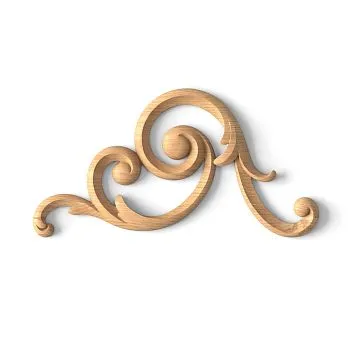
The density of quality MDF is 720–880 kg/m³, providing excellent mechanical strength at relatively low weight. Uniform structure allows for extremely fine milling, creating volumetric decorative elements indistinguishable from hand-carved wood.where to buy furniture decorMDF — an actual question for modern furniture makers.
Water-resistant MDF contains special hydrophobic additives that reduce water absorption by several times. Such panels are dyed a characteristic green color and are ideal for kitchen furniture and bathroom fixtures.
Particleboard and the Evolution of Wood-Particle Materials
Particleboard remains the foundation of economical furniture due to its optimal price-to-quality ratio. Modern particleboards have a three-layer structure — coarse particles in the inner layer provide strength, while fine particles in the outer layers ensure surface quality.
E1 emission class guarantees health safety — formaldehyde content does not exceed the natural level in wood. Innovative technologies allow using formaldehyde-free binders based on polyurethane or natural lignin.
Laminated particleboard (Laminated Particleboard) receives a decorative coating during hot pressing at 200°C. Melamine resins create a wear-resistant surface that imitates any material — from wood to stone and metal.
Plywood and Its Possibilities in Furniture
Birch plywood combines the strength of solid wood with the stability of composite materials. Cross-layered fiber orientation in the layers eliminates warping and cracking. Water-resistant plywood grade FSF withstands repeated soaking and drying without loss of strength.
Flexible plywood 4–6 mm thick allows creating curved furniture elements without steam or special fixtures. The bending radius can reach 150–200 mm, opening unlimited possibilities for design creativity.
Decorative plywood with natural veneer of valuable species combines the beauty of exotic wood with affordable cost. Stabilization technology eliminates typical defects of natural veneer — cracks and delamination.
Metal in modern furniture
Steel Structures and Their Advantages
When we think aboutwhat can be used to make furnitureIn industrial style, steel takes the leading position. Structural steel provides load-bearing capacity unattainable by other materials. Modern welding technologies allow creating joints stronger than the metal itself.
AISI 304 stainless steel contains 18% chromium and 8% nickel, ensuring corrosion resistance in any conditions. Various finishing treatments — grinding, polishing, sandblasting — create diverse visual effects, from mirror shine to elegant matte finish.
Perforated metal adds lightness to furniture and ensures ventilation. Laser cutting allows creating complex ornamental patterns with micron-level precision, transforming functional elements into works of art.
Aluminum and Its Alloys
Aluminum profiles are widely used in modern furniture due to their low weight and high corrosion resistance. Anodized coating not only protects against oxidation but also allows achieving a wide color palette — from silver to deep black.
Casting aluminum parts provide complex geometry at minimal weight. Modern high-pressure casting technologies allow producing parts with wall thickness down to 2 mm at the highest dimensional accuracy.
Welded aluminum structures require special technologies due to material properties. TIG welding in protective atmosphere ensures strong and aesthetic joints without deformation of thin-walled profiles.
Cast Iron and Its Modern Applications
Cast iron is experiencing a second life in furniture design. Its ability to take complex shapes during casting makes it possible to create intricate decorative elements of incredible beauty. Modern anti-corrosion coatings completely eliminate the characteristic rusting of cast iron.
High-strength cast iron with spheroidal graphite combines the casting properties of ordinary cast iron with the mechanical characteristics of steel. This material is ideal for heavily loaded furniture elements — table legs, shelf bases.
Casting of cast iron allows reproducing historical furniture samples with intricate precision. Modern molding materials provide detailing down to fractions of a millimeter.
Glass: transparency and lightness
Types of glass for furniture
Tempered glass undergoes special thermal treatment at 650°C followed by rapid cooling. This process increases strength by 5-7 times compared to ordinary glass. Upon breaking, it forms small, safe fragments with blunt edges.
Triplex glass consists of multiple layers bonded with transparent polymer film. Even under strong impact, fragments remain attached to the film, eliminating the risk of injury. Triplex thickness can reach 20-30 mm for particularly demanding applications.
Laminated glass is formed at high temperatures in special molds. This technology allows creating curved glass elements of any curvature — from gentle waves to sharp spirals.
Glass decoration
Sandblasting creates matte areas of any configuration. By varying abrasive particle size and pressure, one can achieve different levels of matting — from light haze to deep matte finish. Stencil sandblasting allows creating complex images and patterns.
Fusing is a technology of fusing colored glass elements at 800-850°C. Different types of glass fuse into a single whole, creating unique color transitions and textures. Each item is unique.
UV printing on glass opens unlimited possibilities for personalization. Using special inks, any image with photographic quality can be applied. Fade resistance reaches 50 years with proper ink selection.
Plastics and polymers in furniture
Acrylic and its possibilities
Cast acrylic (PMMA) combines the transparency of glass with the safety of plastic. Its optical properties surpass ordinary glass — light transmission reaches 92%. At the same time, the material is 10 times lighter than glass and practically unbreakable.
Extruded acrylic is cheaper than cast acrylic, but inferior in optical properties. However, it is better suited for mechanical processing and thermoforming. Sheets up to 100 mm thick allow creating monolithic furniture elements of impressive size.
Colored acrylic opens unlimited possibilities for color design. Fluorescent additives create an internal glow effect. Pearl pigments impart a shimmering luster to the surface, changing depending on viewing angle.
Polycarbonate and its properties
Solid polycarbonate exceeds acrylic in impact resistance by 100-200 times. This material is practically unbreakable under normal operating conditions. Operating temperature range from -40 to +120°C makes it suitable for any conditions.
Honeycomb polycarbonate provides thermal insulation with minimal weight. Two-layer panels 16 mm thick weigh only 2.5 kg/m² with a thermal conductivity of 2.8 W/m²°C. This opens possibilities for creating energy-efficient furniture.
Antistatic additives prevent dust accumulation on polycarbonate surfaces. UV stabilizers prevent yellowing and degradation of the material under sunlight.
Innovative polymer materials
Polyoxymethylene (POM) has exceptional mechanical properties at low density. This material is ideal for manufacturing furniture hardware — hinges, guides, fasteners. Low friction coefficient eliminates the need for lubrication.
Polyphenylene oxide (PPO) maintains dimensional stability over a wide temperature range. Its dielectric properties make it indispensable for furniture with built-in electronics.
Carbon fiber reinforced polymer (CFRP) provides maximum strength at minimal weight. Specific strength exceeds steel by 5-7 times. The ability to create complex shapes through molding opens unlimited design possibilities.
Textiles and upholstery materials
Natural fabrics
When considering the question ofWhat is cabinet furniture made of?cannot forget about textile elements. Natural linen attracts with its eco-friendliness and unique texture. Its hygroscopicity and breathability create a comfortable microclimate. Modern antibacterial treatment prevents microbial growth.
Cotton remains the basis for budget upholstery fabrics. Mercerization increases strength and imparts a silk-like sheen. Teflon treatment creates stain-repellent properties, significantly simplifying maintenance.
Wool fabrics provide excellent thermal regulation. Lanolin imparts natural antibacterial properties. Modern technologies allow creating thin wool fabrics that match cotton in comfort.
Artificial and synthetic materials
Viscose combines natural origin with synthetic properties. Modal — an improved version of viscose — surpasses cotton in strength and softness. Tencel from eucalyptus possesses natural antimicrobial properties.
Polyester fabrics demonstrate exceptional durability. Microfiber with a thickness less than 1 denier creates a silk-like surface while maintaining high strength. Modern polyester fibers match natural fibers in comfort.
Polyamide fibers provide fabric elasticity. Adding just 2-3% spandex dramatically improves consumer properties. Furniture with elastic upholstery adapts to body contours, ensuring maximum comfort.
Leather and leather substitutes
Natural leather remains the standard of luxury in furniture. Aniline leather preserves its natural texture and breathable properties. Semi-aniline treatment adds a protective coating, enhancing durability.
Pigmented leather achieves uniform color and maximum resistance to stains. Modern eco-friendly dyes exclude harmful emissions. Special impregnations provide antibacterial properties.
Polyurethane-based eco-leather approaches natural leather in consumer properties. Micro-porous structure ensures breathability. Hypoallergenic nature makes it ideal for children's furniture.
Composite and innovative solutions
Wood-Plastic Composites
Laminated particle board combines the beauty of wood with the durability of plastic. Wood flour content of 60-70% ensures a natural appearance and allows mechanical processing with carpentry tools. Polymer matrix prevents rotting and insect damage.
Modern Laminated Particle Boards are produced with various profiles — from wood imitation to complex architectural elements. Co-extrusion allows creating protective layers with enhanced properties while maintaining the cost-effectiveness of the base.
Color stability is achieved using light-resistant pigments and UV stabilizers. High-quality Laminated Particle Board retains its original color for 25-30 years without additional treatment.
Mineral composites
Acrylic-based artificial stone combines the beauty of natural marble with the practicality of synthetic material. Non-porous structure prevents absorption of contaminants. Scratches are easily removed by polishing.
Quartz composites contain up to 95% natural quartz in a polymer matrix. Hardness approaches granite while significantly reducing weight. Wide color palette includes shades impossible for natural stone.
Ceramic composites provide maximum wear resistance. Modern technologies allow creating sheets up to 3-6 mm thick with dimensions up to 3200×1600 mm. This enables seamless covering of large surfaces.
Bio-composites and eco-materials
Composites based on plant fibers are gaining popularity due to their eco-friendliness and unique properties. Linen fiber provides high specific strength while being fully biodegradable.materials for furniture maker— modern CAD systems consider new eco-friendly materials.
Hemp fibers surpass linen in strength and durability. Natural resistance to mold and bacteria eliminates the need for chemical treatment. Rapid hemp growth makes this material a renewable resource.
Composites based on fast-growing wood species — bamboo, paulownia — combine eco-friendliness with outstanding mechanical properties. Bamboo panels surpass plywood in strength while having lower density.
Modern material joining technologies
Adhesive technologies
Polyurethane adhesives provide elastic joints that compensate for material temperature deformations. Setting time of 15-20 minutes allows adjusting part positions. Full polymerization is achieved within 24 hours at room temperature.
Epoxy compositions create joints stronger than the bonded materials. Low shrinkage eliminates internal stresses. Modifications with rubber additives increase impact resistance of joints.
Cyanoacrylate adhesives provide instant bonding upon contact with moisture. They are ideal for precise positioning of small parts. Modern compositions withstand temperatures up to 150°C.
Mechanical connections
Cabinet screws remain the primary fastening for cabinet furniture. Special thread design ensures high holding capacity in wood materials. Concealed head creates a neat appearance of joints.Legs base furniture maker— are often fastened specifically with cabinet screws.
Excentric clamps allow creating high-strength disassemblable joints. Hidden placement of the mechanism does not affect the product's aesthetics. Possibility of multiple assembly/disassembly simplifies transportation and repair.
Dowel joints ensure precise positioning of parts. Glued dowels from hardwood create joints equal to solid wood. Modern dowel equipment guarantees micron-level accuracy of holes.
Welded joints
TIG welding provides strong and aesthetic welds on stainless steel and aluminum. Inert atmosphere prevents oxidation and porosity of welds. Pulsed modes minimize deformation of thin-walled profiles.
Spot welding is ideal for joining sheet materials. Local heating prevents overall deformation of the products. Programmable parameters ensure consistent joint quality.
Ultrasonic welding of thermoplastics creates hermetic joints without additional materials. The process speed — fractions of a second — ensures high productivity.
Finishing materials and coatings
Paint and varnish coatings
Polyurethane coatings demonstrate exceptional wear and chemical resistance. Two-component formulations polymerize to form a three-dimensional network structure. Gloss can vary from 5 to 90 units on the gloss scale.
Nitrocellulose coatings provide rapid drying and easy repair. Multi-layer application with intermediate sanding creates a perfectly smooth surface. The ability for localized repair simplifies maintenance.
Water-based formulations eliminate the emission of volatile organic compounds. They are safe for health and the environment. Modern recipes match solvent-based ones in performance characteristics.
Film coatings
PVC films create durable decorative surfaces at an affordable cost. Thickness of 0.35–0.7 mm allows forming on radii down to 3 mm. Synchronized texture creates tactile sensations reminiscent of natural materials.
Acrylic films surpass PVC in light resistance and eco-friendliness. The absence of plasticizers eliminates migration of harmful substances. The possibility of secondary recycling aligns with circular economy principles.
Melamine coatings are formed directly on the base surface during hot pressing. Chemical bonding with the substrate prevents delamination. The coating hardness exceeds that of many lacquers.
Decorative Techniques
Patina creates an effect of noble antiquity on new items. Different patina compositions — metallic, wax, oil-based — produce diverse visual effects. Handcrafted by artisans, each item becomes unique.
Crackle effect mimics natural cracking of aged coatings. Special formulations create a network of cracks of specified size and density. Contrast underlayer visible through cracks enhances decorative effect.
Brushing mechanically reveals wood texture by removing soft fibers. Metal brushes of varying stiffness allow control over processing depth. Subsequent toning emphasizes surface relief.
Ecological aspects of materials
Renewable resources
Bamboo grows at a rate of up to 1 meter per day, making it the fastest-renewable construction material. Strength of bamboo panels exceeds traditional plywood. Natural antiseptic properties eliminate need for chemical treatment.
Cork combines unique physical properties with absolute eco-friendliness. Bark harvesting does not harm trees that live 200–300 years. Natural elasticity and insulation create comfortable tactile sensations.
Straw from cereal crops — agricultural waste — is successfully used to produce panel materials. Straw panels with formaldehyde-free binders are fully biodegradable.
Waste Recycling
Recycled paper panels solve the problem of paper waste disposal. Modern technologies allow obtaining materials that do not fall short of MDF in mechanical properties. Water-resistant formulations expand application scope.
Plastic composites from recycled materials give a second life to polymer waste. Sorting by plastic type ensures stable material properties. Additives-modifiers improve performance characteristics.
Rubber crumb from worn tires finds application in furniture cushioning elements. High elasticity and durability make this material indispensable for specialized applications.
Biodegradable materials
Starch, cellulose, chitosan-based bioplastics fully degrade under natural conditions. Degradation time ranges from 6 to 24 months depending on composition. Composting yields valuable fertilizer.
Natural fibers — flax, hemp, jute — form reinforcing bases for biocomposites. Plant-based binders eliminate use of synthetic polymers.
Mycelial materials form self-organizing materials with unique properties. Controlled cultivation allows obtaining items of specified shape and density. The resulting material is easy to process and color.
Specialized materials for specific applications
Materials for children's furniture
Safety is the primary criterion when selecting materials for children's furniture. All finishes must comply with EN 71 toy safety standards. Absence of small parts and sharp edges eliminates risk of injury.
Antibacterial coatings with silver nanoparticles suppress growth of harmful microorganisms. The effect lasts throughout the product’s service life. Safety of nanoparticles is confirmed by medical research.
Easy-to-clean surfaces simplify maintenance of children's furniture. Marker, clay, and paint stains can be removed with a damp cloth without using aggressive cleaners.where to buy moldings for decorationChildren's furniture — an important issue for manufacturers.
Materials for kitchen furniture
Moisture resistance is a critical parameter for kitchen materials. Constant fluctuations in humidity and temperature create extreme operating conditions. Edge banding must be absolutely hermetic.
Heat-resistant coatings withstand contact with hot dishes up to 180°C without changing their appearance. Special fillers increase thermal conductivity, preventing localized overheating.
Chemical resistance to acids, alkalis, and fats is ensured by proper selection of binders and fillers. Silicone modifications create stain-repellent properties.
Materials for office furniture
Antistatic properties prevent dust accumulation on office furniture surfaces. This is especially important for electronic equipment. Conductive additives ensure static charge dissipation.
Fire resistance of office materials is regulated by building codes. Self-extinguishing polymers and flame retardants in wood materials reduce fire hazard.
Ergonomic properties of materials affect comfort during prolonged work. Thermal comfort, tactile sensations, and absence of glare — all these factors are considered when designing workspaces.
Quality control and standardization
International Standards
ISO 12460 regulates requirements for formaldehyde emissions from wood panels. Class E1 limits emissions to 0.1 mg/m³, which is safe for health. Testing methods are standardized to ensure comparable results.
GREENGUARD — an American certification system for materials with low emissions. Requirements exceed national standards and account for the specifics of childcare and medical facilities.
FSC (Forest Stewardship Council) — an international forest certification system. Products marked with FSC guarantee origin from sustainably managed forests. The supply chain is controlled at all stages.
Testing methods
Bending tests determine the load-bearing capacity of materials. Standard load of 2.5 kN/m² simulates operational conditions. Residual deformations must not exceed established limits.
Impact tests simulate random mechanical impacts. A 1 kg falling load from a height of 1 m must not cause sample damage. Damage is assessed using a standardized scale.
Climate tests include cycles of wetting-drying and heating-cooling. Changes in dimensions and appearance must not exceed permissible values.
Safety certification
Medical cytotoxicity tests identify potential hazards of materials for living cells. Cell cultures are exposed to extracts from test materials.
Dermatological tests determine the risk of allergic reactions upon skin contact. Volunteers wear material samples on their skin under medical supervision.
Inhalation studies assess the safety of inhaling emitted substances. Air in the work zone is analyzed using highly sensitive chromatographic methods.
Trends and Development Prospects
Digital technologies in materials science
Artificial intelligence revolutionizes the development of new materials. Machine learning analyzes property databases and predicts characteristics of compounds not yet synthesized. Development time is reduced by dozens of times.
Computer modeling allows studying materials at the atomic level. Quantum-mechanical calculations predict mechanical, thermal, and electrical properties of materials. Virtual tests replace costly experiments.
3D printing of materials creates structures impossible with traditional methods. Gradient composites with smoothly varying properties, porous structures with defined topology — all this becomes feasible.
Nanomaterials and nanotechnology
Carbon nanotubes possess a unique combination of strength and lightness. Tensile strength is 100 times greater than steel at a density 6 times lower. Electrical conductivity opens possibilities for smart furniture.
Graphene — a two-dimensional material one atom thick — demonstrates record mechanical and electrical properties. Adding just 0.1% graphene dramatically improves polymer characteristics.
Wood-based nanocellulose has strength comparable to carbon fibers while being fully biocompatible. Bacterial cellulose possesses a unique microstructure providing exceptional mechanical properties.
Smart Materials
Shape-memory materials return to their original configuration upon heating. This opens possibilities for self-assembling furniture and elements with variable geometry.
Electrochromic materials change color under an electric field. Furniture can adapt to the user's mood or time of day. Energy consumption is minimal — color change occurs upon applying a pulse.
Piezoelectric materials generate electricity under mechanical stress. A chair can charge mobile devices using the energy of the seated person. Modern piezomaterials achieve an efficiency of up to 80%.
Frequently asked questions
What materials are best to choose for furniture manufacturing?
Material selection depends on the furniture's purpose, budget, and personal preferences. Solid wood from premium species is ideal for premium living room furniture. Kitchen cabinets are better made from moisture-resistant MDF. Office furniture requires practical materials — MDF, metal, glass.where to buy moldingsFor furniture decoration — a frequent question for designers.
What materials are the most eco-friendly?
The most eco-friendly materials are those of natural origin — solid wood with natural finishes, cork, bamboo, natural fabrics. Among composite materials, preference should be given to products certified E0 or E1 for formaldehyde emissions.
How to determine the quality of a material?
Quality materials have certification marks, clear manufacturer labeling, uniform color without stains or inclusions. Wooden panels should not have chipping at edges, swelling, or delamination. Metals should not show corrosion, pitting, or cracks. Plastics should not have clouding, scratches, or deformation.
Does the thickness of the material affect its strength?
For most materials, increasing thickness proportionally increases strength and rigidity. However, for composites, the quality of the binder and reinforcing elements is more important. A thin, high-quality material may surpass a thick, low-quality one.
What materials are suitable for humid areas?
For bathrooms and kitchens, moisture-resistant MDF, plastics, stainless steel, aluminum, and tempered glass are suitable. Solid wood requires special protection with multi-layer lacquers. All edges must be professionally edge-banded.
Can damaged materials be repaired?
Most materials can be repaired for localized damage. Wood can be sanded and re-coated. Scratches on plastic can be polished away. Chips on particleboard and MDF are filled with special waxes or pastes. Severe damage usually requires replacing the component.
How to properly care for different materials?
Each material requires specific care. Wood with oil finish should be periodically re-oiled. Lacquered surfaces should be wiped with a damp cloth without abrasives. Plastics should be cleaned with neutral cleaners. Metal requires regular polishing with special compounds.
In conclusion, it should be noted that the modern furniture industry offers an almost limitless arsenal of materials to realize any designer's vision. From traditional wood to futuristic nanocomposites — each material finds its niche of application, meeting specific requirements of functionality, aesthetics, and budget.
The company STAVROS has been a reliable partner for the furniture industry for many years, offering a wide range of high-quality materials and decorative elements. Our specialists will help select the optimal materials for any project, taking into account all aspects of usage and design requirements.where to buy decorFor furniture — a question to which STAVROS always provides a comprehensive answer, offering solutions for the most demanding clients.