Article Contents:
- Evolution of Furniture Materials: From Antiquity to the Present
- Classification of Modern Furniture Materials
- Laminated Particle Board: The People's Favorite in the Furniture Industry
- Laminated Particle Board Production Technology
- Advantages of Laminated Particle Board in furniture production
- Limitations and Specifics of Laminated Particle Board Usage
- MDF: The Golden Middle Ground Between Price and Quality
- Unique MDF Technology
- Application of MDF in Cabinet Production
- Moisture Resistance and Durability of MDF
- Solid Wood: Eternal Classic
- Wood Species for Furniture Production
- Advantages of Solid Wood Furniture
- Features of Wooden Furniture Operation
- Fiberboard: An Underrated Universal
- Technical Characteristics of Fiberboard
- Application of Fiberboard in Furniture Production
- Metal in Furniture Production: Strength and Modernity
- Types of Metals in Furniture Production
- Advantages of Metal Furniture
- Plastic: The Material of the Future
- Types of Plastics in Furniture Production
- Innovative Solutions in Plastic Furniture
- Glass: Elegance and Functionality
- Types of Glass for Furniture
- Advantages of glass elements
- Composite Materials: The Art of Combination
- Principles of material combination
- Popular Combinations in Modern Furniture
- Material Selection Based on Cabinet Purpose
- Bedroom Cabinets
- Kitchen Cabinets
- Bathroom Cabinets
- Children's wardrobes
- Ecological Aspects of Material Selection
- Formaldehyde Emission Classes
- Certification and Standards
- Material processing and protection technologies
- Edge banding
- Protective Coatings
- Material cost: price and quality balance
- Material Price Categories
- Economic efficiency calculation
- Trends in furniture materials development
- Eco-Friendly Materials
- Smart materials
- Nanotechnologies in furniture
- Regional Production Features
- European standards
- Asian Technologies
- Russian furniture industry
- Influence of design trends on material selection
- Minimalism
- Loft
- Scandinavian Style
- Eco-style
- Technological innovations in material processing
- 3D technologies
- Digital printing
- Laser technologies
- Quality Control and Production Standards
- International standards
- Quality control systems
- Product certification
- Special requirements for materials
- Fire Resistance
- Antibacterial Properties
- Enhanced Strength
- Chemical resistance
- Regional preferences in material selection
- Northern Regions
- Southern Regions
- Industrial centers
- Rural areas
- Recycling of furniture materials
- Recycling of wood materials
- Disposal of metal furniture
- Problems with plastic disposal
- Innovative composite materials
- Wood-polymer composites
- Mineral composites
- Bio-composites
- Influence of climate on material selection
- Humid climate
- Dry Climate
- Continental Climate
- Future of Furniture Materials
- Biomaterials
- Self-healing materials
- Intelligent Materials
- Nanostructured materials
- Economic Aspects of Material Selection
- Life cycle cost
- Impact of Production Volumes
- Logistical Factors
- Questions and Answers
- Conclusion
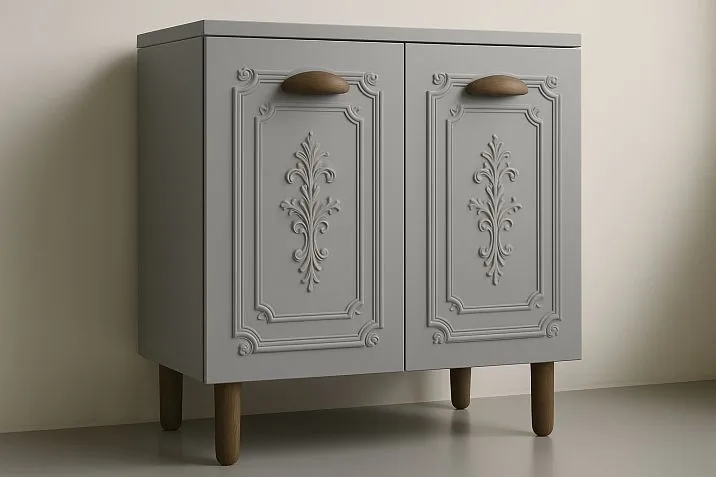
Have you ever wondered why one wardrobe lasts for decades, while another starts falling apart within a couple of years? The secret lies not only in assembly quality, but primarily in the What is cabinet furniture made of?material used. The modern furniture industry offers a wide range of materials, each with its unique characteristics, advantages, and applications.
In a world where every square meter of living space is worth its weight in gold, choosing the right material for a wardrobe is not just an aesthetic issue, but also a matter of practicality, durability, and cost-effectiveness. After all, quality furniture is an investment in the comfort and coziness of your home for many years.


Evolution of furniture materials: from antiquity to modernity
The history of furniture production development is a fascinating story of human ingenuity. If our ancestors were satisfied with only natural wood, modern industry has opened up a whole universe of possibilities. Today, the questionWhat new-generation furniture is made of — a question customers must receive comprehensive answers to. Eco-friendliness, durability, ease of care — specific advantages speak louder than abstract 'innovation'.sounds like a scientific puzzle with multiple correct answers.
Technological progress does not stand still. Modern composite materials allow us to create wardrobes that surpass traditional wooden counterparts in strength and leave even the most exotic wood species far behind in terms of decorative versatility. But does this mean that classic materials have gone to the past? Far from it!




Classification of Modern Furniture Materials
Understanding that, What is better for making furniturerequires a systematic approach. All materials can be divided into several main categories:
Natural materials – solid wood, natural veneer, which have been the foundation of furniture production for centuries.
Composite materials – the result of scientific achievements: particleboard, MDF, plywood, which combine accessibility and functionality.
Synthetic materials – plastic, acrylic, glass, metal – open new horizons in design and performance characteristics.
Combined solutions – modern cabinets often represent a harmonious combination of various materials, each performing its own function.
Our factory also produces:


MDF: the people's favorite in the furniture industry
Laminated particleboard rightfully occupies leading positions in the production of furniture. But what lies behind this abbreviation? MDF is a kind of 'sandwich', where wood particles, impregnated with special resins, are covered with a decorative laminate film.
Get Consultation
MDF Production Technology
The process of creating MDF resembles alchemy: wood particles of various fractions are mixed with binding agents, then under high pressure and temperature they transform into a strong panel. The final stage is lamination, when a decorative coating is applied to the surface, imitating various textures and colors.
Modern technologies allow creating MDF with an astonishing variety of finishes. From classic oak imitation to futuristic metallic surfaces – the possibilities are practically limitless.
Advantages of LDP in furniture production
Economic accessibility – the main advantage of MDF. This material allows creating functional furniture without significant damage to the family budget.
Geometric stability – unlike solid wood, MDF does not 'react' to humidity, does not crack or deform under proper use.
Variety of finishes – modern MDF collections include hundreds of color and texture options, allowing to realize any design idea.
Ease of processing – the material is easy to saw, drill, and mill, which simplifies production and reduces the cost of finished products.
Limitations and specific features of MDF use
Despite its many advantages, MDF has its specific features. The end parts of the panel require mandatory edge protection – without this, the material may absorb moisture and swell. Moreover, MDF is not suitable for creating complex curved forms and thin decorative elements.
The question of ecological safety also requires attention. Modern manufacturers use E0.5 and E0 grade compositions, ensuring minimal formaldehyde emission and making furniture safe even for children's rooms.
MDF: the golden middle ground between price and quality
Fine particle fraction, or MDF, represents an evolutionary development of wood panel technologies. If LDF is made from wood shavings, then MDF is created from the finest wood fibers, which gives the material unique properties.
Unique MDF Technology
MDF production is a high-tech process, where wood fibers are bonded under high temperature and pressure. Lignin, a natural substance contained in wood itself, is used as a binder. This makes MDF more eco-friendly compared to particleboard.
The density of MDF is significantly higher than that of particleboard, which gives the material additional strength and stability. The homogeneous structure allows MDF to be processed almost like natural wood – milling, creating 3D decor, and performing fine carving.
Application of MDF in cabinet production
Thanks to its properties, MDF is ideal for making cabinet fronts. The material easily takes any shape, allows creating smooth curves, radius elements, and complex surface textures.
What furniture fronts are made of Most often? MDF leads in this category due to the ability to create exclusive design solutions. MDF fronts can be painted in any RAL scale color, covered with veneer or PVC film.
Water resistance and durability of MDF
One of the main advantages of MDF is its resistance to moisture. The dense structure of the material prevents moisture penetration, which is especially important for cabinets in bathrooms and kitchens.
The durability of MDF surpasses many other materials. With proper use, furniture made of MDF lasts for decades, maintaining its original appearance and functionality.
Solid wood: eternal classic
Solid wood – a material that will never go out of fashion. what materials are used to make wooden furniture? Of course, from solid wood of various species. Each species has its own unique characteristics that determine its area of application.
Wood species for furniture production
Oak – the king of wood species. Its strength, beautiful texture, and durability make oak an ideal material for luxury furniture. Oak cabinets serve for centuries, passing down from generation to generation.
Spruce – a democratic alternative to expensive species. Easy to work with, with a pleasant pine aroma, spruce is perfect for creating furniture in country or Scandinavian style.
Birch – a domestic species with a dense structure and light tone. Birch furniture is known for its strength and affordable price.
Oak – surpasses even walnut in strength, has a distinctive texture and high impact resistance.
Walnut – an elite species with a noble dark tone and unique wood grain pattern.
Advantages of Solid Wood Furniture
Ecological safety – natural wood does not emit harmful substances, creating a healthy microclimate in the room.
Uniqueness – each solid wood item is unique due to the natural wood grain pattern.
Restorability – wooden furniture can be repaired, sanded, and repainted, extending its service life for decades.
Status – solid wood furniture has always been a symbol of wealth and good taste.
Features of wooden furniture operation
Solid wood requires special care. It is sensitive to humidity fluctuations and may crack under sudden temperature changes. Wooden furniture requires periodic treatment with special compounds to protect against insects and mold.
Plywood: an underrated universal material
Plywood often remains in the shadows of more popular materials, although it surpasses them in many parameters. This multi-layer material is created by gluing thin wood sheets (veneer) with fibers arranged perpendicularly in adjacent layers.
Technical characteristics of plywood
Strength – due to the crosswise arrangement of fibers, plywood has high bending strength and does not deform.
Stability – unlike solid wood, plywood practically does not change its geometry with humidity fluctuations.
Lightness – plywood is significantly lighter than solid wood while maintaining comparable strength.
Ecological safety – high-quality plywood is manufactured using non-toxic adhesives.
Application of plywood in furniture manufacturing
Plywood is ideal for manufacturing back panels of cabinets, drawer bottoms, and internal components. High-grade birch plywood is used to create exclusive furniture due to its beautiful texture.
Modern technologies allow creating complex curved shapes from plywood using bending methods, opening new possibilities for designers.
Metal in furniture manufacturing: strength and modernity
Metal cabinets are not only office furniture. Modern designers actively use metal to create stylish interior solutions. Steel, aluminum, stainless steel – each material has its advantages.
Types of metals in furniture manufacturing
Steel – the strongest and most durable material. Steel cabinets withstand enormous loads and serve for decades.
Aluminum – lightweight, corrosion-resistant metal, ideal for modern interiors.
Stainless steel – combines the strength of steel with corrosion resistance, popular in kitchen furniture.
Advantages of metal furniture
Durability – metal cabinets are practically eternal with proper use.
Resistance to external influences – does not fear moisture, temperature fluctuations, or mechanical damage.
Fire safety – metal does not burn and does not support combustion.
Hygiene – easy to clean, does not absorb odors and contaminants.
Plastic: material of the future
Modern plastics differ fundamentally from their predecessors. High-tech polymers possess remarkable properties and open up new possibilities in furniture design.
Types of plastics in furniture manufacturing
ABS plastic – a strong, impact-resistant material, resistant to scratches.
Acrylic – has high transparency and can imitate glass.
Polypropylene – lightweight, chemically resistant, safe for health.
PVC – a universal material with wide decorating possibilities.
Innovative solutions in plastic furniture
Modern technologies allow creating plastic cabinets with unique properties: self-cleaning surfaces, antibacterial coating, color change depending on lighting.
Plastic furniture is ideally suited for children's rooms due to safety and ease of maintenance. Lack of sharp corners, resistance to impacts and stains make plastic an ideal material for children's furniture.
Glass: elegance and functionality
Glass elements in cabinets – not only beautiful, but also practical. Modern types of glass have high strength and safety.
Types of glass for furniture
Tempered glass – several times stronger than ordinary glass, does not produce sharp fragments when broken.
Triplex – multi-layered glass with a film that holds fragments together.
Tinted glass – protects the contents of the cabinet from ultraviolet rays.
Matte glass – creates a sense of privacy, concealing the contents.
Advantages of glass elements
Glass doors and shelves visually expand space, adding lightness to heavy cabinets. Glass is easy to clean, does not absorb odors, and retains its appearance for decades.
Composite materials: art of combination
Modern furniture is rarely made from a single material. What is cabinet furniture made of? today? Most often it is a harmonious combination of various materials, where each element performs its function.
Principles of Material Combination
Functionality – each material is used where its properties are best expressed.
Economy – expensive materials are used only for visible parts.
Aesthetics – combination of different textures and colors creates a unique design.
Durability – proper combination increases the lifespan of furniture.
Popular combinations in modern furniture
Laminated board + MDF – cabinet body made of laminated board with MDF fronts ensures optimal price-to-quality ratio.
Solid wood + glass – classic combination for luxury furniture.
Metal + wood – modern solution in loft style.
Plastic + Fabric – innovative solutions for youth furniture.
Material selection depending on the cabinet's purpose
Different types of cabinets require different approaches to material selection. What is ideal for a wardrobe in a bedroom may not be suitable for a kitchen set.
Bedroom wardrobes
In the bedroom, the main requirements are eco-friendliness and aesthetics. Preference is given to natural materials or their high-quality imitations. MDF with a wood-grain finish, veneered panels, solid wood – ideal options for bedroom furniture.
Kitchen cabinets
The kitchen is a zone of high humidity, temperature fluctuations, and contamination. Here, practicality and resistance to external influences come first. Laminate with quality edge banding, MDF with water-resistant coating, plastic – optimal solutions for the kitchen.
Bathroom cabinets
The bathroom requires materials with maximum water resistance. Plastic, stainless steel, special water-resistant MDF – these materials can withstand the aggressive environment of a bathroom.
Children's cabinets
Safety is the main criterion for children's furniture. Absence of sharp corners, eco-friendliness of materials, resistance to mechanical impacts – key requirements for children's furniture.
Ecological aspects of material selection
In the modern world, ecological safety of furniture is becoming an increasingly important factor. What quality furniture is made ofto be safe for health?
Formaldehyde emission classes
E0 – the safest class, suitable for any room.
E0,5 – acceptable for residential spaces.
E1 – permitted for use in residential spaces.
E2 – prohibited for use in residential spaces.
Certification and Standards
Quality furniture should have certificates confirming compliance with ecological standards. Pay attention to the presence of documents verifying the safety of materials.
Material processing and protection technologies
Modern technologies allow significantly improving the properties of traditional materials. Special coatings, impregnations, edge banding – all of this affects the quality and durability of furniture.
Edge banding
Quality edge banding is the guarantee of the longevity of furniture made of particleboard and MDF. There are various types of edge banding materials:
PVC edge banding – the most popular option, providing reliable protection for ends.
ABS edge banding – an eco-friendly alternative to PVC.
Melamine edge banding – budget option with limited service life.
Veneer – for luxury furniture, ensures perfect match with surface decor.
Protective coatings
Modern protective coatings significantly extend the service life of furniture:
Lacquers – create a durable protective film.
Oils – highlight the natural beauty of the wood.
Waxes – provide a soft matte sheen.
Polyurethane coatings – maximum protection against wear.
Material cost: balance of price and quality
Material cost is an important factor when choosing furniture. But the cheapest option is not always the most cost-effective in the long run.
Material price categories
Budget category – low-quality particleboard, thin MDF, pine.
Mid-range category – quality particleboard, MDF with good finishes, birch.
Premium category – elite wood species, high-grade MDF, natural veneer.
Luxury category – exotic wood species, exclusive materials.
Economic efficiency calculation
When choosing materials, it is important to consider not only the initial cost, but also the service life, maintenance costs, and repairability. Expensive furniture made from quality materials often proves more cost-effective in the long run.
Trends in furniture materials development
The furniture industry is constantly evolving, introducing new materials and technologies. What trends are shaping the future of furniture production?
Eco-Friendly Materials
Materials made from recycled raw materials, biodegradable plastics, and composts based on plant fibers are gaining popularity.
Smart Materials
Materials with programmable properties are emerging: self-cleaning surfaces, shape-memory materials, antibacterial coatings.
Nanotechnology in furniture
Nanomaterials open up new possibilities: ultra-strong and lightweight composites, self-healing coatings, materials with unique optical properties.
Regional Production Features
Different regions of the world have developed their own furniture production traditions, influenced by the availability of raw materials, climatic conditions, and cultural characteristics.
European standards
European furniture is renowned for its high quality and strict ecological standards. German and Italian manufacturers set the quality benchmark for the entire industry.
Asian technologies
Asian manufacturers actively adopt innovative technologies, especially in the fields of plastics and composite materials.
Russian furniture industry
Domestic manufacturers successfully combine traditional technologies with modern materials, creating products adapted to Russian operating conditions.
Influence of design trends on material selection
Interior design trends directly influence the popularity of certain materials. Unique Interiors require a special approach to material selection.
Minimalism
Minimalist design prefers simple, clean materials: white glossy surfaces, glass, metal.
Loft
Loft style leans toward "raw" materials: uncoated metal, concrete, rough wood.
Scandinavian style
Light wood species, natural materials, simple forms – the foundation of Scandinavian design.
Eco-style
Eco-design prefers natural, recycled, and renewable materials.
Technological innovations in material processing
Modern technologies have fundamentally changed approaches to processing traditional materials. 3D milling, laser cutting, and digital printing open up new possibilities for designers.
3D technologies
3D processing allows creating complex volumetric elements that were previously impossible.
Digital printing
Modern printers can apply any image to furniture surfaces, creating unique decor.
Laser technologies
Laser cutting and engraving provide precision and cleanliness of processing unattainable by traditional methods.
Quality control and production standards
The quality of furniture directly depends on adherence to technological standards at all production stages.
International Standards
ISO, GOST, European EN standards – a system of regulations ensuring the quality and safety of furniture.
Quality Control Systems
Modern enterprises implement comprehensive quality control systems, including control of raw materials, technological processes, and finished products.
Product certification
Certifications, eco-labels, quality awards – indicators of manufacturer reliability.
Special requirements for materials
Some types of furniture have special requirements for materials.
Fire Resistance
Furniture for public buildings must comply with fire safety requirements.
Antibacterial properties
Medical furniture requires materials with antibacterial properties.
Increased Strength
Office furniture must withstand intensive use.
Resistance to chemical exposure
Laboratory furniture is made from chemically resistant materials.
Regional preferences in material selection
In various regions of Russia, certain preferences have developed in selecting furniture materials, influenced by climatic conditions, traditions, and economic factors.
Northern regions
In harsh climates, preference is given to materials with high stability: quality MDF with reliable edges, moisture-resistant MDF.
Southern regions
High humidity and temperature fluctuations require special attention to material moisture resistance.
Industrial centers
In large cities, modern materials such as high-gloss finishes, glass, and metal are popular.
Rural areas
Traditional materials – solid wood, natural finishes – remain popular in rural areas.
Recycling of furniture materials
Environmental responsibility is becoming an increasingly important factor in the furniture industry. The recyclability of materials affects their popularity.
Recycling of wood materials
MDF and particleboard can be recycled into new panels or used as fuel.
Disposal of metal furniture
Metal is one of the most 'recyclable' materials, retaining its properties after multiple uses.
Problems with plastic disposal
Not all types of plastic are recyclable, which limits their use in environmentally responsible projects.
Innovative composite materials
The development of polymer chemistry has led to the emergence of fundamentally new materials combining the best properties of traditional materials.
Wood-Plastic Composites
The combination of wood filler with a polymer matrix creates materials with unique properties.
Mineral composites
Composites based on mineral fillers have high strength and fire resistance.
Bio-composites
Plant fiber-based materials – an eco-friendly alternative to traditional composites.
Influence of climate on material selection
Climate conditions in the region of operation significantly influence the choice of optimal materials for furniture.
Humid climate
High humidity requires materials with low water absorption and resistance to mold.
Dry climate
In low humidity conditions, material stability under varying moisture content is important.
Continental climate
Large temperature fluctuations require materials with low coefficient of thermal expansion.
The future of furniture materials
What materials will define the look of future furniture? Technological advancements open up amazing prospects.
Biomaterials
Materials grown biologically may become an alternative to traditional materials.
Self-healing materials
Materials with shape memory can autonomously repair minor damage.
Intelligent materials
Materials capable of responding to environmental changes and altering their properties.
Nanostructured materials
Controlling structure at the nanoscale will allow creating materials with desired properties.
Economic aspects of material selection
Material selection is always a compromise between desired properties and economic feasibility.
Life cycle cost
When selecting a material, it is important to consider the total cost of ownership: initial price, operating costs, disposal cost.
Impact of production volumes
Mass production allows reducing material costs, making quality furniture more accessible.
Transportation of wooden products during the winter period is associated with additional risks and costs. The need to protect against moisture and temperature fluctuations may increase the final cost by 5-10%.
Transportation costs can significantly affect the final cost of materials, especially for heavy materials.
Questions and answers
What material is best suited for children's furniture?
For children's furniture, the optimal choice is E0 grade MDF or solid wood with a safe finish. These materials combine ecological safety with sufficient strength.
Can MDF be used in humid rooms?
MDF can be used in humid rooms provided all edge surfaces are properly sealed and moisture-resistant grades of material are used.
What is the lifespan of MDF furniture?
With proper use, furniture made of quality MDF lasts 15-20 years, maintaining functionality and appearance.
How does MDF differ from particleboard?
MDF has higher density and strength compared to particleboard, holds fasteners better, and is less prone to deformation.
Is it worth paying more for solid wood?
The tree array justifies its cost through durability, restorability, eco-friendliness, and prestige. For family furniture, it is a good investment.
How to check the quality of MDF?
Quality MDF has a smooth surface without chips, a dense structure at the ends, and no sharp odor. It is important to have a certificate indicating the formaldehyde emission class.
Conclusion
Choosing a material for a cabinet is a decision that affects the comfort, health, and budget of the family for many years. The modern market offers many options, each with its own advantages and limitations. where to buy furniture decor and quality hardware — an equally important issue as choosing the main material.
Understanding the characteristics of different materials will help you make an informed choice that will delight you for many years. Remember: quality furniture is not an expense, but an investment in the comfort and coziness of your home.
In a world of rapidly evolving technologies and changing needs, it is important to stay up to date with the latest developments in the furniture industry, but not to forget about time-tested solutions. The future of furniture materials promises to be exciting, but already today we can create beautiful and functional interiors using accessible materials with smart and creative approaches.
For many years, the company STAVROS has helped customers turn dreams of beautiful and quality furniture into reality, offering a wide selection of materials, components, and professional consultations to create the perfect interior.