Article Contents:
- The soul of Russian cuisine: philosophy of space
- Principles of organizing Russian kitchen space
- Emotional component of Russian cuisine
- Color palette: colors of Russian soul
- Basic colors of traditional palette
- Regional characteristics of color palette
- Seasonal dynamics of colors
- Materials and textures: touch of nature
- Wood — the foundation of Russian kitchen
- Stone in modern Russian kitchen
- Textiles and their role in creating atmosphere
- Furniture: functionality, beauty, durability
- Central elements of kitchen set
- Decorative furniture elements
- Ergonomics of modern Russian kitchen
- Layout: from izba to studio
- Types of layouts for Russian kitchen
- Zoning of kitchen space
- Connection of kitchen with other rooms
- Lighting: play of light and shadow
- Natural Lighting
- Artificial Lighting
- Decor and accessories: details that create style
- Traditional decorative elements
- Textile elements
- Live plants in Russian kitchen
- Modern technologies in Russian kitchen
- Built-in appliances
- Smart home systems
- Energy Efficiency and Ecology
- Seasonal transformations of kitchen
- Spring Refreshment
- Summer abundance
- Autumn preparations
- Winter Coziness
- Style directions of Russian kitchen
- Peasant Style (Izba)
- Merchant Style
- Noble Style (Estate)
- Modern Interpretation (Neo-Russian Style)
- Practical Recommendations for Creating a Russian Kitchen
- Stages of Interior Creation
- Common Mistakes and How to Avoid Them
- Budget Solution vs Premium Class
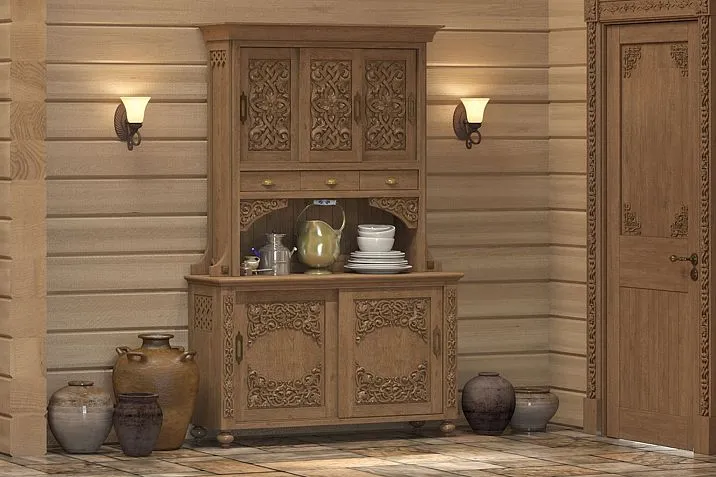
Have you ever wondered why your heart skips a beat at the sight of a cozy Russian izba, with its massive carved table and hearth radiating home warmth? What makes us long for the lost connection to our roots when we see authentic examples of folk art? Kitchen Interior in Russian Style This is not just a design solution, but an opportunity to reconnect with the soul of our ancestors, to create a space where every detail breathes history and is imbued with deep meaning.
In today's world, where standardization even invades the most intimate spaces of our homes, the Russian kitchen becomes an island of authenticity, a place where one can escape the hustle of the metropolis and find inner balance. This is a space where cooking becomes a sacred ritual, and family meals become celebrations of generational unity.
The Soul of the Russian Kitchen: Philosophy of Space
What makes a kitchen truly Russian? It is not only materials and colors, not only forms and ornaments. It is a special philosophy of space organization, where each element has its purpose, where beauty is inseparably linked with functionality, where the home becomes an extension of its inhabitants' souls.




Principles of Russian Kitchen Space Organization
Traditional Russian kitchens were designed according to a centripetal composition principle. The central element was the hearth, around which all life activities were organized. Modern designers adapt this principle, creating kitchen islands or peninsulas that become the compositional center of the space.
The second key principle — zoning without rigid separation. The Russian kitchen was never isolated from the rest of the house. Here, food was prepared, eaten, guests were received, and crafts were done. The modern open-plan kitchen-living room layout perfectly aligns with this tradition, creating a unified space for family life.
The third principle — harmony with natural rhythms. The Russian kitchen always took into account seasonal changes, climate peculiarities, agricultural cycles. This was reflected in the layout, lighting, storage systems. Modern decor in Russian style allows to recreate this connection with nature even in an urban apartment.
Our factory also produces:
Emotional Component of the Russian Kitchen
The Russian kitchen is a space of emotions. Here, family legends were born, recipes were passed down from generation to generation, and the most important conversations took place. Modern design must take into account this emotional component, creating an atmosphere that encourages communication and strengthens family bonds.
Warm wood tones, soft lighting, comfortable furniture that invites long stays on the kitchen — all these elements contribute to creating a special atmosphere of a Russian home. It is important to remember that the Russian kitchen is not a museum exhibit, but a living space adapted for modern life.
Get Consultation
Color Palette: Colors of the Russian Soul
Colors in the Russian kitchen are not a random selection of shades, but a complex system based on a deep understanding of the influence of color on human psychology and traditional notions of beauty.
Basic Colors of the Traditional Palette
Wood tones form the foundation of the color palette of the Russian kitchen. This is not just brown, but a symphony of shades — from light birch and linden to dark oak and walnut. Each tree species has its own character and energy. Pine evokes a sense of freshness and purity, oak — reliability and solidity, birch — lightness and brightness.
White color in Russian tradition symbolizes purity, light, spirituality. It is the color of whitewashed stoves, linen tablecloths, porcelain dishes. In a modern kitchen, white helps visually expand the space and creates a sense of cleanliness and freshness.
Red color — the color of life, health, joy. In Russian tradition, red was synonymous with beauty. On the kitchen, red color should be used sparingly — in textiles, dishes, decorative elements. It enlivens the interior and creates a festive mood.
Regional Characteristics of the Color Palette
Northern Russia dictated a more restrained palette — gray-blue, white, natural wood tones. This reflects the harsh beauty of northern nature. The central belt allowed for a more diverse palette, including green, yellow, and red shades. The south allowed for brighter, more saturated colors.
Modern design can take into account these regional characteristics, creating kitchens that reflect specific traditions of a particular region. This adds additional authenticity and depth to the interior.
Seasonal Color Dynamics
One of the remarkable features of Russian tradition — changing the interior color palette depending on the season. In winter, warm, saturated tones prevailed — burgundy, golden, dark green. In spring, fresh, light shades appeared — pale green, yellow, blue. Summer brought bright colors of field flowers, while autumn brought the golden hues of foliage and warm tones of harvest.
Materials and Textures: Touch of Nature
Material selection in Russian kitchens is determined not only by aesthetic considerations but also by a deep understanding of their impact on the energy of the space and human health.
Wood — the Foundation of Russian Kitchens
Wood in Russian kitchens is not just a construction material, but a living substance that breathes, lives its own life, and influences the atmosphere of the space. Modern wood processing technologies allow preserving all its positive qualities while eliminating its drawbacks.
Solid oak for countertops and facades creates a sense of reliability and durability. Modern protective coatings make oak surfaces resistant to moisture and mechanical damage, while preserving the natural beauty of the wood.
Pine and spruce, treated with modern compounds, are ideal for creating decorative elements. Carved Kitchens from leading manufacturers use these species to create exquisite decorative appliqués and moldings.
Stone in Modern Russian Kitchens
Natural stone has traditionally been used in Russian architecture for foundations, stoves, and cellars. In modern kitchens, stone finds new applications — granite or quartzite countertops, stone backsplashes, decorative elements made of natural stone create a sense of connection to the earth and stability.
Ceramics and tiles hold a special place in Russian tradition. Decorative tiles transformed utilitarian stoves into works of art. Modern ceramic tiles, imitating old tiles, allow recreating this beauty in contemporary kitchens.
Textiles and Their Role in Creating Atmosphere
Natural fabrics — linen, cotton, wool — play an important role in creating the atmosphere of Russian kitchens. Linen curtains diffuse sunlight, creating soft, comfortable lighting. Cotton tablecloths and napkins add coziness and homeliness. Woolen rugs warm the cold floor and provide additional comfort.
Modern fabrics retain the beauty of natural materials but have improved performance characteristics — they are easier to wash, do not fade in sunlight, and retain their original appearance longer.
Furniture: Functionality, Beauty, Durability
Furniture in Russian kitchens must combine three essential qualities — functionality, beauty, and durability. This is not a random collection of items, but a thoughtfully designed system where each element has its place and purpose.
Central Elements of Kitchen Units
Kitchen table — the heart of Russian kitchens. This is not just a working surface, but a place where the whole family gathers, where the most important conversations take place. Traditionally, Russian tables were massive, made from a single piece of wood. Modern technologies allow creating tables that combine traditional appearance with modern functionality — built-in storage systems, pull-out elements, adjustable height.
In modern kitchens, the stove is replaced by a cooktop and oven, but the principle remains the same — it is the center of culinary activity. Modern appliances can be styled to resemble traditional forms or integrated into the overall kitchen design without disrupting the stylistic unity.
Storage systems in Russian kitchens have always been diverse and functional. Buffets for dishes, lari for products, shelves for utensils — each item had its place. Modern kitchen units use these principles, creating convenient and beautiful storage systems.
Decorative elements of furniture
Wood carving — the hallmark of Russian style. Modern furniture manufacturers use both traditional hand-carving methods and modern technologies — laser cutting, CNC milling — to create complex ornaments with perfect precision and repeatability.
Kitchen decor includes appliqués, moldings, cornices, and rosettes that transform ordinary furniture into works of art. It is important to remember that decorative elements must not only decorate but also perform practical functions.
Ergonomics of Modern Russian Kitchens
Modern Russian kitchens must meet current ergonomic requirements. The height of work surfaces, depth of cabinets, placement of appliances — all these parameters are calculated based on anthropometric data and modern standards of comfort.
At the same time, it is important to preserve the feeling of Russian tradition. This can be achieved through the use of traditional materials, forms, and ornaments, adapted to modern functional requirements.
Layout: From the Kitchen to the Studio
Modern housing imposes requirements on kitchens that are fundamentally different from traditional ones. However, the basic principles of space organization, developed over centuries, remain relevant today.
Layout Types of Russian Kitchen
Linear layout is suitable for small kitchens in city apartments. All work zones are arranged along one wall, ensuring maximum space efficiency. With this layout, it is especially important to properly organize storage systems and provide adequate lighting for work zones.
L-shaped layout allows more rational use of corner space and creates a convenient working triangle between the sink, stove, and refrigerator. This is a classic layout suitable for most medium-sized kitchens.
U-shaped layout is ideal for large kitchens, where you can create a maximally functional workspace. With this layout, one side can be made into a bar counter or island, creating an additional area for breakfasts and quick snacks.
Island layout is closest to the traditional organization of Russian kitchens, where the stove was located in the center. A modern kitchen island may include a cooking surface, sink, storage system, and dining area.
Kitchen Space Zoning
Proper zoning is key to creating a functional and beautiful kitchen. In Russian tradition, the kitchen was divided into several functional zones: cooking (by the stove), dining (at the table), and utility (for storing food and utensils).
Modern zoning may be more complex:
- Preparation zone — cooking surface, oven, microwave
- Washing zone — sink, dishwasher, dish drying rack
- Storage zone — refrigerator, freezer, pantry, cabinets
- Dining zone — table, chairs or small sofa
- Relaxation zone — comfortable chair, bookshelf, television
Connection of the kitchen with other rooms
Russian kitchen was never isolated from the rest of the house. It was part of the family's shared living space. Modern open kitchen-living room layout perfectly corresponds to this tradition.
When creating a unified kitchen-living room space, it is important to ensure stylistic unity across all zones. Kitchen Interior in Russian Style It should harmoniously match the living room's decor, creating a cohesive impression.
Lighting: Play of Light and Shadow
Lighting in Russian kitchens has special significance. Long winter evenings required creating a warm, cozy atmosphere capable of sustaining spirits during dark times of the year.
Natural lighting
Windows in Russian kitchens should allow maximum daylight. Traditionally, windows were adorned with carved casings that not only decorated the opening but also protected against drafts and weather.
Modern windows can be significantly larger than traditional ones, but the principle remains the same — maximum light and connection with nature. Light linen or cotton curtains diffuse direct sunlight, creating soft, comfortable lighting.
Artificial lighting
The artificial lighting system in Russian kitchens should be multi-level:
General lighting provides basic illumination for the entire space. Traditionally, this was a central chandelier, often made in the form of a wooden wheel with candles or lamps. Modern chandeliers preserve this tradition, using contemporary lighting technologies.
Task lighting is focused in active activity zones — above work surfaces, stove, sink. These can be recessed lights, pendant lights, or LED strips.
Accent lighting highlights decorative elements — carved appliqués, open shelves with beautiful dishes, works of art.
Decorative lighting creates a special atmosphere. Candles, oil lamps, fireplace fire imitation — all of this reminds us of times when a live fire was the only source of light during dark hours.
Decor and accessories: details that create style
Decorative elements in Russian kitchens are not just ornaments, but carriers of cultural codes, elements that transform an ordinary room into a space filled with meaning and history.
Traditional decorative elements
Wood carving is the main decorative element of Russian style. This can be appliqués on cabinet fronts, door and window frames, decorative panels on walls. Modern technologies allow creating carved elements of any complexity with perfect execution quality.
Painting traditionally decorated tableware, furniture, walls. Хохломская gold painting, Gzhel blue-and-white patterns, Zhostov bouquets — each craft has its own characteristics and can find a place in a modern kitchen.
Ceramics and porcelain — tableware, decorative plates, vases, plant pots. Traditional Russian ceramics are characterized by warm, earthy tones and simple, functional forms.
Textile elements
Textiles play an important role in creating the atmosphere of the Russian kitchen:
Tablecloths and napkins made of linen or cotton with traditional embroidery or lace create a festive atmosphere and highlight special occasions.
Embroidered towels — not only functional but also decorative. Traditionally, they were hung on a special hook next to the sink.
Curtains made of natural fabrics protect from sunlight and prying eyes, creating a sense of coziness and security.
Rugs and runners insulate the floor and provide additional comfort for feet.
Live plants in the Russian kitchen
Plants in the Russian kitchen are not only decoration but also a practical necessity. Herbs and spices grown on the windowsill are always within reach for cooking. This reflects the Russian tradition of rational space use and connection with nature.
Traditional plants for the Russian kitchen:
- Dill, parsley, green onions — the main greens of Russian cuisine
- Mint, lemon balm — for tea and refreshing drinks
- Basil, thyme — aromatic herbs for various dishes
- Geranium — a traditional houseplant that purifies the air
Modern technologies in the Russian kitchen
A modern kitchen is unthinkable without high-tech household appliances. It is important to integrate them into the traditional interior so as not to disrupt the overall stylistic concept.
Built-in appliances
Fully built-in appliances — the ideal solution for the Russian kitchen. Refrigerators, dishwashers, ovens, and microwaves can be completely concealed behind decorative facades designed in the style of the overall kitchen design.
Modern manufacturers offer appliances in retro style, which blend organically into traditional interiors. This includes vintage-designed gas stoves, refrigerators with rounded shapes, and exhaust hoods styled like old chimneys.
Smart home systems
Modern "smart home" technologies can be integrated into the Russian kitchen without being noticeable to the eye. Temperature and humidity sensors, automatic plant watering systems, programmable lighting — all these systems operate in the background, without disrupting the traditional atmosphere.
Control can be performed via hidden panels disguised as decorative elements or via mobile applications.
Energy efficiency and ecology
Modern Russian kitchens must meet current requirements for energy efficiency and eco-friendliness. LED lighting, energy-efficient appliances rated A++, heat recovery systems — all of this makes the kitchen not only beautiful but also economical to operate.
Using natural, eco-friendly materials — wood, stone, ceramics — ensures a healthy microclimate in the kitchen and safety for the entire family.
Seasonal kitchen transformations
One of the remarkable features of Russian tradition — the ability of the interior to change according to the season, reflecting the rhythms of nature and human life.
Spring refreshment
Spring — a time of renewal and freshness. Light tones, light fabrics, and live greenery appear in the kitchen. Heavy winter curtains are replaced with light drapes, and vases are filled with the first spring flowers — snowdrops, mimosa, tulips.
Spring cleaning includes not only tidying up but also updating decorative elements. This is the time to rearrange furniture, change accessories, and refresh the interior with new details.
Summer Abundance
Summer — a time of abundance and bright colors. The kitchen fills with the scents of fresh herbs and flowers, and bouquets of wildflowers appear on the table, while jars and baskets are filled with fresh fruits and vegetables from the garden.
Windows are opened wide, letting in the scents of the garden and the songs of birds. The summer kitchen can expand onto the terrace or veranda, where additional furniture for outdoor dining is installed.
Autumn Preserves
Autumn is the time of harvest and preparation for winter. The kitchen becomes the center of preservation and storage. Jars of jam, pickles, and marinades appear on shelves. Vases hold bouquets of autumn leaves, rowan branches, and last flowers.
The color palette becomes warmer and more saturated — golden, orange, burgundy accents appear. This is the time when heavy fabrics, candles, and warm blankets are especially appropriate.
Winter coziness
Winter is the time of maximum coziness and home warmth. The kitchen becomes the center of family life, the place where all household members gather. Candles burn, the fireplace is lit, and the samovar steams on the table.
The color palette includes deep, saturated tones — dark red, emerald green, golden. Additional sources of warmth and light appear, creating an atmosphere of protection from winter cold.
Russian kitchen style directions
Russian style is not monolithic — it includes several directions, each reflecting a certain period in history and social stratum of society.
Peasant style (izba)
This is the most authentic direction, based on peasant lifestyle traditions. Key features:
- Massive wooden furniture made from local wood species
- Simple, functional forms without excess
- Natural materials — wood, stone, clay
- Muted color palette with dominance of wood tones
- Minimal decoration, but every element is functional
Merchant style
A more luxurious interpretation of Russian style, reflecting the prosperity of the merchant class:
- More expensive materials — valuable wood species, quality porcelain
- Abundance of decorative elements — carving, painting, inlay
- Vivid color accents — red, gold, emerald
- Showy luxury while maintaining functionality
Noble style (manor)
An elegant interpretation of Russian style, enriched by European influences:
- Refined materials and finishes
- Complex decorative compositions
- Elegant color palette with dominance of pastel tones
- Antique furniture or high-quality replicas
- Artworks — paintings, sculptures, porcelain
Modern interpretation (neo-Russian style)
Adaptation of traditional Russian style to modern realities:
- Combination of traditional forms with modern materials
- Simplification of decorative elements without loss of recognizability
- Use of Modern Appliances in a Traditional Setting
- Ecological and energy efficiency
- Functionality Comes First While Preserving Aesthetics
Practical Recommendations for Creating a Russian Kitchen
Creating an authentic Russian kitchen requires attention to detail and understanding of the basic principles of the style.
Stages of Interior Creation
Planning and Designing — the most important stage, where the overall concept is defined, the stylistic direction is chosen, and the budget is calculated. It is important to consider the characteristics of the room, family needs, and technical capabilities.
Selection of Materials and Suppliers — the quality of materials determines the durability and aesthetics of the interior. It is better to choose proven manufacturers with a good reputation.
Execution of Finishing Works — must be carried out strictly in accordance with the project and all technical requirements.
Furnishing and Decorating — the final stage, where the interior acquires a completed look.
Typical mistakes and how to avoid them
Over-decorating — one of the most common mistakes. Russian style does not tolerate kitsch and poor taste. Better to have less, but of higher quality.
Use of Low-Quality Materials — cheap imitation immediately reveals itself and spoils the overall impression. Better to do less, but with quality materials.
Ignoring Functionality — beauty should not interfere with the convenience of using the kitchen.
Incorrect Proportions — all elements must be proportionate to the room and to each other.
Budget Solution vs Premium Class
You can create a Russian kitchen with any budget. A budget solution may include:
- Quality imitation of wood instead of solid wood
- Decorative MDF overlays instead of wood carving
- Stylized modern appliances
- Textiles and accessories in folk style
The premium variant implies:
- Use of only high-quality natural materials
- Hand-carved woodwork
- Antique or custom-made furniture
- Exclusive decorative items
Modern Russian kitchen is not an attempt to recreate a museum exhibit, but a desire to create a living, functional space that maintains a connection with national traditions while meeting all requirements of modern life. This is a kitchen where cooking becomes an art, and family meals become a celebration of unity.
Kitchen Interior in Russian Style It is an investment in the future, creating a space that will delight generations of the family, passing on a part of great Russian culture. It is a choice of those who value authenticity, quality, and beauty, who understand that home is not just a place of residence, but a space of the soul.
In conclusion, it is important to note that creating a genuine kitchen interior in Russian style requires not only artistic taste but also a deep understanding of traditions, as well as the use of high-quality materials and decorative elements. The company STAVROS has been a recognized leader in the production of decorative elements for interiors in Russian style for many years. A rich assortment of carved overlays, moldings, cornices, sockets, and other decorative elements allows creating kitchens that are not only beautiful but also authentic. Each STAVROS product is made using traditional techniques and modern equipment, ensuring the highest quality and durability. Choosing STAVROS products means choosing the opportunity to create a kitchen that will become a true decoration of the home and a source of family pride for many years.