












































































Article Contents:
- Steady possibilities and provincial realities
- Seasonal fluctuations and procurement planning
- Supplier typology: from manufacturers to retail chains
- Specialized dealer centers
- Direct sales from the manufacturer
- Construction hypermarkets and DIY networks
- Online stores: convenience of the digital era
- Selection criteria: what determines the quality of moldings
- Material as the basis of quality
- Geometric accuracy and craftsmanship quality
- Manufacturer's quality control system
- Product assortment matrix: variety of forms and styles
- Wall moldings: accents and details
- Ceiling moldings: the crown of interior composition
- Facade moldings: exterior beauty of the house
- Architectural elements: scale and monumentality
- Technical aspects: from production to installation
- Packaging and logistics systems
- Modern manufacturing technologies
- Professional installation: guarantee of result
- Economic aspects: cost optimization
- Pricing in the molding market
- Innovations and trends: the future of molding decor
- Comparative Analysis of Alternatives
- Return on Investment Calculation
- Innovations and trends: the future of molding decor
- Digital technologies in production
- Ecological requirements
- Integration with smart technologies
- Practical recommendations: how to make the right choice
- Supplier selection algorithm
- Product quality verification
- Documentation of the purchase
- Logistics planning
- Regional specifics: features of different markets
- Moscow region: maximum opportunities
- Saint Petersburg: cultural traditions
- Regional centers: local specifics
- International experience: best global practices
- European quality standards
- American innovations
- Asian Technologies
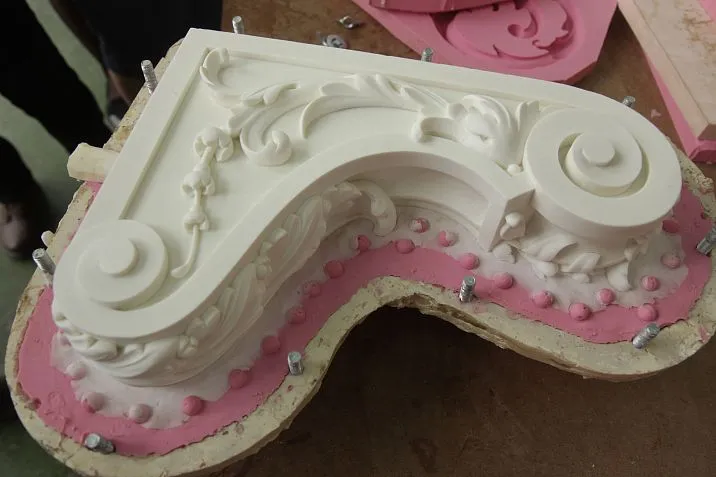
Facing a choice dilemma? Want to transform your interior but overwhelmed by the variety of decorative materials on the market? Question where to buy moldings High-quality craftsmanship concerns everyone striving to create a unique and refined interior. In a world overflowing with mediocre products and dubious suppliers, finding a reliable partner to bring design dreams to life has become an art form.
The modern market for decorative molding resembles a labyrinth, where hidden pitfalls await at every step: substandard materials, inflated prices, and unscrupulous sellers. Yet, precisely now, when technology has reached unprecedented heights and polyurethane products have become accessible to all, it is crucial to know how to make the right choice and avoid falling for marketing tricks.
Decorative molding is no longer the exclusive domain of palaces and mansions. Today, anyone can afford the luxury of a classic interior, but only with a thoughtful approach to selecting a supplier and understanding the characteristics of different types of products. This article will serve as your compass in the world of architectural decoration, helping you avoid mistakes and find exactly what will transform your home into a work of art.


Shopping Geography: Regional Characteristics of the Molding Market




Capital Opportunities and Provincial Realities
Moscow and St. Petersburg traditionally offer the widest selection of decorative materials. Here, the largest manufacturers, importers, and distributor centers are concentrated. Competition forces sellers to lower markups and improve service. In the capitals, one can find both budget options and exclusive collections from leading global brands. However, high rental costs and logistics expenses often lead to price increases of 15-25% compared to other regions.
Regional markets have their own peculiarities. In industrial centers such as Yekaterinburg, Novosibirsk, and Nizhny Novgorod, there is a well-developed local production base, which makes polyurethane molding more affordable. Local manufacturers often offer customized solutions and are willing to work with non-standard orders. More affordable. Local manufacturers often offer customized solutions and are willing to work with non-standard orders.
Southern regions of Russia exhibit increased demand for facade molding. Climatic conditions allow decorative elements to be used year-round, stimulating local market development. Here, moisture resistance and UV stability of materials are especially valued.
Our factory also produces:


Seasonal Fluctuations and Procurement Planning
The market for decorative molding is subject to significant seasonal fluctuations. Sales peak during the spring-summer period, when construction and renovation activities intensify. During this time, prices reach their maximum, and delivery times for popular items extend to 2-3 weeks.
The winter period is characterized by a 30-40% drop in demand, creating favorable conditions for buyers. Many suppliers offer discounts up to 20%, conduct clearance sales of remaining stock. Planning to purchase molding during winter months allows significant savings and ensures timely delivery.
New Year holidays traditionally become a time for special promotions. Manufacturers strive to conclude the year with strong performance and are willing to offer maximum discounts. Decorative Molding for Interior During this period, it may cost 25-35% less than usual.
Get Consultation
Supplier Typology: From Manufacturers to Retail Chains
Direct Sales from the Manufacturer
Purchasing directly from the manufacturer ensures minimal prices and maximum quality control. Large factories usually have their own showrooms, where you can evaluate product samples, receive professional consultation, and order custom items.
The advantages of direct sales are obvious: absence of intermediary markups, complete product information, and the ability to influence production timelines. Many factories offer flexible discount systems for large orders and loyal customers. Polyurethane Molding Production from leading factories guarantees compliance with all technical standards.
However, working with a manufacturer requires a certain minimum order volume. Most factories do not work with retail buyers, preferring large contracts. Logistics can also be an issue — not all manufacturers have an extensive delivery network to remote regions.
Specialized Distributor Centers
Distributor centers present products from multiple manufacturers, allowing you to compare different options in one place. Qualified consultants help select the optimal solution tailored to specific tasks and budgets. Many centers offer additional services: design projects, material calculations, installation work.
A quality distributor center should have a spacious showroom with displays of ready-made interiors. This allows you to evaluate how different molding elements look in real settings. Professional lighting demonstrates the interplay of light and shadow on textured surfaces.
The dealer's reputation plays a critical role. Reliable companies have been operating on the market for no less than 5-7 years, have numerous positive reviews, and are willing to provide contacts of satisfied clients. Ceiling Molding Purchase from a verified center — guarantee of quality and service.
Construction Hypermarkets and DIY Chains
Large retail chains offer a wide range of decorative molding at affordable prices. A standardized approach ensures consistent quality and uniform service across all cities of presence. Self-service systems allow detailed product examination without sales pressure.
The main advantage of hypermarkets is accessibility. Almost every major city has stores of national chains. Developed logistics ensures constant availability of popular items. Loyalty programs and regular promotions make shopping more cost-effective.
The drawback of chain retail is limited assortment. Hypermarkets focus on mass-market items, ignoring exclusive collections. Sales consultations are often superficial, as staff specialization spans multiple product categories.
Online stores: convenience of the digital era
Online retail is rapidly capturing the market for moldings. Online stores offer maximum assortment at minimal overhead costs. Detailed photos, technical specifications, and customer reviews help make an informed choice.
A quality online store should provide detailed information about each product: dimensions, weight, material, installation features. Virtual factory tours and product video reviews increase customer trust. Online consultation systems allow receiving professional assistance in real time.
The main risk of online purchases is the inability to physically assess material quality. Photos may not convey the true surface texture or geometric accuracy. Therefore, it is recommended to order material samples for the first purchase.
Selection criteria: what determines the quality of moldings
Material as the basis of quality
Polyurethane has become the gold standard of modern moldings due to its unique combination of properties. High-quality polyurethane has a uniform structure without bubbles or inclusions. The surface should be smooth, without pits or irregularities. The material color should be even, without stains or streaks.
Polyurethane density varies from 500 to 1200 kg/m³ depending on the product's purpose. For interior moldings, the optimal density is 600-800 kg/m³, providing sufficient strength with minimal weight. Facade molding Requires higher density — 900-1200 kg/m³ for resistance to atmospheric effects.
Material elasticity is checked by a simple test: quality polyurethane should slightly deform under finger pressure and then return to its original shape without residual deformation. Brittleness indicates a violation of production technology or use of cheap components.
Geometric accuracy and craftsmanship quality
Professional moldings feature flawless geometry. Deviations from nominal dimensions should not exceed ±1 mm for items up to 2 meters long and ±2 mm for longer elements. Profile curvature is unacceptable — the element must lie flat on a surface without gaps along its entire length.
The quality of ornament detailing is the most important indicator of product class. The finest elements of the design must be clearly defined, without blurred contours or undercuts. Relief depth must match specified parameters across the entire surface of the item.
End surfaces of quality moldings have clean, chip-free cuts. This is critically important for creating invisible joints during installation. Moldings made of polyurethane They must have perfectly parallel edges for precise fitting.
Manufacturer's quality control system
Serious manufacturers implement multi-stage quality control systems. Incoming raw material inspection excludes the use of substandard materials. Operational control at each production stage prevents defects. Final inspection of finished products guarantees compliance with all standards.
Product certification confirms compliance with technical regulations and environmental standards. Quality moldings must have certificates of fire safety, environmental purity, and compliance with construction norms. Absence of certificates is a warning sign of potential quality issues.
Manufacturer's warranty obligations indicate confidence in their product. The minimum warranty period for interior moldings is 10 years, for facade moldings — 15 years. Some premium brands offer lifetime warranties on their products.
Assortment matrix: variety of forms and styles
Ceiling moldings: the crown of interior composition
Ceiling cornices form the basis of ceiling decoration. Simple profiled cornices 5-15 cm wide suit modern interiors. Complex multi-profile elements up to 30 cm wide create a classic palace-style atmosphere. Ceiling cornices with a channel for hidden lighting combine decorative and functional components.
Ceiling rosettes serve as central composition elements. Diameter varies from 20 cm for small rooms to 150 cm for spacious halls. Classic rosettes are adorned with floral ornaments, modern ones feature geometric precision. Composite rosettes allow creating unique compositions of any size.
Coffered ceilings create an architectural recess effect without complex construction work. Standard coffer sizes range from 30×30 cm to 120×120 cm. Built-in lighting in each coffer ensures even illumination and highlights the composition's geometry.
Wall moldings: accents and details
Wall moldings are universal elements for creating decorative panels and frames. Profile width varies from 2 to 20 cm depending on interior scale. Flexible moldings allow creating curved compositions — arches, ovals, wave-like forms.
Ceiling Rosettes can also be used on walls to create decorative medallions. Wall placement opens new creative possibilities — asymmetrical compositions, gallery walls, space zoning.
Decorative appliqués solve point-decorating tasks. Corner elements decorate wall-ceiling intersections. Central medallions highlight key interior zones. Floral and geometric motifs allow selecting decor to match any style.
Architectural elements: scale and monumentality
Columns and pilasters add a sense of monumentality to the interior. Hollow polyurethane columns with diameters ranging from 20 to 50 cm weigh dozens of times less than their stone counterparts. Different types of capitals — Doric, Ionic, Corinthian — determine the stylistic affiliation of the decoration.
Decorative columns They can be both functional, concealing engineering utilities, and purely decorative. The modular construction allows creating columns of any height from 2 to 6 meters.
Arches and portals zone the space and create architectural logic. Semi-circular, pointed, and elliptical forms suit various stylistic solutions. Decorative keystone and impost elements add authenticity to architectural features.
Facade moldings: the external beauty of the house
Facade cornices protect walls from atmospheric precipitation and create architectural completeness. Plinth cornices visually separate the lower part of the building. Inter-floor bands structure the facade vertically. Finishing cornices create a transition from wall to roof.
Window and door frames solve both practical and aesthetic tasks. Sills protect joints from moisture and create expressive accents. Sash moldings above windows add elegance to the facade. Window sills unite windows into a single composition.
pilasters and pilasters create vertical rhythm on the facade. They can be both decorative and functional — supporting awnings and balconies. Different order systems allow creating a facade in any historical style.
Technical aspects: from production to installation
Modern manufacturing technologies
Injection molding ensures perfect filling of complex shapes and high geometric accuracy. Pressure of 2–5 atmospheres guarantees absence of voids and uniform material density. Automated lines eliminate human factors and ensure consistent quality.
The polyurethane component dosing system is controlled by a computer with precision to 0.1%. This is critically important for obtaining material with specified properties. Even minor deviations in proportions lead to reduced strength or structural defects.
Control of the polymerization temperature regime ensures optimal conditions for forming the molecular structure of polyurethane. Violation of the temperature regime leads to internal stresses and reduced product longevity.
Packaging and logistics systems
Professional packaging protects moldings from damage during transport. Small elements are packed in individual bags with air cushions. Long profiles are protected by polystyrene inserts and cardboard boxes.
Specialized transport for delivering moldings is equipped with securing systems preventing cargo displacement. Pneumatic suspension smooths out road irregularities. Climate control maintains optimal conditions for polyurethane.
Warehouse logistics ensures proper storage of products. Temperature regime of 15–25°C and humidity of 40–60% prevent deformation and cracking. Vertical storage of long elements prevents sagging under their own weight.
Professional installation: guarantee of result
Surface preparation determines the quality of installation. The base must be flat, clean, and dry. Moisture should not exceed 4% for concrete and 12% for gypsum board. Adhesion strength is tested using a pull-off test.
The choice of adhesive composition depends on operating conditions. Acrylic adhesives are suitable for dry rooms, polyurethane adhesives — for humid areas. MS-polymer compositions are universal and provide maximum adhesion to any substrate.
The technology of joining elements requires high precision. Gaps should not exceed 1 mm. Corner joints are made at 45° using a miter box or a miter saw. Casings must join perfectly to create a unified composition.
Economic aspects: cost optimization
Pricing in the molding market
The cost of polyurethane molding is composed of several components: raw material cost (30–40%), production expenses (25–30%), logistics (10–15%), seller’s margin (20–35%). Understanding the price structure helps evaluate the fairness of an offer.
Price fluctuations reach 20–30%. Minimum prices are observed in January–February, maximum — in May–June. Planning purchases during the winter period ensures significant savings.
Volume discounts may reach 15–25% for orders exceeding 100,000 rubles. Many suppliers offer flexible discount systems depending on order volume and client status. Balustrades and other large elements are often sold with individual discounts.
Comparative analysis of alternatives
Polyurethane molding is 3–5 times cheaper than gypsum molding at comparable quality of execution. Installation savings reach 50% due to ease of installation. No need for structural reinforcement further reduces overall costs.
Polystyrene molding costs 2–3 times less than polyurethane, but requires mandatory protective finishing and has limited service life. Considering operational expenses, polyurethane proves more cost-effective in the long run.
Wooden molding is comparable in price to polyurethane, but requires regular maintenance and is susceptible to moisture and insects. Limited range of forms and sizes also reduces the appeal of wooden decoration.
Return on investment calculation
Quality moldings increase the market value of real estate by 10-20%. For an apartment costing 5 million rubles, this amounts to an increase of 500,000 to 1,000,000 rubles. With molding costs of 150,000 to 200,000 rubles, the return on investment is obvious.
The psychological comfort provided by a beautiful interior is difficult to quantify in monetary terms, but its impact on quality of life is undeniable. A beautiful home boosts self-esteem, improves mood, and instills pride in one’s dwelling.
The energy-saving effect of additional insulation is 5-8% savings on heating. For an apartment of 100 m², this means annual savings of 3,000 to 5,000 rubles, which over 20 years amounts to a significant sum.
Innovations and trends: the future of molding decoration
Digital technologies in production
3D printing revolutionizes the creation of master models for moldings. Any ornament, regardless of complexity, can be realized in material with precision down to tenths of a millimeter. The time required to produce unique items is reduced from weeks to days.
Parametric modeling allows creating families of interrelated elements. Changing one parameter automatically adjusts the entire line of products. This ensures stylistic unity across collections.
Virtual reality helps clients visualize the result even before purchase. VR headsets allow "walking through" the future interior and evaluating various decoration options. This eliminates planning errors and increases client satisfaction.
Ecological Requirements
Switching to biodegradable polyurethane components reduces the ecological impact of production. New formulas ensure accelerated disposal of products after their service life ends without compromising performance.
Closed production cycles minimize waste. Scraps and defective items are recycled into granules for reuse. This reduces product cost and decreases the ecological footprint.
Certification according to ecological standards is becoming a mandatory requirement for suppliers of large-scale projects. Decorative Appliques must comply with the strictest emission norms for harmful substances.
Integration with smart technologies
Built-in sensors in decorative elements open new possibilities for creating smart interiors. Motion sensors activate lighting when people approach. Air quality sensors control ventilation systems.
Adjustable lighting allows creating various lighting scenarios. RGB LEDs enable choosing any color from the spectrum. Control via mobile applications ensures full freedom in setting up lighting.
Climate control systems use molding elements as concealed air ducts. This is especially relevant for large outlets and cornices, which can hide ventilation channels and ensure unobtrusive air circulation.
Practical recommendations: how to make the right choice
Supplier selection algorithm
The first step is studying the company’s reputation. Customer reviews, online ratings, and recommendations from acquaintances help form an objective picture. Companies with long-standing history and positive reputation deserve trust.
The second stage is evaluating the product assortment and quality. A spacious showroom with samples of all collections allows comparing different options. The ability to order material samples for home study is a sign of a serious supplier.
The third criterion is the level of service. Qualified consultants must be well-versed in product technical specifications, installation specifics, and compatibility of various elements. Willingness to provide technical support after purchase is an important indicator of service quality.
Product Quality Check
Visual inspection is the first and simplest way to assess quality. The surface should be smooth, without pits, bubbles, or mechanical damage. Color should be uniform across the entire product surface. Geometry should be correct, without bends or deformations.
Tactile inspection complements visual assessment. High-quality polyurethane has a dense, uniform structure. When pressed with a finger, the material should slightly deform and then return to its original shape. Brittleness or excessive softness indicate poor-quality material.
Checking dimensions with a ruler or tape measure reveals deviations from nominal parameters. Permissible deviations should not exceed ±1 mm for elements up to 2 meters in length. Large deviations will cause problems during installation.
Documenting the Purchase
The supply contract must include a detailed product specification indicating dimensions, article numbers, and quantities. Clear delivery timelines and payment terms eliminate misunderstandings. Warranty obligations must be specified in detail.
Quality and compliance certificates confirm product safety. Ecological certificates are especially important for interior applications. Lack of required documentation is grounds for rejecting the purchase.
The goods acceptance act is prepared upon receipt of the shipment. All damages and discrepancies must be recorded in the presence of the transport company’s representative. This ensures the possibility of filing claims if problems are discovered.
Logistics Planning
Calculating material requirements requires precise room measurements and detailed composition planning. It is recommended to order material with a 10-15% surplus to compensate for technological losses and potential damage during installation.
Coordinating delivery with the renovation schedule is critically important. Moldings should arrive after rough work is completed but before finishing work begins. Early arrival creates storage issues, while late arrival delays the entire project.
Organizing unloading and lifting requires advance planning. Long elements may not fit in standard elevators. Oversized items require hiring laborers and special equipment.
Regional Specifics: Features of Different Markets
Moscow Region: Maximum Possibilities
The capital market offers the widest selection of manufacturers and suppliers. Both domestic and international brands are represented here. Competition stimulates service development and maintains competitive pricing despite high operational costs.
The region's logistical development ensures fast delivery from any point in Russia and abroad. Most major manufacturers have warehouses in the Moscow region, guaranteeing constant availability of popular items.
The high level of household income creates demand for premium products. Exclusive collections, custom orders, designer solutions — all of this is in demand among Moscow buyers.
Saint Petersburg: cultural traditions
The Petersburg market stands out for its special attention to historical styles and authentic decoration. Restoration projects create demand for exact replicas of historical samples. Local manufacturers specialize in recreating classical forms.
The city's climatic features require heightened attention to moisture-resistant materials. High humidity and temperature fluctuations impose additional requirements on polyurethane quality.
The city's architectural traditions shape conservative buyer preferences. Classical styles dominate demand, while modern trends develop more slowly than in other regions.
Regional centers: local specifics
Yekaterinburg, as an industrial center of the Urals, has a well-developed production base for construction materials. Local factories offer competitive products at affordable prices. Proximity to raw material sources reduces polyurethane cost.
Novosibirsk serves the entire Siberian region, creating specific logistics requirements. Harsh climatic conditions demand increased frost resistance of materials. Large distances make transportation an urgent issue.
Southern regions are characterized by increased demand for facade moldings. Mild climate allows using decorative elements year-round. Active construction of private homes stimulates market growth.
International experience: best global practices
European quality standards
German manufacturers set quality benchmarks for the entire industry. Strict dimensional tolerances, flawless surfaces, durable materials — all of this has become the de facto standard for premium products.
Italian design schools bring artistic perfection to molding decoration. Complex ornaments, refined proportions, flawless execution make Italian products a benchmark of aesthetic excellence.
French manufacturers specialize in historical styles and restoration projects. Accurate reproduction of classical samples, use of traditional technologies create unique value for French moldings.
American innovations
Modular systems developed in the USA have revolutionized the industry of molding decoration. Standardized elements with universal connections allow creating compositions of any complexity from basic components.
Fast-installation technologies reduce labor costs and improve installation quality. Locking connections, adhesive tapes, magnetic fasteners — all of this simplifies installers' work and makes molding accessible for self-installation.
Digital integration of production processes ensures flexibility and rapid response to demand changes. Automated warehouses, robotic packaging, order tracking systems enhance efficiency across the entire supply chain.
Asian technologies
Chinese manufacturers have captured a significant share of the global market due to optimal price-to-quality ratio. Mass production of standard elements allows offering products at affordable prices.
Japanese quality management principles are integrated into molding production. The Kaizen system ensures continuous process improvement. Precision and reliability of Japanese manufacturing set new industry standards.
South Korean smart manufacturing technologies integrate artificial intelligence into production line management. Predictive analytics prevents defects, optimizes equipment loading, and reduces product cost.
In today's world, where quality of life is directly linked to the beauty of the surrounding space, choosing a reliable supplier of molding decoration becomes a key decision in creating your dream home. The market offers many options, but only a few can provide the ideal combination of quality, service, and reasonable price.
Traveling to the world of architectural decoration requires knowledge, patience, and understanding of industry nuances. However, the result is worth all the effort — an interior filled with beauty and harmony becomes a daily source of inspiration and pride in your home.
For many years, STAVROS has remained a benchmark of quality and reliability in the polyurethane molding industry. By combining craftsmanship traditions with modern technologies, using premium materials and innovative production processes, STAVROS creates products that exceed the highest client expectations. Choosing STAVROS means choosing not just decoration materials, but a partner in creating a unique space that will delight you and your loved ones for years, highlighting your impeccable taste and pursuit of perfection.


