












































































Article Contents:
- What is Furniture Decor and Why It's Needed
- Transforming Simple into Complex
- Restoration and Style Recreation
- Updating Modern Furniture
- Types of Furniture Decor: From Rosettes to Capitals
- Carved Rosettes: Central Accents
- Decorative Overlays: Universal Embellishments
- Cartouches: Baroque Luxury
- Friezes and Borders: Rhythmic Ornamentation
- Corner Elements: Reinforcing Joints
- Capitals and Bases: Column Decor
- Moldings: Linear Decor
- Brackets and consoles: functional decor
- Furniture Decor Materials: Solid Wood vs Alternatives
- Solid Wood: Noble Classic
- Polyurethane: Affordable Imitation
- Carved MDF: Mid-Range Option
- Plastic: For Imitation Only
- Furniture Decor Styles: How to Choose the Right One
- Baroque: opulence and theatricality
- Rococo: elegance and lightness
- Classicism: Symmetry and Strictness
- Empire: Grandeur and Monumentality
- Art Nouveau: Flowing Natural Lines
- Provence and Country: Simplicity with Elegance
- Where to Buy Quality Furniture Decor: Options and Their Features
- Construction Hypermarkets: Limited Selection
- Online Marketplaces: Chaos and Lottery
- Specialized Furniture Stores: More Expensive but Reliable
- Buying from the Manufacturer: The Optimal Solution
- STAVROS: Solid Wood Furniture Decor Manufacturer
- STAVROS Assortment
- STAVROS Product Quality
- Advantages of buying from STAVROS
- How to Choose Decor for a Specific Project
- Step 1: Determine the Furniture Style
- Step 2: Measure the furniture
- Step 3: Create a sketch or diagram
- Step 4: Select elements from the catalog
- Step 5: Consult with specialists
- Step 6: Order samples (if necessary)
- Step 7: Place your order
- Furniture decor installation: basic rules
- Surface Preparation
- Fitting
- Adhesive
- Pressing and fixing
- Additional fastening
- Joint puttying
- Finishing
- Furniture decor application ideas
- Updating a mass-market wardrobe
- Restoration of an antique chest of drawers
- Creating an exclusive door
- Mirror decor
- Fireplace with decor
- Frequently asked questions about buying furniture decor
- Where to buy quality solid wood decor in Moscow?
- How much does oak furniture decor cost?
- Can I order custom-sized decor?
- Does STAVROS deliver to regions?
- Why is solid wood furniture decor better than polyurethane?
- Is it difficult to install decor yourself?
- Can I paint the decor myself?
- Conclusion: quality decor as the foundation of beautiful furniture

Have you ever looked at an antique chest of drawers with carved rosettes, a vintage sideboard with filigree overlays, or a classic armchair with elegant cartouches and wondered: how is such beauty created? Where do these carved details come from that turn simple wooden furniture into a work of art? The answer is both simple and complex: these elements are either hand-carved by a master carver (which requires years of training and weeks of work) or produced on high-precision equipment by specialized companies. And while the first path is accessible only to a few, the second is open to anyone who wants to create or update furniture, adding nobility and character to it.
Questionwhere to buy furniture decorconcerns many: professional furniture makers, antique restorers, interior designers, and simply enthusiasts who have decided to create or update furniture with their own hands. The furniture decor market in Russia was poor for a long time: cheap Chinese plastic, primitive-shaped elements, lack of variety. But today the situation has changed. Manufacturers have emerged who create qualitydecor for furnituremade from solid wood on professional equipment — and one of the leaders in this field is the company STAVROS.
In this article, we will examine in detail what types of furniture decor exist, what they are for, how to choose them,where to buy decorhigh quality in Moscow and throughout Russia, and why buying from a manufacturer is more profitable than from intermediaries. This is a complete guide for those looking for carved overlays, rosettes, cartouches, moldings, and other elements that can turn ordinary furniture into a masterpiece.
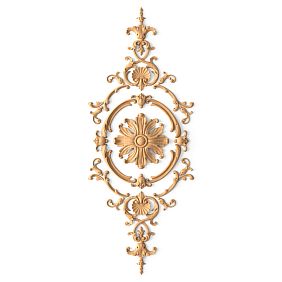


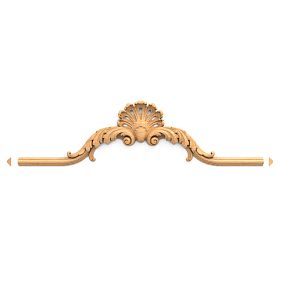
What is furniture decor and why is it needed
Furniture decor refers to elements that do not bear a structural load but radically change the appearance of a piece of furniture. These are decorations, details, accents that add sophistication, individuality, and stylistic belonging to furniture.




Transforming the Simple into the Complex
Imagine a simple wooden chest of drawers: four legs, a body, and drawers. Functional but plain. Now add carved overlay frames to the drawer fronts, place a rosette with a floral pattern in the center of each front, attach decorative overlays to the corners of the body, and top it off with a cornice featuring an ornamental frieze. The chest transforms into a classic sideboard, worthy of a museum collection. And this transformation occurs precisely due to the decoration.
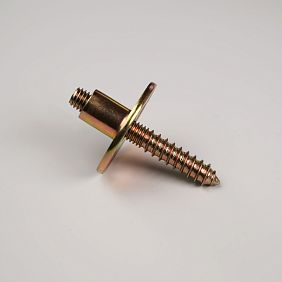
Our factory also produces:



Restoration and Style Recreation
If you are restoring antique furniture, you often have to replace lost decorative elements. Or if you are creating furniture in a classic style (Baroque, Rococo, Classicism, Empire), decoration is indispensable—it defines the stylistic affiliation.furniture appliquésallow you to recreate an authentic appearance, restore the furniture's original beauty, or create a new piece that will look like the work of craftsmen from past centuries.
Get Consultation
Updating Modern Furniture
Even modern furniture can be enhanced with decorative elements. A boring IKEA wardrobe becomes a unique piece after adding moldings and overlays. A simple wooden door becomes a paneled door with the help of decorative frames. The possibilities are limited only by imagination.
Types of Furniture Decor: From Rosettes to Capitals
Furniture decor is diverse. Each type of element has its own purpose and application.
Carved Rosettes: Central Accents
Carved Rosettes— round or oval elements with three-dimensional ornamentation. They can be floral (acanthus leaves, roses, grapevines), geometric (meanders, rosettes of circles), or abstract. Diameter—from 40 mm to 200 mm and more.
Application of Rosettes:
-
Center of a wardrobe, chest of drawers, or sideboard front
-
Middle of a table or bed apron
-
Door decoration (in the center of a panel)
-
Decoration of chair and armchair backs
-
Element of a mirror or picture frame
A rosette is a focal point that attracts the eye. It must be proportionate to the surface it is attached to: too small will get lost, too large will overwhelm.
Decorative Overlays: Versatile Embellishments
Overlays are flat or three-dimensional elements of various shapes: rectangular, oval, shaped. They can imitate frames, moldings, or create the effect of paneled fronts.
Types of pads:
-
Straight Overlays—long, narrow elements with a profiled cross-section, used for creating frames, borders.
-
Corner Overlays—triangular or fan-shaped elements for furniture corners, doors, frames.
-
Shaped Overlays—complex shapes, with scrolls, curves, creating decorative compositions.
Applications of moldings:
-
Creating frames on wardrobe, chest of drawers fronts
-
Framing doors (imitating panels)
-
Tabletop decoration (around the perimeter)
-
Decoration of furniture legs, columns
-
Reinforcing furniture corners (visually and decoratively)
Cartouches: Baroque Opulence
A cartouche is a shield of complex shape, often with space for a coat of arms, monogram, or inscription. Cartouches are characteristic of Baroque and Rococo styles, creating a sense of opulence and aristocracy.
Applications of cartouches:
-
Central element of luxurious furniture facades
-
Decoration of bed headboards
-
Decorating a fireplace portal
-
Element of mirror or picture frames
A cartouche is a statement of status. It is appropriate in interiors that value historicism, luxury, and theatricality.
Friezes and borders: rhythmic ornamentation
A frieze is a long, narrow strip with repeating ornamentation. Friezes are used for horizontal framing of furniture, creating rhythm and completeness.
Applications of friezes:
-
Top of cabinets, buffets, dressers (under the tabletop or cornice)
-
Bottom of furniture (along the lower edge of the body)
-
Framing of tabletops, shelves
-
Decoration of table and bed aprons
A frieze can be simple (geometric repeating pattern) or complex (floral ornaments, figures).
Corner elements: reinforcing joints
Corner elements are attached to furniture corners—at the junctions of horizontal and vertical planes, legs and tabletops, aprons and legs. They visually reinforce the structure, add volume, and create a sense of solidity.
Types of corner elements:
-
Triangular overlays with carving
-
Fan-shaped elements
-
Shaped overlays that follow the angle's form
Application:
-
Corners of tabletops (between the top and legs)
-
Joints of legs and aprons
-
Corners of cabinet facades
-
Door corners
Capitals and bases: columnar decoration
A capital is the upper part of a column or pilaster, a base is the lower part. These elements are used when furniture has vertical columns or when legs need architectural expressiveness.
Application:
-
Top and bottom of columns in cabinets, buffets
-
Completion of pilasters (vertical projections on facades)
-
Decorative completion of table and bed legs
Capitals and bases add architectural quality to furniture, turning it into a miniature building-like form.
Moldings: linear decoration
Molding is a profiled strip with a decorative cross-section. Moldings are used for framing, creating relief, and visually separating planes.
Application of moldings:
-
Framing of facades (creating frames)
-
Wall decor around furniture (built-in cabinets)
-
Framing of mirrors, panels
-
Creating three-dimensional compositions on smooth facades
Moldings can be simple (one smooth line) or complex (multiple profiles, ornaments).
Brackets and consoles: functional decor
Bracket — an element supporting a protruding part of furniture (countertop, shelf). Console — a decorative support, often not bearing real load but creating visual support.
Application:
-
Under protruding table countertops, console tables
-
Under shelves in cabinets, on walls
-
Decor of fireplace portals
Brackets and consoles combine functionality and decorativeness; they make furniture visually stable and substantial.
Materials of furniture decor: solid wood vs alternatives
The quality and durability of furniture decor depend on the manufacturing material.
Solid wood: noble classic
Decorative elements made of solid oak, beech, ash are the highest category of quality. Solid wood is strong, durable, eco-friendly, and beautiful. Carving on solid wood is clear, deep, with detailed workmanship. Solid wood can be sanded, restored, and repainted multiple times.
Advantages of solid wood:
-
Durability (decades of service)
-
Strength (does not chip, does not crumble)
-
Eco-friendliness (natural wood)
-
Processing capability (sanding, painting, patination, gilding)
-
Noble appearance (wood texture, weight, tactility)
Disadvantages:
-
Price (higher than alternatives)
-
Weight (heavier than polyurethane or plastic)
But for quality furniture and restoration of antiques, there is no alternative to solid wood.
Polyurethane: affordable imitation
Polyurethane decor consists of cast elements imitating wood carving. They are lightweight, inexpensive, and moisture-resistant.
Advantages of polyurethane:
-
Low price
-
Lightness (do not weigh down furniture)
-
Moisture resistance (can be used in bathrooms)
-
Ready for installation (often pre-primed)
Disadvantages:
-
Artificial appearance (differs from wood upon close inspection)
-
Less strength (may chip upon impact)
-
Limited processing capability (cannot be sanded, cut)
-
Artificiality (Plastic)
Polyurethane decor is suitable for budget projects, for furniture that does not claim to be antique.
MDF with carving: mid-range option
Milled MDF elements are a compromise between solid wood and polyurethane. MDF holds carving worse than solid wood, but better than plastic. Price is lower than solid wood.
Application: budget furniture where carving is needed, but there is no possibility to use solid wood.
Plastic: for imitation only
Plastic decor (ABS, polystyrene casting) is the cheapest and lowest quality option. Lightweight, fragile, looks cheap. Use only as a last resort for temporary-use furniture.
Furniture decor styles: how to choose the right one
Decor should match the furniture style. Using Baroque cartouches on a minimalist wardrobe will look ridiculous.
Baroque: opulence and theatricality
Characteristic elements: scrolls, acanthus leaves, cartouches, plump rosettes with deep carving, curved shapes, asymmetry.
Color: often with gilding, patination.
Application: luxury furniture for living rooms, dining rooms, bedrooms in palace style.
Rococo: elegance and lightness
Characteristic elements: shells (rocaille), asymmetrical scrolls, floral garlands, miniature carved details, curved lines.
Color: light pastel tones with gold, silver.
Application: boudoirs, salons, romantic bedrooms.
Classicism: symmetry and strictness
Characteristic elements: meanders, geometrically shaped rosettes, fluting, garlands, symmetrical compositions, straight lines.
Color: natural wood, white, gold on white.
Application: studies, libraries, dining rooms, living rooms in classical style.
Empire: grandeur and monumentality
Characteristic elements: laurel wreaths, heraldic symbols (eagles, lions), military attributes, palmettes, strict symmetrical rosettes.
Color: dark wood with bronze or gold decor.
Application: formal interiors, studies, libraries.
Art Nouveau (Art Nouveau): flowing lines of nature
Characteristic elements: floral ornaments (irises, lilies), smooth curves, asymmetry, female figures, insects (dragonflies, butterflies).
Color: natural wood, often dark.
Application: furniture in Art Nouveau, Art Nouveau style.
Provence and Country: simplicity with elegance
Characteristic elements: simple rosettes, unobtrusive moldings, floral motifs, light carving.
Color: white, cream, pastel tones, often with patination, distressing.
Application: kitchens, dining rooms, bedrooms in rustic or romantic style.
Where to buy quality furniture decor: options and their features
The furniture decor market is heterogeneous. There are different purchasing channels, each with its own pros and cons.
Construction hypermarkets: limited selection
Large chains (Leroy Merlin, OBI, Castorama) offer a basic range of furniture decor: moldings, simple overlays, rosettes. Primarily made of polyurethane or MDF.
Advantages:
-
Availability (many sales points)
-
Can be purchased immediately, without waiting
-
Relatively low prices
Disadvantages:
-
Limited selection (a dozen or two basic elements)
-
Low quality (polyurethane, plastic, rarely solid wood)
-
Lack of uniqueness (everyone buys the same thing)
-
No consultations (sellers are not furniture decor specialists)
Conclusion: suitable for simple budget projects, but not for quality furniture.
Online marketplaces: chaos and lottery
Ozon, Wildberries, Yandex.Market offer a huge selection of decor from different sellers. Prices range from minimal to inflated. Quality is unpredictable.
Advantages:
-
Huge selection
-
Convenient search and filters
-
Doorstep delivery
-
Customer reviews
Disadvantages:
-
Impossible to assess quality before purchase (photos often don't match reality)
-
Lots of low-quality Chinese goods
-
Hard to find solid wood elements (mostly polyurethane, plastic)
-
No professional consultations
-
Risk of size, shade mismatch
Conclusion: can be used for searching and comparing, but buy cautiously after studying reviews.
Specialized furniture stores: more expensive but more reliable
Furniture hardware and decor stores in major cities offer higher quality assortment. Here you can find solid wood elements and get consultation.
Advantages:
-
Higher quality goods
-
Seller consultations
-
Can see and touch before purchase
-
Possibility of custom orders
Disadvantages:
-
Limited geography (mainly Moscow, St. Petersburg, major cities)
-
Higher prices (store is an intermediary, marks up prices)
-
Not always have the needed element in stock
Conclusion: a good option for those in Moscow or a major city willing to pay extra to see the product.
Buying from the manufacturer: optimal solution
Buying furniture decor directly from the manufacturer is the most sensible option. You get the product without intermediary markups, quality guarantee, professional consultations, and the possibility of custom orders.
Advantages:
-
Best price (without intermediary markups)
-
Quality guarantee (the manufacturer is responsible for their product)
-
Wide assortment (the entire manufacturer's catalog)
-
Professional consultations (specialists know the product)
-
Possibility of custom orders (non-standard sizes, shapes)
-
Delivery across Russia (manufacturers organize logistics)
Disadvantages:
-
Need to order online or visit the production facility (not always a showroom in your city)
-
Possible waiting time (if an item is not in stock, it will be manufactured)
Conclusion: the optimal option for serious projects where quality, variety of choice, and reasonable price are important.
STAVROS: manufacturer of solid wood furniture decor
STAVROS is one of the leading Russian manufacturers of furniture decor made from solid oak and beech. Production is located in Russia, which guarantees quality control at all stages and fast delivery across the country.
STAVROS assortment
Carved rosettes: dozens of models of various diameters (from 50 to 200 mm), styles (from Baroque to Neoclassical), ornaments (floral, geometric, combined). Each rosette is cut on CNC machines with subsequent manual finishing, ensuring clarity of relief and depth of carving.
Decorative overlays: straight, corner, shaped. Various lengths (from 10 cm to 2 meters), widths, thicknesses. Used for creating frames, trims, and decorating facades.
Cartouches: elements in Baroque and Rococo styles, complex shapes, with space for monograms. Ideal for luxurious furniture.
Friezes: long strips with repeating ornamentation for horizontal furniture decoration.
Corner elements: various shapes and sizes for reinforcing furniture corners.
Capitals and bases: for columns and pilasters in furniture and interiors.
Moldings: profiled strips of various cross-sections for framing and creating volume.
STAVROS Product Quality
Material: only solid oak and beech. The wood undergoes chamber drying to a moisture content of 8-10%, guaranteeing stability (elements do not crack or warp).
Technology: carving is performed on high-precision CNC machines using digital models. This ensures element identity (if you order several identical rosettes, they will be absolutely identical) and clarity of relief. After machine processing, each element undergoes manual sanding to remove burrs and perfect the surface.
Finishing: elements are supplied untreated (natural wood) or with a final finish (painting, patination, gilding) as per customer's request. This allows you to either finish the decor in the desired color yourself or receive a ready-made element.
Advantages of buying from STAVROS
Manufacturer's price: absence of intermediaries means no extra markups. The price is 20-40% lower than in retail stores, with the same or higher quality.
Wide selection: the STAVROS catalog includes hundreds of items. If a regular store has 10-20 rosette models, STAVROS has 50-100. This allows you to find exactly the element that perfectly suits your project.
Custom orders: if the desired element is not in the catalog, STAVROS can manufacture it according to your sketch or photograph. This is especially important for antique restoration when a lost part needs to be recreated.
Professional consultations: STAVROS specialists will help select decor to match the furniture style, calculate the number of elements, and advise on optimal sizes and shapes. This is invaluable support for those working with furniture decor for the first time.
Delivery across Russia: STAVROS organizes delivery to any point in Russia. Elements are carefully packaged to prevent damage during transportation.
Quality guarantee: the manufacturer is responsible for their product. If an element arrives with a defect (which is extremely rare with STAVROS quality control), it will be replaced.
How to choose decor for a specific project
Choosing furniture decor is not just buying beautiful elements. It is a process that requires an understanding of style, proportions, and composition.
Step 1: Determine the furniture style
Baroque, Rococo, Classicism, Provence, Art Nouveau — each style has its characteristic decorative elements. Study furniture examples in the chosen style, pay attention to shapes, ornaments, and proportions of the decor.
Step 2: Measure the Furniture
Record the dimensions of the surfaces you plan to decorate. This will help you select elements of the correct size. A too-small rosette on a large facade will get lost. A too-large one will overwhelm it.
Step 3: Create a Sketch or Diagram
Draw (even schematically) or create a layout of the future decor in a graphic editor. Place the elements on the furniture surface, evaluate the composition. This will help avoid mistakes and understand how many elements are needed.
Step 4: Select Elements from the Catalog
Browse the STAVROS catalog, find elements that match the style and dimensions. Pay attention to the relief depth (too voluminous elements won't suit furniture with thin facades) and the detailing of the ornament.
Step 5: Consult with Specialists
If in doubt, contact STAVROS. Describe the project, send photos of the furniture, a sketch. Specialists will recommend optimal elements and advise on how to place them correctly.
Step 6: Order Samples (if necessary)
If the project is large-scale and expensive, you can order one sample element to evaluate it in person: size, relief, quality. This will help avoid disappointment.
Step 7: Place an Order
Once you've decided on the elements, place an order through the STAVROS website or by phone. Specify the quantity, clarify the need for finishing (if you want to receive pre-painted elements).
Furniture Decor Installation: Basic Rules
Buying decor is only half the job. It's important to install it correctly.
Surface preparation
The surface to which the decor will be attached must be clean, dry, and degreased. If it's new furniture, sand the attachment area. If it's old — remove old paint, varnish, dirt.
Fitting
Before gluing, place the element against the surface, mark its position with a pencil. This is especially important when installing multiple elements — they should be placed symmetrically, at equal distances.
Adhesive
Use wood PVA glue or polyurethane glue. Apply glue to the back of the element in an even, thin layer.
Pressing and Fixation
Press the element firmly against the surface, secure with clamps, painter's tape, or a weight (if the element is horizontal). Fixation time — at least 30 minutes, preferably 2-4 hours until the glue is completely dry.
Additional Fastening
For particularly heavy or protruding elements, additional fastening can be used: thin finishing nails driven into inconspicuous places (in the depth of the relief, along the edges). Nail heads are countersunk and filled with putty.
Puttying Joints
If there are small gaps between the element and the surface, fill them with wood putty to match the tone. After drying, sand with fine sandpaper.
Final finishing
If the elements are unfinished, after installation, coat them with paint, stain, varnish, oil — in accordance with the furniture finish. It's important that the decor and base are treated the same way, otherwise a difference in color and texture will be visible.
Ideas for Using Furniture Decor
Decor can transform not only antique but also modern furniture, creating unique pieces.
Updating a Mass-Market Wardrobe
A simple wardrobe from IKEA or another mass-market store can be turned into a classic sideboard by adding moldings (creating frames) and rosettes to the center of each frame on the facades. After painting, the wardrobe will look like expensive custom-made furniture.
Restoring an Antique Dresser
If you have an antique dresser with lost decorative elements, STAVROS can make copies from photographs or measurements. Restoring antiques is one of the main applications of furniture decor.
Creating an Exclusive Door
A plain smooth door is transformed into a classic paneled door using moldings and overlays. This is an inexpensive way to enhance the interior.
Mirror Decoration
A mirror frame adorned with carved rosettes and corner elements turns an ordinary mirror into a work of art.
Fireplace with Decoration
A fireplace portal decorated with moldings, capitals, and friezes becomes the centerpiece of the living room, an accent around which the entire interior is built.
Frequently Asked Questions About Buying Furniture Decor
Where to Buy Quality Solid Wood Decor in Moscow?
The best option is to order from the manufacturer STAVROS. The company is located in Russia and delivers to Moscow and the surrounding region. You can order through the website or by phone, receive a consultation, and choose the necessary elements from the catalog.
How Much Does Oak Furniture Decor Cost?
Prices depend on the size and complexity of the element. A simple 60 mm diameter rosette starts from 200-300 rubles. A complex 200×150 mm cartouche starts from 1500-2500 rubles. A meter-long molding starts from 300-600 rubles per linear meter. Exact prices are listed in the STAVROS catalog.
Can I Order Decor in a Non-Standard Size?
Yes, STAVROS accepts custom orders. If you need an element in a non-standard size or with a unique design, provide a sketch or description. The production will manufacture the element specifically for your project.
Does STAVROS deliver to regions?
Yes, delivery is available throughout Russia. Elements are carefully packaged and shipped by transport companies. Delivery times depend on the region.
How is Solid Wood Furniture Decor Better Than Polyurethane?
Solid wood is a natural material, stronger, more durable, and looks more noble. Polyurethane is an imitation, lighter, cheaper, but lacks the texture of wood and is less durable. For quality furniture and antiques, solid wood is irreplaceable.
Is It Difficult to Install Decor Yourself?
No, installing decor does not require professional skills. All you need is glue, clamps, and care. Detailed instructions can be found on the STAVROS website or obtained through consultation with specialists.
Can I Paint the Decor Myself?
Yes, untreated solid wood elements can be painted, stained, varnished, patinated, or gilded—just like regular wood. This allows you to achieve an exact color match between the decor and the furniture.
Conclusion: Quality Decor as the Foundation of Beautiful Furniture
Furniture decor is not just an ornament; it is the language through which furniture tells its story. A carved rosette speaks of the craftsmanship and time invested in creating the piece. A cartouche hints at an aristocratic past or the owner's ambitions. Moldings add architectural quality, turning furniture into a miniature palace. And while such decor was once accessible only to wealthy clients who could hire a woodcarver, today's modern production technologies have made it accessible to everyone.
But accessibility does not mean compromising on quality. On the contrary, purchasing from a serious manufacturer guarantees that you receive elements that are not inferior to hand-carved ones in terms of relief clarity, detail, and strength. And the price is many times lower than that of an individual master carver.
STAVROS is a Russian manufacturer of solid oak and beech furniture decor, trusted by professional furniture makers, restorers, interior designers, and beauty enthusiasts across the country. STAVROS combines the best of industrial production (precision, repeatability, speed) and a craft approach (hand finishing, quality control, individual attention to each order).
STAVROS's own production is equipped with modern CNC machines that cut wood with micron precision, reproducing the most complex patterns. But technology does not replace humans—each element passes through the hands of a master after machining, who sands, checks, and perfects it. This symbiosis of machine and human delivers an ideal result.
The STAVROS catalog includes hundreds of items: from miniature 5 cm diameter rosettes to large-scale compositions of overlays, moldings, and cartouches. Any style—from strict classicism to lavish baroque, from romantic Provence to geometric Art Deco—finds its elements here. And if the catalog does not have the needed decor, STAVROS will manufacture it individually, working from a sketch, photograph, or even a verbal description.
By purchasing decor from STAVROS, you save time (no need to travel to stores searching for the right element), money (manufacturer's price without intermediary markups), and nerves (professional consultations help avoid mistakes). You receive quality confirmed by hundreds of completed projects, from restoring antique cabinets to creating exclusive custom furniture.
The STAVROS website is not just an online store but a comprehensive resource for those working with furniture. Here you will find detailed descriptions of each element, photos from different angles, dimensions, and usage recommendations. Here you can ask a specialist a question and receive a detailed answer. Here you can order custom development and track the manufacturing process.
Whether you are a professional furniture maker or an amateur looking to update a grandmother's chest of drawers, an antique restorer, or a designer creating a unique interior—STAVROS will become your reliable partner in the world of furniture decor. Because the beauty of furniture begins with details, and quality details begin with STAVROS!


