












































































Article Contents:
- The Anatomy of Perfection: What Lies Behind the Term 'Wooden Crown Molding'
- Historical Perspective and Modernity
- Technical specifications and quality standards
- Variety of Species: Choosing the Character of the Interior
- Coniferous species: accessibility and practicality
- Hardwood Species: Nobility and Refinement
- Technological Mastery: From Log to Finished Product
- Log Preparation and Primary Processing
- Drying: The Critical Stage of Technology
- Decorative Possibilities and Finishing Technologies
- Final Finishing and Quality Control
- Design Solutions: Profiles for Any Style
- Classic Profiles: Time-Tested Solutions
- Modern Solutions: Minimalism and Functionality
- Application and Installation: Secrets of Professional Mounting
- Preparatory work
- Fastening technology
- Processing corners and joints
- Protective and Decorative Finishing: Durability and Beauty
- Oil finishes
- Lacquer systems
- Staining and Decorative Effects
- Stylistic Solutions and Design Trends
- Classical styles
- Modern directions
- Ecological trends
- Economic Aspects and Investment Appeal
- Initial investments
- Production Technologies
- Impact on property value
- Ecological advantages
- Care and Maintenance: Guarantee of Longevity
- Regular maintenance
- Climate Conditions
- Preventive maintenance
- Repair of damage
- Company STAVROS: The Benchmark of Quality in the World of Wooden Products
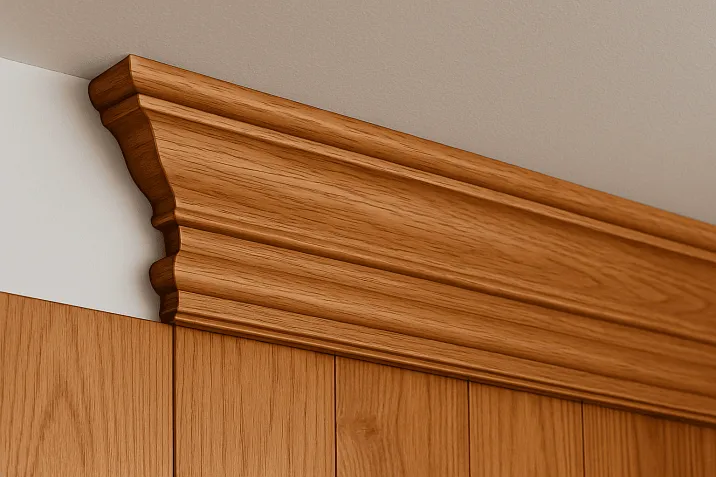
Do you know what distinguishes a truly luxurious interior from an ordinary one? The devil is in the details — and one such decisive detail is wooden corniceThis element can transform an ordinary room into a true masterpiece of design art, but only if the material, profile, and installation technology are chosen correctly.
The modern market of finishing materials is flooded with a wave of synthetic imitations — from cheap plastic to composite materials promising '100% similarity to natural wood'. But can technology deceive nature? Can it replace what has been created over decades of growth under sun and rain?
In this battle between technology and nature, wooden crown molding remains invincible. It does not merely decorate the interior — it lives within it, breathing in harmony with the house, creating that unique atmosphere of comfort and nobility which no artificial material can replicate.


The Anatomy of Perfection: What Lies Behind the Term 'Wooden Crown Molding'
Crown molding is not just a decorative strip. It is an architectural element with a multi-century history, whose function is to create a smooth transition between intersecting planes. Wooden Crown Moldings perform both aesthetic and practical functions, masking technological gaps and irregularities that inevitably arise at the junction of different finishing materials.




Historical Perspective and Modernity
In classical architecture, crown moldings were used as elements of ornamental decoration, emphasizing transitions from walls to ceilings, highlighting architectural details, and creating play of light and shadow. Modern wooden crown molding has preserved these traditions, but enriched them with new technological capabilities and design solutions.
Today wooden crown molding buy which is available in a wide range of sizes and profiles, is a high-tech product created using modern equipment, yet retaining all the beauty and nobility of natural wood.
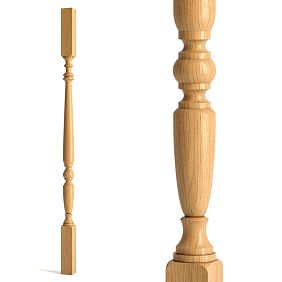
Our factory also produces:



Technical Specifications and Quality Standards
High-quality wooden crown molding must meet strict technical requirements. The moisture content of the finished product should not exceed 12±2%, ensuring dimensional stability during operation. The density of the wood varies depending on the species: for coniferous species — 450-550 kg/m³, for deciduous — 600-800 kg/m³.
Geometric parameters are also strictly regulated. Deviations in length should not exceed ±2 mm, in width and thickness — ±0.5 mm. Surface quality is characterized by the absence of chips, scratches, or dents deeper than 0.5 mm on the front surface.
Get Consultation
Variety of wood species: choosing the interior character
Choosing the wood species for the cornice — is choosing the character of the entire room. Each species has unique properties that determine not only the appearance, but also the operational characteristics of the product.
Coniferous Species: Accessibility and Practicality
Spruce remains the most popular material due to the optimal price-to-quality ratio. The density of spruce wood is 480-520 kg/m³, which ensures ease of processing and installation. A distinctive feature is the pronounced texture with contrasting annual rings and a pleasant golden hue.
Fir has a more uniform structure and a light, almost white color. The density of fir wood is slightly lower — 450-480 kg/m³, making it even easier to process. However, fir is more prone to forming small knots, requiring careful selection of raw material.
Larch occupies a special place among coniferous species due to its unique combination of strength and moisture resistance. The density of larch wood reaches 600-650 kg/m³, and its high resin content provides natural biostability. Floor wooden cornice Larch is ideal for rooms with increased humidity.
Deciduous species: nobility and elegance
Oak is the king among deciduous species. Its wood is distinguished by exceptional strength (density 650-750 kg/m³), beautiful texture, and the ability to become even more attractive over time. Tannins present in oak wood provide natural protection against rot and pests.
Beech attracts designers with its uniform structure and soft pink-cream color. With a density of 680-720 kg/m³, beech wood holds its shape well and is suitable for any type of mechanical processing. A distinctive feature of beech is its ability to undergo steam treatment, allowing for a more uniform color.
Ash demonstrates impressive mechanical properties at a density of 650-700 kg/m³. Its texture is more pronounced than beech, with characteristic contrasting stripes, making ash cornices especially striking in modern interiors.
Birch, with relatively low density of 600-650 kg/m³, is distinguished by exceptional structural uniformity and the ability to be stained in any color. Birch cornices are often used as a base for imitating more expensive species.
Technological mastery: from log to finished product
Producing high-quality wooden cornices is a complex technological process, each stage of which affects the quality of the final product.
Log preparation and primary processing
The quality of future cornices is established already at the stage of timber harvesting. Trees must be felled during the period of minimal sap movement — from October to March, when the moisture content in the wood is minimal. This significantly simplifies subsequent drying and reduces the risk of cracking.
Primary sawing is performed taking into account the anatomical structure of the trunk. For producing cornices, radial sawing is predominantly used, ensuring maximum dimensional stability and beautiful texture of the finished products.
Drying: critical stage of technology
Wood drying is the most critical operation, the quality of which determines all operational characteristics of the finished products. Modern industry uses several drying methods, each with its own advantages.
Natural atmospheric drying is the most traditional method, requiring 2-4 years to achieve optimal moisture content. Wood dried naturally has the best characteristics, but the lengthy process makes this method economically unfeasible for mass production.
Kiln drying allows controlling all parameters of the process and reduces the time to several weeks. Modern drying chambers are equipped with automatic systems for maintaining temperature, humidity, and air circulation, ensuring uniform material drying.
Vacuum drying is an innovative technology that allows conducting the process at reduced temperatures while preserving the natural color of the wood. This method is especially effective for deciduous species prone to color changes at high temperatures.
Mechanical processing and profiling
Creating the cornice profile — a high-precision operation requiring the use of special equipment and tools. Wooden molding dimensions and whose profile must meet project requirements, is manufactured on CNC milling machines.
Processing accuracy is achieved using diamond and carbide tools, ensuring surface cleanliness and profile sharpness. Modern machines allow processing blanks up to 6000 mm in length with dimensional deviations no more than ±0.1 mm.
Final finishing and quality control
After profiling, all items undergo final sanding on special machines that ensure an ideal smooth surface. Sanding is performed in several stages, gradually reducing abrasive grit from 120 to 320 units.
Quality control is performed at every stage of production using modern measuring instruments and visual inspection. Items that do not meet quality standards are rigorously rejected, ensuring consistently high quality of delivered products.
Design solutions: profiles for any style
The modern market offers an incredible variety of wooden cornice profiles capable of meeting any design requirements.
Classic profiles: time-tested solutions
The simple quarter-round profile remains the most popular due to its versatility and ease of installation. Sizes range from miniature 8×8 mm to substantial 50×50 mm, allowing you to select the optimal option for any room.
Profiles of the "goose" type, with their characteristic S-shape, create a more expressive play of light and shadow. Such profiles are especially effective in classic interiors, where ornamental elements are valued.
Composite profiles, consisting of several elements, allow creating complex decorative compositions. Jointing of wooden moldings Installation in such systems requires highly skilled installers, but the result exceeds all expectations.
Modern solutions: minimalism and functionality
Rectangular profiles with sharp edges meet the requirements of modern interior styles — minimalism, high-tech, loft. The absence of decorative elements is compensated by flawless surface quality and precise geometry.
Asymmetric profiles create dynamic interiors and can be used as standalone decorative elements. Such solutions require special skill in design and manufacturing.
Profiles with integrated channels for communication cabling — an innovative solution for "smart" homes. Wooden ceiling molding With such a construction, it is possible to conceally lay cables for lighting, internet, and "smart home" systems.
Application and installation: secrets of professional mounting
Quality installation of wooden moldings requires not only professional skills but also an understanding of the specifics of working with natural wood.
Preparatory Work
Material acclimatization is a mandatory preparation step. Wooden moldings must remain in the room for at least 48 hours to reach equilibrium humidity. This prevents deformation after installation.
Foundation preparation includes checking the room's geometry, leveling surfaces, and cleaning from contaminants. Deviations from vertical and horizontal alignment must not exceed 3 mm per linear meter.
Technology of mounting
wooden molding They are mounted using various methods depending on size, weight, and operating conditions.
Adhesive mounting is suitable for lightweight moldings of small dimensions. Polyurethane adhesives are used, providing strong bonding with various types of substrates while maintaining a certain degree of elasticity.
Mechanical mounting is used for large moldings or under increased loads. Self-tapping screws and finish nails provide secure connections but require subsequent masking.
Combined mounting combines the advantages of both methods and is used for critical structures. The molding is fixed with adhesive and additionally secured mechanically.
Corner and joint treatment
Corner joints are the most complex part of installation, requiring high skill from the installer. Internal corners are formed using the "on the edge" method with precise 45° trimming. Special templates are used for complex profiles.
External corners require special attention to end-face finishing. Techniques using corner overlays or forming complex connections from two elements are applied.
Ceiling wooden molding on paneling It is installed taking into account the thermal expansion of the base material. Compensation gaps are provided to prevent stress formation when the paneling dimensions change.
Protective-decorative finishing: durability and beauty
The choice of protective-decorative finishing system determines not only the appearance of moldings but also their durability, ease of maintenance, and ecological safety.
Oil finishes
Deep-penetration oils are the optimal choice for those who appreciate the natural beauty of wood. The oil penetrates into the wood pores, highlights the texture, and creates a breathable coating. Modern formulations contain UV filters and biocides, protecting the wood from fading and biological damage.
Hard waxes create a more durable coating with a characteristic silky sheen. Wax coatings are easily restored by local application and polishing, making them attractive for use in residential spaces.
Lacquer systems
Polyurethane varnishes form a strong protective film, providing high resistance to mechanical impacts and moisture. Modern water-based formulations are environmentally safe and odorless during application.
Nitrocellulose varnishes dry quickly and form a hard coating with high gloss. However, they are more toxic and require good ventilation during application.
Alkyd lacquers have high elasticity and good decorative properties. They are ideal for wood species with high resin content.
Staining and decorative effects
Stains allow changing the color of wood while preserving its texture. Water-based stains provide even coloring, while alcohol-based stains offer deeper shades. Oil-based stains dry more slowly but provide the best tone uniformity.
Patination creates an effect of noble aging. The technique includes applying a base tone, highlighting relief with contrasting color, and finishing for a natural appearance.
Brushing is a mechanical process that emphasizes the structure of annual rings. Soft fibers are removed with special brushes, creating an expressive surface texture.
Stylistic solutions and design trends
Wooden moldings can dramatically change the perception of space and emphasize the chosen interior style.
Classic styles
Classical interiors typically use moldings with complex profiles and rich detailing. Elements of classical architecture — flutes, ovals, beads — create an atmosphere of grandeur and majesty.
Color solutions tend toward noble shades of natural wood or imitation of valuable species. Techniques such as gilding and patination are popular, creating an antique effect.
Modern trends
Minimalism requires moldings with simple geometric forms without decorative excesses. Emphasis is placed on surface quality and precision of execution. The color palette is limited to natural shades of light species or white enamel.
Loft allows the use of roughly processed elements with an emphasized industrial character. Dark tones, imitation of charred or aged wood, are popular.
Scandinavian style prefers light tones and simple forms. Buy wooden moldings in St. Petersburg In Scandinavian style, it means choosing items made of pine or birch with minimal processing.
Ecological Trends
Growing interest in eco-friendly materials contributes to the popularity of wooden moldings with natural finishes. Preference is given to local wood species and non-toxic finishing systems.
The "zero waste" concept stimulates the use of wood processing waste to produce small-sized moldings. This approach combines ecological responsibility with economic efficiency.
Economic aspects and investment attractiveness
When assessing the feasibility of using wooden moldings, it is necessary to consider not only initial costs but also long-term economic benefits.
Initial investments
The cost of wooden moldings significantly exceeds the price of synthetic analogs. The difference may range from 200-400% depending on the wood species and profile complexity. However, these costs are justified by the longevity and aesthetic qualities of natural material.
Operational characteristics
Wooden moldings, with proper care, last 25-50 years, which is several times longer than plastic analogs. The possibility of restoration and renewal of the finish allows extending service life up to 70-100 years.
Impact on property value
Quality natural wood finishing increases property market value by 7-12%. Such properties attract more financially capable buyers and sell faster.
Ecological advantages
Wooden products have a negative carbon footprint, as wood absorbs CO₂ from the atmosphere. Using local species reduces transportation costs and environmental impact.
Maintenance and care: guarantee of longevity
Proper care of wooden moldings is the key to their longevity and preservation of their original appearance.
Regular Maintenance
Daily dry cleaning with soft cloth prevents dust and dirt accumulation. Wet cleaning should be moderate — excess moisture may damage the finish.
Cleaning agents used are specialized wood surface care products, free of aggressive solvents and abrasives.
Climate conditions
Optimal temperature for wooden items is 18-24°C at relative humidity of 40-60%. Sudden fluctuations may cause cracking or warping.
Preventive maintenance
Wooden moldings require re-coating every 5-10 years depending on usage intensity. Modern systems allow renewal without dismantling the items.
Minor scratches and scuffs are removed by local sanding and coating. Serious damage may require replacement of the affected area.
Minor scratches and scuffs are removed by local sanding and coating. Serious damage may require replacement of the affected area.
STAVROS: the benchmark of quality in the world of wooden products
In the industry of wooden products, there are names that have become synonymous with quality and professionalism. STAVROS rightfully occupies leading positions thanks to its impeccable reputation, advanced technologies, and relentless pursuit of perfection.
STAVROS is not just a manufacturer — it is a philosophy of relationship with natural materials, where each product is considered a work of art. The company has combined centuries-old carpentry craftsmanship with innovative modern production technologies, creating a unique culture of quality.
STAVROS's production facility is a high-tech complex equipped with equipment from leading European manufacturers. Automated drying lines, precision CNC routers, and robotic packaging systems ensure consistently high product quality regardless of order volume.
STAVROS places special emphasis on environmental responsibility. The company works exclusively with certified wood suppliers guaranteeing sustainable forestry. All production processes are optimized to minimize waste, and energy needs are partially met through renewable sources.
Quality control at STAVROS is conducted at every stage of production. A multi-level inspection system, modern measuring equipment, and visual inspection by experienced specialists ensure that each product meets the strictest standards.
The company's R&D center continuously works on improving technologies and developing new products. Collaboration with leading designers and architects allows STAVROS to anticipate market trends and offer innovative solutions.
STAVROS's service support includes a full range of services — from consultation when selecting products to technical support during installation. The company's logistics network ensures fast delivery to any point in the country with guaranteed cargo safety.
69.72 $ р.


