Article Contents:
- Psychology of wooden interior: why we choose naturalness
- Emotional impact of wooden beams
- Choosing wood species: from practicality to aesthetics
- Spruce: Accessible Beauty of Northern Forests
- Larch: Siberian strength and beauty
- Oak: The Aristocrat Among Wood Species
- Configurations and shapes: architectural geometry in interior design
- P-shaped beams: classic functionality
- L-shaped elements: accents in corners
- O-shaped constructions: decor for verticals
- Dimensional Scale: The Mathematics of Beauty
- Standard sizes for typical rooms
- Custom sizes: when standard doesn't fit
- Processing methods: from natural beauty to artistic form
- Shaving: emphasized texture
- Patina: The Nobility of Time
- Thermo-treatment: coffee tones
- Stylistic directions: beams in various interiors
- Scandinavian style: northern simplicity
- Classic style: traditional elegance
- Loft: industrial aesthetics with natural accents
- Country and Provence: rustic romance
- Integration with other decorative elements
- Color and texture coordination
- Play of Contrasts
- Functional capabilities of modern faux beams
- Hidden placement of communications
- Built-in lighting
- Space zoning
- Technological aspects of production
- Wood preparation
- Machine Processing
- Final finishing
- Criteria for selecting a quality product
- Wood Quality
- Precision Processing
- Coating quality
- Installation: from planning to completion
- Preparatory work
- Marking and control
- Joining technologies
- Maintenance and Operation: Preserving Beauty for Years
- Regular Cleaning
- Controlling microclimate
- Periodic Coating Renewal
- Pricing: investments in quality
- Factors influencing pricing
- Economic efficiency
- Ecological aspects: Responsibility to nature
- Certification and Standards
- Health safety
- Regional Characteristics and Logistics
- Climate requirements
- Transportation costs
- Trends and Innovations: Looking to the Future
- Technological Innovations
- Design trends
- Buying psychology: how to make the right decision
- Defining priorities
- Emotional Component
- Conclusion: wise decision for a perfect home
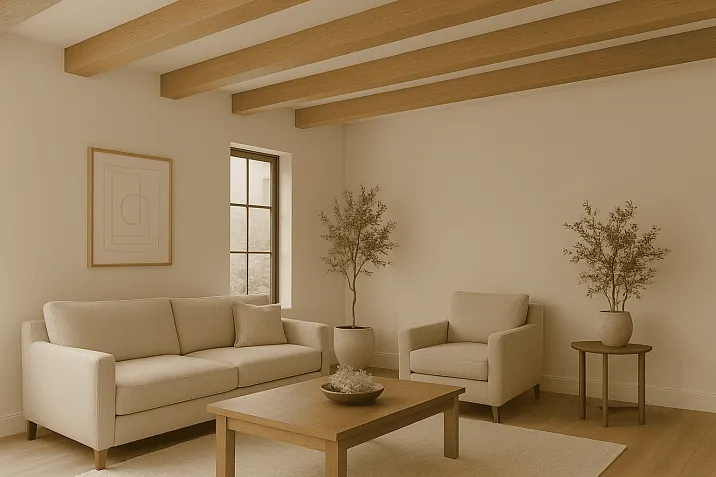
Do you know what can turn an ordinary room into a space that takes your breath away? What makes guests pause at the threshold and admire upward? The answer is simple and revolutionary — wooden faux beams. Solution buy faux wooden beam It's not just purchasing a decorative element — it's an investment in an atmosphere that will inspire you every day.
In an era when technology rapidly transforms our world, home remains the only place where one can feel connected to nature, traditions, and the present. And it is precisely natural wooden beams that can create this magical atmosphere of authenticity.


Psychology of wooden interiors: why we choose naturalness
Why, among the multitude of modern materials, do we continue to reach for wood? The answer lies deep within our subconscious. Wood is a living material that carries the energy of growth, the strength of the earth, the memory of time. Each fiber, each growth ring tells a story.
When you decide to buy a wooden beam, you are not simply purchasing a construction material. You are investing in sensations, emotions, and the quality of life. Natural wood has a unique ability to create a microclimate: it breathes, absorbs excess moisture, and releases beneficial phytoncides.




Emotional impact of wooden beams
Imagine: you enter a room, and your gaze involuntarily rises to the ceiling, where majestic wooden beams create rhythm and structure in the space. At this moment, ancient archetypes of safety and stability are activated. Wood is associated with home, family, and traditions.
Wooden beams They can visually increase ceiling height, create a sense of spaciousness, or, conversely, cozy intimacy. They define the character of the space, setting its style and mood.
Our factory also produces:


Choosing the type of wood: from practicality to aesthetics
Deciding which wooden beam to buy should be based on understanding the unique characteristics of different wood species. Each species has distinctive features that affect both appearance and performance.
Get Consultation
Spruce: accessible beauty of northern forests
Spruce remains the most popular choice due to its optimal price-to-quality ratio. Light-colored wood with a distinctive growth ring pattern creates a sense of freshness and spaciousness. Resinous structure provides natural protection against moisture and insects.
A distinctive feature of spruce beams is their ability to be stained. You can achieve any shade: from snowy Scandinavian style to deep walnut tones of classic interiors. The natural aroma of spruce creates a pine forest atmosphere in the home, which is especially valuable in urban settings.
Larch: Siberian strength and beauty
Larch is a premium choice for those who value durability and expressive texture. Dense structure and high resin content make this species practically impervious to moisture. The distinctive contrasting pattern of growth rings is especially striking after brushing.
The color range of larch varies from light golden to rich brown tones. This species is ideal for rooms with high humidity: kitchens, bathrooms, saunas.
Oak: The Aristocrat Among Wood Species
Oak is the choice of those who understand true quality. Elegant texture, variety of natural shades, exceptional strength make oak beams a true interior decoration. Oak is well-suited to all types of finishing: from classic varnishing to trendy brushing and thermal treatment.
A distinctive feature of oak beams is their ability to become more beautiful with time. Under the influence of light and oxygen, the wood acquires a noble patina that emphasizes the sophistication and solidity of the interior.
Configurations and shapes: architectural geometry in interiors
Modern production offers beams of various configurations, each solving specific design tasks. Understanding the features of each shape will help make the right choice.
L-Beam: classic functionality
The L-shaped configuration is the most universal and popular. Such a structure consists of three elements: two side walls and a top cover, creating an internal cavity for housing utilities.
The advantages of L-shaped beams are obvious: they are easy to install, allow hiding wiring, and create the impression of a massive structure while being lightweight. This configuration suits any interior style: from classic to modern.
G-shaped elements: accents in corners
G-shaped beams are designed for decorating transitions between ceiling and walls, creating visual accents in room corners. They are especially effective in rooms with low ceilings, where full L-shaped beams may create a sense of pressure.
These elements allow visually raising the ceiling, creating an illusion of greater space volume. Combined with proper lighting, G-shaped beams become true architectural accents.
O-shaped structures: decor for verticals
O-shaped beams are closed structures for decorating columns, posts, vertical supports. They allow modern concrete or metal structures to appear as traditional wooden elements.
Such beams are often used in country houses, restaurants, public spaces, where it is necessary to create an atmosphere of solidity and connection with nature.
Dimensional Scale: The Mathematics of Beauty
Choosing beam sizes is an art requiring understanding of proportions and scale of the room. Too thin beams will disappear in a spacious room, while overly massive beams will create a sense of pressure in a small space.
Standard sizes for typical rooms
For standard city apartments with ceiling heights of 2.7–3.0 meters, beams with cross-sections of 100x100 mm or 120x120 mm are optimal. They create a noticeable decorative effect without overwhelming the space.
In country houses with high ceilings, you can use more massive beams: 150x150 mm, 200x200 mm, and even larger. These sizes emphasize the scale of the space, creating a sense of fundamentality.
Custom sizes: when standard doesn't fit
Modern manufacturers offer beams made to custom sizes. This is especially relevant for non-standard rooms, historic buildings, and exclusive design projects.
The ability to order beams of the required length allows avoiding joints, creating a continuous line, and emphasizing the architectural idea. Custom sizes cost more, but the result justifies the expense.
Processing methods: from natural beauty to artistic form
Modern wood processing technologies allow creating beams with various textures and effects. Each processing method imparts wood with unique aesthetic qualities.
Brushing: emphasized texture
Brushing is a mechanical surface treatment using special brushes that remove soft fibers and reveal hard annual rings. The result is an expressive relief texture that highlights the natural beauty of wood.
Brushed beams are especially effective in interiors of country, Provence, and loft styles. The relief surface beautifully plays with light, creating dynamic shadows and highlights.
Patina: The nobility of time
Patination imitates the natural aging of wood, creating an effect of noble gray. Special compounds penetrate the wood structure, emphasizing its texture and imparting a unique depth of color.
Patinated beams fit perfectly into classic interiors, creating a sense of history and solidity. Different patination techniques allow achieving effects ranging from light haze to deep antique patina.
Thermo treatment: coffee tones
Thermal treatment of wood at high temperatures imparts it noble coffee and chocolate tones. In addition to changing the color, it also alters structural properties: the wood becomes more stable and less prone to deformation.
Thermo-treated beams do not require additional staining; their natural color remains unchanged throughout their service life.
Stylistic directions: beams in various interiors
Wooden false beams have an amazing ability to adapt to any stylistic direction. The key is to correctly choose the wood species, processing method, and color solution.
Scandinavian style: northern simplicity
Scandinavian design values naturalness, simplicity, and functionality. Wooden beams Here, they are executed in light tones, often whitewashed or coated with semi-transparent finishes that preserve the visibility of the texture.
The geometry of placement follows minimalist principles: simple parallel lines, equal intervals, absence of unnecessary ornamentation. Such beams create a sense of purity and order, characteristic of northern design.
Classic style: traditional elegance
Classic interiors require the use of noble materials with traditional processing. Oak or larch beams with lacquered finish create an atmosphere of respectability and solidity.
The color palette leans toward natural wood tones: from light golden to deep brown. Patination emphasizes the nobility of age, adding historical character to the interior.
Loft: Industrial Aesthetics with Natural Accents
Loft style, seemingly, contradicts the use of natural wood. However, properly selected beams with intentionally rough processing and dark staining fit perfectly into industrial aesthetics.
Here, emphasized texture, traces of processing, and irregularities are valued. The combination of wood with metallic elements creates the characteristic loft contrast between natural and technological.
Country and Provence: rustic romance
These styles require beams to have a special atmosphere. Here, all artificial aging techniques are appropriate: brushing, patination, imitation of wormholes and wear.
The color palette leans toward muted, bleached tones characteristic of Mediterranean architecture. Such beams should appear as if they have been in service for more than a decade.
Integration with other decorative elements
False beams made of wood are rarely used in isolation. They become part of a comprehensive design system that may include Moldings, Baseboards, cornices made of the same material.
Color and texture coordination
Successful integration requires careful coordination of colors and textures of all wooden elements. Even minor differences in shades may disrupt the overall harmony of the interior.
The ideal solution is to order all elements from one manufacturer in a single batch of material. This guarantees full color and texture consistency.
Play of contrasts
In some cases, contrasting solutions can be striking: dark beams on a light ceiling or, conversely, light elements on a dark background. Such techniques require a professional approach to color design.
Contrast can highlight architectural features of a room, create dynamism, and draw attention to specific zones. The key is a sense of proportion and understanding of the overall interior concept.
Functional capabilities of modern false beams
Modern wooden false beams are no longer exclusively decorative elements. They perform numerous practical functions that enhance comfort and functionality of the space.
Hidden placement of communications
The hollow interior of beams is ideally suited for housing electrical wiring, internet cables, and security systems. Modern homes are filled with various technical systems, and beams help maintain the aesthetic appearance of the ceiling.
When planning, it is important to consider the volume of communications and requirements for their accessibility for maintenance. Technological access panels are provided, disguised as decorative elements.
Built-in lighting
Hollow beams offer wide possibilities for creating original lighting solutions. LED strips inside beams create soft, diffused lighting, especially effective in the evening.
Directional lighting can be used as primary or supplementary lighting. Modern LED technologies allow creating systems with adjustable brightness and color temperature.
Space Zoning
Properly positioned beams can divide a single space into functional zones without physical partitions. This is especially relevant for studio apartments and large open-plan spaces.
The direction of beams plays a key role: longitudinal beams visually elongate the room, transverse beams widen it, and diagonal beams create dynamism and a modern feel.
Technological aspects of production
The quality of wooden beams directly depends on the technology used in their production. Modern enterprises use high-tech equipment and strictly control every stage of the manufacturing process.
Wood preparation
The process begins with careful selection of timber. The material must be dry (moisture content no more than 8-12%), free of defects, with a beautiful natural grain. Kiln-dried timber ensures stable geometric dimensions.
Sorting by quality classes allows for the most rational use of material. Higher-grade timber is used for visible surfaces, while lower-grade timber is used for internal structural elements.
Machine Processing
Modern woodworking machines ensure high precision of geometric dimensions. Profiling is performed on four-sided planers, guaranteeing ideal geometry.
The quality control system prevents defective processed elements from entering the final product. Each part undergoes visual inspection before assembly.
Final finishing
Finish processing determines not only the appearance but also the operational characteristics of beams. Sanding with various abrasives creates a perfectly smooth surface for subsequent coating.
Application of protective coatings is performed in special painting chambers with controlled temperature and humidity parameters. This ensures even coating and its durability.
Criteria for selecting quality products
When deciding to purchase a wooden false beam, it is important to know the criteria by which you can evaluate the quality of the offered product. The right choice affects not only the appearance but also the longevity of the structure.
Wood quality
The first thing to pay attention to is the quality of the raw material. The timber should be dry, free of cracks, knots, stains, or signs of insect damage. Annual rings should be evenly spaced, without abrupt transitions.
Kiln-drying is a mandatory requirement. Naturally dried timber may deform after installation, leading to gaps and disruption of the structure's geometry.
Accuracy of processing
The profile geometry must be ideal. Any deviation from specified dimensions will cause problems during installation. Especially important is the accuracy of internal dimensions of I-shaped profiles — this determines the tightness of element connections.
The surface must be carefully sanded, free of tool marks, scratches, or dents. The quality of sanding is especially important for beams intended for transparent finishes, where all surface defects are visible.
Coating quality
If beams are delivered with a pre-applied coating, it is important to evaluate its quality. The coating must be uniform, without streaks, bubbles, matte or glossy spots. The color must be consistent across the entire surface.
Beam ends require special attention — they must be carefully processed and coated with a protective compound. Unprotected ends quickly darken and may become the cause of wood cracking.
Installation: from planning to completion
Quality installation is the key to a successful project for installing wooden beams. Even the highest-quality materials can disappoint if installed incorrectly.
Preparation Work
Successful installation begins with careful planning. It is necessary to determine the exact placement of beams, taking into account the features of the room: windows, doors, light fixtures, furniture.
The ceiling surface must be prepared: leveled, cleaned, and dust-free. Significant unevenness may lead to poor beam fit and weakened fastening.
Marking and Control
Accurate marking is the foundation of quality installation. Laser levels are used, ensuring perfect horizontal alignment and parallel lines. Even minor deviations will be noticeable after completion of work.
Control measurements are performed at each stage. Distances between beams, their parallelism, and horizontal alignment are checked. Detected deviations are immediately corrected.
Mounting technologies
The choice of fastening method depends on the beam material, ceiling type, and requirements for reliability. For medium-weight wooden beams, a combined method is used: adhesive bonding is reinforced with mechanical fasteners.
Special polyurethane adhesives provide strong, elastic bonding. Additional self-tapping screws are installed through the side walls of beams in areas hidden from view.
Care and maintenance: preserving beauty for years
Proper care of wooden beams ensures their attractive appearance for many years. Natural wood is a living material requiring attention and care.
Regular cleaning
Wooden beams require regular cleaning from dust and dirt. Soft brushes or microfiber cloths are used, leaving no scratches on the surface.
For wet cleaning, special wood care products are used. They not only clean the surface but also nourish the wood, maintaining its elasticity.
Microclimate control
Wood is sensitive to changes in humidity and temperature. Sudden fluctuations may cause cracking or deformation. Optimal air humidity is 40-60%, temperature is 18-24°C.
During the heating season, when air humidity decreases, it is recommended to use humidifiers. They help maintain a comfortable microclimate for wood.
Periodic coating renewal
Lacquered surfaces gradually lose their gloss and may develop minor scratches and scuffs. Periodic renewal of protective coating extends the service life of beams.
Renewal includes light sanding of the surface with fine abrasive, removing dust, and applying a new layer of lacquer or oil. This procedure restores beams to their original appearance.
Pricing: Investment in quality
The cost of wooden false beams is influenced by multiple factors. Understanding these factors will help make an informed purchase, optimally balancing quality and budget.
Factors forming the price
Wood species is the primary factor in pricing. Pine remains the most affordable option, larch occupies the mid-price segment, and oak belongs to the premium class.
Beam dimensions directly affect cost. Large elements with significant cross-sections require high-quality wood without defects, increasing production costs.
Processing complexity significantly affects price. Simple smooth beams are cheaper than brushed or patinated ones. Hand finishing may increase cost several times.
Economic Efficiency
Purchasing quality wooden beams is a long-term investment. With proper care, they serve for decades without requiring significant maintenance costs.
Quality beams enhance interior visual appeal, which may positively impact property value. Homes with thoughtfully designed decorative elements always enjoy higher demand.
Ecological aspects: responsibility toward nature
When choosing natural wooden beams, ecological aspects of production must be considered. Responsible manufacturers use wood from sustainably managed forests and hold appropriate certifications.
Certification and Standards
FSC certification guarantees that wood comes from forests managed according to the highest ecological and social standards. Such wood does not harm ecosystems.
PEFC certification also confirms that wood originates from responsibly managed forests. These standards ensure a balance between forest resource use and conservation.
Safety for health
Natural wood without chemical treatment is completely safe for health. Moreover, it releases beneficial phytoncides that purify air from bacteria and viruses.
When using protective coatings, it is important to choose water-based formulations free of volatile organic compounds. Such coatings are safe for humans and the environment.
Regional characteristics and logistics
When planning to purchase wooden beams, regional characteristics must be considered: climate, transportation accessibility, local construction traditions.
Climate Requirements
In regions with harsh climates, special attention is given to material thermal resistance. Sudden temperature fluctuations may cause deformation, so stabilized wood is preferred.
In humid regions, resistance to moisture and fungal damage is critically important. Special protective coatings ensure long-term durability under challenging conditions.
Transportation costs
Delivery of large wooden elements may constitute a significant portion of the total cost. Planning optimal routes and delivery methods helps reduce expenses.
Regional manufacturers often offer more favorable logistics conditions due to proximity to consumers. This also supports local economy and reduces carbon footprint.
Trends and Innovations: Looking to the Future
The market for wooden decorative elements is constantly evolving under the influence of new technologies and changing consumer needs. Understanding trends helps make a forward-looking choice.
Technological Innovations
Modern thermal modification technologies allow obtaining materials with improved properties. Thermal treatment increases stability, reduces moisture absorption, and imparts beautiful tones.
Vacuum impregnation technologies ensure deep penetration of protective compositions into the wood structure. This significantly increases the material's durability and biostability.
Design Trends
Modern design trends favor natural materials and eco-friendliness. Wooden beams fit perfectly into these trends, especially when combined with other natural materials.
Minimalism influences the shape and finish of beams: preference is given to simple geometric forms, natural textures, and restrained color palettes.
Personalization is becoming increasingly important. Consumers seek unique solutions that reflect their personality and lifestyle. This stimulates the development of custom manufacturing services.
Psychology of Buying: How to Make the Right Decision
Buying wooden beams is not only a rational decision but also an emotional one. Understanding psychological aspects will help make the right decision.
Priority definition
Before purchasing, it is important to clearly define priorities: what matters more — price or quality, appearance or durability, eco-friendliness or practicality. This will help narrow the choice and avoid impulsive decisions.
Creating a list of requirements and ranking them by importance is an effective way to structure the selection process. This is especially important when the budget is limited.
Emotional component
Wood affects on an emotional level, so it is important to listen to your feelings. Which wood species evokes the most positive emotions? Which texture appears most appealing?
Emotional attachment to the chosen material ensures long-term satisfaction from the purchase. Beams that delight the eye every day justify any expenses.
Conclusion: A Wise Decision for the Perfect Home
Solution buy faux wooden beam It is an investment in beauty, comfort, and quality of life. Natural wooden beams can transform any interior, endowing it with warmth, character, and a unique atmosphere.
The correct choice of material, wood species, and processing method determines the success of the entire project. It is important to consider not only aesthetic preferences but also practical requirements: operating conditions, budget, and project timelines.
Quality wooden beams serve for decades, gaining even greater beauty and value over time. They create in the home an atmosphere of coziness, stability, and connection with nature — something so important in today’s fast-paced world.
The modern market offers solutions for any task and budget. From affordable pine beams to exclusive handcrafted oak elements — everyone can find the optimal option.
Investing in high-quality wooden decorative elements is investing in the longevity and beauty of your home. This decision will delight you every day, creating a unique atmosphere of comfort and elegance.
In a world of high-tech and artificial materials, natural wood remains a symbol of authenticity, quality, and connection with nature. Wooden beams help create exactly such an atmosphere — natural, warm, inviting, and conducive to rest and contemplation.
STAVROS Company, with its rich experience in producing high-quality solid wood products, offers solutions that will become a decoration of any interior for many years. Each beam is crafted with special attention to detail, using premium wood and advanced processing technologies. Choosing STAVROS products means choosing unparalleled quality, reliability, and eternal beauty of natural wood.