Article Contents:
- Practical Magic: Real Examples of Space Transformation
- When the Living Room Becomes a Salon
- Kitchen: From Function to Art
- Staircase: Vertical Gallery
- Anatomy of Beauty: Classification of Carved Elements
- Applied Elements: Small Forms of Great Art
- Trim Elements: Continuous Beauty
- Architectural Elements: Monumental Beauty
- Material Science: The Soul of Wood in the Master’s Hands
- Exquisite Hardwoods
- Soft Woods for Fine Work
- Exotic Species: Luxury in Details
- Technological Revolution: Modern Methods of Ancient Craft
- Digital Modeling: From Idea to Reality
- CNC Technologies: Precision and Reproducibility
- Laser Processing: Jewel-like Precision
- Stylistic Palette: From Classicism to Avant-Garde
- Classic Styles: Beauty Proven Through the Ages
- Modernism: nature as a source of inspiration
- Art Deco: geometry of luxury
- Ethnic motifs: cultural heritage
- Functional Integration: Beauty Serving Practicality
- Hidden Potential of Decorative Elements
- Integration with modern technologies
- Regional schools of craftsmanship
- Russian Traditions: From Folk Crafts to High Art
- European Schools: Technical Perfection
- Eastern Traditions: Philosophy in Ornament
- Economics of Beauty: Investment Aspects
- Impact on property value
- Long-term perspective
- Repairability and Restoration
- Installation and Operation: Practical Aspects
- Surface Preparation: The Foundation of Durability
- Adhesive Joints: Chemistry Serving Strength
- Mechanical Fasteners: Reliability First
- Maintenance and Preservation: Extending the Life of Beauty
- Regular Maintenance
- Prevention of Damage
- Restoration and repair
- Trends in development: looking into the future
- Ecological requirements
- Personalization and customization
- Integration with IoT
- Psychology of Perception: How Decoration Affects People
- Emotional Impact of Forms
- Tactile sensations
- Social status
- Conclusion: Investment in Beauty and Culture
You stand before a choice — leave the interior plain or transform it into a work of art? Exactly Elements of Carved Decor You are capable of resolving this dilemma, infusing soul into the most ordinary spaces. Every carved detail is a bridge between past and present, between craft and art, between standard and exclusivity.
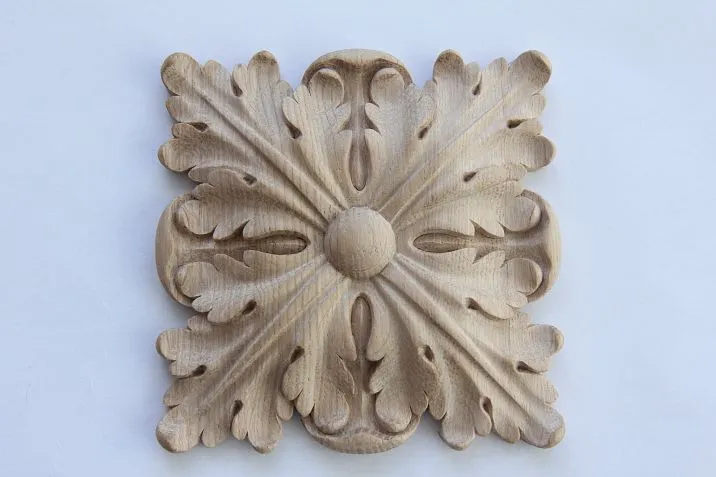
When the morning sun's ray glides over the relief surface of a carved applique, creating a play of light and shadow, magic is born. This magic transforms an ordinary room into a space where one wishes to live, create, and dream. But what lies behind this magic? How to properly choose and apply decorative carved elements?


Practical magic: real examples of space transformation




When the living room becomes a salon
Imagine: a typical three-room apartment in a panel building. Standard furniture, white walls, a sense of blandness. Now add a few wooden carved appliques to the furniture facades, install a carved socket around the chandelier, and frame the door opening with an elegant ornamental casing.
Instantly, the space acquires character. Guests stop perceiving it as 'another city apartment' — before them opens a cozy salon, where every detail speaks of the owners' taste and individuality.
Our factory also produces:


Kitchen: from function to art
Modern kitchens often resemble operating rooms — everything is sterile, functional, but absolutely cold. Carved interior sockets placed on the ceiling above the dining zone radically change perception. Add carved appliques to the facades of upper cabinets, and the kitchen transforms into a family hearth.
Elements with botanical themes — grapevines, wheat ears, oak leaves — look especially striking. They evoke associations with abundance, fertility, and family well-being.
Get Consultation
Staircase: vertical gallery
Carved wooden balusters transform an ordinary staircase into a vertical gallery of art. Each step becomes a new vantage point for appreciating the craftsman's skill. Moving along such a staircase is not merely transitioning between floors — it is an aesthetic journey.
Anatomy of beauty: classification of carved elements
Appliques: small forms of great art
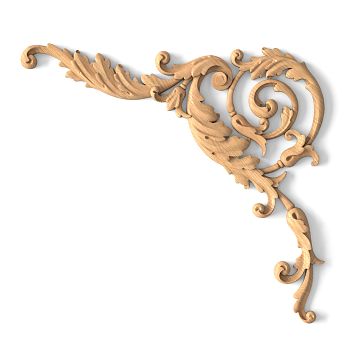
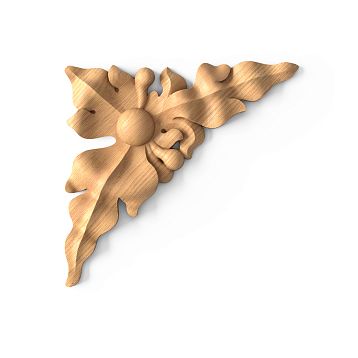
Appliques are the most accessible way to introduce carved decor into an interior. They are mounted over existing surfaces, instantly transforming their character.
Furniture appliques ranging from 50×50 mm to 400×600 mm solve tasks from pinpoint accentuation to radical style transformation of an item. Small sockets with diameters of 30–80 mm are ideal for creating rhythmic compositions on extended surfaces.
Large appliques 200×300 mm and larger become compositional centers, drawing attention and organizing perception of the entire furniture item.
Trimming elements: continuous beauty
Carved wooden trim creates an effect of continuous decorative line. Baseboards, cornices, casings, moldings — all these elements unite scattered interior items into a unified stylistic concept.
Carved baseboards 120–150 mm high radically change the perception of a room. They create a sense of solidity, completeness, and nobility. Baseboards with classical motifs — meanders, palmettes, stylized leaves — are especially striking.
Architectural elements: monumental beauty
Carved capitals of columns transform functional supports into works of architectural art. Classical orders — Doric, Ionic, Corinthian — each carries its own emotional weight.
Doric capitals, with their minimalist forms, suit strict, masculine interiors. Ionic capitals, with their elegant volutes, create a sense of refinement. Corinthian capitals, with their lush acanthus leaves — the choice for luxurious, grand spaces.
Material science: the soul of wood in the master's hands
Noble hardwoods
Oak remains the king among materials for carving. Its density of 650–720 kg/m³ allows creating the finest details that will retain clarity for decades. Oak Elements of Carved Decor darkens over time, acquiring a noble patina.
Beech attracts craftsmen with its uniform structure and excellent working qualities. Its pinkish hue is ideal for warm, cozy interiors. Carved wooden moldings from beech are especially popular in classical styles.
Ash combines the strength of oak with expressive contrasting texture. Its light and dark stripes create a natural decorative effect even without additional processing.
Softwoods for fine work
Linden is favored by carvers for its softness and uniformity. Intricate, jewel-like compositions can be crafted from linden blanks. Carved decorative brackets from linden impress with their detail and elegance.
Aspen shares similar properties with linden but exhibits greater resistance to moisture. It is often used to create elements for rooms with high humidity.
Exotic Woods: Luxury in Detail
Teak, mahogany, rosewood — these species transform carved decor into true treasures. They are used to create exclusive items intended for elite interiors.
Carved teak panels from solid wood not only possess exceptional beauty but also natural resistance to moisture and pests. This makes them ideal for use in bathrooms and kitchens.
Technological Revolution: Modern Methods of Ancient Craft
Digital Modeling: From Idea to Reality
Modern carved decorative creation begins in the computer. 3D modeling allows calculating every detail of the future product and optimizing it for specific application conditions.
Parametric modeling allows quickly adapting basic ornaments to any size and proportions. The designer can see in real time how changing one parameter affects the entire composition.
CNC Technologies: Precision and Reproducibility
CNC machines ensure jewel-like processing accuracy. Deviations do not exceed 0.1 mm, which is critically important for complex joints and fittings.
Multi-axis processing allows creating elements of complex spatial forms in a single setup. This eliminates repositioning errors and ensures perfect geometry of the finished product.
Laser Processing: Jewel-like Precision
Laser cutting has opened new possibilities for creating ultra-thin, intricate elements. The cut thickness does not exceed 0.2 mm, enabling the creation of details inaccessible through traditional methods.
Laser engraving adds delicate planar details to three-dimensional carving — leaf veins, petal textures, and the finest ornamental elements.
Stylistic palette: from classicism to avant-garde
Classic Styles: Beauty Tested by Centuries
Baroque demands opulence and theatricality. Elements in this style abound with scrolls, cartouches, and putti. Every detail strives to astonish the imagination and demonstrate the craftsman’s skill.
Neoclassicism prefers harmony and restraint. Plant motifs here are more rigid, geometry is more precise. Proportions adhere to the mathematical laws of the golden section.
Empire introduces military symbolism into decoration — eagles, laurel wreaths, fasces. This style emphasizes power and grandeur, perfectly suited for representative interiors.
Modern: nature as a source of inspiration
The modern style brought stylized natural forms into carved decoration. Irises, lilies, dragonflies, ocean waves — all of this finds embodiment in carved decorative elements.
Asymmetry becomes an important artistic technique. Compositions are built not on strict repetition, but on dynamic development of the theme.
Art Deco: geometry of luxury
Art Deco combines luxury with geometric strictness. Sun rays, zigzags, stylized flowers create the recognizable aesthetic of the jazz era.
Contrasting material combinations — light and dark wood, wood and metal — are a hallmark of this direction.
Ethnic motifs: cultural heritage
Russian folk ornaments are experiencing a second life. Хохлома scrolls, Городец flowers, Богородская carving adapt to modern aesthetics.
Eastern motifs introduce philosophy and symbolism. Chinese dragons, Japanese stylizations, Indian mandalas create a unique energy in space.
Functional Integration: Beauty Serving Practicality
Hidden Possibilities of Decorative Elements
Modern carved elements often perform multiple functions simultaneously. Decorative carved brackets not only adorn but also serve as supports for shelves, lamps, and cornices.
Carved inlays can conceal technological holes, panel joints, and communication pass-throughs. Beauty becomes an ally of functionality.
Integration with modern technologies
Carved decoration begins integrating with smart home elements. Interior carved outlets can conceal motion sensors, acoustic system speakers, and lighting components.
Hidden LED lighting turns carved panels into self-contained light sources. Programmable controllers allow creating various lighting scenarios.
Regional schools of craftsmanship
Russian Traditions: From Folk Crafts to High Art
The Vologda school of carving is renowned for technical perfection and attention to detail. Local artisans primarily work with coniferous woods, creating pieces in a northern style.
Kostroma carvers specialize in church carving. Their experience in creating iconostases is applied in secular architecture — the carved capitals of Kostroma-style columns are particularly animated.
The Bogorodskaya toy gave rise to a unique direction of three-dimensional carving. Modern masters adapt traditional techniques to create interior sculptures.
European Schools: Technical Perfection
The German school of carving is distinguished by engineering precision and functionality. German carved wooden moldings are renowned for their ideal geometry and durability.
Italian masters bring a special artistic flair to carving. Their works are characterized by expressiveness, painterly quality, and emotional expressiveness.
The French school of decoration leans toward elegance and refinement. French ornaments often use motifs from courtly art — royal lilies, crowned monograms.
Eastern traditions: philosophy in ornament
Chinese carving impresses with the complexity and multi-layered compositions. Traditional motifs — dragons, phoenixes, clouds — create dynamic, movement-filled compositions.
Japanese aesthetics lean toward minimalism and symbolism. Simple-looking forms carry deep philosophical meaning.
Indian carving is distinguished by incredible detail and richness of symbolism. Each element has a sacred meaning, and the entire composition forms a complex mandala.
Economics of Beauty: Investment Aspects
Impact on property value
Quality Elements of Carved Decor can increase property value by 10-25%. This is especially relevant for the luxury segment, where uniqueness and exclusivity play a decisive role.
Appraisal company experts note: interiors with quality carved decoration always attract more attention from potential buyers, sell faster and at higher prices.
Long-term perspective
Unlike trendy finishing materials, classic carved decoration does not become outdated. Moreover, antique carved elements actually appreciate in value over time.
Works by renowned masters become collectible items. Their value may increase several times, especially if they are by recognized masters.
Repairability and Restoration
Wooden carved elements can be restored, unlike plastic analogs. This makes them a more profitable long-term investment.
Modern restoration technologies allow restoring even severely damaged elements. Methods of local wood replacement, special strengthening compounds — all of this extends the life of carved decoration.
Installation and Operation: Practical Aspects
Surface Preparation: The Foundation of Longevity
The quality of installation determines 90% of the longevity of carved decoration. The surface must be perfectly prepared — cleaned of old coatings, degreased, and dried.
Irregularities in the base are unacceptable. Even minor unevenness can lead to cracks forming at stress concentration points.
Adhesive Joints: Chemistry Serving Strength
Modern adhesive compositions provide joint strength exceeding the strength of the wood itself. Polyurethane adhesives create an elastic joint, compensating for thermal deformations.
Epoxy compositions are used for particularly critical joints. They provide absolute geometric stability, but require perfect fitting of parts.
Mechanical Fastening: Reliability First
Large elements — solid wood carved panels, capitals, brackets — require additional mechanical fastening. Hidden screws, dowels, and special fastening systems ensure safe operation.
Special attention is paid to fastening ceiling elements. Here, safety is critical — a heavy carved element falling down can cause serious damage.
Care and Preservation: Extending the Life of Beauty
Regular Maintenance
Carved decoration requires regular but simple maintenance. Removing dust with a soft brush or vacuum cleaner with a brush attachment is the main maintenance procedure.
Periodic treatment with special wood compositions maintains the protective properties of the finish. Natural oils nourish the wood, preventing drying and cracking.
Damage Prevention
A stable microclimate is the key to the longevity of wooden elements. Sudden changes in temperature and humidity can lead to warping and cracks.
Optimal parameters: temperature 18-22°C, relative humidity 45-55%. Deviations are permissible, but changes should occur gradually.
Minor damage to oak balusters can be repaired yourself using special wax pencils or wood putty. It is important to select the material to match the wood tone precisely for an undetectable repair.
Local damage to carved decoration can be repaired without dismantling the entire element. Modern technologies allow restoring even complex carving areas.
The method of local wood insertion allows replacing a damaged section without compromising the integrity of the entire element. Special compositions ensure the repair is invisible.
Trends in development: looking toward the future
Ecological Requirements
Growing consumer environmental awareness stimulates the development of sustainable production technologies. FSC certification guarantees that the wood originates from responsibly managed forests.
Formaldehyde-free and other harmful substance-free coatings are becoming a standard of quality. Consumers are willing to pay more for guaranteed safe products.
Personalization and Customization
Modern technologies make personalization widely accessible. Family crests, monograms, individual ornaments — all of this can be realized without significant cost increases.
Automated design programs allow clients to create decorative variants tailored to specific conditions themselves.
Integration with IoT
The Internet of Things is penetrating even traditional crafts. Smart sensors embedded in carved elements can monitor their condition and promptly signal when maintenance is needed.
Psychology of perception: how decoration affects a person
Emotional Impact of Forms
Different types of ornamentation affect the psyche differently. Plant motifs soothe and create a sense of connection with nature. Geometric patterns stimulate intellectual activity.
The scale of elements also affects perception. Large forms create a sense of monumentality, while small ones convey elegance and refinement.
Tactile sensations
The ability to touch carved surfaces creates an additional sensory channel. The smoothness of polished protrusions contrasts with the depth of incised lines, creating a rich palette of sensations.
Social status
Quality carved decoration is always perceived as a sign of wealth and good taste. This is especially important for reception areas — offices, meeting rooms, lobbies.
Conclusion: Investment in beauty and culture
Elements of Carved Decor — this is not just interior decoration. It is an investment in beauty that pays off every day through the appreciation of the beautiful. It is a connection with cultural traditions, passing aesthetic values to future generations.
In a world of mass production and standardization, carved decoration remains an island of individuality. Each element is unique, every detail bears the mark of the creator's craftsmanship. This is what distinguishes a home from an apartment, an interior from a setting, a space from a room.
Choosing quality carved elements means investing not only in the beauty of our homes, but also in supporting traditional crafts and preserving cultural heritage. We create spaces that will delight not only us, but also our children and grandchildren.
Carved wooden trim, interior carved rosettes, carved wooden balusters — each of these elements can transform an interior, endowing it with character and individuality. The key is to choose them correctly and apply them properly.
Modern technologies allow creating carved elements of the highest quality at a reasonable cost. This makes the art of carving accessible to a wide range of consumers without diminishing its artistic value.
For many years, STAVROS has remained a leader in the production of high-quality carved decoration. The combination of traditional craftsmanship with modern technologies, deep understanding of client needs, and unwavering commitment to quality make the company's products a benchmark in their field. Choosing STAVROS means choosing not just decoration — you are choosing art that will serve generations.