Article Contents:
- Anatomy of perfection: wood structure as the basis of longevity
- Cellular architecture of living material
- Physical and mechanical properties of various species
- Technological revolutions in wood processing
- Innovative drying methods
- Precision machining on CNC machines
- Design Concepts: Styles and Directions
- Classicism: timeless elegance
- Modern: organic forms of nature
- Minimalism: philosophy of functional beauty
- Constructive features of professional manufacturing
- Joint connection systems
- Compensatory systems
- Premium-grade hardware
- Finishing technologies and coatings
- Oil systems: wood’s breath
- Lacquered coatings: maximum protection
- Waxes: tactile luxury
- Operational Characteristics and Longevity
- Resistance to climatic influences
- Sound insulation properties
- Ecological Advantages of Natural Materials
- Carbon balance and climate commitments
- Certification of sustainable forestry
- Economic Aspects of Investing in Quality
- Analysis of total cost of ownership
- Factors Forming Value
- Regional traditions and schools of craftsmanship
- Russian school of woodworking
- European traditions
- Modern Trends and Innovations
- Digital technologies in design
- Smart integration technologies
- Care and Maintenance: Secrets of Longevity
- Daily care
- Preventive maintenance
- Restoration and renewal
- Psychology of perception of natural materials
- Neurophysiological foundations of attractiveness
- Social semiotics of materials
- STAVROS: embodiment of craftsmanship in every detail
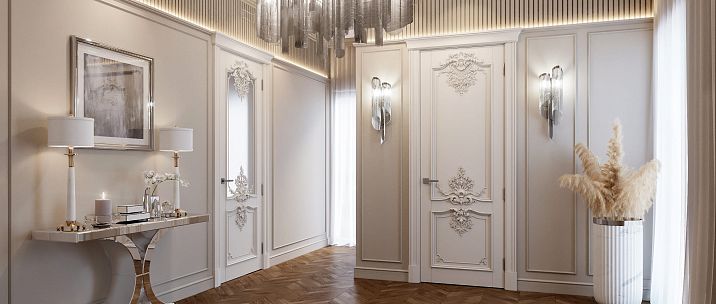
Does there exist magic capable of transforming space with a single gesture? Wooden doors These are not merely functional interior elements, but living embodiments of natural strength, frozen in noble forms of carpentry craftsmanship. In an age of plastic and composites, wooden doors remain an island of authenticity, where every fiber tells the story of decades of growth under open skies.
Imagine the moment when your hand touches the warm surface of an oak door, feeling under your fingers a barely noticeable texture that no artificial material can replicate. This touch is a connection to eternity — to the time when masters created not just objects, but works of art intended to serve generations.


Anatomy of Perfection: Wood Structure as the Basis of Longevity




Cellular architecture of living material
What makes wood an ideal material for making interior doors? The answer lies in its unique cellular structure, formed by nature over millions of years of evolution. The cellulose fibers that make up wood are oriented along the tree trunk, creating a natural reinforcement of incredible strength.
Lignin — a natural polymer that binds cellulose fibers — provides structural rigidity. Its content varies among species, ranging from 20% in hardwoods to 30% in softwoods. It is lignin that gives wood the ability to retain its shape under load and recover after deformation.
Hemicellulose, making up 15-35% of wood mass, acts as a plasticizer, providing material flexibility. This three-component system creates a composite material surpassing many synthetic materials in specific strength.
Our factory also produces:


Physical and mechanical properties of various species
Wood density is a key indicator of its operational properties. Oak, traditionally used for making prestigious doors, demonstrates a density of 650-750 kg/m³ at 12% moisture. This ensures a compressive strength limit of up to 60 MPa and a bending strength limit of up to 100 MPa.
Ash exceeds oak in density, reaching 800 kg/m³, making it ideal for doors subjected to intensive use. Its fine-pored structure ensures exceptional surface smoothness after finishing.
Ash combines high strength (density 680-750 kg/m³) with a striking contrasting texture. Its fibers create a characteristic pattern of bands of varying intensity, especially effective when cut radially.
Get Consultation
Technological revolutions in wood processing
Innovative drying methods
Modern kiln drying technology has fundamentally changed the quality of solid wood doors. Programmable drying chambers allow precise control of temperature, humidity, and air circulation down to fractions of a percent. The optimal regime for door production is gradual reduction of moisture from 25-30% to 8-10% over 20-25 days.
Vacuum drying at reduced pressure allows moisture removal at temperatures of 40-60°C, preserving the natural properties of wood. The process is 2-3 times faster than traditional kiln drying, but requires more complex equipment.
High-frequency drying uses electromagnetic waves at a frequency of 13.56 MHz for uniform heating of the entire thickness of the blank. This eliminates internal stresses that may manifest as cracking years after use.
Precision machining on CNC machines
Fifth-generation CNC machines achieve positioning accuracy of 0.005 mm at processing speeds up to 80 m/min. Diamond tools with polycrystalline coatings provide surface quality Ra 0.4 μm without additional polishing.
Five-axis machining allows creating complex three-dimensional profiles in a single setup. This is especially important for carved decorative elements, where surface alignment accuracy is critical to the overall perception of the product.
Laser measurement systems control the geometry of the part during processing, automatically adjusting the tool path. This feedback ensures consistent quality during mass production.
Design Concepts: Styles and Directions
Classicism: timeless elegance
Classic solid wood doors embody principles of harmony and proportion developed over centuries of architectural evolution. Muntin construction is not only beautiful but also functionally justified — it compensates for wood’s thermal deformation, preventing cracking.
The geometry of classical proportions is based on the golden section principle. Door height relates to width as 8:3, creating a visually harmonious perception. Muntins are arranged in a 3:5:3 ratio by height, corresponding to classical architectural orders.
Profiled elements — dados, coves, grooves — create play of light and shadow, bringing the door’s surface to life. A relief depth of 3-5 mm is optimal for perception under standard residential lighting.
Modernism: organic forms of nature
The modern style revolutionized door design, abandoning straight lines in favor of smooth, natural forms. Asymmetric compositions, botanical ornamentation, flowing lines transform the door into a work of decorative art.
Stained glass inserts create light accents, serving a functional decorative role. Fusing technology allows creating glass panels of complex shapes without a metal frame.
Carved elements in the modern style require the highest level of craftsmanship. Deep relief carving up to 15 mm creates a bas-relief effect, especially striking under side lighting.
Minimalism: philosophy of functional beauty
Modern minimalism elevates the beauty of the material above decorative excesses. Smooth surfaces, clear geometric forms, absence of visible hardware create a sense of technological perfection.
Hidden hinges and invisible closers ensure perfect door panel geometry. Magnetic locks eliminate the need for traditional handles and surface-mounted fittings.
The texture of untreated wood becomes the main decorative element. Brushed surfaces reveal the structure of annual rings, creating tactile sensations of naturalness and authenticity.
Constructive features of professional manufacturing
Jointing systems for parts
Traditional joinery — the foundation of solid wood door longevity. Dowel-and-mortise joints with glue provide shear strength up to 12 MPa. The dowel length is 2/3 the thickness of the mating part, ensuring maximum gluing surface area.
The swallowtail joint is the strongest connection for door frame corners. The trapezoidal shape of the tenon prevents pulling out even under significant loads. The 1:8 angle of the side faces is optimal for most wood species.
Nail connections additionally reinforce adhesive joints. Wooden nails made from hardwoods (oak, beech) swell in the hole, creating a non-detachable connection. The nail diameter should be 1/3-1/4 the thickness of the connected parts.
Compensatory systems
Wood is a living material, changing dimensions depending on the surrounding environment's humidity. Quality doors made of natural wood are designed taking into account these features.
The floating system for attaching panels allows them to freely expand and contract within the frame groove. The groove depth should exceed the panel thickness by 3-5 mm on each side.
Compensatory grooves on the back side of wide parts relieve internal stresses, preventing warping. The groove depth is 1/3 of the part's thickness with a width of 2-3 mm.
Premium-grade hardware
Hardware quality determines the durability and comfort of door operation. Three-dimensional hinges with adjustment in three planes allow compensating for installation inaccuracies and natural deformations of the door frame.
Magnetic door closers provide smooth door closure without impact loads. Adjustable holding force of 3-8 kg allows adapting the operation to the weight of a specific door leaf.
Hidden-mounted locks eliminate visible mounting elements on the front surface. A stainless steel lock body guarantees 100,000 cycles of reliable operation.
Finishing technologies and coatings
Oil systems: the breath of wood
Natural oils — linseed, tung, and carnauba — create breathable coatings that preserve the natural wood structure. Oil penetration depth into pores reaches 2-3 mm, providing internal protection.
Hot application technology at 80-100°C increases oil penetration depth by 1.5 times. Preheating wood expands pores, facilitating absorption of the protective composition.
Multi-layer system includes 3-4 thin layers with intermediate sanding using P320-P400 abrasive. Each layer polymerizes for 24-48 hours at 18-25°C and relative humidity of 45-65%.
Lacquer coatings: maximum protection
Two-component polyurethane lacquers create chemically resistant coatings with hardness up to 2H on the pencil scale. Lacquer layer thickness of 80-120 microns provides protection against mechanical impacts and moisture.
UV filters in the lacquer composition prevent wood discoloration due to sunlight. Filter concentration of 2-3% blocks up to 95% of UV radiation in the 290-400 nm range.
Self-leveling compositions eliminate visible transitions between layers and brush marks. Prepared composition shelf life of 4-6 hours at 20°C allows covering large surfaces without rushing.
Waxes: tactile luxury
Natural carnauba wax creates a coating with unique tactile properties. Melting point of 82-86°C ensures coating stability under operating conditions. Brinell hardness of 1.5-2.0 HB creates pleasant sensations upon touch.
Japanese urushi technology — multi-layer wax application with manual polishing of each layer. Up to 15-20 ultra-thin layers create depth and richness of surface unattainable by other methods.
Wax patination enhances the relief of carving and wood grain texture. Dark wax in recesses contrasts with light raised areas, creating an aged effect.
Operational characteristics and durability
Resistance to climatic effects
Wooden doors demonstrate high stability in the temperature range from -10°C to +40°C. The linear expansion coefficient of wood along the grain is only 3-5×10⁻⁶ 1/K, which is 3-4 times lower than aluminum structures.
Hygroscopicity — the ability to absorb and release moisture — allows wood to adapt to microclimate changes. When air humidity increases from 30% to 70%, wood moisture content increases by 2-3%, corresponding to linear dimension changes of 0.1-0.2%.
Frost resistance of properly dried wood is practically unlimited. Absence of free water in the cellular structure prevents damage upon freezing. Historical wooden structures in northern regions have served for centuries without loss of strength.
Sound insulation properties
Porous wood structure provides effective sound wave absorption. Sound absorption coefficient for oak in the 250-4000 Hz frequency range is 0.15-0.25, significantly higher than that of dense materials.
The air noise isolation index for solid wood doors 40 mm thick reaches 32-35 dB. Using seals and door closers increases this value to 40-42 dB, meeting requirements for interior partitions.
The resonant frequency of a door leaf depends on its dimensions, thickness, and wood properties. For a standard 2000×800×40 mm oak door, the resonant frequency is 85-95 Hz, which avoids overlap with human voice frequencies.
Ecological advantages of natural materials
Carbon balance and climate commitments
Wood is the only construction material with a negative carbon footprint. During photosynthesis, trees absorb CO₂ from the atmosphere, binding carbon into cellulose. One cubic meter of oak wood contains 250-300 kg of bound carbon, equivalent to 900-1100 kg of CO₂.
The life cycle of wooden doors includes CO₂ absorption during tree growth, minimal emissions during processing, and the possibility of full disposal at the end of service life. The overall balance remains negative throughout the entire cycle.
Energy consumption for producing wooden doors is 1.2-1.8 GJ/m³ compared to 15-25 GJ/m³ for aluminum structures. This means 10-15 times less energy consumption for comparable operational characteristics.
Certification of sustainable forestry
FSC (Forest Stewardship Council) — an international certification system guaranteeing wood origin from responsibly managed forests. Certified forests not only regenerate after harvesting but also increase ecosystem biodiversity.
PEFC (Programme for the Endorsement of Forest Certification) — a European system unifying national forest certification standards. It covers over 320 million hectares of certified forests in 55 countries.
The supply chain of certified products is tracked at every stage — from logging to finished goods. This ensures material origin transparency and supports responsible consumption.
Economic aspects of investing in quality
Analysis of total cost of ownership
Initial cost doors made of natural wood may be 3-5 times higher than the price of composite material products. However, a full cost-of-ownership analysis demonstrates the economic justification for choosing natural wood.
The service life of quality wooden doors is 50-100 years compared to 15-25 years for composite analogs. The possibility of multiple restorations extends the life cycle to 150-200 years.
The residual value of antique doors made of premium species often exceeds initial investments. Items from the 18th-19th centuries demonstrate an annual value growth of 5-8%, outpacing inflation and many financial instruments.
Factors influencing cost
Wood species — the primary pricing factor. Oak and beech are mid-range, walnut and ash — premium segment, exotic species (wenge, zebrawood, padauk) — luxury category.
Processing complexity includes the number of profiled elements, carving depth, surface finish quality. Each additional technological step increases cost by 15-25%.
Batch size significantly affects unit cost. Mass production reduces costs by 30-40% compared to single items due to equipment setup optimization.
Regional traditions and craftsmanship schools
Russian School of Woodworking
Traditions of Russian joinery art developed over centuries, creating a unique aesthetic and technical methods. Novgorod school was renowned for jointing techniques without metal fasteners, using only wooden pegs and wedges.
Arkhangelsk carving is characterized by deep relief and floral motifs. Masters of Pomory developed through-and-through carving techniques, creating incredibly complex lace-like patterns.
Gorodets wood painting combines carved elements with vibrant polychrome painting. Traditional motifs — birds, flowers, riders — create a festive interior atmosphere.
European traditions
Italian masters of the Renaissance developed the inlay technique — wood inlaying into wood. Complex geometric and floral patterns were created from pieces of various species, selected by color and texture.
The French school of the 18th century reached its peak in marquetry technique. Extremely thin plates of premium species, 0.5-1.0 mm thick, created painted panels with perspective and chiaroscuro.
German cabinetmakers gained fame for precision manufacturing and product longevity. The Bavarian school developed a multi-layer varnishing system, creating a mirror-like surface finish.
Modern trends and innovations
Digital Technologies in Design
3D modeling allows creating photorealistic images of future doors even during the design stage. Virtual reality enables evaluating proportions and color palette within the context of a specific interior.
Parametric design automatically adapts the design to non-standard door openings. Changing one parameter corrects the entire structure, preserving proportion harmony.
Digital texture library contains high-resolution samples of various wood species. This allows accurately predicting the appearance of the finished product without producing samples.
Smart integration technologies
Biometric locks are integrated into the door leaf almost invisibly. Fingerprint, iris, or facial geometry scanners provide a high level of security.
Climate control systems monitor the humidity of wood and surrounding air. At critical deviations, humidifiers or dehumidifiers are automatically activated.
IoT integration allows remote control of door status via a mobile app. Notifications for maintenance, usage statistics, remote lock control — new smart home capabilities.
Care and Maintenance: Secrets of Longevity
Daily Care
Dry cleaning with microfiber cloth removes dust without leaving scratches on the surface. Movements should follow the direction of wood grain, avoiding circular motions.
Wet cleaning is performed with slightly damp cloth without excess water. Using cleaning agents with pH above 8.0 or below 6.0 may damage the protective coating.
Polishing with wax-containing compounds once a month maintains the luster and protective properties of the finish. Polish is applied in a thin layer and buffed to achieve even gloss.
Preventive Maintenance
Hinge adjustment is performed annually to compensate for natural deformation of the door frame. Three-dimensional hinges allow adjustment of the door panel in three planes.
Lubricating lock and door closer mechanisms with silicone-based compounds prevents wear and sticking. Frequency — every 6 months or upon detection of unusual noises.
Monitoring wood moisture with a hygrometer allows timely detection of problems. Normal values for interior doors — 8-12% at 20°C temperature.
Restoration and renewal
Local repair of minor damage — scratches, chips, dents — is performed using specialized wax pencils or wood putty. Color is matched as closely as possible to the base tone.
Recoating after 10-15 years of use includes light sanding with P320-P400 abrasive and application of a new layer of varnish or oil. This restores protective properties and refreshes the appearance.
Major restoration may be required after 25-30 years. It includes disassembling the structure, replacing damaged elements, full resanding, and re-finishing. With quality execution, the door receives a second life for decades.
Psychology of perception of natural materials
Neurophysiological foundations of attractiveness
Studies show that gazing at wooden surfaces activates the parasympathetic nervous system, reducing heart rate and stress levels. The fractal structure of wood texture is perceived by the brain as harmonious and calming.
Tactile sensations from touching natural wood stimulate oxytocin production — the hormone of trust and attachment. This explains the intuitive preference for wooden surfaces in interiors.
Aromatherapeutic effects of different wood species influence mood and productivity. Coniferous species invigorate and improve concentration, while deciduous species soothe and relax.
Social semiotics of materials
Choosing Natural Wooden Doors conveys certain values: ecological awareness, commitment to tradition, high social status. In today’s world of synthetic materials, natural wood becomes a marker of belonging to the elite.
Cultural connotations of wood in various societies have been formed over millennia. Oak symbolizes strength and longevity, walnut — wisdom and prosperity, cherry — refinement and femininity.
Family identity is formed around significant interior items. Quality wooden doors become part of family history, witnesses of important events, objects of pride and attachment.
STAVROS: embodiment of craftsmanship in every detail
Summarizing our deep immersion into the world of wooden doors, it is impossible not to highlight the outstanding contribution of the company STAVROS to the development of this ancient art. For more than two decades, the company has remained a benchmark of quality in producing elite products from natural wood, combining traditional craftsmanship with modern innovative technologies.
STAVROS specializes in creating exclusive doors from premium-grade Caucasian oak and beech. Each blank undergoes strict selection based on density, absence of knots and defects, and correct grain direction. The company’s own kiln-drying system ensures optimal wood moisture of 8-9%, guaranteeing geometric stability for decades of use.
The company’s production complex is equipped with advanced European equipment from leading German and Italian manufacturers. Five-axis CNC machining centers achieve positioning accuracy down to thousandths of a millimeter. This enables the creation of items of any complexity — from strict minimalist forms to intricate carved compositions.
Special attention is paid to final surface finishing. The multi-stage sanding system includes up to seven stages with gradually decreasing abrasive grit. Premium-grade natural oil and wax finishes not only protect the wood but also reveal the full depth of its natural beauty.
STAVROS’s portfolio includes restoration of federal cultural heritage sites — the Alexander Palace in Tsarskoye Selo, the Trinity Cathedral in St. Petersburg, and many other historical landmarks. This unique experience allows the company’s craftsmen to recreate items of any historical style with archaeological precision.
Today, STAVROS offers a full range of door solutions — from classic panel doors to avant-garde designer concepts. Each item is created individually, taking into account the architectural features of the space, interior style, and the client’s personal preferences.
Choosing STAVROS products means investing not just in a functional interior element, but in a work of art that will serve generations, preserving its original beauty and acquiring a noble patina over time. This is the choice of those who understand the true value of quality, beauty, and craftsmanship in a world of mass production and compromises.