












































































Article Contents:
- Evolution of the wooden corner in architectural heritage
- From protection to decoration
- Modern reinterpretation of classic
- Variety of shapes and sizes: choosing the ideal solution
- Classification by size
- Specialized solutions
- Interior solutions: from function to art
- Protection and decoration of walls
- Creating architectural accents
- Working with space
- Outdoor application: protection and beauty of facades
- Protective functions
- Architectural expressiveness
- Restoration work
- Material science: choosing wood for various tasks
- Hardwood species
- Coniferous species
- Exotic species
- Production and processing technologies
- Modern equipment
- Drying and stabilization
- Final finishing
- Fastening systems and installation
- Fastening corners for wooden structures
- Installation technology
- Adhesive joints
- Regional application specifics
- Climate factors
- Architectural traditions
- Economic aspects of application
- Pricing
- Economic efficiency
- Ecological aspects and sustainable development
- Renewability of resources
- Carbon footprint
- Waste disposal and recycling
- Special applications of wooden corners
- Furniture manufacturing
- Shipbuilding and yachting
- Restoration and museum work
- Innovations and the future of wooden corners
- Modified wood
- Composite materials
- Digital technologies in production
- Practical advice on selection and use
- Defining needs
- Compatibility with interior
- Manufacturing quality
- Frequently Asked Questions
- In conclusion: partnership with STAVROS

In the world of modern architecture and design, where every detail plays a decisive role in creating a harmonious space,corner for wooden structuresoccupies a special place. This seemingly simple element can radically transform the appearance of a building or room, becoming the very distinctive feature that distinguishes a professional approach from an amateur one.
What drives modern architects and designers to repeatedly turn to the use of wooden corners? The answer lies in the unique combination of functionality and aesthetics that this decorative element offers. In the era of glass, metal, and synthetic materials, wood continues to remain a symbol of warmth, coziness, and natural beauty.



Evolution of the wooden corner in architectural heritage




From protection to decoration
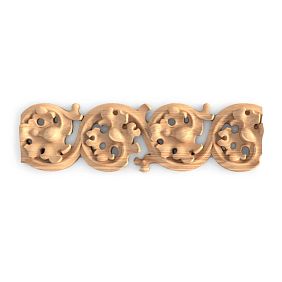
Historically, the external wooden corner served exclusively a practical function — protecting the external corners of wooden structures from atmospheric influences and mechanical damage. However, over time, craftsmen began to imbue these elements with decorative qualities, transforming ordinary protection into a work of art.
In traditional Russian architecture, wooden corners in houses served not only functional purposes but also reflected the status of the owner, the level of the carpenter's skill, and regional characteristics of construction traditions. Each region of Russia developed its own traditions of decorating corners, leading to the emergence of numerous unique styles and techniques.
Our factory also produces:




Modern reinterpretation of classic
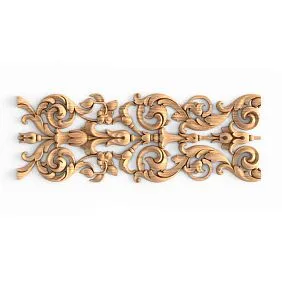
Today, wooden decorative corners are experiencing a true revival. Modern wood processing technologies allow creating elements of incredible precision and durability, while preserving the natural beauty of the material. Designers of the 21st century find in wooden corners solutions to many current tasks: from creating accents in minimalist interiors to implementing eco-friendly projects.
Particular popularity is gained by using wooden corners in the loft style, where the rough texture of wood contrasts with modern materials, creating a unique atmosphere of industrial chic with notes of natural warmth.
Get Consultation
Variety of shapes and sizes: choosing the ideal solution
Classification by size
The modern market offers a wide variety of wooden corners in different sizes. A 50x50 wooden corner is considered a universal solution for most interior tasks. This size provides sufficient strength for protecting corners, while not appearing bulky in ordinary living spaces.
For larger projects, a 100x100 wooden corner is used, which becomes a noticeable architectural element. Such sizes are especially relevant in spacious rooms with high ceilings, where small details simply disappear into space.
Compact sizes, such as a 30x30 or 40x40 wooden corner, are used in delicate interior solutions, where every detail matters, but one does not want to overload the space with decorative elements.
Specialized solutions
A wooden corner for siding represents a specially developed solution for rooms finished with this popular material. The profile of such a corner precisely matches the shape of the siding, creating an ideal connection and visual continuity of the finish.
An internal wooden corner for siding differs from the external one not only in size but also in the degree of surface finishing. Internal elements usually have a finer sanding and are ready for final finishing with varnishes or oils.
A wooden corner for window and door casings occupies a special place — an element that allows creating a beautiful frame around window and door openings. A properly selected corner can visually enlarge a window, emphasize its shape, or, conversely, make it less noticeable in the overall interior composition.
Interior solutions: from function to art
Protection and decoration of walls
In modern interiors, wooden corners for finishing perform multiple functions. Primarily, they protect corners from mechanical damage — especially relevant in homes with children or in high-traffic areas. However, modern designers go beyond simple protection.
Today, people are not only purchasing internal wooden corners to solve practical problems, but also to create a certain atmosphere in the room. Wooden corners made from noble wood species can give even the simplest interior a sense of luxury and elegance.
Creating architectural accents
Wooden corners on corners can become the basis for creating complex architectural compositions. By combining elements of different sizes and profiles, designers create three-dimensional panels that become the main decoration of the room.
Wooden corner brackets for shelves look especially effective, as they not only support the structure but also become its decorative element. This approach allows creating a unified stylistic concept where functional elements blend organically into the overall design.
Working with space
Proper use of wooden corner brackets allows visually altering the proportions of a room. Vertical brackets make ceilings appear higher, while horizontal ones expand the space. Playing with wood color and texture enables creating complex visual effects.
A wooden skirting board corner serves as a transition element between wall and floor, creating a smooth transition and completing the interior. Modern technologies allow creating corners that perfectly match the skirting board profile, ensuring visual continuity of the finish.
Outdoor use: protection and beauty of facades
Protective functions
An outdoor wooden corner bracket primarily serves protective functions. External corners of buildings are most exposed to atmospheric precipitation, wind, and temperature fluctuations. A quality wooden corner bracket creates a reliable barrier, preventing moisture penetration and protecting the main structure from damage.
When purchasing an outdoor wooden corner bracket, consider regional climatic conditions. For humid climates, prefer corner brackets made from wood species with high natural moisture resistance, such as larch or oak.
Architectural Expressiveness
Modern architects use outdoor wooden corner brackets as part of facade design. They can emphasize building geometry, create rhythm on the facade, or serve as color accents.
Wooden corner brackets 100x100 outdoor look especially striking on buildings in Scandinavian style, where large wooden elements highlight the connection between architecture and nature. Such brackets often become a dominant feature of facade composition.
Restoration work
In the restoration of historical buildings, wooden corner brackets play a key role in recreating authentic appearance. Master restorers recreate brackets exactly according to historical samples, using traditional woodworking techniques and historically accurate profiles.
Material science: choosing wood for various tasks
Hardwood Species
Oak remains the gold standard for manufacturing wooden corner brackets. Its high density, beautiful texture, and natural moisture resistance make it ideal for both indoor and outdoor applications. Oak corner brackets become even more beautiful over time, acquiring a noble patina appearance.
Beech, although less moisture-resistant compared to oak, has excellent technical properties for indoor use. Its dense and uniform structure allows creating brackets with perfectly smooth surfaces.
Coniferous species
Spruce and pine are traditionally used for manufacturing outdoor corner brackets. High resin content provides natural protection against moisture and insects. Modern heat treatment technologies allow further enhancing the durability of coniferous species.
Larch holds a special place among coniferous species due to its unique combination of beauty and longevity. Larch corner brackets can serve for decades without additional protective treatment.
Exotic species
For exclusive projects, exotic wood species such as teak, mahogany, or wenge are used. These materials possess unique decorative properties and exceptional durability, but require specialized knowledge for processing and installation.
Production and processing technologies
Modern equipment
Producing high-quality wooden corner brackets requires the use of precision equipment. Modern CNC routers allow creating complex profiles with accuracy down to fractions of a millimeter.
How to make a wooden corner bracket at home? For simple profiles, a circular saw and router suffice, but achieving professional quality without specialized equipment is practically impossible.
Drying and Stabilization
Proper wood drying is the foundation of wooden corner bracket longevity. Modern drying chambers allow precise humidity control, bringing it to optimal 8-12%. This prevents deformation and cracking of finished products.
Final finishing
The surface quality of a wooden corner bracket largely determines the final result. Modern sanding lines provide a perfectly smooth surface, ready for applying finish coatings.
Fastening systems and installation
Fastening brackets for wooden structures
Purchasing fastening brackets for wooden structures means ensuring the reliability of the entire system. Modern fastening elements are made from stainless steel or galvanized metal, eliminating corrosion and ensuring long-lasting connections.
A fastening bracket for wooden structures must match the loads the structure will bear. For light decorative elements, simple self-tapping screws suffice; for load-bearing structures, specialized fastening systems are required.
Installation technology
Correct installation of wooden corner brackets begins with careful surface preparation. The base must be flat, dry, and dust-free. Marking is done using a laser level to ensure ideal geometry.
Joining wooden corner brackets at corners requires special skill. The classic "on the edge" joint at a 45-degree angle provides the most aesthetically pleasing result but requires high precision in cutting.
Modern woodworking adhesives have fundamentally changed approaches to joining wooden elements. Polyurethane formulations create water-resistant joints that match the strength of wood itself. Setting time is 10–15 minutes, full strength is achieved within 24 hours.
Modern wood adhesives provide joints often stronger than the wood itself. Polyurethane adhesives are ideal for outdoor applications due to their moisture resistance.
Regional application specifics
Climate factors
A wooden corner bracket for St. Petersburg and other northern regions must have enhanced resistance to temperature fluctuations and high humidity. For such conditions, larch or heat-treated pine brackets are preferred.
In southern regions, the main issue is exposure to ultraviolet radiation, which can cause wood to fade and crack. Special UV-protective coatings solve this problem.
Architectural traditions
Each region of Russia has its own architectural traditions for using wooden elements. In the North, massive corner brackets from coniferous species are preferred; in the South, more elegant elements from hardwoods are favored.
Economic aspects of application
Pricing
Wooden angles, whose prices vary widely, represent a market segment clearly graded by quality and cost. Simple pine angles are accessible to a broad range of consumers, while exclusive items made from exotic wood species belong to the premium segment.
You can buy a wooden angle 50x50 at prices ranging from several dozen rubles per linear meter for simple profiles to several hundred rubles for items made from valuable wood with individual processing.
Economic Efficiency
Using wooden angles is often a more economical solution compared to alternative materials. The durability of quality wooden products, along with the possibility of repair and restoration, makes them a worthwhile investment in the long term.
Ecological aspects and sustainable development
Renewability of resources
Wood, as a renewable resource, is becoming increasingly relevant in the context of global ecological challenges. Responsible forestry and FSC certification ensure that the wood used to produce angles is obtained in an ecologically sustainable manner.
Carbon footprint
Wooden angles have a negative carbon footprint — they absorb carbon from the atmosphere during tree growth. This makes them one of the most eco-friendly construction materials.
Disposal and recycling
At the end of their life cycle, wooden angles can be fully recycled or used as biomass fuel. This is fundamentally different from synthetic materials, which create waste disposal problems.
Special applications of wooden angles
Furniture manufacturing
In furniture manufacturing, wooden angles are used not only as a decorative element but also as a structural one. They reinforce joints, conceal technological gaps, and give products a finished look.
Shipbuilding and yachting
Traditional shipbuilding is unthinkable without the use of wooden angles. Modern luxury yachts often include wooden elements as a nod to tradition and as a symbol of prestige.
Restoration and museum work
In restoration work, wooden angles must precisely match historical samples not only in shape but also in wood species, processing method, and even the age of the wood.
Innovations and the future of wooden angles
Modified wood
Modern wood modification technologies allow creating materials with improved properties. Thermal treatment, polymer impregnation, compression — all these methods open up new possibilities for using wooden angles.
Composite materials
Wood-polymer composites combine the beauty of natural wood with the practicality of synthetic materials. Such angles require no regular maintenance and have increased resistance to external influences.
Digital technologies in production
The use of 3D modeling and CNC machines allows creating angles of incredible complexity and precision. Individual design becomes accessible to a wide range of clients.
Practical tips for selection and use
Defining Needs
Before choosing a wooden angle, it is necessary to clearly define its purpose. For indoor use, less durable but more decorative wood species are suitable. For outdoor use, priority should be given to durability and resistance to external influences.
Compatibility with interior design
A wooden angle should harmoniously fit into the overall interior concept. Color, texture, and size should match the room's style and not conflict with other finishing elements.
Manufacturing quality
When selecting a wooden corner, attention should be paid to the quality of sanding, absence of chips and cracks, and geometric accuracy of the profile. These factors determine not only the appearance but also the durability of the product.
Frequently asked questions
What size wooden corner should be chosen for a standard apartment?
For most interior tasks in a standard apartment, the optimal choice will be a 45x45 or 50x50 wooden corner. These sizes provide sufficient strength and do not appear overly bulky in ordinary rooms.
Can internal corners be used outdoors?
No, internal corners are not intended for outdoor use. They lack the necessary resistance to atmospheric conditions and will quickly lose their appearance or deteriorate.
How to properly join wooden corners at corners?
The most aesthetic connection is the "on the edge" joint at a 45-degree angle. This requires precise trimming of ends and the use of quality wood glue.
Which type of wood is best suited for humid rooms?
For humid rooms, it is recommended to use corners made of oak, larch, or tropical wood species with high natural resistance to moisture.
Should wooden corners be treated with protective compounds?
Yes, to extend their service life, wooden corners should be treated with antiseptics and covered with protective-decorative compounds according to the manufacturer's recommendations.
Can wooden corners be painted in any color?
Yes, wooden corners can be painted in any color using appropriate paints and varnishes. It is important to properly prepare the surface and use primer.
How to determine the quality of a wooden corner when purchasing?
A quality wooden corner should have a smooth, evenly sanded surface without chips, cracks, or other defects. The profile should be geometrically accurate along its entire length.
What tools are needed to install wooden corners?
For installation, you will need: a circular saw or miter gauge, drill, screwdriver, level, tape measure, pencil for marking, fasteners, and glue.
In conclusion: partnership with STAVROS
Choosing a qualitycorner for wooden structuresis an investment in the beauty, functionality, and longevity of your project. STAVROS, with over twenty years of experience in woodworking, offers a wide range of high-quality wooden corners for any task.
STAVROS masters continue the traditions of Russian woodworking art, using modern technologies and equipment. Each corner undergoes strict quality control and meets the highest standards. Whether restoring a historic building or creating a modern interior, STAVROS will offer the optimal solution for your project.
By contacting STAVROS, you receive not just wooden products, but the result of decades of experience, deep knowledge, and genuine love for wood. The company offers a full cycle of services: from consultation on material selection to delivery of finished products throughout Russia.


