Article Contents:
- What is a wooden trim and for what is it needed
- Definition and main functions
- History of use in construction and design
- Advantages of wooden trims over analogs made from other materials
- Variety of types and shapes of wooden trims
- Classification by shape and profile
- Sizes and proportions
- Types of wood for making trims
- Where to buy wooden trim: overview of options
- Specialized stores for building and finishing materials
- Online stores and marketplaces
- Directly from manufacturers
- Construction markets and fairs
- Furniture factories and carpentry workshops
- How to choose a quality wooden trim
- Assessment of material quality and processing
- Compatibility with interior style and functional requirements
- Ecological Aspects and Safety
- Applications of wooden trims in various fields
- In window and door structures
- In furniture manufacturing
- In interior finishing
- In restoration work
- Installation and maintenance of wooden trims
- Tools and Materials for Installation
- Step-by-step installation guide
- Care and maintenance recommendations
- Trends and innovations in the world of wooden trims
- Modern Design Solutions
- Technological innovations in production
- Eco-Trends
- Conclusion: a choice that won't disappoint

In the world of finishing materials, there are elements that, despite their apparent insignificance, play a decisive role in shaping the appearance of a room and ensuring the functionality of various structures. One such element is a wooden trim. This thin strip, seemingly insignificant at first glance, is capable not only of solving practical tasks but also becoming an important decorative detail that adds completeness and elegance to an interior.
But where to buy wooden trimLet's dive into the wonderful world of wooden trim — elements that, like the final stroke of an artist, complete the overall picture and give it perfection.
Let's dive into the wonderful world of wooden trim — elements that, like the final stroke of an artist, complete the overall picture and give it perfection.




What is a wooden trim and what is it for?
Before discussing where to buy this element, let's first understand what a wooden trim is and what role it plays in construction and finishing.




Definition and main functions
A wooden trim is a narrow, thin strip made from solid wood. In construction and finishing, this element performs two main functions: practical and decorative.
From a practical standpoint, trim is used to secure glass, mirrors, or decorative panels in window, door, or furniture frames. It ensures secure fastening of these elements, preventing displacement or falling out. In window structures, trim plays a particularly important role, ensuring airtightness and protection against moisture and cold air infiltration.
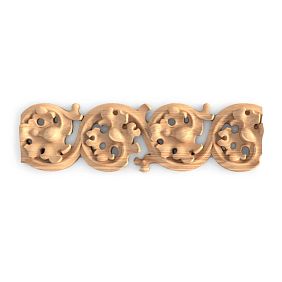
The decorative function of trim is equally important. Thanks to the variety of shapes and profiles, this element can become an elegant interior accent, highlighting its style and character. Trim is used to frame panels, create decorative frames, and finish joints between different surfaces.
Our factory also produces:


History of use in construction and design
The use of wooden strips for securing glass and decorative elements has a long history. Even in the Middle Ages, craftsmen used wooden battens to fix stained glass in the windows of cathedrals and castles. With the development of carpentry and the emergence of more advanced tools, trim began to be manufactured with various profiles, expanding their decorative possibilities.
In the 19th century, with the spread of glazed windows in residential homes, trim became an indispensable part of window structures. At the same time, they began to be actively used in furniture manufacturing for decorating cabinet facades, display cases, and buffets.
In modern construction and design, wooden trim continues to play an important role, despite the emergence of alternative materials. Their naturalness, ecological properties, and aesthetic qualities make them indispensable in creating interiors in classic, country, or eco styles.
Get Consultation
Advantages of wooden trim over analogs made from other materials
Today, the market offers trim made from various materials: plastic, aluminum, MDF. However, wooden products retain their popularity due to a number of undeniable advantages:
- Ecological and natural properties. Wood is a completely natural material that does not emit harmful substances and creates a favorable microclimate in the room.
- Aesthetic appeal. The natural texture and warm tone of wood give interiors coziness and elegance that cannot be achieved with artificial materials.
- Possibility of restoration. Unlike plastic or aluminum analogs, wooden trim can be restored by sanding the surface and applying a new protective coating.
- Ease of processing. Wood is easily cut, sanded, and painted, allowing trim to be adapted to specific requirements and conditions.
- Longevity with proper care. Well-processed and protected wooden trim can serve for decades, retaining its functional and decorative qualities.
- Thermal conductivity. Wood has low thermal conductivity, which is especially important for window structures, as it helps avoid the formation of cold bridges.
Variety of types and forms of wooden trim
The world of wooden trim is incredibly diverse. They differ by shape, size, profile, wood species, and processing method. Let's consider the main types and their features.
Classification by shape and profile
Depending on the cross-sectional shape, wooden trim can be divided into several main types:
- Rectangular trim — the simplest and most common variant. It has a rectangular cross-section and is primarily used for functional purposes, where the decorative component is not as important.
- Round trim — has one or several rounded sides, giving them a more elegant appearance. Such trim is often used in classic interiors.
- Figured trim — has a complex profile with various protrusions, recesses, and curves. They serve primarily decorative purposes and are used to create refined interiors in baroque, rococo, and neoclassical styles.
- Square trim — has a square cross-section and is often used in modern minimalist interiors.
- Beveled trim — one or several sides are beveled at a specific angle. This shape creates an interesting interplay of light and shadow.
- Concave trim — has a concave surface, giving them a distinctive appearance and used to create a sense of depth.
Dimensions and Proportions
The dimensions of wooden trim pieces can vary significantly depending on their purpose and stylistic solution:
- Width usually varies from 10 to 30 mm, although narrower and wider options are also available.
- Thickness is most often between 5 to 15 mm.
- The standard length of trim pieces is usually 1-2 meters, but can be longer.
The proportions of the trim (width-to-thickness ratio) play an important role in its visual perception. For classic interiors, trim pieces with proportions close to the golden ratio are often chosen, creating a harmonious impression.
Wood species for making trim pieces
The choice of wood species for making trim pieces depends on many factors: operating conditions, interior stylistic solution, budget. The following options are most commonly used:
- Spruce and pine - affordable coniferous species widely used for making trim pieces. They are relatively soft, easy to process, and have a pleasant light tone. However, they are less resistant to mechanical damage and moisture compared to hardwoods.
- Oak - a hardwood with distinctive texture and high strength. Oak trim pieces are durable and moisture-resistant, but cost more than coniferous alternatives.
- Beech - a hardwood with uniform structure and a light pinkish tone. Beech trim pieces are strong, easy to process and paint.
- Ash - a hardwood with beautiful texture and high strength. Ash trim pieces are resistant to mechanical impacts and retain their shape well.
- Linden - a softwood with uniform structure that is easy to process. Linden trim pieces are often used to create complex decorative profiles.
- Exotic species (mahogany, wenge, rosewood, etc.) - used to manufacture premium trim pieces that become a true decoration of the interior.
Where to buy wooden trim: overview of options
Now that we have examined the types and features of wooden trim pieces, let’s consider where they can be purchased. The choice of where to buy depends on your needs, budget, and requirements for product quality.
Specialized stores for building and finishing materials
Specialized stores for building and finishing materials offer a wide variety of wooden trim pieces in different shapes, sizes, and wood species. Advantages of such stores:
- Ability to see the product in person, assess its quality and appearance
- Sales consultations that can help select trim pieces to meet your requirements
- Availability of complementary products (fasteners, tools, finishing materials)
- Quality guarantee and possibility of return or exchange of the product if defects are found
However, it should be noted that prices in such stores may be higher than when purchasing directly from the manufacturer or through the internet.
Online stores and marketplaces
In the era of digital technology, more and more people prefer to shop online. Online stores and marketplaces offer a vast selection of wooden trim pieces with delivery to your home. Advantages of online purchases:
- Convenience of selection and ordering from anywhere and at any time
- Ability to compare prices and characteristics of different products
- Often lower prices due to the absence of physical store maintenance costs
- Delivery to your home, which is especially convenient for large orders
Disadvantages:
- Inability to see the product in person before purchase
- Risk of receiving a product that does not match the description or expectations
- Shipping costs, which can be significant for small orders
Direct from manufacturers
Many manufacturers of wooden products offer to purchase tenons directly, without intermediaries. This can be a large factory or a small carpentry workshop.
where to buy wooden trim Direct from the manufacturer? Information about manufacturers can be found on the internet, on specialized forums and trade shows. Many companies have their own websites or social media pages where they present their products.
Advantages of buying from the manufacturer:
- Lower prices due to the absence of intermediary markup
- Ability to order non-standard sizes or shapes
- Guarantee of product quality and origin
- Ability to see the production process and ensure the quality of materials used
Disadvantages:
- Not always convenient location of production or warehouse
- May require advance ordering and waiting for production
- Limited selection (only products of this manufacturer)
Construction markets and fairs
Construction markets and fairs - another option for purchasing wooden tenons. Here, products from both large manufacturers and small workshops are often presented.
Advantages:
- Ability to see and evaluate the product before purchase
- Often lower prices, especially when buying in bulk
- Ability to negotiate and get a discount
- Wide selection and availability of complementary products
Disadvantages:
- Not always high product quality
- No warranties or after-sales service
- Need for self-transportation
Furniture factories and carpentry workshops
Furniture factories and carpentry workshops that use tenons in their production often sell them as separate items. This can be a good option if you need tenons of a specific quality or design.
Advantages:
- High quality, as the manufacturer uses the same tenons in their products
- Ability to receive professional consultation on selection and installation
- Often offer installation or mounting services
Disadvantages:
- Limited selection
- Not always convenient location
- May require advance ordering
How to choose a quality wooden tenon
Choosing a high-quality wooden trim is an important step that will determine not only the appearance of your interior but also the durability of the structures in which it will be used. Here’s what to pay attention to when selecting.
Material and surface treatment assessment
The quality of the wooden trim begins with the quality of the material itself. Here are several key points to pay attention to:
- The type of wood should match the trim's intended use. For outdoor applications or rooms with high humidity, it is better to choose hardwoods or conifers with high resin content, which are more resistant to moisture.
- Wood moisture content is a critically important parameter. For indoor use, wood with a moisture content of 8-12% is used. Too dry wood may crack, while overly moist wood may deform upon drying.
- Absence of defects — carefully inspect the trim for cracks, chips, knots, resin pockets. Small knots are acceptable if they are firmly attached and do not fall out.
- Surface treatment quality — the trim's surface should be smooth, free of burrs and roughness. Run your hand over the surface — it should feel pleasant to the touch.
- Dimensional accuracy — trim pieces should have the same width and thickness throughout their entire length. Check this by aligning several pieces next to each other.
- Straightness — the trim should be straight, without bends or twists. You can check this by placing the trim on a flat surface and looking along its length.
Compatibility with interior style and functional requirements
When selecting wooden trim, it is important to consider not only its quality but also its compatibility with the interior style and functional requirements:
- Interior style — the shape and profile of the trim should harmonize with the overall style of the room. For classic interiors, decorative or rounded trim pieces are suitable, while for modern interiors, simpler, geometric shapes are preferred.
- Color and texture — wooden trim can be painted or coated with a transparent varnish that preserves the natural wood texture. The choice depends on the overall color scheme of the interior and personal preferences.
- Functional requirements — if the trim will be used to mount glass or mirrors, it is important that its shape and dimensions ensure secure fixation. For decorative purposes, these parameters are less critical.
- Operating conditions — for rooms with high humidity (bathrooms, kitchens) or for outdoor use, choose trim made from moisture-resistant wood species with appropriate treatment.
Ecological aspects and safety
In today's world, increasing attention is being paid to ecological aspects and safety of materials used in construction and finishing. When selecting wooden trim, pay attention to the following points:
- Ecological certification — high-quality wooden products should have certificates confirming their safety for health and the environment.
- Origin of the wood — responsible manufacturers use wood from sustainably managed forests, which is certified by FSC or PEFC.
- Finishing materials — varnishes, paints, and stains used to treat the trim should be safe and non-toxic. Prefer water-based or natural formulations.
- Absence of sharp edges and burrs — especially important if there are small children or pets in the house.
Application of wooden trim in various fields
Wooden trim is a universal element that finds application in various areas of construction, finishing, and design. Let’s consider the main areas of its use.
In window and door structures
One of the main applications of wooden trim is securing glass in window and door structures. In this role, trim pieces perform several functions:
- Mounting glass panes or single glass — trim pieces press the glass against the frame, ensuring secure fixation.
- Ensuring airtightness — in combination with seals, trim pieces create an airtight connection between the glass and the frame, preventing moisture and drafts from entering.
- Decorative finishing — trim pieces give window and door structures a finished, aesthetically pleasing appearance.
- Protecting glass edges — trim pieces cover and protect sharp glass edges, making the structure safer.
In wooden windows and doors, trim pieces are typically fastened with small nails or screws, which are then concealed with putty or wax. In modern constructions, special clips or latches may be used for easier installation and removal.
In furniture manufacturing
In furniture manufacturing, wooden strips are used for various purposes:
- Glass and mirror mounting - in display cases, cabinets, chests, and dressing tables, strips hold glass or mirror inserts.
- Decorative facade finishing - strips are used to create frames, panels, and surface-mounted decorative elements on furniture facades.
- Joint and seam concealment - strips can hide connections between different furniture elements, giving the item a more refined appearance.
- Creating relief surfaces - using strips on flat surfaces, three-dimensional patterns and ornaments are formed.
In furniture manufacturing, decorative strips with various profiles are often used, becoming an important design element in classical, neoclassical, Provencal, or country styles.
In interior finishing
In interior finishing, wooden strips find the widest application:
- Creating decorative panels - strips are used to divide walls into sections, create geometric patterns, and imitate expensive finishing materials.
- Ceiling decoration - using strips, coffered ceilings, decorative frames around light fixtures, cornices, and moldings are created.
- Joint and transition concealment - strips hide connections between different finishing materials, for example, between wallpaper and paint, or between different types of wallpaper.
- Creating frames for pictures and photographs - wooden strips serve as the basis for making frames of various shapes and sizes.
- Decorative finishing of niches and openings - strips emphasize architectural features of a room, giving them a more expressive appearance.
In modern interior design, wooden strips are often used to create a sense of depth and dimension on flat surfaces, which is especially relevant in neoclassical, art deco, and American classic styles.
In restoration work
Wooden strips play an important role in restoring antique furniture, old windows and doors, and historical interiors:
- Recreating lost elements - strips are manufactured according to preserved samples or historical documents to match the original.
- Replacing damaged parts - old, damaged strips are replaced with new ones made from the same wood species and profile.
- Adapting historical structures to modern requirements - for example, when installing double-glazed units in old window frames, specially designed strips may be used to preserve the window's historical appearance.
Restoration work requires special attention to the authenticity of materials and techniques. Strips for such work are often handcrafted using traditional tools and methods.
Installation and maintenance of wooden strips
Proper installation and regular maintenance of wooden strips will ensure their longevity and preserve their attractive appearance. Let's consider the main aspects of these processes.
Tools and materials for installation
To install wooden strips, you will need the following tools and materials:
- Miter saw and fine-toothed hacksaw - for accurately cutting strips at the required angle.
- Hammer - for driving nails or screws.
- Screws, small nails, or special adhesive - for attaching strips.
- Wood putty or wax pencil - for concealing attachment points and filling minor defects.
- Sandpaper - for sanding surfaces and edges.
- Protective coating - varnish, oil, or paint for protection and decorative finishing.
- Brushes or rollers - for applying protective coating.
- Measuring tools - tape measure, square, pencil for marking.
- Level - for checking horizontal and vertical alignment during installation.
Step-by-step installation instructions
The installation process of wooden trim may vary depending on their purpose and application location, but general principles remain unchanged:
- Surface preparation - clean the surface where the trim will be installed from dust, dirt, and old coating. Level it if necessary.
- Measuring and marking - carefully measure and mark the locations where the trim will be placed. Use a level to check horizontal and vertical alignment.
- Trim preparation - measure the required length of the trim, taking into account the bevel angle. For inside corners, a 45-degree bevel is typically used; for outside corners, 45 or 90 degrees, depending on the construction.
- Trim cutting - using a miter box and saw, carefully cut the trim according to the marked lines. The miter box will help make an accurate cut at the required angle.
- Sanding - sand the cut edges and, if necessary, the entire trim surface with sandpaper to remove burrs and achieve a smooth finish.
- Protective coating application - it is recommended to coat the trim with a protective finish (varnish, oil, paint) before installation, especially if it will be used in high-humidity areas or outdoors.
- Installation - attach the trim to the surface using the chosen fastening method (nails, screws, adhesive). If nails or screws are used, drive them at a slight angle for better hold.
- Covering fastening points - fill nail or screw holes with wood putty or a wax pencil matched to the trim color.
- Final finishing - after installing all trim and covering fastening points, apply a final finish if necessary.
Care and Maintenance Recommendations
To keep wooden trim looking attractive and lasting long, follow these care recommendations:
- Regular cleaning - remove dust from trim surfaces with a soft dry cloth or brush. For more thorough cleaning, use a slightly damp cloth, then immediately dry the surface.
- Moisture protection - avoid direct contact of trim with water. If installed in high-humidity areas, ensure good ventilation and regularly renew protective coating.
- Sunlight protection - direct sunlight can cause fading and cracking of wood. Use curtains or blinds to protect trim from intense sunlight.
- Renewing protective coating - depending on usage conditions and coating type, periodically (usually every 2-5 years) renew the protective coating on trim. Lightly sand the surface before applying a new layer to ensure better adhesion.
- Repairing damage - minor scratches and dents can be fixed with sanding and re-coating. For deeper damage, use wood putty.
- Checking fastening - periodically check the secureness of trim fastening and reinforce if necessary.
Trends and Innovations in Wooden Trim
The world of wooden trim is not standing still. New technologies, materials, and design solutions constantly expand the possibilities of using these seemingly simple elements.
Modern Design Solutions
In modern interior design, wooden trim is used increasingly creatively:
- Geometric patterns on walls - trim of different widths and profiles creates complex geometric compositions on walls, becoming a main interior accent.
- Combining with other materials - wooden trim combines with metal, glass, mirrors, creating interesting contrasts and textures.
- Three-dimensional compositions - trim is used to create three-dimensional objects on walls and ceilings, playing with spatial perception.
- Color experiments - traditional wooden trim is painted in bright, unexpected colors, creating a modern, dynamic look.
- Minimalism and simplicity - in contrast to traditional profiled shapes, modern designers often choose simple, streamlined forms, emphasizing material quality and precision of execution.
Technological innovations in production
Technological progress has not bypassed the production of wooden trim:
- Computer modeling and CNC machining - modern technologies allow creating trim with complex shapes, high precision, and repeatability.
- New wood processing methods - thermal and chemical modification of wood increases its resistance to moisture, rot, and pests without using toxic substances.
- Innovative protective coatings - new varnishes, oils, and other compounds provide better protection for wood against external influences while preserving its natural beauty.
- 3D printing - although still an experimental technology, 3D printing from wood composites opens new possibilities for creating unique, complex shapes.
Ecological trends
In line with the global trend toward eco-friendliness and sustainable development, the production of wooden trim is showing the following trends:
- Use of certified wood - an increasing number of manufacturers obtain FSC or PEFC certificates, confirming that the wood comes from sustainably managed forests.
- Recycling and reuse - trim made from recycled or reclaimed wood is appearing, reducing pressure on forest resources.
- Eco-friendly coatings - water-based varnishes, natural oils, and waxes replace traditional solvent-based coatings.
- Zero-waste production - modern technologies allow for the most efficient use of wood, minimizing waste.
Conclusion: a choice that won't disappoint
Wooden trim is not just a functional element, but also an important part of interior design, capable of giving it completeness and individuality. Properly selected and installed trim will serve for many years, pleasing the eye and fulfilling its practical functions.
where to buy wooden trimWhich one will meet all your requirements? This question has no single answer - it all depends on your specific needs, budget, and preferences. Specialized stores, online platforms, direct contact with manufacturers - each option has its advantages and features.
The key is to approach the selection thoughtfully, paying attention to material quality, compliance with your functional and aesthetic requirements, and ecological safety. Quality wooden trim is an investment in the beauty and longevity of your interior.
In a world where individuality and naturalness are increasingly valued, wooden trim remains a sought-after element, combining practicality, aesthetics, and eco-friendliness. They remind us of the importance of details, much like the final brushstrokes of an artist, transforming ordinary space into a work of art.