Article Contents:
- Poetry of Wooden Architecture: When Material Becomes Art
- Warmth of Natural Material
- Ecology as a Philosophy of Life
- Stylistic diversity: from classic to avant-garde
- Russian Traditions in Modern Interpretation
- European Influences and Their Adaptation
- Specialized Picture Frame Solutions
- Constructive Features and Technological Solutions
- Choice of Wood Species: Foundation of Quality
- Modern Drying and Processing Technologies
- Protective Formulations and Finish Coatings
- Design and Manufacturing: From Idea to Realization
- Individual Approach to Each Project
- Manufacturing Technologies: Traditions and Innovations
- Quality control at all stages
- Installation and Integration: The Art of Proper Mounting
- Preparatory Work: Foundation of Success
- Modern Fastening Systems
- Sealing and Protection of Joints
- Regional Features and Climate Adaptations
- Northern Regions: Fighting Extreme Conditions
- Southern Regions: Protection from Sun and High Temperatures
- Coastal Zones: Salt as the Main Enemy
- Cost and economic efficiency
- Factors Affecting Cost
- Long-Term Economic Efficiency
- Comparison with alternative solutions
- Trends in development and innovative solutions
- Integration with smart technologies
- New Protective Technologies
- Ecological innovations
- Frequently Asked Questions
- In Conclusion: An Investment in Beauty and Individuality
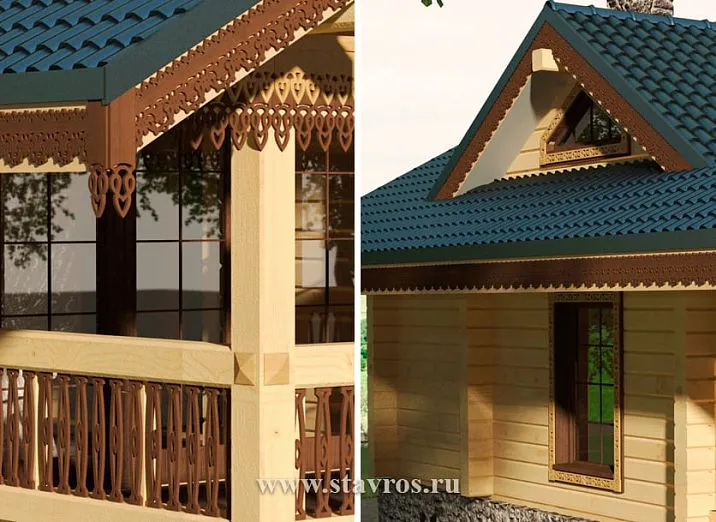
Imagine this: you are walking down the street and suddenly your gaze is drawn to a house that seems to have stepped out of an old fairy tale. What made you stop? What created this magical feeling? The answer is simple – decorative wooden gable, crowning the facade like a precious crown. This architectural element is capable of transforming an ordinary building into a true masterpiece of architectural art.
In an era of dreary uniformity of standard construction, a decorative wooden gable becomes a true breath of fresh air, an opportunity to break free from the monotony of blandness and assert one's individuality. It does not merely decorate – it tells a story, conveys an atmosphere, and creates an incomparable ambiance in the home.




Poetry of Wooden Architecture: When Material Becomes Art
Why wood? This question resonates especially in today’s world of synthetic materials and high-tech composites. The answer lies in the deep connection between humans and nature, in the genetic memory of times when homes were built from what grew nearby.
A decorative wooden gable possesses a unique ability to 'breathe' along with the building. Each board, each carved element carries the memory of the wood – its growth rings, texture, natural curves. This creates a sense of liveliness and organic harmony that cannot be achieved with artificial materials.




Warmth of Natural Material
Wood emits a special warmth – not only physical, but also emotional. When sunlight touches the surface of a decorative wooden gable, the wood seems to come alive, playing with glints, creating a cozy interplay of light and shadow. This warmth is felt even from afar, making the home welcoming and hospitable.
Modern wood processing technologies allow preserving all the best qualities of natural material while simultaneously protecting it from negative environmental effects. Carved wooden elements undergo special preparation, including drying, impregnation with protective formulations, and final finishing, which guarantees their longevity and preservation of original beauty for many years.
Our factory also produces:


Ecologicalness as a philosophy of life
In the modern world, more and more people are aware of the importance of an ecological lifestyle. A decorative wooden gable perfectly fits into this philosophy. Wood is a renewable resource, its production does not harm the environment, and at the end of its service life, the product fully decomposes, leaving no toxic waste.
Moreover, wood can absorb carbon dioxide even after processing, making wooden decorative elements active participants in the fight against climate change. Choosing a decorative wooden gable is a conscious choice in favor of the planet.
Get Consultation
Stylistic diversity: from classic to avant-garde
One of the main advantages of decorative wooden gables is their remarkable stylistic flexibility. This element can be executed in any architectural style, from strict classicism to bold modernism.
Russian traditions in modern interpretation
Russian wooden architecture has gifted the world an incredible wealth of ornamental motifs. House Carving — it is a whole universe of symbols, each carrying deep meaning. Solar signs protect against evil forces, plant ornaments attract fertility, geometric patterns structure space.
Modern masters do not blindly copy old samples, but creatively reinterpret them, creating gables that harmoniously combine traditional motifs with modern needs. This approach allows creating items that look authentic yet perfectly suit modern architecture.
European influences and their adaptation
A decorative wooden gable can carry echoes of various European traditions. Scandinavian minimalism with its clear lines and functional beauty, German half-timbering with its characteristic geometric patterns, Alpine style with its cozy solidity — all these directions find their embodiment in modern decorative gables.
Eclectic solutions, where elements of different traditions harmoniously combine, creating a unique authorial style, are especially interesting. Such an approach requires high professionalism and a refined sense of proportion, but the result surpasses all expectations.
Modern interpretations of classic profiles
Modernism and minimalism have not overlooked wooden gables either. Contemporary designers create decorative elements where beauty arises from the simplicity of forms, play of proportions, and expressiveness of textures. Such gables are especially suitable for homes in high-tech or loft styles, where wooden elements create a warm contrast against cold materials.
Constructive features and technological solutions
Creating a quality decorative wooden gable is a complex technological process requiring deep knowledge in both woodworking and construction physics.
Choice of wood species: the foundation of quality
Not all wood species are equally suitable for manufacturing facade elements. The ideal material should combine an attractive texture, good strength characteristics, and resistance to external influences.
Oak is traditionally considered one of the best species for facade decoration. Its dense structure ensures longevity, and its expressive texture creates an elegant appearance. A decorative wooden gable made of oak can serve for decades, acquiring only a noble patina with age.
Larch is another excellent choice. This coniferous species has natural resistance to rot due to its high resin content. Larch has an attractive texture and is easily workable, making it ideal for intricate carved elements.
Spruce and pine, being more affordable, are also widely used for making gables. With proper treatment and protection, these species demonstrate excellent performance characteristics.
Modern drying and treatment technologies
The quality of a decorative wooden gable largely depends on the proper drying of the wood. Modern chamber dryers allow reducing the material's moisture content to optimal 8-12%, practically eliminating deformations during use.
The drying process must be gradual and even. Forced drying may lead to the appearance of cracks and internal stresses in the wood, negatively affecting the product's longevity.
After drying, the wood undergoes calibration — a process in which blanks are brought to precise geometric dimensions. This is critically important for decorative elements, where even minor deviations can disrupt the overall harmony of the composition.
Protective compositions and finishing coatings
Even the highest quality wood requires additional protection from external influences. Modern protective compositions form an invisible barrier preventing moisture penetration, protecting against ultraviolet radiation, and inhibiting microbial growth.
Antiseptic impregnations penetrate deeply into the wood structure, providing long-term protection against biological damage. Fire-retardant compositions reduce the flammability of the material, which is especially important for facade elements.
Finishing coatings not only protect but also highlight the natural beauty of wood. Modern varnishes and impregnations can be transparent, preserving the natural color of the wood, or tinted, allowing you to achieve the desired shade.
Designing and manufacturing: from idea to realization
Creating a unique decorative wooden gable begins long before the craftsman picks up a tool. It is a complex creative process requiring the combination of artistic taste, technical knowledge, and understanding of the architectural context.
Individual approach to each project
Every house is unique, and a decorative gable must harmoniously fit into its architecture. The design process begins with a detailed analysis of the building: its style, proportions, materials, and surrounding landscape are studied.
Modern Decorative Inserts Frontons are created taking into account the individual features of each object. Designers work not with standard solutions, but create original projects that fully reveal the potential of a specific building.
An important stage is coordinating the design with the client. Both traditional sketches and drawings, as well as modern 3D modeling technologies, are used, allowing to see how the finished fronton will look in the context of the entire facade.
Manufacturing technologies: traditions and innovations
Manufacturing a decorative wooden fronton is a unique combination of traditional craftsmanship and modern technologies. Basic outlines and simple shapes can be cut using computer numerical control machines, ensuring high precision and repeatability of elements.
However, delicate carving, detailing, and finishing are still performed manually by skilled artisans. Only human hands can impart the soul and uniqueness to an item that distinguishes true art from mass-produced goods.
Modern tools significantly expand the capabilities of craftsmen. High-precision routers allow creating complex three-dimensional compositions, laser engravers add fine details, and pneumatic tools speed up work without compromising quality.
Quality control at all stages
The quality of a decorative wooden fronton is established at every stage of production. Incoming inspection of raw materials excludes the use of defective wood. Intermediate control during processing stages allows timely detection and elimination of possible deviations.
Special attention is paid to controlling the geometry of the items. Even minor deviations from the specified dimensions may cause problems during installation and negatively affect the appearance of the finished fronton.
Final control includes checking surface quality, absence of coating defects, and conformity of color and texture to samples. Only after passing all control stages is the item handed over for packaging and delivery to the client.
Installation and integration: the art of proper installation
Even the highest-quality decorative wooden fronton may disappoint if improperly installed. Installation is no less important than manufacturing, requiring professional skills and strict adherence to technology.
Preparatory work: the foundation of success
Quality installation begins with careful preparation. It is necessary to precisely determine mounting locations, check the condition of load-bearing structures, prepare all necessary fasteners and tools.
Special attention is paid to waterproofing. Mounting locations must be reliably protected from moisture penetration, as this is where destructive processes often begin, affecting both wooden elements and load-bearing structures.
An important stage is creating an installation plan, which determines the sequence of installing elements. Complex multi-component frontons require especially careful planning, as violating the sequence may make installation impossible.
Modern fastening systems
The development of technologies has led to the emergence of new, more advanced systems for mounting decorative elements. Modern fasteners provide secure fixation while minimizing impact on the fronton's appearance.
Hidden mounting systems allow completely concealing fasteners, preserving the aesthetic integrity of the composition. Such systems are especially important for delicate carved elements, where visible fasteners may disrupt overall harmony.
Adjustable fasteners allow precise fitting of elements on-site, compensating for minor geometric deviations in the building. This is especially important when working with old houses, where perfect geometry is rare.
Sealing and protection of joints
Proper sealing of joints is the key to the longevity of a decorative wooden fronton. Modern sealants have high elasticity, allowing them to compensate for temperature-induced wood deformation.
The choice of sealant depends on specific operating conditions. In regions with harsh winters, frost-resistant compounds are used, while in coastal areas, salt-resistant formulations are preferred.
It is important to ensure not only airtightness but also the possibility of disassembly for maintenance. High-quality sealants allow disassembling connections when necessary without damaging decorative elements.
Regional characteristics and climate adaptations
Russia is a country with vast climatic diversity, and a decorative wooden fronton must be adapted to specific operating conditions.
Northern regions: combating extreme conditions
In northern regions of Russia, decorative wooden frontons face extreme conditions: severe frosts, sharp temperature fluctuations, and high humidity. These factors require a special approach to material selection and processing technologies.
Wood for northern regions must have enhanced frost resistance. Local species — Siberian larch and cedar — have proven most effective, as they adapted during growth to harsh conditions.
Special attention is paid to drainage systems. Under frequent freeze-thaw cycles, moisture accumulation can lead to rapid deterioration of decorative elements.
Southern regions: protection from sun and high temperatures
In southern regions, the main enemies of wooden decor are intense ultraviolet radiation and high temperatures. UV rays degrade lignin — the substance binding wood fibers — leading to loss of strength and color changes.
Protective coatings for southern regions must contain UV filters to prevent destructive effects of sunlight. Modern formulations can provide protection for up to 10-15 years.
Proper orientation of decorative elements plays an important role. The most complex and detailed parts of the fronton are best placed on the northern side, where solar exposure is minimal.
Coastal zones: salt as the main enemy
Coastal regions create special conditions for wooden structures. Salty sea air aggressively affects all materials, and high humidity creates ideal conditions for mold and mildew growth.
Special anti-corrosion coatings are used in coastal zones, which create a reliable barrier against salt. These compounds require more frequent renewal but provide reliable protection for decorative elements.
Special attention is paid to ventilation. Structures must ensure free air circulation to prevent moisture accumulation in critical zones.
Cost and economic efficiency
The cost of a decorative wooden gable is often a decisive factor when deciding to install it. It is important to understand that this is not merely an expense, but an investment in beauty, comfort, and property value.
Factors Affecting Cost
The price of a decorative wooden gable depends on many factors. The type of wood plays a significant role – an oak gable will cost more than a pine one, but it will also last significantly longer.
Design complexity directly affects manufacturing cost. Simple geometric shapes are cheaper than intricate carvings with many small details. However, investments in complex designs are offset by exclusivity and high aesthetic value.
The size of the gable also affects the final cost, but not linearly. Large elements are often more economical per square meter due to optimized manufacturing processes.
Long-term economic efficiency
When evaluating the cost of a decorative wooden gable, it is important to consider not only initial expenses but also long-term effects. A well-made and properly installed gable can serve 30-50 years with minimal maintenance costs.
A decorative gable increases the market value of real estate. Studies show that quality decorative facade treatment can increase home value by 15-25%. This makes investments in decorative elements economically justified.
Energy efficiency is another important aspect. A properly designed gable can improve a building's thermal insulation, reducing heating costs. Energy savings over time may offset a significant portion of initial expenses.
Comparison with alternative solutions
When comparing wooden gables with alternative materials, it is important to consider not only initial cost but also performance characteristics. Polymer analogs may cost less, but they lack the natural beauty of wood and may fade under UV exposure.
Metal decorative elements are durable but require regular anti-corrosion treatment and do not provide the warmth and coziness that wood offers.
Stone elements are undoubtedly durable, but their weight creates additional loads on building structures, and manufacturing and installation costs often exceed those of wooden analogs.
Trends in development and innovative solutions
The world of decorative wooden gables is constantly evolving. New technologies, materials, and design approaches open up incredible possibilities.
Integration with smart technologies
Modern decorative gables can be integrated with "smart home" systems. LED lighting, temperature and humidity sensors, and security system components can be embedded into decorative elements.
Hidden lighting can dramatically change the perception of a gable at night. Soft light highlighting the relief of carvings creates a completely new visual impression and turns the house into a true work of art.
Integrating sensors allows creating a monitoring system for the condition of decorative elements. Humidity sensors can alert to the need for preventive maintenance, while temperature sensors can help optimize heating systems.
New protective technologies
The development of new protective compounds opens opportunities for using decorative wooden gables in even more challenging conditions. Nanotechnological coatings create protective layers just a few molecules thick, yet provide excellent protection against all types of exposure.
Self-healing coatings can "repair" minor damage, significantly extending the service life of the protective layer. Photocatalytic compounds break down contaminants under sunlight, providing self-cleaning surface properties.
Ecological Innovations
The development of ecological technologies also affects the production of decorative wooden gables. New wood treatment methods using only eco-friendly substances are emerging.
Thermal modification of wood allows increasing its stability and longevity without using chemical treatments. Such wood acquires new aesthetic qualities – a darker color and more pronounced texture.
Using wood from sustainably managed forests is becoming an industry standard. FSC certification guarantees that the material is obtained without harm to the environment.
Frequently asked questions
What is the service life of a decorative wooden gable?
When properly manufactured, installed, and maintained, a decorative wooden gable can serve 30-50 years or more. Key factors for longevity include wood quality, protective coatings, correct installation, and regular preventive maintenance.
Does a wooden gable require special care?
A decorative wooden gable requires periodic renewal of protective coatings every 5-7 years depending on climatic conditions. It is also recommended to clean it annually from contaminants and inspect the condition of fastening elements.
Can a wooden gable be installed on a brick or concrete house?
A decorative wooden gable harmonizes beautifully with any wall material. Modern fastening systems allow securely fixing wooden elements to brick, concrete, stone, and other surfaces.
How to choose the right gable style?
Style selection should take into account the house's architecture, surrounding buildings, and personal preferences. It is recommended to consult a designer who will help create a harmonious composition that considers all specific features of the property.
Is it possible to manufacture a gable according to an individual sketch?
Modern technologies allow manufacturing a decorative wooden gable of almost any complexity according to an individual project. This can be either adapting existing designs or creating a completely unique original solution.
Does a wooden gable affect the energy efficiency of a house?
A properly designed decorative gable can positively influence energy efficiency. It creates an additional thermal insulation layer, protects against wind, and overhangs regulate solar radiation.
Which types of wood are best suited for gables?
Oak, larch, cedar, and beech have proven to be the best options. The choice depends on climatic conditions, budget, and aesthetic preferences. Coniferous species are more affordable, while deciduous species are more prestigious and durable.
Do you need permits to install a decorative gable?
In most cases, installing decorative elements does not require special permits, as they do not affect load-bearing structures. However, when working in historical centers or protected zones, coordination with architectural authorities may be required.
In conclusion: an investment in beauty and individuality
A decorative wooden gable is not just an architectural element — it is a means of self-expression, an opportunity to create your dream home that will delight not only you, but also your children and grandchildren. In a world where standardization often deprives us of individuality, such elements become islands of uniqueness and beauty.
Each wooden gable is unique, as unique as the pattern of annual rings in the tree from which it is made. It is a living material that changes over time, acquiring a noble patina and a special charm of maturity.
Choosing a decorative wooden gable means investing not only in the beauty of your home, but also in preserving woodworking traditions, supporting master craftsmen, and promoting environmentally friendly technologies.
For more than two decades, the STAVROS company has been creating unique decorative wooden elements, combining the best traditions of Russian architecture with modern technologies. Every STAVROS product is the result of meticulous work by experienced masters who invest not only their professional skills but also their soul into their work. Entrusting STAVROS with the creation of decorative elements for your home means receiving not just a quality product, but also a piece of true art that will delight you for many years.