












































































Article Contents:
- Why Furniture Needs Patterns: Functions and Meanings
- Aesthetic Function: Beauty Saves the Interior
- Status Function: When Furniture Speaks About the Owner
- Individualization Function: Creating Uniqueness
- Camouflage Function: Hide Flaws, Emphasize Strengths
- Cultural Function: Connection with Tradition
- Types of Wooden Furniture Patterns: From Classic to Avant-Garde
- Floral Patterns: Eternal Nature in the Interior
- Geometric Patterns: Order and Harmony
- Anthropomorphic and Zoomorphic Motifs: Living Images
- Architectural Motifs: Columns in Miniature
- Abstract and Authorial Patterns: Freedom of Creativity
- Decorative Overlays: A Universal Tool for Furniture Transformation
- Central Overlays: The Main Accent of the Composition
- Corner Overlays: Joining and Decorating
- Border Overlays: Creating Frames and Friezes
- Modular Overlays: A Constructor for Creativity
- Asymmetric Overlays: Right and Left
- Materials for Furniture Patterns: From Budget to Premium
- Solid Oak: The Standard of Strength and Nobility
- Solid Beech: Balance of Price and Quality
- Solid Linden: For the Finest Carving
- Ash: Strength and Contrast
- MDF with Carving: Budget Option
- Styles of Furniture Patterns: Eras and Directions
- Empire: Grandeur of the Empire
- Rococo: Playful Elegance
- Classicism: Return to Antiquity
- Empire Style: Imperial Grandeur
- Modernism: Fluid Lines of Nature
- Art Deco: Geometric Luxury
- Application of Patterned Overlays on Different Types of Furniture
- Case furniture: wardrobes, chests of drawers, sideboards
- Tables: tabletop decor and under-table elements
- Chairs and armchairs: backs and armrests
- Beds: headboards and footboards
- Kitchen furniture: fronts and countertops
- Furniture pattern manufacturing technologies: from hand to robot
- Hand carving: a tradition of craftsmanship
- CNC machines: precision and productivity
- Hybrid approach: the best of both worlds
- Installation and fastening of carved overlays: mounting nuances
- Adhesive bonding: classic reliability
- Screw fastening: for large elements
- Dowel fastening: invisible connection
- Magnetic fastening: innovative solution
- Care for carved patterns: preserve beauty for decades
- Regular cleaning: gentle and thorough
- Protection from damage: prevent the problem
- Coating renewal: restoring shine
- Damage restoration: a second life
- Frequently asked questions about wooden furniture patterns
- Can carved overlays be added to finished furniture?
- How much do wooden carved overlays cost?
- How to match patterns to the interior style?
- Can a custom pattern be ordered?
- How to attach overlays to curved surfaces?
- Do wooden patterns fade in the sun?
- Can antique carved elements be restored?
- Are modern carved overlays eco-friendly?
- What tools are needed for self-installation of overlays?
- Can carved overlays be used on outdoor furniture?
- In conclusion: trust the professionals at STAVROS
- A catalog that sparks the imagination
- Premium Materials
- World-class technologies
- Protection and Finishing
- Convenient purchasing and delivery
- Custom projects and partnership
- Your step towards perfection
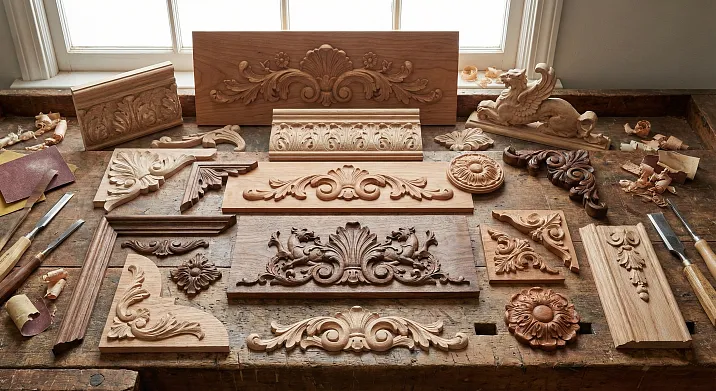
Is it worth spending time and resources to turn an ordinary wardrobe or chest of drawers into a work of art? For those who understand the value of genuine beauty, the answer is obvious.Wood furniture patternscan transform the perception of an entire interior, turning a bland, standard setting into a unique space filled with character, history, and emotion. When a master's hand leaves the finest design on the wood surface, when a chisel creates relief that plays with light and shadow, then not just furniture is born—a part of your life is born, an item you will pass down to children and grandchildren.
Wooden furniture patterns have existed for as long as furniture itself. From ancient Egyptian thrones with gold inlay to Italian cassoni of the Renaissance, from French rococo commodes to Russian carved terems—wherever people wanted to give furniture status, significance, and beauty, carving appeared. And today, when the world is swept by a wave of mass production and standardization, wooden patterns reconnect us with the tradition of craftsmanship, with a time when things were created not on an assembly line, but with soul.


Why furniture needs patterns: functions and meanings
You can live with simple furniture. You can furnish a home with IKEA items—functional, inexpensive, practical. But the soul demands more. Patterns on furniture serve several crucial functions that make them not a luxury, but a necessity for those creating a home, not a temporary dwelling.




Aesthetic function: beauty will save the interior
The first and most obvious function is decoration. Carved patterns turn a flat, monotonous surface into a three-dimensional, lively, detail-rich one. They create visual accents that attract the eye and set the rhythm for perceiving space. The human eye is designed to need complexity and detail. Monotony tires, while variety of forms and textures stimulates, inspires, and delights.
floral patterns on the frontscarved inlayscreating a floral ornament on the fronts. Which one will evoke admiration? Which will become the focal point in the room? The answer is obvious. Carved decor turns a utilitarian object into an art piece, an interior element that shapes the character of the entire space.
Our factory also produces:


Status function: when furniture speaks about the owner
Carved furniture has always been a sign of wealth, taste, and belonging to the cultural elite. Only affluent people could afford hand carving—the work of a carver was expensive, requiring time and skill. And today, despite the advent of CNC machines that have made carved decor more accessible, it still remains a status marker.
a dining tableclassic furniturewith exquisite carved elements, they instantly read the information: here live people who value quality, traditions, and genuine beauty. Here, they don't chase fashionable trends but create timeless values. Carved furniture is an investment not only in the interior but also in reputation, in the image of oneself and one's family.
Get Consultation
Individualization function: creating uniqueness
In a world where most goods are mass-produced, uniqueness becomes the highest value. Wooden patterns allow you to create furniture that no one else has. Even using standard overlays from a catalog, you get an endless number of combinations—different sizes, different placements, different combinations of elements.
And what about ordering a custom project where patterns are developed specifically for your interior, according to your preferences? Then the furniture becomes absolutely unique, existing in a single copy. This is your personal story embodied in wood, your taste, your vision of beauty, frozen in carved lines and forms.
Camouflage function: hide flaws, highlight strengths
Sometimes furniture has structural features you want to hide: material joints, technological seams, hardware attachment points. Decorative overlays brilliantly solve this task. They don't just cover problem areas—they turn them into decorative accents.
Cracked an old cabinet door? Don't rush to throw out the furniture. An elegant carved overlay will hide the defect and simultaneously refresh the appearance. Need to unify disparate elements of a furniture set? Identical patterns will create visual unity, linking separate pieces into a harmonious ensemble.
Cultural function: connection with tradition
Carved patterns are a living connection with the history of furniture art. Using classical motifs—acanthus leaves, rosettes, cartouches, monograms—you integrate your furniture into a centuries-old tradition, making it part of a larger cultural context. Each ornament has a history, symbolism, and meaning. Studying the patterns on your furniture, you study art history, the evolution of styles, and the cultural codes of different eras.
Types of wooden patterns for furniture: from classic to avant-garde
What kinds of patterns are there? There are many classifications—by style, execution technique, motifs, purpose. Let's look at the main types used in modern furniture.
Floral patterns: eternal nature in the interior
The most common type is plant-based ornaments. Leaves, flowers, branches, fruits — flora provides endless variety of forms for carving. Why plants specifically? Because they symbolize life, growth, renewal, fertility. Because their forms are organic, beautiful, and easily perceived by the eye.
The classic acanthus leaf — lush, with deep cutouts, with elegant curls — is the foundation of most European furniture styles. Baroque, Rococo, Neoclassicism, Empire — acanthus appears everywhere in different variations. It is perfectly suited for deep-relief carving, creates a rich play of light and shadow, and gives furniture a luxurious, solemn appearance.
Roses, peonies, tulips — floral motifs are more delicate, romantic. They are characteristic of Provence, shabby chic, and English classic styles. Flowers can be gathered into garlands, bouquets, wreaths, creating festive, elegant compositions.decorative inlays for furniturewith floral patterns are perfect for bedrooms, living rooms, dining rooms — anywhere an atmosphere of coziness, warmth, and homeliness is needed.
Grapevine — a special motif symbolizing abundance, fertility, the celebration of life. Clusters of grapes with carved leaves adorn dining room furniture, sideboards, wine cabinets. This is a pattern that creates an atmosphere of hospitality, joy, and feasting.
Geometric patterns: order and harmony
Geometry is the opposite of the organic nature of plant forms. Here, straight lines, regular shapes, symmetry, and repeating rhythms dominate. Geometric patterns are characteristic of Art Deco, Modern, Scandinavian classic, and minimalist styles.
Meander — an ancient Greek ornament in the form of a broken line, symbolizing eternity, infinity. It is often used as a border, as a frame surrounding other elements.
Diamonds, squares, triangles in various combinations create dynamic, modern compositions. Geometric carving can be either bas-relief (shallow grooves forming a pattern) or volumetric (protruding edges creating a three-dimensional effect).
Mesh patterns, parquet compositions, interweaving lines — all of this is geometry, but complex, refined geometry, demonstrating the skill of the carver and designer.
Anthropomorphic and zoomorphic motifs: living images
Depictions of people and animals in furniture carving are less common, but they always make a strong impression. Mascarons — stylized human faces or masks — adorn chair legs, armrests, central parts of cabinets. They can be solemn (lion masks symbolizing strength and power), playful (putti — plump baby angels), or fantastic (grotesque masks, chimeras).
Animal motifs — lions, eagles, dolphins, horses — are also frequent guests in carved decor. Griffins, dragons, unicorns — mythological creatures add mystery, fairy-tale quality to furniture, referencing heroic epics.
Architectural motifs: columns in miniature
Furniture often imitates architecture — columns, pilasters, capitals, pediments. This is especially characteristic ofclassic furniture, reproducing the forms of ancient temples, Renaissance palazzos, Baroque palaces.
Fluting — vertical grooves on columns — creates rhythm, visually elongates proportions. Capitals of the Ionic, Corinthian, and Composite orders with their luxurious curls and acanthus leaves turn table legs and cabinet corners into architectural masterpieces in miniature.
Abstract and authorial patterns: freedom of creativity
Not all patterns fit into traditional categories. Art Nouveau with its flowing, asymmetrical lines, Art Deco with its stylized, geometric forms, modern design with its free, expressive compositions — all of this creates new types of patterns, not tied to historical tradition.
Authorial collections, where a designer develops unique ornaments specifically for a particular project, are the pinnacle of furniture art. Here, the pattern is not chosen from a catalog but created from scratch, taking into account the features of the space, the client's wishes, and the overall interior concept.
Decorative overlays: a universal tool for transforming furniture
What is a decorative overlay? It is a separate element made of wood with a carved pattern that is attached to the surface of the furniture. Overlays can be of any size — from miniature rosettes with a diameter of 5 cm to large panels measuring one meter by one meter. Their variety is astounding.
Central overlays: the main accent of the composition
Central elements are placed in the middle of the facade, door, tabletop. They are symmetrical, usually in the shape of a circle, oval, diamond, or square. This is the visual center around which the entire composition is built.Carved furniture decorin the form of a central overlay sets the tone, defines the style, and scale of the other elements.
Rosettes — round overlays with a radial pattern (rays, petals radiating from the center). They are universal, suitable for almost any style. Rosettes range from simple, with minimal relief, to the most complex, multi-level ones where every petal is detailed.
Cartouches — oval or shield-shaped overlays, often framed by curls, ribbons, garlands. In the center of the cartouche, there can be the owner's monogram, a heraldic symbol, or the date of the furniture's creation. The cartouche is an element of the Baroque and Rocaille tradition; it creates an atmosphere of solemnity and aristocracy.
Corner overlays: connection and decoration
Furniture corners are problematic areas. Here, planes meet, here joints and technological gaps are often visible. Corner overlays solve this problem while simultaneously decorating the furniture. They can be symmetrical (the same for all corners) or asymmetrical (mirror images for left and right corners).
The shape of corner elements is diverse: a quarter circle, triangle, fan shape, complex curved silhouettes. The pattern can continue the ornament running along the perimeter of the facade or be an independent, contrasting element.
Border overlays: creating frames and friezes
Long narrow overlays are used to create frames around panels, to decorate the perimeter of countertops, and to embellish horizontal and vertical elements. They can be straight or flexible (for framing curved surfaces).
The pattern on border overlays is usually repetitive — a plant repeat (the same motif reproduced multiple times), geometric ornament, or braid. The purpose of the border is to create rhythm, structure the surface, and frame the main decorative elements.
Modular overlays: a constructor for creativity
A special category is modular systems, where individual elements can be connected to each other, creating compositions of any length and configuration. There are basic modules (straight segments), corner transitions, joining elements, and end caps.
Such a system provides enormous freedom. You can create framing of any shape, adapt to non-standard furniture dimensions, combine different modules, creating unique compositions. Modular overlays are especially convenient for restoring antique furniture, where it is necessary to accurately replicate lost elements.
Asymmetric overlays: right and left
Many patterns are not symmetrical in themselves — plant shoots, curved ribbons, asymmetric scrolls. For such elements, paired versions are produced — right and left. This allows creating mirror compositions while maintaining overall symmetry when using asymmetric parts.
For example, on a cabinet facade, curved plant overlays are placed to the left and right of the central rosette. The left one curves to the left, the right one to the right, creating a harmonious framing of the center. The use of paired elements is a sign of high-level design and attention to detail.
Materials for furniture patterns: from budget to premium
What are carved overlays made of? The choice of material is critically important — it determines the appearance, durability, cost, and possibilities for pattern detailing.
Solid oak: the standard of strength and nobility
Oak is the king of furniture woods. Hard, dense, with an expressive texture, it is ideal for carving that will last for decades. Oak overlays are not afraid of mechanical damage, do not deform over time, acquire a noble patina, darkening and becoming even more beautiful.
Carving oak requires sharp tools and physical effort, but the result is impressive. Clear edges, deep relief, expressive play of light and shadow — oak allows creating monumental, powerful, impressive carvings. For classic furniture in dark tones, for interiors in English classic, country, rustic styles, oak is the optimal choice.
Solid beech: balance of price and quality
Beech is denser than oak but without a pronounced texture — the surface is uniform, with small dots (medullary rays). This makes beech ideal for carving where detailing is important, not the texture effect. Beech overlays take paint well, accept stain, creating an even tone without spots or streaks.
Beech is sensitive to humidity — it can deform in unstable conditions. But for interior furniture where temperature and humidity are stable, this is not a problem. Beech is cheaper than oak, making it a popular choice for medium and large projects where a lot of carved decor is needed.
Solid linden: for the finest carving
Linden is soft, pliable, uniform. It cuts easily, like butter, allowing the creation of the smallest details, jewelry-like carving. For openwork pierced work, for sculptural elements, for miniature patterns, linden is indispensable.
The disadvantage — softness makes linden vulnerable. Linden overlays are suitable for furniture that is not subjected to intensive use — bedrooms, living rooms, studies. For kitchen furniture, children's rooms, where the risk of mechanical damage is high, it is better to choose harder woods.
Ash: strength and contrast
Ash is similar to oak but lighter, with a more contrasting texture. It is strong, elastic, beautiful. Ash overlays are suitable for modern interiors where the natural light color of wood is valued. Ash takes tinting well, creating interesting effects — from bleached wood to deep gray and brown shades.
MDF with carving: budget option
For those on a limited budget, there are overlays made of MDF, cut on CNC machines. MDF — medium-density fiberboard — is a uniform, stable material that lends itself well to mechanical processing.
Advantages of MDF: low cost, stability (does not deform from humidity), lightness. Disadvantages: lack of wood texture, impossibility of very fine carving (the material crumbles on small details), the need for mandatory painting (unprotected MDF is afraid of moisture).
MDF overlays are suitable for painted furniture where wood texture is not important, for temporary or budget projects. But for elite, durable furniture, the choice is unequivocal — only solid wood.
Styles of furniture patterns: eras and directions
Each historical era has created its own style of carved decor. Understanding styles helps to correctly choose patterns for furniture, creating a harmonious, stylistically cohesive interior.
Baroque: the triumph of opulence
17th-18th centuries, the era of absolutism and church splendor. Baroque is maximalism, excess, dynamics. Patterns are complex, multi-layered, covering the entire surface. Acanthus leaves intertwine with garlands, putti support cartouches, scrolls form endless labyrinths.
The relief is deep, dramatic, with contrasting chiaroscuro. Gilding, patination, and polychrome painting enhance the decorative effect. Baroque furniture is a theater where each piece plays a role, creates an impression, delights, and overwhelms.
Rococo: Playful Elegance
Mid-18th century, the style of French aristocratic salons. Rococo softens Baroque opulence, making it lighter, more playful, more intimate. Patterns are asymmetrical, whimsical, reminiscent of seashells (rocaille), tongues of flame, clouds.
Colors are pastel — pink, blue, golden. Carving is shallow, elegant, emphasizing lines rather than volume. Rocaille patterns create an atmosphere of a boudoir, a salon, a place for pleasant conversations, flirtation, and gallant entertainment.
Classicism: Return to Antiquity
Late 18th — early 19th century, a reaction to the excesses of Rococo. Classicism turns to ancient models — strict, symmetrical, proportional. Patterns are ordered, subordinate to geometry, using ancient motifs: meander, palmettes, laurel wreaths, triglyphs.
Relief is shallow, silhouette is clear, composition is balanced. Classicist furniture embodies the ideals of reason, order, harmony. It does not shout about its beauty but demonstrates it with restraint and noble dignity.
Empire: Imperial Grandeur
Early 19th century, the style of the Napoleonic era. Empire develops classicist principles but adds monumentality and triumphalism. Patterns include military symbolism — trophies, laurel wreaths, eagles, lions, torches. Egyptian motifs (sphinxes, lotuses, hieroglyphs) recall Napoleon's campaign in Egypt.
Carving is strict, graphic, often gilded on a dark background. Empire furniture is majestic, solemn, suitable for formal interiors, studies, reception rooms.
Modern: fluid lines of nature
Late 19th — early 20th century, a revolution in decorative art. Art Nouveau rejects historical styles, creating a new language of forms. Patterns are asymmetrical, flowing, inspired by nature — iris stems, waves, women's hair, dragonfly wings.
Carving emphasizes line, movement, rather than volume. Often combined with other materials — metal, glass, mother-of-pearl. Art Nouveau furniture is a poem where every line sings, every form is filled with symbolism and emotion.
Art Deco: geometric luxury
1920s-1930s, the style of jazz, skyscrapers, ocean liners. Art Deco combines luxury with geometry, exoticism with modernism. Patterns are stylized — zigzags, steps, sun rays, stylized flowers and animals.
Materials are expensive — exotic woods, inlays of ivory, mother-of-pearl, metal. Carving is shallow, emphasized by contrasting inserts. Art Deco furniture is the glamour, chic, luxury of the interwar era.
Application of patterned overlays on different types of furniture
Where and how to use carved overlays? Decorative elements can find a place on practically any furniture. Let's consider the main categories.
Case furniture: cabinets, chests of drawers, sideboards
The fronts of case furniture are an ideal canvas for carved decoration. Large door panels require adornment, otherwise they look empty, boring. A central rosette overlay on a cabinet door creates a focal point, attracts the eye. Corner elements structure the plane, create a frame. Borders around the perimeter complete the composition.
Chests of drawers and cabinets are adorned with overlays on the drawers. You can create a gradation — large decor on the top drawer, medium on the middle, small on the bottom. Or vice versa — identical elements on all drawers create a rhythmic, ordered composition.
Sideboards, display cabinets, china cabinets — formal furniture for dining rooms and living rooms — require especially rich decoration. Here, large compositions, complex multi-element panels, combinations of different types of overlays are appropriate.
Tables: decoration of tabletops and under-table structures
Tabletops are adorned with border overlays around the perimeter, inlays in the center. For round tables, radial compositions radiating from the center are used. For rectangular ones — frames, corner elements, central panels.
The under-table structure — legs and aprons (horizontal crosspieces between legs) — is also decorated. Legs can be turned (shaped on a lathe, creating baluster-like forms) or carved (hand-carved or CNC-carved, creating complex sculptural forms). Aprons are adorned with border overlays, friezes, central elements.
Chairs and armchairs: backs and armrests
Chair backs are a traditional place for carving. For classical styles, pierced backs are characteristic, where the pattern is cut through, creating an openwork, light effect. Floral motifs, cartouches, lyres, shields — the forms are endlessly varied.
Armrests of armchairs often end with carved elements — lion heads, scrolls, rosettes. The front legs of armchairs can be complex carved sculptures — animal paws, human figures (caryatids), fantastic creatures.
Beds: headboards and footboards
A carved headboard is the main decoration of a bedroom. It can be low, with an elegant floral pattern, creating an atmosphere of romance and coziness. Or monumental, in Baroque or Empire style, emphasizing the owner's status.
Footboards are less common in modern furniture, but in classical styles they are essential. A symmetrical footboard, repeating the motifs of the headboard, creates a complete, cohesive composition.
The sides of beds are also adorned — with border overlays, corner elements, creating visual unity of all parts.
Kitchen furniture: fronts and countertops
The kitchen is a functional space, but that doesn't mean it has to be boring.Furniture frontswith carved overlays transform a standard kitchen set into a work of art.
Important: for the kitchen, choose overlays made of hardwoods (oak, beech, ash) with a high-quality protective coating that is resistant to moisture, temperature, and dirt. Avoid overly deep relief where grease and grime will accumulate—shallow, low-relief carving that is easy to clean is better.
Technologies for manufacturing furniture patterns: from hand to robot
How are carved overlays created today? There are several technologies, each with its own advantages.
Hand carving: a tradition of craftsmanship
A master carver works with a wooden blank using a set of chisels, gouges, and knives. They transfer the pattern onto the surface (via a stencil, carbon paper, or by freehand drawing), then sequentially removes the background, forms the relief, works out the details, and sands the surface.
Hand carving is a slow process. A complex overlay can take days or weeks of work. But the result is unique. Each piece is slightly different, carries the energy of the master, and possesses that elusive vitality that a machine cannot provide.
Today, hand carving is used for exclusive projects, for restoring antique furniture, and for creating unique art objects. The cost is high, but for true connoisseurs, price is not an issue—authenticity, craftsmanship, and connection to tradition are what matter.
CNC Machines: Precision and Productivity
CNC milling machines revolutionized the production of carved decor. A computer program controls the movement of the cutter, which carves the pattern with micron precision. Hundreds of identical overlays can be created, and incredibly complex shapes, impossible by hand, can be cut.
Process: a designer creates a three-dimensional model of the pattern in specialized software. The software generates control code (G-code) for the machine. The operator loads the wooden blank and starts the program. The machine automatically carves the pattern. Processing time ranges from a few minutes to several hours depending on complexity.
Advantages of CNC: speed (dozens of times faster than handwork), repeatability (absolutely identical products), the ability to carve the most complex three-dimensional forms, low cost in mass production.
Disadvantages: initial costs for program creation (recouped with large runs), a certain mechanical feel (lack of the individuality of handwork), limitations on minimum element thickness (the cutter has a diameter and cannot carve details thinner than that).
Hybrid approach: the best of both worlds
The optimal solution used by leading manufacturers is a combination of CNC and hand finishing. The machine performs the rough work: removes the background, forms the main relief, creates basic shapes. Then a master hand-finishes the details, emphasizes lines, removes cutter marks, sands, and perfects the piece.
This approach combines the efficiency of technology with the soul of craftsmanship. The products turn out high-quality and detailed, while the cost remains reasonable and production times acceptable.
Installation and fastening of carved overlays: mounting nuances
How to attach an overlay to furniture? There are several methods.
Adhesive bonding: the classic of reliability
The most common method is gluing. Wood glue is used (PVA for interior furniture, polyurethane for furniture used in damp conditions). Surfaces are prepared: cleaned of dust and degreased. Glue is applied in a thin, even layer. The overlay is pressed onto the surface and fixed with clamps or weights during drying time (usually 12-24 hours).
Advantage: strong, durable connection, no visible fasteners. Disadvantage: difficulty of removal (if the overlay needs to be taken off, it will likely have to be cut off, risking damage to the base).
Screw fastening: for large elements
Large, heavy overlays are additionally fastened with screws. Holes are pre-drilled (to prevent the wood from cracking), the screw is driven in, the head is countersunk, and the hole is covered with a wooden plug sanded flush.
Advantage: maximum strength, possibility of disassembly. Disadvantage: labor intensity, risk of cracking with careless work.
Dowel fastening: invisible connection
For particularly valuable pieces, wooden dowels are used. Holes are drilled in the overlay and the base, and dowels are glued into them. This connection is strong, completely invisible, and allows the furniture to be disassembled if necessary.
Magnetic fastening: an innovative solution
A modern technology involves embedding neodymium magnets into the overlay and the base. The overlay is simply placed, and the magnets attract, providing secure fixation. Advantage—instant installation/removal, the ability to easily change overlays and update the decor. Disadvantage—high cost, need for precise fitting.
Caring for carved patterns: preserving beauty for decades
Carved furniture requires careful maintenance. Patterns with their complex relief collect dust and are sensitive to damage.
Regular cleaning: gently and thoroughly
Use a soft brush (a shoe brush with natural bristles or a large artist's brush works well) or a vacuum with a soft attachment. Run the brush/attachment over the pattern to remove dust from the recesses. Frequency: weekly or as needed.
For wet cleaning, use a slightly damp (not wet!) soft cloth. Wipe the surface, then immediately dry it thoroughly. Avoid excessive moisture—wood can swell, and the paint/varnish coating can become cloudy.
Protection from damage: prevent the problem
Carved elements are fragile, especially protruding parts, thin leaves, and scrolls. Protect furniture from impacts, do not place heavy objects on carved parts, and do not allow children or pets to play near particularly valuable pieces.
When rearranging furniture, do not drag it across the floor—carved legs can break off. Lift and carry it carefully, holding onto sturdy parts (the body, rails), not the carved elements.
Refinishing: restoring shine
Over time, varnish or wax finishes become dull and wear off. To refresh, use special furniture polishes or wood wax. Apply a thin layer with a soft cloth, let it absorb, then polish to a shine. Frequency: every 6-12 months.
For matte surfaces, use wood oil (linseed, tung, or special furniture formulations). Oil nourishes the wood, highlights the grain, and protects against drying and cracking.
Restoring damage: a second life
A piece broke off? Don't rush to get upset. An experienced restorer can glue it back so the repair is invisible. Lost a carving fragment? A master will carve a new one, match the tone, and age it so it doesn't stand out.
For valuable antique furniture, restoration is a necessity. For modern furniture, it's an opportunity to extend its lifespan and preserve its beauty for decades.
Frequently Asked Questions about Wooden Furniture Patterns
Can carved overlays be added to finished furniture?
Absolutely. This is one of the easiest ways to update your interior without buying new furniture. Choose overlays that match the style and size, glue them onto the fronts—and the furniture will transform. The key is to correctly match the color and tone. You can buy overlays in natural wood and tint them to match your furniture's color, or order pre-finished ones.
How much do wooden carved overlays cost?
The price range is vast. A simple geometric beech overlay 10×10 cm—from 500 rubles. A complex floral oak composition 30×50 cm—from 5,000 rubles. A large 100×100 cm panel with deep hand carving—from 50,000 rubles. Exclusive custom pieces—up to several hundred thousand rubles. You can find current prices for specific models on the website.
How to match patterns to the interior style?
The rule is simple: the style of the overlays should match the style of the furniture and interior. For a classic interior, choose classic motifs—acanthus, rosettes, symmetrical compositions. For modern—geometry, minimalist shapes, abstraction. For country and Provence—simple floral motifs, shallow carving. For Baroque and Rococo—lush, complex, asymmetrical patterns.
If in doubt—consult a designer. Many manufacturers, including STAVROS, offer design consultation services to help you select the best elements for your project.
Can a custom pattern be ordered?
Yes, most manufacturers offer custom design services. You provide a sketch, photo, or description of the desired pattern. A designer creates a 3D model, coordinates it with you, then the piece is manufactured on a CNC machine or by hand. The production time for a custom order ranges from 2 weeks to several months depending on complexity. The cost is higher than catalog items, but the result is unique decor that exists only for you.
How to attach overlays to curved surfaces?
For curved surfaces (convex or concave), flexible overlays are used. They are made from thin wood (veneer on a base) that can bend. Attachment is with glue, with additional clamping or elastic band fixation during drying time.
An alternative is composite overlays made of small segments, each attached separately. The segments follow the surface curvature, creating a unified composition.
Do wooden patterns fade in the sun?
Natural wood changes color under UV exposure—usually darkens (oak, walnut) or yellows (pine, linden). Paint and varnish coatings can also fade. To prevent this, use UV-protective varnishes, place furniture away from direct sunlight, and use curtains or blinds during sunny hours.
For furniture under constant sunlight, it's better to choose wood species stable to UV (teak, iroko) or use painted overlays where the pigment is protected by multiple layers of varnish.
Can antique carved elements be restored?
Yes, restoring carved decor is a separate specialty. A master restorer analyzes the damage, determines the wood species, carving style, and original finish. Then they recreate lost fragments using the same techniques and tools as the original craftsmen. New parts are tinted, patinated, and aged to not stand out against the preserved ones.
Good restoration is invisible — the item looks intact, as if it had never been damaged. For particularly valuable antique pieces, restoration is the only way to preserve them for future generations.
Are modern carved overlays eco-friendly?
With responsible production — yes. Wood from legal sources is used, preferably with FSC certification (sustainable forestry). Water-based or low-VOC (volatile organic compounds) glues, varnishes, and paints are safe for health. Production waste is minimized and recycled.
When buying from trusted manufacturers, request quality certificates confirming the eco-friendliness of materials and processes.
What tools are needed for self-installation of overlays?
Minimum set: PVA wood glue, a soft brush for applying glue, clamps or weights for fixation, fine sandpaper for surface preparation. For screw mounting additionally: drill, wood drill bits, screws, wooden plug caps. For a professional result: miter saw (for sizing), router (for creating recesses), sander.
If you have no carpentry experience — it's better to entrust the installation to a specialist. Improper installation can ruin both the overlay and the furniture.
Can carved overlays be used on outdoor furniture?
Outdoor furniture requires special conditions: wood from hard, weather-resistant species (oak, larch, teak), special deep-penetration antiseptic impregnation, finishing with yacht varnish or weather-resistant paint. The carving should not be too deep or intricate — moisture accumulates in recesses, accelerating deterioration.
An alternative — polyurethane overlays imitating wood carving. They are resistant to moisture, temperature fluctuations, UV radiation, while looking almost like natural wood.
In conclusion: trust the professionals at STAVROS
I will continue and conclude the article:Wooden patterns for furniture are not just decoration. They are a way to express yourself, to create a space that reflects your tastes, values, and aspirations. It is an investment in beauty that never goes out of style, in quality that serves generations, in craftsmanship that connects the past with the present.
The company STAVROS is a recognized leader in the Russian marketcarved wooden elements, uniting the traditions of classical carpentry with advanced production technologies. Over the years, STAVROS has built a reputation as a company where quality is not a marketing slogan, but a reality confirmed by thousands of completed projects, enthusiastic customer reviews, and the durability of its products.
A catalog that sparks the imagination
The STAVROS assortment features over 400 modelsdecorative inserts — from miniature rosettes a few centimeters in diameter to monumental panels a meter or more in size. Each model is carefully designed, proportionally balanced, and adapted to modern furniture standards.
Classical collections include traditional motifs — acanthus leaves, Baroque cartouches, Rococo scrolls, Classicist palmettes. These patterns are time-tested; they adorned palaces and mansions for centuries, and today they are as relevant as they were three hundred years ago.
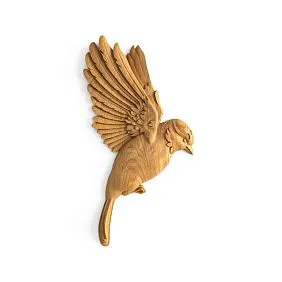
The author's collection "Summer Garden" is the pride of STAVROS. It is a modern interpretation of Baroque carving, where traditional plant motifs gain new life, freshness, and expressiveness. Leaves, flowers, birds, branches — each element is crafted with jewelry-like precision, creating compositions that enliven furniture, filling it with movement and the breath of nature.
Modular systems allow assembling compositions of any configuration — choose basic elements, corner transitions, connecting parts, end caps, combine them to your taste. It's a construction set for adults, where instead of plastic parts there is noble wood, and the result is unique furniture.
Paired overlays with mirror images for left and right sides ensure symmetry in compositions. Overlays with recesses on the back side, matching the profile of moldings, allow mounting them over protruding elements, creating multi-layered, three-dimensional compositions.
Premium Materials
STAVROS works exclusively with solid noble wood species. Oak and beech are the primary production materials. This wood is sourced from trusted suppliers and undergoes multi-stage quality control. Each board is checked for the absence of knots, rot, cracks, and other defects. Rejection is strict — only perfect material goes into production.
Chamber drying in special kilns brings the wood moisture content to 8-10% — the optimal level for interior products. At this moisture level, the wood is stable, does not warp, and does not crack with indoor temperature and humidity fluctuations. The drying process is slow and controlled — no rush, no compromises.
After drying, the wood undergoes an acclimatization period in a warehouse where conditions are close to real operating conditions. The wood "rests," relieves internal stresses, and becomes absolutely stable. Only after this does it enter production.
World-class technologies
The STAVROS production complex is equipped with high-precision CNC milling machines from leading European manufacturers. These machines can carve patterns with an accuracy of tenths of a millimeter, reproduce the most complex three-dimensional forms that are impossible or extremely labor-intensive to create by hand.
But technology is only the first stage. After the machine, each overlay goes into the hands of an experienced craftsman. They check the quality of the machine processing, remove the tiniest tool marks, accentuate edges, deepen relief where needed for expressiveness. Manual finishing turns a precise product into a living piece of art, where you can feel the touch of human hands, the skill, and the attention to detail.
Sanding is a particularly critical stage. The surface is treated with abrasives of progressively decreasing grit — from coarse, removing major irregularities, to the finest, creating a silky smoothness. In complex relief areas, sanding is done manually with special tools, allowing access to every recess, every scroll.
Protection and Finishing
Protective treatment at STAVROS is performed with professional compounds that ensure product durability. Deep-penetration antiseptic impregnation protects the wood from fungus, mold, and wood-boring insects. Primer evens the surface and ensures adhesion of the final coating.
Final finishing is offered in several options. Natural wood under clear varnish — for those who appreciate the authentic beauty of wood texture and color. Tinted coatings imitate valuable species — walnut, mahogany, wenge, rosewood. Patination creates an effect of noble antiquity, emphasizing the relief and making patterns more expressive. Painting in any RAL color allows you to perfectly match the shade to existing furniture or the overall interior palette.
All varnishes and paints are water-based or have low volatile organic compound content — safe for health, have no strong odor, and dry quickly. After applying the final coat, products undergo quality control — checking for coating uniformity, absence of drips, missed spots, and other defects.
Convenience of purchase and delivery
Purchasing from STAVROS is maximally comfortable. The detailed online catalog on the website contains high-resolution photos of each model from multiple angles, technical drawings with precise dimensions, descriptions of materials and finishes, and current prices. The filter system allows you to quickly find what you need — choose by style (classic, baroque, modern), by pattern type (floral, geometric), by size, by wood species, by stock availability.
Can't decide? Qualified STAVROS managers will help with your selection. Describe your furniture, interior style, your preferences — receive professional recommendations, a selection of suitable models, and calculation of the required quantity. This is a free consultation, without pushiness or pressure — only expert assistance.
Placing an order is easy — through the website shopping cart or via the hotline phone. Payment via convenient methods — bank card, transfer, cash on delivery. For legal entities — full accounting documentation package, contract-based work, payment deferral for regular partners.
Delivery is organized throughout Russia — from Kaliningrad to Vladivostok, from major metropolises to remote villages. Reliable transport companies ensure cargo safety. Products are carefully packaged — protective film, corrugated cardboard, bubble wrap, wooden crates for particularly fragile elements. This prevents damage during transportation.
For Moscow, St. Petersburg, and other major cities, self-pickup from STAVROS warehouses is available. Come, see the products in person, consult with specialists, receive recommendations on installation and care. Popular in-stock models are available at warehouses — take them immediately, without waiting.
Custom projects and partnership
STAVROS is open to complex, non-standard projects. Need an overlay of unique shape not in the catalog? Company designers will develop it specifically for you — create a 3D model, coordinate details, produce a trial sample. After approval, production will commence. Timeline — from two weeks to two months depending on complexity.
For professionals — architects, interior designers, furniture manufacturers, construction companies — STAVROS offers partnership programs. Special prices, priority production timelines, dedicated managers, technical support at all project stages. Collaboration with STAVROS is a reliable backbone, quality guarantee, and confidence in the result.
Restoration workshops will find everything necessary for antique furniture restoration at STAVROS. The catalog contains many models reproducing historical specimens. Didn't find an exact match? Order custom manufacturing based on your sample — STAVROS craftsmen will recreate the lost element with filigree precision.
Your step toward perfection
ChoosingWooden carved appliquésChoosing STAVROS, you choose quality confirmed by years of impeccable work. You choose beauty created by talented craftsmen and modern technologies. You choose the reliability of a company for whom reputation is more valuable than momentary profit.
Wooden furniture patterns are the language in which your home tells your story. Let this story be beautiful, worthy, inspiring. Let your furniture become a family heirloom valued by your children and grandchildren. Let every morning, looking at the elegant carved pattern on your favorite dresser, you smile, understanding: beauty lives here, the genuine is valued here.
STAVROS — your guide to the world of authentic furniture art. Call, write, visit — discover the endless variety ofwooden furniture patternsthat will transform your interior into a dream space, filled with the warmth of wood, the craftsmanship of carvers, and the eternal beauty of tradition!


