Article Contents:
- Evolution of Wooden Frames in Architectural History
- From Ancient Civilizations to the Middle Ages
- Renaissance and Baroque: The Peak of Decorative Arts
- National Traditions in Wooden Frames
- Typology and Functions of Wooden Frames
- Mouldings and portals
- Coffers and Panels
- Pilasters and Columns
- Plinths and Moldings
- Materials and Manufacturing Technologies
- Wood Species for Frames
- Traditional Wood Treatment Methods
- Modern manufacturing technologies
- Final finishing and protective coatings
- Application of Wooden Frames in Various Styles
- Classical and Historical Styles
- National and regional styles
- Modern trends
- Installation of Wooden Frames
- Preparatory work
- Fastening and Joining Methods
- Installation Features in Different Rooms
- Care and Maintenance of Wooden Frames
- Regular Care and Cleaning
- Restoration and repair
- Protection Against Pests and Decay
- Conclusion
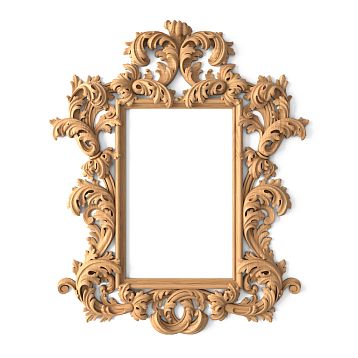
In the world of architecture and interior design, there are elements that simultaneously serve a practical function and act as important aesthetic accents. Wooden Frames — such an element, combining utility and beauty, protection and decoration. These architectural details not only complete doorways, corners, and joints, but also protect them from damage, creating a cohesive image of a room or facade.
Tradition of Use wooden frames has a multi-century history tracing back to ancient architecture of various peoples. From carved lintels of Russian wooden houses to exquisite Victorian moldings — these elements were never merely functional necessities, but also reflections of cultural characteristics, technical craftsmanship, and artistic taste of their time.
the diversity of wooden framestheir historical development, manufacturing technologies, installation and maintenance features, as well as modern trends in their use. Whether you are restoring a historic building or designing a modern interior, this information will help you better understand the significance and potential of these important architectural elements.


Evolution of Wooden Frames in Architectural History




From Ancient Civilizations to the Middle Ages
History wooden frames begins with early attempts by humans to decorate and protect openings in their dwellings. Already in ancient Egypt and Mesopotamia, doorways were framed with wooden structures that not only reinforced the passage but also served as decorative elements. These early frames were often adorned with carvings featuring symbolic images intended to protect the home from evil spirits.
In ancient Greece and Rome Wooden Frames door and window openings became more refined. The Greeks developed a system of architectural orders, where each element, including frames, adhered to strict proportions. The Romans, inheriting these traditions, added their own innovations, creating richly decorated portals and casings that often combined wood with stone and metal.
The Middle Ages brought a new understanding wooden framesIn the Romanesque period, they were massive and simple, reflecting the harsh spirit of the era. Gothic style, on the contrary, introduced lightness and upward orientation — moldings became thinner, elongated, often adorned with pointed arches and intricate carvings. In wooden architecture of Northern Europe, half-timbered structures appeared, where the wooden frame of the building became part of its decorative finish.
Our factory also produces:


Renaissance and Baroque: the peak of decorative art
The Renaissance era returned to classical ideals, but reinterpreted them in accordance with new conceptions of harmony and proportions. Wooden Frames became more refined and mathematically precise. Renaissance architects widely used pilasters, columns, cornices, and pediments to create harmonious compositions. Special attention was paid to the design of doorways and windows — they were framed by complex moldings, sashings, and volutes.
Baroque brought dynamism and expressiveness to architecture. Wooden Frames became more plastic, rich in details, often asymmetrical. Curved cornices, broken pediments, ornate carvings — all of this created an effect of movement and theatricality. During this period, masters achieved incredible skill in wood carving, creating true works of art.
Rococo, developed from Baroque, further intensified decoration, adding lightness and playfulness. Wooden Frames of this period were characterized by elegant curves, asymmetry, and abundance of plant motifs. They were often gilded or painted in pastel tones, creating an effect of refined luxury.
Get Consultation
National traditions in wooden moldings
in different countries and regions Wooden Frames acquired their unique features, reflecting local traditions, climatic conditions, and available materials.
In Russia, carved moldings became true works of folk art. They not only decorated door and window openings, but also, according to beliefs, protected the house from evil spirits. Each region had its own carving features, by which one could determine the geographical origin of the house. Solar symbols, plant motifs, images of birds and animals — all of this formed a rich symbolic language, understandable to every inhabitant.
In Scandinavian countries Wooden Frames were characterized by restraint and functionality, conditioned by the harsh climate. They often had simple geometric forms and minimal decoration, yet distinguished themselves by high craftsmanship and thoughtful construction.
In Japan, traditional sliding doors fusuma were framed by wooden frames, which not only performed a structural function but also served as elements of minimalist aesthetics, characteristic of Japanese culture. Simplicity of lines, attention to wood texture, harmony with the surrounding space — all of this reflected Zen philosophy.
In Mediterranean countries Wooden Frames often combined with bright wall colors, creating contrasting, picturesque compositions. They protected houses from scorching sun and created the distinctive look of city streets.
Typology and functions of wooden moldings
Moldings and portals
Moldings are decorative frames for window openings, serving both aesthetic and practical functions, protecting the junction between the window frame and the wall from moisture and drafts.
In classical architecture, moldings can be very complex, including pilasters, columns, sashings, and pediments. In folk architecture, wooden moldings were often adorned with carving, turning into true works of art. Carving could be flat (relief) or through (openwork), creating a play of light and shadow on the facade of the house.
Portals are decorative frames for entrance doors, emphasizing the importance of the entrance and creating a transitional zone between the external space and the interior. Wooden Frames Portals may include columns, pilasters, pediments, cornices, sculptural elements. They not only protect the door opening from atmospheric influences, but also create the first impression of the house, expressing the status and taste of its owners.
Crown mouldings and mouldings
Cornices — horizontal projecting elements that serve to divert rainwater from building walls and simultaneously are important decorative elements. In wooden architecture, a cornice often consists of several profiled parts forming a complex silhouette.
Wooden Frames in the form of cornices may be:
- Gable cornices — located at the top of the building, at the junction of the wall and roof
- Interfloor cornices — divide the facade horizontally, emphasizing the layered nature of the building
- Window cornices — located under windows and serve to divert water from window openings
Moldings — profiled elements used for dividing facades or interiors, framing openings, creating decorative panels. They may have various profiles — from simple rectangular to complex curved. Wooden Frames in the form of moldings allow creating expressive play of light and shadow, emphasizing the architectural style of the building, visually correcting its proportions.
Pilasters and columns
Pilasters — flat vertical projections on the wall surface, imitating columns. They have the same proportions and details as columns of the corresponding order — base, shaft, capital. Wooden Frames As pilasters, they are used for vertical division of the facade, creating a rhythmic structure, and framing openings.
Columns are freestanding vertical supports that can be structural or decorative. In wooden architecture, columns are often used to create porticos, balconies, and galleries. They can be executed in various architectural orders — Doric, Ionic, Corinthian, Composite — or have a free-form design characteristic of folk architecture.
Wooden Frames In the form of pilasters and columns, they impart monumentality to a building, create expressive play of light and shadow, and emphasize vertical lines. In interiors, they can serve to zone space, create architectural accents, and support arches and vaults.
Baseboards and moldings
Baseboards — elements of wooden framingwhich cover the junction between the wall and the floor. They not only perform a practical function, protecting the wall from dirt and damage, but also serve as an important decorative element, completing the room's finish.
In classical architecture, baseboards can be quite tall (up to 30 cm) and have a complex profile with multiple levels. In modern design, lower and simpler-shaped baseboards are more commonly used, but their role in creating a cohesive interior image remains significant.
Moldings (ceiling baseboards) — elements of wooden framingcovering the junction between the wall and the ceiling. They soften the transition between vertical and horizontal surfaces, creating a more harmonious perception of space. Moldings can be simple or have a complex profile with carved ornamentation, depending on the interior style.
Materials and Manufacturing Technologies
Wood species for framing
Choosing wood species for wooden frames depends on many factors: interior or facade style, usage conditions, budget, and personal preferences. Each species has its own characteristics and advantages.
Oak — one of the most popular materials for making framing. It is characterized by high strength, resistance to moisture and mechanical damage. Oak framing has an expressive texture and develops a noble patina over time. Oak is easily carved, allowing for the creation of complex decorative elements.
Beech — a hard wood species with a uniform structure and pleasant light-pink hue. Beech framing is characterized by high strength and resistance to abrasion. This material is easy to process and can be painted in various colors.
Larch — a unique material that only increases its strength over time. Larch wood contains a large amount of resin, making it resistant to moisture and microorganisms. Wooden Frames Made from larch have a beautiful golden hue and pronounced texture.
Spruce — a more affordable option, yet it possesses excellent performance characteristics. Spruce framing has a pleasant light tone and pronounced texture. Due to its natural resin content, spruce has inherent protection against rot and pests.
Linden — a soft wood species ideal for carving. Linden framing can feature the most complex and delicate carved elements. This material has a uniform structure and light tone, and is easily painted.
Exotic species (redwood, wenge, teak) — used to create exclusive framing. They are distinguished by unusual texture, color, and high resistance to external influences. Such framing becomes a true decoration of the interior or facade.
Traditional wood processing methods
Traditional manufacturing methods wooden frames are based on manual wood processing and passed down from generation to generation. These methods require high skill, but allow for the creation of unique, individual pieces.
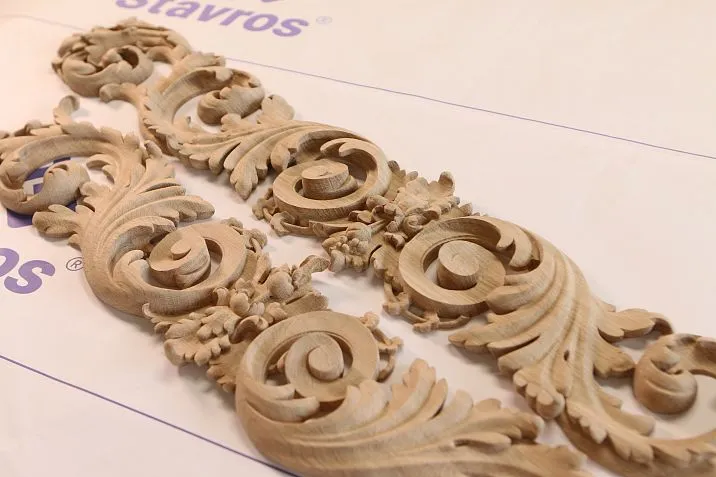
Hand carving — one of the oldest methods of wood processing, allowing for the creation of unique decorative elements. Master carvers use special tools — chisels, gouges, and knives — to create relief patterns and ornaments on the surface of wooden framing.
Several types of carving are distinguished:
- Relief (raised) — the pattern is chosen on the surface of the wood, creating a convex design
- Cut-out (through) — the background is completely removed, creating an openwork pattern
- Three-dimensional — sculptural carving
Turning — a method in which the blank rotates around its axis, and the craftsman uses special cutters to give it the desired shape. Turning allows for the creation of round or cylindrical framing elements, such as columns or balusters.
Milling — one of the main methods of creating wooden frames. The craftsman uses special milling cutters to form the desired profile. This method allows for the creation of both simple and complex profiles with various decorative elements.
Inlay and marquetry — techniques in which framing is decorated with inserts made of various materials. These can include other wood species, metal, mother-of-pearl, bone, etc. The craftsman carves recesses of the required shape in the main material and inserts prepared elements into them. These techniques allow for the creation of complex patterns and images.
Modern Manufacturing Technologies
With the development of technology, new manufacturing methods have emerged wooden frameswhich allow increasing the accuracy, speed, and quality of production.
CNC milling — the use of computer-controlled machines to create framing. A computer program controls the movement of the milling cutter, allowing for the creation of complex profiles with high precision and repeatability. This method is widely used in industrial furniture and architectural element production.
Laser cutting is a technology that uses a laser beam to process materials. It allows creating frames with very thin and intricate patterns that are inaccessible with traditional processing methods. Laser cutting is especially effective when working with thin materials and creating delicate elements.
3D printing is an innovative technology that allows creating three-dimensional frame elements by layer-by-layer material buildup. This method opens up new design possibilities, enabling the creation of shapes that are impossible to achieve using traditional methods.
Wood bending — a technology that allows creating curved elements wooden framesThere are several bending methods:
- Steaming — wood softens under steam and is then bent into special forms
- Laminating — bonding thin layers of wood onto a curved form
- Carving — creating curved shapes by cutting from a solid block
Finishing and protective coatings
Finishing plays an important role in creating quality wooden framesIt includes:
Sanding — a process in which the wood surface is treated with abrasive materials to achieve smoothness and remove irregularities. Sanding is performed in several stages, starting with coarse and ending with fine abrasives.
Staining — a process of changing the color of wood using special dyes or stains. Staining allows highlighting the natural wood texture or giving it the desired shade that matches the overall interior or facade style.
Varnishing — applying a transparent protective coating that protects wood from moisture, ultraviolet radiation, and mechanical damage. Modern varnishes can be matte, satin, or glossy, allowing the desired visual effect to be achieved.
Oil treatment — an alternative way to protect wood, which allows preserving its natural texture and tactile feel. Oils penetrate deeply into the wood structure, protecting it from within and emphasizing the natural beauty of the material.
Waxing — a traditional protection method wooden framesin which a layer of natural or synthetic wax is applied to the surface. This method creates a water-repellent effect and gives the wood a soft, silky sheen.
Application of wooden frames in various styles
Classical and historical styles
Classical styles wooden frames Renaissance – characterized by clear composition, harmonious proportions, and moderate decoration. Typical elements include rusticated ground floors, pilasters and columns of classical orders, arched windows with keystone stones, cornices with modillions, and pediments above windows.
Renaissance — characterized by clear composition, harmonious proportions, moderate decoration. Typical elements — pilasters and columns of classical orders, arched windows with keystone stones, cornices with modillions, gables above windows. Wooden Frames In Renaissance style, often feature ancient motifs — acanthus leaves, ovals, meanders.
Baroque — characterized by dynamism, plasticity of forms, abundance of decoration. Typical elements — curved cornices, broken gables, volutes, cartouches, ornate carving. Wooden Frames In Baroque style, often covered with gold leaf or polychrome painting.
Neoclassicism — characterized by strictness, restraint, rationality. Typical features — clear symmetry, use of classical orders, triangular gables, restrained decoration. Wooden Frames In Neoclassical style, have clear, geometrically correct forms and minimal decorative elements.
Empire — a monumental style that developed from Neoclassicism. It is characterized by massive forms, military symbolism (laurel wreaths, eagles, lions), use of Egyptian motifs. Wooden Frames In Empire style, often imitate bronze or marble, emphasizing imperial power and grandeur.
National and regional styles
National and regional styles wooden frames Reflect cultural traditions and climatic characteristics of various regions.
Russian style — includes elements of ancient Russian architecture and folk architecture. Typical features — pointed arches, kokoshniks, ornamentation, polychrome decoration, carved casings. Wooden Frames In Russian style, often decorated with solar symbols, plant motifs, images of birds and animals.
Gothic style — characterized by upward reach, delicacy, abundance of vertical lines. Typical elements — pointed arches, rosettes, pinnacles, buttresses. Wooden Frames In Gothic style, often feature complex carvings with religious motifs.
Scandinavian style is characterized by simple forms, functionality, use of natural materials, and minimalistic decor. Wooden Frames In Scandinavian style, items usually have simple, minimalist forms and light shades.
Alpine style (chalet) is characterized by massiveness, use of rough wood, and simple forms. Wooden Frames In chalet style, wood often retains visible texture and minimal processing, creating a sense of closeness to nature.
Modern trends
Modern trends in wooden frames Reflect new technological capabilities, ecological requirements, and aesthetic preferences.
Minimalism is characterized by simple forms, absence of decor, use of clean lines and planes. Wooden Frames In minimalist style, items have simple, geometric forms without unnecessary details. They emphasize spatial structure and create a sense of order and calm.
Eco-style is characterized by use of natural materials, integration with the natural environment, and application of green technologies. Wooden Frames In eco-style, wood often retains natural texture and color, minimal processing, which highlights their eco-friendliness.
Fusion — a style combining elements of various cultures and eras. Wooden Frames In fusion style, one can combine traditional and modern forms, various materials and processing techniques, creating unique, eclectic compositions.
Industrial style is inspired by industrial aesthetics. Wooden Frames In industrial style, items often combine with metal, have rough texture and minimal finishing, creating a sense of 'unfinished' authenticity.
Installation of wooden frames
Preparatory Work
Before installation wooden frames A series of preparatory works must be carried out to ensure the quality and longevity of the result.
Measurement and calculation — accurate measurements of openings or surfaces where frames will be installed are the foundation of successful installation. It is necessary to consider not only the dimensions of the openings themselves, but also the characteristics of the walls, presence of irregularities, and other factors that may affect the installation process.
Surface preparation — walls or other surfaces where frames will be installed must be flat, dry, and clean. If necessary, the surface is leveled using plaster or putty, and treated with antiseptic compounds to prevent mold and mildew growth.
Material acclimatization — Wooden Frames must be adapted to the room conditions before installation. For this, they are placed in the room where installation will take place for 2-3 days. This allows the wood to achieve optimal moisture content and avoid deformation after installation.
Tool and material preparation — installing frames requires various tools: saw, hammer, screwdriver, drill, level, tape measure, pencil, square. Also, fasteners (nails, screws, anchors) and adhesive must be prepared, if it will be used.
Methods of joining and connecting
There are several ways of mounting wooden frameseach of which has its own advantages and specific applications.
Adhesive connection — one of the most common methods of attaching frames. Various types of adhesive are used: PVA, polyurethane, contact adhesive, etc. Adhesive is applied to the wall and frame surfaces, then they are pressed together and left to dry completely. This method provides invisible connections but requires a flat surface.
Mechanical fastening — use of nails, screws, anchors, or other fasteners. This method ensures a secure connection but leaves visible fastener marks that may disrupt the item's aesthetics. Decorative caps or putty can be used to conceal these marks.
Combined fastening — combination of adhesive and mechanical methods. The frame is first secured with adhesive, then additionally fastened with mechanical elements. This method ensures maximum connection reliability.
Connecting elements together — when installing complex frames composed of multiple parts, it is important to ensure proper connection of elements. For this, the following methods may be used:
- Connection at a 45-degree angle (for casings and frames)
- Dovetail connection (for more complex structures)
- Mortise-and-tenon connection (for moldings and cornices)
Installation features vary depending on the type of room and operating conditions.
Installation wooden frames has its own features depending on the type of room and operating conditions.
Residential rooms — in living rooms, bedrooms, and children's rooms, the focus is on the aesthetic aspect of moldings. Here, more decorative and refined options can be used, which will become a true decoration of the interior. It is important to consider the overall style of the room and color scheme.
Kitchen and bathroom — in rooms with high humidity, it is necessary to use moldings made of moisture-resistant wood species (oak, larch) with additional protective treatment. It is also important to ensure the tightness of joints to prevent moisture penetration.
Office and public spaces — here, practicality and durability of moldings are paramount. It is recommended to use hardwoods with high resistance to abrasion and mechanical damage, as well as more restrained and universal designs.
Building facades — for outdoor use Wooden Frames must be made from wood species resistant to atmospheric effects (larch, oak, teak) and have special protective treatment. It is also important to ensure water runoff from the molding surfaces to prevent premature deterioration.
Care and Maintenance of Wooden Moldings
Regular Care and Cleaning
To maintain an attractive appearance and extend service life wooden frames regular care is required:
Dust removal — regular removal of dust from molding surfaces using soft cloth or special brush. This prevents accumulation of dirt and preserves the aesthetic appearance.
Wet cleaning — periodic cleaning of moldings with slightly damp cloth without using aggressive cleaning agents. For more thorough cleaning, special wood care products can be used, which not only clean but also nourish the wood.
Updating protective coating — depending on the type of protective coating and intensity of use, it is necessary to periodically renew varnish, oil, or wax on molding surfaces. This provides protection for wood against moisture, UV radiation, and mechanical damage.
Humidity control — maintaining optimal humidity level in the room (40-60%) helps prevent deformation wooden frames and mold growth. For this, humidifiers or dehumidifiers can be used depending on the season and climatic conditions.
Restoration and Repair
Even with the most careful handling Wooden Frames may over time require restoration or repair:
Repairing minor damage — scratches, chips, or scuffs can be removed by sanding and reapplying protective coating. For deeper damage, special wood putties are used, which allow restoring surface integrity.
Replacing damaged elements — if individual molding elements are severely damaged, they can be replaced without the need to dismantle the entire structure. This is especially relevant for casings or other removable parts of moldings.
Full restoration — in case of serious damage or significant wear, full restoration of moldings may be required. This process includes dismantling, cleaning off old coating, eliminating all defects, and reinstalling with new protective coating.
Restoration of historical moldings — restoration of historical wooden frames requires a special approach and specialized knowledge. It is important to preserve the authenticity of the item, using traditional materials and techniques. Such work is often carried out under the supervision of specialists in architectural heritage protection.
Protection against pests and decay
Wood may be exposed to various pests and microorganisms, therefore it is important to ensure its reliable protection:
Antiseptic treatment — periodic application of special compounds that prevent the development of mold, mildew, and other microorganisms. This procedure is especially important for rooms with high humidity and for outdoor moldings.
Protection against insects — use of special agents that prevent wood damage by wood-boring beetles and other insects. These agents can be applied to the surface or injected into the wood structure.
Fire-retardant treatment — application of special compounds that increase fire resistance wooden frames. This is especially important for public buildings and spaces with higher fire safety requirements.
Regular inspection — periodic inspection of moldings for signs of pest damage or mold growth. Early detection of problems allows taking action before damage becomes serious.
Conclusion
Wooden Frames — these are not just decorative elements, but also an important functional part of architecture and interior design. They protect openings and joints, emphasize the style of the building, and create harmonious transitions between different surfaces. From carved casings of a country house to refined moldings of palace interiors — these elements have always been and remain an important means of expressing architectural ideas.
In the modern world Wooden Frames do not lose their relevance. New technologies for wood production and processing allow creating high-quality items that combine the traditional beauty of natural material with modern performance characteristics. The ecological trend and desire to use natural materials only enhance interest in wooden elements in architecture and design.
Choosing Wooden Frames For your home or project, it is important to consider not only their aesthetic qualities but also practical aspects: wood species, type of protective coating, installation method. Properly selected and installed frames will delight with their appearance and serve for many years, highlighting the beauty and individuality of your interior or facade.
STAVROS offers a wide range of high-quality wooden frames — moldings, cornices, window casings, skirting boards from various wood species. Years of experience, modern equipment, and qualified specialists allow creating items of any complexity, from classic to innovative. STAVROS delivers products to any region of the Russian Federation, ensuring item preservation and adherence to deadlines. Individual approach to each client, specialist consultations, quality guarantee — all this makes STAVROS a reliable partner in creating expressive, long-lasting wooden frames for your home or project.