












































































Article Contents:
- Pricing Anatomy for Wooden Balusters
- Material as the Basis of Cost
- Complexity of processing and design
- Order Volume and Seasonality
- Classification by Price Segments
- Economy class: accessibility without compromise
- Middle Class: Optimal Ratio
- Premium Class: Investment in Quality
- Regional pricing characteristics
- Moscow Region: Pricing Center
- Regional Centers: Alternative Solutions
- Technical Factors Affecting Cost
- Dimensional parameters
- Wood Quality and Grade
- Final finishing
- Practical tips for choosing and purchasing
- Defining needs
- Finding a Reliable Supplier
- Sample Quality Assessment
- Economic aspects of purchase
- Budget Planning
- Comparison of offers
- Cost Optimization
- Market Trends and Forecasts
- Impact of Technology on Pricing
- Ecological trends
- Changes in consumer preferences
- Conclusion
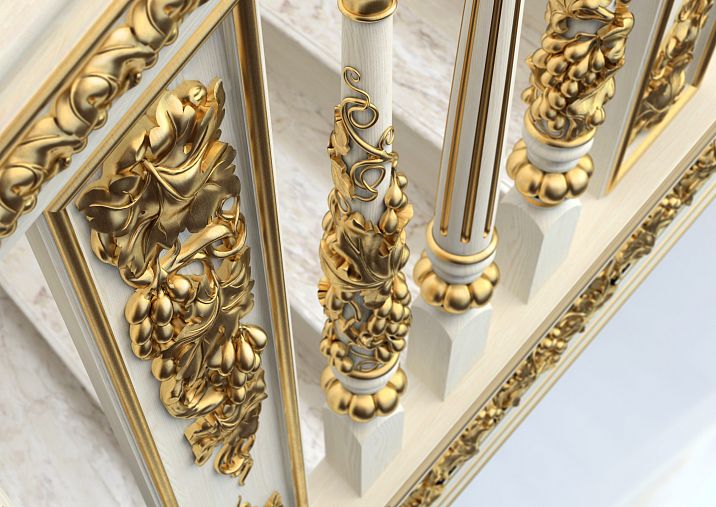
Creating the ideal staircase begins with selecting the right details. Each element plays its role not only in forming the exterior appearance of the structure, but also its functionality. When it comes to where buy wooden balusters price which match quality, it is important to understand all the nuances of selection. These vertical supports do not simply support handrails – they create an architectural rhythm, ensure safety, and become the hallmark of the entire interior.
The world of wooden staircase elements is incredibly diverse. From simple turned forms to complex carved compositions – each type has its purpose and price category. Understanding this diversity will help make an informed choice that will serve for decades and delight the eye every day.
The modern market offers a vast array of options, but how to avoid getting lost in this variety? How to find the optimal price-to-quality ratio? What factors actually influence the cost and longevity of products? Let's explore all the nuances of this question.


Pricing Anatomy for Wooden Balusters




Material as the Basis of Cost
The wood species remains the primary factor determining the price of the finished product. Coniferous species – pine, spruce, larch – form the budget segment of the market. Their cost starts at 250-300 rubles per standard-sized element (50×50×900 mm). These species possess sufficient strength for most residential projects and are easy to process.
Broadleaf species represent the mid and premium segments. Birch and beech fall into the mid-price range – 500-800 rubles per element. Their wood is denser than coniferous species, providing greater durability and the ability to create thinner, more elegant profiles.
Elite species – oak, ash, walnut – form the premium segment with prices ranging from 1000 to 3000 rubles per element. Oak products can last for centuries, gradually acquiring a noble patina. Ash attracts designers with its light-colored wood and distinctive texture, while walnut creates a luxurious atmosphere thanks to its noble chocolate tone.
Our factory also produces:


Processing and Design Complexity
Manufacturing technology directly affects the final product cost. Simple turned elements with basic profiles are produced on automated equipment, allowing for affordable pricing. Such items are suitable for projects where functionality is key and budget is limited.
Milled elements with decorative profiles require more complex equipment and skilled operators. The cost of such items increases by 30-50% compared to simple turned analogs. However, the result justifies the expense – these elements feature rich surface detailing.
Hand-carved balusters represent the pinnacle of craftsmanship and price range. The cost can reach 5000-15000 rubles per element depending on the complexity of the pattern and the craftsman’s skill. Each item is unique and bears the mark of the creator’s individuality.
Get Consultation
Order Volume and Seasonality
The number of ordered elements significantly affects the unit cost. When ordering 50 or more pieces, most manufacturers offer discounts of 10-15%. Large batches of 100 or more elements may receive discounts of up to 25-30%. This is due to savings on equipment setup and optimization of logistical processes.
Seasonal fluctuations also affect pricing. The spring-summer period is characterized by increased demand, which may lead to a 10-20% price increase. Winter months are more favorable for buyers – many manufacturers offer discounts and special promotions.
Urgency of production becomes an additional pricing factor. Standard production times are 2-3 weeks. Reducing the timeframe to one week may increase the cost by 30-50%, while production within 2-3 days may double the price.
Classification by Price Segments
Economy class: accessibility without compromise
The budget segment is represented by products made from coniferous species with simple processing. Prices start at 200 rubles per element (50×50×900 mm) made of pine. These items are suitable for cottage construction, temporary structures, or projects with strict budget constraints.
The quality of the economy class is quite satisfactory when choosing the right manufacturer. Main features: standard sizes, simple turned profiles, basic surface treatment. The moisture content of the wood should comply with norms — no more than 12% for internal elements.
The service life of economy-class items, under proper use, is 15-25 years. This is a quite satisfactory indicator for budget products. The key condition for longevity — quality protective treatment and regular maintenance.
Mid-range: optimal balance
The mid-price segment covers a range of 500-1500 rubles per item. Here, items made from larch, beech, and birch with more complex processing are presented. Quality is noticeably higher: precise geometry, quality sanding, variety of profiles and sizes.
Price of wooden balusters In this segment, there is a good balance between cost and quality. Items are suitable for most residential projects where reliability and aesthetics are important at reasonable costs.
Production technologies in the mid-range segment include kiln-dried wood, precision processing on modern equipment, multi-stage sanding. Quality control is stricter, which reduces the percentage of defects and increases the overall product quality.
Premium class: investment in quality
The premium segment starts at 1500 rubles per item and can reach 15,000 rubles for exclusive items. Here, balusters made from oak, ash, and exotic species with high-quality processing and unique design are presented.
Premium-class items are distinguished by flawless material quality, precision processing, and exclusive design. Each item undergoes individual quality control. Only selected materials without defects are used.
The service life of premium items may exceed 50-100 years with proper care. This makes them economically advantageous despite their high initial cost. Moreover, such elements increase property value.
Regional pricing features
Moscow region: pricing center
The Moscow market traditionally sets price benchmarks for the entire country. High consumer purchasing power, developed logistics infrastructure, and concentration of manufacturers create unique pricing conditions.
The cost of renting production facilities in the Moscow region significantly affects final prices. Manufacturers are forced to include these expenses in product cost. However, high competition restrains unjustified price increases.
Logistical advantages of the Moscow region allow for rapid delivery of raw materials from various regions of Russia. This ensures stable supply and relatively stable material prices.
Regional centers: alternative solutions
Manufacturers in regional centers often offer more attractive prices due to lower overhead costs. The difference may be 15-25% compared to Moscow prices for comparable product quality.
However, additional logistics costs should be considered when ordering from remote regions. Delivery cost may offset price advantages, especially for small batches.
The quality of regional products may vary widely. It is important to carefully study the manufacturer's reputation, presence of quality certificates, and customer reviews.
Technical factors affecting cost
Dimensional Parameters
Standard sizes 50×50×900 and 60×60×900 millimeters are produced in large quantities, ensuring minimal prices. Non-standard sizes require equipment retooling and are produced in small batches, increasing cost by 20-40%.
Increasing the cross-section of elements proportionally affects material consumption and, consequently, price. Elements 80×80 millimeters cost approximately 1.5 times more than 50×50 millimeter elements of the same wood species.
The height of elements also affects cost, but not proportionally. Increasing height from 900 to 1200 millimeters increases price by 25-35%, as it requires higher-quality material and more complex processing.
Wood quality and grade
Wood grade significantly affects the final cost of items. Extra-class material without visible defects may cost 2-3 times more than second-grade wood. However, for many applications, the highest grade is not mandatory.
Wood moisture content is a critical quality parameter. Properly dried material (8-12% moisture) costs more but guarantees dimensional stability during use. Saving on drying may lead to serious problems.
The direction of cutting also affects cost and quality. Radial cutting provides greater stability but increases material consumption and item cost by 15-25%.
Final finishing
The level of finish processing significantly affects the price of finished items. Basic processing includes rough and final sanding. Higher-quality processing may include polishing, increasing cost by 20-30%.
Protective treatment with antiseptics and fire-retardant compounds adds 10-15% to the cost. However, these expenses are justified by increased service life and safety during use.
Pre-coloring or priming for painting also affects price. Cost may increase by 25-40% depending on the complexity of processing and materials used.
Practical tips for choosing and purchasing
Defining Needs
Before starting the search, it is important to clearly define your needs and budget. Make a list of requirements: wood species, dimensions, quantity, manufacturing deadlines, budget. This will help focus on suitable offers.
Consider the operating conditions of future products. For humid areas, it is better to choose larch or oak. For dry, heated rooms, any species will do provided they are properly treated.
Do not forget about compatibility with other parts of the staircase. It is preferable to use one type of wood for all wooden structural elements. This ensures uniform appearance and material behavior.
Finding a Reliable Supplier
Manufacturer's reputation is a key factor in successful purchase. Study customer reviews, portfolio of completed projects, presence of quality certificates. Serious manufacturers do not hide information about their activities.
Having in-house production is preferable to working with intermediaries. This ensures better quality control, more flexible pricing, and the ability to make changes during the manufacturing process.
Geographical proximity of the manufacturer simplifies logistics and reduces transportation costs. However, do not sacrifice quality for savings on delivery.
Sample Quality Assessment
Always request samples before placing a large order. Evaluate material quality, processing accuracy, and compliance with stated characteristics. A good manufacturer will always provide samples.
Check the moisture content of the wood with a special instrument. Exceeding normative values may lead to deformation during operation. Quality products have a moisture content of 8-12%.
Assess surface quality under good lighting. Scratches, tool marks, and chips are unacceptable. The surface should be smooth and ready for final coating.
Economic aspects of purchasing
Budget planning
The cost of balusters usually accounts for 15-25% of the total staircase budget. When planning, consider not only the cost of the elements themselves, but also delivery, installation, and finishing costs.
Create a contingency budget of 10-15% for unforeseen expenses. Additional elements, design changes, or adjustments after installation may be required.
Consider implementing the project in stages. You can start with basic elements and add decorative details later. This helps distribute financial burden.
Comparison of Offers
Do not limit yourself to one offer. Obtain commercial proposals from 3-5 manufacturers for objective price and condition comparison. Pay attention not only to price, but also to delivery terms, warranties, and delivery conditions.
Consider total ownership cost, not just initial price. Cheap items may require replacement within a few years, making them economically unviable.
Study payment terms and installment options. Many manufacturers offer flexible payment schemes, especially for large orders.
Cost Optimization
Combining orders with neighbors or acquaintances can provide volume discounts. Many manufacturers offer significant discounts for large batches.
Choosing the optimal time to place an order can save money. Winter months often feature reduced prices and special offers.
Consider doing the installation yourself if you have the necessary skills. This can save 20-30% of the project's total cost.
Market Trends and Forecasts
Influence of Technology on Pricing
Production automation gradually reduces the cost of mass products. Modern CNC machines allow producing high-quality items with minimal human involvement, reducing labor costs.
Development of logistics technologies optimizes supply chains and reduces transportation costs. Digitization of ordering and production processes speeds up order fulfillment and reduces administrative expenses.
New wood processing technologies allow creating products with improved characteristics. Thermal modification, impregnation, and composite materials expand designers' possibilities.
Ecological trends
Growing attention to ecology influences material and technology selection. FSC certification is becoming a standard for responsible manufacturers, which may affect pricing.
Development of waste recycling technologies reduces production costs. Zero-waste technologies not only benefit the environment but also improve company economics.
Local production gains advantages over imports due to reduced carbon footprint. This may change the competitive landscape in the market.
Changes in consumer preferences
Rising household incomes increase demand for quality products. Consumers are willing to pay more for durability, eco-friendliness, and unique design.
Customization is becoming an important trend. Demand for standard products is declining, while interest in exclusive solutions is growing.
Integration of smart home technologies creates new opportunities for manufacturers. Elements with built-in electronics may become a new development direction.
Conclusion
The market for wooden balusters is a complex ecosystem where price is formed under the influence of multiple factors. Buy wooden balusters at a pricematching the quality, which is possible with a thoughtful approach to selecting a supplier and understanding all pricing nuances.
Successful purchase requires careful preparation: defining needs, studying the market, comparing offers. Do not cut corners on material quality and processing — this is an investment in the longevity and beauty of your home.
Modern technologies open new opportunities for creating unique items at reasonable costs. Automation of production, new materials, and digital design technologies make high-quality products more accessible.
The future of the market is linked to further technological, ecological, and personalized development. Companies that can adapt to these trends will gain competitive advantages and be able to offer consumers the best solutions.
When choosing a supplier of wooden balusters, it is important to turn to companies with an impeccable reputation and long-standing experience. STAVROS represents a new generation of manufacturers combining traditional craftsmanship with innovative technologies. Our experience, modern equipment, and team of professionals guarantee the creation of top-quality products at fair prices. Choosing STAVROS means investing in the beauty, reliability, and longevity of your home.


