Article Contents:
- Architectural Orders: The Foundation of Stage Design Language
- Doric Order: Strength and Masculinity
- Ionic Order: Elegance and Harmony
- Corinthian Order: Luxury and Splendor
- Tuscan and Composite Orders
- Constructive Features of Theatrical Columns
- Hollow Construction
- Disassemblable Construction
- Construction Materials
- Decorative elements
- Pilasters: Flat Alternative to Columns
- Construction of Theatrical Pilasters
- Pilaster Shaft: Design Variants
- Materials for Pilasters
- Other Architectural Elements of Stage Decorations
- Arches and Portals
- Coffers and Panels
- Balustrades and Railing
- Doors and Windows
- Staircases
- Technologies for Manufacturing Carved Elements
- Hand Carving: Tradition and Craftsmanship
- Machine Carving: Precision and Speed
- Combined technologies
- Final Finishing of Theatrical Decorations
- Surface Preparation
- Painting techniques
- Special effects
- Installation and Operation of Theatrical Decorations
- Column Mounting Systems
- Pilaster Installation
- Safety techniques
- Storage and transportation
- Frequently Asked Questions
- What is the Difference Between a Theatrical Column and an Architectural One?
- Which Wood Species Are Best for Theatrical Columns and Pilasters?
- How Much Does It Cost to Order Theatrical Columns?
- How Long Does It Take to Manufacture Stage Decorations with Columns?
- Can stage columns be used outdoors?
- What are the advantages of wooden stage sets over plastic ones?
- How to care for wooden theater decorations?
- Are fire safety certificates required for stage decorations?
- Which architectural orders are used in modern productions?
- Can stage decorations be created from photographs of other performances?
- Conclusion: Where visual magic of theater is born
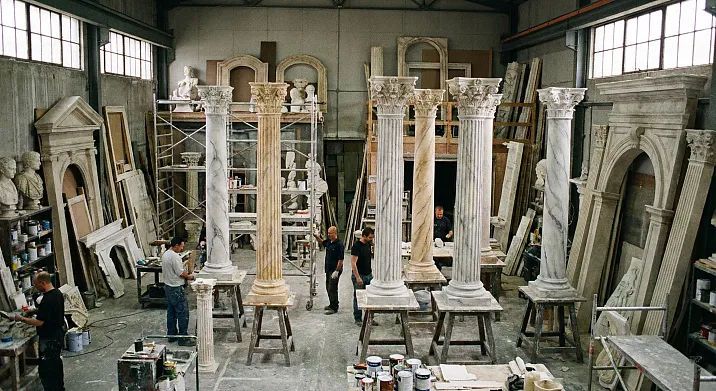
A professional stage requires professional solutions. When a scenic designer creates the visual world of a performance, architectural elements become not just a backdrop, but a full-fledged language through which the stage speaks to the audience.Theatrical Stage DecorationsIt is an engineering task requiring precise calculations, and simultaneously an artistic expression demanding impeccable taste.
Columns and pilasters occupy a special place in the scenic designer's arsenal. They create vertical structure in space, define scale, and determine the stylistic era. A Doric column instantly transports the audience to antiquity. A Gothic pilaster — to the Middle Ages. Baroque — to the era of luxury and grandeur.Stage decorations made of woodThey work as visual markers, instantly readable by the audience.
Stage columns and pilasters must meet strict technical requirements. Stability during multiple assembly and disassembly. Lightweight for transportation. Durability for long-term use. Safety for actors during operation. Compliance with fire safety regulations.Buy stage columnsIt means finding a balance between artistic perfection and technical feasibility.


Architectural orders: the foundation of scenic design language
Understanding classical architectural orders is critically important for creating historically accurate decorations. The order system is not merely a set of forms, but a complete philosophy of proportions, where each element has a strictly defined relationship to the whole.




Doric order: strength and masculinity
The Doric order is the oldest and most rigid of the Greek orders. Its columns are massive, low-set, with pronounced entasis — thickening in the middle third of the shaft. The capital is simple, consisting of an echinus (a cushion) and an abacus (a square slab). Doric columns have no bases — the shaft is set directly onto the stylobate.
Proportions of the Doric order: the height of the column is 5.5–6 lower diameters. This creates a sense of solidity, immovability, and strength.Carved elements for the stageIn the Doric style, they are minimalist — here, the purity of form is valued over an abundance of decoration.
The flutes of Doric columns have sharp edges between grooves. There are always 20 — no more, no less. The depth of the flutes is 1/16 of the column's diameter. These proportions have been refined over centuries, and any deviation is immediately noticeable to a professional.
For theatrical productions, the Doric order is ideal when creating an atmosphere of heroism, masculinity, and archaic simplicity. Tragedies by Aeschylus and Sophocles, historical dramas about the ancient world, productions requiring a sense of monumentality — all of these require Doric elements.columns and pilasters.
Our factory also produces:


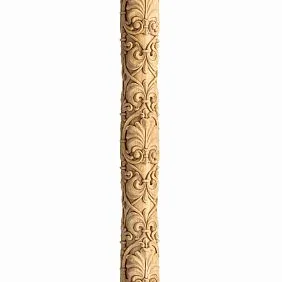

Ionic order: elegance and harmony
The Ionic order is lighter, more elegant, and more decorative than Doric. Its hallmark is the capital with volutes — elegant scrolls reminiscent of ram horns or seashells. A base appears — complex, multi-profiled, creating a smooth transition from the floor to the column shaft.
Proportions of the Ionic order: column height is 8–9 lower diameters. The column becomes slimmer, elongated, lighter. Entasis is less pronounced or absent — the shaft is nearly cylindrical.
The flutes of Ionic columns have rounded edges — grooves between the channels. There are 24 (sometimes 20 or 28, but the classical variant is exactly 24). The depth of the flutes is less than in the Doric order, creating a softer, more delicate interplay of light and shadow.
The Ionic order in stage decorations creates an atmosphere of harmony, culture, and civilization. This is the order of classical Greece during its golden age, Rome in the Augustan era, European classicism.Stage decorations made of woodThey are used in productions requiring nobility and elegance.
Get Consultation
Corinthian order: luxury and grandeur
The Corinthian order is the most ornate and decorative. Its capital is adorned with stylized acanthus leaves arranged in two or three rows. Between the leaves, smaller volutes rise than in the Ionic order. The capital is crowned by an abacus with concave sides and beveled corners.
Proportions of the Corinthian order: column height is 10 lower diameters, sometimes more. These are the most slender, tall, elongated columns. The base resembles the Ionic, but is often even more complex. The shaft has 24 flutes with rounded edges.
The Corinthian order appeared later than the others, already in the Hellenistic period, and reached its peak in Roman architecture. It symbolizes wealth, imperial power, and grandeur.Carved elements for the stageCorinthian order requires delicate work — acanthus leaves are detailed, and the capital is richly ornamented.
In theatrical decorations, the Corinthian order is indispensable for creating an atmosphere of luxury. Palace interiors, imperial halls, temples of gods, triumph scenes — all of these require Corinthian columns. Opera productions, historical dramas about rulers, and spectacles where visual opulence is important, use this order.
Tuscan and Composite Orders
The Tuscan order is a Roman simplification of the Doric. It is even more strict, laconic, without fluting, with the simplest capital and base. It evokes the feeling of Roman practicality, military discipline, and republican simplicity. It is used less frequently in theatrical decorations but is indispensable for productions about early Rome, Roman provinces, and peasant life in antiquity.
The Composite order combines Ionic volutes with Corinthian acanthus leaves. It is a Roman invention, symbolizing imperial eclecticism, when Rome united the cultures of the entire Mediterranean. In theater, the Composite order is used to create an atmosphere of late antique Rome and Byzantium, for productions where excessive, almost baroque ornamentation is needed.
Constructive Features of Theatrical Columns
Buy stage columnsReady-made or custom-made — in any case, it is necessary to understand their constructive features, which distinguish them from architectural columns.
Hollow Construction
Unlike real stone or even wooden architectural columns, theatrical columns are almost always hollow. This is dictated by the need to reduce weight — theatrical decorations are repeatedly assembled, transported, and repositioned. A 3-4 meter tall column made of solid wood would weigh hundreds of kilograms. A hollow construction weighs 5-10 times less while maintaining the visual effect.
Typical construction of a theatrical column: an internal frame made of timber or metal profile, covered with thin plywood, MDF, or bent plywood. The frame provides rigidity, the cladding provides the shape. Decorative elements — bases, capitals, applied details — are attached to this base.
For short columns (up to 2 meters), a construction from solid timber or glued boards is possible. But this is more an exception for small chamber productions. Standard theatrical columns 3-5 meters tall are hollow.
Disassemblable Construction
Transporting and storing solid columns 4-5 meters tall creates logistical problems. Therefore, theatrical columns are often made disassemblable — the shaft consists of several sections connected during assembly. The base and capital are attached separately.
Joints must be secure but quick to assemble and disassemble. Various systems are used: flanged connections with bolts, sleeve connections with clamps, magnetic locks. It is important that joints are invisible — perfectly aligned, without gaps, with thoughtful masking of the joint line.
For permanent pavilion decorations, which are assembled once for the entire duration of the performance, solid columns are possible. But for touring productions, for theaters with frequent repertoire changes, disassemblable construction is the only sensible option.
Construction Materials
Timber frame — classic option. A 40×40 or 50×50 mm timber provides sufficient rigidity with minimal weight. Connections using dowels, mortise joints, reinforced with glue and self-tapping screws. Wood is easy to work with, repair, and does not require special tools.
Metal frame — used for tall columns (over 4 meters) or columns subjected to significant loads. A 20×20 or 30×30 mm profile pipe is welded into a frame to which the cladding is attached. Metal provides maximum strength with minimal cross-section, but requires welding, is heavier than wood, and may resonate.
Combined construction — timber frame with metal inserts at critical points. Optimal balance of strength, weight, and technology.
Plywood cladding — most common option. 4-8 mm thick plywood provides a smooth surface, easily bends (for creating cylindrical shafts), and is affordable. Birch plywood is preferable to coniferous — it is stronger and has a more uniform structure.
MDF cladding — provides an ideally smooth surface, but does not bend. MDF is used for straight sections or is shaped on machines. Heavier than plywood, susceptible to moisture, but provides unparalleled quality when painted.
Bent plywood — special technology where thin veneer layers are glued directly onto a mold, creating a cylindrical or conical surface of ideal quality. More expensive than regular plywood, but provides excellent results for critical elements.
Decorative elements
Bases and capitals — the most complex parts of the column. They are rarely made from solid wood (too heavy and expensive). Typical construction — turned or milled base, to which applied carved elements are attached.
Carved elements for the stageAcanthus leaves, volutes, rosettes, ornaments — are manufactured separately and mounted on the capital. This allows creating complex forms unattainable with solid manufacturing.
Modern technologies complement traditional methods. 3D printing allows creating complex decorative elements from plastic, which are then cast into silicone molds and reproduced in polyurethane or plaster. But for theatricalwooden decorationsnatural wood is preferred — it has proper acoustics, does not resonate under spotlights, and is easier to repair.
Pilasters: flat alternative to columns
Pilaster — a flat vertical protrusion imitating a column. In theatrical decorations, pilasters are often preferred over full columns: they save stage space, are lighter, easier to manufacture and install.
Construction of theatrical pilasters
A typical theatrical pilaster is a plywood or MDF panel 10–18 mm thick, to which decorative elements are attached. If the pilaster is small (up to 2 meters high), the panel can be solid. For tall pilasters, the panel is assembled — several panels are joined during installation.
The pilaster's protrusion from the wall is usually minimal — 30–80 mm. This is sufficient to create visual relief, but insufficient to utilize valuable stage space.Pilasters for TheaterMounted on wall decorations or suspended on trusses.
The base and capital of the pilaster are surface-mounted. For the base, a profiled board or a simple carved element is often sufficient. The capital is more complex, especially for Ionic and Corinthian orders. Scrolls and acanthus leaves are cut or milled separately, then mounted onto the base.
Pilaster shaft: design options
Smooth shaft — the simplest option. A rectangular or slightly tapering upward panel, painted in the required color. Used for Tuscan order or modern stylizations where form purity is important.
Fluted shaft — with vertical grooves, like a column. Fluting on a flat pilaster can be done in several ways:
-
CNC milling — provides perfectly even grooves of specified depth and profile.
-
Gluing profiled strips — grooves are formed between strips, imitating fluting.
-
Painting — illusionary fluting painted by an artist using chiaroscuro.
For theatricalstage decorationsThe choice of method depends on budget, deadlines, and audience distance from the stage. For large theaters with distant rows, painting is quite acceptable. For intimate halls, real relief is preferable.
Rusticated shaft — with horizontal divisions imitating large stone masonry. Rustication gives the pilaster strength and solidity. Used in productions requiring an atmosphere of fortress, castle, or massive building.
Decorated shaft — with decorative panels, garlands, arabesques. Characteristic of Baroque, Rococo, and Art Deco. Requires delicate carving or molding to create rich decoration.
Materials for pilasters
Solid wood is used for small pilasters or elements requiring deep carving.Carved elements for the stageMade from linden, oak, walnut, they provide depth and expressiveness that no other material can.
Plywood — the base for most theatrical pilasters. Lightweight, strong, accessible, easy to work with. Surface requires careful preparation for painting — filling, sanding, priming.
MDF provides the smoothest surface. Easily milled to create relief elements. Heavier than plywood, but for pilasters mounted permanently, weight is not critical.
Polyurethane is used for mass-producing decorative elements. Capitals, bases, ornaments are cast from polyurethane, then mounted onto wooden bases. Lightweight, moisture-resistant, but require careful handling — easily damaged by impacts.
Combination of materials — optimal option. Plywood or MDF base, wooden carved elements at key points, polyurethane mass-produced details for repeating ornaments. Balance of quality, weight, and cost.
Other architectural elements of theatrical decorations
Besides columns and pilasters,Stage decorations made of woodthey include many other architectural elements creating a full environment.
Arches and portals
Arched openings structure the stage space, create portals, frame action zones. Structurally, a theatrical arch is a wooden frame covered with plywood and decorated.
The arch shape is determined by style: semi-circular for Romanesque and Renaissance, pointed for Gothic, segmental for Baroque, elliptical for Classicism. Decorative treatment includes archivolt (arch opening frame), impost (arch supports), keystone (decorative element at the arch apex).
To create an arched vault, curved plywood or a segmented construction of straight elements is used, creating an illusion of curvature.Theatrical DecorationsArches require precise calculation — the arch should appear harmonious, without visual distortions.
Cornices and moldings
Horizontal profiled elements crowning walls, framing openings, separating tiers. The cornice completes the composition, creating a visual pause for the viewer's eye.
Theatrical cornices are made from profiled boards, milled to the specified profile, or assembled from separate elements — brackets, scrolls, and curved pieces. For large theaters with high stage heights, cornices are enlarged — the profile is increased 1.5–2 times compared to the architectural prototype, so elements remain clearly visible from a distance.
Carved elements for the stageDecorative elements such as modillions (brackets under the cornice), dentils (tooth-like projections), and rosettes enrich the design. They can be carved from solid wood or molded from polyurethane.
Balustrades and railings
Balcony, staircase, and terrace railings. A balustrade consists of balusters (vertical posts), a handrail, and a base. Balusters can be turned (classic shape) or carved (for more decorative styles).
Theatrical balustrades must be not only beautiful but also functional — actors lean on the railings, sometimes even sit on them. The strength of connections and the structural stability are critically important.Decoration manufacturing for theaterIncludes load calculations and multiple tests.
To speed up production, balusters are turned on a lathe according to a template. For mass-produced elements, casting from polyurethane is possible, but wooden balusters are stronger and more reliable.
Doors and windows
Functional elements through which actors enter and exit. Theatrical doors and windows must be stronger than household ones — they open and close dozens of times during a performance, hundreds of times over the run.
Door frames are especially securely attached to the scenery. Hinges are reinforced and designed for intensive use. The door panel is lightweight — frame made of beams, covered with plywood, decorative inserts create the desired style.
Trim and casing are decorated according to the style of the production.Carved MouldingsThey create the character of the era: strict neoclassical, ornate baroque, delicate modernist.
Windows in theatrical scenery are often non-functional — they are simply openings in the wall, imitating windows. But if, according to the plot, one needs to look out of the window or enter through it, the construction becomes more complex: frame, panels, glass (acrylic or film).
Stairs
One of the most dramatically rich elements of the stage. Key scenes occur on stairs: ascents and descents, meetings and partings, triumphs and tragedies. A theatrical staircase is not just a functional element, but a full-fledged participant in the action.
The construction of a theatrical staircase must ensure absolute safety. Steps with anti-slip coating, strong railings, precisely sized risers and treads. Standard: riser height 15–18 cm, tread width 28–32 cm. Deviation from these norms creates discomfort for actors and risks tripping.
Decorative treatment of the staircase corresponds to the style of the scenery.carved balustersColumns adorned with decorative elements, profiled handrails create character. For historical productions, authentic examples are studied — baroque staircases of Peterhof, neoclassical staircases of Tsarskoye Selo, modernist mansions of the early 20th century.
Technologies for manufacturing carved elements
Carved elements for the stage— the soul of theatrical scenery. They create the depth, richness, visual complexity that distinguish professional work from amateur work.
Hand-carving: tradition and craftsmanship
Traditional wood carving — an art requiring years of experience. The master works with a set of chisels and gouges, gradually shaping the wood, forming relief, and refining details. It is a slow process, but the result possesses liveliness and expressiveness unattainable by machine methods.
Relief carving creates a raised pattern above the background. Low relief (bas-relief) has a depth of up to 5–10 mm, medium relief has a depth of 10–30 mm, and high relief (high relief) features elements protruding half or more of their thickness.
For theatrical scenery, medium relief is preferred — it is sufficiently expressive, clearly visible from a distance, does not require excessive material or time.Carved elements for cinemaand theaters are often executed precisely in this technique.
Perforated carving creates a through pattern — the background is completely removed. Delicate elements, lace-like ornaments, complex floral motifs. Perforated carving is effective in areas where backlighting is planned — light passing through the pattern creates a magical effect.
Three-dimensional carving — fully three-dimensional elements. Sculptural groups, figures of atlantes and caryatids, mascarons, grotesques. This is the most complex and labor-intensive technique, requiring not only the skill of the carver but also sculptural intuition.
For hand-carving, linden is preferred — soft, uniform, without pronounced texture. Oak and walnut are more difficult to work with, but they provide a more expressive grain, accentuated by the wood’s pattern.
Machined carving: precision and speed
Modern technologies complement manual work, speeding up production without sacrificing quality.
CNC milling has revolutionized the production of carved elements. A 3D model is loaded into the machine's computer, and the cutter removes wood layer by layer, reproducing the desired shape. Accuracy — down to tenths of a millimeter. Speed — vastly higher than manual work. The ability to produce exact duplicates — the machine will create 10 or 100 perfectly identical elements.
However, CNC does not fully replace humans. The machine leaves characteristic tool marks that must be removed by sanding. Small details inaccessible to the minimum diameter cutter are finished by hand. Final finishing — sanding, trimming, adding life to the form — is performed by the craftsman.
Laser cutting is used for flat cut-out elements. The laser burns through wood, creating perfectly crisp outlines. Material thickness is limited — usually up to 10-12 mm. Laser is ideal for delicate inlays, decorative panels, complex ornaments.
The drawback of laser cutting is charred edges, which must be sanded or accepted as part of the aesthetic. For theatrical decorations, where elements are painted, this is not an issue.
Turning is used to create round elements — balusters, columns with entasis, turned capitals. A turning lathe with a tracer allows precise reproduction of the specified profile, creating a series of identical elements.
For complex turning forms, CNC turning lathes are used, capable of processing not only round but also complex three-dimensional surfaces. This expands possibilities, allowing the creation of forms unattainable on a conventional turning lathe.
Combined technologies
Optimal results are achieved by combining different methods. Rough wood removal on CNC machines, rough shaping of forms. Then the craftsman manually refines details, creates trimmings, adds life to the element. Final sanding, toning, patination — all these are manual operations requiring sensitivity to the material.
This approach optimizes the balance of speed/quality/cost. The machine does what it does better than humans — precise reproduction of the specified shape. Humans do what machines cannot — create lively, expressive, emotionally rich forms.
Final finishing of theatrical decorations
Quality manufacturing — only half the success.Stage decorations made of woodRequire careful final finishing, transforming bare wood into elements of a specified style and era.
Surface preparation
Sanding — the first and most important stage. Sequential processing with sandpaper, decreasing grit: 80-120 for removing rough irregularities, 150-180 for leveling the surface, 220-320 for creating a perfectly smooth base for painting.
Special attention — ends, edges, joints. They must be rounded and sanded to the same smoothness as flat surfaces. Sharp edges are unacceptable — they visually stand out, create shadows, emphasize the artificiality of the construction.
Putty fills small wood defects, levels the surface. For theatrical decorations, acrylic wood putties are used — fast-drying, non-shrinking, easily sandable. After drying, the surface is sanded again with fine sandpaper.
Priming — a mandatory stage. Acrylic primer seals wood pores, equalizes absorption, creates a base for paint. Modern primers dry in 1-2 hours, after which the surface is ready for painting.
Painting with a brush is suitable for small elements and hard-to-reach areas. Choose a brush with soft yet resilient bristles that won’t leave streaks. Apply paint in thin layers, carefully blending each one.
Topcoat painting — application of opaque paint, completely hiding wood texture. Used when imitating stone, plaster, painted surfaces. Water-based acrylic paints — standard for theatrical decorations. They dry quickly, odorless, provide vibrant colors, and are safe.
Usually, 2-3 layers of paint are applied with intermediate sanding. The first layer creates a base, the second equalizes color, the third adds depth and final quality.
Glazing — application of semi-transparent paint layers, creating depth of color. The technique is borrowed from painting: each layer is translucent, allowing subsequent layers to show through, creating a complex, multi-dimensional color. Glazing is indispensable for imitating marble, valuable wood species, and patinated surfaces.
Painting — application of a design, ornament, or texture imitation by the artist’s brush.Carved elements for the stageAfter painting, they acquire additional depth — shadows and highlights emphasize relief, making it more expressive.
Marble painting — a classic theatrical technique. The artist uses a brush to imitate veins, color transitions characteristic of natural stone. From a distance, the effect is complete illusion. It is cheaper and lighter than real marble, but requires the artist’s skill.
Multi-tone patination uses several shades: dark patina in deep recesses, medium on main planes, light on raised parts. This creates richness of tonal transitions, visual complexity.
Gilding — the pinnacle of decorative art. Real gold leaf is rarely used due to high cost. More commonly, patina — an imitation of gold made from a copper-zinc alloy — is used. Applied over glue-mordant, after drying it is polished to give a luster close to real gold.
Special effects
For theatrical decorations, gold paint — acrylic or alkyd — is often sufficient. Modern gold paints provide a respectable luster, indistinguishable from real gilding from a distance. For grand elements — Corinthian capitals, carved cornices, decorative panels — gilding is mandatory.
Silvering — using the same technology, it creates effects of silver, steel, or chrome surfaces. Less commonly used than gilding, but indispensable for modern productions requiring metallic effects.
Crackle — a technique for creating cracks on the surface, imitating aged paint. A special crackle lacquer is applied between paint layers, which, upon drying, forms a characteristic network of cracks. The effect of an old, weathered surface.
Brushing — mechanical wood processing with metal brushes, removing soft fibers and emphasizing texture. It creates an effect of old, weathered wood. For rustic interiors and historical decorations, this technique is indispensable.
Brushing — mechanical wood processing with metal brushes, removing soft fibers and emphasizing texture. It creates an effect of old, weathered wood. For rustic interiors and historical decorations, this technique is indispensable.
Half the job. Equally important is to properly mount them on stage, ensure safety, and plan logistics.
Buy stage columnsHalf the job. Equally important is to properly mount them on stage, ensure safety, and plan logistics.
Column Mounting Systems
Columns must stand stably, yet be quickly dismantled for scene changes or touring. Several standard mounting systems exist.
Floor Mounting with Weights. The column base has a wide platform onto which weights (sandbags, metal plates) are placed. The weight holds the column upright. Simple, but requires significant weight — for a 4-meter column, 50–80 kg of weight is needed.
Mounting to the Stage Floor. The column base has a flange with holes. The column is secured with screws or bolts to the stage floor. Reliable, but requires damage to the floor. Used when the decoration is installed for an extended period.
Spread Mounting. The column is braced between the floor and grates (or a special overhead structure). A telescopic insert at the top extends and rests against the ceiling. Very reliable, does not require mounting to the floor, but only possible if a strong ceiling is present above the stage.
Cable Suspension. The column is suspended by cables or chains to rigging. Rarely used, mainly for decorative columns not intended for physical contact with actors. Creates the effect of floating elements.
Installing Pilasters
Pilasters are mounted to wall decorations or hung separately. Fastened with screws, bolts, or quick-release clamps. It is important that the pilaster fits tightly against the surface with no gaps — gaps are visible under side lighting and reveal the artificiality of the structure.
For suspended pilasters, cables or chains are used, attached to rigging. The pilaster must hang strictly vertically — even a slight tilt is noticeable. Plumb bobs, levels, and laser levels are used for precise installation.
Safety equipment
Decorations are a potential hazard. A falling column, a detached hanging element, or a collapsing structure can lead to tragedy. Therefore, safety is an absolute priority.
All fastenings are designed with a threefold safety factor. If the calculated load is 100 kg, the fastening must withstand 300 kg. Certified fastening elements — carabiners, slings, chains, ropes with passports confirming strength — are used.
Regular inspection of decorations reveals potential problems. Loose fastenings are tightened, cracked elements are replaced, damaged structures are repaired. The person responsible for stage safety conducts a daily check before each performance.
Storage and Transportation
Proper storage extends the life of decorations. A dry room with constant temperature of 15–25°C and humidity of 40–60% — ideal conditions. Elements are stored vertically or on special racks, protected from dust with covers.
Transporting theatrical decorations requires care. Each element is individually packaged — bubble wrap protects against impacts, cardboard spacers prevent pressure.Carved elements for the stageEspecially fragile — delicate details easily break with careless handling.
For touring productions, special transport cases are created — sturdy boxes with soft inserts, where each element has its own place. This increases cost, but guarantees the preservation of decorations during multiple transports.
Frequently asked questions
What is the difference between a theatrical column and an architectural one?
A theatrical column is hollow, lightweight, often disassemblable — optimized for multiple installations and transport. An architectural column is massive, bearing real loads, stationary. A theatrical column visually imitates an architectural one with minimal weight. Decorative details of a theatrical column may be simplified or enlarged for better visibility from a distance. Materials for theatrical columns — primarily wood and plywood; for architectural columns — stone, concrete, rarely wood.
Which wood species are best for theatrical columns and pilasters?
For frames and structural elements — pine or spruce: strong, lightweight, affordable. For cladding — birch plywood: strong, with good surface. For carved decorative elements — linden: soft, uniform, ideal for carving. For especially critical elements — oak: strong, durable, with expressive texture. For turned details — birch: hard, easily turned, holds shape. Choice depends on the element’s function, budget, and requirements for durability.
How much does it cost to order theatrical columns?
Cost depends on size, decoration complexity, material, and quantity. A simple smooth column 3 meters high and 30 cm in diameter costs from 25–35 thousand rubles. A column with fluting and carved capital — from 50–80 thousand. A Corinthian column with ornate capital and base — from 100–150 thousand and more. Mass production reduces price — a set of 4–6 columns is cheaper per unit than individual ones. Exact cost is determined after developing sketches and technical specifications.
How long does it take to manufacture theatrical decorations with columns?
Simple columns are manufactured in 2–3 weeks. Medium-complexity columns with decorative elements require 4–6 weeks. Complex Corinthian columns with hand-carved details, fine painting, and gilding take 2–3 months. Time depends on production load, material availability, and decoration complexity. Rush manufacturing is possible with a 30–50% surcharge, but is limited by technical capabilities — some processes (drying, gluing, multi-layer painting) require time.
Can theatrical columns be used outdoors?
Theatrical columns are designed for indoor use. Outdoors, they are exposed to moisture, temperature fluctuations, and ultraviolet radiation. Wood swells and dries, paint fades and cracks, joints weaken. For short-term events (1–2 days), use is possible provided protection from direct rain. For regular outdoor use, special constructions — made of moisture-resistant materials, with reinforced fastenings, and treated with weather-resistant coatings — are required.
What is the advantage of wooden decorations over plastic ones?
The wood has a natural, noble texture that creates authenticity. Proper acoustics — does not resonate, does not produce a hollow sound. Ecological safety — does not emit harmful substances when heated. Repairability — damage is easily remedied. Capability for fine processing — carving, milling, creating complex forms. Traditional aesthetics — for historical productions, wood is more authentic than plastic. Plastic is lighter and cheaper, but loses out on artistic qualities and durability.
How to care for wooden theatrical sets?
Store in a dry room with stable temperature and humidity of 40-60%. Regularly clean with a dry, soft cloth. Avoid impacts, drops, and rough handling. Check fasteners before each installation, tighten any loosened ones. Promptly repair damage — reattach detached parts, touch up scratches. Every 1-3 years, renew fire-retardant treatment. Protect from direct sunlight — ultraviolet rays degrade wood and fade paint. With proper care, wooden sets last 20-30 years.
Are fire safety certificates required for theatrical sets?
Yes, this is a mandatory requirement. All wooden elements must be treated with fire-retardant compounds certified with a flammability class no lower than G1 (slightly flammable materials). Fabrics are impregnated with flame retardants. Each batch of decorations is accompanied by a fire-retardant treatment passport specifying the compound used, the date of treatment, and its validity period. Fire inspection authorities may request these documents during theater inspections. Absence of certificates constitutes a violation, potentially leading to prohibition of operation and fines.
Which architectural orders are used in modern productions?
The choice of order is determined by the era and style of the production. For ancient tragedies — Doric or Ionic. For Roman productions — all five orders depending on the period. For Renaissance productions — Ionic and Corinthian. For Baroque — Corinthian and Composite. For Classicist — all orders, but with emphasis on purity and correctness of proportions. Modern productions often use stylizations — free interpretations of classical orders, adapted to the artistic intent.
Can theatrical sets be created based on photographs from other productions?
Technically possible, but there are legal and ethical restrictions. Stage design is a copyrighted work belonging to the scenic designer. Direct copying of others' solutions without the author's permission is illegal and unethical. One can create sets 'in the style of' or 'inspired by', but not an exact copy. The optimal approach — commission original design or obtain permission from the original scenic designer for adaptation. The professional community values originality and condemns plagiarism.
Conclusion: Where visual magic of theater is born
Theatrical Stage Decorations— it is not merely a backdrop for action. It is an architectural language through which the stage speaks to the audience. Every column, every pilaster, every carved element carries semantic weight, creates atmosphere, immerses in the era.
Stage decorations made of wood— remain relevant in the age of digital technology. Natural wood possesses qualities that cannot be replaced by plastic or projection: authenticity of texture, proper acoustics, tactile warmth, capability for fine artistic processing.Carved elements for the stage— crafted from wood, create the depth and richness of decoration that distinguish professional stage design.
Buy stage columns— today can be sourced from various manufacturers. But not all can provide the level required by professional stagecraft. Theater does not forgive carelessness. Here, all flaws and simplifications are visible. Here, masters are needed, for whom every detail is an object of care.
Architectural elements — columns, pilasters, cornices, balustrades — form the structure of the stage space. They define scale, create verticals and horizontals, frame areas of action. Professionally executed, they transform an empty stage into an ancient temple, palace hall, medieval castle — whatever is desired.
Quality of manufacture determines not only visual effect, but also safety, durability, ease of use. Sets made with care serve for decades, outlast hundreds of performances, delight many generations of audiences. Sets made carelessly collapse after a few seasons, require constant repair, create problems.
Here, it is necessary to name a company that understands this responsibility, masters the technologies, has experience creating museum-level decoration. The company STAVROS — recognized leader in manufacturing wooden items, including theatrical sets and architectural elements.
STAVROS portfolio speaks for itself. Participation inreconstruction of the Alexandrovsky Palace— a state-level project where lost interiors were recreated based on historical sources — demonstrated the company's capabilities. Working with museum experts, adhering to strict requirements of authenticity, mastering complex decorative finishing techniques — all this STAVROS successfully accomplished.
STAVROS masters perfectly master the art of wood carving.Carved elements for cinema— created by the company, are distinguished by expressiveness, fine detailing, artistic perfection. Here, they are not just performers — here, they are artists who understand the material, feel the form, create not details, but works of applied art.
STAVROS production facility is equipped with the most modern equipment. CNC routers of the latest generation create complex three-dimensional forms. Laser cutters cut delicate lace-like elements. Computer-controlled lathes turn perfect balusters and columns. Painting chambers ensure flawless finish coating.
But technology is merely a tool. STAVROS' main wealth — people. Carpenters with years of experience, virtuoso carvers, decorative artists, technicians who know all subtleties of wood processing. For them, each project is a challenge to craftsmanship, an opportunity to create something outstanding.
STAVROS understands the specifics of theatrical sets. The company knows that theatrical columns must not only be beautiful, but also light, strong, safe. That carved elements must be clearly visible from a distance. That finish must withstand powerful stage lighting, without fading or deforming.
Stage decorations made of wood— is a combination of traditional craftsmanship and modern technologies. Frames and structures are calculated by engineers, ensuring strength with minimal weight. Carved elements are created by master carvers, combining handwork with machine precision. Finish is executed by artists who master all classical techniques — from marble imitation painting to gilding.
STAVROS offers a full cycle of work: from concept development to installation on stage. The company's artists are ready to work closely with the theater's scenic designer, realizing his vision in wood. Engineers will calculate optimal solutions ensuring a balance of aesthetics and functionality. Production will manufacture elements within specified deadlines. Installation crew will mount the sets on stage, ensuring safety and reliability.
Buy stage columns— means obtaining not just products, but a comprehensive solution. The company understands that theater operates by its own rules, where premiere deadlines are sacred, where every detail must be in place on time. STAVROS observes deadlines, works with understanding of the importance of each day of rehearsal period.
STAVROS assortment allows solving any scenic design tasks.pilasters and columns— from strict Doric to ornate Corinthian.Carved elements for the stage— capitals, bases, cornices, moldings, ornaments of any complexity.Furniture and interior itemsfor theatrical decorations — from ancient thrones to baroque chandeliers.
STAVROS works not only with major state theaters but also with private theatrical projects, chamber stages, amateur groups. The scale of the project is not important — what matters is the attitude to work. A small order for a student theater is executed with the same care as decorations for the Bolshoi Theatre.
Individual approach — the philosophy of STAVROS. Every performance is unique, every scenography requires its own solution. The company’s specialists do not work by templates — they create original solutions taking into account the specifics of a particular production, the characteristics of the stage, and the client’s budgetary possibilities.
The geographical scope of STAVROS’s work is extensive. The company ships items throughout Russia and abroad. Experience in packaging and transporting fragile carved elements guarantees that decorations will arrive in perfect condition. For complex projects, a mounting crew may be dispatched — STAVROS specialists will install and assemble the decorations on-site and train theater staff in proper operation.
STAVROS’s pricing policy is honest and transparent. The estimate is prepared in detail, indicating the cost of each element. There are no hidden payments, unexpected additional charges, or vague wording. The client knows exactly what they are paying for and receives exactly what they ordered.
STAVROS’s deadlines are realistic and achievable. The company does not make unattainable promises or miss deadlines. If unforeseen difficulties arise, the client is immediately informed and alternative solutions are proposed. Communication is a strong point of the company.
STAVROS’s products are proven not by words but by deeds. The company’s work can be seen in the Alexandrovsky Palace, private interiors, and theatrical productions. This is the best advertising — when the products speak for themselves.
Theatrical Stage DecorationsTheater — a place where miracles are born. Where actors become heroes, where words gain power, where stories come alive. And STAVROS helps this miracle come to life, creating the material environment in which the magic of theatrical performance unfolds. Every column, every pilaster, every carved element from STAVROS — a contribution to this miracle.
Theater is a place where magic is born. Where actors become heroes, where words gain power, where stories come alive. And STAVROS helps this magic take shape, creating the physical environment in which theatrical magic unfolds. Every column, every pilaster, every carved element from STAVROS — a contribution to this magic.
Theater — a place where miracles are born. Where actors become heroes, where words gain power, where stories come alive. And STAVROS helps this miracle come to life, creating the material environment in which the magic of theatrical performance unfolds. Every column, every pilaster, every carved element from STAVROS — a contribution to this miracle.
Stage decorations made of wood, theatrical columns, Carved elements for the stagefrom STAVROS — this is the choice of professionals who value quality, understand the importance of details, are not willing to compromise. This is the choice of those who create not just performances, but works of theatrical art worthy of audience memory and professional recognition.
STAVROS — this is the traditions of Russian woodworking craftsmanship combined with modern technologies. This is respect for the material, love for the craft, understanding of responsibility toward art. This is a team of like-minded individuals for whom creating beauty is not a job, but a calling.
Choosing STAVROS for creating theatrical decorations means choosing quality, reliability, professionalism. You are choosing a partner who shares your artistic ambitions, understands the importance of every detail, and is ready to pour your soul into every item. You are choosing a company for which your success is also our success.