












































































Article Contents:
- Variety of forms and styles of applied decor
- Materials and production technologies
- Application areas and functional features
- Installation technology and practical recommendations
- Stylistic Directions and Design Solutions
- Classic White
- Economic advantages and practical value
- Innovative materials and modern trends
- Professional secrets and master techniques
- Conclusion: STAVROS — Workshop of Beauty and Perfection
- Development prospects and future trends
- Conclusion
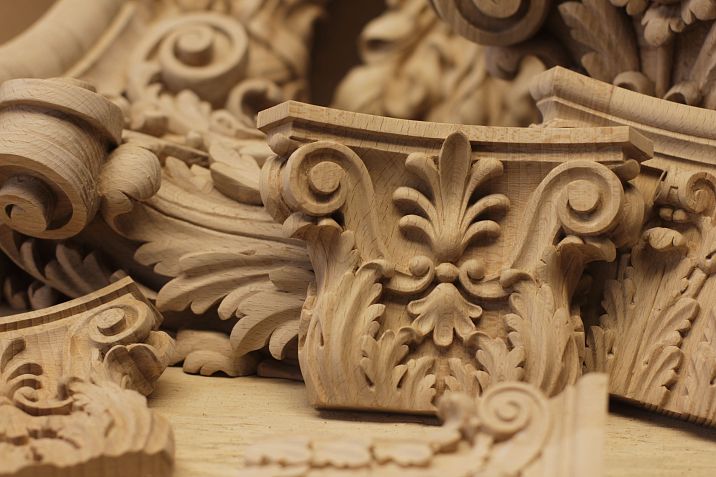
In the modern world of interior design, the art of decorating furniture with applied elements occupies a special place. Applied decor is not just a way of decoration, but a true philosophy of creating a unique space, where every detail tells its own story. When you decide applied furniture decoration to buyyou open up boundless opportunities for creative self-expression in the interior.


Variety of forms and styles of applied decor
Decorative appliqués are a universal solution for transforming any furniture. Today, the market offers a variety of options: carved rosettes in square, rectangular, and round shapes with floral ornaments, corner and central decorative elements, special brackets for decorating various surfaces. Each element of applied decor is created taking into account modern trends and classical traditions of furniture art.
Appliqués made of PVC have gained particular popularity due to their durability and ability to create complex relief surfaces. Such elements are easy to install and have high resistance to mechanical impacts. Many modern manufacturers offer applied 3D decor in various sizes and configurations, allowing to realize the most daring design concepts.




Materials and production technologies
Choosing the material for applied decor plays a key role in creating a durable and aesthetically pleasing result. Traditionally, elements made of natural wood — oak and beech — are most popular. Oak is distinguished by exceptional hardness and strength, has high resistance to moisture and a beautiful natural grain. Beech is characterized by good flexibility, resistance to scratches, and a pleasant yellowish-red hue.
Modern technologies allow creating appliqués from polyurethane and MDF, which do not fall short in quality compared to natural materials, but also have additional advantages. Polyurethane elements are resistant to moisture, do not deform over time, and are easily painted in any color. MDF panels allow creating complex relief surfaces using milling, opening new opportunities for design creativity.
Our factory also produces:


Application areas and functional features
Applied decor finds wide application in various areas of furniture design. The main purpose of such elements is to decorate furniture facades, transforming simple surfaces into exquisite works of art. Decorative appliqués are successfully used for decorating door and window openings, picture and mirror frames, bed and chair backs.
Applied decor proves especially effective in restoring antique furniture. With its help, not only lost elements can be restored, but also old items can be given new life while preserving their historical value. Modern masters actively use appliqués to create furniture in a classical style, allowing to obtain items with rich decoration without the need for complex hand carving.
Get Consultation
Installation technology and practical recommendations
Installation of applied decor requires certain skills and attention to detail. There are two main methods of mounting: on screws and on mounting adhesive. The choice of method depends on the size of the element, the material of the base, and the expected load. For lightweight decorative elements made of PVC, adhesive mounting is often used, while large wooden appliqués require mechanical mounting.
Before installation, the base surface must be carefully prepared: cleaned of dust, degreased, and primed if necessary. Proper preparation ensures reliable adhesion and long-term durability of the connection. When working with wooden elements, it is important to consider the direction of the grain and possible material deformation under the influence of temperature and humidity.
Stylistic directions and design solutions
Applied decor opens up boundless opportunities for implementing various stylistic directions. The classical style implies using elements with floral ornaments, acanthus leaves, and complex rosettes. Such details create an atmosphere of luxury and aristocracy, characteristic of palace interiors of past eras.
Modern minimalist directions require a more restrained approach to decoration. Here, simple geometric shapes, clean lines, and minimalist solutions are appropriate. Appliqués in such a style serve more as functional elements highlighting the constructive features of furniture rather than as striking decorative accents.
The Provence and country styles imply using aged elements with a patina effect. Such decor creates a sense of coziness and home warmth, typical of country interiors. Artificial aging is achieved through special surface treatment technologies and application of protective coatings.
Color Solutions and Final Finish
Choosing a color solution for applied decor plays a key role in creating a harmonious interior. The classic option remains the natural wood color with a transparent lacquer finish, which highlights the natural beauty of the material. This solution is universal and suitable for most interior styles.
Painting appliqués opens up new opportunities for design creativity. White color gives the interior lightness and airiness, black creates dramatic accents, gold and silver finishes highlight the luxury of classical styles. Modern paints and lacquers allow creating complex effects: metallic sheen, pearl-like luster, matte and glossy surfaces.
Techniques of artificial aging — patination, craquelure, brushing — have gained particular popularity. These methods allow creating a sense of antiquity and authenticity, which is especially valued in modern design.
Economic advantages and practical value
Using applied decor represents an economically advantageous solution for updating the interior. Instead of buying new furniture, you can radically transform existing items, spending significantly less money. This is especially relevant for owners of quality furniture that has retained its functional characteristics but has become outdated in terms of style.
The overlays allow hiding minor surface defects: scratches, chips, scuffs. Thus, decoration becomes not only a way to beautify, but also a method of restoration. Properly selected elements can visually alter the proportions of furniture, making it more elegant or, conversely, more substantial.
Innovative materials and modern trends
The development of technologies has led to the emergence of new materials for producing overlay decoration. Composite materials combine the best qualities of various components: strength, lightness, resistance to external influences. Flexible overlays made of modern polymers allow decorating curved surfaces, which was previously practically impossible.
3D printing opens revolutionary possibilities for creating unique decorative elements. This technology allows bringing to life the most complex design concepts, creating elements with previously impossible detail and precision. Individual design becomes accessible to a wide range of consumers.
Ecological trends influence the choice of materials and production technologies. Decorative overlays made from recycled materials, biodegradable polymers, and wood from sustainably managed forests are gaining increasing popularity. This allows creating beautiful interiors without harming the environment.
Professional secrets and workshop techniques
Experienced furniture makers and designers know many secrets that allow achieving an ideal result when working with overlay decoration. One of the most important principles is maintaining proportions. The size of decorative elements should correspond to the dimensions of the furniture: too small details will be lost on a large surface, while overly large elements may look inappropriate.
Combining different types of overlays allows creating complex compositions. Corner elements combine beautifully with central rosettes, linear moldings emphasize the geometry of the structure. It is important to remember about balance: active decorative elements should be balanced by calm areas.
The play of light and shadow plays an important role in perceiving overlay decoration. Relief elements look especially effective under side lighting, which highlights the volume and texture of the surface. When planning the placement of overlays, it is important to consider the location of light sources in the room.
Care and maintenance of decorative elements
Proper care for overlay decoration ensures its longevity and preservation of its original appearance. Wooden elements require regular care using special products that nourish the wood and protect it from drying out. Polishing with wax provides additional protection and gives the surface a noble sheen.
Elements made of PVC and polyurethane require less maintenance, but also need regular cleaning from dust and dirt. For this, soft damp cloths and non-abrasive cleaning agents are suitable. It is important to avoid using solvents and aggressive chemical substances that may damage the surface.
Minor damages can be repaired using special repair compounds. Scratches on wooden surfaces are filled with wax or special markers, chips on polymer materials are restored using appropriate adhesive compositions.
Prospects for development and future trends
The market for furniture overlay decoration continues to develop, following general trends in design and technology. Personalization is becoming a key trend: consumers increasingly seek unique solutions that reflect their individuality. This stimulates the development of individual production technologies and the creation of small-batch collections.
Integrating digital technologies into the design process allows creating virtual interior models and seeing the result even before starting work. Augmented reality allows "trying on" different decoration variants on existing furniture, significantly simplifying the selection process.
Ecological standards are becoming stricter, stimulating the development of new eco-friendly materials and production technologies. The possibility of recycling decorative elements after their service life is becoming an important factor when choosing materials.
Conclusion
Overlay decoration for furniture is a powerful tool for creating unique interiors, combining functionality and aesthetic appeal. Modern technologies and materials open boundless opportunities for creative self-expression, allowing to create interiors of any complexity and stylistic direction.
STAVROS occupies leading positions in the market of decorative elements for furniture, offering products of the highest quality made from various materials. Years of experience and deep understanding of customer needs allow STAVROS to create items that perfectly combine traditional craftsmanship with modern technologies. Choosing STAVROS products means getting not just decorative elements, but tools for creating dream interiors.


