Article Contents:
- Philosophy of Beauty: What Lies Behind Decorative Accents
- Psychology of perception of decorative elements
- Cultural Codes and Symbolism
- Decorative Materials: The Foundation of Lasting Beauty
- Natural Wood: Living Beauty of Centuries
- Polyurethane: Technologies Serving Design
- MDF: Compromise Between Naturalness and Technology
- Typology of Decorative Solutions: From Classicism to Avant-Garde
- Classic Directions: Heritage of Centuries
- Regional Traditions: Local Character
- Modern Directions: New Forms of Expression
- Creation Technologies: From Sketch to Realization
- Assembly and fitting
- Manufacturing Technologies
- Final finishing
- Application in Interiors: From Accents to Dominants
- Principles of Placing Decorative Elements
- Zonal Application
- Stylistic Compatibility: Creating Harmonious Compositions
- Classic Interiors
- Modern styles
- Psychology of Color in Decorative Accents
- Traditional Color Solutions
- Modern Color Trends
- Technical aspects of installation and operation
- Preparatory work
- Mounting methods
- Post-Installation Processing
- Care and Restoration: Preserving Beauty for Centuries
- Preventive care
- Restoration work
- Frequently Asked Questions About Decorative Accents
- Conclusion: Investment in Beauty and Quality of Life

Have you ever wondered what transforms an ordinary dwelling into a dream home? What makes guests pause at the threshold in awe, while homeowners daily enjoy the beauty of their own space? The answer lies in the remarkable power of decorative accents — those very elements that transform four walls and a ceiling into a true work of art. In a world where functionality often triumphs over aesthetics, decorative accents become a bridge between practicality and beauty, creating spaces that not only serve but also inspire.
Modern interior design is experiencing a true renaissance of decorative art. After decades of dominance by minimalism and strict geometric forms, people are once again turning to refined details that make a home truly alive and individual. Decorative accents are not merely beautiful additions to interiors; they are a means of expressing personality, creating a unique atmosphere, and showcasing good taste.


Philosophy of Beauty: What Lies Behind Decorative Accents
The history of decorative art spans millennia, yet its essence remains unchanged — humanity’s pursuit of beauty, the desire to surround oneself with beauty, and the creation of a harmonious living environment. Each decorative element carries not only an aesthetic function, but also a deep symbolic meaning.




Psychology of Perception of Decorative Elements
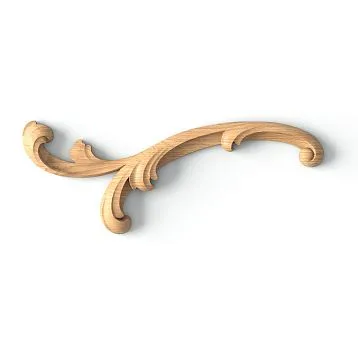
The human brain is structured in such a way that beautiful, harmonious forms evoke positive emotions, reduce stress levels, and create a sense of well-being. Decorative wooden inlays Their natural textures and smooth lines particularly positively influence a person’s mental state.
Scientific studies show that people living in aesthetically pleasing interiors demonstrate higher levels of creativity, productivity, and overall life satisfaction. Decorative elements function as sorts of 'anchors of beauty,' focusing attention on the positive aspects of the surrounding space.
Our factory also produces:


Cultural codes and symbolism
Each culture developed its own traditions of decorative art, reflecting the worldview, values, and aesthetic preferences of the people. Russian wood carving, with its plant motifs, symbolizes a connection to nature and fertility. European classicism with ancient motifs speaks to the pursuit of perfection and harmony of proportions.
Modern decorative ornaments often combine different cultural traditions, creating eclectic compositions that reflect the globalized nature of the contemporary world. Decor Sets allow creating cohesive stylistic solutions that unite elements from different eras and cultures.
Get Consultation
Decorative Materials Science: The Foundation of Lasting Beauty
Choosing a material for decorative ornaments is not only an aesthetic issue but also a matter of practicality, durability, and ecological soundness. Each material possesses unique properties that determine its suitability for various applications.
Natural Wood: The Living Beauty of Centuries
Wood remains an unmatched material for creating decorative elements due to its living texture, warmth, and ability to create a cozy atmosphere. Solid Wood Items possess the unique energy of natural material, which cannot be reproduced by artificial means.
Oak is the king of decorative woods, symbolizing strength and longevity. Its dense structure allows for creating the finest carving details that retain clarity for decades. Oak elements become even more beautiful with age, acquiring a noble patina and deeper tones.
Beech attracts craftsmen with its uniformity and plasticity. Its light wood is ideal for painting in any color, and its fine-grained structure provides a smooth surface without additional processing.
Ash, with its expressive texture, creates dynamic visual effects. Contrasting annual rings form natural decorative patterns, especially effective in modern interiors.
Polyurethane: Technology at the Service of Design
Modern polymer materials have opened new possibilities in creating decorative elements. Polyurethane allows reproducing the most complex carved compositions with perfect repeatability, which was impossible using only natural materials.
Polyurethane decorative ornaments are lightweight, moisture-resistant, and easy to install. They are not afraid of temperature fluctuations, do not deform over time, and are easily painted in any color. This makes them an ideal choice for spaces with special requirements — bathrooms, kitchens, public areas.
MDF: A Compromise Between Naturalness and Technology
MDF combines the ecological nature of natural wood with the technological capabilities of modern production. This material ensures stable geometric parameters, absence of internal stresses, uniform structure without knots or cracks.
Complex profile elements made from MDF are impossible or economically unjustified to produce from solid wood. The ability to precisely reproduce dimensions makes MDF an ideal material for creating extended decorative compositions.
Typology of Decorative Solutions: From Classicism to Avant-Garde
World decorative accents is impressive in its variety of styles, forms, and execution techniques. Each direction has its own distinctive features, historical roots, and aesthetic principles.
Classic Directions: Heritage of Centuries
Baroque is a triumph of ornamentation, where each element strives to impress the imagination with its complexity and opulence. Baroque ornaments are characterized by dynamic forms, abundance of scrolls, plant motifs, and play of light and shadow. Such elements require spacious rooms with high ceilings, where their scale will be appropriate.
Rococo brought lightness and elegance to decorative art. Asymmetric compositions, pastel tones, gilding create an atmosphere of French chic. Rocaille elements are especially suitable for boudoirs, salons, and rooms intended for relaxation and socializing.
Classicism leans toward strictness and symmetry. Here, it is not so much the ornamentation that matters, but the perfection of proportions and quality of execution. Classicist elements emphasize the architectural logic of space, creating a sense of monumentality and solemnity.
Empire uses decorative elements as a means to demonstrate greatness and power. Military symbolism, laurel wreaths, eagles, torches — all this creates an atmosphere of triumph and glory. Empire ornaments require appropriate scale and surroundings.
Regional Traditions: Local Character
Russian carving is a unique phenomenon in world decorative art. Each region of Russia developed its own motifs and techniques, creating an unmistakable stylistic signature. Northern carving is characterized by restraint and minimalism, central regions — by ornamental richness, southern regions — by vividness and decorativeness.
The symbolism of Russian carving is deeply rooted in folk consciousness. Solar signs symbolize life energy, plant ornaments — fertility and connection to nature, geometric patterns — cosmic order. Modern interpretations of Russian motifs preserve this symbolic depth, adapting forms to contemporary requirements.
Scandinavian tradition leans toward simplicity and functionality. Here, decoration serves not so much as adornment, but as an accentuation of the natural beauty of the material. Light tones, simple forms, emphasis on quality of execution — these are the main principles of the Scandinavian approach.
Modern Directions: New Forms of Expression
Modernism brought a new understanding of beauty to decorative art. Asymmetric compositions, stylized natural motifs, flowing lines create a sense of movement and life. Modernist ornaments often combine different materials — wood, metal, glass — creating complex textured compositions.
Art Deco is characterized by geometric stylization and luxurious materials. Zigzag lines, stepped forms, and contrasting combinations create dynamic, memorable images. Art Deco elements are especially effective in modern interiors, which favor graphic design and contrasts.
Minimalism uses decorative elements sparingly. Here, quality of each element is more important than quantity. Simple geometric shapes, ideal proportions, and absence of excess — these are the principles of minimalist decor.
Production technologies: from sketch to realization
Modern production of decorative ornaments combines traditional craftsmanship techniques with high-tech manufacturing methods. This synthesis allows creating items that unite the charm of handcrafted work with the precision of machine production.
Design and Planning
Computer modeling has revolutionized the process of creating decorative elements. Three-dimensional CAD systems allow creating accurate models of future items, experimenting with shapes, proportions, and details before physical production begins.
Parametric modeling allows quickly creating variations of the basic design, adapting elements to specific dimensions, and creating families of compatible decorative elements. This is especially important when working with Art Deco collections, where each element must harmoniously combine with others.
Visualization and presentation allow clients to see the future result even before production begins. Photorealistic renders show how decorative elements will appear in a specific interior, under different lighting, combined with other materials and colors.
Manufacturing Technologies
CNC milling ensures the highest precision in manufacturing decorative elements. Multi-axis machining centers can create complex three-dimensional forms with detail down to fractions of a millimeter. This allows reproducing the finest carving nuances that were previously accessible only to highly skilled masters.
Laser cutting opens new possibilities for creating delicate compositions. The laser beam allows making cuts as thin as fractions of a millimeter, creating a "lace" effect in wood. This technology is especially effective when working with flat decorative panels, screens, and partitions.
Injection molding is used for producing polyurethane elements. High pressure and precise forms ensure perfect reproduction of the smallest details of the original. Modern polyurethane compositions allow imitating the texture of various materials — from wood to stone and metal.
Final finishing
Hand finishing remains an important stage in producing high-quality decorative elements. Experienced masters eliminate the smallest defects, emphasize the most expressive details, and add uniqueness to each item.
Patination and toning create aging effects, highlight relief, and add depth and expressiveness to elements. Various surface treatment techniques allow imitating natural material aging and creating effects of gilding, silvering, and bronzing.
Protective coatings not only preserve decorative elements from external influences but can also dramatically change their appearance. Matte, glossy, and metallic coatings create various visual effects, allowing adaptation of elements to specific design tasks.
Application in interior: from accents to dominants
requires understanding of compositional laws. The size of decorative elements must correspond to the scale of the room and the objects they adorn. Too small elements will disappear in a large space, while overly large ones will overwhelm the interior. decorative accents in interior requires understanding of composition principles, sense of proportions, and knowledge of stylistic features of various directions.
Principles of placing decorative elements
Hierarchy of importance — the main principle of creating harmonious decorative compositions. There must be one main element — the dominant — that attracts primary attention. Other elements play a supporting role, creating background and developing the main theme.
Scale relationships are critically important for perceiving decorative compositions. Large elements require corresponding space, while small details may be lost in large rooms. The golden ratio helps determine optimal proportions of elements relative to room size.
Rhythmic structures create dynamics in static architectural environments. Regular repetition of elements creates a calm, measured rhythm. Progressive changes in size or intervals add dynamism. Free rhythm creates a more lively, organic composition.
Zonal application
Entrance zone — the first thing guests see, so here it is appropriate to use the most representative decorative elements. Richly decorated consoles, mirrors in carved frames, decorative panels create a festive atmosphere for meetings.
Living room provides the greatest opportunities for using decorative ornaments. Here, complex compositions can be created, combining various elements — ceiling roses, moldings, panels, fireplaces. Wood Carving in the living room can become the central theme, unifying all interior elements.
Bedroom requires a more delicate approach to decoration. Here, soft, calm forms are appropriate, creating an atmosphere of comfort and tranquility. Headboards, dressing tables, and bedside tables can be adorned with carved elements, but without excessive detail.
Office allows using more strict, geometric decorative forms. Here, classical motifs are appropriate, emphasizing the seriousness and respectability of the space. Bookshelves, desks, and chairs can be adorned with restrained but high-quality decorative elements.
Stylistic compatibility: creating harmonious compositions
The success of decorative design largely depends on understanding the laws of stylistic compatibility. Different styles have their own distinctive features, which must be considered when selecting decorative elements.
Classic Interiors
Baroque interiors require corresponding scale of decorative elements. Here, large, expressive ornaments with abundant gilding, intricate carving, and dynamic forms are appropriate. Symmetry of compositions emphasizes the grandeur and ceremonial nature of the rooms.
Neoclassical spaces lean toward strict proportions and restrained decoration. Here, quality of execution matters more than quantity of ornamentation. Antique motifs, vegetal ornamentation, strict geometry — the foundation of neoclassical decor.
English classicism is distinguished by particular elegance and restraint. Decorative elements here serve as subtle accents, highlighting the owner's nobility and good taste. Carved panels, moldings, cornices create the atmosphere of an old English manor house.
Modern Styles
Modern classicism adapts traditional motifs to contemporary realities. Simplified forms, reduced detailing, modern materials make classical elements more relevant for contemporary interiors.
Eclecticism allows mixing elements of various styles, creating unique compositions. Here, a sense of proportion and understanding of general principles of harmony are important. Unifying factors may include color, texture, and scale of elements.
Fusion styles deliberately break traditional stylistic boundaries, creating unexpected combinations. Eastern motifs in European interiors, ethnic elements in modern spaces, mixing of eras and cultures — all this requires high professionalism and artistic sensitivity.
Psychology of color in decorative ornaments
Color plays a key role in the perception of decorative elements. The right choice of color palette can enhance the emotional impact of decor, create the desired atmosphere, and emphasize the interior's style.
Traditional color solutions
Natural wood tones create a sense of warmth, coziness, and connection to nature. Different wood species have their own characteristic color palettes — from light honey-colored beech to dark brown oak. These natural tones easily combine with other materials and colors.
Gilding is traditionally used to create an effect of luxury and solemnity. Various gilding techniques — from leaf gold to modern metallic paints — allow creating different visual effects, from restrained sheen to bright brilliance.
Patination creates effects of natural aging, adding depth and expressiveness to decorative elements. Green, blue, brown patinas imitate oxidation processes of various metals, creating a sense of historic authenticity.
Modern color trends
Monochromatic solutions are based on using various shades of one color. This creates a calm, harmonious atmosphere, allowing focus on the form and texture of elements.
Contrasting combinations attract attention, create dynamism, and highlight architectural features of the space. Light elements on a dark background or dark accents on light surfaces become striking compositional centers.
Color accents allow introducing bright spots into the interior without disrupting overall harmony. One or two elements of bright color can radically change the perception of space, making it more lively and dynamic.
Technical aspects of installation and operation
Quality installation and proper operation decorative accents ensure their longevity and preservation of original appearance for many years.
Preparation Work
Surface inspection is the first and most important stage of installation. The surface must be flat, strong, dry, and free of old coatings and contaminants. Irregularities exceeding 3 mm must be removed using putty or plaster.
Marking is performed using laser levels and other precise measuring tools. Accuracy is especially important when installing symmetrical compositions, where even minor deviations will be noticeable and spoil the overall impression.
Acclimatizing elements in the room before installation prevents deformation after mounting. Wooden elements should remain in the room for at least 48 hours at working temperature and humidity.
Methods of mounting
Adhesive mounting is suitable for lightweight, small-sized elements. Modern polyurethane adhesives provide connection strength comparable to mechanical fastening. It is important to choose an adhesive compatible with the base material.
Mechanical mounting is used for heavy or large elements. Screws, anchors, and dowels must be selected according to the wall material and weight of the mounted element. Mounting points should be placed in the least noticeable locations.
Combined mounting combines advantages of different methods. Initial fixation is performed using mechanical elements, final securing — with adhesive. This ensures maximum reliability and longevity of the connection.
Post-installation finishing
Sealing joints is an important stage determining the quality of the finished work. Sealants must match the tone of the base material. Excess sealant is immediately removed, and the surface is leveled.
Final finishing may include touch-up of damaged areas from installation, application of protective coatings, polishing. All work must be performed using materials compatible with the base coatings.
Care and Restoration: Preserving Beauty for Centuries
Proper care of decorative ornaments extends their lifespan and preserves their original beauty for many years.
Preventive Care
Regular cleaning prevents dust and dirt accumulation in recesses of carvings. For wooden elements, soft brushes or vacuum cleaners with crevice tools are used. Wet cleaning is permissible only for elements with quality water-resistant coatings.
Control of microclimate is critically important for wooden elements. Optimal air humidity 45-65%, temperature 18-22°C. Sudden changes in these parameters may lead to cracking or deformation of wood.
Protection from direct sunlight prevents fading and drying of materials. UV filters on windows or special protective coatings help preserve the original color of elements.
Restoration work
Minor repairs include filling in chips, scratches, and minor damage. Wood putty allows restoring lost carved fragments. After drying, the damaged area is sanded and stained to match the original color.
Coating restoration is performed when signs of wear appear — dullness, flaking, color change. The old coating is carefully removed, the surface is prepared and covered with a new compound.
Deep restoration may be required for serious damage — deep cracks, detached fragments, significant deformations. Such work requires high qualification and should be performed by specialists.
Frequently Asked Questions about Decorative Elements
How to choose decorative elements for a specific interior?
The selection of decorative elements should be based on the interior style, room size, and functional purpose. Classic interiors suit elements with botanical motifs and intricate carving. Modern styles require more minimalist, geometric forms. The size of elements should correspond to the room's scale.
Can decorative elements made from different materials be combined?
Yes, but this requires a professional approach. Different materials should be united by a common stylistic approach, color palette, or form. For example, wooden and polyurethane elements can be painted in a single color to create a harmonious composition.
How often should decorative elements be renewed?
With proper care, high-quality decorative elements last 20-30 years without replacement. Coatings may require renewal every 7-10 years depending on usage conditions. Preventive cleaning and condition monitoring help extend service life.
Is it difficult to install decorative elements yourself?
Simple elements — moldings, small appliqués — can be installed yourself with basic skills. Complex compositions, heavy elements, and high-altitude work are better entrusted to professionals. Incorrect installation may result in damage to elements or their falling.
How do decorative elements affect property value?
High-quality decorative elements significantly enhance interior appeal and can increase property value by 15-25%. Handcrafted elements made from natural materials are especially valued. Unique decorative solutions make properties more attractive to buyers.
Can decorative elements be custom-made?
Most serious manufacturers offer custom design and manufacturing services. This allows creating unique elements precisely matching room dimensions and designer concepts. The cost of custom elements is higher than standard ones, but the result fully justifies the investment.
Conclusion: Investment in Beauty and Quality of Life
and frames create a home atmosphere, making it truly cozy and individual. This is an investment in beauty, which pays off every day through aesthetic pleasure from admiring the beautiful. Decorative elements are not just interior features — they are an investment in beauty, comfort, and quality of life. In a world where functionality often triumphs over aesthetics, decorative elements remind us of the importance of beauty in everyday life.
High-quality decorative elements serve for decades, delighting owners with their beauty and creating a unique atmosphere in the home. They transform ordinary living spaces into works of art, where every element is thoughtfully designed and has its place within the overall composition.
Choosing decorative elements is an expression of individuality — a way to tell the world about your tastes, preferences, and life philosophy. Each style, each ornament, each detail carries a specific meaning and creates a unique energy in the space.
Modern manufacturing technologies allow creating decorative elements of any complexity, realizing the boldest design ideas, and combining tradition with innovation. However, it is important to remember that technology is merely a tool — the key is understanding beauty and striving for perfection.
STAVROS — a recognized leader in creating high-quality decorative elements. For many years, STAVROS has produced items that become ornaments of the most refined interiors and delight owners with flawless quality and beauty.
STAVROS combines the best traditions of artisan craftsmanship with modern production technologies. Each item is created with attention to detail, quality, and a pursuit of perfection.
STAVROS craftsmen work with premium materials — selected oak and beech, high-quality polyurethane, eco-friendly MDF. Strict quality control at every production stage guarantees compliance with the highest standards.
By choosing STAVROS, clients receive not just decorative elements, but the opportunity to create a unique interior that will delight for many years. Professional consultations, individual approach to each project, quality after-sales service — all this makes STAVROS the ideal partner for realizing the most ambitious design projects.
STAVROS — guarantee of quality, beauty, and longevity. Choosing STAVROS means choosing the best for your home.