Article Contents:
- History of Wall Decoration: Eternal Pursuit of Beauty
- Technological Revolution in Decorative Arts
- Psychology of Wall Decor Perception
- How Decorative Elements Affect Mood
- Social Function of Decoration
- Materials and Technologies: Foundation of Quality Decor
- Wood — The Living Soul of Interior Design
- Stylistic Palette of Wall Decor
- Polyurethane: Modern Alternative
- Classicism: Eternal Values of Beauty
- Functional Aesthetics of Decorative Elements
- Baroque: Theatricality and Emotion
- Modernism: nature as a source of inspiration
- Minimalism: beauty of simplicity
- Moldings: Architectural Grammar of Interior Design
- Decorative Appliqués: Sculpture in Interior Design
- Technological Aspects of Production and Installation
- Corner Elements: Completing the Composition
- Professional Installation — Guarantee of Results
- From Sketch to Finished Product
- Quality control at all stages
- Color Solutions in Wall Decor
- Color Schemes and Their Application
- Color Combinations
- Stylistic Trends in Modern Decor
- Eco-Trend in Decoration
- Eclecticism: Blending Styles as Art
- Personalization as a Megatrend
- European Classical School
- Russian traditions of wooden architecture
- European influences in Russian interiors
- Economic Aspects of Decorative Design
- Technologies of the Future in Decorative Arts
- Investment Appeal of Quality Decoration
- Price-to-Quality Ratio
- Digital Innovations
- Space Analysis
- New materials and technologies
- Practical recommendations for selection and application
- Care and Maintenance of Decorative Elements
- Compositional principles
- Conclusion: STAVROS — Workshop of Beauty and Perfection
- Regular maintenance
- Restoration and renewal
- Frequently Asked Questions
- Conclusion: STAVROS — a workshop of beauty and perfection
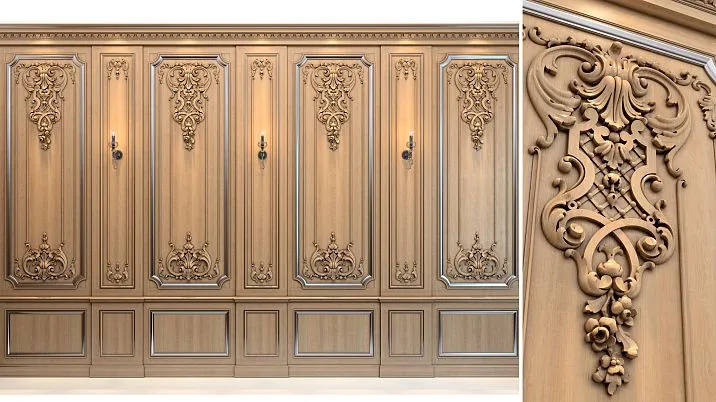
Walls are not merely vertical surfaces dividing space. They are canvases on which one can create true works of art capable of radically changing the perception of any room. But how to transform an ordinary room into an elegant salon? How to make guests stand in awe upon entering your home? The secret lies in the skill to properly use wall decor for interior — those very magical elements that turn banality into luxury.
Imagine: you open the door, and your gaze is immediately drawn to exquisite carved moldings framing the wall like a precious setting. Delicate ornament lines create a play of light and shadow, giving the room depth and character. Every detail tells its own story, every swirl carries the imprint of craftsmanship and an understanding of beauty.
In the world of modern interior design, wall decor holds a special place. It is not merely a way to fill empty space — it is a philosophy of creating a space that reflects the homeowner’s individuality, taste, status, and life values. High-quality decorative elements can transform the most modest dwelling into a true palace, while a poor choice can spoil even the most expensive renovation.


Evolution of wall decor: from cave drawings to the digital age




History of wall decoration: eternal pursuit of beauty
The need to decorate walls is ingrained in human nature. Even our distant ancestors created cave paintings, not only to convey information but also to make their dwellings more attractive. Ancient civilizations elevated this art to unprecedented heights — the frescoes of Pompeii, Byzantine mosaics, carved panels of medieval castles — all testify that throughout history, people understood: beautiful walls are the foundation of a beautiful home.
Each era brought its own characteristics to the art of wall decor. Gothic architecture amazed with vertical lines and upward-reaching forms. Renaissance dazzled with harmony of proportions and mathematical precision. Baroque enchanted with opulence and theatricality. Classicism impressed with strictness and nobility of forms.
Modern decorative appliqués for furniture and interior are heirs to these great traditions, but adapted to the realities of the 21st century. Today, we have the opportunity to use the best achievements of all eras, creating unique interior solutions.
Our factory also produces:


Technological revolution in decorative arts
The 20th and 21st centuries brought a true revolution to the world of decor. If previously every element was crafted by hand by experienced master carvers, modern technologies allow reproducing the most complex ornaments with mathematical precision. High-precision CNC machines can create details that match in complexity and beauty the works of great masters of the past.
But technical progress does not mean the loss of soul in decorative arts. On the contrary, liberation from routine work allows modern designers to focus on creativity, seeking new forms and solutions. Computer modeling allows seeing the future interior even before starting work, while a wide range of materials and technologies opens boundless opportunities for experimentation.
Get Consultation
Psychology of wall decor perception
How decorative elements affect mood
Why do some interiors evoke feelings of calm and harmony, while others cause unease and discomfort? The secret lies in understanding the psychology of perception of forms, lines, proportions. The human brain is structured so that certain visual signals trigger specific emotional reactions.
Horizontal molding lines create a sense of stability and calm. They visually expand space, making it more cozy and intimate. Vertical elements, on the contrary, add dynamism, upward direction, a sense of growth and development. Curved lines of plant ornaments soothe the nervous system, creating a connection with nature.
wall decor for interior act as sort of emotional programs. Properly selected elements can reduce stress levels, improve productivity, and enhance mood. This is not esotericism, but scientifically proven facts, confirmed by numerous studies in the field of neuropsychology.
Social function of decor
Your home is not only a place to live, but also a means of communication with the outside world. How you decorate your walls tells guests about your tastes, education, financial possibilities, and life priorities. High-quality decorative elements demonstrate an understanding of beauty, respect for traditions, and a striving for perfection.
An interior with thoughtfully designed wall decor creates a special atmosphere that encourages conversation, inspires creativity, and boosts self-esteem. In such a space, people automatically begin to behave more elegantly, speak more thoughtfully, and feel more significant.
Materials and technologies: the foundation of quality decor
Wood — the living soul of interior
Why is wood still the unsurpassed material for creating decorative elements? The answer lies in the very nature of this remarkable material. Wood is living matter that retains a connection with nature even after processing. Each wood species has its own unique texture, distinctive pattern, and energy.
Oak impresses with the power of its grain and incredible durability. Oak items serve for centuries, becoming even more beautiful with age. Beech delights with soft pinkish tones and dense, uniform structure, ideal for delicate carving. Walnut impresses with its refined pattern and noble brown tones.
Modern wood processing technologies allow fully revealing the natural beauty of the material. Special impregnations protect wood from moisture and pests without impairing its ability to 'breathe'. Various types of finishes — from natural oil to enamel — allow adapting wooden decor to any interior style.
Polyurethane: modern alternative
The development of polymer technologies has given designers a new material — polyurethane decorative elements— which, in beauty, do not fall short of wooden analogs, but possess a number of unique advantages.
Polyurethane does not fear moisture, making it ideal for bathrooms and kitchens. It does not crack, does not deform, does not attract insects. Moreover, polyurethane elements are significantly lighter than wooden ones, simplifying installation and reducing load on load-bearing structures.
Modern production technologies allow creating polyurethane elements with detail that is impossible with traditional wood carving. The finest lines, most complex interweavings, multi-level reliefs — all of this is possible thanks to the precision of modern equipment.
Stylistic palette of wall decoration
Classicism: eternal values of beauty
Classical style of wall decoration is based on principles developed by ancient masters and refined by Renaissance architects. Here, strict hierarchy, mathematical precision of proportions, and noble restraint of forms prevail.
Key elements of classical decoration include pilasters, cornices, friezes, rosettes. Each element has its place in the overall composition; disrupting this immediately destroys harmony. Classical ornamental motifs — palmettes, acanthus, laurel branches — are stylized to the extreme, subordinate to strict geometric logic.
The color palette of classical decoration is restrained and noble. White symbolizes purity and perfection. Gold signifies luxury and status. Natural wood tones create a sense of warmth and coziness.
Baroque: theatricality and emotion
If classicism appeals to reason, baroque appeals to emotion. This is a style of emotions, theatrical effects, luxurious opulence. Baroque interiors are not merely beautiful — they are captivating, stirring, leaving an indelible impression.
A distinctive feature of baroque decoration is the dynamism of forms. Here, there are no static elements — everything is in motion. Plant ornaments seem to sway in the wind, architectural details curve and intertwine, creating a sense of living, pulsating matter.
Asymmetry in baroque is not chance, but a deliberate artistic technique. Breaking strict order creates a sense of spontaneity, naturalness, liveliness. This requires the highest level of designer skill — to create an asymmetrical composition that remains harmonious.
Modern: nature as a source of inspiration
The modern style brought a true revolution to decorative arts. For the first time in history, designers abandoned copying historical models and turned directly to nature for inspiration.
Modernist plant motifs are maximally naturalistic. Here, you can identify specific plant species, feel the season, sense the artist’s mood. The curves of branches, petals of flowers, silhouettes of leaves are reproduced with photographic accuracy, yet remain subordinate to the overall compositional logic.
Modern asymmetry differs from baroque. If baroque breaks symmetry for theatrical effect, modernism follows the natural asymmetry of organic forms. This creates a sense of organicness, naturalness, harmony with the surrounding world.
Minimalism: the beauty of simplicity
The minimalist approach to decoration seems paradoxical — how can one decorate while rejecting ornamentation? But this is precisely the philosophy of minimalism: to find beauty in simplicity, expressiveness in conciseness.
Minimalist wall decor for interior are based on pure geometric forms. Here, there is no room for chance — every line is precisely calibrated, every angle calculated. The simplicity of forms is compensated by flawless execution quality and precision of proportions.
The color palette of minimalism is extremely restrained. White, black, gray — these colors allow focus on form, without distraction from color effects. Occasionally, natural wood tones are permitted, emphasizing the material’s naturalness.
Functional aesthetics of decorative elements
Moldings: architectural grammar of interior
Moldings and cornices are the foundation of any decorative composition. They serve as a kind of architectural grammar of interior, organizing space, creating structure, setting rhythm.
Horizontal moldings divide walls into zones, create a sense of proportion, visually expand the room. They can be used to imitate paneling, which is especially effective in classical interiors.
Vertical moldings lift ceilings, create a sense of grandeur. They are ideal for decorating high rooms, where it is necessary to emphasize the scale of space.
Molding frame compositions allow creating accent zones on walls. Within such frames, you can place paintings, mirrors, or simply highlight with color, creating striking visual accents.
Decorative appliqués: sculpture in interior
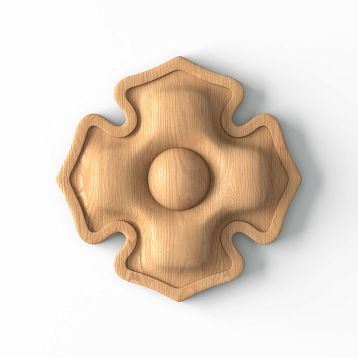
Applied elements are true miniature sculpture. They transform flat walls into three-dimensional compositions, create play of light and shadow, add depth and character to interiors.
Plant appliqués are especially popular in classical and baroque interiors. Rosettes with images of flowers, leaves, fruits create an atmosphere of abundance and prosperity. Geometric appliqués are better suited for modern styles — their strict forms emphasize rationality and technology.
The size of appliqués should correspond to the scale of the room. In small rooms, it is better to use small, delicate details. In spacious halls, large, monumental elements are appropriate.
Corner Elements: Finishing the Composition
Corner decorative details play a special role in creating a harmonious composition. Corners are places of maximum visual tension — here, the gaze stops, seeking support for further movement.
External corners experience increased mechanical loads, so corner elements must be not only beautiful but also strong. High-quality corner details are made from dense wood species or high-strength polyurethane.
Internal angles are less stressed but no less important for overall perception. They must precisely replicate the profile of main elements, creating an impression of a unified, cohesive composition.
Technological aspects of production and installation
From sketch to finished product
Creating a high-quality decorative element is a complex process that begins with a design project. Modern computer technologies allow creating three-dimensional models of future elements, calculating their behavior under various conditions, and optimizing their shape for specific tasks.
Special attention is paid to the ergonomics of installation. Decorative elements must not only look beautiful but also be easy to install, securely fastened, and harmoniously combine with each other. A thoughtfully designed mounting system ensures quick and high-quality installation.
Modern manufacturing technologies allow achieving incredible precision in production. Deviations are measured in fractions of a millimeter, ensuring perfect alignment of elements during installation.
Quality control at all stages
The quality of decorative elements is established at every stage of production. Incoming control of raw materials ensures the stability of material characteristics. Operational control guarantees compliance with technological parameters. Final control includes checking geometry, surface quality, and conformity to the design project.
Special attention is paid to ecological safety. All materials and coatings must comply with strict sanitary-hygienic norms, not emit harmful substances, and be safe for human health.
Professional installation — guarantee of result
Even the highest-quality decorative elements may fail to produce the desired impression if improperly installed. Installation requires professional skills, specialized tools, and understanding of the characteristics of different materials.
Surface preparation is a critically important stage. The wall must be perfectly flat, clean, and dry. Even minor defects in the base may become apparent after installing decor, spoiling the overall impression.
Marking requires mathematical precision. Decorative elements must be placed strictly symmetrically, at equal distances, and at the correct height. Modern laser levels and measuring instruments help achieve the required accuracy.
Color solutions in wall decoration
Psychology of color in interior design
The color of decorative elements significantly affects the perception of the interior. White creates a sense of cleanliness, freshness, and visually expands space. It is universal and suitable for any interior style, easily combining with any wall and furniture colors.
Natural wood tones create an atmosphere of warmth and coziness. They are associated with nature, eco-friendliness, and stability. Such colors are especially suitable for family interiors, country homes, and children's rooms.
Dark shades — black, dark brown — add drama and contrast to the interior. They emphasize the relief of decorative elements, creating expressive accents. However, they should be used carefully — excessive use of dark colors can make the room gloomy.
Color schemes and their application
Monochromatic schemes are based on various shades of one color. White elements on white walls create an elegant play of textures and volumes. Such interiors look elegant and refined but require flawless execution.
Contrasting schemes use opposite colors. White elements on dark walls or vice versa create bright, memorable interiors. Contrast highlights the beauty of decorative elements, making them more expressive.
Nuanced schemes are based on closely related shades of the color spectrum. They create calm, harmonious interiors that invite relaxation and rest.
Stylistic trends in modern decoration
Eclecticism: mixing styles as an art
Modern design increasingly turns to eclecticism — intentional mixing of elements from different styles and eras. This requires refined taste and deep understanding of design, but the result can be stunning.
The key to successful eclecticism is finding a unifying element. This may be color, material, scale, or a common philosophy. It is important that different elements do not conflict with each other but create a harmonious, albeit complex, composition.
Ecological trend in decoration
Growing ecological awareness affects all areas of life, including interior design. Consumers are paying more attention to the origin of materials, production technologies, and environmental impact.
Natural wood from certified forests is becoming especially valuable. It is not only the quality of the material but also the producer's responsibility, ecological policy, and social responsibility that matter.
Personalization as a megatrend
The era of mass production is giving way to individual solutions. People want unique interiors that reflect their personality and tell their story. This creates demand for customized decorative solutions.
Modern technologies make personalization accessible. CAD systems allow creating unique designs, while CNC machines bring them to life in material. Individualized approaches are no longer a luxury but a standard.
Regional characteristics and cultural traditions
Russian traditions of wooden architecture
Russia has rich traditions of wooden decorative art. Carved door casings of Russian peasant houses, ornate interiors of wooden churches, exquisite details of noble estates — all of this constitutes a unique cultural heritage.
Russian carving is distinguished by exceptional plasticity and expressiveness. Masters skillfully combined geometric and plant motifs, creating complex, multi-layered compositions. A distinctive feature of Russian style is emotionality, soulfulness, and connection with nature.
Modern interpretations of Russian traditions do not copy historical samples but creatively reinterpret them, adapting them to contemporary life realities.
European classical school
European decorative art has evolved over centuries, absorbing influences from various epochs and cultures. The legacy of antiquity, Gothic traditions, Renaissance revival — all of this has created a rich palette of decorative motifs.
The French school is renowned for its elegance and refinement. The Italian school — for monumentality and drama. The English school — for practicality and durability. The German school — for technical perfection and precision.
Economic aspects of decorative finishing
Investment attractiveness of quality decoration
Quality decorative elements are not expenses, but investments. Beautiful interiors increase property value and make it more attractive to potential buyers.
The lifespan of quality decor is measured in decades. Wooden elements, with proper care, are practically eternal — interiors from five centuries ago are preserved in European castles. Polyurethane items also exhibit longevity, requiring replacement only after 20-30 years.
Price-to-quality ratio
The cost of decorative elements can vary widely. Simple polyurethane details cost several hundred rubles, while exclusive hand-carved elements can cost tens of thousands.
The right approach is to define priorities and find the optimal price-to-quality ratio. It is better to use several expensive but quality elements than many cheap, questionable-quality details.
Technologies of the future in decorative art
Digital innovations
The development of digital technologies opens new horizons for decorative art. Virtual reality allows you to 'walk through' a future interior even before work begins. Augmented reality helps visualize various decor options in real time.
Artificial intelligence analyzes user preferences and offers personalized solutions. Machine learning enables the creation of new ornaments based on the analysis of historical samples.
New materials and technologies
3D printing revolutionizes the production of decorative elements. It becomes possible to create forms unattainable through traditional processing methods. Biodegradable plastics solve ecological issues.
Smart materials can change their properties depending on external conditions. Decorative elements that change color based on temperature or lighting are no longer science fiction.
Practical recommendations for selection and application
Space Analysis
Choosing decorative elements should begin with a careful analysis of the room. Room size, ceiling height, natural lighting, existing furniture — all of this affects the choice of decor.
In small rooms, large elements may create a sense of confinement. Conversely, small decor in spacious rooms may go unnoticed. The golden mean rule — the size of decor should match the scale of the room.
Compositional Principles
The placement of decorative elements follows compositional laws. The rule of thirds helps find optimal placement points for accents. The golden ratio determines harmonious proportions.
Rhythm and repetition create a musical quality in composition. Repeating elements should be placed at equal intervals, creating a sense of order and stability.
Care and maintenance of decorative elements
Regular Maintenance
Decorative elements require regular but simple maintenance. Dust is the main enemy of relief surfaces. It accumulates in recesses, gradually filling ornament details and depriving them of expressiveness.
Dry cleaning with soft brushes is the primary method of care. Special brushes with curved working parts are used for hard-to-reach areas. Wet cleaning is only permissible for elements with moisture-resistant coatings.
Restoration and renewal
Even quality elements may require periodic updates. Repainting, replacing damaged parts, renewing protective coatings — all of this extends the lifespan of decor.
Restorability is one of the advantages of quality decor. Minor damages are repaired without dismantling, serious defects — by replacing individual elements.
Frequently asked questions
How to determine the required quantity of decorative elements for a room?
The amount of decor depends on interior style, room size, and personal preferences. The general rule — better to have less than too much. Start with 2-3 key elements and gradually add details, assessing the overall impression. In small rooms, a few accents suffice; in spacious rooms, more complex compositions can be used.
Can elements from different materials be combined?
Yes, a thoughtful combination of different materials can create very interesting effects. The key is to maintain stylistic unity and proportions. For example, wooden moldings can be combined with polyurethane overlays if they are executed in the same style and painted in the same color.
How to choose the color of decorative elements?
Color should harmonize with the overall color scheme of the interior. White is universal and suitable for any style. Natural wood tones create warmth and coziness. Contrasting solutions attract attention but require caution. Bright colors are better used sparingly.
How long does it take to install decorative elements?
The time required depends on the complexity of the project. Simple moldings can be installed in a day. Complex multi-element compositions may require a week of work. Quality is more important than speed — rushing can ruin the entire project.
Can decor be installed by oneself?
Simple elements can be installed by hand with basic skills and tools. Complex compositions are better entrusted to professionals. Incorrect installation can not only ruin the appearance but also create a safety hazard.
Does decor affect room acoustics?
Yes, relief surfaces affect acoustic properties. They break up sound waves, reduce echo, and improve sound quality. This is especially noticeable in rooms with high ceilings.
How to care for decorative elements?
Regular dry cleaning with soft brushes is the basis of care. Avoid aggressive chemical agents. For wet cleaning, use slightly damp cloths. Periodically renew protective coatings.
Are decorative elements suitable for modern interiors?
Absolutely. Modern design offers numerous minimalist solutions — from simple geometric forms to stylized natural motifs. The key is to correctly choose the style and proportions.
Conclusion: STAVROS — a workshop of beauty and perfection
In a world where beauty is often sacrificed for functionality, and mass production triumphs over individuality, it is especially important to find a company that remains loyal to high quality standards and understands the true value of beauty. The STAVROS company has been an industry benchmark for creating decorative interior elements for many years, bringing the boldest design fantasies to life.
The philosophy of STAVROS is based on a deep understanding that a home is not merely a place to live, but a space for self-expression, creativity, and inspiration. Every element created by our artisans carries a part of this philosophy, becoming a bridge between dream and reality.
The STAVROS production facility is equipped with the most modern European equipment, enabling the creation of items of any complexity with unparalleled craftsmanship. However, technology is merely a tool for us. The company’s greatest treasure is its team of talented designers, experienced technicians, and master craftsmen who pour their hearts into every piece.
STAVROS offers a full range of services: from conceptual design to final installation. Our consultants will help you choose optimal solutions for your interior, designers will create unique elements based on your individual project, technicians will ensure flawless manufacturing quality, and installers will mount everything quickly and professionally.
Over the years of operation, STAVROS products have adorned thousands of homes throughout Russia and beyond. Each completed project is a testament to our professionalism, a sign of client trust, and a source of inspiration for new creative pursuits.
Choosing STAVROS, you are choosing not just decorative elements. You are choosing a partner in creating your dream home, an ally in the pursuit of beauty, a guarantee that your interior will not only be beautiful but truly unique. Let us help you create a space that will delight, inspire, and amaze you for many years.