












































































Article Contents:
- Starting positions: two materials, two worldviews
- PVC plastic panels: an honest breakdown without romance
- Composition and Production
- Where plastic works
- Where plastic falls short
- Slatted ceiling: what it really is and why it's fundamentally better
- Why slatted ceiling is objectively superior to plastic
- Limitations of slatted ceiling
- Comparison of plastic and slatted ceiling: table by key parameters
- Where Suspended Ceilings Are Objectively Better: By Room Type
- Living Room and Dining Room
- Bedroom
- Kitchen
- Hallway and corridor
- Children's room
- Bathroom
- Polyurethane Ceiling Molding: When It's Appropriate
- What Is Polyurethane Ceiling Decor
- Three Scenarios for Using Polyurethane Ceiling Decor
- When to Choose Polyurethane Ceiling Decor: Selection Criteria
- Final Room-by-Room Ceiling Material Selection Scheme
- DIY Suspended Ceiling: Is It Possible
- Acoustics and Sound Absorption: Suspended Ceiling vs. Plastic
- Durability: Honest Numbers
- Price range: what costs how much
- Common misconceptions when choosing ceiling materials
- Frequently Asked Questions (FAQ)
- STAVROS: materials for those who understand the difference
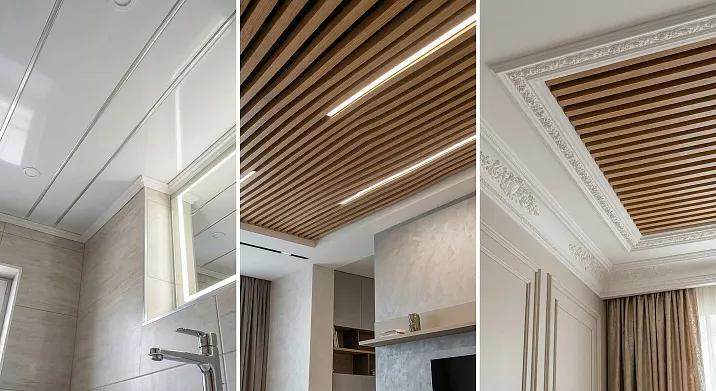
Thousands of people ask themselves this question when faced with choosing a ceiling material. And every time it sounds the same: 'What's better — plastic panels or slatted ceiling?' A concise question behind which dozens of variables are hidden: room, budget, durability, aesthetics, humidity, ceiling height, interior style. There is no universal answer. But there is an honest, detailed, and professional breakdown — exactly what someone needs who wants to make the right decision, not just buy whatever is cheaper.
And a separate story — Polyurethane moldings. It exists in a completely different coordinate system: not where they choose 'practical' ceiling coverings, but where the ceiling is given architectural character. About how these three worlds intersect and in which cases each of them is appropriate — read on.



Starting positions: two materials, two worldviews
Before comparing, it's important to understand: PVC plastic panels and wooden or MDF slatted ceilings are not just two finishing materials. These are two different answers to the same question: 'What should a ceiling be like?'
Plastic answers: practical, cheap, easy to install, maintenance-free. Wood or MDF answers: alive, warm, expressive, carrying aesthetic value. One approach comes from function. The other — from character.
This doesn't mean one is 'worse' and the other is 'better'. It means they solve different problems. And the first thing to do before choosing is to understand your own problem.




PVC Plastic Panels: An Honest Breakdown Without the Romance
Plastic ceiling panels emerged in mass construction in the 1990s as a budget alternative to everything else. Over three decades, they haven't fundamentally changed. The material is the same - polyvinyl chloride. The same installation principle. The same limitations.
Our factory also produces:
Composition and production
PVC panels for ceilings are profile products with a hollow structure (longitudinal channels inside) or solid, extruded from polyvinyl chloride with the addition of plasticizers and stabilizers. The front surface features lamination with a printed film (imitation wood, marble, solid color) or embossing. The panels connect via tongue-and-groove.
Standard dimensions: width 25–37 cm, length 270–600 cm, thickness 8–12 mm. Weight per square meter — 1.5–2.5 kg. A lightweight material with simple installation on a metal or wooden frame.
Get Consultation
Where Plastic Works
Frankly and without embellishment: PVC panels are appropriate in a limited number of contexts.
Bathroom — the classic context for a plastic ceiling. Complete waterproofing, resistance to mold and fungus (provided quality installation with treated joints), easy cleaning. In a bathroom, where functionality is more important than aesthetics, and where a person spends a maximum of 30 minutes a day, a plastic ceiling is an acceptable solution.
Utility rooms — storage rooms, technical corridors, walk-in closets without high aesthetic requirements. Here, plastic handles the task of covering the ceiling structure without needing to think about it.
Balcony and loggia — provided the balcony is unheated and the PVC panels are frost-resistant (a special series with a higher content of modifiers). On unheated balconies, wood and MDF don't work — moisture and temperature fluctuations will destroy any wooden solution.
Where Plastic Falls Short
Living room, bedroom, study, dining room — anywhere the interior has aesthetic ambitions. PVC panels in a living space create a sense of temporariness, 'cottage' quality, incompleteness. Even expensive laminated panels imitating wood don't solve this problem: the falseness is visible, especially on the ceiling, where light falls from top to bottom and mercilessly exposes every joint and every gleam of the plastic film.
The second critical flaw: behavior under heat. PVC begins to deform at temperatures above 60°C. On a ceiling with built-in spotlights of more than 35 W, plastic panels yellow, sag, and form stains around the fixtures. This is irreversible damage.
Third: chemical emission. When heated (sunlight through a window, summer heat in an apartment), PVC releases micro-amounts of plasticizers — phthalates. This process is not noticeable to the sense of smell, but with prolonged exposure, it creates a burden on the body. In a bedroom, where a person spends 7–8 hours a day, this is an argument against a plastic ceiling.
Slatted ceiling: what it really is and why it's fundamentally better
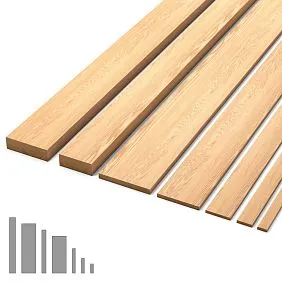
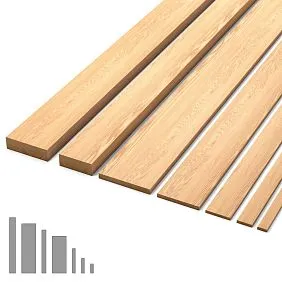
A slatted ceiling is a system of parallel strips (slats) made of wood, MDF, or aluminum, mounted on a suspended frame with a specific spacing. It is precisely this thatBatten panels for ceilingscreates what plastic fundamentally cannot provide: a living rhythm of the surface, a play of shadows in the gaps, tactile and visual depth.
When speaking of a slatted ceiling as a choice, most often three types are meant:
-
Wooden slats made of solid wood — oak, ash, cedar, pine. Real wood with natural texture, character, and seasonal movement.
-
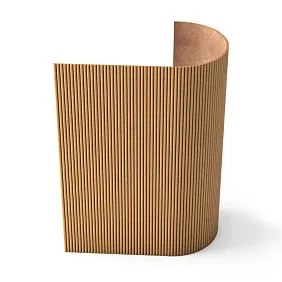
Slatted panel for the wall made of MDFand ceiling — slats made of MDF with veneer or for painting. Stable geometry, rich choice of finishes, affordable price.
-
Aluminum slatted ceilings — for commercial spaces, high-end bathrooms, modern interiors in loft and minimalist styles. Fully moisture-resistant, durable, industrial aesthetic.
Why slatted ceilings are objectively superior to plastic
First: natural or nature-like material. Wood and MDF with veneer are surfaces perceived as living. In the space above a person's head, this is fundamentally important: the brain reacts differently to natural materials than to synthetics. A wooden ceiling creates a feeling of coziness and security — exactly what a living space needs.
Second: play of light and shadow. Slats with gaps create a rhythm of shadows that changes with the angle of lighting. In the morning with soft side light, the gaps between slats are narrow dark lines. In the evening with directed light — deep shadows adding volume to the ceiling. Plastic provides neither gaps nor shadows — it remains flat under any light.
Third: durability and repairability. A wooden slat with mechanical damage can be restored: local sanding and repainting make the defect invisible. A plastic panel under mechanical impact cracks or deforms irreversibly; the only option is complete replacement.
Fourth: value perception of space. A wooden or MDF slatted ceiling signals the quality of the interior as a whole. A PVC ceiling signals compromises. This is an objective market reality: apartments with wooden slatted ceilings are valued higher.
Limitations of slatted ceilings
Wooden and MDF slatted ceilings are not intended for rooms with constant high humidity (over 80%). A bathroom with poor ventilation, sauna, swimming pool — are not their context. For such rooms — aluminum slatted ceiling or PVC.
Moreover, installation of a wooden slatted ceiling is a technically more demanding task than laying PVC panels. Marking the centerline, maintaining spacing, acclimatization, finishing.installation of slatted panelsrequires either professional skills or precise adherence to step-by-step instructions.
Comparison of plastic and slatted ceilings: table by key parameters
| Parameter | PVC panels | Slatted ceiling (wood/MDF) | Slatted ceiling (aluminum) |
|---|---|---|---|
| Material Price | Low | Medium — high | Medium |
| Installation complexity | Low | Medium | Medium |
| Moisture resistance | High | Low/medium | Very High |
| Durability | 10–15 years | 25–50 years | 30–50 years |
| Aesthetics | Low–medium | High | Medium–high |
| Repairability | Low | High | Medium |
| Ecological | Medium | High | High |
| Compatibility with molding | No | Yes | Limited |
| Repainting | No | Yes (MDF) | No |
Where slatted ceilings are objectively stronger: by rooms
Each room has its own selection logic. Let's break it down honestly.
Living room and dining room
A slatted ceiling is the unconditional choice.Slatted panels in interior designIn the living room and dining room, they create architectural expressiveness that is fundamentally unattainable with plastic. Wooden slats or MDF with veneer — depending on budget and style. Aluminum — only for loft or industrial style.
Plastic in the living room is unacceptable from an aesthetic point of view. Even with minimal interior requirements — it signals a temporary solution.
Bedroom
Wooden slats on the bedroom ceiling are one of the most powerful techniques for creating a cozy, 'enveloping' space. Cedar or pine with a natural reserve of natural esters (pine) also creates an aromatic atmosphere.
Plastic in the bedroom is not recommended due to chemical emissions when heated and due to the general feeling of cheapness, incompatible with the task of sleep and rest.
Kitchen
The situation here is more complicated. The area above the cooking surface is an aggressive environment: grease, steam, temperature fluctuations. A wooden slatted ceiling above the stove requires enhanced protective treatment and regular maintenance. An alternative is aluminum slats in the work area above the stove and wooden slats in the dining area.
Slatted panels in the kitchen— is a full-fledged topic with many nuances requiring separate immersion. Plastic in the kitchen is acceptable only in purely utilitarian solutions.
Hallway and corridor
The hallway often suffers from a lack of height (especially in standard apartments with 2.5 m ceilings). A slatted ceiling in the hallway draws the eye upward — especially vertical or diagonal slats if the ceiling is designed unconventionally. Plastic in the hallway is functionally acceptable but adds nothing positive.
Children's room
A wooden slatted ceiling in a child's room is ideal: eco-friendly, durable, grows with the child. MDF for painting allows repainting the ceiling along with the walls when the child outgrows the nursery aesthetic.
Plastic in a child's room is undesirable for the same reason as in the bedroom: chemical emissions in a space where the child spends a lot of time.
Bathroom
The only room where plastic can be accepted as a working solution—especially in small bathrooms with high humidity. But even here, a worthy alternative exists: an aluminum slatted ceiling. It offers both the moisture resistance of PVC, the aesthetics of a slatted ceiling, and the durability of metal.
Polyurethane ceiling molding: when it is appropriate
This is where a fundamentally different story begins.Ceiling moldingandPolyurethane ceiling decor—these are not competitors to either plastic or slatted ceilings. This is a different level of conversation about the ceiling.
Plastic and slats are covering systems: they occupy the entire ceiling surface. Molding is an accent system: it works with details, creates architectural events on the ceiling plane.
What polyurethane ceiling decor is
Polyurethane moldings—these are cast products made of high-quality polyurethane foam with a density of 130–180 kg/m³, reproducing classic molding elements: rosettes, cornices, moldings, coffered frames, beams. The precision of casting allows reproduction of historical ornamentation with detailing up to 0.5 mm. Weight—6–8 times less than plaster with comparable or superior strength.
The fundamental advantage of polyurethane over plaster for ceiling decor: it does not crumble under vibration, does not absorb moisture (which is critical for an apartment with a ceiling at the junction with the upstairs neighbor), cuts with an ordinary hacksaw with precision of 45° corner joints, and easily adheres with acrylic mounting adhesive.
Three scenarios for using polyurethane ceiling decor
Scenario one: painted ceiling + molding
A smooth white ceiling is a basic option that doesn't require any slatted or plastic solutions. But a bare white ceiling has neither architecture nor character. A polyurethane cornice around the perimeter, a ceiling rosette in the center, frame moldings—all of this transforms a smooth ceiling into an architectural surface. The cost of such a solution is moderate, installation is accessible with basic construction skills, and the result is quality associated with classical architecture.
It is for this scenario that cornices, moldings, rosettes, and polyurethane coffered frames exist in a rich assortment from specialized manufacturers.
Scenario two: slatted ceiling + molding at the wall junction
A slatted ceiling made of wood or MDF ends at the wall. This junction is a potentially weak spot: if it's not finished, the ceiling looks incomplete. A polyurethane cornice at the junction of the slatted ceiling and the wall solves this problem: it creates a clear horizontal finishing line, hides the gap, and adds an architectural detail.
Feature: in this case, the cornice is mounted not on the ceiling, but on the wall—at the level of the lower plane of the slatted structure. It imitates a ceiling cornice but functionally serves as a transition element between the slatted ceiling and the wall.
Scenario three: stretch ceiling + molding
Stretch ceilings are popular for obvious reasons: they hide all ceiling slab defects, have quick installation, and offer a wide choice of textures. But the stretch fabric is a smooth, faceless surface. Polyurethane decor around the perimeter of the stretch ceiling, false beams in the form of polyurethane profiles, framed division of the ceiling field—all of this gives the stretch ceiling an architectural character.
Compatibility with plastic PVC panels: molding on a plastic ceiling is technically possible but impractical. A polyurethane cornice at the junction of a plastic ceiling and a wall is difficult to glue (the PVC surface doesn't accept most adhesives without a special primer). Decor on a plastic ceiling looks stylistically incompatible: molding is the language of classical and neoclassical architecture, plastic is the language of budget construction.
When to Install Polyurethane Ceiling Decor: Selection Criteria
Polyurethane ceiling decor is appropriate when at least one of the following conditions is met:
-
Ceiling height is 2.7 m or more. At 2.5 m, the cornice 'eats up' the already limited height. At 2.7 m and above, it creates monumentality rather than pressure.
-
Interior style is classic, neoclassical, baroque, art deco, eclectic. Molding is an element of these styles. In minimalism, loft, and Scandinavian style, only a thin cornice, nothing more complex.
-
Smooth or slatted base ceiling. Only here does molding add value.
-
Presence of a central lighting source (chandelier). A rosette around the chandelier is one of the strongest techniques of a classic ceiling. Without a chandelier, the rosette loses its functional meaning.
Final scheme for selecting ceiling material by room
| Room | Recommendation | Molding |
|---|---|---|
| Living room | Wood/MDF slatted ceiling | Yes — cornice + rosette |
| Bedroom | Wood/MDF slatted ceiling | Yes — thin cornice, rosette |
| Kitchen (dining area) | Wood/MDF slatted ceiling | Yes — cornice |
| Kitchen (work area) | Aluminum slats or PVC | No |
| Bathroom | Aluminum slats or PVC | No |
| Hallway | Slatted ceiling MDF or PVC | Cornice acceptable |
| Children's room | Slatted ceiling MDF for painting | Yes — thin cornice |
| Office | Wood/MDF slatted ceiling | Yes — cornice + rosette |
| Balcony (unheated) | PVC or aluminum | No |
| Utility room | PVC | No |
Slatted ceiling DIY: is it possible?
Yes, quite.DIY slatted panelis installed on the ceiling as follows:
-
Ceiling marking: center line, frame mounting lines every 40–50 cm
-
Installation of hangers and frame profiles while maintaining level using a laser level
-
Acclimatization of solid wood slats — 48 hours in the room without packaging
-
Mounting slats on the frame: glue + hidden fastening with clips or finishing nails
-
Treatment of ends and gaps
-
Application of finish coating (oil, varnish, or paint)
The question "How to install slatted panels» is resolved unequivocally: the correct method depends on the material. MDF battens are fixed with adhesive and additional fastening. Solid wood — on clips, allowing the batten to move with seasonal humidity changes.
Acoustics and sound absorption: slatted ceiling vs. plastic
Sound is rarely discussed when choosing a ceiling material — and in vain. It is an important practical parameter.
PVC plastic panels with a hollow structure provide weak sound absorption — sound reflects off the rigid synthetic surface, creating a slight echo.
Wooden battens with gaps are a completely different story. The space between the battens and the base wall (or filled with sound-absorbing material between the battens) acts as an acoustic buffer. The wooden surface absorbs high frequencies, reducing reverberation harshness. This is precisely whyacoustic slat panels— with absorbing filler behind the battens — are used in studios, meeting rooms, home theaters.
A slatted ceiling in a living room with a sofa and soft furniture is in itself a more acoustically sound solution than plastic, even without special filler.
Durability: honest numbers
PVC panels: manufacturers' warranty period — 10–15 years. Actual service life in a residential space with normal conditions — 15–20 years. When exposed to UV radiation (direct sunlight), plastic yellows in 5–8 years. When exposed to elevated temperatures from built-in lights — warps in 2–3 years.
Solid wood battens with quality coating: service life — 30–50 years provided normal humidity and protection from mechanical damage. Oak and ash battens outlast several renovations, several furniture changes, several repaintings.
MDF battens for painting: 15–25 years. If damaged — repaired with putty and repainted.
Aluminum battens: virtually unlimited lifespan under normal conditions. Aluminum does not corrode in domestic conditions, does not deform when heated to 100°C, and does not react to moisture.
Polyurethane ceiling decor: 30–50 years. The material is stable at room conditions, does not crumble, does not yellow (with neutral stabilization in the composition).
Price range: what costs how much
Plastic PVC panels: from 150 to 700 rubles per square meter. Frame — another 200–400 rubles per meter. Total: 350–1100 rubles per m².
Solid wood battens (oak, ash): from 1500 to 5000 rubles per linear meter. Cost per square meter of finished ceiling — from 3000 to 12,000 rubles including frame and finish.
MDF battens with veneer or for painting: from 600 to 2500 rubles per linear meter. Square meter of ceiling — 1500–6000 rubles.
Aluminum battens: from 800 to 3000 rubles per square meter (depending on manufacturer and batten width).
Polyurethane ceiling decor: cornice — from 300 to 2000 rubles per linear meter. Rosette with a diameter of 50 cm — from 1500 to 8000 rubles. This is an additional layer of investment in the ceiling, paying off in the long term due to the value perception of the space.
Common misconceptions when choosing ceiling material
Misconception one: 'plastic is easier to install, so it's better for DIY installation'
Installing PVC panels is indeed simple. But installingwooden slat panelsby yourself with a step-by-step guide is quite accessible for someone with basic construction skills. The argument 'too complicated' is not an argument, but a reason to study the matter.
Misconception two: 'a wooden ceiling requires constant maintenance'
A wooden slat ceiling with a quality oil or varnish finish in a living space requires no special maintenance. Wiping with a damp cloth every few weeks is all the care needed. Refinishing the coating is required every 7–10 years depending on the intensity of use.
Misconception three: 'molding is tacky and outdated'
Molding is outdated in the form of heavy gypsum baroque in a panel apartment. A thin polyurethane cornice with a classic profile on the ceiling of a modern living room is not tacky, it's architectural literacy. Molding is like punctuation: it organizes space, not fills it.
Frequently Asked Questions (FAQ)
Can wooden slats be installed on a ceiling without a frame?
In exceptional cases—on a perfectly level concrete ceiling with adhesive. But the correct method is always on a frame: it allows for leveling the geometry, hiding wiring, and ensuring ventilation between the slats and the ceiling slab.
What is better for a ceiling — oak or ash?
Both are good. Oak is heavier, harder, with a more pronounced radial texture. Ash is slightly lighter, with a finer, more neutral texture. For a classic interior — oak. For Scandinavian — ash. Prices are roughly the same.
Is molding needed in a bathroom with an aluminum slatted ceiling?
In a bathroom — no. An aluminum ceiling in a bathroom is a functional solution, not aspiring to architectural expressiveness. Molding in a bathroom is only for high-end designer interiors with moisture-resistant special polyurethane profiles.
How to choose a cornice profile for a living room?
Base it on ceiling height and interior style. A minimalist interior with a 2.7 m ceiling — a cornice 50–70 mm high with a simple profile. Neoclassical with a 3.0 m ceiling — a cornice 100–130 mm with an elaborate classical profile. Rule: the higher the ceiling, the more elaborate a profile is appropriate.
Can a slatted ceiling be combined with a stretch ceiling in one room?
Yes. A classic technique: a slatted ceiling in part of the room (e.g., over the dining area or over the sofa group) and a stretch ceiling in the remaining space. The transition between them is finished with a beam or molding.
How much does it cost?installation of slatted panelsHow much does it cost to install a ceiling professionally?
The cost of work — from 800 to 2500 rubles per square meter depending on the region, complexity of configuration, and type of material. A wooden ceiling costs more to install than MDF due to more thorough preparation and acclimatization.
STAVROS: materials for those who understand the difference
The ceiling is the surface you look at every day. It's the first to greet the morning light and the last to see the evening. A plastic panel that yellows after five years will never become part of an interior you're proud of. A wooden slat will.
STAVROS producesRafter panelsmade from solid oak, ash, cedar, and other species — for those who choose based on quality, not price. Each slat undergoes humidity, geometry, and surface control. Ready for installation, ready for finishing, ready to become part of an interior that doesn't age.
STAVROS producespolyurethane ceiling decor— cornices, rosettes, moldings, coffered frames — for those who understand that a ceiling without architectural detail is an unfinished sentence.
Plastic or wood? STAVROS's answer is clear: wood. Always — wherever possible. And polyurethane decor — where the ceiling should say more than just 'ceiling.'
STAVROS. The ceiling that remains.


