












































































Article Contents:
- Architecture of modern furniture design
- Evolution of furniture database
- Components of professional database
- Material basis for design
- Hardware solutions and mechanisms
- Decorative Elements and Appliqués
- Technical aspects of integration
- Compatibility with production equipment
- Cutting optimization algorithms
- Regional Characteristics and Localization
- Adaptation to the Russian market
- Standards and certification
- User interface and ease of use
- Search and filtering system
- Preview tools
- Economic benefits of using a quality database
- Reduction of Design Time
- Reduction of Errors
- Expansion of creative possibilities
- Integration with Production Systems
- Automatic specification generation
- Quality control and compliance with standards
- Training and development of personnel
- Certification Programs
- Continuous skill development
- Trends in furniture database development
- Artificial intelligence and machine learning
- Virtual and Augmented Reality
- Ecological responsibility
- Working with suppliers and manufacturers
- Direct integrations with supplier catalogs
- Searching for alternative solutions
- Mobility and remote work
- Cloud Solutions
- Offline mode
- Security and Data Protection
- Encryption and access control
- Backup and recovery
- Customization and adaptation to business needs
- Creating corporate libraries
- Integration with third-party systems
- Impact on customer experience
- Interactive work with customers
- Pricing transparency
- Analytics and Business Intelligence
- Trend and preference analysis
- Designer workflow optimization
- Globalization and International Cooperation
- Multilingual support
- Compliance with international standards
- Practical advice on selection and implementation
- Criteria for selecting a system
- Phased implementation
- Staff training
- Frequently asked questions and problem solutions
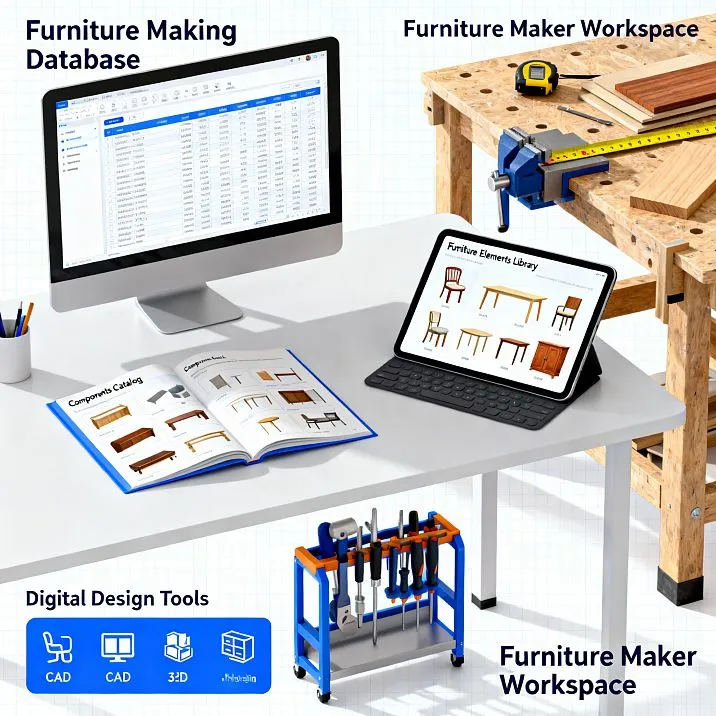
Each professional furniture designer knows: quality {count} {name}becomes the foundation of a successful project. In the era of digital technology and high-precision manufacturing, a properly selected database of materials, textures, and components determines not only the speed of the designer's work but also the quality of the final result. What does a modern database for furniture design look like, and why is it so important for industry specialists?Furniture design today is a symbiosis of traditional craftsmanship and advanced computer technologies. Designers create projects that are realized with mathematical precision, while manufacturers gain the ability to implement the most daring architectural concepts. In this process, the database serves as a link between the creative idea and its material embodiment.
Architecture of modern furniture design


Architecture of modern furniture design
Imagine an artist who works not with canvas and paint, but with a digital space, where each brushstroke is a precisely calculated element of future furniture. A modern furniture designer operates with thousands of parameters: dimensions, materials, textures, connection methods, types of hardware. And each of these parameters must not only be visually appealing but also technically correct.
A database for furniture design is not just a set of images with wood textures or catalogs of sheet material sizes. It is a comprehensive system that contains complete information on the physical properties of materials, their compatibility, processing characteristics, and applications. When a designer selects a particular wood species for a countertop, the system automatically suggests the optimal material thickness, recommends suitable edge treatments, and proposes compatible finishing options.




Evolution of furniture databases
The development path of furniture databases resembles the evolution of the furniture industry itself. In the early 2000s, these were simple libraries with basic materials — a few dozen laminate textures, standard particleboard sheet sizes, a limited hardware set. Designers worked with what was available, often improvising and creating their own textures.
Today, a quality database contains thousands of material positions, each presented not only visually but also accompanied by a complete technical description. This is a revolutionary leap that has changed the very philosophy of furniture design. Now, a designer can confidently plan the most complex projects, knowing that each element is technically verified and implementable.
Our factory also produces:


Components of a professional database
Qualitybecomes the foundation of a successful project. In the era of digital technology and high-precision manufacturing, a properly selected database of materials, textures, and components determines not only the speed of the designer's work but also the quality of the final result. What does a modern database for furniture design look like, and why is it so important for industry specialists?represents a multi-layered structure, where each level carries a specific functional load. Understanding this structure is critically important for effectively using all the system's capabilities.
Get Consultation
Material design foundation
The first and most extensive section of any professional database is the catalog of sheet and panel materials. Here, hundreds of types of laminate, MDF, plywood, solid wood are presented. But it is important to understand: each position is not just an image with a name. It is a comprehensive description including physical properties, recommended application areas, processing characteristics.
Modern sheet materials impress with their variety. From classic wood veneers to avant-garde abstract textures, from matte surfaces to glossy metallic-effect coatings. A quality database contains not only popular collections from well-known manufacturers but also rare, exclusive materials for special projects.
Special attention is paid to technical characteristics. Material density affects the choice of fasteners. Coefficient of thermal expansion is important for large structures. Moisture resistance determines the possibility of use in kitchens and bathrooms. A professional database takes into account all these nuances.
Hardware solutions and mechanisms
Furniture hardware for base cabinet makersIt occupies a special place in the database structure. It is not just a catalog of hinges and guides — it is an intelligent system for selecting optimal solutions for specific tasks.
Modern furniture hardware are high-tech mechanisms that ensure comfortable use of furniture and its durability. Soft-close systems for smooth door and drawer closure, push-to-open mechanisms for minimalist facades without handles, complex transformation systems for space-saving.
Each type of hardware has its own installation requirements, allowable loads, compatibility with various materials. The database contains not only geometric models of hardware, but also detailed installation instructions, cutting diagrams, and recommendations for selecting fasteners.
Decorative elements and appliqués
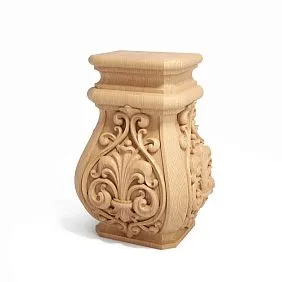
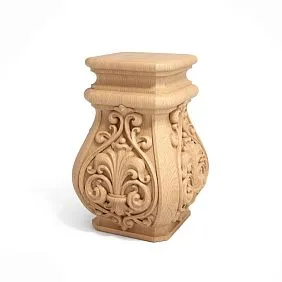
The decorative elements section turns functional furniture into a work of art.where to buy furniture decor— a question often asked by designers working on exclusive projects.
Modern furniture decor is not only traditional wood carving. It includes laser engraving, milled panels with complex geometric patterns, inlays made from various materials — from natural veneer to composite materials with unique properties.
The database contains both ready-made decorative elements and parametric models that can be adapted to a specific project. Ornamental elements can be scaled, combined, and adapted to different surface sizes.
Technical aspects of integration
Professionalbecomes the foundation of a successful project. In the era of digital technology and high-precision manufacturing, a properly selected database of materials, textures, and components determines not only the speed of the designer's work but also the quality of the final result. What does a modern database for furniture design look like, and why is it so important for industry specialists?— it is not a static archive, but a dynamic system that integrates with production processes and is constantly updated.
Compatibility with production equipment
Modern furniture production uses CNC machines that operate according to programs created directly from projects. The database contains not only visual information about materials, but also their processing parameters.
For each material, optimal tool feed rates, cutting depths, tool types and sizes for various operations are specified. This ensures processing quality and extends equipment lifespan.
Special attention is paid to edge banding operations. Each sheet material in the database is accompanied by information on compatible edge banding materials, bonding temperature regimes, and recommended adhesive types.
Cutting optimization algorithms
One of the most important functions of modern databases is automatic optimization of material cutting. The system analyzes the project, identifies all required parts, and calculates the optimal cutting layout, minimizing waste.
The algorithms take into account the direction of wood grain, material structure characteristics, and edge quality requirements. For each part, the system selects the optimal placement on the sheet, considering technological allowances and processing requirements.
Regional Characteristics and Localization
The furniture industry has clearly defined regional characteristics. What is popular in Europe may not find demand in Russia, and vice versa. A quality database takes these differences into account and offers localized solutions.
Adaptation to the Russian market
The Russian furniture market has its own characteristics: preferences in color solutions, room sizes, functional requirements. The database should reflect these characteristics, containing materials and solutions popular specifically in our country.
Climate conditions also play an important role. Russian winters, with their sharp temperature and humidity fluctuations, impose special requirements on materials. The database contains information on the behavior of various materials under our climate conditions.
Material accessibility is an important aspect. There is no point in including materials in the database that cannot be purchased in Russia or have unnecessarily high costs due to logistical difficulties.
Standards and certification
Russian construction and furniture standards may differ from European or American ones. The database contains only materials and components that meet Russian safety and quality requirements.
Special attention is paid to environmental standards. All materials in the database have corresponding certificates confirming safety for human health. This is especially important for children's furniture and bedroom furniture.
User interface and ease of use
Even the most complete and technically advanced database will be useless if it is inconvenient to work with. A modern interface must combine functionality with intuitive usability.
Search and filtering system
A professional database contains thousands of items, and finding the required material or element without an effective search system is practically impossible. Modern systems offer multiple search criteria: by material type, color, texture, manufacturer, technical specifications.
An intelligent filtering system allows quickly narrow the search scope. The designer can set the main project parameters — style, price segment, functional requirements — and the system will automatically select the most suitable options.
Visual search is another useful feature. The user can upload an image of a preferred material or element, and the system will find similar options in the database.
Preview tools
The ability to evaluate the appearance of a material or element within the context of a specific project is critical for decision-making. Modern databases offer photorealistic rendering tools that allow you to see how the selected material will look on the finished product.
The virtual try-on feature allows you to "dress" the selected material onto a furniture model and evaluate the result from all angles. You can change the lighting, viewing angle, and add surroundings for a more realistic assessment.
Economic benefits of using a quality database
Investments in professionaldatabase for furniture makerpay off through increased work efficiency and project quality.
Reduction of design time
The presence of a ready-made database of materials and elements drastically reduces project creation time. Instead of creating each texture and element from scratch, the designer uses ready-made, tested solutions.
Statistics show: using a professional database reduces design time by 40-60%. A kitchen set that previously took a week can now be completed in 2-3 days.
This is especially important when working on commercial projects, where deadlines are often critical. The ability to quickly create several project variants and show them to the client is a serious competitive advantage.
Reduction of errors
Each element of a professional database has undergone verification and testing. This means the probability of errors in the project is significantly reduced. The designer can be confident that the selected material is compatible with the planned processing method, and the hardware is suitable for the given construction type.
Errors in furniture design are costly. Incorrectly selected hardware may lead to mechanism failure, incompatible materials to product defects, inaccuracies in dimensions to assembly problems.
Expanding creative possibilities
Paradoxically, but limitations often stimulate creativity. With an extensive database of tested materials and elements at hand, the designer can experiment with unusual combinations, createUnique Interiors.
various design solutions, select the most suitable ones. Clients receive more refined and thoughtful projects.
Integration with production systems
Modernbecomes the foundation of a successful project. In the era of digital technology and high-precision manufacturing, a properly selected database of materials, textures, and components determines not only the speed of the designer's work but also the quality of the final result. What does a modern database for furniture design look like, and why is it so important for industry specialists?is not isolated — it integrates with production planning systems, inventory management, and quality control systems.
Automatic specification generation
One of the key advantages of an integrated system is the automatic creation of detailed material and component specifications. As soon as the project is ready, the system analyzes all used elements and generates a complete list of required materials, including quantities and suppliers.
This eliminates the human factor in material requirement calculations. All positions are automatically accounted for, including fasteners, adhesives, and finishing materials. The system takes into account technological losses and generates orders with necessary reserves.
Quality control and compliance with standards
An integrated database helps maintain high quality standards at all production stages. Each material and element is accompanied by information on quality requirements, allowable deviations, and control methods.
The system can automatically generate quality control checklists tailored to a specific project. This ensures uniformity in control procedures and reduces the likelihood of missing defects.
Employee training and development
Implementing a professional database requires appropriate staff training. Investments in training pay off through increased productivity and work quality.
Certification Programs
Many database providers offer certification programs for users. These programs include studying all system functions, best practices for use, and methods for optimizing workflows.
Certified specialists work more efficiently, utilize all system capabilities, and can train colleagues. This creates a multiplicative effect from investments in training.
Continuous skill development
The furniture industry is rapidly evolving, with new materials, technologies, and design trends emerging. The database is regularly updated, and staff must be prepared to work with new capabilities.
Regular training, webinars, and experience exchange with colleagues help maintain a high level of competence. Companies investing in staff development gain a competitive advantage through higher-quality projects and satisfied clients.
Trends in the development of furniture databases
The furniture design industry is not standing still. New technologies open up new possibilities for creating and using databases.
Artificial Intelligence and Machine Learning
AI is revolutionizing furniture design. Machine learning systems analyze user preferences, study successful projects, and propose optimal solutions based on accumulated experience.
Smart recommendation systems can suggest materials and elements that a designer might not consider on their own. Analysis of big data reveals non-obvious patterns and trends.
Automatic project optimization is becoming increasingly sophisticated. AI can suggest design changes that reduce production costs without compromising aesthetic quality.
Virtual and Augmented Reality
VR and AR technologies are changing how projects are presented to clients. Instead of flat images and static visualizations, clients can immerse themselves in a virtual space, walk through the future kitchen, open cabinets, and evaluate ergonomics.
The database must be adapted for use in virtual environments. This requires not only high-quality textures but also accurate reproduction of material physical properties — light reflection, tactile sensations.
Ecological responsibility
Growing attention to environmental issues influences the development of furniture databases. Information about environmental impact becomes mandatory for each material.
The database of the future will include information about the carbon footprint of materials, recyclability, and use of renewable resources. Designers will be able to create not only beautiful but also environmentally responsible projects.
Working with suppliers and manufacturers
Qualitybecomes the foundation of a successful project. In the era of digital technology and high-precision manufacturing, a properly selected database of materials, textures, and components determines not only the speed of the designer's work but also the quality of the final result. What does a modern database for furniture design look like, and why is it so important for industry specialists?is closely integrated with material and component supplier systems. This ensures up-to-date information on product availability, pricing, and delivery times.
Direct integrations with supplier catalogs
Modern systems connect to catalogs of major furniture material suppliers. Product information is updated in real time. Designers see current prices and availability and can immediately place orders.
Such integration eliminates situations where a project is ready, but required materials are unavailable or prices have changed. The system alerts users to potential issues during the design phase.
Searching for alternative solutions
If the selected material is temporarily unavailable or its price is unacceptable to the client, the system can suggest alternatives. Intelligent search will find materials with similar characteristics but from other manufacturers or price segments.
This is especially important when working on large projects, where replacing a material may require recalculating the entire estimate. The system will calculate the impact of changes on the overall project cost.
Mobility and remote work
Modern working conditions require mobility. A designer must have access to the database not only in the office but also when working with clients, on-site, or during travel.
Cloud solutions
Cloud technologies ensure access to the database from any device. Tablets and smartphones become full-fledged work tools. A designer can show clients material options directly in the showroom, make changes to the project on-site.
Synchronization between devices ensures information freshness. Changes made on one device automatically appear on all others.
Offline mode
Stable internet connection is not always available, especially on construction sites. Quality systems provide the ability to work in offline mode. The database is cached on the device, changes are saved locally and synchronized upon connection.
Security and data protection
Furniture projects often contain confidential information — room layouts, client preferences, commercial terms. The database must ensure reliable protection of this information.
Encryption and access control
All data is encrypted both during transmission and storage. Access control system ensures that each user sees only the information to which they have access rights.
Multi-factor authentication, regular password changes, monitoring suspicious activity — standard security measures for modern systems.
Backup and recovery
Loss of project data can be catastrophic for business. Backup systems create multiple copies of data at various geographic locations. In case of failure, data can be restored in minutes.
Customization and adaptation to business needs
Every furniture company is unique — it has its own specializations, preferences, corporate standards. A professional database should be sufficiently flexible to adapt to specific requirements.
Creation of corporate libraries
Companies can create their own libraries of materials and elements, supplementing the standard database. This may include proprietary solutions, exclusive materials, standard constructions, frequently used in projects.
Corporate quality standards, control procedures, document templates — all of this can be integrated into the system.
Integration with third-party systems
The database should easily integrate with other corporate systems — CRM, ERP, warehouse management systems, accounting software. This ensures a unified information space for the company.
APIs for integration allow creating specialized solutions tailored to specific company business processes.
Impact on customer experience
A quality database not only simplifies designers' work but also dramatically improves the customer experience. Modern consumers are demanding — they want to see many options, understand differences between materials, and participate in the design process.
Interactive work with clients
A tablet or laptop with access to the database turns a meeting with a client into an interactive session. The client can browse material options themselves, compare them, ask questions about properties and applicability.
The ability to instantly visualize changes makes the design process engaging for the client. They become co-authors of the project, not passive service consumers.
Pricing transparency
Integration with pricing systems allows the client to immediately see how material choices affect project cost. This builds trust and helps make informed decisions.
The client can independently experiment with options, finding the optimal balance between desired characteristics and budget.
Analytics and business intelligence
A modern database is not only a design tool but also a source of valuable analytical information. Data on customer preferences, material popularity, and designer effectiveness help make strategic decisions.
Trend and preference analysis
The system accumulates data on which materials clients choose most often, which color combinations are popular, which interior styles are trending. This information helps plan purchases and develop marketing strategies.
Predictive analytics allows forecasting future trends and preparing for changes in consumer preferences in advance.
Designer workflow optimization
Analyzing work processes reveals bottlenecks and shows where designers spend the most time. This information helps optimize the system interface and create additional automation tools.
Comparing performance of different designers helps identify best practices and organize training for less experienced staff.
Globalization and International Cooperation
The furniture market is becoming increasingly global. Designers work with clients from different countries, use materials from international manufacturers, and monitor global trends.
Multi-language support
A quality database supports multi-language operation. This is not just translating the interface — it's adapting material catalogs to local markets, accounting for regional specifics in product names and characteristics.
Compliance with international standards
Different countries have different quality, safety, and environmental requirements. The database should contain information on each material's compliance with standards of various countries.
This is especially important for export-oriented companies that supply furniture to different countries.
Practical advice on selection and implementation
Choosingbases for furniture maker— a strategic decision that affects company operations for years to come. It is important to carefully analyze needs, compare different options, and plan the implementation process.
Criteria for selecting a system
First criterion — completeness and currency of the materials catalog. The database should contain materials actually available in your market. Exotic materials that cannot be purchased only complicate the work.
Second criterion — quality of technical support. Even the most advanced system may require specialist assistance. Fast and quality support is critically important for uninterrupted operation.
Third criterion — integration capabilities. The system should easily integrate with your existing workflows, without requiring radical changes to established methods of work.
Step-by-step implementation
Implementing a new system is a complex process best conducted step by step. Start with a pilot project involving a limited number of employees. This will allow you to identify problems, refine procedures, and prepare training materials.
Be sure to plan a period of parallel operation between the old and new systems. This creates a safety net in case of unforeseen problems.
Staff Training
Investments in training are no less important than investments in the system itself. Even the most advanced database will be used inefficiently if employees are unaware of all its capabilities.
Organize comprehensive training: from basic skills for working with the system to advanced techniques for optimizing projects. Create a mentoring system where experienced users assist newcomers.
Frequently Asked Questions and Problem Solutions
How often is the materials database updated?
A quality database is regularly updated — usually monthly or even more frequently. New materials are added immediately after their appearance on the market. Outdated items are marked accordingly but are not completely removed — this is important for supporting old projects.
What to do if the required material is not in the database?
Most systems provide tools for creating custom materials. You can add photos, technical specifications, and create your own library. Some database providers accept requests to add new materials to the main database.
How to ensure material compatibility?
Professional databases contain information about compatibility of different materials. The system can automatically warn about potential issues — for example, about incompatibility of certain types of glue with specific materials.
Is it possible to work without internet?
Modern systems provide offline work capabilities. The database is cached on the local device, allowing you to work without an internet connection. Synchronization occurs automatically upon restoring connectivity.
How to transfer existing projects into the new system?
Most professional systems provide import tools from other formats. The process may not be fully automated — some elements will need manual adaptation, but this is significantly faster than recreating projects from scratch.
What to do if the team resists implementing the new system?
Resistance to change is a natural reaction. It is important to involve the team in the system selection process, explain the benefits, and provide sufficient time for training. Show how the new system resolves existing problems and simplifies work.
Professionalbecomes the foundation of a successful project. In the era of digital technology and high-precision manufacturing, a properly selected database of materials, textures, and components determines not only the speed of the designer's work but also the quality of the final result. What does a modern database for furniture design look like, and why is it so important for industry specialists?— an investment in the future of your business. It not only accelerates the design process and reduces errors, but also opens up new creative opportunities, increases customer satisfaction, and creates competitive advantages.
The modern furniture market requires a professional approach to all aspects of activity. Companies that invest in quality tools and technologies gain the ability to offer clients higher-quality services, work faster and more efficiently.
Materials for furniture maker 11 download— has become easier thanks to modern digital solutions. However, it is important to remember: technology is a tool, and the result depends on the professionalism of those who use it.
STAVROS Company has supported Russian furniture makers for many years, providing not only high-quality materials and components but also modern technological solutions. We understand the industry's needs and work to enable Russian furniture manufacturers to compete on an international level, create world-class products, and realize the most ambitious projects.


