












































































Article Contents:
- Historical Heritage of Tula Craftsmanship
- Modern interpretation of traditions
- Wood Science: Tula’s Approach to Wood Selection
- Innovative Approaches to Processing
- Design directions and stylistic solutions
- Artist Collections and Exclusive Solutions
- Modern Methods of Oak Wood Processing
- Innovative Control Methods
- Logistics and After-Sales Service
- Post-Sales Service
- Economic aspects and market positioning
- Investment attractiveness
- Ecological aspects and sustainable development
- Social Responsibility
- Industry Development Prospects
- International Expansion
- Conclusion
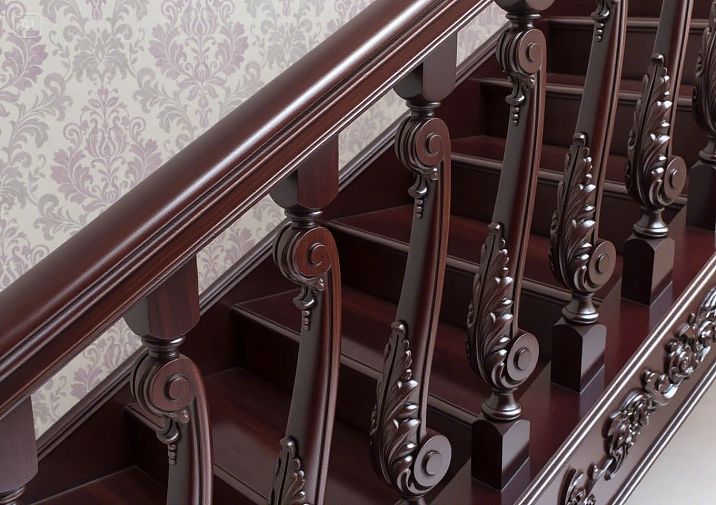
Ancient Tula, a city of masters and gunsmiths, today opens a new chapter in its history — the chapter of architectural rebirth. Here, where blades and samovars have been forged for centuries, now wooden architectural masterpieces are born, capable of adorning any home. Tula Balusters These are not just architectural elements — they are embodiments of centuries-old craftsmanship traditions, adapted to modern standards of quality and aesthetics.
What makes Tula balusters special? Why is this region becoming a magnet for those who value true quality and authentic beauty? The answer lies in the unique combination of historical heritage and modern technologies, in understanding that every interior detail must carry soul and character.
In an era of mass production and standardization, Tula craftsmen remain faithful to the principles of individualized approach to each product. Here, they do not merely manufacture balusters — they create elements that transform an ordinary staircase into a work of art, capable of being passed down through generations as a family heirloom.


Historical Heritage of Tula Craftsmanship
Tula is a city with a unique energy, where every stone breathes the history of craftsmanship. Traditions of metal and wood processing, established centuries ago, today find new embodiment in the creation of high-quality architectural elements.
The craftsmanship gene is passed down in Tula from generation to generation. Local artisans absorbed an understanding of materials, sense of proportions, and pursuit of perfection from their mothers’ milk. These qualities, refined over centuries of metalwork, are now applied to woodworking, creating a unique blend of tradition and innovation.
The culture of precision, formed in gunsmithing, demands millimeter accuracy in every detail. These quality standards are automatically transferred to baluster production, where each element must be crafted with jewel-like precision. Tula craftsmen do not allow compromises in quality — it is a matter of professional honor.
The culture of material in Tula has deep roots. Local artisans understand wood as a living material, know its character, the peculiarities of different species, and are able to reveal the beauty of natural texture. This knowledge, accumulated over generations, allows creating items that are not only functional but also aesthetically perfect.




Modern interpretation of traditions
The technological revolution has not bypassed Tula workshops. Modern CNC-controlled equipment allows to realize the most complex design concepts with precision unattainable by manual processing. However, technologies here do not replace the craftsman, but complement him, expanding creative possibilities.
The synthesis of experience and innovation creates a unique atmosphere in Tula production. Here, young engineers work hand-in-hand with experienced masters, creating items that combine modern functionality with traditional beauty.
The ecological awareness of Tula producers is manifested in careful selection of raw materials and use of environmentally friendly technologies. Wood comes only from certified sources, and production processes are organized with minimal environmental impact.
Our factory also produces:


Wood Science: Tula’s Approach to Wood Selection
Material selection for manufacturing balusters in Tula is a science based on deep understanding of properties of different wood species and long experience working with them. Each species has its own character, its own features, which an experienced master knows how to use to achieve the best result.
Russian oak holds a special place in the hearts of Tula craftsmen. This species, celebrated in Russian literature and folklore, possesses unique characteristics of strength and durability. Oak density of 700-800 kg/m³ ensures exceptional resistance to mechanical impacts, while high content of tannins provides natural protection against biological damage.
Tula craftsmen especially value oak for its ability to 'age beautifully'. Over time, oak balusters acquire a noble patina that only enhances their aristocratic elegance. Each growth ring tells its own story, creating a unique pattern that cannot be artificially reproduced.
Siberian larch is another favorite of Tula producers. This species combines the beauty of conifers with exceptional resistance to external influences. High resin content makes larch practically impervious to moisture and insects, which is especially important for items used under harsh conditions.
Get Consultation
Innovative Approaches to Processing
Thermal modification of wood is one of the advanced technologies used in Tula. At temperatures of 180-230°C, irreversible changes occur in the wood structure, significantly improving its performance characteristics. Thermally modified wood acquires increased dimensional stability, resistance to rot, and a beautiful chocolate hue.
Deep impregnation with protective compounds under pressure ensures penetration of protective substances up to 20 mm depth. This technology, borrowed from shipbuilding, guarantees the longevity of products even under the most severe operating conditions.
Stabilization of wood with polymer compounds is another direction actively developing in Tula. Special compounds penetrate into wood pores, creating an internal frame that prevents deformation and increases material strength.
Design directions and stylistic solutions
The Tula school of baluster design has been shaped under the influence of various architectural traditions, yet it has preserved its unique identity. Here, they are capable of creating both strict classical forms and bold avant-garde solutions, always remaining faithful to principles of quality and functionality.
Russian Classicism in the Tula interpretation is distinguished by particular monumentality and expressiveness. Classic-style balusters have clearly defined proportions based on the principles of the golden section. The base, stem, and capital create a harmonious composition, where each element has its place and significance. The feature of Tula classicism is the use of traditional Russian motifs in decoration. Stylized oak, birch, and rowan leaves create a recognizable national character that integrates organically into modern interiors.
Modern Tula Moderne is characterized by smooth lines and natural motifs, yet retains a certain rigor inherent to local traditions. Vegetal ornaments are stylized to emphasize the constructive logic of the item, rather than conceal it behind decorative excesses.
Tula Modern is characterized by smooth lines and natural motifs, yet retains a certain strictness inherent to local traditions. Vegetal ornaments are stylized to emphasize the constructive logic of the item, rather than conceal it behind decorative excesses.
Author collections and exclusive solutions
Individual design is the hallmark of Tula workshops. Here, experimentation is not feared, and bold client ideas are ready to be realized. Each project is treated as a unique creative challenge requiring an individual approach.
Collaborations with designers allow for truly innovative solutions. Tula masters actively cooperate with leading architects and designers, creating items that become standards of style and quality.
Limited editions are produced for special projects and collectors. These items are distinguished by their exceptional craftsmanship and exclusivity, often becoming investment objects.
Production technologies and quality control
Modern baluster production in Tula is a high-tech process where each stage is strictly controlled and documented. The quality management system implemented at leading enterprises meets international standards and ensures consistently high product quality.
Raw material incoming control includes checking moisture content, density, absence of defects and imperfections in wood. Each material batch undergoes careful sorting, and only the best samples are allowed into production. Modern instruments allow determining internal stresses in wood and predicting its behavior during processing.
The technological process is divided into clearly defined stages, each with its own control points. Wood drying is conducted in special chambers with precise temperature and humidity control. Mechanical processing is performed on high-precision equipment with constant monitoring of dimensions and surface quality.
Final processing includes several stages of sanding with gradually decreasing abrasive grit. Modern dust removal systems ensure a perfectly clean surface before applying protective coatings.
Innovative control methods
Laser scanning allows creating accurate 3D models of finished items and comparing them with reference samples. Any deviations from specified parameters are immediately detected and corrected.
Ultrasonic defectoscopy detects internal wood defects invisible to visual inspection. This ensures the absence of hidden flaws in finished items.
Climate testing simulates various operating conditions and allows predicting item behavior under real-world conditions. Special chambers create extreme temperatures, humidity, and other environmental factors.
Logistics and service support
Tula manufacturers understand that a quality product must be accompanied by an appropriate level of service. A developed logistics network ensures fast and secure delivery balusters from Tula to any point in Russia and abroad.
Specialized packaging protects items from damage during transport. Each baluster is individually packaged using modern protective materials. Group packaging ensures ease of loading and unloading.
Own fleet allows controlling the entire delivery process from warehouse to site. Specialized vehicles with climate control ensure cargo safety under any weather conditions.
Tula manufacturers' installation crews work throughout Russia, ensuring professional installation of items. Experienced craftsmen know all the nuances of installation and guarantee quality results.
After-sales service
Tula manufacturers' warranty obligations are among the longest on the market. Standard warranty is 5 years, and for premium items it may reach 10 years. This reflects manufacturers' confidence in the quality of their products.
Technical support includes consultations on care, maintenance, and repair of items. Qualified specialists are always ready to help resolve any issues related to the operation of balusters.
Loyalty programs for regular customers include special pricing, priority service, and exclusive offers. Long-term customer relationships are the foundation of a successful business.
Economic Aspects and Market Positioning
The Tula baluster market is characterized by high competition, which motivates manufacturers to continuously improve their products and reduce costs. However, the main focus is not on dumping, but on improving quality and expanding the product range.
Tula manufacturers' pricing policy is based on the principle of fair pricing. Prices are set based on actual production costs with a reasonable markup. This ensures business stability and the ability to invest in development.
Market segmentation allows offering products for different consumer categories. The economy segment is represented by simple items made from coniferous species, while the premium segment features exclusive balusters made from valuable wood with original design.
Tula manufacturers' export potential is actively developing. Quality items find demand on international markets, especially in countries that value natural materials and high-quality craftsmanship.
Investment Appeal
Modernization of production requires significant investments, but is recouped through increased productivity and product quality. Tula enterprises actively attract investments to update equipment and implement new technologies.
Human capital development includes staff training, qualification improvement, and attracting young specialists. Investments in human capital are a guarantee of long-term success.
Research activities are conducted in cooperation with relevant institutes and universities. Development of new materials, technologies, and design solutions ensures competitive advantages.
Ecological aspects and sustainable development
Environmental responsibility is becoming an increasingly important factor in the activities of Tula baluster manufacturers. Understanding the necessity of preserving the environment for future generations influences all aspects of production activities.
Certified wood forms the basis of the raw material base for responsible manufacturers. FSC and PEFC certificates guarantee that the wood is sourced from forests managed according to the principles of sustainable forestry.
Zero-waste technologies allow for the most efficient use of raw materials. Waste from main production is recycled into fuel pellets, wood flour for composite materials, and decorative wood chips for landscape design.
Energy efficiency of production processes is continuously improved through the introduction of modern equipment and optimization of technological regimes. Many enterprises are transitioning to renewable energy sources.
Social Responsibility
Creating jobs in the region contributes to the socio-economic development of the Tula region. Baluster manufacturing enterprises provide employment not only in main production but also in related industries.
Education support includes cooperation with relevant educational institutions, organizing internships and practical training for students, and participation in educational programs.
Charitable activities of Tula manufacturers are aimed at supporting local communities, preserving cultural heritage, and developing sports and culture in the region.
Industry Development Prospects
The future of baluster production in Tula is envisioned as further technological modernization, expansion of product range, and entry into new markets. Key development trends are linked to digitization, personalization, and ecological production.
Digital technologies fundamentally change approaches to design and production. BIM modeling allows creating accurate virtual models of future products and integrating them into overall building projects. Augmented reality technologies help clients visualize results even before production begins.
Mass customization is becoming a new industry standard. Modern production systems allow manufacturing unique items with nearly the same efficiency as mass-produced ones. This opens new opportunities to meet individual customer needs.
Integration with smart homes requires developing balusters with embedded technological elements. Lighting systems, motion sensors, and climate control components can be integrated into architectural elements, creating a new level of functionality.
International expansion
Entering foreign markets opens new growth opportunities. Tula manufacturers already have experience working with international clients and plan to expand their distribution geography.
Adapting to local requirements of different countries requires flexibility in production processes and design. Each market has its own characteristics that must be considered when developing products.
Creating international partnerships allows using local distribution channels and service networks. Strategic alliances with foreign companies provide access to new technologies and markets.
Conclusion
Tula land, renowned for the craftsmanship of its artisans, is today writing a new chapter in the history of Russian craftsmanship. Tula Balusters These are not just products of local enterprises, but symbols of quality, reliability, and beauty that are valued far beyond the region.
The combination of centuries-old craftsmanship traditions with modern technologies creates a unique atmosphere where exceptional quality products are born. Each baluster created in Tula carries a part of the master’s soul and reflects the best traditions of Russian architecture.
Investments in Tula wooden balusters These are investments in quality, durability, and beauty. These items not only perform their function, but they create an atmosphere, shape the character of interiors, and become objects of pride for owners.
The future of Tula baluster production is envisioned as further technological development, expansion of product range, and strengthening positions in international markets. The traditions of quality, established by generations of masters, will become the foundation for new achievements and victories.
In a world where individuality and authenticity are increasingly valued, Tula balusters offer a unique opportunity to experience true craftsmanship. They remind us that beauty and quality know no time, and good work always finds its admirer.
STAVROS, a recognized leader in the production of wooden architectural elements, continues and develops the best traditions of Tula craftsmanship. Combining decades of experience with modern technologies, STAVROS creates balusters that become benchmarks of quality and beauty. Choosing STAVROS products means investing in a heritage that will delight many generations, creating an atmosphere of comfort, reliability, and elegance in your home.


