Article Contents:
- Architectural role of balusters in the second-floor space
- Creating visual connections between levels
- Zoning and functional organization
- Material science: choosing wood for the second floor
- Premium species for prestigious interiors
- Practical solutions for everyday use
- Stylistic solutions for different interior types
- Classic Directions
- Modern Interpretations
- Technical aspects of installation on the second floor
- Features of installation in multi-level structures
- Mounting systems for the upper level
- Acoustic and thermal properties
- Construction norms for the second floor
- Child safety
- Aesthetic Aspects and Design Solutions
- Color Solutions and Finishing
- Decorative elements and ornaments
- Technological innovations in production
- Modern Wood Processing Methods
- Innovative materials and coatings
- Economic Aspects and Planning
- Pricing factors
- Economic Efficiency of Various Solutions
- Maintenance and care
- Regular Maintenance
- Preventive Measures
- Conclusion
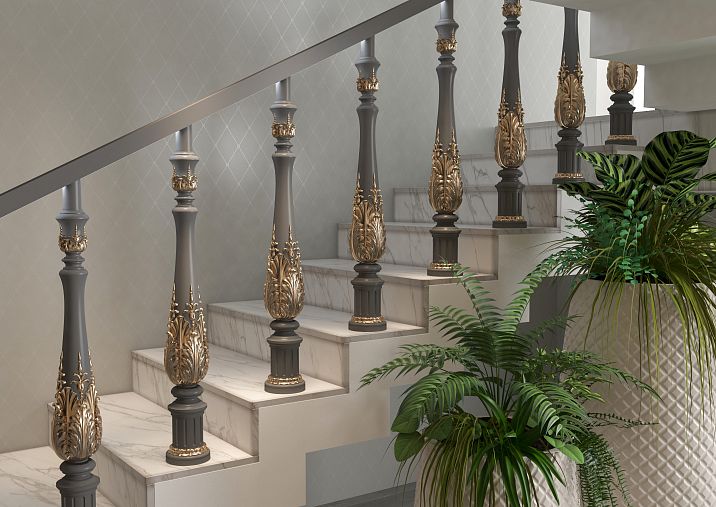
The second floor of a house is a special space where every detail must contribute to creating an atmosphere of comfort and safety. Balusters on the 2nd floor Play a key role in forming the architectural appearance of the upper level, transforming functional railings into refined decorative elements. These vertical posts not only ensure safety but also create spatial rhythm, emphasize the home’s stylistic concept, and become the signature feature of the entire interior.
Why does the second floor require special attention to baluster selection? The upper level of a house is a zone of heightened responsibility, where family safety directly depends on the quality of railings. Here are bedrooms, children’s rooms, and home offices — spaces where people spend significant portions of their time. Residents interact with stair railings every morning and evening, so their aesthetic and functional qualities must be flawless.
Modern wood processing technologies allow creating balusters of any complexity, from classic turned forms to avant-garde design solutions. The choice of a specific style depends on the home’s architectural concept, the owners’ personal preferences, and functional requirements of the structure.


Architectural role of balusters in the second-floor space




Creating visual connections between levels
Balusters on the second floor serve as a unique connecting element between the first and second levels of the house. They create visual continuity of the architectural solution, ensuring a harmonious transition from public areas on the first floor to private spaces on the second. Properly selected balusters can visually unify multi-level rooms into a single composition.
Rhythmic organization of space is one of the most important functions of balusters on the second floor. Evenly spaced vertical elements create a certain rhythm that influences the perception of the entire interior. The frequency of baluster installation, their proportions, and decorative features form the character of the space — from grand and formal to cozy and intimate.
Lighting plays a critical role in the perception of balusters on the second floor. Natural light from upper-level windows creates a play of light and shadow between vertical posts, emphasizing their volume and material texture. Artificial lighting must be designed to highlight the beauty of balusters while ensuring safe movement.
Acoustic properties of wooden balusters are also important for comfort on the second floor. Wood has the ability to absorb sound waves, reducing noise from footsteps and conversations. This is especially important in homes with children, where the second floor often becomes an area of active play.
Our factory also produces:


Zoning and functional organization
Balusters on the second floor often serve a zoning function. In homes with open-plan upper levels, they can separate hallways from sleeping zones, creating a sense of privacy without erecting solid walls. Different heights of balusters, their installation density, and decorative features allow creating zones with varying degrees of openness.
Gallery spaces on the second floor require a special approach to baluster placement. Here, they not only ensure safety but also create architectural expressiveness, transforming an ordinary corridor into an impressive gallery. Balusters can support not only handrails but also decorative arches, creating a complex spatial composition.
Children’s zones on the second floor impose special requirements on balusters. The distance between posts must not exceed 100 mm to prevent a child from slipping through. The height of the railing must be at least 1200 mm in areas accessible to children. The surface of balusters must be smooth, without sharp edges or burrs.
Get Consultation
Wood science: selecting wood for the second floor
Premium species for prestigious interiors
Oak remains the unrivaled choice for balusters on the second floor of high-class homes. Its density of 700 kg/m³ ensures exceptional strength and durability of structures. Tannins in oak wood provide it with natural resistance to moisture and biological damage. The color range of oak varies from light golden to dark brown, allowing selection of the optimal tone for any interior.
Ash attracts designers with its exceptional strength and beautiful texture. With a density of 650-700 kg/m³, this species can withstand significant loads without deformation. Light shades of ash with contrasting annual rings create an expressive pattern, especially effective in modern second-floor interiors.
Walnut is an elite material with a unique chocolate color and complex texture pattern. The density of walnut wood reaches 650 kg/m³, and its workability allows creating delicate decorative elements. Natural oils in the wood composition provide additional protection against external influences.
Redwood (mahogany) is considered a classic for luxury furniture and architectural elements. Its deep red-brown color and noble texture create an atmosphere of luxury and respectability. Dimensional stability and resistance to deformation make mahogany an ideal choice for critical structures.
Practical solutions for everyday use
Spruce remains the most popular material due to its optimal price-to-quality ratio. With a density of 500-550 kg/m³, spruce wood has sufficient strength for most applications. Natural resins provide protection against moisture and pests, while its light shade creates a sense of cleanliness and freshness.
Larch stands out among coniferous species with unique operational characteristics. Density reaches 665 kg/m³, comparable to broadleaf species. High content of resin and tannins makes larch practically immune to moisture and biological damage. The golden-amber shade becomes even more noble over time.
Beech is characterized by uniform structure and beautiful pinkish shade. Its density is 680 kg/m³, ensuring high product strength. Beech wood is easy to process and retains its shape well after drying. Its ability to be evenly stained allows creating items of any color scheme.
Birch attracts attention with its accessibility and good working properties. With a density of 600-650 kg/m³, birch wood provides sufficient strength for baluster production. Light, almost white birch color is ideal for Scandinavian style and minimalist interiors.
Stylistic solutions for different types of interiors
Classic styles
Classic style requires strict adherence to proportions and canons developed over centuries. Balusters on the second floor In classical execution, balusters often have the form of miniature columns with a base, shaft, and capital. The order system defines the main principles: Doric order dictates simplicity and masculinity of forms, Ionic — elegance and refinement, Corinthian — luxury and ornamentation.
Baroque balusters represent the peak of decorative art. Complex curved forms, rich ornamentation, play of light and shadow characterize this style. Balusters often resemble several vases stacked one on another, decorated with rich acanthus leaves, volutes, and cartouches.
Empire created its interpretation of classical forms with military symbolism. Laurel wreaths, eagles, fasces, swords — all these elements found their place in the decoration of balusters of the imperial era. The strictness of lines combines with the grandeur of images, creating an atmosphere of greatness and parade.
Neoclassicism adapted ancient forms to modern needs. While preserving the main principles of classical architecture, this style allows some liberties in interpreting canonical forms. Balusters may be more laconic, yet still retain the nobility of proportions.
Modern Interpretations
Modernism revolutionized the approach to architectural elements, abandoning historical styles in favor of natural forms. Plant motifs became the basis of modernist aesthetics. Stems, leaves, flowers, intertwining branches — nature became the main source of inspiration for creators of balusters in the modern style.
Art Deco introduced geometric motifs and luxurious materials into baluster design. Zigzags, stepped forms, sun rays — characteristic elements of this style. Combining wood with metal inserts, mother-of-pearl or ivory inlay created an effect of luxury and modernity.
Minimalism requires extreme simplicity of forms. Balusters in minimalist style are characterized by simple geometry, absence of decorative elements, clean lines. Square or rectangular cross-section, smooth surfaces, neutral colors — main characteristics of minimalist balusters.
Scandinavian style combines functionality with coziness. Balusters made of light wood species, simple forms, natural textures create an atmosphere of a northern home. Absence of unnecessary decoration is compensated by material quality and perfect proportions.
Technical aspects of installation on the second floor
Features of installation in multi-level structures
Installation of balusters on the second floor has specific features related to the structural characteristics of multi-level buildings. Floor slabs between levels create additional vibrations that must be considered when designing fastening systems. Wooden slabs are more flexible than concrete, requiring reinforcement of connection nodes.
Temperature and humidity conditions on the second floor differ from the first. Warm air rises, creating a temperature difference between levels. This may lead to different drying rates of wood and stress formation in the structure. Balusters must be made from wood with the same moisture content and treated with stabilizing compounds.
Loads on second-floor balusters may be higher than on the first, especially in homes with children. The upper level often becomes a play area where children may hang on railings or use balusters as support for games. Fasteners must withstand not only static but also dynamic loads.
Accessibility for maintenance is an important factor when planning baluster installation on the second floor. Some elements may be difficult to access for regular maintenance, so materials and finishes must be especially durable and require infrequent renewal.
Fastening systems for the upper level
The choice of baluster fastening system on the second floor depends on the type of floor slab, base material, and expected loads. Wooden floor slabs allow using traditional fastening methods — dowels, self-tapping screws, bolted connections. Concrete floor slabs require the use of anchor systems or chemical anchors.
Adjustable fasteners are especially relevant for the second floor, where minor structural settlements may occur. Special systems allow adjusting the position of balusters without dismantling the entire structure. This is particularly important in new homes, where natural material shrinkage occurs.
Anti-vibration pads help reduce vibration transmission from stairs to the second-floor structure. Elastic materials are placed at connection nodes, dampening vibrations and preventing squeaks and creaks.
Hidden mounting systems allow creating an aesthetically perfect structure without visible fasteners. Special bushings, magnetic systems, pneumatic clamps — modern industry offers numerous innovative solutions for concealed mounting.
Safety and regulatory requirements
Building codes for the second floor
Safety is a priority when designing balusters for the second floor. Building codes establish strict requirements for guardrail height, spacing between elements, and strength characteristics. The height of railings on the second floor must be at least 1100 mm to ensure safety for adults.
The distance between balusters should not exceed 120 mm center-to-center to prevent children from slipping through. In homes with young children, it is recommended to reduce this distance to 100 mm. Vertical elements must be installed strictly vertically, without any inclinations that could facilitate climbing.
Strength requirements for second-floor balusters are stricter than for the first floor. The horizontal load on the handrail should be at least 100 kg/m without residual deformation. Each baluster must withstand a point load of 30 kg applied at a height of 900 mm above the floor level.
Fire resistance of materials is especially important for the second floor, where evacuation in case of fire may be difficult. Wood must be treated with fire retardants that reduce the flammability of the material. Metal fasteners must retain strength at high temperatures.
Child safety
The second floor often becomes a children's area, which imposes special safety requirements on balusters. Surfaces must be smooth, free of burrs, chips, and sharp edges. All fasteners must be concealed or securely covered with decorative caps.
The height of handrails for children should be adapted to their height. Additional handrails at 500-600 mm height provide convenience for children of different ages using the stairs. Handrails should have an easy-to-grip shape — round cross-section with diameter 30-40 mm or oval cross-section.
Materials must be environmentally safe. Lacquers and paints must not contain volatile organic compounds, heavy metals, or other harmful substances. Preference should be given to water-based coatings based on natural materials.
Construction solutions must exclude the possibility of body parts getting stuck. All openings must be either less than 50 mm or greater than 230 mm. Intermediate sizes create a risk of head or limb entrapment.
Evenly
Color solutions and finishing
Color scheme selection for balusters on the second floor The color scheme selection should consider room lighting, overall interior color palette, and psychological impact of color. Light tones visually expand space and increase brightness, while dark tones create a sense of coziness and intimacy.
Natural wood tones remain the most popular for residential interiors. Transparent finishes and oils highlight the natural beauty of the material while preserving its tactile qualities. Tinting compounds allow changing the color of wood while retaining its texture.
Contrasting solutions create expressive interiors. Dark balusters on a light background or vice versa attract attention and become accent elements. Such an approach requires caution — contrast should not be excessive to avoid visual discomfort.
Patina and artificial aging allow creating an antique effect. Special processing techniques mimic natural wood aging, creating a sense of historical value. Such balusters are especially suitable for classic-style interiors.
Decorative elements and ornamentation
Carving is a traditional way to decorate balusters. Modern technologies allow creating ornaments of any complexity — from simple geometric patterns to complex floral compositions. The depth, character, and placement of carving determine the stylistic affiliation of the piece.
Inlaying with various materials creates exclusive pieces. Inserts made of precious woods, metals, mother-of-pearl, or stone transform balusters into works of decorative-applied art. Such elements require special craftsmanship and significant time investment.
Combining materials opens new design possibilities. Combining wood with metal, glass, or ceramic creates modern and expressive compositions. It is important to maintain a balance between different materials to avoid eclecticism.
Baluster lighting — a modern technique allowing to create striking interiors. Built-in LED strips, spotlights, and light guides transform balusters into lighting elements. Such solutions are especially effective at night.
Technological innovations in production
Modern wood processing methods
CNC machines have revolutionized baluster production. Five-axis milling centers can create items of any complexity with micron-level precision. Programmable lathes ensure perfect repeatability of complex profiles.
Laser processing opens new possibilities for decorating balusters. Laser engraving allows applying delicate ornaments, inscriptions, and images with photographic precision. Laser cutting creates delicate elements impossible to achieve with traditional methods.
Thermal modification of wood changes its properties at the molecular level. Treatment at 160-230°C in an oxygen-free environment increases dimensional stability, moisture resistance, and resistance to biological damage. Thermally modified wood does not require additional protective treatment.
Pressure impregnation ensures deep penetration of protective compounds into the wood structure. Special autoclaves create pressure up to 12 atmospheres, forcing protective substances to penetrate up to 15 mm deep. Such treatment guarantees the longevity of the products.
Innovative materials and coatings
Nanocoatings create a protective layer on the wood surface, several molecules thick. Titanium dioxide nanoparticles provide self-cleaning properties under UV exposure. Nano-silver imparts antibacterial properties to the coating.
Wood-based polymer composites combine the beauty of natural wood with the practicality of modern materials. They are resistant to rot, do not require protective treatment, and are dimensionally stable. Modern technologies allow creating composites indistinguishable from natural wood.
Smart materials with shape memory open new possibilities for creating adaptive structures. Balusters made from such materials can change their shape depending on temperature or humidity, ensuring optimal operational characteristics.
Biodegradable coatings based on natural polymers ensure ecological safety of products. After the end of their service life, such coatings fully degrade without harming the environment.
Economic Aspects and Planning
Pricing Factors
The cost of balusters for the second floor depends on multiple factors: wood species, processing complexity, type of fastening systems, order volume. Premium wood species may cost 5-10 times more than common ones, but their longevity and prestige justify the additional expenses.
The complexity of manufacturing significantly affects the cost. Simple, precision-turned balusters are produced on automatic machines with minimal labor input. Carved items require skilled manual labor, which increases their cost manyfold.
Order volume allows optimizing production processes and reducing the unit cost of items. Ordering a complete set of staircase elements can result in a significant discount. Standard sizes are cheaper than custom ones.
Logistical costs can constitute a significant portion of the total cost, especially for remote regions. Balusters are bulky items requiring special packaging and careful transportation. Cargo insurance increases transportation costs but guarantees compensation in case of damage.
Economic efficiency of various solutions
Investments in quality balusters pay off through their longevity and low maintenance costs. Items made from premium wood last 50-100 years without major repairs, whereas cheap alternatives require replacement every 10-15 years.
Energy efficiency of wooden structures contributes to reduced heating costs. Wood has low thermal conductivity, providing additional insulation in the stair area. This is especially important for homes with high ceilings.
Maintenance cost of quality balusters is minimal. Properly treated wood requires only periodic cleaning and renewal of protective coating every 5-7 years. Cheap items may require annual repair and renewal.
Residual value of quality balusters remains high even after many years of use. During home reconstruction, they can be dismantled and reused or sold as antique items.
Care and Maintenance
Regular Maintenance
Balusters on the second floor require regular care to maintain their appearance and performance. Daily dry cleaning with soft cloth removes dust and prevents its accumulation in decorative elements. Wet cleaning is performed as needed using slightly damp cloth without aggressive cleaning agents.
Protection from direct sunlight prevents uneven color changes in the wood. Although larch is resistant to UV radiation, prolonged exposure may cause fading in certain areas. Using curtains or blinds helps resolve this issue.
Protective coating renewal is performed as needed. Signs of coating wear include loss of gloss, matte spots, and surface roughness. Renewal frequency depends on usage intensity and initial coating quality.
Local repair of minor damage can be done independently. Scratches and dents are sanded with fine abrasive, followed by application of the appropriate coating. It is important to use the same type of coating as during the initial treatment.
Preventive measures
Protection from direct sunlight prevents uneven color changes in wood. Although high-quality wood is resistant to UV, prolonged exposure may cause fading in certain areas. Using curtains or blinds helps resolve this issue.
Climate control is especially important in homes with large windows on the second floor. Sudden temperature and humidity fluctuations may cause wood deformation. The air conditioning system must ensure even air distribution throughout the entire room volume.
Professional maintenance is recommended every 3-5 years. Specialists will perform a full structural diagnosis, tighten fasteners if necessary, renew finishes, and address identified defects. This ensures the longevity and safety of the staircase railing.
Documenting the condition of balusters helps plan maintenance and track changes. Photo documentation, records of completed work, and scheduled maintenance calendars all contribute to extending the service life of the structure.
Conclusion
Selection and installation balusters on the second floor Installing balusters on the second floor is a complex task requiring consideration of multiple factors: from technical safety requirements to aesthetic preferences of homeowners. Properly selected and professionally installed balusters not only ensure safe movement on the second floor but also become an important element of interior design.
Modern woodworking technologies allow creating balusters of any complexity and style, from classic forms to avant-garde design solutions. Innovative materials and finishes ensure longevity and minimal maintenance requirements, making wooden balusters a practical choice for modern homes.
Investments in quality balusters for the second floor pay off through their longevity, safety, and aesthetic value. A properly designed and installed railing system serves for decades, maintaining its functionality and appeal.
Environmental aspects are becoming increasingly important when selecting materials for living spaces. Naturally sourced wood from sustainably managed forests, safe finishes, and energy-efficient production technologies — these factors must be considered when planning a project.
The future of baluster art lies in integrating traditional craftsmanship with modern technologies. Digital design, robotic production, and smart materials open new possibilities for creating unique and functional items.
STAVROS, with its rich experience in woodworking, continues the tradition of the highest quality in creating staircase elements. The combination of centuries-old craftsmanship traditions with advanced technologies enables STAVROS to produce items that become a decoration for any home. Every STAVROS project is a manifestation of perfection in every detail, the result of meticulous work by skilled artisans and a commitment to absolute quality.