Article Contents:
- History and evolution of balusters: from Renaissance to the present day
- Functional purpose: more than just support
- Safety Above All
- Constructive rigidity
- Aesthetic component
- Advantages of wooden balusters: why wood is unmatched
- Ecological and natural properties
- Aesthetic appeal
- Variety of design solutions
- Ease of processing and modification
- Ease of installation and replacement
- Durability with Proper Care
- Choice of wood species: from budget pine to premium oak
- Coniferous species: accessibility and practicality
- Hardwood species: strength and elegance
- Exotic Species: Uniqueness and Character
- Material compatibility rule
- Types and styles of wooden balusters: from classic to avant-garde
- Classical styles
- Modern styles
- Special shapes and solutions
- Manufacturing technologies: from hand carving to CNC processing
- Turning: The Genre’s Classic
- Milling processing: playing with relief
- Wood carving: master’s handwork
- CNC processing: precision and complexity
- Combined technologies: synergy of traditions and innovations
- Installation and mounting: technical aspects and recommendations
- Preparatory work
- Ways to mount balusters
- Technical parameters and requirements
- Final finishing
- Common Installation Mistakes
- Maintenance and care: preserving beauty for decades
- Regular maintenance
- Periodic maintenance
- Protection from Unfavorable Factors
- Restoration of old balusters
- Modern trends and innovations in the design of wooden balusters
- Minimalism and geometric clarity
- Combining materials
- Ecological sustainability and development
- Personalization and Individual Design
- Technological Innovations
- Conclusion: balusters as a reflection of style and individuality
In the world of architectural elements, there are details that, despite their apparent secondary importance, are capable of completely transforming a space, giving it completeness and a unique charm. One such element, without doubt, is Wooden balustersThese elegant vertical supports, supporting stair railings, balconies, and terraces, combine functionality and decoration, practicality and aesthetics, reliability and refinement.
Imagine a luxurious wooden staircase in a country house. What makes it truly majestic and memorable? Undoubtedly, it is the carefully selected and masterfully crafted balusters, which, like guardians, line up along the stair run, creating a unique rhythmic pattern. They not only ensure safety when ascending and descending, but also become the central element of interior composition, setting the tone for the entire space.
In this article, we will dive into the wonderful world of wooden balusters, uncovering their history, functional purpose, variety of forms and styles, production and installation specifics. You will learn why wooden balusters remain timeless and unmatched in competition, which wood species are optimal for their manufacture, and how to properly choose this architectural element for your home. Ready to embark on a journey through the world of wooden architecture? Then let’s begin!


History and evolution of balusters: from the Renaissance to our days
Amazingly, balusters, which today seem an indispensable part of architecture, appeared relatively recently by historical standards. Unlike columns and pilasters widely used in ancient Rome and Greece, balusters entered the architectural lexicon only during the Renaissance.
There are several versions of the origin of the term 'baluster'. One version suggests the name is linked to the shape of a closed flower bud, which resembles the outline of this architectural element. Another version claims that balusters are miniature copies of classical columns, adapted for decorative purposes.
Initially, balusters were used exclusively for balcony railings, and only in the 15th century did they begin to be applied in staircase construction. From the end of the 15th century, these elements rapidly gained popularity, becoming an indispensable part of interiors, exteriors, park ensembles, and urban spaces.
Over centuries, baluster design evolved alongside architectural styles: from lavish Baroque forms to strict neoclassical lines, from intricate Victorian patterns to minimalist modern solutions. However, the core concept of the baluster as a vertical support for railings remained unchanged, confirming the genius and functionality of this architectural invention.
Today Wooden balusters are experiencing a true renaissance, returning to modern interiors not only as a tribute to tradition, but also as a contemporary design element capable of imparting individuality and character to a space. Woodworking masters create both classic models and innovative solutions, combining traditional techniques with modern technologies and aesthetics.




Functional purpose: more than just support
It would be a mistake to consider balusters exclusively as decorative elements. In fact, these architectural details perform three crucial functions, ensuring comfort and safety when using staircases and other elevated structures.
Our factory also produces:


Safety above all
The primary task of balusters is to prevent falls from staircases or balconies. According to building codes, the distance between balusters must not exceed 15 centimeters. This is a critically important parameter, guaranteeing that in case of losing balance, a person can grasp a baluster or railing, and a child cannot squeeze between the supports.
Correctly installed Wooden balusters create a reliable barrier, ensuring safe movement along the staircase for all family members — from children to the elderly. At the same time, unlike solid railings, they do not create a sense of enclosure and heaviness, preserving the visual lightness of the structure.
Get Consultation
Structural rigidity
The second important function of balusters is to ensure structural integrity and rigidity of the entire staircase structure. Evenly distributed along the length of the stair run, balusters create additional support points for railings, preventing their bending and deformation under load.
Wooden balusters, despite their apparent fragility, exhibit excellent strength characteristics in bending and compression, especially when using hardwood species. They effectively distribute lateral loads that arise when leaning on railings, ensuring the long-term durability of the entire structure.
Aesthetic component
The third, but no less important function of balusters — aesthetic. It is precisely the balusters that define the visual appearance of the staircase, establish its style and character. Thanks to the variety of forms, sizes, and decorative elements, Wooden balusters they can serve as a restrained interior accent or a striking focal point.
The rhythmic alternation of balusters creates a dynamic composition that accompanies movement along the staircase and attracts the eye. The play of light and shadow on carved details, the warmth of natural wood, tactile comfort upon touch — all of this makes wooden balusters an indispensable element in creating a cozy and harmonious atmosphere in the home.
Advantages of wooden balusters: why wood is unmatched in competition
In modern construction, various materials are used to manufacture balusters: metal, stone, glass, plastic. However, wooden balusters remain the most popular and in-demand option. What accounts for this leadership?
Ecological and natural
Wood is an absolutely natural material, free of chemical additives and not emitting harmful substances. Moreover, wood positively affects the microclimate of a room, regulating humidity and enriching the air with beneficial phytoncides and essential oils.
Choosing Wooden balusters, you create not only a beautiful, but also a healthy interior, especially important for homes where children, elderly people, or allergy sufferers reside.
Aesthetic appeal
No artificial material can replicate the unique texture, pattern, and warmth of natural wood. Each wooden baluster is unique, like a fingerprint, due to its individual wood grain and growth rings.
Wooden balusters bring a sense of coziness, solidity, and nobility to an interior. They harmoniously combine with other natural materials — stone, leather, textiles — creating a harmonious and cohesive composition.
Variety of design solutions
Wood is an incredibly versatile material, allowing for the realization of the most daring design ideas. Modern woodworking technologies enable the creation of balusters of virtually any shape and complexity:
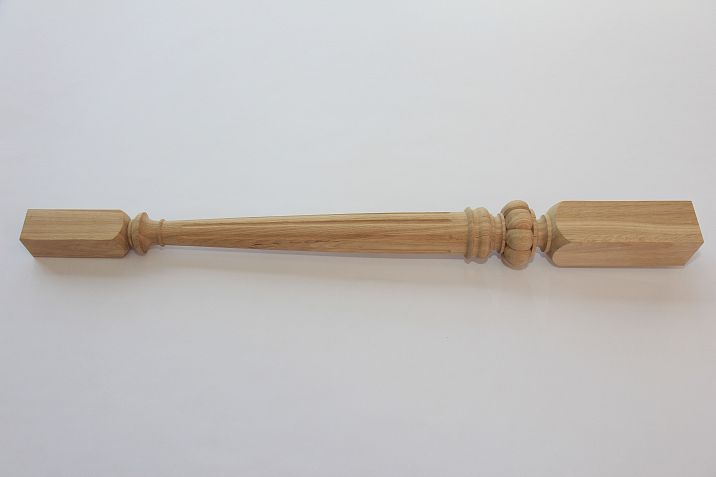
- Turned balusters - a classic variant, manufactured on a lathe. Characterized by smooth, symmetrical lines and traditional proportions.
- Turned balusters - feature more complex decoration in the form of spirals, grooves, fluting, and other relief elements created using a lathe.
- Carved balusters - true works of art, crafted on CNC machines or by hand by master woodworkers. They may include intricate ornaments, botanical motifs, and even narrative compositions.
- Combined balusters - combine different processing techniques and may include elements made from other materials (metal inserts, inlays, etc.).
Ease of processing and modification
Wooden balusters are easily subjected to additional processing: sanding, staining, painting, and varnishing. This allows them to be perfectly adapted to a specific interior and color scheme of the room.
If necessary, wooden balusters can be restored by renewing the finish or repairing minor damage, significantly extending their service life.
Ease of installation and replacement
The relatively low weight of wooden balusters facilitates their transportation and installation. Installation does not require special equipment and can be performed with minimal time and effort.
In case of damage to an individual baluster, it can be easily replaced without dismantling the entire structure, which is especially important for long-term use of the staircase.
Longevity with proper care
When manufacturing technology is followed and proper care is maintained, wooden balusters serve for decades without losing their aesthetic and functional qualities. The minimum service life of high-quality balusters made from hardwoods is 50 years or more.
Modern protective finishes - varnishes, oils, waxes - reliably protect wood from moisture, ultraviolet radiation, mechanical damage, and biological effects, preserving its natural beauty and strength.
Choice of wood species: from budget pine to premium oak
Choosing the wood species for balusters is a responsible step that determines not only the appearance but also the longevity, strength, and cost of the finished structure. Let's consider the main options, their features, and areas of application.
Coniferous species: accessibility and practicality
Pine - the most common and economical option for manufacturing balusters. Pine wood is characterized by:
- Light, warm tone with a distinct grain pattern of annual rings
- Relatively low weight and ease of processing
- Good strength and wear resistance
- Resistance to deformation when properly dried
Pine balusters are ideal for classic interiors in Scandinavian, country, or Provence styles. It is important to choose items made from high-quality, well-dried wood without knots or resin pockets in visible areas.
Larch - a premium option among coniferous species. Its distinctive features:
- High density and hardness comparable to some hardwoods
- Exceptional resistance to moisture, high temperatures, and even open flames
- Rich amber tone, darkening over time
- Natural resistance to rot and insect damage
Larch balusters are the optimal choice for rooms with high humidity, as well as for outdoor staircases, terraces, and verandas.
Hardwood species: strength and elegance
Oak - a classic material for manufacturing premium balusters. Its advantages:
- Exceptional strength and durability
- Elegant dark-golden tone with a distinctive texture
- High resistance to mechanical damage and abrasion
- Dimensional stability under changes in humidity and temperature
Oak balusters are ideally suited for luxurious classical interiors, highlighting the status and solidity of the home. Despite their high density, oak is easily workable, allowing for intricate carved elements.
Beech - a universal material combining excellent technical properties with moderate cost:
- Uniform structure with fine pores, ideal for precise carving
- Light rose hue, well-suited for staining
- High hardness and wear resistance
- Resistance to cracking when properly processed
Beech balusters are versatile and seamlessly integrate into various stylistic solutions - from classic to modern minimalism.
Ash - the optimal choice for creating elegant yet sturdy constructions:
- Flexible yet dense structure, capable of withstanding high loads
- Beautiful light tone with distinctive wavy grain
- Resistance to wet steam and decay processes
- Excellent workability, enabling the creation of fine details
Ash balusters are especially suitable for elegant, visually light staircases in modern interiors.
Exotic species: uniqueness and character
To create truly unique, exclusive staircases, exotic wood species are used:
Wenge - an African species with nearly black color and contrasting grain, creating a dramatic, expressive accent in interiors.
Merbau - reddish-brown wood with a coppery sheen, distinguished by exceptional hardness and moisture resistance.
Teak - golden-brown wood with a silky luster, containing natural oils that protect it from moisture and insects.
Balusters made from exotic species are not just functional elements, but true works of art, emphasizing the individuality and refined taste of the home's owner.
Material compatibility rule
It is important to remember that for ensuring the longevity and structural integrity of the staircase, balusters must be made from the same wood species as the main structural elements - treads, risers, stringers. This prevents internal stresses caused by changes in the room's temperature and humidity, as different wood species have different coefficients of expansion and shrinkage.
Types and styles of wooden balusters: from classic to avant-garde
The variety of forms and styles of wooden balusters is captivating. From strict geometric shapes to intricate carved compositions - everyone can find a variant perfectly matching the interior concept and personal preferences.
Classic styles
Tuscan style - characterized by a pear-shaped form with smooth expansion at the bottom and tapering towards the top. Features balanced proportions and elegant simplicity. Ideal for traditional interiors with Italian motifs.
English style - more slender and elongated balusters with a characteristic thickening in the central part. Often complemented by thin ring elements and small capitals. Creates an impression of aristocratic restraint and nobility.
French style - elegant, refined forms with numerous decorative elements: spirals, grooves, acanthus leaves. Distinguished by sophistication and a certain theatricality characteristic of French classicism and baroque.
Russian style - massive, solid balusters with rich carving, often including traditional Slavic ornaments: solar symbols, floral motifs, geometric patterns. Creates an atmosphere of a traditional Russian home.
Modern Styles
Scandinavian style - minimalist, geometrically correct forms, often square or rectangular in cross-section. Minimal decoration, emphasis on the natural beauty of wood and clean lines. Perfectly integrates into modern minimalist interiors.
Modern style - smooth, flowing lines reminiscent of plant forms. Asymmetric compositions, organic transitions between elements. Creates a sense of movement and natural harmony.
Loft - industrial aesthetics combining simple wooden forms with metallic elements. Often uses unprocessed or roughly finished surfaces, highlighting the texture of wood.
High-tech - geometrically precise, minimalist forms with an emphasis on functionality. Often combined with elements made of glass, metal, or composite materials, creating a futuristic look.
Special forms and solutions
Turned balusters - created by spiral milling and resemble a twisted rope or miniature helical staircase. Add dynamism and movement to the staircase design.
Figurative balusters - may have the shape of stylized human figures, animals, plants, or abstract compositions. Become true works of art and central elements of interior design.
Combined balusters - combine wooden elements with inserts of other materials: wrought metal, glass, ceramic. Create unexpected contrasts and textural combinations.
Through balusters - contain cut-out elements creating play of light and shadow. May include complex openwork patterns, giving the structure lightness and airiness.
When choosing baluster style, it is important to consider not only the overall interior concept, but also the architectural features of the staircase itself: its configuration, width, height, and step material. Harmonious combination of all elements creates a cohesive composition, where each detail contributes to the overall image.
Manufacturing technologies: from hand carving to CNC processing
The process of creating wooden balusters has evolved from fully manual craftsmanship to high-tech production using computer modeling and robotic machines. Let's consider the main technologies used today, their features, and advantages.
Turning: the classic of the genre
Turning - traditional and most common method of baluster manufacturing. The process includes the following stages:
- Preparation of blank - selection of high-quality timber without defects, cutting, and initial processing
- Securing the blank on the lathe between centers
- Gradual removal of material with special cutters to form the desired profile
- Surface sanding to achieve perfect smoothness
- Final processing - priming, painting, varnishing
Turning allows creating balusters with perfectly symmetrical profiles and smooth transitions between elements. Modern CNC lathes ensure high precision and repeatability, which is especially important when manufacturing large quantities of identical balusters.
Milling: playing with relief
Milling complements turning, allowing to create complex relief patterns on the baluster surface:
- The basic shape of the baluster is created on the lathe
- The blank is secured on the milling machine
- Using various milling cutters, grooves, spirals, coves, and other decorative elements are cut into the surface
- Final sanding and processing
Milling significantly expands design possibilities, allowing to create balusters with three-dimensional relief and complex decorative elements. Modern CNC milling machines can reproduce almost any pattern with micron-level precision.
Wood carving: master's handwork
Hand carving - an art requiring the highest level of skill and years of experience. The process of creating a carved baluster includes:
- Sketch development and transferring it onto the blank
- Gradual cutting of the pattern with special chisels and gouges
- Detailed work on small elements
- Sanding and final processing
Hand-carved balusters are unique works of art carrying the energy and individuality of the craftsman. They are ideally suited for exclusive interiors where uniqueness and handcrafting are valued.
CNC Processing: Precision and Complexity
Modern computer modeling and CNC machining technologies open new horizons in creating wooden balusters:
- Development of a 3D baluster model in specialized software
- Creation of a control program for the machine
- Automatic processing of the blank with minimal operator involvement
- Final finishing and treatment
CNC processing allows creating balusters of incredible complexity with perfect replication accuracy. This is especially important when producing large batches of items or when precise reproduction of historical samples is required for restoration.
Combined Technologies: Synergy of Traditions and Innovations
In modern production, combined technologies are often used, combining the advantages of various methods:
- The basic shape is created on a CNC lathe
- Complex relief elements are milled on a milling machine
- Final details and accents are added by the craftsman by hand
- Final finishing and protective coating are applied
This approach allows combining technological precision and efficiency with the warmth and uniqueness of handcrafting, creating balusters that meet the highest standards of quality and aesthetics.
Installation and Mounting: Technical Aspects and Recommendations
Even the most beautiful and high-quality balusters will not perform their function if incorrectly installed. Let us consider the main aspects of installing wooden balusters that ensure the reliability, longevity, and aesthetic appeal of the entire structure.
Preparation Work
Before beginning installation, thorough preparation is required:
- Material acclimatization - wooden balusters must be placed in the room where they will be installed for at least 48 hours to adapt to the temperature and humidity conditions.
- Quality inspection - each baluster must be inspected for defects: cracks, chips, uneven coloring.
- Marking - precise marking of baluster installation locations must be made on the stair stringer and lower surface of the handrail, maintaining equal intervals.
- Tool preparation - for installation, you will need: drill, wood drill bits, chisel, hammer, screwdriver, level, tape measure, pencil, wood glue, screws or dowels.
Ways to Mount Balusters
There are several main methods of mounting wooden balusters:
Mounting in grooves - the most reliable and aesthetic method:
- Grooves are cut into the stringer and lower part of the handrail to a depth of 15-20 mm
- Baluster ends are processed to fit precisely into the grooves
- Balusters are installed into grooves using glue and, if necessary, additionally secured with dowels or screws
- Joint areas are masked with wooden plugs or wood putty matching the wood color
Joining with dowels - a simpler method to execute:
- Holes are drilled in the balusters, stringers, and handrails for dowels
- Dowels are inserted into the holes using glue
- Balusters are installed in place and secured
Mounting on metal fasteners - primarily used for pre-assembled staircases:
- Special metal brackets are attached to the stringers and handrails
- Balusters are placed into the brackets and secured with screws
- Mounting locations are concealed with decorative elements
Technical specifications and requirements
When installing balusters, the following technical requirements must be observed:
- Distance between balusters - no more than 15 cm (per construction norms)
- Height of the railing - at least 90 cm from the stair level
- Vertical alignment - checked with a construction level
- Fastening strength - each baluster must withstand a lateral load of at least 50 kg
Final finishing
After installing all balusters, final finishing treatment is required:
- Sanding connection areas to achieve perfect smoothness
- Filling visible joints and fastener elements with wood-colored putty
- Final treatment with protective finishes - varnish, oil, or wax
- Polishing to the desired level of gloss
Typical installation mistakes
When installing wooden balusters, avoid common mistakes:
- Ignoring acclimatization - may cause balusters to deform after installation
- Insufficient groove depth - reduces fastening strength
- Excessive distance between balusters - violates safety requirements
- Using incompatible materials - may cause fastener corrosion or reaction with protective finishes
- Insufficient final finishing - reduces service life and deteriorates appearance
Correct installation of wooden balusters is a combination of technical precision and artistic sense. Only by adhering to all technological requirements and paying attention to details will the staircase become not only a safe element of the home, but also its decoration for many years.
Care and maintenance: preserving beauty for decades
Wooden balusters, like any wooden products, require proper care to maintain their aesthetic and functional qualities. Proper maintenance will allow your balusters to delight the eye and reliably serve for many decades.
Regular Maintenance
Daily care of wooden balusters is relatively simple:
- Dust removal - regularly wipe balusters with a soft dry or slightly damp cloth. Avoid using abrasive materials that may scratch the surface.
- Cleaning from dirt - to remove stains, use specialized cleaners for wooden surfaces or a mild soap solution. After cleaning, be sure to wipe the surface with a dry cloth.
- Ventilation of the room - maintain optimal humidity (40-60%) in the room where wooden elements are installed. Too dry air may cause wood cracking, while excessive humidity may lead to swelling and deformation.
Periodic maintenance
In addition to regular care, wooden balusters require periodic deeper maintenance:
- Updating protective coating - depending on the type of finish and usage intensity, it is recommended to renew the protective coating every 3-5 years:
- Lacquered surfaces - light sanding and application of a new lacquer layer
- Oil finish - cleaning and applying a fresh layer of oil
- Wax finish - removing old wax and applying new wax
- Checking fastening elements - periodically check the reliability of baluster fastenings, and tighten weakened connections if necessary.
- Repairing minor damage - small scratches, chips, and scuffs can be removed using special wax pencils or wood-colored putty.
Protection from adverse factors
To extend the service life of wooden balusters, it is important to protect them from main destructive factors:
- Ultraviolet radiation - direct sunlight may cause fading and cracking of wood. Use UV-filtering protective coatings or provide window shading on sunny days.
- Temperature and humidity fluctuations - sharp changes in microclimate negatively affect wooden structures. Maintain stable conditions in the room, especially during the heating season.
- Mechanical impacts - avoid impacts and scratches that may damage the protective coating and expose the wood to moisture.
- Biological factors - periodically inspect wooden elements for signs of mold, fungus, or insect activity. Treat immediately with specialized protective coatings if detected.
Restoration of old balusters
Even with significant damage, wooden balusters can often be restored:
- Complete cleaning - removal of old coating down to bare wood using sanding or special strippers.
- Structural repair - replacement or restoration of damaged areas using wooden inserts, epoxy resin, or specialized wood restoration compounds.
- Staining - restoring color and masking differences between old and restored sections.
- Applying new protective coating - finishing treatment providing protection and desired aesthetic effect.
Proper care of wooden balusters does not require significant time or resources, but allows preserving their beauty and functionality for many years. Remember that natural wood is a living material that responds to care and attention, revealing new facets of its natural beauty over time.
Modern trends and innovations in wooden baluster design
The world of architecture and design is not static, and wooden balusters, despite their centuries-long history, continue to evolve, reflecting modern aesthetic preferences and technological capabilities. Let us consider the main trends and innovations defining the appearance of contemporary wooden balusters.
Minimalism and geometric clarity
Modern design favors clean, simple forms. Balusters with clear geometric outlines — square, rectangular, trapezoidal — are trending. They feature minimal decorative elements and emphasize the natural beauty of wood and the quality of its finish.
Such balusters fit perfectly into modern interiors in minimalist, high-tech, and Scandinavian styles. Their strict geometry creates a rhythmic, orderly pattern, highlighting the architectural purity of the space.
Combining materials
One of the most prominent modern trends — combining wood with other materials in baluster construction:
- Wood and metal — inserts made of stainless steel, brass, bronze, or wrought iron create interesting contrasts and add an industrial charm to the structure.
- Wood and glass — transparent or matte glass elements combined with wooden details create a sense of lightness and visually expand the space.
- Wood and composite materials - high-tech composites complement natural wood, enhancing structural strength and expanding design possibilities.
Such combined solutions allow creating unique, memorable interiors where the traditional warmth of wood combines with the modern aesthetics of other materials.
Ecological Sustainability
Modern consumers are increasingly paying attention to the ecological aspects of selected materials and products. In trend, balusters made of:
- Certified wood - obtained from responsibly managed forests (FSC, PEFC certified)
- Recycled wood - old beams, planks, elements of historic buildings receive a second life as stylish balusters with a unique history and patina of time
- Fast-growing species - bamboo, eucalyptus, and other species that quickly regenerate and cause minimal damage to ecosystems
Ecological considerations also apply to finishing - more and more manufacturers are switching to non-toxic, health-safe natural-based lacquers, oils, and waxes.
Personalization and individual design
Modern design and production technologies make it possible to create fully customized balusters, reflecting the personality and taste of the home owner:
- 3D modeling allows visualizing and precisely designing unique shapes and patterns
- Laser engraving enables personal monograms, family crests, commemorative dates, or any other images to be applied to balusters
- Color toning using special dyes creates unusual color effects while preserving the visible wood texture
Such an individual approach transforms balusters from a standard staircase element into a true work of art, telling the story of the home and its inhabitants.
Technological Innovations
Modern wooden baluster production actively incorporates innovative technologies:
- Computer modeling and load simulation allow creating balusters of optimal shape, combining aesthetic appeal with maximum strength while minimizing material usage
- Vacuum impregnation ensures deep penetration of protective compounds into the wood structure, significantly enhancing its resistance to moisture, fire, and biological effects
- Thermo-treatment alters the wood structure at the molecular level, increasing its stability and longevity without using chemicals
- Nanocoatings create an invisible protective layer on the wood surface, protecting against contamination, moisture, and UV radiation, while preserving the natural appearance and tactile feel of wood
These technological innovations not only enhance the quality and longevity of wooden balusters but also expand their application possibilities in various conditions and architectural contexts.
Conclusion: balusters as a reflection of style and individuality
Wooden balusters They are much more than just a functional element of a stair railing. They are architectural details with a rich history, embodiments of woodworking craftsmanship, and key elements defining the style and character of the entire interior.
Choosing wooden balusters for your home means choosing not just a reliable support for handrails, but also creating a certain atmosphere, aesthetic statement. Classic turned balusters bring a sense of tradition and solidity, minimalist geometric forms create a modern, sleek look, while intricate carved compositions become true works of art and focal points.
Natural wood, with its warmth, unique texture, and tactile comfort, remains unmatched among materials for making balusters. Modern wood processing and protection technologies allow creating products that combine traditional beauty with impressive durability and practicality.
When choosing balusters, it is important to consider not only their aesthetic qualities but also functional aspects: compliance with safety building codes, compatibility with other staircase elements, installation and maintenance specifics. Only a harmonious combination of form and function, beauty and practicality creates a truly successful architectural solution.
STAVROS offers a wide range of high-quality wooden balusters of various styles, shapes, and sizes. Our specialists' long experience, modern equipment, and craftsmanship guarantee impeccable quality of each item. We create not just wooden elements, but true works of art that will be a source of pride in your home for years to come.
Choosing STAVROS means choosing reliability, quality, and an individual approach. Our experts will help you select the optimal baluster option, taking into account the specifics of your interior, the architectural style of your home, and your personal preferences. We offer both standard solutions and custom-made balusters, bringing the boldest design ideas to life in wood.