Article Contents:
- Classic turned balusters: eternal elegance
- Carved balusters: sculpture in wood
- Modern minimalism: simplicity as expression
- Biophilic design: wood as a connection to nature
- Colored balusters: when wood becomes a canvas
- Combined Solutions: Wood Plus Other Materials
- Wooden handrails and balusters: harmony of the system
- Lighting balusters: how light reveals form
- Video projects: balusters in motion and time
- Regional characteristics: styles and preferences of different cities
- Interior styles through the lens of balusters
- Classic and neoclassic
- Modern and art deco
- Scandinavian minimalism
- Loft and Industrial
- Art of installation: installing trims
- Practical aspects: what to learn from photos
- Company STAVROS: creator of photogenic balusters
- Project portfolio
- Variety of offerings
- Individual projects
- Quality of photography
- Video content
- How to use photos for selection
- Conclusion: from inspiration to realization
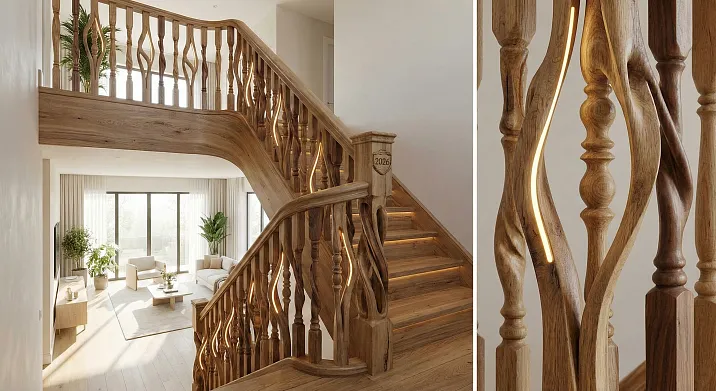
Visual inspiration — the first step toward creating your dream home. When it comes to staircases, this vertical architectural accent that defines the character of the entire space, photos become not just images, but guides for ideas. Wooden balusters — these vertical railing posts — can transform a utilitarian structure into a work of art. Simple turned forms create classic elegance. Complex carvings with botanical ornaments tell the story of craftsmanship. Minimalist square posts emphasize modernity. And every project realized in reality proves: wood remains a living material capable of breathing with the house.
In 2026, we are witnessing a true renaissance of wooden balusters. After a decade of glass and metal dominance, designers and homeowners are returning to natural materials, to textures that can be not only seen but also felt. Biophilic design — the philosophy of connecting with nature through materiality — is becoming mainstream. And wooden balusters perfectly embody this idea: each carries the history of the tree, a unique pattern of growth rings, tactile warmth that cannot be replicated with artificial materials. Looking at photos of top projects, you are not just choosing shape and wood species — you are defining the emotional tone of your home, its character, its soul.


Classic turned balusters: eternal elegance
TurnedWooden balustersWith traditional profiles — this is the foundation upon which the history of staircase design is built. Turning wood is the oldest craft, where the master transforms a cylindrical blank into an elegant element with alternating spheres, rings, cones, and transitions. Each profile has a name and history: a baluster with a vase shape traces back to ancient columns, a baluster with an apple shape references Russian wooden architecture, a baluster with rings — to Victorian-era English mansions.
In photos of classic interiors from 2026, turned balusters demonstrate remarkable variety. A project of a suburban mansion near Moscow shows oak balusters with a complex profile featuring seven diameter transitions — from a massive base to an elegant neck, then to a decorative thickening in the form of a sphere, followed by narrowing and a final ring before attaching to the handrail. The play of light on these transitions creates dramatic shadows, especially effective under side natural lighting from large windows. The color of oak — warm honey after oil treatment — contrasts with dark steps made of stained oak, creating a visual rhyme between dark and light.
The Petersburg project features beech balusters with a more restrained profile — only three main elements, but perfectly symmetrical and finely turned. Beech allows for ideal geometry due to its uniform structure. In the photo, you can see how sixty balusters, arranged in a rhythmic row along a two-flight staircase, create almost a musical visual rhythm. A semi-matte lacquer finish gives a soft satin sheen, highlighting the form without vulgar gloss.
The project in Scandinavian style from Yekaterinburg uses ash balusters with the simplest profile — only two transitions, no complex details. The light ash wood, nearly white after bleaching, creates a sense of airiness and purity. In the photos, you can see how these balusters do not compete for attention with other interior elements, but delicately support the overall concept of northern minimalism.




Carved balusters: sculpture in wood
If turned balusters are classicism and restraint, then carved ones are maximalism and theatricality. Wood carving transforms a baluster into a sculptural object, where every centimeter carries meaning, where the master’s hand is revealed in every leaf swirl, every flower vein, every ornament curve.
The mansion project in Kazan in the style of Russian Baroque features balusters made of solid oak with three-dimensional vegetal carving. Acanthus leaves wrap around the baluster body, creating an illusion of a living plant frozen in wood. The carving is relief-style, with depths up to fifteen millimeters, producing dramatic shadows. In photographs taken under artificial bottom lighting, the balusters appear almost mystical — light penetrating between the carved elements creates an effect of glowing from within. The dark stain and matte varnish enhance the relief’s volume, making every detail clearly visible.
The Moscow project in the Art Deco style demonstrates balusters with geometric carving — vertical flutes alternate with diamond-shaped reliefs, forming a strict, almost graphic pattern. The wood — beech, tinted in a cool gray-brown hue — emphasizes the geometric form. Photographs show how twenty-two balusters of this staircase create a visual rhythm, where the repetition of the geometric motif works like ornament on fabric — the more repetitions, the stronger the effect.
The Novosibirsk suburban house project uses balusters with through-carving — a technique where the chisel passes through, creating delicate elements. On the photo, balusters with pierced vegetal motifs — grapevine leaves interweave, forming a lace-like structure. This requires virtuoso craftsmanship and dense wood (used walnut), capable of holding thin elements without cracking. Looking up through these balusters, one can see how light penetrates through the openings, creating play of light and shadow on the staircase landing wall.
Our factory also produces:


Modern minimalism: simplicity as an expression
Not all 2026 projects aim for ornamentation. A significant portion — especially in urban apartments and modern cottages — chooses a minimalist approach, where balusters are as simple in form as they are flawless in execution.
The Moscow loft apartment project shows square balusters made of mahogany oak, 50x50 mm in cross-section, without any turning work. These are simply precisely sawn and sanded blocks, installed at 120 mm spacing. But the devil is in the details: perfect geometry, absolute verticality, silky surface after multi-stage sanding and oiling. Photographs show how these minimalist balusters contrast with brick walls and concrete ceilings, creating a balance between the roughness of industrial materials and the nobility of wood.
The Petersburg townhouse project uses rectangular-section balusters, 30x40 mm, made of light beech. Thin and almost elegant, they create a sense of lightness in the structure. Photographs demonstrate how frequent installation spacing (every 80 mm) turns the baluster row into a semi-transparent curtain — one can see what lies behind the staircase, yet there is a clear visual boundary. The colorless matte lacquer finish preserves the natural beech tone, emphasizing Scandinavian interior philosophy.
The Yekaterinburg modern cottage project demonstrates a combined solution: steel cables as the main railing and wooden baluster inserts made of dark walnut, mounted on support posts. On the photo, one can see how wood and metal work in dialogue — the coldness of steel is softened by the warmth of walnut, the rigidity of straight steel cables contrasts with the light organic texture of wood. This is an example of how minimalism does not mean abandoning wood, but using it sparingly, as an accent.
Get Consultation
Biophilic design: wood as a connection to nature
The 2026 trend impossible to ignore — biophilic design, the desire to bring nature back into interiors.wooden balustersHere, elements that literally grew out of the earth, preserving the memory of the forest, play a key role.
The project of a house in the Moscow region uses balusters made of untrimmed spruce, where the natural shape of the trunk is preserved with small irregularities, knots, even patches of bark. This is a deliberate rejection of ideal geometry in favor of natural organic form. On the photographs, each baluster is unique — there are no two identical ones, just as there are no two identical trees in the forest. Processing is minimal — only protective oiling, preserving the natural color and texture. Such a staircase appears as an architectural installation, connecting the house with the surrounding pine forest.
The Siberian project uses balusters made of Karelian birch — a species with a unique marble-like texture resembling natural stone. Simple cylindrical forms allow the texture to speak for itself. Photographs show how the wood grain pattern on each baluster is unique — swirls, spots, transitions from light beige to dark brown create visual richness. Transparent oiling highlights this texture, making it almost tactile on the photo.
The Krasnodar project demonstrates balusters made of oak with a brushing effect — a technique where soft wood fibers are brushed out with a metal brush, leaving hard fibers to create a pronounced tactile relief. On close-up photographs, this texture is visible — grooves following annual rings, height variations up to two millimeters. After brushing, the balusters are tinted with white oil and lightly sanded to highlight raised areas — resulting in an effect of old, weathered wood found on a seaside shore.
Colored balusters: when wood becomes a canvas
Natural wood color is beautiful, but sometimes the interior concept requires color. Stained wooden balusters are a way to preserve the natural material texture while adding a color accent.
The Provence-style project from Rostov-on-Don uses pine balusters stained matte white. The medium-complexity turned profile with classic transitions after staining acquires sculptural purity of form. Photographs show how white balusters create a sense of lightness, visually expanding the space of a small attic staircase. Artificial patina — light scratches on raised areas, through which wood peeks — adds an effect of antiquity, vintage, characteristic of Provence style.
The Moscow apartment project in the Art Deco style demonstrates balusters stained deep emerald green, followed by applying a gold patina to carved details. The complex carved profile with vegetal motifs, after such treatment, acquires palace luxury. Photographs taken under evening artificial lighting show how gold accents shimmer, creating a precious stone effect.
The Scandinavian project from St. Petersburg uses an unexpected solution — balusters stained in a muted gray-blue hue. This is not a bright color, but a delicate tone, which on photographs reads almost as neutral, yet adds a cool northern note. Simple turned forms after staining retain the readability of wood texture due to semi-transparent paint — an effect where color is present, but wood still feels tangible.
Combined solutions: wood plus other materials
Modern design often uses hybrid approaches, where wooden balusters combine with other materials, creating interesting visual effects.
The Kazan house project shows oak balusters with metal inserts — vertical steel rods 8 mm in diameter integrated into the wooden baluster body, passing through it. On photographs, this appears as a futuristic reinterpretation of a classic form — wood remains the base, but metal adds modernity and technology. The contrast between warm oak and cold steel creates dynamic tension.
The Novosibirsk project uses wooden balusters combined with glass panels — balusters are installed at wide spacing (every 500 mm), and between them, 10 mm thick tempered glass is fixed. Photographs demonstrate how this solution combines the safety of solid railing with the visual lightness of glass and the natural warmth of wood. Beech balusters serve as vertical accents, breaking the glass plane.
The Moscow loft space project combines massive wooden balusters made of mahogany oak, 80x80 mm in cross-section, with horizontal steel cables 6 mm in diameter. The cables are tensioned between balusters at 150 mm spacing vertically. On the photo, one can see how this creates an industrial aesthetic, where the massiveness of wood contrasts with the elegance of metallic strings.
Wooden handrails and balusters: harmony of the system
wooden balusters for staircasesThey do not exist separately — they work as a system with the handrail (railings), support posts, and baluster base. The best 2026 projects demonstrate how these elements unite into a cohesive composition.
The suburban house project near Petersburg shows a system where balusters, handrail, and support posts are made of the same oak species, with identical processing, but varying degrees of ornamentation. Balusters have a medium-complexity turned profile. Support posts are more massive, with carved capitals at the top. The handrail is smooth, ergonomic oval-shaped. On photographs, the entire system reads as a unified whole due to color and texture unity. Oil finish with light tinting gives the entire ensemble a warm honey tone.
The Yekaterinburg project uses a contrasting solution: balusters made of light beech, and handrail made of dark walnut. Photographs show how this contrast creates visual dynamics — light vertical balusters reach upward, while the dark horizontal handrail unites them, creating a compositional frame. Support posts are combined — lower part made of walnut (like the handrail), upper part made of beech (like the balusters), linking the two parts of the system.
The Novosibirsk project demonstrates a minimalist solution where balusters and handrail have identical square cross-sections, 50x50 mm, made of spruce. The difference is only in orientation — balusters are vertical, handrail horizontal. On the photo, this looks like a construction kit assembled from identical elements — strict geometry, absence of decoration, focus on material quality and execution precision.
Baluster lighting: how light reveals form
Photos of the best projects of 2026 show the importance of lighting in perceiving wooden balusters. Proper lighting transforms a baluster from a functional element into a sculptural object.
The project of a mansion in the Moscow region uses LED strip lighting embedded in the risers, directed upward to illuminate the balusters from below. Photos show how turned oak balusters, under such lighting, cast dramatic shadows on the wall — each turn and ring casts its own shadow, the pattern of shadows moves upward as one ascends. Carved elements under bottom lighting appear especially voluminous, almost detached from the base.
The Moscow project uses spotlights directed at the staircase from the side at a 45-degree angle. Photos demonstrate how side lighting reveals the wood’s texture — growth rings become more contrasting, the brushed surface gains tactile expressiveness. Shadows from balusters fall on the steps in parallel bands, creating a rhythmic visual pattern.
The Petersburg project integrates LED lighting into the handrail itself — a thin LED strip embedded in the lower part of the wooden handrail, creating a soft glow that flows around the balusters. In evening photos, this looks magical — balusters seem to glow from within, creating a cozy, almost intimate atmosphere. The light is not bright, sufficient for safety, but does not destroy the intimacy of the space.
Video projects: balusters in motion and time
In addition to static photos, the best projects of 2026 are presented through video content that shows balusters in motion — how their perception changes with camera movement, how light plays throughout the day, and how they interact with people.
The video of a suburban house near Moscow shows a staircase with carved oak balusters throughout the daylight hours. Filming begins in the morning with soft side lighting from windows — carved elements cast delicate shadows. By noon, when the sun is at its zenith, the light becomes more contrasted, shadows deeper, and the carving appears more voluminous. In the evening, under artificial lighting from spotlights, the balusters take on a warm golden glow. The video lasts three minutes but demonstrates how the same object lives differently depending on the light.
The video tour of a Petersburg townhouse shows interaction between people and the staircase. The camera follows a hand gliding along a beech handrail, balusters flicker in rhythmic succession. The sound of footsteps on wooden steps is audible, sometimes a light creak — this is not a defect, but evidence of living material. Close-ups show the wood’s texture, the silkiness of the oil finish. The video creates not only a visual, but also a tactile and acoustic impression.
The time-lapse video of baluster production at STAVROS shows the journey from a log to a finished product. Accelerated filming demonstrates turning — how a rotating blank, under a cutting tool, transforms into a baluster with a classic profile in a few seconds of screen time. Next, milling details, sanding, and oiling. The final shot — a finished baluster installed on a staircase. Such a video provides understanding of the process, respect for the craftsmanship, and appreciation of the final product.
Regional characteristics: styles and preferences of different cities
Photos of projects from different regions of Russia show interesting local trends and preferences.
Moscow projects lean toward eclecticism and maximalism. Here, the most expensive species (walnut, Karelian birch, exotic types) are used, complex carved profiles, combinations of wood with metal and glass. Photos of Moscow mansions often show grand staircases with balusters as architectural dominants — this is not just function, but a statement of status, taste, and possibilities.
Petersburg projects show adherence to classicism and restraint. Turned balusters of traditional profiles from oak and beech dominate, with quality finishing but without excessive ornamentation. Photos of Petersburg interiors demonstrate respect for historical context — many projects in historic buildings recreate or stylize after original 19th-century balusters.
Siberian projects (Novosibirsk, Yekaterinburg, Krasnoyarsk) prefer local species — larch, pine, cedar. Photos show massive, substantial balusters emphasizing the connection to Siberian nature. Often, brushed texture and toning are used, creating the effect of aged wood. Styles range from Russian country to modern bio-design.
Southern projects (Krasnodar, Rostov, Sochi) prefer light species and light forms. Photos show balusters from beech, whitewashed oak, sometimes painted white or pastel tones. This is related to the hot climate — dark wood visually weighs down interiors, while light wood creates a sense of coolness.
Interior styles through the lens of balusters
Classicism and neoclassicism
Photos of projects in classical style show turned balusters with traditional profiles from oak or beech. Essential elements: decorative columns with carved capitals, massive oval handrails, symmetrical composition. Color — natural or lightly toned in warm honey shades. Examples: a mansion in Russian classicism style near St. Petersburg, a Moscow apartment in a Stalinist building with recreated historical elements.
Modern and Art Deco
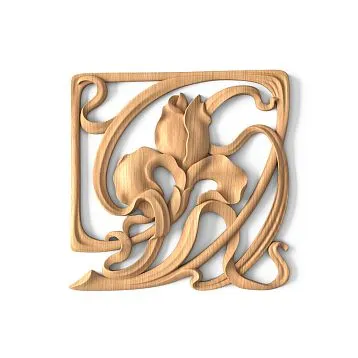
Projects in modern style use balusters with smooth, organic curves, sometimes asymmetrical. Carved elements of plant character — stylized lilies, irises, climbing stems. Photos show how these balusters create a sense of fluidity and movement. Art Deco prefers geometry — vertical fluting, stepped forms, strict symmetry. Species — oak, walnut, beech, often with contrasting toning.
Scandinavian minimalism
Scandinavian interior photos demonstrate balusters of extreme simplicity from light wood (beech, birch, whitewashed oak). Shapes — square or round, without decoration. Finish — colorless oil or matte varnish, preserving the natural tone. Installation spacing — frequent, creating a rhythmic structure. Examples: a townhouse in Petersburg, an apartment in a new building in Yekaterinburg.
Loft and industrial
Loft-style projects on photos show massive balusters from dark wood (wenge oak, walnut) or, conversely, roughly processed from light larch, preserving natural irregularities. Often, combinations of wood with metal — steel cables, metal inserts. Contrast with brick walls, concrete surfaces. Examples: a loft apartment in a former factory building in Moscow, a studio in the industrial zone of Novosibirsk.
Country and Provence
Photos of rustic styles show balusters from pine or oak, often painted white, cream, or pastel tones. Turned profiles of moderate complexity, sometimes with an artificial aging effect — patina, wear marks. Overall impression — coziness, warmth, homeliness. Examples: a suburban house in Russian country style near Yaroslavl, a cottage in Provence style near Rostov.
Practical aspects: what to learn from photos
Consideringphotos of wooden balustersPay attention not only to aesthetics, but also to practical details.
Installation spacing: the distance between balusters affects the visual density of the railing and safety. On photos, visually measure — if balusters are installed frequently (spacing less than 100 mm), this creates almost a solid wall. If spaced widely (over 150 mm), the staircase feels lighter, but ensure it is safe for children.
Proportions: the ratio of baluster thickness to staircase dimensions. A massive staircase requires proportionally large balusters (cross-section from 50 mm). An elegant staircase — slender (30–40 mm). On photos, assess the visual balance.
Color and contrasts: how balusters relate to the color of steps, handrail, walls. A contrasting solution (light balusters on dark steps) creates graphic impact. Monochromatic (everything in one tone) — calmness and unity.
Finish: on quality photos, close-ups reveal whether it is oil or varnish, whether there is gloss, how smooth the surface is. Matte finishes look more natural, glossy finishes richer, but may cause glare.
Lighting: how the staircase was photographed — under natural or artificial light, from what angle. This affects perception and will suggest how best to illuminate your future staircase.
STAVROS Company: creator of photogenic balusters
Many of the best projects, whose photographs inspire thousands of homeowners, were executed using balusters from STAVROS. Over twenty years of operation, STAVROS has created products for hundreds of projects — from private homes to luxury complexes, from restoration of historical buildings to modern design projects.
Project Portfolio
The STAVROS website features an extensive portfolio with professional photographs of completed projects. Each project is accompanied by a description: which balusters were used, what species they are made from, what finish was applied, and what mounting features were employed. You can see STAVROS balusters in various interiors, evaluate how they look not just in catalogs, but in real life, in living spaces.
Photographs show not only the final result, but sometimes the process — from production to installation. This gives an understanding of the quality of work, the professionalism of the team, and attention to detail.
Variety of offerings
the STAVROS catalogincludes more than a hundred baluster models, each with photographs. Simple turned, complex carved, minimalist square, combined — the choice is vast. Each model is presented from several angles, often with finish options (natural wood, staining, brushing).
The ability to see the same baluster model in different wood species helps make a decision. One shape can look completely different in oak, ash, or walnut — photographs demonstrate this.
Individual Projects
STAVROS does not limit itself to catalogs. A significant portion of projects are custom orders based on client or designer sketches. Photographs of these unique balusters demonstrate the company’s capabilities: intricate carving, non-standard sizes, combinations of species, original shapes. If you did not find what you’re looking for in the catalog — check the section of individual projects; perhaps you’ll see an idea you can adapt.
Photo quality
STAVROS product photographs are professionally executed — proper lighting, neutral backgrounds, close-ups showing details of finishing. This is not accidental — quality photos reflect product quality. When a manufacturer is not afraid to show a baluster in detail, it speaks to confidence in their work.
In addition to studio photos, the website features images from real objects — balusters in interiors, natural lighting, within the context of a complete staircase. This helps visualize how the selected model will look specifically in your space.
Video content
STAVROS creates video content showing production, installation, and completed projects. Virtual tours of sites, time-lapses of production, reviews of new models — all of this is available on the company’s website and YouTube channel. Videos provide a more complete picture than photos — you see volume, movement, and dynamic interplay of light.
How to use photos for selection
Viewing hundreds of baluster photos may overwhelm with variety. How to structure the search?
Create an inspiration board: save photos that resonate with you into a separate folder or on a Pinterest board. After some time, analyze the collection — what unites the selected projects? Perhaps a certain wood species, style, or color? This will help define your preferences.
Assess context: do not view balusters in isolation. Evaluate how they function within the context of the entire interior. Balusters that look stunning in one project may not suit your space in terms of style, scale, or color.
Collect references for the manufacturer: when contacting the manufacturer, show photos of projects you like. This provides a clearer picture of your preferences than verbal descriptions.
Check feasibility: not all eye-catching photos represent practical solutions. Intricate carving is beautiful but expensive and requires careful maintenance. White-stained balusters are elegant but prone to stains. Evaluate not only aesthetics but also practical qualities.
Conclusion: from inspiration to realization
Photographs of the best projects of 2026 — these are not just beautiful images. They are proof of capabilities, examples of solutions, sources of ideas. Each photograph is someone’s realized project, someone’s dream made real. And your staircase could become the next project, whose photographs will inspire others.
Wooden balusters in 2026 are experiencing a renaissance. After a period of dominance by glass and metal, people are returning to natural materials, to textures that live and breathe. Wood is not just a material — it is a connection to nature, history captured in growth rings, warmth you can feel by hand.
Choosing balusters for your staircase is not just selecting a functional safety element. You are choosing the visual tone of the entire space, the tactile sensation of daily touch, the emotional resonance these vertical posts will create every time you ascend or descend. Photographs help visualize, but reality is always richer — living wood under your hand, play of light on carved elements, the light creak of steps, the scent of oil finish.
Use visual inspiration wisely. Collect references, analyze what truly resonates with you. Consult a professional manufacturer like STAVROS, who will help turn inspiration into a concrete project. In a few months, your home will be enriched with a staircase featuring balusters that will delight you for decades, become part of your family’s history, and perhaps find their way into someone’s collection of inspiring photographs.
970.19 $ USD