Article Contents:
- Classic Heritage: Eternal Forms in Modern Interpretation
- Ancient Roots of Modern Elegance
- Renaissance Revival of Forms
- Baroque Opulence: Theatricality in Architecture
- Dynamics and Movement in Static Forms
- Materials and Techniques of the Baroque Period
- Modern: Natural Forms in Architectural Expression
- Biomorphic Forms and Botanical Motifs
- New materials and technologies
- Art Deco: Geometric Luxury
- Geometric Patterns and Symmetry
- Luxurious Materials and Finishes
- Modern minimalism: beauty of simplicity
- Philosophy of 'Less is More'
- Innovative materials and technologies
- High-Tech: Technological Aesthetics
- Industrial Beauty
- Technology integration
- Loft: industrial romance
- Authenticity and Character
- Contrast of Rough and Refined
- Scandinavian style: northern restraint
- Natural Materials and Light Tones
- Ecology and sustainability
- Ethnic Styles: Cultural Heritage in Modern Interpretation
- Eastern Motifs
- European traditions
- Style Selection: Practical Recommendations
- Compatibility with architectural style
- Functional Requirements
- Budget Constraints
- Modern Trends and the Future of Styles
- Ecological trends
- Technological Innovations
- Personalization and customization
- Conclusion
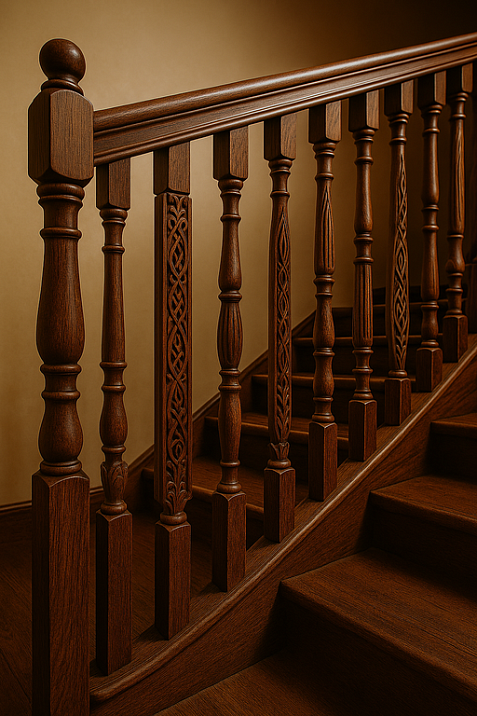
What makes a staircase a work of art? Why do some structures inspire awe, while others remain unnoticed? The answer lies in the details that transform functionality into beauty. Baluster Styles They represent a unique universe of architectural solutions, where each era has left its indelible mark. From ancient columns to modern minimalist forms — the stylistic diversity of balusters reflects the evolution of human taste and technological capabilities.
In the world of architectural design, balusters occupy a special place. These vertical elements do not merely support handrails — they create rhythm, set the mood, and shape the character of the entire space. Each baluster style carries the philosophy of its time, reflecting the cultural values and aesthetic ideals of a specific era.


Classic Heritage: Eternal Forms in Modern Interpretation
The classical style of balusters originates in ancient architecture, where the principles of harmony and proportion were born, still relevant today. These elements embody ideals of beauty, tested over millennia and remaining popular in modern design.




Ancient Roots of Modern Elegance
Ancient Greek and Roman masters laid the foundations upon which the classical aesthetics of balusters are built. The principles of the golden ratio, symmetry, and mathematical precision of proportions—all are reflected in the forms we call classical. Each detail has its purpose and meaning: the expansion in the central part creates visual stability, smooth transitions between elements ensure harmonious perception, and finishing details give the composition completeness.
Classic balusters are traditionally made from noble materials — oak, ash, marble, or granite. Each material brings its own characteristics: wood creates a sense of warmth and coziness, stone adds monumentality and grandeur. Surface treatment also plays an important role — polished surfaces reflect light and create play of highlights, matte finishes emphasize the nobility of the material.
Our factory also produces:


Renaissance Revival of Forms
The Renaissance era gifted the world a new understanding of classical beauty. Masters of that time did not merely copy ancient models, but reinterpreted them, creating more complex and refined forms. Renaissance balusters are distinguished by rich decorative elements, complex profiles, and virtuosity of execution.
Characteristic features of Renaissance balusters include multi-tiered composition, where various geometric forms — spheres, cylinders, cones — are combined into a unified whole. Decorative elements include vegetal ornaments, geometric patterns, and sometimes figurative imagery. Such balusters become true works of art, where every detail is thoughtfully designed and carries symbolic meaning.
Get Consultation
Baroque Grandeur: Theatricality in Architecture
Baroque brought to architecture a spirit of theatricality and emotionality. Baluster Styles Baroque-era balusters are characterized by dynamic forms, rich decoration, and a desire to make an impression. This is a style for those who are not afraid to stand out and appreciate luxury in all its manifestations.
Dynamics and Movement in Static Forms
Baroque balusters create an illusion of movement even in a static state. Spiral elements, curved lines, asymmetrical details — all of this gives the structure liveliness and expressiveness. Baroque masters were able to make stone and wood 'dance,' creating forms that appear frozen in the moment of motion.
A distinctive feature of Baroque balusters is their ability to interact with light. Deep reliefs and complex profiles create a play of light and shadow that changes throughout the day, giving the structure liveliness and variability. This is especially noticeable in interiors with large windows, where natural lighting highlights all nuances of form.
Materials and Techniques of the Baroque Period
Baroque demanded virtuosity from craftsmen in material processing techniques. Wood carving reached unprecedented levels of complexity, allowing the creation of delicate structures with the finest details. Work with stone also underwent a revolution — techniques emerged that allowed creating almost weightless-looking structures from heavy marble.
Color solutions for Baroque balusters often include gilding, patination, multi-colored painting. These techniques allow creating effects of wealth and luxury, emphasizing the owner's status and demonstrating the skill of the craftsmen.
Modern: Natural Forms in Architectural Embodiment
The Modern style brought to architecture a completely new philosophy — inspiration from natural forms and rejection of strict geometric canons. Balusters in the Modern style impress with their organic and natural appearance, as if plants grown from the earth.
Biomorphic Forms and Vegetal Motifs
Modern drew inspiration from living nature — curves of stems, shapes of leaves, structures of flowers became the basis for architectural elements. Balusters of this style often resemble stylized plants, where each detail has a natural prototype. Smooth lines, absence of sharp angles, organic transitions between elements — all of this creates a sense of naturalness and harmony with the surrounding world.
A distinctive feature of balusters in the Modern style is their individuality. Unlike classical styles, where repetition and symmetry are important, Modern allows and even welcomes differences between elements. Each baluster may have its own features, like leaves on a tree — similar, but not identical.
New materials and technologies
Modern coincided with a period of technical revolution, which allowed craftsmen to experiment with new materials and technologies. The emergence of new metal alloys opened opportunities for creating thin and elegant structures. Cast iron allowed embodying the most complex forms with high precision and detail.
Combining different materials became a characteristic feature of Modern. Wood combines with metal, stone with glass, creating unique textural and color effects. This approach allows creating balusters that are true works of decorative and applied art.
Art Deco: geometric luxury
The Art Deco style emerged as a reaction to the excessive ornamentation of Modern and proposed a new aesthetic — luxury through geometry. Balusters in the Art Deco style combine strict lines with rich materials and finishes.
Geometric Patterns and Symmetry
Art Deco returned to architecture the principles of symmetry and geometric regularity, but interpreted them anew. Zigzag lines, stepped forms, stylized sun rays — these motifs became characteristic for balusters of this style. Geometric patterns create rhythm and dynamism, giving the structure a modern and elegant appearance.
A key feature of Art Deco is the use of contrasts — light and dark, smooth and textured, matte and shiny. These contrasts create visual tension and draw attention to the details of the structure.
Luxurious Materials and Finishes
Art Deco did not stint on materials — valuable wood species, noble metals, natural stones were used. Special attention was paid to surface finishes — polishing to a mirror shine, inlay, engraving created effects of luxury and refinement.
The Art Deco color palette includes black, white, gold, silver, as well as rich tones — emerald, sapphire, ruby. These colors emphasize the geometry of forms and create an atmosphere of elegance and refinement.
Modern minimalism: beauty of simplicity
Modern Baluster Styles They lean towards simplicity and functionality. Minimalism offers to abandon decorative excesses in favor of purity of lines and perfection of proportions.
Philosophy of 'Less is More'
Minimalist balusters embody the principle 'Less is More'. Simple geometric forms — rectangles, cylinders, prisms — become the basis for creating elegant and functional structures. The absence of decorative elements is compensated by perfection of proportions and quality of materials.
An important aspect of minimalist design is interaction with space. Balusters should not dominate the interior but harmoniously integrate into the overall concept, highlighting architectural features of the room.
Innovative materials and technologies
Modern minimalism actively uses new materials and production technologies. Composite materials, high-tech alloys, innovative coatings allow creating balusters with unique properties — self-cleaning surfaces, antibacterial coatings, color-changing materials.
The precision of modern production allows achieving ideal geometric forms, which is especially important for minimalist design, where any imperfection becomes noticeable.
High-tech: technological aesthetics
The high-tech style brought the aesthetics of advanced technologies into architecture. Balusters in this style demonstrate the beauty of engineering solutions and modern materials.
Industrial beauty
High-tech does not hide structural elements but makes them part of the aesthetic concept. Visible fasteners, technological details, engineering solutions become decorative elements. Balusters in the high-tech style often resemble elements of industrial equipment, but executed with jewel-like precision.
Characteristic materials include stainless steel, aluminum, glass, composites. These materials allow creating structures with ideal surfaces and precise geometry.
Integration of technologies
Modern balusters in the high-tech style may include technological elements — built-in lighting, touch panels, smart home systems. Such integration transforms balusters from simple structural elements into multifunctional systems.
Loft: industrial romance
The loft style emerged from the need to adapt industrial spaces for residential purposes. Balusters in the loft style combine the roughness of industrial materials with the elegance of design solutions.
Authenticity and character
Loft values the authenticity of materials and their natural aging. Balusters may be made from recycled materials, have traces of time, patina, irregularities. These features are not considered defects but rather add character and individuality.
Characteristic materials include black metal, untreated wood, brick, concrete. The combination of these materials creates an atmosphere of industrial romance.
Contrast of rough and refined
A characteristic feature of loft is the contrast between the roughness of materials and the elegance of forms. Balusters may have simple geometric shapes, but executed in materials with rich texture and history.
Scandinavian style: northern restraint
Scandinavian baluster style reflects the philosophy of northern peoples — practicality, functionality, closeness to nature. This style values simplicity, but not primitivism, restraint, but not dullness.
Natural materials and light tones
Scandinavian balusters are traditionally made from light-colored woods — pine, birch, beech. Natural wood tones are enhanced by transparent or light finishes that preserve the material's natural texture.
Baluster shapes are simple and functional, without excessive decoration. Beauty is achieved through perfect proportions and quality surface finishing.
Ecological and sustainable design
Scandinavian style pays great attention to the ecological nature of materials and sustainable production. Wood should come from responsibly managed forests, coatings — be safe for health.
Ethnic styles: cultural heritage in modern interpretation
Ethnic baluster styles reflect the cultural traditions of various peoples. Each culture has contributed to the development of architectural forms, creating unique stylistic directions.
Eastern motifs
Eastern baluster styles are distinguished by refined forms and rich decorative elements. Japanese minimalism offers simple, yet perfect forms that highlight the beauty of natural materials. Chinese style uses symbolic elements and intricate carved ornaments.
Indian balusters impress with rich decoration and complex forms. Each element has symbolic meaning and is part of a broader philosophical concept.
European traditions
Different European regions have created their unique baluster styles. The English style is characterized by restraint and elegance, the French — refinement and delicacy, the German — solidity and quality of execution.
Mediterranean styles use natural materials and warm tones, creating an atmosphere of a sunny coastline.
Choosing a style: practical recommendations
The choice of baluster style depends on many factors — architectural features of the building, overall interior concept, personal preferences of the owner, project budget.
Compatibility with architectural style
Balusters should harmonize with the overall architectural style of the building. Classical balusters are suitable for historical interiors, modern styles for new constructions. However, contrasting solutions are also possible, when modern balusters in a historical interior create an interesting effect.
Functional Requirements
In addition to aesthetic considerations, functional requirements must be taken into account. The intensity of staircase use, presence of children in the house, climatic conditions — all of this affects the choice of materials and structural solutions.
Budget constraints
The cost of balusters may vary widely depending on the chosen style, materials, and manufacturing complexity. It is important to find a balance between the desired result and available resources.
Modern trends and the future of styles
The development of technologies and changes in lifestyle influence the evolution of baluster styles. New materials, manufacturing technologies, and ecological requirements shape future trends.
Ecological trends
Growing attention to ecology stimulates the use of sustainable materials and technologies. Recycled materials, renewable resources, and energy-efficient production are becoming important selection factors.
Technological Innovations
The development of digital technologies opens new opportunities for baluster design and production. Parametric design, 3D printing, and robotic manufacturing enable the creation of unique forms with high precision.
Personalization and Customization
Modern consumers increasingly value individuality and uniqueness. The ability to create customized balusters based on individual projects has become an important competitive advantage.
Conclusion
The world of baluster styles presents a remarkable panorama of human creativity, where each era has left its unique mark. From ancient classics to modern high-tech — each style reflects the spirit of its time and continues to inspire contemporary masters and designers.
Choosing baluster style is not merely a technical decision, but an opportunity to express individuality, create a unique atmosphere in the home, and highlight architectural features of a building. Properly selected balusters can transform an ordinary staircase into a work of art that will delight the eye and serve as a source of inspiration for many years.
Modern technologies and materials open boundless opportunities for creativity, allowing the realization of the most daring design concepts. However, it is important to remember that true beauty lies not in the complexity of forms or the cost of materials, but in the harmony of all elements and alignment with the overall space concept.
In the context of creating outstanding architectural solutions, special attention deserves the company STAVROS, which for many years has demonstrated the highest standards of quality in the production of staircase elements. The combination of deep understanding of classical traditions with innovative technologies enables STAVROS to create balusters that not only conform to any stylistic direction but also set new standards of perfection in the industry, confirming its reputation as a leader in creating architectural masterpieces, where every detail embodies craftsmanship and artistic taste.