












































































Article Contents:
- Historical heritage in modern embodiment
- Evolution of style through epochs
- Constructive features and technical characteristics
- Geometry of longitudinal grooves
- Material science and production technologies
- Hardwood species for premium products
- Manufacturing Technologies
- Traditional and modern methods
- Design variants and stylistic solutions
- Adaptation to various interior styles
- Installation of Roman Balusters
- Ensuring verticality and geometry
- Finishing and Protective Coatings
- Special effects and decorative coatings
- Application in various interior types
- Commercial and Public Spaces
- Maintenance and care
- Preventive Measures
- Economic Aspects and Pricing
- Long-Term Economic Efficiency
- Conclusion
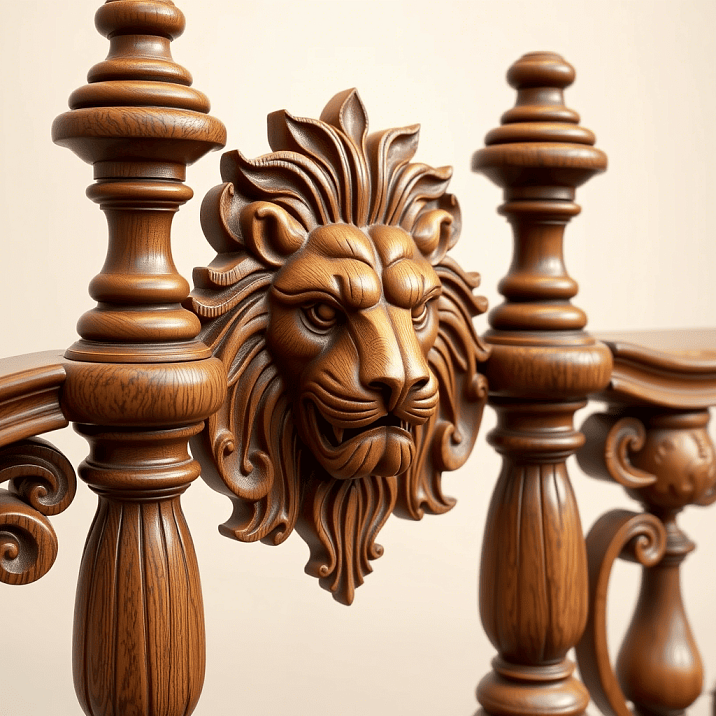
When ancient Roman masters created their majestic columns with characteristic longitudinal grooves-friezes, they never imagined that their architectural legacy would find a new embodiment in modern homes a thousand years later. Balisina Rome has become a symbol of generational continuity, a bridge between the grandeur of antiquity and the elegance of today. This architectural element transforms an ordinary staircase into a work of art, where every detail breathes history and refinement.
What makes a Roman-style baluster so attractive to modern designers and homeowners? The secret lies in the unique combination of functionality and aesthetics. The characteristic longitudinal grooves do not merely decorate the surface—they create a play of light and shadow, adding volume and dynamism to the entire structure. Every ray of sunlight penetrating the house becomes an artist, painting unique patterns on the balusters.
In the world of modern architecture, where minimalism often borders on anonymity, Roman balusters return soul and character to interiors. They remind us that beauty is not luxury, but necessity; that a home must be not merely a functional space, but a place where inspiration lives.


Historical heritage in modern embodiment
The journey of Roman balusters through centuries is a remarkable story of how architectural forms survive empires and epochs, adapting to new conditions while preserving their essence. Ancient Rome gave the world not only laws and roads, but also the language of architecture, which still speaks to us in the universal language of beauty.
The ancient roots of Roman style stretch deep into the centuries, when architecture was not merely construction, but philosophy in stone. Roman columns with their characteristic grooves-friezes were created not by chance—every line had meaning, every groove told a story. These vertical grooves not only adorned the columns but also served a practical function, diverting rainwater and adding additional structural strength.
The symbolic meaning of friezes in Roman culture was deep and multi-layered. They symbolized the aspiration toward heaven; vertical lines directed the gaze upward, toward the divine. The number of grooves, their depth and width—all of this had a sacred meaning, understandable only to the initiated.
The technical mastery of Roman craftsmen still astonishes us today. Creating perfectly flat, parallel grooves required not only artistic taste but also engineering skill. Each groove had to be of equal depth along the entire length of the column, which, when hand-carving stone, represented a serious technical challenge.




Evolution of style through epochs
The Renaissance revived interest in ancient forms, but reinterpreted them in the spirit of the new era. Italian masters of the 15th-16th centuries adapted Roman motifs for decorating palazzi and villas, creating more refined and elegant variations of classical forms.
Baroque took decoration to the extreme, yet preserved the fundamental principles of Roman architecture. Balusters of this period became more ornate, adorned with additional embellishments, but the core—the longitudinal grooves—remained unchanged.
Classicism of the 18th-19th centuries returned to the strictness of ancient models, purifying forms from Baroque excesses. It was precisely during this period that Roman-style balusters gained widespread popularity in palace and estate architecture.
Our factory also produces:


Constructive features and technical characteristics
Modern Balisina Rome is the result of centuries of refinement in form and manufacturing technology. Every element is meticulously designed, and each detail performs its function within the overall composition.
The anatomy of a Roman baluster includes several key elements. The base—square or round—ensures stability and serves as a transition from the horizontal plane of the step to the verticality of the baluster. The central part, with characteristic longitudinal grooves, constitutes the main height of the element and determines its stylistic affiliation. The upper part—the capital—completes the composition and serves as a support for handrails.
Proportions play a decisive role in the perception of a baluster. Classical Roman proportions are based on the golden ratio, where the ratio of the base height to the total height is approximately 1:8, and the capital height is 1:10 of the total height. These proportions create a visually harmonious form, pleasing to the eye.
The technical parameters of modern Roman-style balusters are standardized to ensure compatibility with various stair systems. The standard height is 900 mm, meeting the requirements of building codes for residential buildings. The cross-section varies from 45x45 mm to 60x60 mm depending on purpose and load.
Get Consultation
Geometry of longitudinal grooves
The number of grooves in the classic variant ranges from 16 to 24, evenly distributed around the baluster perimeter. This quantity ensures an optimal visual effect — sufficient to create expressive play of light and shadow, yet not excessive to preserve form readability.
Groove depth is typically 3–5 mm, ensuring clear relief readability without compromising structural integrity. Too deep grooves may reduce baluster strength, while too shallow ones will not achieve the desired visual effect.
Groove profile can vary from simple semi-circular to more complex profiles with additional elements. The classic profile is a semi-circle with smooth transitions, providing soft light play and absence of sharp edges.
Wood Science and Manufacturing Technologies
Material selection for manufacturing Roman balusters determines not only their appearance but also their performance characteristics, durability, and cost. Each wood species possesses unique properties that influence the final result.
Coniferous species — pine, spruce, larch — remain the most popular choice for mass production of Roman-style balusters. Their advantages include availability, relatively low cost, good workability, and sufficient strength for most applications.
Common pine features attractive grain with distinct annual rings. High resin content provides natural protection against moisture and biological damage. Pine density of 400–600 kg/m³ allows creating sharp grooves without chipping or surface defects.
Spruce has a more uniform structure and lighter tone, making it ideal for subsequent staining or painting. Spruce balusters retain shape well and are less prone to warping when properly dried.
Hardwood species for premium products
Oak represents the standard of quality and durability. Its exceptional hardness allows creating grooves with perfectly sharp edges that retain their shape for decades. Oak density of 700–800 kg/m³ ensures high strength and resistance to mechanical impacts.
Ash combines strength with attractive grain. Its light-colored wood with contrasting fibers creates an eye-catching appearance, especially with transparent finishes. Ash is easy to work with and allows creating complex groove profiles.
Beech features uniform structure and pinkish tone. Its high density and fine-grained texture allow achieving mirror-smooth surface finish after sanding. Beech balusters look especially striking with glossy finishes.
Manufacturing Technologies
Modern Production Roman balusters made of wood Combines traditional processing methods with innovative technologies. Each production stage affects the final product quality and requires a professional approach.
Preparation of blanks begins with careful selection of timber. Material must be properly dried to 8–12% moisture content and conditioned under conditions close to service conditions. Blanks are cut considering grain direction and natural wood stresses.
Rough shaping includes giving the blank an approximate shape of the future baluster. At this stage, basic proportions — base height, central section, and capital — are formed. Band saws and milling machines are used to create the basic geometry.
Groove formation is the most critical stage, defining the characteristic appearance of Roman balusters. Several technologies exist for creating longitudinal recesses, each with its own advantages.
Traditional and modern methods
Hand processing remains the standard of quality for exclusive items. An experienced craftsman can create grooves with a unique character, where each line bears the mark of human hands. Handwork allows varying groove depth and profile, creating subtle light and shadow nuances.
CNC milling ensures high precision and repeatability of results. Programmable machines can create grooves with ideal geometry and deviations no more than 0.1 mm. This is especially important in mass production, where absolute product uniformity is required.
Combined technology combines advantages of machine and hand processing. Basic shape is created on machines, while finishing touches are done manually, allowing achieving optimal balance of quality and productivity.
Design variations and stylistic solutions
Roman-style baluster architecture does not limit itself to one canonical variant. There are numerous interpretations of the classical theme, each suitable for a specific interior type and architectural style.
Classic variant strictly follows ancient proportions and forms. Such balusters have clearly defined base and capital, with the central part decorated by evenly spaced grooves of equal depth. This variant is ideal for interiors in classical, Empire, or neoclassical styles.
Simplified Roman style is adapted for modern interiors where connection to tradition is important but without excessive ornamentation. Base and capital may be less pronounced, and grooves — finer and more frequent. This approach preserves style recognizability while offering greater versatility in application.
Author interpretations offer creative reinterpretation of classical forms. Grooves may have variable depth, creating wave or spiral effects. Combination of straight and curved lines, addition of decorative elements is possible.
Adaptation to various interior styles
Mediterranean style requires balusters with rougher, rustic finish. Grooves may be uneven, surface slightly textured, creating a sense of antiquity and authenticity.
Scandinavian minimalism prefers clean, simple forms. Roman balusters for such interiors have minimal grooves, light tones, and matte finishes that highlight the natural beauty of wood.
Modern eclecticism allows bold experiments with shape and color. Roman grooves can be painted in contrasting colors, complemented with modern materials or unusual textures.
Installation of Roman balusters
Correct installation Roman-style baluster Requires understanding of structural features and adherence to technical requirements. The quality of installation directly affects the longevity and safety of the entire staircase structure.
The preparatory stage includes precise marking of baluster installation locations. The distance between baluster axes should not exceed 150 mm for safety. When marking, it is important to consider not only functional requirements but also visual perception — even distribution creates a harmonious rhythm.
Mounting methods depend on the type of staircase and step material. For wooden steps, the most reliable method is using pegs or threaded bolts. Metal bolts with a diameter of 8-12 mm provide strong connections capable of withstanding significant loads.
Mounting to different bases requires an individual approach. Concrete steps require the use of anchor bolts or chemical anchors. Metal structures imply welded or bolted connections with pre-installed embedded elements.
Ensuring verticality and geometry
Controlling the verticality of each baluster is critically important for the overall perception of the railing. Even minor deviations from verticality become noticeable against the regular rhythm of grooves. Use laser levels or plumb bobs for precise positioning.
Leveling by height ensures a straight handrail line. Minor height deviations of steps are compensated by trimming the lower part of balusters. It is important to maintain proportions of elements when adjusting dimensions.
The orientation of grooves should be identical for all balusters in a row. This creates visual continuity of the railing and emphasizes the rhythmic composition. Mark the orientation on each baluster before installation.
Finishing and protective coatings
The final finish of Roman balusters not only determines their appearance but also provides protection against external influences. Properly selected coating extends the service life of the items and preserves their original beauty.
Surface preparation is the foundation of quality finishing. All surfaces must be carefully sanded, starting with coarse sandpaper of 120-150 grit and finishing with 320-400 grit. Special attention is paid to grooves — they must be perfectly smooth.
Sealing ensures better adhesion of the final coating and equalizes the absorbency of different wood areas. For coniferous species, use isolating primers to prevent resin exudation.
The choice of final coating depends on usage conditions and aesthetic requirements. Lacquers create a durable protective film and highlight the natural beauty of wood. Oils penetrate the wood structure, creating a matte surface with pleasant tactile sensations.
Special effects and decorative finishes
Patination creates an aging effect, emphasizing historical ties to ancient models. Dark patina in grooves contrasts with light raised parts, enhancing surface relief.
Toning allows changing the color of wood while preserving texture visibility. For Roman balusters, warm tones — golden oak, walnut, redwood — are especially effective.
Gilding individual elements creates a luxurious effect suitable for grand interiors. Grooves, bases, or capitals can be gilded to emphasize the architectural logic of the element.
Application in Various Interior Types
The versatility of Roman balusters allows their use in various architectural contexts. From classical mansions to modern lofts — these elegant elements find their place everywhere.
Classic interiors are a natural setting for Roman balusters. Here, they serve not as decoration but as authentic elements matching the overall concept. Marble floors, molded ceilings, antique furniture — all this creates an ideal backdrop to showcase the beauty of Roman forms.
Country or Provence-style country houses also welcome Roman balusters, especially those made of natural wood with emphasized texture. Simpler versions without excessive ornamentation are appropriate here.
Modern interiors require a delicate approach to using historical forms. Roman balusters in minimalist execution, with clear lines and modern finishes, can become an interesting accent in a minimalist space.
Commercial and public spaces
Hotels and restaurants often use Roman balusters to create an atmosphere of luxury and respectability. Grand staircases with classical railings make a strong impression on visitors and highlight the establishment's status.
Representative office buildings can also benefit from using Roman balusters in entrance areas and grand staircases. This creates a sense of stability and reliability of the company.
Museums and cultural centers naturally gravitate toward classical architectural forms. Roman balusters here are not only functional but also educational, demonstrating to visitors the beauty of ancient heritage.
Care and Maintenance
Proper care of Roman balusters ensures their beauty and functionality for many years. Regular maintenance prevents serious problems and extends the service life of the items.
Daily care includes removing dust with a dry soft cloth or special brushes for grooves. It is important not to allow dirt to accumulate in recesses, as cleaning it later will require more effort.
Periodic cleaning is performed using special wood cleaning agents. Avoid aggressive chemical compositions that may damage the coating or change the color of the wood.
Covering should be renewed every 3-5 years depending on the intensity of use. Oil-based coatings require more frequent renewal, but the procedure is simpler. Lacquer coatings last longer, but their restoration requires complete sanding.
Preventive measures
Controlling humidity in the room helps prevent wood deformation. The optimal air humidity is 40-60%. Use humidifiers or dehumidifiers as needed.
Protection from direct sunlight prevents wood fading and drying out. Use curtains or blinds to shield stair areas from intense sunlight.
Regular inspection of fasteners and joints allows timely detection and elimination of potential problems. Loose joints should be tightened, and damaged elements replaced.
Economic aspects and pricing
The cost of Roman balusters depends on many factors; understanding them helps make an informed choice and optimize the project budget.
The material used is the primary factor in pricing. Coniferous species are the most affordable, while exotic hardwoods can cost significantly more. It is important to find a balance between desired quality and available budget.
Processing complexity also affects cost. Simple grooves made on a machine are cheaper than hand-carved ones. Additional decorative elements increase labor costs and, consequently, the price.
Order volume allows significant discounts for large quantities. Manufacturers often offer progressive discount systems, making large projects more economically viable.
Long-term economic efficiency
Quality balusters last for decades without needing replacement, making them economically advantageous in the long term. Cutting corners on quality often leads to additional costs for repairs and replacements.
The increase in property value due to quality architectural elements can significantly exceed the cost of acquiring them. This is especially relevant for luxury real estate.
The ability to restore wooden balusters allows restoring their original appearance upon damage, which is significantly cheaper than full replacement.
Conclusion
Roman balusters represent a remarkable synthesis of historical heritage and modern technology, where ancient beauty finds new expression in today's interiors. These architectural elements do not merely serve as barriers—they create an atmosphere, tell a story, and transform an ordinary staircase into a work of art.
Choosing Roman balusters made of woodYou invest not only in functionality and safety, but also in beauty that will delight many generations. Every groove, every line carries echoes of great civilization, reminding us that true beauty is eternal.
Modern manufacturing technologies allow creating Roman balusters that do not fall short of ancient examples in beauty, but surpass them in processing quality and durability. Proper material selection, professional manufacturing, and quality installation ensure creating railings that will become a source of pride for your home and a point of admiration for guests.
In a world where individuality and connection to history are increasingly valued, Roman balusters offer a unique opportunity to touch the great heritage of the past without sacrificing the comfort and technology of the present. They remind us that beauty knows no time, and good taste is always relevant.
STAVROS, a recognized leader in the production of wooden architectural elements, offers a full range of Roman balusters crafted in accordance with all canons of classical style. Years of experience, use of premium materials, and modern technologies enable STAVROS to create products that embody the best traditions of ancient craftsmanship in contemporary quality. Choosing STAVROS products means acquiring not just architectural elements, but a piece of history that will adorn your home for many years.


