Article Contents:
- Appliqué as a Decorative Technique
- Principles of Appliqué
- Historical Development
- Wood Appliqués - Handmade, Naturalness, Texture
- Types of Wooden Appliques
- Wood species
- Manufacturing Technique
- Finishing Wooden Appliqués
- Polyurethane Appliqués - Precise Geometry, Universality, Ability to Mimic Carving
- Technological advantages
- Production and assortment
- Installation and painting
- Application in Furniture, Wall Decoration, and Door Panels
- Furniture application
- Wall Decoration
- Door Decoration
- Installation and Painting Technology
- Surface Preparation
- Installation of Wooden Appliqués
- Installation of Polyurethane Appliqués
- Painting Appliqués
- Aesthetics of Form - How Relief Animates the Surface
- Psychology of Relief Perception
- Scale and proportions
- Stylistic Expressiveness
- Conclusion: Synthesis of Tradition and Modernity

Appliqué is the oldest decorative art technique, based on attaching cut-out elements to a base, creating a relief image, pattern, ornament. The etymology of the word traces back to Latin 'applicatio' - application, attachment, which accurately reflects the essence of the method as placing decorative elements on a flat surface to create visual enrichment, spatial structuring, and enhanced expressiveness. Appliqué transforms a smooth, featureless surface into a relief composition, where the play of light and shadow creates depth, volume, and dynamism. Applied elements - rosettes, cartouches, garlands, geometric shapes - organize the perception of the plane, reveal the structure of an object, and fill it with decorative content.
The history of appliqué demonstrates the universality of the technique, applicable to any material - textiles, leather, paper, wood, metal, plastic. Ancient civilizations adorned clothing, footwear, and household items with applied elements made from various materials - leather scraps, metal plates, precious stones, creating richness of textures and contrast. Medieval Europe developed textile appliqué art - brocade appliqués on church vestments, heraldic compositions on knightly banners, decorative panels on castle walls. Eastern cultures created unique appliqué traditions - Japanese kimonos with silk appliqués, Chinese screens with carved wooden elements, Indian textiles with mirror inlays.
In architecture and furniture, appliqué evolved as a method of enriching surfaces with applied decorative elements. Wood carving created appliqués of any complexity - from simple geometric shapes to intricate multi-figure compositions. Gypsum molding became applied decoration, mounted on walls, ceilings, and furniture. Bronze and brass metal appliqués adorned furniture of the classical and Empire styles. Each material offered unique possibilities for expressiveness, texture, manufacturing, and installation techniques.
Modern technologies have expanded the material base of appliqué.Wooden appliquéspreserve the traditions of artisanal carving, embody the nobility of natural material, the uniqueness of handcrafted art.Polyurethane Appliquésoffer a practical alternative - ideal geometry, precise reproduction of forms, moisture resistance, ease of installation, affordability. The choice of materials is determined by the project's stylistic approach, usage conditions, required detail level, and budgetary possibilities.
Properly selected appliqués transform standard flat surfaces into expressive relief compositions, filling space with decorative richness, creating stylistic definition. They can be rich and ornate for classical styles, or minimalist and graphic for modern directions. The character of elements, their size, density of placement, and degree of relief create different perceptions of the same interior or object.


Appliqué as a Decorative Technique
Appliqué occupies a unique place among decorative techniques as a method of creating relief without altering the base. Unlike carving, where decoration is part of the mass, or molding, formed directly on-site, appliqué involves manufacturing elements separately and then attaching them to the surface. This provides flexibility - elements can be moved, combined, replaced, creating various compositions without altering the base.




Principles of Application
Texture contrast is a key expressive technique in appliqué. Applied elements differ from the base material, color, and relief, creating visual enrichment. Carved wooden rosettes on a smooth painted door, white polyurethane appliqués on dark wood, gilded elements on a cream background — contrast makes appliqué visible, expressive, and compositionally significant.
Relief creates a play of light and shadow, visual volume on a flat surface. The depth of relief varies from several millimeters for thin appliqués to 30-50 millimeters for volumetric elements. Side lighting enhances the effect — morning and evening slanted sunlight creates dramatic shadows, emphasizing the relief. Artificial directional lighting also reveals the volume of appliqués.
Compositional organization determines the placement of elements on a plane. Central composition places the main element in the geometric center, flanked by symmetrical side elements. Framing composition surrounds the plane with appliqués along the perimeter. Modular composition covers the entire surface with rhythmic repetition of identical elements. Free composition places elements asymmetrically, creating dynamism.
Our factory also produces:


Historical Development
Ancient civilizations used appliqué to decorate utensils, clothing, and dwellings. Egyptians inlaid furniture with ivory, ebony, and gold plates, creating refined compositions. Greeks adorned wooden furniture with applied bronze elements — rosettes, palmettes, lion heads. Romans developed marquetry — wooden mosaic made of plates of various woods, creating multi-colored images.
The Middle Ages created the tradition of heraldic appliqué. Knightly shields, banners, and tapestries were adorned with applied heraldic emblems made of various materials — leather, metal, fabric. Church vestments were decorated with rich appliqués made of brocade, velvet, silk with pearl and gemstone embroidery. Gothic furniture was covered with carved wooden appliqués with architectural motifs — pointed arches, Gothic roses, interlacing patterns.
The Renaissance revived the ancient tradition of bronze appliqués. Italian masters adorned furniture with cast bronze elements — putti heads, grotesque masks, garlands. The intarsia technique — wood inlay — reached its peak of mastery. Florentine and Venetian masters created multi-colored compositions from dozens of wood species, depicting architectural perspectives, still lifes, and landscapes.
Baroque turned appliqué into the dominant method of decoration. Furniture was covered with incredibly complex bronze appliqués — volutes, garlands, putti, mascarons. Gilded bronze on dark ebony or red wood created a luxurious contrast. French masters — Boulle, Cresson, Riesener — reached the pinnacle of bronze appliqué art.
Neoclassicism preserved the love for bronze appliqués with greater restraint in form. Strict classical motifs — palmettes, meanders, laurel wreaths — replaced Baroque opulence. Russian Empire style created a unique tradition of appliqués with military symbolism — swords, shields, torches, laurel wreaths. Furniture by Gambas and Tura embodied imperial grandeur through rich bronze appliqués.
Get Consultation
Wood appliqués — handmade, natural, textured
Wood appliqué — a traditional technique for enriching furniture and interiors, where carved applied elements create relief decoration of any complexity.wooden appliqueembodies centuries-old traditions of master carpenters, carvers, and marquetry artists, creating unique works from noble materials.
Types of wooden appliqués
Carved appliqués — volumetric elements with complex relief, carved from solid wood. Rosettes, cartouches, garlands, volutes, acanthus leaves are carved with detailed work on each element. Relief depth of 10–30 millimeters creates expressive play of light and shadow. Carved appliqués are mounted on furniture facades, door panels, wall panels, creating rich decoration of classical interiors.
Cut-out appliqués — lace-like elements with openwork, creating lace from wood. The technique requires virtuoso skill — thin bridges between cut-outs must be strong yet visually light. Cut-out appliqués are especially effective on contrasting backgrounds — light wood on dark surfaces or vice versa. Used for decorating furniture, screens, grilles, creating lightness while preserving decorative quality.
Marquetry — mosaic made of thin plates of various wood species, creating multi-colored images, ornaments, geometric patterns. Plates of 0.5–2 millimeters thickness are cut along the contour, fitted together, and glued onto the base. Use of various wood species — from white birch to black ebony — creates a palette of shades. Marquetry decorates tabletops, cabinet facades, panels, creating refined decoration.
Inlay — embedding wooden elements into the base material flush with the surface. Unlike applied appliqué, inlaid elements do not protrude above the plane. The technique is labor-intensive — precise fitting of inlaid elements into carved recesses is required. Inlay with metal, mother-of-pearl, bone creates precious effects. Used for elite furniture, creating the impression of monolithic unity despite rich decoration.
Wood species
Linden — a classic material for carvers to create complex appliqués. Soft, uniform wood allows carving of delicate details with botanical precision. Carved acanthus leaves, roses, putti from linden achieve sculptural perfection. After staining or gilding, linden appliqués are indistinguishable from more expensive species, at lower cost and better workability.
Oak is used for appliqués requiring strength and durability. Hardwood allows creating clear relief that preserves details for decades. Expressive coarse-grained texture adds additional decorative quality even with simple carving. Oak appliqués are ideal for furniture subjected to intensive use — tables, chairs, doors.
Walnut — an elite material for exclusive appliqués. Dark brown color with purple undertones, wavy texture create a luxurious look without additional finishing. Walnut appliqués become works of decorative art, highlighting the elite status of furniture. Often used in combination with marquetry from other valuable species.
Exotic species — ebony, rosewood, mahogany, amaranth — create a multi-colored palette for marquetry. From white and yellow to red, purple, black — natural wood colors allow creating images without staining. Exotic species are also used for carved appliqués on elite furniture, where material uniqueness is important.
Manufacturing Technique
Hand carving creates unique appliqués, where each element carries the individuality of the craftsman. The carver sequentially forms the relief — rough shaping of the main volume, then detailing, refining small elements, final finishing. Working on a complex appliqué takes 20–40 hours. The result — a living artwork, where the handiwork is visible, and the energy of creativity is felt.
CNC machines reproduce appliqués from 3D models with micron accuracy. The program controls the milling cutter, carving the relief from the blank. The technology allows mass-producing complex shapes, ensuring element identity. For serial furniture, this is critical — all facades must have identical decoration. Combining machine processing with manual finishing optimizes cost while preserving quality.
Marquetry is performed manually or with laser cutting. Manual technique requires virtuoso skill — plates of various species are cut with a fret saw along the contour, fitted with precision to fractions of a millimeter. Laser cutting ensures perfect contour accuracy, allowing creation of the most complex compositions. Plates are glued onto the base, sanded flush, and coated with transparent lacquer.
Finishing of wooden appliqués
Sanding reveals the beauty of texture, creating smoothness on carved elements. Sequential processing with progressively finer sandpaper removes tool marks. Hand sanding is required for carved appliqués — access to all recesses of the relief. Quality sanding is critical for subsequent staining or lacquering.
Staining with dyes emphasizes texture, alters the color of wood. Light species are stained to resemble valuable ones — linden stained to resemble walnut, beech stained to resemble mahogany. Gradient staining — dark in recesses, light on protrusions — enhances visual depth of carving. For marquetry, staining enriches the color palette, creating additional shades.
Lacquering protects wood, emphasizes texture. Transparent lacquers create protective film with varying degrees of gloss. For marquetry, lacquer quality is critical — the surface must be perfectly smooth, lacquer must not accumulate at joints between plates. Multi-layer lacquering with intermediate sanding creates depth, highlighting the beauty of wood.
Gilding transforms appliqués into luxurious elements. Classical gilding covers carving with the finest gold leaf. Imitations — gold paints, gold leaf — create visually similar effects. Partial gilding — only protruding elements of carving — creates refined contrast with natural wood or stained background.
Polyurethane appliqués - precise geometry, versatility, ability to imitate carving
Modern polyurethane has revolutionized the production of appliquésfurniture decor. Polyurethane AppliquésThey reproduce any shape with jewel-like precision, creating elements that are visually indistinguishable from carved wood or plaster molding after painting.
Technological Advantages
The ideal geometry of cast elements ensures mathematical precision of forms unattainable by hand carving. All elements in a batch are absolutely identical — critical for decorating mass-produced furniture, where repeatability is required. Symmetrical elements have mirror precision, radii of circles are ideal, straight lines have no deviations. Such precision corresponds to classical ideals of harmony.
The phenomenal lightness of polyurethane appliqués is critical for installation on thin MDF or particleboard facades. An appliqué measuring 200x300 millimeters weighs 80-120 grams compared to 400-600 grams for wooden ones. Lightness allows mounting decor on any surface without risking deformation of the base or requiring structural reinforcement. A glue joint is sufficient for secure fixation.
Absolute water resistance makes polyurethane appliqués ideal for kitchen and bathroom furniture. The material does not absorb water, does not swell, and never develops mold. Kitchen facades with polyurethane decor serve for decades in humid conditions under intensive use. Wooden appliqués in humidity quickly lose their appearance and require replacement.
The complexity of forms does not affect the cost of cast elements. A simple rosette and a complex cartouche with multi-figure composition cost the same when comparable in size. For wooden carving, complexity is critical — labor intensity increases exponentially. Polyurethane makes complex historical forms accessible to a broad audience, democratizing classical decor.
Production and assortment
Creating a master model is a key stage determining product quality. The sculptor creates a reference appliqué from clay or plasticine, carefully working out every detail considering that casting will reproduce elements down to fractions of a millimeter. For reproducing historical samples, museum exhibits, antique furniture, and archival drawings are used. Every carving detail is recreated with archaeological precision.
The silicone mold captures the finest nuances of the master model's surface. Elastic silicone penetrates the finest recesses of carving, fixing details invisible to the naked eye. After the silicone hardens, the mold is cut open, and the master model is removed. For complex appliqués, the mold may consist of several parts that open to extract finished items.
Casting fills the mold with foaming polyurethane mass. Inside, a porous, lightweight structure forms, while the surface develops a dense shell 2-3 millimeters thick with perfectly detailed relief. Every vein of an acanthus leaf, every petal of a rose, every fold of drapery is reproduced with original precision. After polymerization, the finished appliqué is removed, and technological elements are trimmed.
The variety of forms is measured in thousands of variations. Classic rosettes of all sizes and degrees of complexity. Cartouches with coats of arms, monograms, allegorical images. Garlands with flowers, fruits, ribbons. Corner elements in triangular, quarter-circular, and shaped forms. Extended borders with ornaments. Masks, putti, brackets — a complete arsenal of classical decor.
Installation and Painting
Installation on special glue takes minutes. Glue is applied to the back of the appliqué in dots or zigzag. The element is pressed against the facade, door, or panel and held for 30 seconds until it sets. Excess glue is removed with a damp sponge. For securing large appliqués, thin brad nails are used in shadowed areas — at corners and centers, where they are not noticeable.
Painting does not require priming for quality polyurethane. Acrylic paints are applied directly onto the material with brushes of various widths. Narrow brushes work into recesses of relief, while wide brushes cover flat areas. Two layers create a dense, opaque finish. Traditional white color is universal for classical furniture. Painting to match the facade color makes appliqués barely noticeable as relief.
Imitating carved wood is achieved through a special technique. A base ochre-brown color is applied in an even layer. After drying, a fine brush outlines the wood texture — growth rings, grain direction. Dark brown patina in recesses enhances relief. A final matte varnish layer creates the illusion of natural wood. From a distance of 1-2 meters, polyurethane appliqué is indistinguishable from wooden one.
Patination creates an antique furniture effect. A base cream or beige color is covered with brown or dark green paint. Before drying, dark paint is partially rubbed off raised relief areas. Recesses remain dark, raised areas lighten — imitating centuries-old patina. The technology transforms new furniture into antique pieces.
Application in furniture, wall decor, and door panels
The versatility of appliqués is demonstrated by their limitless application possibilities on any interior surfaces and furniture, creating a cohesive decorative system.
Furniture application
Cabinet facades are transformed by central appliqués, turning smooth doors into richly decorated panels. A large rosette or cartouche measuring 150-250 millimeters is placed at the geometric center of the door. Corner appliqués at the four corners create a framed composition. For two-door cabinets, symmetrical appliqués are used — mirror reflections on each door ensure visual balance.
Drawer fronts of commodes are decorated with appliqués that structure the front planes. A central rosette on each drawer creates a compositional center. For wide drawers, two symmetrical appliqués flank the handle. Extended borders around the drawer perimeter create a frame, visually separating each drawer from its neighbors. Gradation of appliqué sizes — larger on lower drawers, smaller on upper ones — creates visual stability.
Countertops are adorned with appliqués along the perimeter, creating framing. Corner elements emphasize corners, extended borders connect them. For formal dining tables, complex multi-element compositions are used — central panels, radial elements, framing borders. Marquetry creates refined countertops, where wooden mosaics depict still lifes, architectural views, and coats of arms.
Chairs and armchairs are decorated with appliqués on backs, armrests, and stretchers. A central appliqué on the back becomes the main decorative accent. Classic chairs feature carved cartouches, garlands, lyres. Appliqués on upper parts of legs and transitions between elements enhance the architectural logic of the structure. Gilding appliqués on painted bodies creates luxury.
Wall decor
Wall panels are structured by appliqués creating a relief composition. Rectangular frames made of applied strips divide the wall into panels. A central rosette or cartouche is placed within each panel. Corner elements at the corners of panels complete the composition. For high rooms, multi-tiered compositions are used — lower panels are larger and richer, upper panels smaller and simpler.
Pilasters are adorned with applied capitals, bases, and fluting. Vertical elements visually divide walls, creating architectural structure. Capitals are decorated with carved acanthus leaves and volutes. Pilaster shafts are covered with vertical grooves (fluting) or remain smooth with a central appliqué. Bases are profiled with applied molding and ledges.
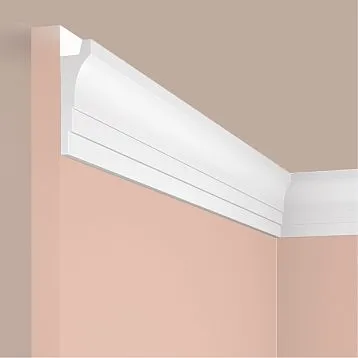
Ceiling moldings are decorated with extended ornamental bands. The width of the molding is 150-300 millimeters depending on room height. The ornament — acanthus garlands, meanders, ovals, and beads — repeats rhythmically. Corner elements ensure clean turns. The molding visually separates walls from the ceiling, creating horizontal division of vertical space.
Door decor
Lattice doors are enriched with appliqués at the centers of lattices, at corners, along the frames. Each lattice receives a central rosette, corner elements, and framing border. For formal doors, complex multi-element compositions with cartouches, garlands, and putti are used. Appliqués transform a standard door into a work of joinery art.
Smooth doors mimic lattice doors through applied frames. Rectangular frames made of profiled strips are mounted on flat panels, imitating frames. A central appliqué is placed within each frame. This creates the illusion of a classic lattice door at lower cost, weight, and technical complexity. This technique is popular for renovating old doors.
Door casings are decorated with appliqués, transforming simple strips into rich decor. Corner rosettes at junctions of vertical and horizontal strips. Extended borders with ornament along strips. The top of the casing is crowned with a pediment or sash with a cartouche, garland. Appliqués coordinate with door panel decor, creating stylistic unity.
Installation and painting technology
Professional installation and quality finishing ensure the longevity, aesthetics, and functionality of appliqués regardless of the material used.
Surface preparation
Cleaning the base from contaminants, dust, and grease stains is critical for adhesive bonding. The surface is wiped with a solvent and degreased. Glossy lacquered surfaces are sanded with P180-P220 sandpaper to improve adhesion. Loose areas are reinforced with a penetrating primer. Proper preparation determines the reliability of the appliqué attachment.
Marking determines the exact position of appliqués. For central elements, the geometric center is found at the intersection of diagonals. For symmetrical compositions, symmetry axes are drawn. The position of each appliqué is marked with a pencil. Preliminary layout of all elements without adhesive allows assessing the composition and, if necessary, adjusting placement.
Fitting each appliqué without adhesive checks the accuracy of marking and surface fit. The appliqué is placed at its installation site and visually assessed. Issues such as uneven base, size mismatch, or compositional errors are identified. Fitting saves time, prevents mistakes, and ensures a high-quality result.
Installation of wooden appliqués
Adhesives are selected based on the base material. Wood-based base: reinforced PVA. For MDF, particleboard, and plastic: contact adhesive. For critical joints requiring maximum strength: epoxy systems. Adhesive is applied to the back of the appliqué and to the base in a thin, even layer.
Appliqué pressing is performed with even pressure across the entire surface. For large, heavy appliqués, weights such as sandbags are used to distribute load. Holding time under weight is 2–4 hours until initial adhesive setting. Full polymerization takes 24 hours. Excess adhesive is immediately wiped off with a damp cloth — hardened adhesive is difficult to remove and damages appearance.
Additional fixation with screws or pins is applied to appliqués subjected to mechanical loads. Thin screws or pins are screwed or driven through the appliqué into the base in recessed areas — relief indentations or on the reverse side. Fixations are invisible and ensure reliability under intensive use. Especially important for furniture appliqués and doors.
Installation of polyurethane appliqués
Special polyurethane adhesive or universal liquid nails are applied to the back in dots. Small, lightweight appliqués require only 4–6 drops of adhesive. Large, heavy appliqués require zigzag or continuous application. The appliqué is pressed to the surface and held by hand for 30–60 seconds until the adhesive sets. Polyurethane’s lightness allows omitting weights.
Double-sided tape is used for temporary fixation until the adhesive dries. Tape strips are applied to the back of the appliqué in addition to the adhesive. After pressing the appliqué, the tape holds it, freeing the craftsman’s hands. After 12–24 hours, the adhesive is fully cured — the tape can be removed or left in place; it does not interfere.
Masking joints with acrylic sealant creates visual monolithism. The gap between the appliqué and base is filled with white sealant, smoothed with a wet finger or rubber spatula. After drying, the joint is painted to match the tone. The appliqué appears as part of the base, not as a separate glued element. This technique is critical for imitating wood carving.
Painting appliqués
Wooden appliqués are primed with white acrylic primer. Primer is applied with brushes, penetrating all relief indentations. After drying, the surface is sanded with fine-grit sandpaper P240-P320. Defects — cracks, knots, resin pockets — are spackled and resanded. Quality preparation is critical for the final finish.
Paint is applied in two to three layers using acrylic or alkyd enamels. The first layer is a primer, diluted 10–15% for better penetration. The second layer is a finish coat, applied undiluted with brushes or spray gun. For deep, dark colors, a third layer is required. Narrow brushes work into recesses; wide brushes cover flat areas.
Polyurethane appliqués are painted without primer. Acrylic paints are applied directly to the material. The polyurethane surface is perfectly smooth, allowing even paint application. Two coats are sufficient for dense coverage. Painting can be done after installation or beforehand — depending on composition, accessibility, and risk of base contamination.
Special effects — patina, gilding, craquelure — create decorative richness. Patina in recesses enhances relief. Gilding of protruding elements creates luxury. Craquelure — a network of artificial cracks — imitates aged paint. Multi-layered coatings with various effects transform simple appliqués into works of decorative art.
Aesthetics of form — how relief brings surfaces to life
Relief is the key property of appliqués, transforming flat surfaces into three-dimensional compositions where the play of light and shadow creates visual richness, depth, and dynamism.
Psychology of relief perception
Relief activates binocular vision, creating a sense of volume, materiality, and tangibility. Flat surfaces are passively perceived, while relief surfaces are actively explored — the gaze examines protrusions and recesses, following transitions in form. This creates visual interest, holds attention, and makes surfaces memorable. Relief decoration transforms neutral planes into expressive compositions.
The play of light and shadow creates visual enrichment that changes throughout the day. Morning and evening slanted sunlight creates dramatic deep shadows, highlighting every detail of the relief. Midday vertical light smooths shadows, making the relief less pronounced. Artificial directional lighting reveals relief in the evening. The changing play of light makes decoration alive and dynamic.
Tactile appeal of relief surfaces enhances aesthetic experience. The desire to touch and trace the relief with fingers is natural — touch complements visual perception. For wooden appliqués, tactile contact is especially valuable — the warmth of solid wood, the smoothness of polished surfaces, and the grain structure create a multisensory experience. Polyurethane, after quality painting, is also pleasant to the touch.
Scale and proportions
Appliqué size is coordinated with the scale of the decorated surface. For furniture facades 400–600 mm wide, optimal appliqué diameter is 100–150 mm. Larger appliqués overwhelm; smaller ones disappear. For doors 800–900 mm wide — appliqués 150–250 mm. For wall panels 1000–1500 mm high — 200–350 mm. Proportionality creates visual balance.
Relief depth determines the expressiveness of appliqués. Thin flat appliqués 5–10 mm thick create delicate, barely noticeable relief. Medium 15–25 mm — expressive decoration with clear light and shadow play. Deep 30–50 mm — dramatic relief with strong light and shadow contrast. Depth choice depends on style — classicism prefers medium relief, baroque deep, minimalism thin.
Density of placement affects the perception of decoration. One central appliqué on a door creates a minimalist accent. Appliqués with angular elements — structured composition. Multiple elements covering the entire surface — rich, saturated decoration. Classical styles favor moderate density, baroque high, modern low.
Stylistic expressiveness
Classicism uses strict symmetrical appliqués with classical motifs. Rosettes with laurel wreaths and palmettes. Cartouches with allegories of virtues. Garlands with ribbons and flowers. Symmetry is absolute, forms are mathematically precise, decoration is restrained. Color is white or matching base with partial gilding. Appliqués emphasize the architectural logic of furniture.
Baroque requires lavish multi-element compositions. Large appliqués with complex forms, volutes, putti, garlands. Asymmetrical, dynamic elements. Deep relief with dramatic light and shadow play. Gilding is mandatory — full or partial. Dense placement creates an impression of abundant decoration. Appliqués dominate, transforming furniture into sculptural objects.
Modern creates organic, asymmetrical appliqués. Stylized plants with curved stems, female profiles with flowing hair. Rejection of geometric regularity, fluid lines, expressive forms. Natural wood with inlay accents. Appliqués integrate into the overall composition, flowing into adjacent elements, creating organic unity.
Minimalism rejects complex decoration in favor of simple geometric forms. Circles, squares, rectangles without ornamentation. The number of elements is minimal — one or two accents. Low relief — 5–10 millimeters. Colors are monochromatic — white, black, gray. Appliqués create surface graphics, structuring the plane without excessive ornamentation.
Result: synthesis of tradition and modernity
Decorative appliquéembodies a dialogue between eras, where the oldest technique of applied art finds new life thanks to modern materials and technologies. The thousand-year-old tradition of enriching surfaces with applied elements remains relevant, demonstrating the universality of the method applicable to any materials, styles, or purposes.
Wooden appliqués— choice for admirers of traditions, handmade craftsmanship, natural beauty. Carved appliqués carry the individuality of the master, uniqueness of each piece. Marquetry creates refined compositions from noble woods. Wooden appliqués are ideal for luxury furniture, historical interiors, projects where connection to cultural heritage is important.
Polyurethane Appliqués— practical solution for a wide range of projects. Ideal geometry ensures repeatability, critical for mass-produced furniture. Moisture resistance opens application in kitchens, bathrooms. Lightness simplifies mounting on any base. Affordable price democratizes classic decor, making it mass-market.
Combining materials creates an optimal balance. Key visible elements from noble wood, secondary from practical polyurethane. Unified coloring makes material differences imperceptible. This approach optimizes cost while preserving the impression of expensive furniture, creating a rational balance between aesthetics and practicality.
STAVROS Company offers a full spectrum of appliqué decoration from natural wood and polyurethane. Hand-carved appliqués based on historical models. Marquetry from noble woods. European-quality polyurethane systems with detailed relief work. Professional consultations will help select appliqués matching the style, scale, usage conditions, and budgetary possibilities.
Create interiors where flat surfaces transform into relief compositions, where the play of light and shadow brings space to life, where every detail is thoughtfully and perfectly crafted. Transform standard furniture into unique artworks, fill rooms with decorative richness, realize dreams of beauty. Choose appliqués — choose the method where traditions meet innovations. Choose STAVROS — choose quality proven over centuries, craftsmanship embodied in material, beauty designed for perfection in every form.