












































































Article Contents:
- What makes a slatted panel three-dimensional: the physics of volume
- Materials for 3D slatted panels: MDF and solid oak
- MDF for painting: maximum color freedom
- Solid oak: living three-dimensional volume
- Structural types of 3D slatted panels
- Rigid 3D panels on MDF backing
- Flexible 3D panels on fabric base
- Difference in volume: flat and curved surfaces
- Slat profile and 3D effect character
- Rectangular profile: architectural clarity of volume
- Semicircular profile: organic volume
- Trapezoidal profile: volume dynamics
- Table: profile, shadow, atmosphere
- Slat spacing and 3D effect depth
- 3D slat panel lighting: light as an essential system element
- Directional spotlights: the main tool
- LED strip behind top molding
- LED in gaps between slats
- Shadow play with changing lighting
- System finishing with slatted 3D panels: how to build an architectural whole
- Upper boundary: molding and cornice
- Lower boundary: floor skirting board
- Trim elements
- Decorative overlays: architectural frame
- Staircase as an extension of the 3D theme
- Furniture decor in the system
- Styles and spaces: where 3D slatted panels deliver maximum impact
- Minimalism: volume through negation
- Scandinavian style: natural three-dimensionality
- Japandi: Meditative Volume
- Modern Classic: Monumental Volume
- Organic Modern: Natural Sculpture
- Restaurant: Atmosphere Through Volume
- Office: Volume as a Branding Tool
- Bedroom: Quiet Volume Behind the Headboard
- Technical Parameters of 3D Slat Panels: What's Important to Know
- Standard Module Format
- Slat Height (Protrusion Above the Substrate)
- Slat Width
- Slat spacing accuracy
- MDF backing thickness
- 3D slat panel installation: key principles
- Common mistakes when working with 3D slat panels
- About the Company STAVROS
- FAQ: answers to popular questions about 3D slat panels

A wall is no longer just a wall. In modern interiors, it's an architectural tool capable of compressing and expanding space, absorbing sound, controlling light, and creating atmosphere from scratch. Among all available methods for transforming flat surfaces, 3D slat panels hold a special place—because they work in multiple dimensions simultaneously.
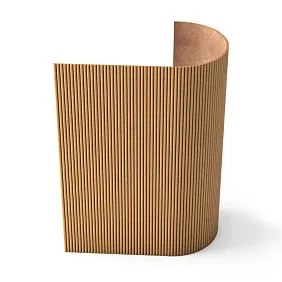
What is a slat 3D panel in the strict sense? It's not abstract relief plaster or plastic imitation with simulated depth. It's a structure made of real slats with real protrusion over the backing—a physically three-dimensional surface you can touch, where light truly lives, forming a changing pattern of shadows throughout the day. The three-dimensionality here isn't digital simulation but the physical reality of the material.
This distinction is fundamental. When directional light hits a slat 3D surface at a 30-degree angle—each slat casts a shadow into the gap. Depth emerges. The eye perceives space behind the surface. The wall ceases to be a plane and becomes a volume. This isn't an illusion—it's architectural mechanics that works flawlessly.
What makes a slat panel three-dimensional: the physics of volume
Before discussing application, styles, and selection, it's worth understanding the physics of the effect. Understanding the mechanics helps make correct decisions when choosing profile, spacing, and lighting.
A slatted 3D panel creates volume through three physical factors:
The projection of the slat above the substrate. The slat rises above the base plane—this is the literal third dimension. Projection height: from 15–18 mm (semi-circular profile of a standard glazing bead) to 30–35 mm (large rectangular profile). The greater the projection, the deeper the shadow, the more pronounced the volume.
The gap between slats. The space between the glazing beads is the 'shadow cavity'. When illuminated, it is the gap that creates the contrasting shadow perceived by the eye as depth. A 10 mm gap with an 18 mm slat height gives one light-and-shadow ratio. A 20 mm gap with the same slat gives another, more airy one.
The slat profile. A rectangular profile gives a hard, sharp shadow with a defined edge. A semi-circular one gives a soft, diffused shadow with a smooth transition. A trapezoidal one gives a multi-level, volumetric shadow. The profile defines the character of the light and shadow, and therefore the character of the perceived volume.
Result:3D slatted panels— are not a decorative technique, but an architectural tool for managing spatial perception through physical relief and interaction with light.




Materials for 3D slatted panels: MDF and solid oak
Our factory also produces:
MDF for painting: maximum color freedom
MDF with a density of 750–850 kg/m³ is a pressed wood fiberboard with a homogeneous structure. Perfect geometry, defect-free surface, complete color freedom according to the RAL or NCS catalog. It is MDF that allows for the realization of the boldest color concepts for slatted 3D panels:
-
monochrome systems "wall - slats - single tone";
-
saturated accents (anthracite, bottle green, cobalt, burgundy);
-
two-color systems "slats of one color, backing of another";
-
any corporate color in exact RAL.
Key technical parameter: density 750–850 kg/m³. Below 700 — loose material with swelling ends and unstable geometry. MDF with correct density maintains the slat volume without deformation for decades.
Get Consultation
Solid oak: living three-dimensional volume
Oakslatted 3D panelsadd another dimension to the physical volume of the relief — the natural variability of texture. The grain pattern on the front and side faces of the slat under directional lighting creates a unique, non-static visual effect. Each batten is an independent natural sculpture.
Oak with a density of 700–750 kg/m³ maintains geometry with proper drying (moisture 8–10%). The natural tactility of open pores under oil — an effect unattainable for any synthetic material. The three-dimensionality here is not only visual but also tactile.
Structural types of 3D slatted panels
Rigid 3D panels on MDF backing
The slats are fixed to a rigid MDF base with factory precision of spacing. Standard module format: 0.6 × 2.4 m. The design ensures precise flat geometry of the entire system: the slats protrude strictly perpendicular to the backing, without tilt or deflection. This is a condition for correct volume—even a slight deviation of a slat from vertical 'breaks' the rhythm of the shadow.
Rigid panels are a standard solution for straight vertical walls, horizontal ceilings, flat partitions. Adhesive or frame mounting. Factory control of spacing accuracy ≤ 0.5 mm is a necessary condition for a monolithic surface when joining several modules.
Flexible 3D panels on fabric base
Slats on a fabric mesh base with the ability to bend to a radius from 100–150 mm. On curved surfaces—columns, arches, radius partitions—the three-dimensional effect gains an additional dimension: the relief wraps around the form, creating a continuous volume without interrupting the pattern. This is one of the most impressive architectural effects in modern interiors.
Difference in volume: flat and curved surface
On a flat plane, a slatted 3D panel creates a 'frontal' volume—a perceived depth when viewed at an angle. On a curved surface—an 'enveloping' volume: the relief exists at all viewing points simultaneously. For columns, arches, and radius walls, a flexible panel provides a fundamentally different spatial result than a flat solution.
Slat profile and the nature of the 3D effect
Choosing a profile for a slatted 3D panel is choosing the character of the volume. Each profile creates a unique chiaroscuro pattern.
Rectangular profile: architectural clarity of volume
Straight vertical edges. The shadow is sharp, with a clear boundary. The transition from the illuminated edge to the shadowed one is abrupt. The volume reads as 'architectural': structural, disciplined, with engineering precision. Under 2700 K side lighting — a monumental, weighty image.
Application: minimalism, office, modern classic in a restrained interpretation, furniture facades with linear design, any spaces with an architectural accent.
Semicircular profile: organic volume
Rounded edges. The shadow is smooth, diffused, with a gradual transition from light to shadow. The volume is soft, 'natural'. On oak slats with a semicircular oiled profile — the effect resembles organic natural forms. The surface is lively, non-static, warm.
Application: bedroom, living room with a soft atmosphere, children's room, library, Scandinavian style, organic modern, japandi.
Trapezoidal profile: volume dynamics
Expansion of the slat towards the base. The shadow is multi-level: the side edge gives one shadow, the lower platform — another. The volume is dynamic, decoratively rich. The most pronounced 3D effect among standard profiles.
Application: restaurant, hotel lobby, boutique, showroom, commercial spaces with high decorative intensity.
Table: profile, shadow, atmosphere
| Profile | Shadow character | Atmosphere | Application |
|---|---|---|---|
| Rectangular | Sharp, clear | Architectural rigor | Office, minimalism, classic |
| Semi-circular | Smooth, diffused | Natural softness | Residential, Scandinavian, Japandi |
| Trapezoidal | Multi-level, dynamic | Decorative richness | Restaurant, lobby, boutique |
Slat spacing and depth of 3D effect
In the context of 3D slatted panels, the spacing (pitch) takes on special significance: it's not just a rhythm, it's the 'slat-to-gap' ratio that determines the intensity of the shadow pattern.
Tight spacing of 15–20 mm. Slats dominate over gaps. The surface is rich, active. The shadow pattern is frequent, rhythmic. The volume reads as 'dense,' substantial. For large planes in spacious rooms.
Medium spacing of 25–35 mm. Balance of slat and gap. The shadow in the gap is clearly visible under moderate lighting. A universal 3D effect — works in most applications.
Wide spacing of 40–60 mm. Gaps dominate over slats. Each slat is an independent architectural element. The shadow in the wide gap is deep, rich. The volume is airy, monumental. For small spaces and delicate accent solutions.
Practical rule: to enhance the 3D effect — use a wide gap + directional light at an acute angle. Dense rhythm + uniform overhead lighting = loss of volume.
Lighting 3D slatted panels: light as an essential element of the system
Let's be direct here: without proper lighting, a slatted 3D panel doesn't work. It is the light that creates the volume — the slat merely gives it form. Under uniform overhead lighting, the relief is barely perceptible. Three minutes spent understanding this principle are worth more than any other knowledge about slatted panels.
Directional spotlights: the main tool
Spotlights on a ceiling track or in recessed cups at a 30–45° angle to the panel surface. This is the optimal angle: sharp enough to create a contrasting shadow, wide enough to illuminate the entire surface. The sharper the angle — the deeper the shadow, the more pronounced the 3D effect.
Color temperature: 2700 K (warm white) for living spaces enhances the natural warmth of oak and creates a cozy atmosphere. 3000–3500 K — neutral tone, for office and commercial projects.
LED strip above the molding
Molding along the upper edge of the slatted field with a 20–30 mm gap. LED strip inside, directed downward — descending light on the slatted surface. The shadow falls strictly along the gaps, enhancing the vertical 3D rhythm. One of the most 'cinematic' lighting techniques for slatted relief.
LED in the gaps between slats
The strip is mounted on a backing in the gaps — before attaching the panel to the wall. The panel glows from within. With warm light at 2700 K and an oak surface — the effect of a 'burning forest'. For the bedroom — one of the most powerful atmospheric techniques.
Play of shadows when lighting changes
On a 3D slatted oak panel throughout the day, you can observe how the visual appearance of the surface changes: morning side light from the window, daytime diffused light, evening warm directional artificial lighting — three fundamentally different states of one wall. This is something no other material provides.
Systemic finishing with slatted 3D panels: how to build an architectural whole
3D slatted panels work at their maximum only as part of a coordinated system. One beautiful plane without architectural 'frames' is an unfinished thought. Let's consider how to build the system.
Upper boundary: molding and cornice
wooden moldingfrom the same production program creates a clear horizontal line along the upper edge of the slatted field. Oak molding of the same tint — natural consistency. MDF molding in the same RAL — a color monolith. In classic interiors —Wooden cornicewith a profiled face surface: a full-fledged architectural 'cover' for the slatted field, separating it from the ceiling architecturally, not just physically.
Molding with a 20–30 mm gap from the ceiling — space for LED strip: a functional and architectural element simultaneously.
Lower boundary: floor skirting board
Solid oak wooden skirting board— the natural lower boundary of the oak slatted system. One species, one tint, one production: visual solidity that cannot be achieved with assembled elements from different sources.— is a horizontal element that frames the room at the bottom of the walls where the wall meets the floor. Skirting boards perform several functions: they hide the technological gap between the wall and floor covering (necessary for thermal expansion), protect the lower part of the wall from mechanical damage, create visual completion, and may conceal wiring.in the same RAL for MDF systems — seamless color transition from below.
Fitting elements
wooden plankfrom the same solid wood — an extension piece for corner transitions, window reveals, and junctions with door openings. An inconspicuous, organic extension without extraneous accents.
Decorative overlays: architectural frame
In neoclassical and classical interiorsDecorative Insertscreate vertical and horizontal framings for the slatted field — an architectural 'frame' around the 3D plane. This transforms a beautiful wall into a full-fledged architectural panel system with historical roots and modern embodiment.
Staircase as a continuation of the 3D theme
In a country house or multi-level apartment, slatted 3D panels in the stairwell create an architectural narrative—a natural theme that accompanies the upward movement.balusters for staircasesfrom the same solid oak enhance this theme: three-dimensionality is present on both the wall and the staircase railing simultaneously—a unified volumetric image.
Furniture decor in the system
Furniture Handlesin a coordinated material complete the system down to the details. Slatted fronts of the built-in wardrobe with handles made from the same oak—this is not furniture placed next to a wall, it is a unified architectural space.
Styles and spaces: where 3D slatted panels deliver maximum impact
Minimalism: volume through negation
The paradox of minimalism: the less decor, the stronger each element. White MDF slats RAL 9010 on a white backing of the same tone—a monochrome monolith. Relief exists only through shadow. In the absence of other decorative elements, the surface acquires an almost meditative expressiveness. The 3D effect here is maximally 'pure': no distracting color contrasts, only the physics of light and shadow.
Scandinavian style: natural three-dimensionality
Light oak with oil finish. Semi-circular profile. Vertical slats. Warm light 2700 K. The natural three-dimensionality here is twofold: the physical volume of the relief plus the living variability of the oak grain. Each slat carries a unique fiber pattern—the surface of oak slatted 3D panels proves to be infinitely rich upon close inspection.
Japandi: meditative volume
Gray-toned oak. Horizontal slats – a meditative horizon. Wide spacing of 40–45 mm. Rectangular profile. In Japandi, the 3D effect is subtle: not loud, not accent – a quiet, contemplative volume for spaces where inner silence is valued.
Modern classic: monumental volume
Dark oak with toning. Trapezoidal profile.Decorative InsertsFraming the slatted panel field.wooden cornicealong the upper edge. The volume here works in tandem with the architectural 'frame' – creating a sense of monumentality characteristic of classic palace interiors. Yet, with modern proportions and no literal historicism.
Organic Modern: natural sculpture
Oak with natural toning. Semi-circular profile. Flexible panels on curved surfaces. Natural stone and linen nearby. In Organic Modern, the 3D slatted panel is a natural sculpture on the wall: a living material with volume that changes with the lighting.
Restaurant: atmosphere through volume
Warm oak in a honey tone. Trapezoidal profile with pronounced 3D. Directional spotlights at 2700 K, angled at 35°. Acoustic filling in the frame. In a restaurant, 3D slatted panels work simultaneously as a decorative element and an acoustic solution. The guest doesn't analyze – they feel. Coziness, warmth, depth. And they want to return.
Office: volume as a branding tool
MDF in corporate RAL. Rectangular profile. Precise color, precise geometry. In the reception area and meeting rooms – a 3D slatted wall in the corporate color communicates seriousness, precision, and the company's character without a single word. This is branding through architecture.
Bedroom: a quiet volume behind the headboard
The wall behind the headboard is the most intimate application for slatted 3D panels. Honey-toned oak, semi-circular profile, medium spacing of 30 mm. LED strip along the lower perimeter of the panel. Upward warm glow in the gaps. Falling asleep in such a space is different. The volume creates a feeling of natural shelter, intimacy—that very 'den' where you want to stay.
Technical parameters of 3D slatted panels: what's important to know
Standard module format
Width: 0.6 m. Length: 2.4 m. Module area: 1.44 sq.m. This is the standard format for most applications. For non-standard rooms (ceiling height above 2.4 m, non-standard width)—inquire with the manufacturer about the possibility of a custom format.
Slat height (protrusion above the substrate)
Semi-circular profile of standard batten: 15–18 mm. Rectangular profile of medium batten: 20–25 mm. Trapezoidal large profile: 25–35 mm. This parameter determines the 'depth' of the 3D effect—the higher the slat, the deeper the shadow with directed light.
Slat width
12–18 mm—narrow batten, elegant, light volume. 20–30 mm—medium batten, balanced volume. 30–50 mm—wide batten, monumental volume with pronounced oak grain pattern.
Accuracy of slat spacing
≤ 0.5 mm — manufacturing tolerance for monolithic surfaces when joining multiple modules. This is an absolutely critical parameter specifically for 3D panels: an unstable pitch disrupts the rhythm of shadows, and joints between modules become visible 'breaks' in the pattern.
MDF Substrate Thickness
12–16 mm — standard range. A thin substrate (less than 12 mm) in frame mounting may sag between attachment points. A thick one (16 mm) provides rigidity but increases the module weight.
Installation of 3D Slat Panels: Key Principles
Installation of 3D panels follows the same principles as installation of standard slat panels, but with additional requirements for flatness — because on a three-dimensional surface, any deviations are seen much more sharply under side lighting than on a flat one.
Base surface flatness. Permissible deviation for adhesive installation — up to 5 mm. More than 5 mm — frame installation is mandatory. On a 3D surface, the 'wave' of the base is fully reproduced and is readable under side lighting.
First panel aligned with laser level. For vertical slats, the first panel is set strictly vertically. Even a 1 mm tilt on the first module 'accumulates' over 5–6 modules into a visible shift in rhythm.
Joining without a gap. Slats of adjacent modules must form a continuous rhythm. A gap in the joint is a 'missed beat' in the rhythm of shadows. Visible immediately.
Securing with finish nails. For adhesive installation — use finish nails Ø1.2×30 mm around the perimeter until the adhesive fully cures. This is especially important on 3D surfaces: a volumetric slat, if accidentally touched, can shift the panel before the adhesive hardens.
Mistakes when working with slatted 3D panels
Error 1. Installation without side lighting. The 3D effect does not work without directional light. This is the most costly mistake — good panels, good installation, and no result.
Error 2. Dense spacing in a small room. A frequent rhythm in a small space creates visual crowding instead of volume.
Error 3. Unstable spacing from the manufacturer. This cannot be fixed after installation.
Error 4. Installation of a rigid panel on a curved surface. Only a flexible base is suitable.
Error 5. Cheap MDF with a density below 700 kg/m³. The slats will deform over time, lose their geometry, and the volume will 'shift'.
Error 6. Exposed MDF substrate ends. With the slightest moisture, the ends swell, deforming the edges of the panel.
Error 7. Uncoordinated moldings. Moldings from another manufacturer do not match in either tint or geometry.
About the company STAVROS
3D slatted panels are a product where manufacturing precision determines the final result. The volume of the slat, the accuracy of the spacing, the stability of the substrate geometry — all of this is immediately and fully visible under side lighting. That is why choosing a manufacturer for a volumetric slatted surface is a choice that cannot be made based on price alone.
STAVROS is a Russian manufacturer of MDF and solid wood products for interior finishing and furniture production. Slatted 3D panels of all structural types: rigid on MDF substrate, flexible on fabric base. All profiles: rectangular, semicircular, trapezoidal. MDF from European suppliers with a density of 750–850 kg/m³. Solid oak with climatic drying to 8–10%.
Spacing accuracy control ≤ 0.5 mm in each batch. Two-level quality control system (Standard and Prestige). Manual processing of decorative elements. Complete coordinated system: moldings and cornices, solid wood and MDF skirting boards, extension slats, decorative overlays, stair balusters, furniture handles, classic furniture. Over 4000 models, 20,000 modifications, 39 product groups.
Shipping from one piece. Delivery across Russia. Professional consultation: system selection, quantity calculation, lighting and installation recommendations.
FAQ: answers to popular questions about 3D slatted panels
How do 3D slatted panels differ from regular slatted panels?
Fundamentally — nothing structurally. '3D' describes the physical volume of the slat above the substrate — that is, literally the third dimension. All slatted panels with slats protruding above the substrate are technically 3D. The term emphasizes precisely the volumetric, sculptural nature of the surface.
Is directional lighting mandatory for the 3D effect?
Yes. With uniform overhead lighting, the relief is almost indistinguishable. Directional light at a 30–45° angle is a mandatory condition. Plan the lighting before installing the panels, not after.
Can 3D slatted panels be installed on the ceiling?
Yes — with frame mounting plus mounting adhesive. Adhesive mounting without a frame on the ceiling is not allowed. Ceiling frame: profile spacing 300–400 mm, direct hangers to the slab every 600–800 mm.
Which profile creates the most pronounced 3D effect?
Trapezoidal — the most dynamic, multi-level shadow. Rectangular with a high slat — the clearest contrast. Semicircular — the softest volume. The choice depends on the desired character of the atmosphere.
Do 3D slat panels need to be acclimatized before installation?
Mandatory — 48–72 hours at the temperature and humidity of the installation room. Without acclimatization — risk of slat deformation after installation due to humidity changes.
What is more important for the 3D effect — slat spacing or slat height?
Both parameters are important and work in tandem. Slat height determines the 'depth' of the shadow. Spacing determines the 'width' of the gap. Optimal ratio: slat height is at least 60–70% of the gap width. With this ratio, the volume is perceived as maximally convincing.


