Article Contents:
- Magic of Definitions: From Simple to Grand
- History of Grandeur: From Antiquity to the Present
- Material Philosophy: Choosing the Foundation for Creativity
- Architectural Grammar: Typology of Ceiling Elements
- Stylistic Interpretations: From Classicism to Avant-Garde
- Technological Renaissance: Modern Methods of Creation
- Psychology of Space: The Influence of Stucco on Perception
- Assembly Alchemy: Secrets of Professional Installation
- Practical Wisdom: Rules for Application in Interior Design
- Lighting Direction: Stucco as Stage Design
- Coloristic Experiments: Color as an Expressive Tool
- Technological Innovations: The Future of Stucco Art
- Economic Wisdom: Investing in Beauty
- Regional Characteristics: Stucco in Various Cultures
When entering a space where noble energy lingers, one involuntarily turns gaze upward. And there, as if magic fully unveiled, it floats stucco on the ceiling is a manifestation of elegance, rejecting the banality of modern finishes.
What lies behind this term? What secrets does the art hold, capable of transforming an ordinary room into royal chambers with a single master’s gesture? Let us immerse ourselves in the world of volumetric fantasies, where every swirl carries meaning, and every line tells a story.


Magic of Definitions: From Simple to Grand
When we say 'ceiling stucco,' we do not envision merely a decorative element. It is architectural poetry, frozen in plaster or polyurethane. In strict terms, stucco on the ceiling is three-dimensional decorative elements that create a volumetric composition on the ceiling surface.
Professionals in architecture use numerous terms to denote various types of ceiling decoration. Moldings — elegant strips framing the ceiling perimeter. Friezes — horizontal bands creating a transition between wall and ceiling. Rosettes — central compositions, often placed beneath chandeliers.
Each element has its purpose. Cornices structure space, giving it completeness. Cores create play of light and shadow, adding depth. Reliefs tell visual stories, transforming the ceiling into a canvas for artistic expression.




History of Grandeur: From Antiquity to the Present
The journey of stucco art began in ancient civilizations, where artisans first recognized the power of three-dimensional decoration. In ancient Greece and Rome, ceiling decorations made of plaster and stone symbolized power and divine favor. Roman baths amazed with their coffered ceilings, where each element was precisely crafted to the millimeter.
The Middle Ages brought Gothic verticality, but the true flourishing of ceiling stucco occurred during the Renaissance. Italian masters created ceiling masterpieces, combining architectural logic with artistic imagination. Vatican halls still demonstrate the power of stucco art from that era.
Baroque and Rococo turned ceilings into theatrical stages. French palaces of the 17th-18th centuries amazed contemporaries with the opulence of stucco decoration. Every swirl, every rosette was part of a grand spectacle of power and splendor.
In Russia, stucco art acquired unique characteristics. Peter’s reforms brought European traditions, but Russian masters adapted them to national taste. Tsarskoye Selo halls, the Hermitage, palaces of St. Petersburg — living witnesses to how Ceiling moldings Became an indispensable part of Russian architectural tradition.
Our factory also produces:


Material Philosophy: Choosing the Foundation for Creativity
Modern moldings offer a choice of materials, each with unique characteristics. Gypsum remains the classic of the genre — an eco-friendly, pliable material allowing the creation of minute details. Gypsum items 'breathe', regulating humidity in the room, but require careful handling and protection from moisture.
Polyurethane revolutionized molding art. Lightweight, strong, moisture-resistant — it lacks the drawbacks of gypsum while preserving aesthetic qualities. polyurethane moldings Does not accumulate dust, easily painted, suitable for any type of room.
Polystyrene offers a budget-friendly solution for lovers of molding decor. When properly installed and painted, polystyrene elements can create the impression of expensive finishing, although the longevity of such decor is limited.
Material selection depends on interior concept, budget, and functional requirements. For classical interiors, gypsum is preferred; for modern interiors — polyurethane; for experimental projects — polystyrene.
Get Consultation
Architectural Grammar: Typology of Ceiling Elements
The world of ceiling moldings is as diverse as an architectural forms dictionary. Each element has its function and aesthetic purpose.
Ceiling moldings and cornices — the foundation of composition. They create a transition between vertical and horizontal surfaces, mask imperfections, and give the room a sense of completion. Simple smooth profiles suit minimalist interiors, while complex multi-tiered profiles suit classical interiors.
Central rosettes — the stars of the ceiling ensemble. Placed under chandeliers, they create a focal point that draws the eye. Rosettes vary from modest ring shapes to complex multi-tiered compositions with floral or geometric motifs.
Coffers — recessed panels creating a rhythmic structure on the ceiling. They visually increase room height and add architectural logic. Coffered ceilings are especially effective in large spaces — living rooms, halls, offices.
Friezes and borders perform decorative and zoning functions. Positioned along the ceiling perimeter or highlighting separate zones, they create visual accents and emphasize the geometry of the space.
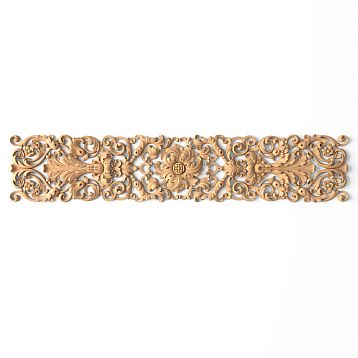
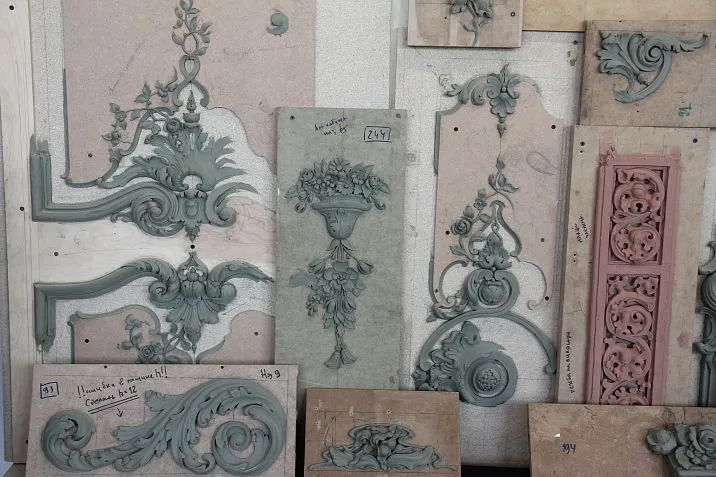
Decorative panels and medallions — artistic elements that transform the ceiling into a gallery. Relief compositions with mythological, floral, or abstract motifs create a unique atmosphere.
Stylistic Interpretations: From Classicism to Avant-Garde
stucco on the ceiling is A universal tool for stylistic expression. Every era and design direction found expressive possibilities in molding decor.
Classicism prefers strict geometry, symmetrical compositions, and classical motifs. Ceilings in the classical style are adorned with proper coffers, minimalist cornices, and rosettes with floral ornamentation.
Baroque explodes with opulence and theatricality. Ceiling moldings become stages for dramatic compositions. Wavy lines, asymmetrical scrolls, and abundance of details create a sense of movement and dynamism.
Modernism introduced natural forms into molding art. Ceiling compositions imitate botanical motifs — vines, flowers, leaves. Smooth lines, absence of sharp angles, organic asymmetry — characteristic features of modernist moldings.
Modern interpretations of molding decor demonstrate the remarkable flexibility of traditional art. Minimalist profiles, geometric clarity, and innovative materials allow integrating moldings into the most daring design projects.
Neoclassicism adapts classical forms to modern needs. Simplified profiles, restrained ornamentation, noble minimalism make neoclassical moldings a universal solution.
Technological Renaissance: Modern Creation Methods
The evolution of technology has revolutionized the process of creating ceiling moldings. If traditional production required months of manual labor, modern methods allow creating complex elements in days.
3D modeling precedes any project. Designers create virtual models allowing clients to see the result before production begins. Computer programs calculate loads, optimize shapes, and minimize material costs.
CNC milling ensures ideal precision when creating complex forms. Computer-controlled machines cut matrices with micron-level accuracy, guaranteeing perfect replication of elements.
Molding technologies allow creating elements of any complexity. Modern polymer materials ensure the strength, lightness, and durability of finished products.
Innovative materials expand designers' possibilities. Composite compositions combine advantages of different materials, creating unique functional characteristics.
Psychology of Space: The Impact of Moldings on Perception
Ceiling moldings do not merely decorate — they transform the psychological perception of space. Scientific research confirms the influence of architectural decoration on human emotional state.
The ceiling height visually changes depending on the type of moldings. Vertical elements increase height, horizontal ones decrease it. Coffered ceilings create a sense of protection, open compositions — spaciousness.
Lighting effects are enhanced by the three-dimensionality of the moldings. The play of light and shadow creates dynamism, adding life to static forms. Hidden backlighting placed behind cornices creates a "floating" ceiling effect.
Color solutions radically change the perception of moldings. Classical white moldings create a sense of purity and light. Gilded elements add luxury. Contrasting colors accentuate attention to architectural details.
Scale relationships require careful balancing. Large elements in small rooms create a sense of confinement. Small decor in large spaces fades away, failing to create the desired effect.
Installation alchemy: secrets of professional mounting
Installing ceiling moldings is an art requiring professional skill. Each material has its own mounting characteristics, and each element requires an individual approach.
Surface preparation is the foundation of successful installation. The ceiling must be perfectly flat, cleaned of old coatings, and primed. Any irregularities will become visible after installing moldings.
Marking determines the future appearance of the ceiling. Professional installers use laser levels to create an accurate grid for placing elements. Symmetry is a key requirement for classical moldings.
Adhesive compositions are selected depending on the molding material and ceiling type. Gypsum elements require special gypsum adhesives. Polyurethane details are mounted using polymer compositions.
Final finishing includes sealing joints, priming, and painting. Quality finishing makes the molding decor monolithic, creating the impression of a single architectural form.
Practical wisdom: rules for applying in interiors
Successful integration of ceiling moldings into the interior requires understanding of proportions, stylistic logic, and functional characteristics of the room.
Ceiling height is a determining factor when choosing molding decor. For rooms with ceilings below 2.7 meters, recommend minimalist profiles and avoid volumetric elements. High ceilings allow using complex multi-tiered compositions.
Room area affects the scale of decorative elements. Small rooms require a delicate approach — small details, restrained forms. Spacious halls allow the designer's imagination to flourish.
Functional purpose determines the type of molding decor. Bedrooms prefer calm, soothing forms. Living rooms can afford theatricality and opulence. Offices require strictness and minimalism.
Stylistic compatibility is key to a harmonious interior. stucco on the ceiling is It is not a standalone element, but part of a larger composition. It should support architectural logic and not conflict with furniture and finishes.
Lighting direction: molding as stage design
Lighting transforms molding decor into theatrical decoration, creating dramatic effects and highlighting architectural features.
Central lighting is traditionally placed in the center of the ceiling rose. The chandelier becomes the compositional center, and the molding decor serves as its frame. A properly chosen rose enhances the lighting effect, creating a play of light and shadow.
Hidden backlighting is a modern solution for classical decor. LED strips placed behind cornices create a "floating" ceiling effect. Soft diffused light highlights the three-dimensionality of molding elements without creating harsh shadows.
Accent lighting highlights individual molding elements. Directional spotlights can illuminate medallions, reliefs, creating a museum-like effect.
Colored backlighting opens new creative possibilities. RGB systems allow changing the color of lighting, creating various moods and highlighting architectural features of molding decor.
Color experiments: color as an expressive medium
Color solutions radically change the perception of ceiling moldings, transforming classical forms into modern art objects.
Monochromatic solutions — genre classic. White molding on a white ceiling creates an elegant play of volumes. This solution is universal, suitable for any style, and visually increases space.
Contrasting combinations create dramatic effects. Dark molding on a light ceiling attracts attention, creating graphic accents. The reverse combination — light molding on a dark background — creates a starry sky effect.
Metallic finishes add luxury and grandeur. Gilding, silvering, patination transform molding decor into jewelry for the interior.
Color solutions require refined taste and professional approach. Pastel tones create a soft, cozy atmosphere. Bright colors transform the ceiling into an art object requiring appropriate interior solutions.
Technological innovations: the future of molding art
Modern technologies open new horizons for the development of ceiling moldings, combining traditional forms with innovative possibilities.
3D printing revolutionizes the production of molding elements. The ability to create unique forms inaccessible through traditional methods opens new creative perspectives. Personalization of decor becomes accessible to a wide range of customers.
Smart materials integrate additional functions into molding decor. Thermochromic coatings change color depending on temperature. Photocatalytic surfaces purify air. Sound-absorbing compositions improve room acoustics.
Interactive systems transform molding decor into elements of a "smart home." Built-in sensors, LED lighting, and control systems create new possibilities for interacting with architectural decor.
Ecological innovations make molding decor even safer and more environmentally friendly. Biodegradable materials, non-toxic coatings, and renewable resources — trends defining the future of the industry.
Economic wisdom: investment in beauty
Ceiling molding is not an expense, but an investment in property value and quality of life. Properly selected and installed molding decor significantly enhances interior appeal.
Long-term perspective — the main advantage of quality molding. With proper care, gypsum molding lasts for decades, polyurethane molding — even longer. One-time costs are offset by longevity and enduring relevance of classic forms.
Increased property value — practical effect of molding decor. Apartments and homes with quality molding sell and rent for more than similar properties without decorative finishes.
Psychological comfort — an often overlooked but important component of molding decor value. Beautiful surroundings improve mood, boost self-esteem, and create a sense of well-being.
The cultural value of molding decor increases over time. In an era of mass production and standardization, handcrafted beauty becomes especially valuable.
Regional characteristics: molding in various cultures
Ceiling molding has developed in various cultures, acquiring national characteristics and unique features.
European tradition laid the foundations of modern molding art. French, Italian, and German masters created classical canons that continue to influence modern production.
The Russian school adapted European traditions to national taste. Russian molding is distinguished by greater decorative richness, love for floral motifs, and a special understanding of proportions.
Eastern influences introduced geometric ornaments, complex line interweavings, and a unique understanding of rhythm and symmetry into molding art.
Modern globalization blurs the boundaries between national schools, creating an international language of architectural decor.
In the modern world, the company STAVROS continues the traditions of high-quality molding production, combining classical techniques with innovative materials. Decades of experience, deep understanding of architectural traditions, and use of advanced technologies make STAVROS products a benchmark of quality in the field of decorative molding. By engaging professionals from STAVROS, clients receive not just decorative elements, but works of art capable of transforming any space, filling it with the nobility and refinement of true architectural classicism.