Article Contents:
- Philosophy of wooden architecture in the modern world
- Connecting eras through craftsmanship
- The ecological aspect of creativity
- Material selection: the foundation of a successful project
- Coniferous species: accessibility and practicality
- Hardwood Species: Nobility and Durability
- The Master's Toolkit: From Basic Set to Professional Equipment
- Hand tools: the foundation of craftsmanship
- Machine equipment: expanding capabilities
- Design and planning: from idea to drawing
- Analysis of Architectural Context
- Creating working drawings
- Material and time calculation
- Technological processes: from blank to finished product
- Preparation of Blank
- Centering and mounting on the lathe
- Rough processing
- Profile forming
- Decorative processing: art in details
- Wood Carving
- Surface Texturing
- Inlay and inserts
- Final finishing: protection and beauty
- Sanding: the foundation of quality finishing
- Choosing a protective-decorative coating
- Coating application techniques
- Quality control and defect correction
- Typical Defects and Their Causes
- Methods of correction
- Assembly and installation: the final touch
- Preparation for Installation
- Installation technology
- Final inspection
- Economic aspects of independent manufacturing
- Cost calculation
- Comparison with purchased items
- Developing craftsmanship: the path to perfection
- Training and Self-Improvement
- Experimentation and creativity

The art of woodworking has been passed down from master to apprentice for centuries, preserving traditions and secrets of creating exquisite architectural elements. Building a newel post — this is not just a technical task, but a creative process, where every stroke of the chisel creates a unique shape capable of transforming any staircase structure. In the age of mass production, the ability to create newel posts by hand becomes especially valuable skill, allowing to realize the most daring design ideas.
Imagine the moment when, under your hands, an ordinary wooden block transforms into an elegant support that will not only be a functional safety element, but also a work of art. Each newel post you create will carry the imprint of your individuality, reflecting your understanding of beauty and harmony. This journey from idea to finished product requires patience, skill, and deep understanding of the material.
Modern technologies open up unprecedented opportunities for home craftsmen. The accessibility of quality tools, variety of materials, and abundance of informational resources make the process of creating newel posts engaging and achievable even for beginners. However, behind the apparent simplicity lies a multitude of nuances, knowledge of which distinguishes a true master from an amateur.


Philosophy of wooden architecture in the modern world
In our rapidly changing world, where digital technologies penetrate all spheres of life, working with wood remains an island of traditional craftsmanship. Wood is a living material that breathes, reacts to environmental changes, and carries the energy of nature. Every tree is unique, and this uniqueness is passed on to the items created from it.




Connecting eras through craftsmanship
When you pick up a chisel or turn on a lathe, you become part of a centuries-old tradition. The same movements, the same principles of working with material were used by masters of past eras, creating architectural masterpieces that still amaze us today. This continuity makes the process of creating newel posts especially significant.
Modern tools greatly simplify the work, but the basic principles remain unchanged. Understanding the structure of wood, the ability to read the direction of fibers, a sense of proportion — all of this is passed down through practice and experience. Every mistake becomes a lesson, every successful solution — a step toward mastery.
Our factory also produces:


The ecological aspect of creativity
In the era of ecological awareness, working with natural materials gains particular relevance. Creating newel posts from wood means choosing an ecologically clean path that contributes to preserving the environment. Properly processed wood serves for decades, does not pollute nature, and does not require energy-intensive recycling.
Using local wood species supports the regional economy and reduces carbon footprint. Each handcrafted baluster is a small contribution to sustainable development and responsible consumption.
Get Consultation
Material selection: the foundation of a successful project
The success of any baluster-making project depends 50% on the correct choice of material. Wood is a fussy material requiring understanding and respect. Each species has its own characteristics that must be considered when planning work.
Coniferous species: accessibility and practicality
Spruce is an ideal choice for beginner craftsmen. Its soft structure is easy to work with, and its pleasant aroma creates a special atmosphere in the workshop. Spruce wood forgives many beginner mistakes, allowing flaws to be corrected without critical consequences.
Angarsk spruce is especially prized for its dense structure and minimal knots. Such wood ensures clean processing and a beautiful finish on the finished product. With proper drying and treatment, spruce balusters can last for decades.
Larch combines the beauty of coniferous wood with the strength of hardwoods. Its dense structure requires a sharper tool and more experience, but the result exceeds expectations. Larch’s natural resinous quality provides protection against moisture and pests.
Hardwood Species: Nobility and Durability
Oak is the king among materials for balusters. Its hardness and density require a professional approach, but reward the craftsman with exceptional beauty and longevity. Oak balusters become family heirlooms, passed down from generation to generation.
Working with oak requires patience and a sharp tool. Each cut must be precise, as corrections in hard wood are difficult. However, the finished product impresses with the nobility of its texture and depth of color.
Ash attracts modern craftsmen with its elasticity and beautiful texture. Light-colored wood with contrasting dark veins creates a striking visual effect. Ash is easy to bend, opening up possibilities for creating curved elements.
Birch is an underrated species that becomes a material for exquisite balusters in skilled hands. Its uniform structure and light color make birch ideal for staining and painting. Modern processing technologies allow birch to be given the properties of more expensive species.
Master's Toolset: From Basic Kit to Professional Equipment
Tool quality directly affects the result of the work. However, this does not mean you need to immediately purchase the most expensive equipment. You can start with a basic set and gradually expand your toolkit as your skill grows.
Hand tools: the foundation of craftsmanship
Chisels are the soul of turning. A set of 6-8 chisels with different profiles allows performing most operations. A roughing chisel for initial shaping, a finishing chisel for precision turning, a skew chisel for trimming ends — each has its specific purpose.
The quality of steel and proper sharpening are critically important. A dull tool not only complicates work but can also be dangerous. Regular sharpening and honing are essential skills for a turner.
Measuring tools ensure precision in work. Calipers, rulers, squares, templates — all of these help control the dimensions and proportions of the item. Templates are especially important when manufacturing a series of identical balusters.
Machine tools: expanding capabilities
A lathe is the heart of a baluster workshop. For home use, a lathe with a center distance of 1000-1500 mm and a processing diameter of 300-400 mm is suitable. Smooth operation, absence of vibrations, and reliable workpiece clamping are important.
Modern lathes are equipped with electronic speed control systems, allowing precise selection of processing modes for different wood species. Dust extraction systems make the work more comfortable and safer.
A milling machine opens additional possibilities for decorating balusters. It allows creating grooves, cutting slots, forming complex profiles. A hand-held router combined with guide fixtures enables high-precision operations.
Design and planning: from idea to drawing
Any quality work begins with careful planning. Building a newel post Requires preliminary design, taking into account both functional and aesthetic requirements.
Architectural context analysis
Before creating a sketch, it is necessary to carefully study the architectural context. The building style, finishing materials, interior color scheme — all of this affects the choice of baluster shape and proportions.
Classic interiors require traditional forms with clear proportions and restrained decoration. Modern styles allow experimentation with geometry and unconventional solutions. It is important to find a balance between innovation and harmony with the surrounding space.
Creating working drawings
A detailed drawing is the foundation of quality manufacturing. It must indicate all dimensions, radii, angles, and structural features. Special attention is paid to the junctions of different elements and mounting points.
Modern 3D modeling programs allow creating realistic images of future balusters, helping to evaluate the result even before starting work. A virtual model also allows identifying and eliminating possible issues during the design phase.
Material and time calculation
Accurate calculation of required materials helps avoid unpleasant surprises during work. Not only the main material, but also consumables — sandpaper, glue, finishing compounds — are taken into account.
Realistic assessment of manufacturing time helps properly plan the work. An experienced craftsman can make a simple baluster in 2-3 hours, but intricate carved elements may require several days of work.
Technological processes: from blank to finished product
The process of making a baluster includes several sequential stages, each requiring attention and skill. Disrupting the technology at any stage may result in defects or reduced quality of the finished product.
Preparation of the blank
Quality blank is the foundation of a successful project. The wood must be properly dried to a moisture content of 8-12%. Exceeding this value will lead to deformations and cracking of the finished product.
The blank is selected with allowance for all dimensions. For a baluster 900 mm high, a block at least 950 mm long is required. The cross-section of the blank must exceed the maximum diameter of the future baluster by 10-15 mm.
Special attention is paid to the orientation of the grain. They must be strictly parallel to the axis of the future baluster. Diagonal or wavy grain may lead to chips and uneven processing.
Centering and mounting on the lathe
Precise centering of the blank is critically important for obtaining a symmetrical product. Centers are marked using special fixtures or by drawing diagonals on the ends of the blank.
Mounting the blank on the lathe requires special care. The front center must fit tightly into the marked point, and the rear center must provide reliable support without excessive force. Incorrect mounting may lead to runout and inaccuracies in processing.
Rough processing
Roughing out transforms the square blank into a cylindrical blank. A router chisel is used, which allows quickly removing large volumes of material.
Work is carried out from the center to the edges, gradually reducing the diameter of the blank. It is important to maintain a constant feed rate and avoid overheating the wood. The finished blank should have a smooth cylindrical surface without scratches or chips.
Profile forming
This stage requires the highest skill and attention. Using various chisels, all profile elements — rounds, ovals, fillets, transitions — are formed. Each element must be executed with precision to the millimeter.
Work is carried out step by step, from general shapes to details. First, the main dimensions are marked, then the large elements are formed, and only at the end are the small details worked on. Constant control of dimensions using templates and measuring tools ensures manufacturing accuracy.
Decorative Processing: Art in Details
Decorative elements transform a functional part into a work of art. The choice of type and complexity of decoration depends on the interior style, the craftsman's skill, and available time.
Threaded connections for wood
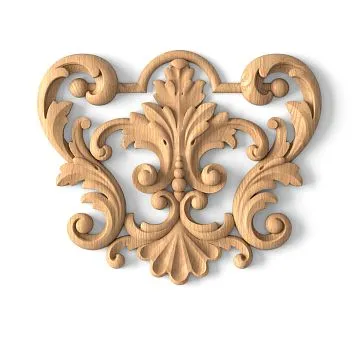
Carving is the highest form of decorative processing of balusters. It requires not only technical skills but also artistic taste. Traditional motifs — plant ornaments, geometric patterns, stylized images — create a unique character of the product.
Modern masters are not limited to traditional motifs, creating original compositions. It is important to observe a sense of proportion — excessive detailing may overload the product and disrupt harmony.
Surface texturing
Different texturing methods allow creating interesting visual effects. Brushing highlights the natural wood texture, creating an aging effect. Sandblasting provides a uniform matte surface.
Combining different textures on a single item creates a rich play of light and shadow. Smooth areas contrast with textured ones, creating a dynamic visual image.
Inlay and inserts
Using contrasting materials — other wood species, metal, mother-of-pearl — allows creating unique decorative effects. The inlay technique requires high skill, but the result is impressive in its refinement.
Modern technologies allow using laser engraving to create complex patterns and even photographic images. Such elements make each baluster unique.
Finish Processing: Protection and Beauty
Quality finishing not only protects wood from external influences but also highlights its natural beauty. The choice of coating type depends on operating conditions and aesthetic preferences.
Sanding: the basis of quality finishing
Thorough sanding is a mandatory step before applying a finish. The process is carried out in stages, gradually reducing the grit of the abrasive. Start with grit P120-P150, finish with P320-P400.
Special attention is paid to hard-to-reach areas — internal corners, grooves, carved elements. Special abrasive materials and fixtures are used for their processing.
Selection of protective-decorative coating
Lacquers provide maximum protection for wood against moisture and mechanical damage. Modern polyurethane lacquers have high wear resistance and longevity. They are suitable for heavily used staircases.
Oils create a more natural appearance, highlighting the natural wood texture. They penetrate deeply into the wood pores, providing protection from within. Oil-based coatings require periodic renewal but are easily restored.
Waxes give the surface a soft matte sheen and pleasant tactile finish. They are environmentally safe and create a special cozy atmosphere. Wax coatings require regular maintenance, but this is compensated by their beauty.
Coating application technique
The quality of the coating largely depends on its proper application. The surface must be perfectly clean and dry. The temperature and humidity in the room must comply with the coating manufacturer's recommendations.
Application is carried out in thin, even layers with intermediate sanding using fine abrasive. The number of layers depends on the type of coating and operating conditions. Usually, 2-3 layers are sufficient to achieve the required protection.
Quality control and defect correction
Even experienced craftsmen make mistakes and defects. It is important to know how to identify and eliminate them without compromising the quality of the finished product.
Typical defects and their causes
Scratches and chips usually occur when working with dull tools or incorrect cutting direction. Minor defects can be corrected with additional processing, while major defects may require redoing the part.
Size inaccuracies are usually the result of carelessness or tool wear. Minor deviations can be compensated during assembly, while significant deviations require additional work.
Coating defects — runs, bubbles, unevenness — occur due to violations of the application technology. Most of these defects can be eliminated by resanding and reapplying the coating.
Methods of correction
Modern materials and technologies allow correcting many defects without major rework. Special wood putties mask chips and cracks. Local resanding eliminates coating defects.
It is important to realistically assess the possibilities of correction. Sometimes it is simpler to manufacture a part anew than to spend time correcting serious defects.
Assembly and mounting: the final chord
Well-made balusters require equally high-quality mounting. Proper installation ensures the longevity and safety of the entire structure.
Preparation for Installation
Before starting assembly, all dimensions must be carefully checked and mounting locations prepared. Marking must be done with maximum accuracy — errors at this stage are difficult to correct.
All fasteners must be prepared in advance. The quality of fasteners directly affects the reliability of the structure. Cutting corners on fasteners is unacceptable.
Installation technology
Building a newel post It is completed by proper installation into the staircase structure. There are several mounting methods, the choice of which depends on the staircase construction and step material.
The most reliable method is mounting on metal bolts. This method ensures a strong connection and allows for disassembling balusters without damage if necessary.
Final inspection
After completing the assembly, a thorough inspection of the entire structure must be conducted. The strength of each baluster's fastening, absence of play and deformations, is checked.
Visual inspection allows identifying possible coating defects or damage incurred during mounting. All identified shortcomings must be corrected before handing over the work.
Economic aspects of self-manufacturing
Self-manufacturing balusters can provide significant cost savings, especially when producing a large number of items. However, it is necessary to realistically assess all expenses.
Cost calculation
Costs include not only materials but also tool depreciation, electricity, and consumables. At small production volumes, the share of fixed costs can be quite significant.
The time spent on manufacturing also has a cost. For an objective assessment of economic efficiency, it is necessary to consider the alternative cost of time.
Comparison with purchased items
Quality purchased balusters are quite expensive, especially handcrafted items. Self-manufacturing can provide savings of 50-70% at comparable quality.
However, it should be noted that achieving professional quality requires time and experience. Initial items may be inferior to purchased analogs in terms of execution quality.
Development of craftsmanship: the path to perfection
Skill comes only with experience. Each manufactured baluster adds knowledge and skills, bringing one closer to a professional level.
Training and self-improvement
Modern learning opportunities are practically limitless. Video lessons, master classes, specialized literature — all of this helps quickly master the necessary skills.
Communication with experienced masters is especially valuable. Their advice and recommendations help avoid typical mistakes and learn professional secrets.
Experimentation and creativity
As craftsmanship grows, the desire to experiment, create original shapes and decorative elements emerges. This is a natural process of development for any craftsman.
It is important not to fear mistakes — they are inevitable on the path to mastery. Each failure provides valuable experience and brings one closer to perfection.
Creating balusters by hand is an engaging journey into the world of traditional craftsmanship. It requires patience, perseverance, and a constant pursuit of perfection. But the reward — unique pieces crafted by your own hands — is worth all the effort.
In the world of mass production, handcrafted items acquire special value. They carry a piece of the craftsman’s soul, his vision of beauty and harmony. Each individually made baluster is a small masterpiece that will delight the eye and serve as a reminder of human creative potential.
The path of the craftsman never ends. There is always something to learn, improve, or create. This makes craftsmanship especially appealing to creative individuals seeking self-expression through the creation of beautiful and functional objects.
For many years, STAVROS has been a recognized leader in the creation of exclusive wooden items. Our artisans combine centuries-old craftsmanship traditions with modern technologies, producing artworks that become ornaments for any interior. We understand the value of handcrafted work and strive to preserve craftsmanship traditions for future generations. When you choose STAVROS, you receive not just quality products, but a piece of the craftsman’s soul embodied in wood.