Article Contents:
- Psychology of thickness perception in space
- Visual weight and balance of elements
- Emotional impact of different thicknesses
- Harmony with Floor Coverings
- Features of combination with parquet
- Adaptation to laminate
- Interaction with tile finishes
- Stylistic adaptation of thickness
- Classic directions and their requirements
- Modern styles and their features
- Technical aspects of different thicknesses
- Strength characteristics
- Possibilities of decorative finishing
- Economic aspects of choosing thickness
- Influence on material cost
- Influence on labor requirements
- Adaptation to Architectural Features
- Wall irregularities and compensatory capabilities
- Features of corner junctions
- Regional preferences and climatic factors
- Influence of climate on thickness selection
- Traditions and Preferences
- Innovative solutions in thickness
- Variable thickness
- Combined Solutions
- Future development trends
- Ecological Aspects
- Technological Innovations
- Frequently Asked Questions
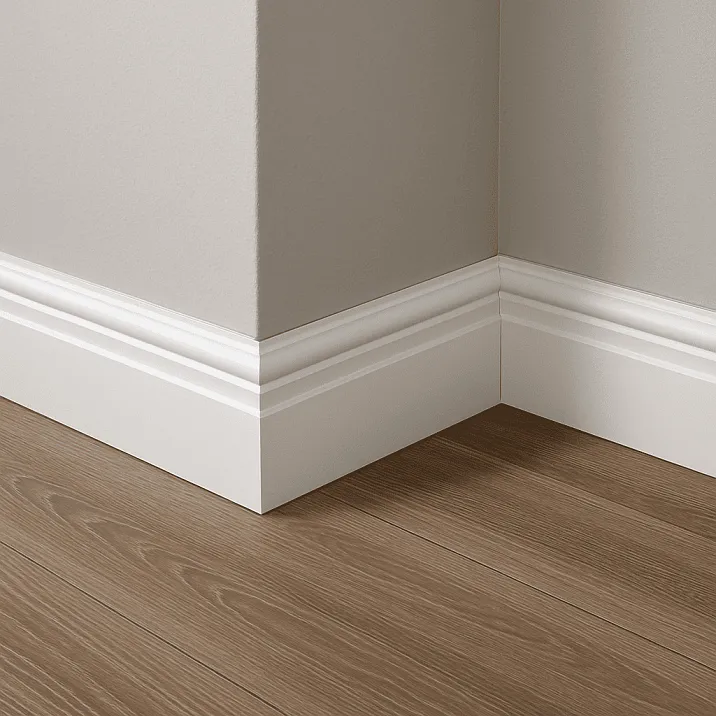
Skirting board thickness plays a decisive role in forming the visual image of a room, affecting the perception of proportions, stylistic coherence, and functional characteristics of the finish. Properly selected skirting board thickness can dramatically change the atmosphere of the interior, highlight its strengths or, conversely, reveal shortcomings of the layout. Wooden Skirting Boards in Interior Design require special attention to proportions, since natural wood has a pronounced texture and creates a certain visual weight in space.
Modern architectural practice offers a wide range of skirting board thicknesses - from minimalist 12 mm to substantial 30 mm, each with its own application features and impact on the interior. Understanding the principles of selecting optimal thickness allows creating a harmonious space where each element contributes to the overall composition.


Psychology of thickness perception in space




Visual weight and balance of elements
The thickness of a baseboard directly affects its visual weight in an interior, creating a sense of lightness or massiveness. Thin baseboards with a thickness of 12-15 mm practically dissolve into the space, establishing a delicate boundary between horizontal and vertical surfaces. This approach is particularly effective in minimalist interiors, where visual purity and the absence of unnecessary details are important.
Narrow wooden skirting boards create a sense of modernity and technological sophistication, emphasizing the geometry of the room without adding additional visual noise. They are ideal for small spaces, where every millimeter of visual expansion matters.
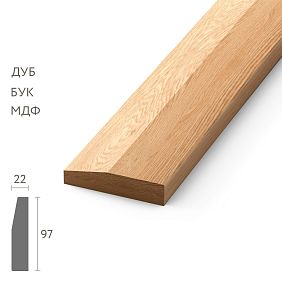
Thick baseboards with a thickness of 20-25 mm, on the contrary, create a sense of solidity and tradition. They draw attention to architectural details, integrating them into the overall interior composition. Such baseboards require an appropriate environment — spacious rooms, high-quality finishing materials, and thoughtful lighting.
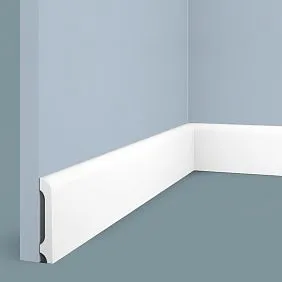
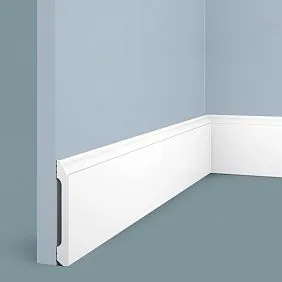
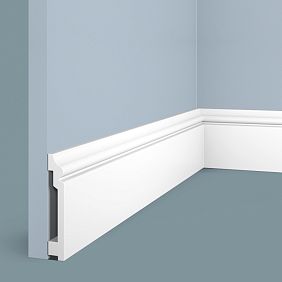
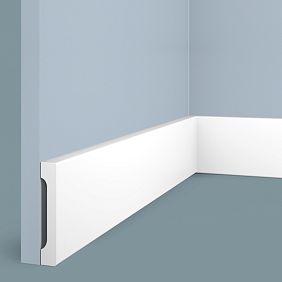
Our factory also produces:
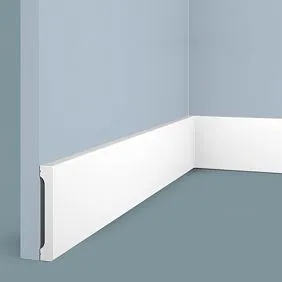
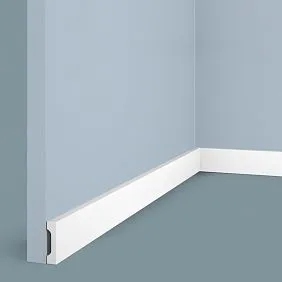
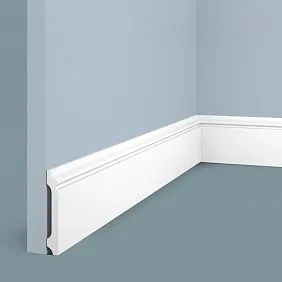
Emotional impact of different thicknesses
The thickness of baseboards subconsciously influences the emotional perception of space. Thin profiles are associated with lightness, dynamism, and modernity, creating an atmosphere of activity and movement. They are suitable for workspaces, modern studio apartments, and rooms with an active lifestyle.
Thick baseboards create a sense of stability, coziness, and protection. They subconsciously associate with high-quality, expensive renovations, classic interiors, and family homes. Such solutions are preferred for living rooms, bedrooms, and offices, where an atmosphere of relaxation and comfort is important.
Medium thicknesses of 16-18 mm represent a universal solution, providing a balance between modernity and tradition. They suit most interior styles and do not conflict with other finishing elements.
Get Consultation
Harmony with floor coverings
Features of combining with parquet
Parquet, as a noble floor covering, requires appropriate framing in the form of baseboards of suitable thickness. What skirting board for wooden floors Choosing depends on the character of the parquet itself, its thickness, and the overall interior style.
For classic parquet with a thickness of 15-22 mm, baseboards of 18-22 mm thickness are optimal. This combination creates visual harmony, where the baseboard is perceived as a natural continuation of the floor covering. The massiveness of the baseboard should match the solidity of the parquet, creating a sense of high-quality, expensive finishing.
Thin parquet, such as "French pine" or small-format planks, can be combined with more elegant baseboards of 15-18 mm thickness. This allows preserving the refined pattern of the floor without overwhelming it with bulky framing.
Engineered wood, possessing modern aesthetics while retaining the naturalness of wood, combines well with medium-thickness baseboards of 16-20 mm. This solution highlights the technological nature of the covering while preserving its natural beauty.
Adaptation to laminate
Laminate, as an affordable floor covering, provides more freedom in choosing baseboard thickness. Standard laminate thickness of 8-12 mm allows using thin baseboards of 12-15 mm for a minimalist look, or more substantial 20-25 mm baseboards for a sense of solidity.
When choosing baseboard thickness for laminate, it is important to consider its decor and texture. Laminate with a natural wood imitation requires a baseboard of corresponding massiveness to create a convincing image. A thin baseboard may reveal the artificiality of the covering, disrupting the overall composition.
Modern laminate with minimalist design harmoniously combines with thin baseboards, creating a unified modern look. This solution is especially effective in Scandinavian and high-tech interiors.
Interaction with tile coverings
Ceramic tiles and ceramic granite have their own specifics in combining with baseboards of different thicknesses. Large-format tiles with a thickness of 10-20 mm require corresponding baseboards of 18-25 mm thickness to create a proportional relationship.
Mosaic and small-format tiles combine better with thin baseboards of 12-16 mm, which do not compete with the detailed pattern of the covering. An overly massive baseboard may suppress the delicate beauty of the mosaic composition.
Natural stone, possessing the maximum thickness among floor coverings, requires correspondingly massive baseboards of 22-30 mm. This creates a sense of monolithic solidity and expensive finishing, highlighting the prestige of the materials used.
Stylistic adaptation of thickness
Classic directions and their requirements
Classic interior styles historically lean towards massive architectural elements, including baseboards. Baroque, Empire, and English classicism require baseboards of 20-30 mm thickness with appropriate decorative treatment. Wide Wooden Skirting Board becomes not just a functional element, but a full-fledged architectural detail.
Neoclassicism prefers more restrained proportions while maintaining solidity. Baseboards of 18-22 mm thickness provide the necessary dignity without creating a sense of excess. It is important that the baseboard profile matches the overall style of the room.
Neoclassicism, as a modern interpretation of classical traditions, allows using baseboards of 16-20 mm thickness. This enables preserving classical proportions while adapting to modern requirements for functionality and economy.
Modern styles and their characteristics
Minimalism requires the thinnest baseboards of 12-15 mm, which are practically invisible in the interior. The main task is to create technically necessary protection at the joint without disrupting the purity of the space's geometry.
Scandinavian style prefers baseboards of medium thickness 14-18 mm in light tones. This ensures necessary functionality while preserving the characteristic lightness and naturalness of the style.
Loft and industrial styles allow both thin metallic profiles and massive wooden baseboards depending on the overall concept. Thickness can vary from 12 to 25 mm depending on the desired effect.
High-tech tends toward thin, technological solutions with a thickness of 12-16 mm, featuring a perfectly flat surface and precise geometry. Any decorative elements are excluded in favor of functional form purity.
Technical aspects of various thicknesses
Strength characteristics
The thickness of the skirting board directly affects its mechanical strength and durability. Thin skirting boards 12-15 mm are more prone to deformation during installation and operation. They require more careful handling and quality mounting to prevent damage.
Skirting boards of medium thickness 16-20 mm provide an optimal balance between strength and economy. They are sufficiently rigid to maintain their shape under various influences, but do not require excessive material consumption.
Heavy skirting boards 22-30 mm have maximum strength and shape stability. They are practically immune to deformation, ensuring long-term use without loss of appearance.
Decorative finishing options
The thickness of the skirting board determines its decorative finishing capabilities. Thin profiles limit milling depth to 3-5 mm, allowing only simple geometric patterns or chamfers to be created.
Wooden Flat Skirting Board Minimum thickness is suitable for modern interiors where decoration should be as restrained as possible. The main beauty lies in the quality of the material and precision of execution.
Medium thicknesses 16-20 mm open up possibilities for creating more complex profiles with milling depths up to 8-10 mm. This allows implementing most classical and modern profiles.
Heavy skirting boards 22-30 mm provide maximum decorative finishing capabilities. Milling depth can reach 15 mm, allowing the creation of complex multi-level profiles with rich play of light and shadow.
Economic aspects of choosing thickness
Impact on material cost
The thickness of the skirting board directly affects the consumption of wood and, consequently, the cost of the finished product. Increasing thickness by 2-3 mm leads to a 15-20% price increase, which is significant for large-scale finishing projects.
Thin skirting boards 12-15 mm represent the most economical solution, allowing significant reduction in overall finishing costs without critical loss of functionality. This is especially relevant for budget projects and commercial real estate.
Medium thicknesses 16-20 mm provide an optimal price-to-quality ratio. Additional material costs are offset by improved performance characteristics and expanded design possibilities.
Heavy skirting boards require significant investment but provide maximum aesthetic effect and longevity. Their use is justified in premium projects where quality outweighs cost savings.
Impact on labor costs
The thickness of the skirting board affects installation complexity and, consequently, labor costs. Thin skirting boards require more careful handling, which may slow down installation and increase the risk of damage.
Heavy skirting boards, despite greater strength, require stronger mounting and precise fitting. Their weight creates additional loads on mounting elements, which may require the use of specialized fasteners.
Medium thicknesses provide an optimal balance between installation simplicity and mounting reliability. They are sufficiently strong for standard installation methods, but do not create excessive complexity during work.
Adaptation to architectural features
Wall irregularities and compensation capabilities
The thickness of the skirting board determines its ability to conceal wall irregularities and installation defects of floor coverings. Thin skirting boards 12-15 mm can compensate for irregularities up to 3-4 mm, which is insufficient for many real-world conditions.
Skirting boards of medium thickness 16-20 mm can conceal irregularities up to 6-8 mm, covering most practical situations in modern construction. This makes them a universal solution for various types of buildings.
Heavy skirting boards 22-30 mm provide maximum compensation capabilities, concealing irregularities up to 12-15 mm. They are indispensable for restoring old buildings or working with non-standard architectural solutions.
Features of corner joints
The thickness of the skirting board affects the complexity of corner joint processing. Thin profiles require high precision in cutting, as any errors become noticeable on a small cross-sectional area.
Wooden skirting board options Different thicknesses imply different approaches to corner joints. Heavy skirting boards allow using ready-made corner elements, simplifying installation and ensuring an ideal appearance.
Medium thicknesses provide a reasonable compromise between processing complexity and result quality. They are sufficiently robust to conceal minor inaccuracies, but do not create excessive complexity during cutting.
Regional preferences and climatic factors
Impact of climate on thickness selection
The climatic conditions of the region may affect the optimal skirting board thickness. In high-humidity regions, thicker skirting boards of 18-25 mm are preferred, providing better geometric stability under humidity changes.
In dry climates, thinner solutions can be used since the risk of deformation due to humidity changes is minimal. Thin skirting boards of 12-16 mm can provide the necessary functionality at lower costs.
Regions with sharp temperature fluctuations require special attention to thickness selection. Thick skirting boards better resist thermal deformation, ensuring stability under extreme conditions.
Regional construction traditions shape preferences in wood species selection. Northern regions prefer coniferous species, while southern regions favor deciduous ones.
Different regions have historically developed preferences for skirting board thickness. Northern regions traditionally favor thicker solutions associated with reliability and solidity.
Southern regions more often prefer lighter, elegant solutions that match local architectural traditions and climatic characteristics.
Metropolitan areas show a trend toward minimalism, preferring thin, technologically advanced solutions that align with modern life rhythms and urban aesthetics.
Innovative thickness solutions
Variable thickness
Modern technologies allow creating skirting boards with variable thickness along the height, producing interesting visual effects. Such solutions are especially effective in avant-garde interiors, where originality and non-standard design are valued.
Gradient thickness allows creating a smooth transition from a thick base to a thin upper part, creating a sense of lightness while maintaining structural strength.
Combined solutions
Using skirting boards of different thicknesses within a single room allows creating spatial zoning and highlighting functional features of different zones.
Transitions between zones with different skirting board thicknesses require special connecting elements ensuring smoothness and aesthetic continuity.
Future development trends
Ecological Aspects
Growing attention to eco-friendly building materials influences skirting board thickness preferences. Thin solutions allow minimizing wood consumption, aligning with sustainable development principles.
Using fast-growing wood species makes it possible to produce thick skirting boards without harming the environment.
Technological Innovations
Advancements in manufacturing technologies expand the possibilities for creating skirting boards with non-standard thicknesses, tailored to specific projects and client requirements.
3D printing of wooden composites opens new opportunities for creating skirting boards with complex shapes, variable thickness, and integrated functional elements.
Frequently Asked Questions
What thickness of skirting board is considered optimal?
A thickness of 16-20 mm is considered optimal for most modern interiors. This thickness provides the right balance between strength, aesthetics, and cost-effectiveness. A 18 mm skirting board is the most universal solution, suitable for various interior styles—from modern minimalism to neoclassicism. This thickness allows creating diverse profiles, concealing minor wall irregularities (up to 6-8 mm), and provides sufficient rigidity for long-term use. For classic interiors, thickness can be increased to 20-22 mm, while for ultra-modern interiors, it can be reduced to 14-16 mm.
Is a thick skirting board suitable for a small room?
A thick skirting board in a small room requires careful consideration, but can be an effective solution when used properly. A 20-25 mm thick skirting board in light tones or matching wall color visually does not reduce space, but creates a sense of solidity and quality finish. However, a dark or contrasting thick skirting board in a small room may create a feeling of confinement and visually compress the space. The key factor is color choice, not just thickness. In small rooms with ceiling height less than 2.6 meters, it is better to limit thickness to 16-18 mm to maintain spatial proportionality.
What to choose: thin or wide skirting board?
The choice between thin and wide skirting boards depends on several factors: interior style, room size, floor covering type, and project budget. Thin skirting boards (12-16 mm) are suitable for modern styles (minimalism, Scandinavian, high-tech), small rooms, and limited budgets. They create a sense of lightness and visually expand space. Wide skirting boards (20-30 mm) are ideal for classic styles, spacious rooms, and expensive floor coverings (parquet, natural stone). They provide better wall protection, more opportunities for decorative treatment, and create a sense of solidity. A universal solution is medium thickness 16-20 mm, suitable for most situations.
Choosing the correct skirting board thickness requires a comprehensive approach, considering not only aesthetic preferences but also technical requirements, room characteristics, and the overall stylistic concept of the interior. Beautiful wooden skirting boards Skirting boards of different thicknesses allow implementing any design ideas, creating a harmonious and functional space that will delight owners for many years.