Article Contents:
- History and Evolution of Artistic Wood Turning
- From Antiquity to Modernity: The Path of Turning Art
- Traditions and Innovation in Turning
- Materials and Tools: The Foundation of Mastery
- Choosing Wood: Character and Soul of the Future Product
- The Craftsman's Tools: The Extension of the Turner's Hands
- Technology and Process: From Blank to Work of Art
- Material Preparation: The First Step Toward a Masterpiece
- Basic Turning Techniques: The Language of Turning Art
- Finishing Touches: Revealing the Beauty of Wood
- Types of Artistic Turned Items: Variety of Forms and Functions
- Interior Items and Furniture: Functional Aesthetics
- Tableware and Kitchenware: Beauty in Everyday Life
- Decorative Items: Art in Pure Form
- Games and Toys: Joy for All Ages
- Modern Trends in Artistic Wood Turning
- Fusion of Tradition and Innovation: A New Perspective on the Ancient Craft
- Ecological Aspect: Responsible Relationship with Nature
- Integration with Other Art Forms: Synthesis of Techniques and Materials
- Masters and Schools: Keepers of Tradition and Innovators
- Russian School of Turning Craftsmanship: From Folk Crafts to Contemporary Art
- International Community of Turners: Exchange of Experience and Ideas
- Practical Tips: How to Choose and Care for Turned Items
- Criteria for Choosing Quality Turned Items
- Caring for Wooden Turned Items: Preserving Beauty for Years to Come
- Commissioning Artistic Turning Works: From Idea to Realization
- Concept and Design Development
- Creating an Sketch or 3D Model
- Material and Technology Selection
- Manufacturing process
- Finishing and Delivery
- Conclusion: Eternal Beauty of Wood in Motion
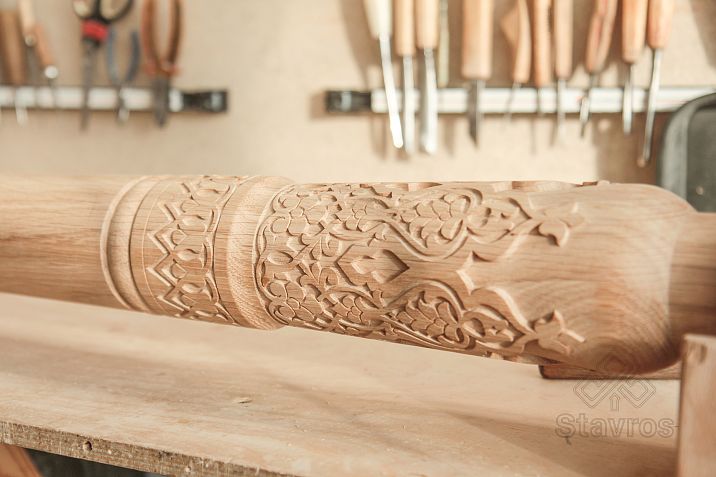
Have you ever noticed how a room transforms when a piece created by a true master enters it? This is not just an interior detail—it is a story told in the language of wood fibers, the energy of nature encapsulated in elegant forms. Artistic Wood Turning It is a special kind of art where the skill of the craftsman and the beauty of natural material intertwine, creating something greater than just a functional object.
In the world of modern technologies and mass production, we increasingly turn to the roots, to what was created not by a soulless conveyor belt, but by the living hands of a master. Why? Because within each of us lies a desire for authenticity, for things with character and soul. And it is precisely here that the oldest art of wood turning takes center stage, an art that, over thousands of years of existence, has not lost its relevance but has instead acquired a new resonance in the modern world.


History and Evolution of Artistic Wood Turning
The art of wood turning traces its roots to deep antiquity. Archaeological findings indicate that already in ancient Egypt, craftsmen used primitive lathes to create household items and decorative elements. These first lathes were remarkably simple: the blank was secured between two centers and rotated using a bow and string, while the craftsman pressed a cutting tool against it.




From Antiquity to Modernity: The Path of Wood Turning Art
Over time, the technology improved. In the Middle Ages, foot-powered lathes appeared, allowing craftsmen to free their hands for more precise work. The Renaissance brought new lathe designs and tools, while the Industrial Revolution introduced mechanization.
However, even with the advent of electric lathes and computerized equipment, the essence of wood turning art remains unchanged—it is the dialogue between the craftsman and the wood, where every movement of the cutting tool reveals the hidden beauty of the material.
Our factory also produces:


Traditions and Innovation in Wood Turning
Wood turning has a rich history in Russia. From simple peasant crafts to exquisite furniture for royal chambers, wood turning craftsmanship has always been valued and developed. Particularly interesting is that Peter the Great himself was a great enthusiast of wood turning and even had his own workshop.
Today Artistic Wood Turning continue the traditions of the past, yet actively absorb modern design trends and production technologies. Masters experiment with forms, combine wood with other materials, and use new finishing and decorative methods.
Get Consultation
Materials and Tools: The Foundation of Craftsmanship
Choosing wood for turning is an entire science, where not only aesthetic properties of the material are considered, but also its technical characteristics. Each wood species has its own character, specific processing features, and unique beauty.
Choosing Wood: The Character and Soul of the Future Object
Various types of wood are used for artistic turning, each with its own advantages:
- Hardwoods (oak, beech, maple, walnut, hornbeam) are distinguished by strength and durability, holding shape and details well.
- Fruitwoods (apple, pear, cherry) are prized for their beautiful grain and warm tones.
- Softwoods (linden, osier) are easy to work with and ideal for beginners.
- Exotic woods (wenge, padauk, ebony) impress with their unusual grain and color.
It is important to understand that the choice of wood must correspond to the purpose of the object. For example, for tableware, it is better to use dense woods without a strong odor, while for decorative items, one can choose wood with interesting grain and patterns.
Tools of the Craftsman: The Extension of the Turner’s Hands
The quality of turning work largely depends on the tools the craftsman uses. The main tools for wood turning include:
- Turning chisels — various types of gouges for rough and finish work.
- Measuring tools — calipers, compasses, rulers for size control.
- Clamping devices — chucks, faceplates, centers for securing blanks.
- Finishing tools — sandpaper of various grits, scrapers, polishing compounds.
Wood turning lathes occupy a special place, coming in various types and sizes. Compact tabletop models are suitable for home workshops, while professional work requires more powerful and functional lathes.
Technology and process: from blank to work of art
The process of creating a turned item is a sequence of carefully calibrated actions, where each stage has its own significance and affects the final result.
Material preparation: the first step toward a masterpiece
Work begins with the selection and preparation of the blank. The wood must be well-dried, free of cracks and other defects. The blank is given a shape as close as possible to the future item's form, which allows reducing the time spent on machine processing.
Main turning techniques: the language of turning art
In wood turning, two main methods are distinguished:
- Turning between centers - the blank is secured between the front and rear centers of the lathe. This method is used for creating long cylindrical parts, such as furniture legs, balusters, and tool handles.
- Turning in a chuck or on a faceplate - the blank is secured on only one side. This method is used for creating bowls, plates, vases, and other hollow forms.
Each method has its own characteristics and requires specific skills and tools. Masters creating Artistic Wood Turningusually master both methods and choose the most suitable one depending on the task.
Final finishing: revealing the beauty of wood
After completing the turning, the item requires final finishing. This includes sanding the surface with abrasive paper of varying grit, starting with coarse and gradually moving to finer grades. Then comes polishing and application of a protective coating - oil, wax, or varnish - which not only protects the wood from moisture and damage but also highlights its natural beauty.
Types of artistic turned items: variety of forms and functions
The world of turned items is incredibly diverse - from simple functional objects to complex artistic compositions. Let's consider the main categories:
Interior items and furniture: functional aesthetics
Turned elements are widely used in furniture manufacturing and interior design:
- Balusters and posts for staircases - classic elements that give stairs elegance and style.
- Legs for tables and chairs - from simple cylindrical to complex ornamental shapes.
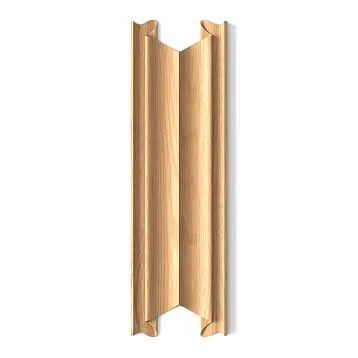
- Crown mouldings and rosettes - decorative elements for window, door, and ceiling trim.
- Columns and half-columns - architectural elements used in classical interiors.
Tableware and kitchen utensils: beauty in everyday life
Wooden tableware and kitchen utensils are not only functional but also bring a special atmosphere of warmth and coziness to the home:
- Bowls and cups - from simple shapes to complex compositions with decorative elements.
- Plates and dishes - flat or with profiled edges, for serving and decoration.
- Salt cellars, pepper mills, sugar bowls - small but important details of kitchen use.
- Mortars with pestles - traditional tools for grinding spices and herbs.
- Spatulas and grater tools - functional items with ergonomic design.
Decorative items: art in its purest form
Here, turning craftsmanship is fully revealed, allowing to create true works of art:
- Vases and cups - from classic forms to avant-garde experiments.
- Boxes and small containers - for storing jewelry and small items.
- Candlesticks - from simple to multi-tiered compositions.
- Decorative balls and eggs - popular elements of interior decoration.
- Sculptural compositions - complex works combining turning with carving and other techniques.
Games and toys: joy for all ages
Turning items are often the basis for games and toys:
- Chess pieces - a classic example of turning art, requiring precision and attention to detail.
- Puzzles - educational games combining aesthetics and functionality.
- Spinning tops and yo-yos - traditional toys demonstrating physics principles in action.
- Matryoshkas - although more associated with carving, the base of a matryoshka is created on a lathe.
Modern trends in artistic wood turning
Like any art, turning does not stand still. It develops, absorbing new ideas and technologies, responding to the demands of the time and consumer tastes.
The fusion of traditions and innovations: a new perspective on ancient craftsmanship
Modern masters are not limited to traditional forms and techniques. They experiment with asymmetry, complex geometric compositions, combining different wood species in a single item. A popular direction has become creating "segmented" works, where the item is assembled from numerous wooden segments of different species, forming complex patterns and ornaments.
Ecological aspect: responsible attitude towards nature
In an era of growing ecological awareness, more attention is being paid to sustainable resource use. Masters choose wood from responsibly managed forests, use local wood species, work with recycled materials. Also gaining popularity are items made from "saved" wood - old beams, stumps, logs, which are given a second life as works of art.
Integration with other art forms: synthesis of techniques and materials
An interesting trend has been the combination of turning with other techniques - carving, engraving, inlay, painting. Also popular is combining wood with other materials - metal, glass, stone, epoxy resin. This allows creating unique items that cannot be classified under any single craft.
Masters and schools: keepers of traditions and innovators
Behind every outstanding turning item stands a master - a person who has devoted years to studying the properties of wood and perfecting their craft. In the world, there are numerous schools and directions of turning art, each with its own characteristics and traditions.
Russian school of turning craftsmanship: from folk crafts to contemporary art
Russia has rich traditions of woodworking, including turning. From simple peasant crafts to exquisite items for the imperial court - turning art has always been an important part of Russian culture. Today, Russian masters continue these traditions, combining them with modern trends and technologies.
International community of turners: exchange of experience and ideas
In the modern world, boundaries between national schools are becoming increasingly blurred. Masters from different countries exchange experience at international exhibitions, symposiums, workshops. This leads to mutual enrichment of traditions and the emergence of new directions in turning art.
Practical advice: how to choose and care for turning items
If you have decided to purchase a turning item or are already a happy owner of such an item, it is important to know how to properly choose a quality item and how to care for it.
Criteria for choosing a quality turning item
When choosing a turning item, pay attention to the following aspects:
- Wood quality - absence of cracks, chips, unevenness.
- Workmanship quality - smooth surface, straight lines, neat joints.
- Functionality - if the item has a practical purpose, it should be easy to use.
- Finish coating - even, without streaks or spots, highlighting the beauty of the wood.
- Design originality - the item should have its own character, reflecting the individual style of the craftsman.
Care for wooden turned items: preserving beauty for years to come
Wooden items require specific care to maintain their beauty and functionality:
- Protection from moisture - avoid prolonged contact with water, do not place items near heat sources or in areas with high humidity.
- Regular cleaning - wipe items with a soft dry cloth, slightly damp if necessary, but then dry thoroughly.
- Updating protective coating - periodically treat items with special oils, waxes, or varnishes, depending on the original coating type.
- Protection from direct sunlight - prolonged exposure to sunlight may cause fading and cracking of the wood.
Ordering artistic turned works: from idea to realization
If you wish to purchase a unique turned item created specifically for you, it is advisable to consult professional craftsmen who perform Artistic Wood Turning. The process of creating a custom item usually includes several stages:
Concept and design development
At this stage, you discuss your ideas and preferences with the craftsman, define the shape, dimensions, and functionality of the future item. The craftsman may suggest several design options, assist with selecting the wood species and finish type.
Creating a sketch or 3D model
For complex items, a detailed sketch or even a 3D model is often created, allowing you to see how the finished item will look from different angles. This helps make necessary adjustments before beginning work with wood.
Material and technology selection
Based on the approved design, the craftsman selects suitable wood and determines the manufacturing technology. For complex items, combining different techniques — turning, carving, gluing — may be required.
Manufacturing process
The actual creation process may take from several hours to several weeks, depending on complexity. At this stage, the craftsman may send interim photos so you can see how the work is progressing.
Final finishing and delivery
After completing the main work, the item undergoes final finishing — sanding, polishing, and applying protective coating. Then it is carefully packaged and delivered to the customer.
Conclusion: eternal beauty of wood in motion
Artistic Wood Turning - it is a wonderful world where nature meets human craftsmanship, traditions meet innovation, functionality meets beauty. Each turned item is not just an object, but a story told in the language of wood fibers, an energy of nature encapsulated in elegant forms.
In an era of mass production and synthetic materials, wooden items crafted by hand by artisans acquire special value. They bring warmth and comfort into our lives, connect us with nature and the traditions of our ancestors, reminding us of eternal values of beauty and harmony.
Regardless of whether you are a collector of turned items, a beginner craftsman, or simply appreciate the beauty of natural materials, the world of artistic wood turning is open to you — a world where each item is unique, like a fingerprint, and where beauty is created in the dance of wood and tool, in the eternal motion of creativity.
By purchasing wooden turned items or ordering them from artisans, you not only surround yourself with beautiful and functional objects, but also support an ancient craft that is becoming increasingly rare and valuable each year. In a world where more and more things are produced by machines, handcrafted items become true treasures that can be passed down from generation to generation.