Article Contents:
- The essence of decorative stucco
- Historical retrospective of stucco art
- Technological evolution of production
- Classification of stylistic directions
- Functional purpose in architectural space
- Material science aspects of modern production
- Production technologies and quality control
- Artistic techniques and decorative effects
- Integration into modern interior styles
- Economic Aspects and Investment Appeal
- Technological innovations and prospects for development
- Maintenance and technical care
- Cultural significance and aesthetic impact
- Conclusion
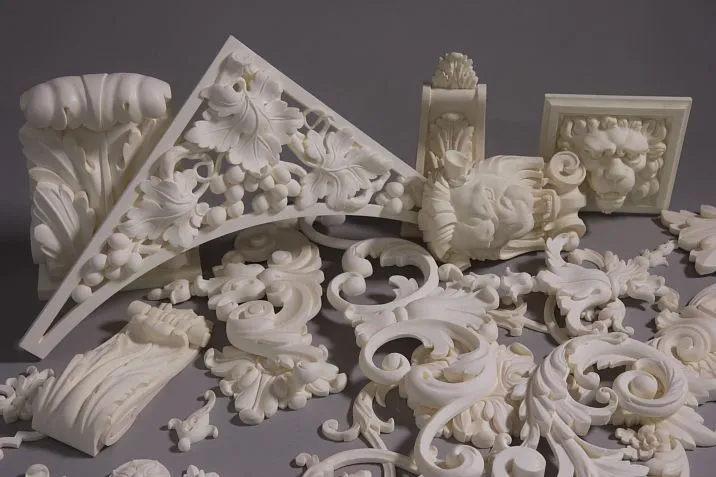
When designers dream of creating truly exclusive interiors, they invariably turn to one of the most refined elements of decorative art. Stucco is not just wall decoration — it is living architecture history, embodied in three-dimensional forms, capable of transforming an ordinary room into a work of art. In the age of mass production and standardized solutions, decorative stucco becomes a symbol of individuality, aristocracy, and impeccable taste.
Modern masters of decorative art reinterpret classical traditions, creating unique compositions that harmoniously blend historical heritage with current design trends. From ancient times to the present day, stucco decoration remains an unparalleled means of creating an atmosphere of luxury and refinement.


The essence of decorative stucco
Definition and philosophy of art
Stucco is an architectural-decorative element created by molding, casting, or hand sculpting from plastic materials. It is an art where every line carries deep meaning, and every swirl tells its own story. Unlike flat painting, the three-dimensional forms of stucco decoration create a multidimensional space, where the play of light and shadow transforms static elements into living, breathing works of art.
The philosophical foundation of stucco art lies in humanity's pursuit of beauty, the desire to surround oneself with harmonious forms that elevate the spirit and beautify everyday existence. Each element of stucco becomes a bridge between the material and spiritual worlds, embodying abstract concepts of beauty, harmony, and perfection in tangible forms.
Material science foundation of modern stucco
The evolution of materials has fundamentally changed the possibilities of stucco art. While classical plaster stucco required special operating conditions and regular maintenance, modern polymer compositions open up boundless creative prospects. High-density polyurethane, modified with nanomaterials, provides ideal detail at minimal weight — only 180-250 kg/m³ compared to 1800-2200 kg/m³ for traditional plaster.
Innovative additives endow modern stucco with remarkable properties: self-cleaning surfaces due to photocatalytic components, antibacterial protection using silver nanoparticles, thermal stability from -50°C to +80°C. The ecological safety of materials is confirmed by international certifications — absence of formaldehyde, heavy metals, and volatile organic compounds makes modern stucco safe for children's rooms and medical facilities.




Historical retrospective of stucco art
Ancient roots and Byzantine heritage
The roots of stucco art go back to deep antiquity, when the first civilizations discovered the magic of three-dimensional forms. Ancient Greek masters created unparalleled examples of architectural sculpture — Corinthian capitals with acanthus leaves, friezes depicting Olympian gods, metopes with heroic scenes. Each element adhered to strict mathematical laws of the golden section, creating works of eternal beauty.
The Roman Empire brought monumentality and technical perfection to stucco art. Roman architects developed complex decorative systems, where stucco elements were not merely decorative but became an integral part of the structural system. The Pantheon, the Baths of Caracalla, triumphal arches demonstrated virtuosity in three-dimensional sculptural techniques.
The Byzantine era introduced a spiritual dimension to stucco art. Christian symbolism, stylized floral ornaments, geometric compositions created a unique sacred atmosphere. Byzantine masters achieved remarkable skill in creating multi-layered compositions, where each level of relief conveyed a specific theological idea.
Renaissance and Baroque revolution
The Renaissance era became the golden age of stucco art. Florentine masters revived ancient traditions, enriching them with Christian symbolism and humanist ideals. Luca della Robbia developed the technique of colored terracotta, allowing stucco works to gain new expressiveness. Donatello and Ghiberti perfected the art of bas-relief, creating works that remain benchmarks of artistic mastery to this day.
Baroque introduced theatricality and emotional expressiveness into sculptural art. Bernini and his followers created dynamic compositions where marble appeared as living flesh and drapery as real fabric. Baroque stucco transformed interiors into theatrical spaces, where every element participated in a unified artistic spectacle.
Rococo pushed decorative art to its absolute peak. Asymmetric compositions, maritime motifs, pastoral scenes created an atmosphere of refined playfulness. French masters of the 18th century achieved incredible delicacy in detail work — every swirl, every shell was executed with jewel-like precision.
Our factory also produces:


Technological evolution of production
Modern methods of creating sculptural masterpieces
The revolution in production technologies fundamentally changed the possibilities of sculptural art. Computer 3D modeling allows creating projects of unprecedented complexity, where every element is calculated down to the finest details. Parametric modeling programs enable instant design changes, adapting compositions to specific room dimensions.
CNC milling of master models ensures reproduction accuracy down to 0.005 mm. Modern milling centers can process the most complex curved surfaces, creating forms impossible to achieve by hand. Multi-axis processing allows creating recesses and complex transitions inaccessible to traditional methods.
Vacuum casting in silicone molds eliminates the formation of pores and air inclusions. The process occurs under strictly controlled parameters: temperature 70–85°C, pressure 2–4 atmospheres, humidity no more than 40%. Such conditions ensure perfect filling of the mold even in the thinnest areas.
Robotic finishing systems guarantee consistent surface quality. Automated grinding complexes with programmable motion trajectories ensure ideal smoothness and geometric precision.
Innovative decorative techniques
Modern decorative finishing technologies open fantastic possibilities for artistic self-expression. Electrostatic metal coating creates effects indistinguishable from solid metal objects. Vacuum metallization allows applying ultra-thin layers of noble metals — gold, silver, platinum — with nanometer precision.
Laser engraving adds microscopic details impossible with traditional processing methods. A laser beam with a diameter of 0.1 mm can create the finest lines, mimicking engraving on metal or carving on bone. The technology allows applying texts, ornaments, portraits with photographic precision.
Multi-layer patination creates effects of centuries-old aging. Special compounds are applied in a specific sequence, creating complex interplays of tones and textures. Masters use up to 15 different patination compounds to achieve the desired effect.
Get Consultation
Classification of stylistic directions
Historical styles in modern interpretation
Neoclassicism remains the golden standard of elegance in sculptural decoration. Strict proportions based on the golden ratio, symmetrical compositions, traditional classical motifs create an atmosphere of eternal beauty. Modern interpretations of classical forms use lightweight materials and simplified geometry, preserving the nobility and grandeur of historical examples.
Baroque opulence finds new embodiment in modern materials. Dynamic compositions rich in detail and emotional expressiveness create an atmosphere of luxury and theatricality. Modern masters skillfully adapt Baroque motifs to the scale of typical apartments, preserving the spirit of the style even at more modest dimensions.
Rococo introduces playfulness and elegance into modern interiors. Asymmetric compositions, maritime motifs — shells, pearls, coral — create an atmosphere of the gallant era. Rocaille motifs are especially effective in women’s interiors — boudoirs, living rooms, bedrooms.
Empire demonstrates imperial grandeur through solemn symbolism. Eagles, laurel wreaths, military trophies, ancient armor create an atmosphere of triumph and glory. Modern interpretations of Empire often use simplified forms while preserving the monumental character of compositions.
Modern directions and avant-garde trends
Modernism opens new horizons of artistic expression through natural forms and organic lines. Stylized images of plants — irises, lilies, poppies, female figures in flowing garments create a poetic atmosphere. A distinctive feature of modernist stucco is the abandonment of symmetry in favor of natural organicism.
Art Deco combines geometric clarity with decorative richness. Zigzags, spirals, stylized plant forms create rhythmic compositions full of energy and movement. Contrasting combinations of matte and glossy surfaces, metallic and painted elements enhance the decorative effect.
Minimalism offers a fundamentally different approach to sculptural decoration. Concise forms, clear geometry, minimal detail — such stucco emphasizes the architectural structure of space without overloading it with excessive decoration. The philosophy 'less is more' is reflected in strict yet expressive forms.
Eclecticism opens boundless opportunities for creative experimentation. Combining elements from different eras and styles requires a special artistic touch, but the result can surpass even the most daring expectations. Skillful mixing creates unique authorial interiors without analogs.
Modern masters constantly experiment with forms and materials, creating fundamentally new directions in sculptural art.
Functional purpose in architectural space
Structural elements and their role
Cornices play a crucial role in interior architectural composition. They visually complete walls, create transitions to ceilings, can conceal lighting or climate control systems. Modern cornices are manufactured with internal channels for wiring, enabling hidden lighting or integration of smart home systems.
Moldings serve to frame architectural elements — door and window openings, panels, mirrors, paintings. They create visual frames, structure space, add volume to flat surfaces. The variety of profiles — from simple rectangular to complex multi-step — allows creating compositions of any complexity.
Pilasters imitate structural columns, visually supporting ceilings or entablatures. They create vertical accents, divide long walls into separate sections, can conceal structural columns or mask utilities.
Rosettes serve as central elements of ceiling compositions. Classically, they frame chandeliers, but modern designers use them as independent decorative elements, creating rhythmic compositions on ceilings or walls.
A powerful tool for organizing interior space. Arched openings with ornamental decoration create visual passages between functional zones while preserving the sense of spatial unity. Colonades of decorative columns can serve as partitions without cluttering the space with solid walls.
Stucco is Niche with ornamental framing become focal points of the interior. They house artworks, decorative items, built-in furniture. Ornamental decoration lends niches a sense of grandeur, transforming them into mini-galleries or sanctuaries of beauty.
Platforms and steps decorated with ornamental elements create a multi-level space. They zone the room vertically, creating intimate corners or, conversely, grand areas.
Ceiling compositions made of stucco radically change the perception of room height. Coffers create a sense of monumentality, domed vaults — of grandeur, multi-level cornices — of elegance.
Ceiling moldings dramatically change the perception of room height. Coffered ceilings create a sense of monumentality, domed vaults convey grandeur, and multi-level cornices exude elegance.
Material science aspects of modern production
Polymer compositions of new generation
Modern stucco is manufactured from high-tech polymer materials that surpass traditional plaster in all operational characteristics. High-density polyurethane (180-350 kg/m³) provides ideal detailing with minimal weight of the finished product. This opens opportunities for placing decorative elements even on lightweight partitions.
The molecular structure of modern polymers allows creating items with variable wall thickness — from 2 mm in thin elements to 200 mm in massive architectural details. Such flexibility opens boundless opportunities for design creativity.
Adding nanomaterials imparts unique properties to stucco. Silver nanoparticles create antibacterial protection, titanium dioxide ensures self-cleaning surfaces under light exposure, carbon nanotubes increase strength by dozens of times.
Thermal stability of modern materials allows using stucco in any climatic conditions. Operating temperature range from -60°C to +120°C ensures dimensional and property stability under the most extreme conditions.
Ecological and hygienic characteristics
Modern stucco is manufactured from ecologically clean materials safe for human health. Absence of formaldehyde, heavy metals, volatile organic compounds is confirmed by international quality certificates ISO 14001, GREENGUARD, OEKO-TEX.
Hypoallergenic materials make stucco safe for people with heightened sensitivity. The surface does not attract dust, does not create a favorable environment for development of dust mites, mold, and other microorganisms.
Moisture permeability of modern materials ensures natural moisture exchange, preventing condensation and maintaining a healthy microclimate in the room. This is especially important for bedrooms, children's rooms, and rooms with limited ventilation.
The possibility of secondary recycling makes modern stucco an ecologically responsible choice. Production waste and products at the end of their service life can be recycled into new products without loss of quality.
Manufacturing technologies and quality control
Computer design and modeling
Modern stucco production begins with creating precise 3D models in specialized programs. CAD systems allow designing items of any complexity while considering all technological constraints. Parametric modeling enables quickly adapting base projects to specific room dimensions.
Virtual reality revolutionizes the process of coordinating projects with clients. The ability to "walk" through the future interior before production begins allows avoiding errors and misunderstandings. Interactive presentations help evaluate the impact of different lighting options on the perception of ornamental decoration.
Automated design systems integrate with production equipment, ensuring seamless transition from idea to finished product. Programs automatically generate control codes for CNC machines, optimize material cutting, and calculate casting technological parameters.
Libraries of standard elements contain thousands of tested solutions for various styles and directions. Designers can combine ready-made elements or create new ones, using them as a basis for creativity.
Precision manufacturing and quality control
Molds for casting are produced on high-precision CNC equipment. Milling centers with positioning accuracy of 0.001 mm create master models of ideal geometry. Multi-axis processing allows creating complex recesses and transitions inaccessible to manual work.
Silicone molds are made from special high-strength compositions that withstand hundreds of casting cycles without losing accuracy. Two-component cold-curing silicones ensure perfect reproduction of the finest surface details.
The casting process takes place under controlled conditions. Temperature, humidity, pressure, and holding time — all parameters are controlled by automated systems. Vacuuming eliminates the formation of pores and air inclusions in finished products.
Technical control systems check each item for compliance with technical requirements. Laser scanners create precise 3D models of finished items, which are compared with reference samples. Deviations exceeding 0.1 mm are recorded and analyzed.
Understanding that, What is stuccoHelps assess the complexity of manufacturing processes and high quality requirements.
Artistic techniques and decorative effects
Classic decoration methods
Patination remains one of the most popular techniques for decorative molding finishing. The art of creating artificial patina requires a deep understanding of the natural aging processes of various materials. Masters use special compositions that mimic the effects of time — oxidation of copper, tarnishing of silver, corrosion of iron.
Multi-layer patination creates a complex play of tones and textures. The base layer establishes the overall tone, intermediate layers add depth and complexity, and the finishing coating protects against external influences. The process may include up to 12 different operations, each requiring precise adherence to technology.
Gilding with 24-karat gold is the pinnacle of decorative craftsmanship. Ultra-thin metal leaves, only a few microns thick, are applied to specially prepared surfaces. The quality of gilding is determined by the uniformity of the coating, absence of bubbles, scratches, or other defects.
The 'dry brush' technique creates an effect of natural wear on protruding parts of the relief. Contrast paint is applied with a nearly dry brush only to protruding elements, emphasizing the composition's volume and creating an illusion of long-term use.
Innovative decorative technologies
Electrostatic powder coating creates finishes indistinguishable from solid metal objects. Charged metal particles settle evenly on the surface, creating a uniform coating without runs or gaps.
Flocking with textile fibers gives molding a velvet texture. Short fibers of various colors and textures are applied to an adhesive base, creating surfaces pleasant to the touch. This technique is especially effective for creating interiors in an Eastern style.
Holographic coatings create optical effects that change depending on viewing angle. Special films with microstructured surfaces create color play and light reflections, transforming static molding into a dynamic art object.
Luminescent materials accumulate light energy during the day and emit it in darkness. Phosphorescent pigments incorporated into the finish create a soft glow in the evening, turning molding into a decorative lighting source.
Integration into modern interior styles
Classic directions in a new interpretation
Neoclassical interiors require a special approach to using molded decoration. Modern interpretations of classical forms involve simplifying details while preserving basic proportions and distinctive stylistic features. Columns may be non-solid, appearing as pilasters or half-columns integrated into walls.
Empire style, in modern interpretation, retains its grandeur and monumentality but adapts to the scale of typical apartments. Large architectural elements are replaced by smaller, yet equally expressive, details. Military symbolism may be stylized or replaced with more neutral motifs.
Baroque opulence finds its place in spacious interiors of country houses or luxury apartments. Modern materials allow creating complex multi-level compositions without significantly increasing the weight of structures. Gold leaf may be replaced by high-quality imitation indistinguishable from the original.
Rococo in modern interiors is often used fragmentarily — individual motifs, characteristic details, color solutions. Asymmetric compositions are especially effective in feminine interiors — boudoirs, ladies' drawing rooms, bedrooms.
Modern styles and minimalism
A minimalist approach to molded decoration involves using concise geometric forms without excessive detailing. Simple profiles, clear lines, minimal ornamental elements — such molding emphasizes the architectural structure of space without competing for attention.
Loft style seemingly excludes the use of classical molding, but a creative approach allows finding unexpected solutions. Roughly finished or deliberately simple molded elements, painted in industrial colors — gray, metallic, black — fit organically into industrial aesthetics.
Scandinavian style prefers light tones and simple forms. White or light-gray molding creates additional play of light and shadow without compromising the style's characteristic purity and freshness. Natural motifs — branches, leaves, flowers — are especially suitable for northern interiors.
Eclecticism opens boundless opportunities for creative experimentation. Combining molded elements from different eras and styles requires a special artistic touch, but the result may exceed even the most daring expectations.
Economic Aspects and Investment Attractiveness
Cost structure and pricing
The cost of molded decoration is composed of several components: design (10-15%), master model and mold production (25-35%), materials (20-25%), manufacturing (15-20%), decorative finishing (10-15%), installation (10-15%). Understanding this structure helps optimize the project budget.
Serial items of standard sizes are significantly cheaper than custom orders due to savings in design and mold production. The cost per square meter of serial molding ranges from 2500 to 8000 rubles depending on profile complexity and finish type.
Custom projects require significant investment in development but ensure absolute uniqueness of the solution. The cost may reach 25,000 to 75,000 rubles per square meter for especially complex original compositions.
Installation work constitutes a significant portion of total costs, especially for complex multi-element compositions. Professional installation guarantees the longevity and aesthetic perfection of the result.
Return on investment and long-term perspective
Quality molding lasts 25-30 years without losing its original properties, making investments economically justified. Unlike wallpapers, paints, or other finishes requiring regular renewal, molded decoration remains relevant for decades.
Increased property value is an important economic effect of quality molding decoration. Unique interior solutions increase the property's market attractiveness by 20-40%, providing additional profit upon sale.
Operating expenses are minimal due to modern materials and coatings. Molding requires no special maintenance, is resistant to dirt, and is easily cleaned with regular cleaning agents.
The psychological value of a beautiful environment cannot be measured in monetary terms, but significantly affects the quality of life, emotional state, and creative activity of the inhabitants.
Technological innovations and development prospects
Digital technologies in production
Artificial intelligence revolutionizes the design process of molded elements. Neural networks analyze thousands of historical samples, identifying patterns and creating new compositions in a specified style. Machine learning enables systems to refine their skills, producing increasingly sophisticated and harmonious works.
The Internet of Things integrates production equipment into a unified information system. Sensors track technological process parameters in real time, automatically correcting deviations and preventing defects. Predictive analytics forecasts the need for equipment maintenance.
Blockchain technologies ensure transparency in the supply chain and guarantee the authenticity of premium items. Each element receives a unique digital signature containing information about its origin, materials, and master craftsman.
Augmented reality allows clients to visualize how molding will look in their interior even before purchase. Mobile applications overlay 3D models of decorative elements onto real images of rooms, helping make the right decision.
Ecological innovations
Biodegradable polymers based on plant raw materials gradually replace traditional synthetic materials. New biocomposites retain all the advantages of polyurethane — lightness, strength, detail — but fully degrade under natural conditions.
Closed-loop technologies minimize production waste. Scraps and defective items are recycled into new raw materials without loss of quality. Heat recovery systems use energy from technological processes to heat production spaces.
Renewable energy sources — solar panels, wind turbines — provide energy independence for production. Modern enterprises strive for carbon neutrality, offsetting CO2 emissions through tree planting or investments in green technologies.
Certification according to ecological standards is becoming a mandatory requirement for premium manufacturers. EcoLabel, GREENGUARD, Cradle to Cradle certifications confirm the company’s ecological responsibility and product safety.
Maintenance and care
Preventive measures
Regular dust cleaning is the foundation for long-term operation of molded decor. Soft anti-static brushes or vacuum cleaners with adjustable power effectively remove dirt without damaging delicate surfaces. Special attention should be paid to recesses and hard-to-reach areas, where most dust accumulates.
Wet cleaning is permitted only with pH-neutral cleaning agents (pH 6.5–7.5) and soft materials. Abrasives, acids, and alkalis may damage decorative finishes. Water temperature must not exceed 40°C.
Controlling the room’s microclimate contributes to the longevity of molded decor. Optimal parameters: temperature 18–24°C, relative humidity 45–65%, absence of sharp fluctuations, quality ventilation without drafts.
Protection against mechanical damage is especially important in areas with high foot traffic. Corner elements can be protected with transparent overlays, protruding details with special covers during repair work.
Restoration technologies
Local repair of minor damages is performed using original materials and technologies. Chips are filled with repair compound of identical color and texture, sanded flush with the main surface, and coated with protective varnish.
Restoring decorative finishes requires high-level craftsmanship. Damaged gilding or patina areas are carefully removed, the surface is prepared and covered with new material, strictly following the technology.
Reinforcement of fastening may be required for elements subjected to increased loads. Additional mechanical fasteners are installed discreetly, without compromising the composition’s aesthetics.
Professional documentation of all repair work helps track the condition of decor and plan future activities. Photographic documentation, description of materials used, dates of work — all are preserved in the technical passport of the object.
Cultural significance and aesthetic impact
Psychology of perception of three-dimensional forms
The human brain is evolutionarily tuned to perceive three-dimensional forms as more significant and important compared to flat images. Relief surfaces activate not only visual centers but also areas responsible for tactile sensations, creating a richer and more immersive perception.
Rhythmic repetition of ornamental elements creates a meditative effect, promoting relaxation and stress reduction. Symmetrical compositions are perceived as stable and reliable, while asymmetrical ones — as dynamic and creative.
The play of light and shadow on a relief surface creates constantly changing visual effects. Throughout the day, as the angle of illumination changes, the same composition may appear completely different, maintaining interest and preventing visual fatigue.
Color solutions of molded decor influence people’s emotional state. Warm tones — gold, ochre, terracotta — create a sense of coziness and comfort. Cool tones — silver, blue, green — promote concentration and a work-oriented mood.
Social and status functions
Molded decor is traditionally associated with high social status and cultural level of the owner. The presence of quality molding in an interior signals material prosperity, refined taste, and understanding of artistic values.
The educational function of molded decor is manifested in the continuous influence of artworks on the development of aesthetic taste of home inhabitants. Children raised in an environment of beauty develop a more refined understanding of beauty and harmony.
The communicative role of molding is manifested in creating topics for conversation, discussing artistic merits, historical parallels. Interesting decorative elements become focal points of attention for guests.
The therapeutic effect of beautiful surroundings is scientifically proven by numerous studies. Contemplating harmonious forms promotes the production of endorphins — happiness hormones, improves mood, and enhances vitality.
Conclusion
Understanding that, What is stuccoIt opens before us a world of limitless possibilities for creating unique interior spaces. This is an art that combines centuries-old traditions with modern technologies, classical beauty with innovative materials, functionality with aesthetic perfection.
Modern stucco is not luxury, but a wise investment in the beauty, comfort, and longevity of interior design. New materials and technologies make high art accessible to a broad circle of admirers of beauty, while preserving its exceptional artistic qualities.
Each element of stucco decoration tells its own story, creates a unique atmosphere, reflects the personality of the owner. In a world of standardized solutions and mass production, stucco remains an island of individuality, where every detail is crafted with soul and attention to perfection.
Choosing stucco decoration for your home is an investment not only in the beauty of the interior, but also in the quality of life, emotional comfort, and cultural development of the family. Artworks do not merely decorate walls — they shape the character of the space, influence mood, and inspire creativity.
The future of stucco art is linked to further development of technologies, emergence of new materials, integration with smart home systems. But what remains unchanged is the core — the pursuit of beauty, the desire to surround oneself with harmonious forms, to create a space worthy of human personality.
Modern stucco is a bridge between the past and the future, traditions and innovations, material and spiritual. It transforms an ordinary dwelling into a work of art, a home into a temple of beauty, a space into a source of inspiration.
STAVROS, recognized as a leading company in creating exclusive stucco compositions, offers a full range of services for designing, manufacturing, and installing decorative elements of any complexity. Years of experience, a team of highly skilled sculptors, use of advanced technologies and materials guarantee a result that surpasses even the most daring expectations.
From the first consultation to the ceremonial completion of the project, STAVROS specialists accompany every stage with maximum professionalism and attention to detail. Individual approach to each client, understanding the uniqueness of each project, striving for perfection in every detail — all this makes cooperation with STAVROS a guarantee of creating authentic masterpieces of decorative art.